



Fleet Management Market
Report Code
TC 2867
Published in
Jan, 2026, By MarketsandMarkets™
Fleet Management Market by Solutions (Operation Management, Vehicle Maintenance & Diagnostics, Performance Management, Fleet Analytics & Reporting), Fleet Type (Passenger Cabs, Commercial Vehicles, Public Transport) - Global Forecast to 2032

USD 88.49 BN
MARKET SIZE, 2032

CAGR 12.5%
(2026-2032)

300
REPORT PAGES

55
MARKET TABLES
OVERVIEW

Source: Secondary Research, Interviews with Experts, MarketsandMarkets Analysis
The global fleet management market is estimated to reach USD 43.56 billion in 2026 and is projected to reach USD 88.49 billion by 2032, reflecting a CAGR of 12.5% over the forecast period. Market growth is supported by the expanding scale of commercial vehicle operations across logistics, construction, utilities, and field services. Fleet operators face growing pressure to improve cost control, maintain regulatory compliance, and ensure consistent service delivery across increasingly distributed operations.
Market Size and Forecast:
- Market Size Value in 2025: USD 38.31 billion
- Market Size Value in 2026: USD 43.56 billion
- Revenue Forecast in 2032: USD 88.49 billion
- Growth Rate: CAGR of 12.5% from 2026 to 2032
- Data available from 2020 to 2032
- Base year: 2025
- Forecast period: 2026-2032
- Fastest Growing Region: Asia Pacific
- The services segment is projected to exhibit the highest growth rate at a CAGR of 14.5% during the forecast period.
Key Market Trends and Insights
- Growth Driver: Rising commercial vehicle fleets, stricter regulatory compliance, and growing demand for operational efficiency are driving the adoption of fleet management solutions.
-
Key Trends: AI-powered telematics, predictive maintenance, cloud-based fleet platforms, and real-time fleet analytics are transforming fleet operations.
- Opportunities: Increasing electric vehicle (EV) adoption, connected mobility, and smart transportation initiatives create significant growth opportunities.
- AI Impact: AI enables predictive maintenance, intelligent route optimization, driver behavior analysis, fuel efficiency improvements, and real-time fleet monitoring.
KEY TAKEAWAYS
-
By RegionAsia Pacific to the fastest growing region in the global fleet management market
-
By OfferingBy offering, the services segment is expected to post the highest CAGR of 14.5%.
-
By Fleet TypeBy fleet type, the commercial vehicles segment is projected to grow at the fastest rate from 2026 to 2032.
-
By PowertrainBy powertrain, the internal combustion engine (ICE) segment is expected to dominate the market.
-
Competitive LandscapeVerizon Connect, Trimble, Geotab, Wheels, were identified as some of the star players in the Fleet Management market, given their strong market share and product footprint.
-
Competitive Landscape Startup/SMEsRuptela, Fleetroot, GPS Insight, and Gurtam have distinguished themselves among startups and SMEs in the fleet management market
Fleet management adoption continues to gain momentum as fleet operations become more complex and cost-sensitive. Many organizations now rely on digital systems to track vehicle movement, monitor fuel use, plan maintenance, and oversee driver activity. This approach helps limit unexpected disruptions and improves the use of available vehicles. As fleets operate across wider geographies, delivery timelines are tightening and becoming harder to manage with manual processes. Under these conditions, better visibility into daily operations is essential. Centralized platforms enable fleet managers to respond more quickly to operational issues and make informed planning decisions. This shift toward data-driven operations is strengthening the role of fleet management systems as a core part of modern fleet operations.
TRENDS & DISRUPTIONS IMPACTING CUSTOMERS' CUSTOMERS
The fleet management market is shifting from traditional GPS tracking, manual dispatch, and compliance-focused solutions to intelligent, connected fleet management platforms that deliver greater operational value. Revenue growth is increasingly driven by AI-powered fleet analytics, predictive maintenance, connected vehicle ecosystems, EV fleet management, Fleet-as-a-Service (FaaS), and cloud-native digital platforms that enable new business models and customer partnerships. Fleet operators, logistics providers, last-mile delivery companies, public transportation agencies, and construction and field service organizations are prioritizing fleet utilization, driver safety, fuel efficiency, predictive maintenance, and sustainable fleet operations to meet evolving customer expectations. These capabilities ultimately enable faster, more reliable deliveries, lower operating costs, improved regulatory compliance, higher vehicle uptime, enhanced customer satisfaction, and more resilient, data-driven fleet operations, creating a long-term competitive advantage across the transportation ecosystem.

Source: Secondary Research, Interviews with Experts, MarketsandMarkets Analysis
MARKET DYNAMICS

Drivers
Impact
Level
Level
-
AI, IoT, and telematics are improving fleet efficiency, safety, and cost optimization

-
Rising focus of fleet owners on operational efficiency


RESTRAINTS
Impact
Level
Level
-
Cybersecurity and data privacy concerns hinder connected fleet adoption

-
Atmospheric interference hampering GPS connectivity


OPPORTUNITIES
Impact
Level
Level
-
AI-driven predictive maintenance and analytics are creating new opportunities

-
Development of transportation in logistics industry and growth in fleet size


CHALLENGES
Impact
Level
Level
-
Rapid technology evolution requires continuous upgrades and investment

-
Lack of network connectivity in non-terrestrial areas

Source: Secondary Research, Interviews with Experts, MarketsandMarkets Analysis
Driver: AI, IoT, and telematics are improving fleet efficiency, safety, and cost optimization
The integration of AI, IoT, and telematics is transforming fleet management by enabling real-time vehicle tracking, predictive maintenance, driver behavior monitoring, and fuel optimization. Fleet operators can use connected data to reduce downtime, improve route planning, enhance driver safety, and lower operating costs. AI-powered analytics also automate decision-making and optimize resource utilization across large fleets. As businesses increasingly prioritize digital transformation and operational efficiency, adoption of connected fleet technologies continues to accelerate, making AI, IoT, and telematics key growth drivers for the fleet management market.
Restraint: Cybersecurity and data privacy concerns hinder connected fleet adoption
Connected fleet management systems depend on continuous data exchange among vehicles, cloud platforms, and mobile applications, increasing exposure to cybersecurity threats and data breaches. Fleet operators are concerned about unauthorized access to vehicle systems, sensitive operational data, and customer information. Compliance with evolving data protection regulations further increases implementation complexity and costs. These concerns often delay technology adoption, particularly among small and medium-sized fleet operators that lack dedicated cybersecurity resources. As a result, cybersecurity and privacy challenges remain significant barriers to broader connected fleet deployment.
Opportunity: AI-driven predictive maintenance and analytics are creating new opportunities
Artificial intelligence and advanced analytics are enabling fleet operators to shift from reactive to predictive maintenance. By analyzing vehicle diagnostics, sensor data, and historical maintenance records, AI can identify potential component failures before they occur, reducing breakdowns and unplanned downtime. Predictive insights also improve asset utilization, extend vehicle lifespan, and optimize maintenance scheduling. As organizations seek to improve fleet reliability and reduce operating costs, demand for AI-powered analytics platforms is expected to rise, creating significant growth opportunities for fleet management solution providers.
Challenge: Rapid technology evolution requires continuous upgrades and investment
The fleet management industry is quickly changing due to advances in AI, IoT, electric vehicles, autonomous tech, and cloud platforms. Fleet operators need to regularly update software, telematics hardware, and communication systems to stay competitive and adapt to evolving business needs. However, frequent technology upgrades can raise costs, complicate integrations, and require ongoing employee training. Small and medium-sized businesses often face budget limitations that hinder their ability to adopt the newest innovations, making consistent tech investment a significant challenge in the fleet management sector.
FLEET MANAGEMENT MARKET: COMMERCIAL USE CASES ACROSS INDUSTRIES
| COMPANY | USE CASE DESCRIPTION | BENEFITS |
|---|---|---|
 |
Zebra Technologies delivers fleet management and connected asset visibility solutions powered by AI telematics, rugged mobile devices, RFID, IoT sensors, and the Zebra MotionWorks platform. Fleet operators across transportation, logistics, warehousing, utilities, and field services use these solutions to monitor vehicles, drivers, trailers, and assets in real time. The platform enables automated fleet operations, predictive maintenance, route optimization, workforce coordination, and data-driven decision-making to improve operational efficiency and asset utilization. | Real-time fleet and asset visibility | Improved driver productivity and workforce efficiency | Optimized asset utilization and maintenance scheduling | Reduced operational costs and downtime | Enhanced fleet safety and regulatory compliance |
 |
Wheels provides comprehensive fleet management services on a unified platform, combining vehicle leasing, maintenance, telematics, fuel management, accident management, and lifecycle optimization. Enterprises with commercial fleets use these services to streamline vehicle acquisition, monitor fleet performance, optimize operating costs, and improve driver safety. Its technology-driven fleet solutions support proactive maintenance, sustainability initiatives, and mobility management, enabling organizations to maximize fleet efficiency throughout the vehicle lifecycle. | Lower total cost of ownership (TCO) | Improved fleet lifecycle management | Enhanced driver safety and compliance | Increased vehicle uptime and operational efficiency | Simplified fleet administration and cost control |
 |
Trimble provides integrated fleet management solutions that include GPS tracking, telematics, transportation management software, video intelligence, and AI-enabled analytics. Fleet operators in transportation, construction, field services, and logistics use these solutions to monitor vehicle performance, optimize routing and dispatch, manage driver behavior, and improve fuel efficiency. The platform combines real-time visibility with predictive insights to automate fleet operations, enhance resource utilization, and support regulatory compliance across diverse fleet environments. | Real-time fleet tracking and operational visibility | Optimized route planning and fuel efficiency | Improved driver safety and performance monitoring | Reduced maintenance costs and vehicle downtime | Enhanced compliance and productivity through data-driven insights |
Logos and trademarks shown above are the property of their respective owners. Their use here is for informational and illustrative purposes only.
MARKET ECOSYSTEM
The fleet management market ecosystem comprises telematics providers, fleet management software vendors, connectivity providers, vehicle OEMs, hardware manufacturers, system integrators, mobility service providers, and fleet operators who work together to optimize vehicle operations, driver performance, and asset utilization. Hardware manufacturers supply GPS trackers, onboard diagnostics (OBD) devices, sensors, cameras, and IoT gateways that enable real-time vehicle monitoring and data collection. Software providers develop platforms for fleet tracking, route optimization, fuel management, predictive maintenance, compliance management, and driver safety analytics, transforming operational data into actionable business insights. Connectivity providers ensure seamless data transmission over cellular, satellite, and emerging 5G networks, while system integrators deploy and integrate fleet management solutions with enterprise applications such as ERP, TMS, and maintenance systems. Together, these stakeholders enable organizations to improve fleet visibility, reduce operating costs, enhance regulatory compliance, increase driver safety, and achieve sustainability goals across transportation, logistics, construction, retail, utilities, government, and other commercial fleet operations.

Logos and trademarks shown above are the property of their respective owners. Their use here is for informational and illustrative purposes only.
MARKET SEGMENTS

Source: Secondary Research, Interviews with Experts, MarketsandMarkets Analysis
Fleet Management Market, By Offering
Fleet management solutions account for a significant share of overall market adoption because they form the operational backbone of day-to-day fleet activities. These platforms consolidate vehicle tracking, route planning, maintenance scheduling, and driver monitoring into a single operational view. As fleet operations grow larger and more distributed, relying on manual reporting or disconnected tools makes it difficult to maintain consistency and control. Real-time access to vehicle and driver data enables fleet managers to respond more quickly to delays, breakdowns, or route deviations. This improves service reliability while reducing unnecessary fuel use and downtime. Over time, the ability to standardize processes and reduce manual oversight has made solution-based platforms central to fleet operations, particularly for organizations managing vehicles across multiple locations or regions.
Fleet Management Market, By Fleet Type
The commercial vehicles segment is experiencing steady growth as industries such as logistics, construction, utilities, and field services continue to expand their vehicle fleets. Higher delivery volumes, ongoing infrastructure work, and expanding service networks are increasing the number of vans and trucks in use. As vehicles are deployed more frequently, operators need closer oversight of fuel use, maintenance cycles, and overall utilization. Fleet management systems help identify where time, fuel, or maintenance resources are overused, allowing operators to control costs more effectively. With larger fleets, even modest improvements in routing or service planning can deliver noticeable savings, supporting broader adoption of digital fleet management tools among commercial operators.
Fleet Management Market, By Powertrain
Electric vehicle (EV) fleets are gaining traction globally as organizations respond to sustainability goals and evolving transportation policies. Compared with conventional vehicles, EVs introduce additional operational needs tied to battery condition, charging access, and route planning. Fleet operators need systems that can coordinate charging with daily delivery schedules, particularly when routes and time windows are fixed. Fleet management platforms are increasingly adapted to support these needs by providing visibility into energy usage and vehicle readiness. As EVs are added alongside traditional vehicles, managing mixed powertrain fleets is becoming a practical requirement. This shift is driving steady demand for EV-focused fleet management capabilities, especially in regions moving more quickly toward electrification.
Fleet Management Market, By Vertical
The law enforcement and emergency services vertical is projected to lead growth in the fleet management market, driven by the need for faster emergency response, real-time fleet visibility, and improved operational coordination. Police departments, fire and rescue agencies, ambulance services, and disaster response organizations are expanding their use of connected fleet management platforms to monitor vehicle locations, optimize dispatch, and improve resource allocation during critical incidents. Growing investments in smart public safety infrastructure, digital emergency communication systems, and connected government fleets are further accelerating adoption. Fleet management solutions enable agencies to track vehicle health, manage maintenance schedules, monitor driver behavior, and analyze fleet performance, helping reduce vehicle downtime and ensure fleet readiness. Integration with GPS, AI-powered route optimization, telematics, and incident management systems also supports quicker response times and more efficient field operations. As governments continue to modernize emergency response capabilities and prioritize public safety, demand for advanced fleet management solutions across law enforcement and emergency services is expected to increase significantly, making this one of the fastest-growing verticals in the global fleet management market.
REGION
Fleet Management Market: Asia Pacific Overview
Asia Pacific is experiencing accelerated adoption of fleet management solutions as commercial vehicle fleets grow in both emerging and mature markets. Factors such as rapid urbanization, infrastructure improvements, and expanding logistics and delivery sectors are driving the need for organized fleet oversight. Many firms are shifting from informal or manual approaches to more standardized digital systems as their fleet sizes expand. Challenges like managing fuel costs, vehicle availability, and service reliability in dense city environments and across long routes are intensifying. Fleet management platforms address these challenges by offering enhanced operational visibility and aiding operators in maintaining control amid increasing fleet activity. These trends together are fueling consistent growth throughout the region.

FLEET MANAGEMENT MARKET: COMPANY EVALUATION MATRIX
In the fleet management market matrix, Verizon Connect (Star) holds a leading position, supported by a strong combination of market share and a broad product footprint, as well as its comprehensive telematics platform and deep expertise across commercial logistics and service fleets. Zebra Technologies (Emerging Leader) is gaining momentum by leveraging its asset visibility, rugged mobility solutions, and integrated tracking capabilities to strengthen its role in modern fleet operations. While Verizon Connect maintains its lead through scale, feature depth, and widespread adoption, Zebra Technologies shows considerable potential to advance toward the leaders’ quadrant as demand for unified device ecosystems, real-time operational intelligence, and connected asset management accelerates across industries.

Source: Secondary Research, Interviews with Experts, MarketsandMarkets Analysis
KEY MARKET PLAYERS
- Verizon Connect (US)
- Trimble (US)
- Geotab (Canada)
- Wheels (US)
- Samsara (US)
- Bridgestone (Webfleet) (Japan)
- Ctrack (South Africa)
- Solera (US)
- Teletrac Navman (US)
- Holman (US)
- ORBCOMM (US)
- Powerfleet (US)
- Verra Mobility (US)
- Chevin Fleet Solutions (UK)
- Zebra Technologies (US)
- Motive (US)
- Michelin (UK)
- Lytx (US)
- GPS Insight (US)
- Gurtam (Lithuania)
- ABAX (UK)
- VIA Transportation (US)
- Fleetroot (UAE)
- Ruptela (Lithuania)
- Freeway Fleet Systems (UK).
MARKET SCOPE
| REPORT METRIC | DETAILS |
|---|---|
| Market Size in 2025 (Value) | USD 38.31 Billion |
| Market Size in 2026 (Value) | USD 43.56 Billion |
| Market Forecast in 2032 (Value) | USD 88.49 Billion |
| Growth Rate | CAGR of 12.5% from 2026-2032 |
| Years Considered | 2020-2032 |
| Base Year | 2025 |
| Forecast Period | 2026-2032 |
| Units Considered | Value (USD Million/Billion) |
| Report Coverage | Revenue forecast, company ranking, competitive landscape, growth factors, and trends |
| Segments Covered |
|
| Regions Covered | North America, Europe, Asia Pacific, Middle East & Africa and Latin America |
WHAT IS IN IT FOR YOU: FLEET MANAGEMENT MARKET REPORT CONTENT GUIDE

DELIVERED CUSTOMIZATIONS
We have successfully delivered the following deep-dive customizations:
| CLIENT REQUEST | CUSTOMIZATION DELIVERED | VALUE ADDS |
|---|---|---|
| Leading Service Provider (US) |
|
|
| Company Information | Detailed analysis and profiling of additional market players (up to 5) |
|
RECENT DEVELOPMENTS
- June 2026 : Geotab introduced its Model Context Protocol (MCP) connector, allowing fleet operators to securely access real-time fleet data through top AI platforms like ChatGPT, Microsoft Copilot, and Claude. Users can inquire about fleet data in natural language, automate workflows, and perform operational tasks directly via AI interfaces. This advancement represents a major move toward embedding generative AI into fleet management, aiding organizations in making better decisions, optimizing maintenance and dispatch, and boosting overall efficiency through AI-powered automation.
- June 2026 : Samsara introduced a suite of agentic AI capabilities, including an Agentic Shipment Center, AI-powered workflow automation, and a new 360° camera for operated equipment. These enhancements enable fleet operators to automate repetitive tasks, improve shipment visibility, enhance driver safety, and gain real-time operational insights across vehicles and assets. The launch reflects the industry's transition toward AI-powered connected operations, helping organizations increase productivity, reduce manual intervention, and improve fleet-wide visibility.
- February 2026 : Verizon Connect released its 2026 fleet technology trends report, highlighting the rapid adoption of AI-powered fleet technologies. The report found increased use of video telematics, GPS tracking, and predictive analytics, with organizations reporting measurable improvements in driver safety, operational efficiency, maintenance, and cost reduction. The findings demonstrate that AI and connected fleet technologies are becoming core components of fleet operations, accelerating digital transformation and supporting data-driven decision-making across commercial fleets.
Table of Contents
 Exclusive indicates content/data unique to MarketsandMarkets and not available with any competitors.
TITLE
PAGE NO
1
INTRODUCTION
37
2
EXECUTIVE SUMMARY
41
3
PREMIUM INSIGHTS
47
4
MARKET OVERVIEW
AI and IoT innovations drive fleet efficiency amidst regulatory pressures and cybersecurity challenges.
50
4.1
INTRODUCTION
4.2
MARKET DYNAMICS
4.2.1
DRIVERS
4.2.1.1
AI, IOT, AND TELEMATICS ARE IMPROVING FLEET EFFICIENCY, SAFETY, AND COST OPTIMIZATION
4.2.1.2
STRICTER SAFETY AND EMISSIONS REGULATIONS ARE ACCELERATING FLEET MANAGEMENT ADOPTION
4.2.1.3
RISING FOCUS OF FLEET OWNERS ON OPERATIONAL EFFICIENCY
4.2.1.4
INCREASING ADOPTION OF CLOUD-BASED ANALYTICAL SOLUTIONS TO MANAGE FIELD VEHICLES
4.2.2
RESTRAINTS
4.2.2.1
CYBERSECURITY AND DATA PRIVACY CONCERNS HINDER CONNECTED FLEET ADOPTION
4.2.2.2
ATMOSPHERIC INTERFERENCE HAMPERING GPS CONNECTIVITY
4.2.3
OPPORTUNITIES
4.2.3.1
FLEET-AS-A-SERVICE (FAAS) IS EXPANDING THE SUBSCRIPTION-BASED FLEET MARKET
4.2.3.2
AI-DRIVEN PREDICTIVE MAINTENANCE AND ANALYTICS ARE CREATING NEW OPPORTUNITIES
4.2.3.3
SMART CITY INVESTMENTS ARE CREATING NEW GROWTH OPPORTUNITIES FOR FLEET MANAGEMENT
4.2.3.4
DEVELOPMENT OF TRANSPORTATION IN THE LOGISTICS INDUSTRY AND GROWTH IN FLEET SIZE
4.2.4
CHALLENGES
4.2.4.1
RAPID TECHNOLOGY EVOLUTION REQUIRES CONTINUOUS UPGRADES AND INVESTMENT
4.2.4.2
INTEGRATING DIVERSE VEHICLES AND SOFTWARE PLATFORMS REMAINS CHALLENGING
4.2.4.3
LACK OF NETWORK CONNECTIVITY IN NON-TERRESTRIAL AREAS
4.2.4.4
LACK OF AWARENESS REGARDING FLEET MANAGEMENT SOLUTIONS AND SLOW ADAPTABILITY AMONG DEVELOPING COUNTRIES
4.2.4.5
INACCURATE GEOCODING
4.3
INTERCONNECTED MARKETS AND CROSS-SECTOR OPPORTUNITIES
4.3.1
FLEET TELEMATICS MARKET
4.3.2
CONNECTED VEHICLE MARKET
4.3.3
TRANSPORTATION MANAGEMENT SYSTEM (TMS) MARKET
4.3.4
ELECTRIC VEHICLE (EV) CHARGING INFRASTRUCTURE MARKET
4.3.5
INTELLIGENT TRANSPORTATION SYSTEMS (ITS) MARKET
4.3.6
LOGISTICS & TRANSPORTATION SECTOR
4.3.7
RETAIL & E-COMMERCE SECTOR
4.3.8
CONSTRUCTION & HEAVY EQUIPMENT SECTOR
4.3.9
UTILITIES & FIELD SERVICES SECTOR
4.4
STRATEGIC MOVES BY TIER-1/2/3 PLAYERS
4.4.1
TIER-1 PLAYERS: BUILDING AI-DRIVEN, END-TO-END FLEET MANAGEMENT ECOSYSTEMS THROUGH CONNECTED VEHICLES, TELEMATICS, AND DATA ANALYTICS
4.4.2
TIER-2 PLAYERS: EXPANDING SPECIALIZED FLEET SOLUTIONS THROUGH SAFETY, COMPLIANCE, ASSET VISIBILITY, AND MOBILITY SERVICES
4.4.3
TIER-3 PLAYERS: DRIVING INNOVATION THROUGH AFFORDABLE CLOUD-BASED TELEMATICS, FLEET AUTOMATION, AND REGIONAL FLEET SOLUTIONS
5
INDUSTRY TRENDS
Navigate industry shifts with strategic insights into competitive forces and transformative supply chain trends.
60
5.1
PORTER’S FIVE FORCES ANALYSIS
5.1.1
THREAT OF NEW ENTRANTS
5.1.2
THREAT OF SUBSTITUTES
5.1.3
BARGAINING POWER OF SUPPLIERS
5.1.4
BARGAINING POWER OF BUYERS
5.1.5
INTENSITY OF COMPETITIVE RIVALRY
5.2
MACROECONOMICS INDICATORS
5.2.1
INTRODUCTION
5.2.2
GDP TRENDS AND FORECAST
5.2.3
TRENDS IN TRANSPORTATION & LOGISTICS INDUSTRY
5.2.4
TRENDS IN CONSTRUCTION & INFRASTRUCTURE INDUSTRY
5.3
SUPPLY CHAIN ANALYSIS
5.4
ECOSYSTEM ANALYSIS
5.5
PRICING MODEL ANALYSIS
5.5.1
INDICATIVE PRICING ANALYSIS OF KEY PLAYERS, BY SOLUTION
5.6
KEY CONFERENCES AND EVENTS, 2026-2027
5.7
TRENDS/DISRUPTIONS IMPACTING CUSTOMERS’ BUSINESSES
5.8
INVESTMENT AND FUNDING SCENARIO
5.9
CASE STUDY ANALYSIS
5.9.1
TRANSFORMING LAST-MILE FOOD DELIVERY OPERATIONS WITH FLEETROOT
5.9.2
IMPROVING MUNICIPAL FLEET EFFICIENCY WITH GPS INSIGHT
5.9.3
ENHANCING STUDENT TRANSPORTATION SAFETY WITH POWERFLEET
5.9.4
ENHANCING FLEET SAFETY AND DRIVER COACHING WITH LYTX
5.9.5
ACCELERATING LAST-MILE DELIVERY WITH ZEBRA TECHNOLOGIES
5.9.6
MODERNIZING EMERGENCY FLEET OPERATIONS WITH FLEETWAVE
5.10
IMPACT OF 2025 US TARIFFS - FLEET MANAGEMENT MARKET
5.10.1
INTRODUCTION
5.10.2
KEY TARIFF RATES
5.10.3
PRICE IMPACT ANALYSIS
5.10.3.1
STRATEGIC SHIFTS AND EMERGING TRENDS
5.10.4
IMPACT ON COUNTRIES/REGIONS
5.10.4.1
US
5.10.4.2
EUROPE
5.10.4.3
ASIA PACIFIC
5.10.5
IMPACT ON END-USER INDUSTRIES
5.10.5.1
TRANSPORTATION & LOGISTICS
5.10.5.2
FLEET LEASING & RENTAL COMPANIES
5.10.5.3
GOVERNMENT & PUBLIC SECTOR FLEETS
6
STRATEGIC DISRUPTIONS: DIGITAL AND AI ADOPTION
AI and digital technologies redefine fleet management, driving innovation and competitive advantage.
86
6.1
KEY EMERGING TECHNOLOGIES
6.1.1
BIG DATA AND ANALYTICS
6.1.2
ARTIFICIAL INTELLIGENCE
6.1.3
5G
6.1.4
INTERNET OF THINGS
6.1.5
BLOCKCHAIN
6.2
COMPLEMENTARY TECHNOLOGIES
6.2.1
ROBOTICS AND AUTOMATION
6.2.2
CLOUD COMPUTING
6.3
ADJACENT TECHNOLOGIES
6.3.1
ADVANCED DRIVER-ASSISTANCE SYSTEMS (ADASS)
6.3.2
TELEMATICS AND CONNECTIVITY
6.4
TECHNOLOGY/PRODUCT ROADMAP FOR FLEET MANAGEMENT MARKET
6.4.1
SHORT-TERM ROADMAP (2023–2025)
6.4.2
MID-TERM ROADMAP (2026–2028)
6.4.3
LONG-TERM ROADMAP (2029–2032)
6.5
PATENT ANALYSIS
6.6
IMPACT OF AI/GEN AI ON FLEET MANAGEMENT MARKET
6.6.1
TOP USE CASES AND MARKET POTENTIAL
6.6.2
BEST PRACTICES IN FLEET MANAGEMENT PROCESS
6.6.3
CASE STUDIES OF AI IMPLEMENTATION IN FLEET MANAGEMENT MARKET
6.6.4
INTERCONNECTED ADJACENT ECOSYSTEMS AND IMPACT ON MARKET PLAYERS
6.6.5
CLIENTS’ READINESS TO ADOPT GENERATIVE AI IN FLEET MANAGEMENT
7
REGULATORY LANDSCAPE
Navigate complex fleet management compliance with insights on key regulations and industry standards.
98
7.1
REGULATORY BODIES, GOVERNMENT AGENCIES, AND OTHER ORGANIZATIONS
7.2
INDUSTRY STANDARDS
8
CUSTOMER LANDSCAPE & BUYING BEHAVIOR
Uncover key stakeholder influence and unmet needs shaping fleet purchasing decisions.
102
8.1
DECISION-MAKING PROCESS
8.2
KEY STAKEHOLDERS & BUYING CRITERIA
8.2.1
KEY STAKEHOLDERS IN BUYING PROCESS
8.2.2
BUYING CRITERIA
8.3
ADOPTION BARRIERS & INTERNAL CHALLENGES
8.4
UNMEET NEEDS FROM VARIOUS END-USE INDUSTRIES
9
FLEET MANAGEMENT MARKET, BY OFFERING
Market Size & Growth Rate Forecast Analysis to 2032 in USD Million | 46 Data Tables
107
9.1
INTRODUCTION
9.1.1
OFFERING: FLEET MANAGEMENT MARKET DRIVERS
9.2
SOLUTIONS
9.2.1
GROWING NEED TO UNLEASH OPERATIONAL EFFICIENCY WITH CENTRALIZED CONTROL TO DRIVE GROWTH
9.2.2
OPERATIONS MANAGEMENT
9.2.2.1
FLEET TRACKING & GEOFENCING
9.2.2.2
ROUTING & SCHEDULING
9.2.3
VEHICLE MAINTENANCE & DIAGNOSTICS
9.2.4
PERFORMANCE MANAGEMENT
9.2.4.1
DRIVER MANAGEMENT
9.2.4.2
FUEL MANAGEMENT
9.2.5
FLEET ANALYTICS & REPORTING
9.2.6
COMPLIANCE MANAGEMENT
9.2.7
OTHER SOLUTIONS
9.3
SERVICES
9.3.1
GROWING DEMAND FOR FLEET MANAGEMENT SERVICES FOR STREAMLINED OPERATIONS TO BOOST MARKET EXPANSION
9.3.2
PROFESSIONAL SERVICES
9.3.2.1
TRAINING & CONSULTING
9.3.2.2
IMPLEMENTATION & INTEGRATION
9.3.2.3
SUPPORT & MAINTENANCE
9.3.3
MANAGED SERVICES
10
FLEET MANAGEMENT MARKET, BY FLEET TYPE
Market Size & Growth Rate Forecast Analysis to 2032 in USD Million | 22 Data Tables
130
10.1
INTRODUCTION
10.1.1
FLEET TYPES: FLEET MANAGEMENT MARKET DRIVERS
10.2
PASSENGER CABS
10.2.1
GROWING ADOPTION OF CONNECTED MOBILITY SOLUTIONS TO DRIVE FLEET MANAGEMENT ACROSS PASSENGER CAB OPERATIONS
10.3
EMPLOYEE TRANSPORT
10.3.1
GROWING CORPORATE MOBILITY PROGRAMS AND WORKFORCE SAFETY INITIATIVES ARE DRIVING FLEET MANAGEMENT ADOPTION FOR EMPLOYEE TRANSPORT
10.4
COMMERCIAL VEHICLES
10.4.1
RISING FREIGHT MOVEMENT AND DIGITAL FLEET OPERATIONS CONTINUE TO STRENGTHEN COMMERCIAL VEHICLE FLEET MANAGEMENT
10.4.2
LCV
10.4.3
M&HCV
10.5
OFF-HIGHWAY & INDUSTRIAL VEHICLES
10.5.1
DIGITAL EQUIPMENT MONITORING AND PREDICTIVE MAINTENANCE ARE TRANSFORMING OFF-HIGHWAY FLEET OPERATIONS
10.6
LAW ENFORCEMENT & EMERGENCY SERVICES
10.6.1
MODERNIZATION OF EMERGENCY RESPONSE FLEETS DRIVES ADOPTION OF INTELLIGENT FLEET MANAGEMENT SOLUTIONS
10.7
PUBLIC TRANSPORT
10.7.1
SMART MOBILITY INITIATIVES AND CONNECTED TRANSIT SYSTEMS ENHANCE FLEET MANAGEMENT ACROSS PUBLIC TRANSPORTATION
10.8
OTHER FLEET TYPES
11
FLEET MANAGEMENT MARKET, BY POWERTRAIN
Market Size & Growth Rate Forecast Analysis to 2032 in USD Million | 8 Data Tables
144
11.1
INTRODUCTION
11.1.1
POWERTRAIN: FLEET MANAGEMENT MARKET DRIVERS
11.2
ICE
11.2.1
OPTIMIZATION OF CONVENTIONAL VEHICLE FLEETS SUSTAINS DEMAND FOR ADVANCED FLEET MANAGEMENT PLATFORMS
11.3
EV
11.3.1
RAPID FLEET ELECTRIFICATION TO CREATE NEW GROWTH OPPORTUNITIES FOR INTELLIGENT EV FLEET MANAGEMENT
11.4
HYBRID
11.4.1
HYBRID FLEET EXPANSION SUPPORTS TRANSITION TOWARD SUSTAINABLE FLEET MANAGEMENT OPERATIONS
12
FLEET MANAGEMENT MARKET, BY REGION
Comprehensive coverage of 7 Regions with country-level deep-dive of 19 Countries | 390 Data Tables.
150
12.1
INTRODUCTION
12.2
NORTH AMERICA
12.2.1
NORTH AMERICA: FLEET MANAGEMENT MARKET DRIVERS
12.2.2
US
12.2.2.1
UNITED STATES DRIVES FLEET MANAGEMENT INNOVATION THROUGH AI, CONNECTED VEHICLES, AND DIGITAL FLEET OPERATIONS
12.2.3
CANADA
12.2.3.1
CANADA STRENGTHENS FLEET MANAGEMENT ADOPTION WITH INTELLIGENT MOBILITY AND SUSTAINABLE FLEET OPERATIONS
12.3
EUROPE
12.3.1
EUROPE: FLEET MANAGEMENT MARKET DRIVERS
12.3.2
UK
12.3.2.1
UNITED KINGDOM EXPANDS INTELLIGENT FLEET MANAGEMENT THROUGH DIGITAL TRANSFORMATION AND COMPLIANCE AUTOMATION
12.3.3
GERMANY
12.3.3.1
GERMANY ACCELERATES FLEET MANAGEMENT INNOVATION WITH SMART LOGISTICS AND CONNECTED COMMERCIAL MOBILITY
12.3.4
ITALY
12.3.4.1
ITALY ENHANCES FLEET EFFICIENCY THROUGH CONNECTED MOBILITY AND ADVANCED FLEET INTELLIGENCE
12.3.5
FRANCE
12.3.5.1
FRANCE PROMOTES SUSTAINABLE FLEET MANAGEMENT THROUGH CONNECTED MOBILITY AND FLEET ELECTRIFICATION
12.3.6
SPAIN
12.3.6.1
SPAIN STRENGTHENS FLEET MANAGEMENT ADOPTION WITH LOGISTICS DIGITALIZATION AND INTELLIGENT TRANSPORTATION SOLUTIONS
12.3.7
REST OF EUROPE
12.4
ASIA PACIFIC
12.4.1
ASIA PACIFIC: FLEET MANAGEMENT MARKET DRIVERS
12.4.2
CHINA
12.4.2.1
CHINA ACCELERATES FLEET MANAGEMENT GROWTH THROUGH INTELLIGENT TRANSPORTATION AND CONNECTED COMMERCIAL FLEETS
12.4.3
INDIA
12.4.3.1
INDIA DRIVES RAPID FLEET MANAGEMENT ADOPTION THROUGH LOGISTICS MODERNIZATION AND DIGITAL TRANSPORTATION INITIATIVES
12.4.4
JAPAN
12.4.4.1
JAPAN ADVANCES FLEET MANAGEMENT WITH SMART MOBILITY, AUTOMATION, AND CONNECTED VEHICLE TECHNOLOGIES
12.4.5
AUSTRALIA & NEW ZEALAND
12.4.5.1
AUSTRALIA & NEW ZEALAND STRENGTHEN FLEET MANAGEMENT THROUGH AI-POWERED SAFETY AND CONNECTED FLEET TECHNOLOGIES
12.4.6
REST OF ASIA PACIFIC
12.5
MIDDLE EAST & AFRICA
12.5.1
MIDDLE EAST & AFRICA: FLEET MANAGEMENT MARKET DRIVERS
12.5.2
UAE
12.5.2.1
UAE LEADS REGIONAL FLEET MANAGEMENT INNOVATION THROUGH SMART CITY INITIATIVES AND CONNECTED MOBILITY
12.5.3
KSA
12.5.3.1
SAUDI ARABIA ACCELERATES FLEET MANAGEMENT GROWTH THROUGH VISION 2030 AND LOGISTICS MODERNIZATION
12.5.4
SOUTH AFRICA
12.5.4.1
SOUTH AFRICA STRENGTHENS FLEET MANAGEMENT THROUGH DIGITAL LOGISTICS AND CONNECTED FLEET TECHNOLOGIES
12.5.5
REST OF MIDDLE EAST & AFRICA
12.6
LATIN AMERICA
12.6.1
LATIN AMERICA: FLEET MANAGEMENT MARKET DRIVERS
12.6.2
BRAZIL
12.6.2.1
BRAZIL LEADS FLEET MANAGEMENT GROWTH THROUGH CONNECTED LOGISTICS AND INTELLIGENT TRANSPORTATION SOLUTIONS
12.6.3
MEXICO
12.6.3.1
MEXICO EXPANDS FLEET MANAGEMENT THROUGH MANUFACTURING GROWTH AND CROSS-BORDER LOGISTICS DIGITALIZATION
12.6.4
REST OF LATIN AMERICA
13
COMPETITIVE LANDSCAPE
Discover how top players dominate market share and revenue through strategic innovations.
269
13.1
INTRODUCTION
13.2
KEY PLAYER STRATEGIES/RIGHT TO WIN, 2023–2026
13.3
MARKET SHARE ANALYSIS, 2025
13.4
REVENUE ANALYSIS OF LEADING PLAYERS, 2021–2025
13.5
BRAND/PRODUCT COMPARISON
13.6
COMPANY VALUATION AND FINANCIAL METRICS
13.7
COMPANY EVALUATION MATRIX: KEY PLAYERS, 2025
13.7.1
STARS
13.7.2
EMERGING LEADERS
13.7.3
PERVASIVE PLAYERS
13.7.4
PARTICIPANTS
13.7.5
COMPANY FOOTPRINT: KEY PLAYERS, 2025
13.7.5.1
COMPANY FOOTPRINT
13.7.5.2
REGIONAL FOOTPRINT
13.7.5.3
OFFERING FOOTPRINT
13.7.5.4
FLEET TYPE FOOTPRINT
13.7.5.5
POWERTRAIN FOOTPRINT
13.8
COMPANY EVALUATION QUADRANT: STARTUPS/SMES
13.8.1
PROGRESSIVE COMPANIES
13.8.2
RESPONSIVE COMPANIES
13.8.3
DYNAMIC COMPANIES
13.8.4
STARTING BLOCKS
13.8.5
COMPETITIVE BENCHMARKING: STARTUPS/SMES, 2025
13.8.5.1
DETAILED LIST OF KEY STARTUPS/SMES
13.8.5.2
COMPETITIVE BENCHMARKING OF KEY STARTUPS/SMES
13.9
COMPETITIVE SCENARIO
13.9.1
PRODUCT LAUNCHES
13.9.2
DEALS
14
COMPANY PROFILES
In-depth Company Profiles of Leading Market Players with detailed Business Overview, Product and Service Portfolio, Recent Developments, and Unique Analyst Perspective (MnM View)
305
14.1
KEY PLAYERS
14.1.1
VERIZON CONNECT
14.1.1.1
BUSINESS OVERVIEW
14.1.1.2
PRODUCTS/SOLUTIONS/SERVICES OFFERED
14.1.1.3
RECENT DEVELOPMENTS
14.1.1.3.1
PRODUCT LAUNCHES
14.1.1.3.2
DEALS
14.1.1.4
MNM VIEW
14.1.1.4.1
RIGHT TO WIN
14.1.1.4.2
STRATEGIC CHOICES
14.1.1.4.3
WEAKNESSES AND COMPETITIVE THREATS
14.1.2
TRIMBLE
14.1.3
GEOTAB
14.1.4
WHEELS
14.1.5
SAMSARA
14.1.6
BRIDGESTONE
14.1.7
CTRACK
14.1.8
SOLERA
14.1.9
TELETRAC NAVMAN
14.1.10
HOLMAN
14.1.11
ORBCOMM
14.1.12
POWERFLEET
14.1.13
VERRA MOBILITY
14.1.14
CHEVIN
14.1.15
ZEBRA TECHNOLOGIES
14.1.16
MOTIVE
14.1.17
MICHELIN
14.1.18
LYTX
14.2
STARTUPS/SMES
14.2.1
GPS INSIGHT
14.2.2
GURTAM
14.2.3
ABAX
14.2.4
VIA TRANSPORTATION
14.2.5
FLEETROOT
14.2.6
RUPTELA
14.2.7
FREEWAY FLEET SYSTEMS
15
RESEARCH METHODOLOGY
385
15.1
RESEARCH DATA
15.1.1
SECONDARY DATA
15.1.2
PRIMARY DATA
15.1.2.1
BREAKDOWN OF PRIMARY PROFILES
15.1.2.2
KEY INDUSTRY INSIGHTS
15.2
DATA TRIANGULATION
15.3
MARKET SIZE ESTIMATION
15.3.1
TOP-DOWN APPROACH
15.3.2
BOTTOM-UP APPROACH
15.4
MARKET FORECAST
15.5
RESEARCH ASSUMPTIONS
15.6
LIMITATIONS
16
APPENDIX
394
16.1
DISCUSSION GUIDE
16.2
KNOWLEDGESTORE: MARKETSANDMARKETS’ SUBSCRIPTION PORTAL
16.3
AVAILABLE CUSTOMIZATION
16.4
RELATED REPORTS
16.5
AUTHOR DETAILS
LIST OF TABLES
TABLE 1
INCLUSIONS AND EXCLUSIONS
TABLE 2
USD EXCHANGE RATES, 2023–2025
TABLE 3
PORTER’S FIVE FORCES’ IMPACT ON FLEET MANAGEMENT MARKET
TABLE 4
GDP PERCENTAGE CHANGE, BY KEY COUNTRY, 2021–2029
TABLE 5
FLEET MANAGEMENT MARKET: ECOSYSTEM
TABLE 6
INDICATIVE PRICING ANALYSIS OF KEY PLAYERS, BY SOLUTION, 2025
TABLE 7
FLEET MANAGEMENT MARKET: LIST OF KEY CONFERENCES AND EVENTS, 2025–2026
TABLE 8
US ADJUSTED RECIPROCAL TARIFF RATES, 2026
TABLE 9
FLEET MANAGEMENT MARKET: LIST OF TOP PATENTS, 2026
TABLE 10
TOP USE CASES AND MARKET POTENTIAL
TABLE 11
FLEET MANAGEMENT MARKET: CASE STUDIES RELATED TO GEN AI IMPLEMENTATION
TABLE 12
LIST OF REGULATORY BODIES, GOVERNMENT AGENCIES, AND OTHER ORGANIZATIONS
TABLE 13
KEY REGULATIONS IN FLEET MANAGEMENT MARKET
TABLE 14
KEY INDUSTRY STANDARDS IN FLEET MANAGEMENT
TABLE 15
INFLUENCE OF STAKEHOLDERS ON BUYING PROCESS FOR TOP THREE FLEET TYPE
TABLE 16
KEY BUYING CRITERIA FOR TOP THREE FLEET TYPE
TABLE 17
FLEET MANAGEMENT MARKET, BY OFFERING, 2020–2025 (USD MILLION)
TABLE 18
FLEET MANAGEMENT MARKET, BY OFFERING, 2026–2032 (USD MILLION)
TABLE 19
FLEET MANAGEMENT SOLUTIONS MARKET, BY REGION, 2020–2025 USD MILLION)
TABLE 20
FLEET MANAGEMENT SOLUTIONS MARKET, BY REGION, 2026–2032 (USD MILLION)
TABLE 21
FLEET MANAGEMENT MARKET, BY SOLUTION, 2020–2025 (USD MILLION)
TABLE 22
FLEET MANAGEMENT MARKET, BY SOLUTION, 2026–2032 (USD MILLION)
TABLE 23
FLEET OPERATIONS MANAGEMENT MARKET, BY TYPE, 2020–2025 (USD MILLION)
TABLE 24
FLEET OPERATIONS MANAGEMENT MARKET, BY TYPE, 2026–2032 (USD MILLION)
TABLE 25
FLEET OPERATIONS MANAGEMENT MARKET, BY REGION, 2020–2025 (USD MILLION)
TABLE 26
FLEET OPERATIONS MANAGEMENT MARKET, BY REGION, 2026–2032 (USD MILLION)
TABLE 27
FLEET TRACKING & GEOFENCING MARKET, BY REGION, 2020–2025 (USD MILLION)
TABLE 28
FLEET TRACKING & GEOFENCING MARKET, BY REGION, 2026–2032 (USD MILLION)
TABLE 29
FLEET ROUTING & SCHEDULING MARKET, BY REGION, 2020–2025 (USD MILLION)
TABLE 30
FLEET ROUTING & SCHEDULING MARKET, BY REGION, 2026–2032 (USD MILLION)
TABLE 31
VEHICLE MAINTENANCE & DIAGNOSTICS MARKET, BY REGION, 2020–2025 (USD MILLION)
TABLE 32
VEHICLE MAINTENANCE & DIAGNOSTICS MARKET, BY REGION, 2026–2032 (USD MILLION)
TABLE 33
FLEET PERFORMANCE MANAGEMENT MARKET, BY TYPE, 2020–2025 (USD MILLION)
TABLE 34
FLEET PERFORMANCE MANAGEMENT MARKET, BY TYPE, 2026–2032 (USD MILLION)
TABLE 35
FLEET PERFORMANCE MANAGEMENT MARKET, BY REGION, 2020–2025 (USD MILLION)
TABLE 36
FLEET PERFORMANCE MANAGEMENT MARKET, BY REGION, 2026–2032 (USD MILLION)
TABLE 37
FLEET DRIVER MANAGEMENT MARKET, BY REGION, 2020–2025 (USD MILLION)
TABLE 38
FLEET DRIVER MANAGEMENT MARKET, BY REGION, 2026–2032 (USD MILLION)
TABLE 39
FLEET FUEL MANAGEMENT MARKET, BY REGION, 2020–2025 (USD MILLION)
TABLE 40
FLEET FUEL MANAGEMENT MARKET, BY REGION, 2026–2032 (USD MILLION)
TABLE 41
FLEET ANALYTICS & REPORTING MARKET, BY REGION, 2020–2025 (USD MILLION)
TABLE 42
FLEET ANALYTICS & REPORTING MARKET, BY REGION, 2026–2032 (USD MILLION)
TABLE 43
FLEET COMPLIANCE MANAGEMENT MARKET, BY REGION, 2020–2025 (USD MILLION)
TABLE 44
FLEET COMPLIANCE MANAGEMENT MARKET, BY REGION, 2026–2032 (USD MILLION)
TABLE 45
OTHER FLEET MANAGEMENT SOLUTIONS MARKET, BY REGION, 2020–2025 (USD MILLION)
TABLE 46
OTHER FLEET MANAGEMENT SOLUTIONS MARKET, BY REGION, 2026–2032 (USD MILLION)
TABLE 47
FLEET MANAGEMENT SERVICES MARKET, BY REGION, 2020–2025 (USD MILLION)
TABLE 48
FLEET MANAGEMENT SERVICES MARKET, BY REGION, 2026–2032 (USD MILLION)
TABLE 49
FLEET MANAGEMENT MARKET, BY SERVICE, 2020–2025 (USD MILLION)
TABLE 50
FLEET MANAGEMENT MARKET, BY SERVICE, 2026–2032 (USD MILLION)
TABLE 51
FLEET MANAGEMENT MARKET, BY PROFESSIONAL SERVICE, 2020–2025 (USD MILLION)
TABLE 52
FLEET MANAGEMENT MARKET, BY PROFESSIONAL SERVICE, 2026–2032 (USD MILLION)
TABLE 53
FLEET MANAGEMENT PROFESSIONAL SERVICES MARKET, BY REGION, 2020–2025 (USD MILLION)
TABLE 54
FLEET MANAGEMENT PROFESSIONAL SERVICES MARKET, BY REGION, 2026–2032 (USD MILLION)
TABLE 55
FLEET MANAGEMENT TRAINING & CONSULTING MARKET, BY REGION, 2020–2025 (USD MILLION)
TABLE 56
FLEET MANAGEMENT TRAINING & CONSULTING MARKET, BY REGION, 2026–2032 (USD MILLION)
TABLE 57
FLEET MANAGEMENT IMPLEMENTATION & INTEGRATION MARKET, BY REGION, 2020–2025 (USD MILLION)
TABLE 58
FLEET MANAGEMENT IMPLEMENTATION & INTEGRATION MARKET, BY REGION, 2026–2032 (USD MILLION)
TABLE 59
FLEET MANAGEMENT SUPPORT & MAINTENANCE MARKET, BY REGION, 2020–2025 (USD MILLION)
TABLE 60
FLEET MANAGEMENT SUPPORT & MAINTENANCE MARKET, BY REGION, 2026–2032 (USD MILLION)
TABLE 61
FLEET MANAGEMENT MANAGED SERVICES MARKET, BY REGION, 2020–2025 (USD MILLION)
TABLE 62
FLEET MANAGEMENT MANAGED SERVICES MARKET, BY REGION, 2026–2032 (USD MILLION)
TABLE 63
FLEET MANAGEMENT MARKET, BY FLEET TYPE, 2020–2025 (USD MILLION)
TABLE 64
FLEET MANAGEMENT MARKET, BY FLEET TYPE, 2026–2032 (USD MILLION)
TABLE 65
FLEET MANAGEMENT MARKET FOR PASSENGER CABS, BY REGION, 2020–2025 (USD MILLION)
TABLE 66
FLEET MANAGEMENT MARKET FOR PASSENGER CABS, BY REGION, 2026–2032 (USD MILLION)
TABLE 67
FLEET MANAGEMENT MARKET FOR EMPLOYEE TRANSPORT, BY REGION, 2020–2025 (USD MILLION)
TABLE 68
FLEET MANAGEMENT MARKET FOR EMPLOYEE TRANSPORT, BY REGION, 2026–2032 (USD MILLION)
TABLE 69
FLEET MANAGEMENT MARKET FOR COMMERCIAL VEHICLES, BY TYPE, 2020–2025 (USD MILLION)
TABLE 70
FLEET MANAGEMENT MARKET FOR COMMERCIAL VEHICLES, BY TYPE, 2026–2032 (USD MILLION)
TABLE 71
FLEET MANAGEMENT MARKET FOR COMMERCIAL VEHICLES, BY REGION, 2020–2025 (USD MILLION)
TABLE 72
FLEET MANAGEMENT MARKET FOR COMMERCIAL VEHICLES, BY REGION, 2026–2032 (USD MILLION)
TABLE 73
FLEET MANAGEMENT MARKET FOR LCVS, BY REGION, 2020–2025 (USD MILLION)
TABLE 74
FLEET MANAGEMENT MARKET FOR LCVS, BY REGION, 2026–2032 (USD MILLION)
TABLE 75
FLEET MANAGEMENT MARKET FOR M&HCV, BY REGION, 2020–2025 (USD MILLION)
TABLE 76
FLEET MANAGEMENT MARKET FOR M&HCV, BY REGION, 2026–2032 (USD MILLION)
TABLE 77
FLEET MANAGEMENT MARKET FOR OFF-HIGHWAY & INDUSTRIAL VEHICLES, BY REGION, 2020–2025 (USD MILLION)
TABLE 78
FLEET MANAGEMENT MARKET FOR OFF-HIGHWAY & INDUSTRIAL VEHICLES, BY REGION, 2026–2032 (USD MILLION)
TABLE 79
FLEET MANAGEMENT MARKET FOR LAW ENFORCEMENT & EMERGENCY SERVICES, BY REGION, 2020–2025 (USD MILLION)
TABLE 80
FLEET MANAGEMENT MARKET FOR LAW ENFORCEMENT & EMERGENCY SERVICES, BY REGION, 2026–2032 (USD MILLION)
TABLE 81
FLEET MANAGEMENT MARKET FOR PUBLIC TRANSPORT, BY REGION, 2020–2025 (USD MILLION)
TABLE 82
FLEET MANAGEMENT MARKET FOR PUBLIC TRANSPORT, BY REGION, 2026–2032 (USD MILLION)
TABLE 83
FLEET MANAGEMENT MARKET FOR OTHER FLEET TYPES, BY REGION, 2020–2025 (USD MILLION)
TABLE 84
FLEET MANAGEMENT MARKET FOR OTHER FLEET TYPES, BY REGION, 2026–2032 (USD MILLION)
TABLE 85
FLEET MANAGEMENT MARKET, BY POWERTRAIN, 2020–2025 (USD MILLION)
TABLE 86
FLEET MANAGEMENT MARKET, BY POWERTRAIN, 2026–2032 (USD MILLION)
TABLE 87
ICE FLEET MANAGEMENT MARKET, BY REGION, 2020–2025 (USD MILLION)
TABLE 88
ICE FLEET MANAGEMENT MARKET, BY REGION, 2026–2032 (USD MILLION)
TABLE 89
EV FLEET MANAGEMENT MARKET, BY REGION, 2020–2025 (USD MILLION)
TABLE 90
EV FLEET MANAGEMENT MARKET, BY REGION, 2026–2032 (USD MILLION)
TABLE 91
HYBRID FLEET MANAGEMENT MARKET, BY REGION, 2020–2025 (USD MILLION)
TABLE 92
HYBRID FLEET MANAGEMENT MARKET, BY REGION, 2026–2032 (USD MILLION)
TABLE 93
FLEET MANAGEMENT MARKET, BY REGION, 2020–2025 (USD MILLION)
TABLE 94
FLEET MANAGEMENT MARKET, BY REGION, 2026–2032 (USD MILLION)
TABLE 95
NORTH AMERICA: FLEET MANAGEMENT MARKET, BY OFFERING, 2020–2025 (USD MILLION)
TABLE 96
NORTH AMERICA: FLEET MANAGEMENT MARKET, BY OFFERING, 2026–2032 (USD MILLION)
TABLE 97
NORTH AMERICA: FLEET MANAGEMENT MARKET, BY SOLUTION, 2020–2025 (USD MILLION)
TABLE 98
NORTH AMERICA: FLEET MANAGEMENT MARKET, BY SOLUTION, 2026–2032 (USD MILLION)
TABLE 99
NORTH AMERICA: FLEET OPERATIONS MANAGEMENT MARKET, BY TYPE, 2020–2025 (USD MILLION)
TABLE 100
NORTH AMERICA: FLEET OPERATIONS MANAGEMENT MARKET, BY TYPE, 2026–2032 (USD MILLION)
TABLE 101
NORTH AMERICA: FLEET PERFORMANCE MANAGEMENT MARKET, BY TYPE, 2020–2025 (USD MILLION)
TABLE 102
NORTH AMERICA: FLEET PERFORMANCE MANAGEMENT MARKET, BY TYPE, 2026–2032 (USD MILLION)
TABLE 103
NORTH AMERICA: FLEET MANAGEMENT MARKET, BY SERVICE, 2020–2025 (USD MILLION)
TABLE 104
NORTH AMERICA: FLEET MANAGEMENT MARKET, BY SERVICE, 2026–2032 (USD MILLION)
TABLE 105
NORTH AMERICA: FLEET MANAGEMENT MARKET, BY PROFESSIONAL SERVICE, 2020–2025 (USD MILLION)
TABLE 106
NORTH AMERICA: FLEET MANAGEMENT MARKET, BY PROFESSIONAL SERVICE, 2026–2032 (USD MILLION)
TABLE 107
NORTH AMERICA: FLEET MANAGEMENT MARKET, BY FLEET TYPE, 2020–2025 (USD MILLION)
TABLE 108
NORTH AMERICA: FLEET MANAGEMENT MARKET, BY FLEET TYPE, 2026–2032 (USD MILLION)
TABLE 109
NORTH AMERICA: FLEET MANAGEMENT MARKET FOR COMMERCIAL VEHICLES, BY TYPE, 2020–2025 (USD MILLION)
TABLE 110
NORTH AMERICA: FLEET MANAGEMENT MARKET FOR COMMERCIAL VEHICLES, BY TYPE, 2026–2032 (USD MILLION)
TABLE 111
NORTH AMERICA: FLEET MANAGEMENT MARKET, BY POWERTRAIN, 2020–2025 (USD MILLION)
TABLE 112
NORTH AMERICA: FLEET MANAGEMENT MARKET, BY POWERTRAIN, 2026–2032 (USD MILLION)
TABLE 113
NORTH AMERICA: FLEET MANAGEMENT MARKET, BY COUNTRY, 2020–2025 (USD MILLION)
TABLE 114
NORTH AMERICA: FLEET MANAGEMENT MARKET, BY COUNTRY, 2026–2032 (USD MILLION)
TABLE 115
US: FLEET MANAGEMENT MARKET, BY OFFERING, 2020–2025 (USD MILLION)
TABLE 116
US: FLEET MANAGEMENT MARKET, BY OFFERING, 2026–2032 (USD MILLION)
TABLE 117
US: FLEET MANAGEMENT MARKET, BY SOLUTION, 2020–2025 (USD MILLION)
TABLE 118
US: FLEET MANAGEMENT MARKET, BY SOLUTION, 2026–2032 (USD MILLION)
TABLE 119
US: FLEET OPERATIONS MANAGEMENT MARKET, BY TYPE, 2020–2025 (USD MILLION)
TABLE 120
US: FLEET OPERATIONS MANAGEMENT MARKET, BY TYPE, 2026–2032 (USD MILLION)
TABLE 121
US: FLEET PERFORMANCE MANAGEMENT MARKET, BY TYPE, 2020–2025 (USD MILLION)
TABLE 122
US: FLEET PERFORMANCE MANAGEMENT MARKET, BY TYPE, 2026–2032 (USD MILLION)
TABLE 123
US: FLEET MANAGEMENT MARKET, BY SERVICE, 2020–2025 (USD MILLION)
TABLE 124
US: FLEET MANAGEMENT MARKET, BY SERVICE, 2026–2032 (USD MILLION)
TABLE 125
US: FLEET MANAGEMENT MARKET, BY PROFESSIONAL SERVICE, 2020–2025 (USD MILLION)
TABLE 126
US: FLEET MANAGEMENT MARKET, BY PROFESSIONAL SERVICE, 2026–2032 (USD MILLION)
TABLE 127
US: FLEET MANAGEMENT MARKET, BY FLEET TYPE, 2020–2025 (USD MILLION)
TABLE 128
US: FLEET MANAGEMENT MARKET, BY FLEET TYPE, 2026–2032 (USD MILLION)
TABLE 129
US: FLEET MANAGEMENT MARKET FOR COMMERCIAL VEHICLES, BY TYPE, 2020–2025 (USD MILLION)
TABLE 130
US: FLEET MANAGEMENT MARKET FOR COMMERCIAL VEHICLES, BY TYPE, 2026–2032 (USD MILLION)
TABLE 131
US: FLEET MANAGEMENT MARKET, BY POWERTRAIN, 2020–2025 (USD MILLION)
TABLE 132
US: FLEET MANAGEMENT MARKET, BY POWERTRAIN, 2026–2032 (USD MILLION)
TABLE 133
CANADA: FLEET MANAGEMENT MARKET, BY OFFERING, 2020–2025 (USD MILLION)
TABLE 134
CANADA: FLEET MANAGEMENT MARKET, BY OFFERING, 2026–2032 (USD MILLION)
TABLE 135
CANADA: FLEET MANAGEMENT MARKET, BY SOLUTION, 2020–2025 (USD MILLION)
TABLE 136
CANADA: FLEET MANAGEMENT MARKET, BY SOLUTION, 2026–2032 (USD MILLION)
TABLE 137
CANADA: FLEET OPERATIONS MANAGEMENT MARKET, BY TYPE, 2020–2025 (USD MILLION)
TABLE 138
CANADA: FLEET OPERATIONS MANAGEMENT MARKET, BY TYPE, 2026–2032 (USD MILLION)
TABLE 139
CANADA: FLEET PERFORMANCE MANAGEMENT MARKET, BY TYPE, 2020–2025 (USD MILLION)
TABLE 140
CANADA: FLEET PERFORMANCE MANAGEMENT MARKET, BY TYPE, 2026–2032 (USD MILLION)
TABLE 141
CANADA: FLEET MANAGEMENT MARKET, BY SERVICE, 2020–2025 (USD MILLION)
TABLE 142
CANADA: FLEET MANAGEMENT MARKET, BY SERVICE, 2026–2032 (USD MILLION)
TABLE 143
CANADA: FLEET MANAGEMENT MARKET, BY PROFESSIONAL SERVICE, 2020–2025 (USD MILLION)
TABLE 144
CANADA: FLEET MANAGEMENT MARKET, BY PROFESSIONAL SERVICE, 2026–2032 (USD MILLION)
TABLE 145
CANADA: FLEET MANAGEMENT MARKET, BY FLEET TYPE, 2020–2025 (USD MILLION)
TABLE 146
CANADA: FLEET MANAGEMENT MARKET, BY FLEET TYPE, 2026–2032 (USD MILLION)
TABLE 147
CANADA: FLEET MANAGEMENT MARKET FOR COMMERCIAL VEHICLES, BY TYPE, 2020–2025 (USD MILLION)
TABLE 148
CANADA: FLEET MANAGEMENT MARKET FOR COMMERCIAL VEHICLES, BY TYPE, 2026–2032 (USD MILLION)
TABLE 149
CANADA: FLEET MANAGEMENT MARKET, BY POWERTRAIN, 2020–2025 (USD MILLION)
TABLE 150
CANADA: FLEET MANAGEMENT MARKET, BY POWERTRAIN, 2026–2032 (USD MILLION)
TABLE 151
EUROPE: FLEET MANAGEMENT MARKET, BY OFFERING, 2020–2025 (USD MILLION)
TABLE 152
EUROPE: FLEET MANAGEMENT MARKET, BY OFFERING, 2026–2032 (USD MILLION)
TABLE 153
EUROPE: FLEET MANAGEMENT MARKET, BY SOLUTION, 2020–2025 (USD MILLION)
TABLE 154
EUROPE: FLEET MANAGEMENT MARKET, BY SOLUTION, 2026–2032 (USD MILLION)
TABLE 155
EUROPE: FLEET OPERATIONS MANAGEMENT MARKET, BY TYPE, 2020–2025 (USD MILLION)
TABLE 156
EUROPE: FLEET OPERATIONS MANAGEMENT MARKET, BY TYPE, 2026–2032 (USD MILLION)
TABLE 157
EUROPE: FLEET PERFORMANCE MANAGEMENT MARKET, BY TYPE, 2020–2025 (USD MILLION)
TABLE 158
EUROPE: FLEET PERFORMANCE MANAGEMENT MARKET, BY TYPE, 2026–2032 (USD MILLION)
TABLE 159
EUROPE: FLEET MANAGEMENT MARKET, BY SERVICE, 2020–2025 (USD MILLION)
TABLE 160
EUROPE: FLEET MANAGEMENT MARKET, BY SERVICE, 2026–2032 (USD MILLION)
TABLE 161
EUROPE: FLEET MANAGEMENT MARKET, BY PROFESSIONAL SERVICE, 2020–2025 (USD MILLION)
TABLE 162
EUROPE: FLEET MANAGEMENT MARKET, BY PROFESSIONAL SERVICE, 2026–2032 (USD MILLION)
TABLE 163
EUROPE: FLEET MANAGEMENT MARKET, BY FLEET TYPE, 2020–2025 (USD MILLION)
TABLE 164
EUROPE: FLEET MANAGEMENT MARKET, BY FLEET TYPE, 2026–2032 (USD MILLION)
TABLE 165
EUROPE: FLEET MANAGEMENT MARKET FOR COMMERCIAL VEHICLES, BY TYPE, 2020–2025 (USD MILLION)
TABLE 166
EUROPE: FLEET MANAGEMENT MARKET FOR COMMERCIAL VEHICLES, BY TYPE, 2026–2032 (USD MILLION)
TABLE 167
EUROPE: FLEET MANAGEMENT MARKET, BY POWERTRAIN, 2020–2025 (USD MILLION)
TABLE 168
EUROPE: FLEET MANAGEMENT MARKET, BY POWERTRAIN, 2026–2032 (USD MILLION)
TABLE 169
EUROPE: FLEET MANAGEMENT MARKET, BY COUNTRY, 2020–2025 (USD MILLION)
TABLE 170
EUROPE: FLEET MANAGEMENT MARKET, BY COUNTRY, 2026–2032 (USD MILLION)
TABLE 171
UK: FLEET MANAGEMENT MARKET, BY OFFERING, 2020–2025 (USD MILLION)
TABLE 172
UK: FLEET MANAGEMENT MARKET, BY OFFERING, 2026–2032 (USD MILLION)
TABLE 173
UK: FLEET MANAGEMENT MARKET, BY SOLUTION, 2020–2025 (USD MILLION)
TABLE 174
UK: FLEET MANAGEMENT MARKET, BY SOLUTION, 2026–2032 (USD MILLION)
TABLE 175
UK: FLEET OPERATIONS MANAGEMENT MARKET, BY TYPE, 2020–2025 (USD MILLION)
TABLE 176
UK: FLEET OPERATIONS MANAGEMENT MARKET, BY TYPE, 2026–2032 (USD MILLION)
TABLE 177
UK: FLEET PERFORMANCE MANAGEMENT MARKET, BY TYPE, 2020–2025 (USD MILLION)
TABLE 178
UK: FLEET PERFORMANCE MANAGEMENT MARKET, BY TYPE, 2026–2032 (USD MILLION)
TABLE 179
UK: FLEET MANAGEMENT MARKET, BY SERVICE, 2020–2025 (USD MILLION)
TABLE 180
UK: FLEET MANAGEMENT MARKET, BY SERVICE, 2026–2032 (USD MILLION)
TABLE 181
UK: FLEET MANAGEMENT MARKET, BY PROFESSIONAL SERVICE, 2020–2025 (USD MILLION)
TABLE 182
UK: FLEET MANAGEMENT MARKET, BY PROFESSIONAL SERVICE, 2026–2032 (USD MILLION)
TABLE 183
UK: FLEET MANAGEMENT MARKET, BY FLEET TYPE, 2020–2025 (USD MILLION)
TABLE 184
UK: FLEET MANAGEMENT MARKET, BY FLEET TYPE, 2026–2032 (USD MILLION)
TABLE 185
UK: FLEET MANAGEMENT MARKET FOR COMMERCIAL VEHICLES, BY TYPE, 2020–2025 (USD MILLION)
TABLE 186
UK: FLEET MANAGEMENT MARKET FOR COMMERCIAL VEHICLES, BY TYPE, 2026–2032 (USD MILLION)
TABLE 187
UK: FLEET MANAGEMENT MARKET, BY POWERTRAIN, 2020–2025 (USD MILLION)
TABLE 188
UK: FLEET MANAGEMENT MARKET, BY POWERTRAIN, 2026–2032 (USD MILLION)
TABLE 189
GERMANY: FLEET MANAGEMENT MARKET, BY OFFERING, 2020–2025 (USD MILLION)
TABLE 190
GERMANY: FLEET MANAGEMENT MARKET, BY OFFERING, 2026–2032 (USD MILLION)
TABLE 191
GERMANY: FLEET MANAGEMENT MARKET, BY SOLUTION, 2020–2025 (USD MILLION)
TABLE 192
GERMANY: FLEET MANAGEMENT MARKET, BY SOLUTION, 2026–2032 (USD MILLION)
TABLE 193
GERMANY: FLEET OPERATIONS MANAGEMENT MARKET, BY TYPE, 2020–2025 (USD MILLION)
TABLE 194
GERMANY: FLEET OPERATIONS MANAGEMENT MARKET, BY TYPE, 2026–2032 (USD MILLION)
TABLE 195
GERMANY: FLEET PERFORMANCE MANAGEMENT MARKET, BY TYPE, 2020–2025 (USD MILLION)
TABLE 196
GERMANY: FLEET PERFORMANCE MANAGEMENT MARKET, BY TYPE, 2026–2032 (USD MILLION)
TABLE 197
GERMANY: FLEET MANAGEMENT MARKET, BY SERVICE, 2020–2025 (USD MILLION)
TABLE 198
GERMANY: FLEET MANAGEMENT MARKET, BY SERVICE, 2026–2032 (USD MILLION)
TABLE 199
GERMANY: FLEET MANAGEMENT MARKET, BY PROFESSIONAL SERVICE, 2020–2025 (USD MILLION)
TABLE 200
GERMANY: FLEET MANAGEMENT MARKET, BY PROFESSIONAL SERVICE, 2026–2032 (USD MILLION)
TABLE 201
GERMANY: FLEET MANAGEMENT MARKET, BY FLEET TYPE, 2020–2025 (USD MILLION)
TABLE 202
GERMANY: FLEET MANAGEMENT MARKET, BY FLEET TYPE, 2026–2032 (USD MILLION)
TABLE 203
GERMANY: FLEET MANAGEMENT MARKET FOR COMMERCIAL VEHICLES, BY TYPE, 2020–2025 (USD MILLION)
TABLE 204
GERMANY: FLEET MANAGEMENT MARKET FOR COMMERCIAL VEHICLES, BY TYPE, 2026–2032 (USD MILLION)
TABLE 205
GERMANY: FLEET MANAGEMENT MARKET, BY POWERTRAIN, 2020–2025 (USD MILLION)
TABLE 206
GERMANY: FLEET MANAGEMENT MARKET, BY POWERTRAIN, 2026–2032 (USD MILLION)
TABLE 207
ITALY: FLEET MANAGEMENT MARKET, BY OFFERING, 2020–2025 (USD MILLION)
TABLE 208
ITALY: FLEET MANAGEMENT MARKET, BY OFFERING, 2026–2032 (USD MILLION)
TABLE 209
ITALY: FLEET MANAGEMENT MARKET, BY SOLUTION, 2020–2025 (USD MILLION)
TABLE 210
ITALY: FLEET MANAGEMENT MARKET, BY SOLUTION, 2026–2032 (USD MILLION)
TABLE 211
ITALY: FLEET OPERATIONS MANAGEMENT MARKET, BY TYPE, 2020–2025 (USD MILLION)
TABLE 212
ITALY: FLEET OPERATIONS MANAGEMENT MARKET, BY TYPE, 2026–2032 (USD MILLION)
TABLE 213
ITALY: FLEET PERFORMANCE MANAGEMENT MARKET, BY TYPE, 2020–2025 (USD MILLION)
TABLE 214
ITALY: FLEET PERFORMANCE MANAGEMENT MARKET, BY TYPE, 2026–2032 (USD MILLION)
TABLE 215
ITALY: FLEET MANAGEMENT MARKET, BY SERVICE, 2020–2025 (USD MILLION)
TABLE 216
ITALY: FLEET MANAGEMENT MARKET, BY SERVICE, 2026–2032 (USD MILLION)
TABLE 217
ITALY: FLEET MANAGEMENT MARKET, BY PROFESSIONAL SERVICE, 2020–2025 (USD MILLION)
TABLE 218
ITALY: FLEET MANAGEMENT MARKET, BY PROFESSIONAL SERVICE, 2026–2032 (USD MILLION)
TABLE 219
ITALY: FLEET MANAGEMENT MARKET, BY FLEET TYPE, 2020–2025 (USD MILLION)
TABLE 220
ITALY: FLEET MANAGEMENT MARKET, BY FLEET TYPE, 2026–2032 (USD MILLION)
TABLE 221
ITALY: FLEET MANAGEMENT MARKET FOR COMMERCIAL VEHICLES, BY TYPE, 2020–2025 (USD MILLION)
TABLE 222
ITALY: FLEET MANAGEMENT MARKET FOR COMMERCIAL VEHICLES, BY TYPE, 2026–2032 (USD MILLION)
TABLE 223
ITALY: FLEET MANAGEMENT MARKET, BY POWERTRAIN, 2020–2025 (USD MILLION)
TABLE 224
ITALY: FLEET MANAGEMENT MARKET, BY POWERTRAIN, 2026–2032 (USD MILLION)
TABLE 225
FRANCE: FLEET MANAGEMENT MARKET, BY OFFERING, 2020–2025 (USD MILLION)
TABLE 226
FRANCE: FLEET MANAGEMENT MARKET, BY OFFERING, 2026–2032 (USD MILLION)
TABLE 227
FRANCE: FLEET MANAGEMENT MARKET, BY SOLUTION, 2020–2025 (USD MILLION)
TABLE 228
FRANCE: FLEET MANAGEMENT MARKET, BY SOLUTION, 2026–2032 (USD MILLION)
TABLE 229
FRANCE: FLEET OPERATIONS MANAGEMENT MARKET, BY TYPE, 2020–2025 (USD MILLION)
TABLE 230
FRANCE: FLEET OPERATIONS MANAGEMENT MARKET, BY TYPE, 2026–2032 (USD MILLION)
TABLE 231
FRANCE: FLEET PERFORMANCE MANAGEMENT MARKET, BY TYPE, 2020–2025 (USD MILLION)
TABLE 232
FRANCE: FLEET PERFORMANCE MANAGEMENT MARKET, BY TYPE, 2026–2032 (USD MILLION)
TABLE 233
FRANCE: FLEET MANAGEMENT MARKET, BY SERVICE, 2020–2025 (USD MILLION)
TABLE 234
FRANCE: FLEET MANAGEMENT MARKET, BY SERVICE, 2026–2032 (USD MILLION)
TABLE 235
FRANCE: FLEET MANAGEMENT MARKET, BY PROFESSIONAL SERVICE, 2020–2025 (USD MILLION)
TABLE 236
FRANCE: FLEET MANAGEMENT MARKET, BY PROFESSIONAL SERVICE, 2026–2032 (USD MILLION)
TABLE 237
FRANCE: FLEET MANAGEMENT MARKET, BY FLEET TYPE, 2020–2025 (USD MILLION)
TABLE 238
FRANCE: FLEET MANAGEMENT MARKET, BY FLEET TYPE, 2026–2032 (USD MILLION)
TABLE 239
FRANCE: FLEET MANAGEMENT MARKET FOR COMMERCIAL VEHICLES, BY TYPE, 2020–2025 (USD MILLION)
TABLE 240
FRANCE: FLEET MANAGEMENT MARKET FOR COMMERCIAL VEHICLES, BY TYPE, 2026–2032 (USD MILLION)
TABLE 241
FRANCE: FLEET MANAGEMENT MARKET, BY POWERTRAIN, 2020–2025 (USD MILLION)
TABLE 242
FRANCE: FLEET MANAGEMENT MARKET, BY POWERTRAIN, 2026–2032 (USD MILLION)
TABLE 243
SPAIN: FLEET MANAGEMENT MARKET, BY OFFERING, 2020–2025 (USD MILLION)
TABLE 244
SPAIN: FLEET MANAGEMENT MARKET, BY OFFERING, 2026–2032 (USD MILLION)
TABLE 245
SPAIN: FLEET MANAGEMENT MARKET, BY SOLUTION, 2020–2025 (USD MILLION)
TABLE 246
SPAIN: FLEET MANAGEMENT MARKET, BY SOLUTION, 2026–2032 (USD MILLION)
TABLE 247
SPAIN: FLEET OPERATIONS MANAGEMENT MARKET, BY TYPE, 2020–2025 (USD MILLION)
TABLE 248
SPAIN: FLEET OPERATIONS MANAGEMENT MARKET, BY TYPE, 2026–2032 (USD MILLION)
TABLE 249
SPAIN: FLEET PERFORMANCE MANAGEMENT MARKET, BY TYPE, 2020–2025 (USD MILLION)
TABLE 250
SPAIN: FLEET PERFORMANCE MANAGEMENT MARKET, BY TYPE, 2026–2032 (USD MILLION)
TABLE 251
SPAIN: FLEET MANAGEMENT MARKET, BY SERVICE, 2020–2025 (USD MILLION)
TABLE 252
SPAIN: FLEET MANAGEMENT MARKET, BY SERVICE, 2026–2032 (USD MILLION)
TABLE 253
SPAIN: FLEET MANAGEMENT MARKET, BY PROFESSIONAL SERVICE, 2020–2025 (USD MILLION)
TABLE 254
SPAIN: FLEET MANAGEMENT MARKET, BY PROFESSIONAL SERVICE, 2026–2032 (USD MILLION)
TABLE 255
SPAIN: FLEET MANAGEMENT MARKET, BY FLEET TYPE, 2020–2025 (USD MILLION)
TABLE 256
SPAIN: FLEET MANAGEMENT MARKET, BY FLEET TYPE, 2026–2032 (USD MILLION)
TABLE 257
SPAIN: FLEET MANAGEMENT MARKET FOR COMMERCIAL VEHICLES, BY TYPE, 2020–2025 (USD MILLION)
TABLE 258
SPAIN: FLEET MANAGEMENT MARKET FOR COMMERCIAL VEHICLES, BY TYPE, 2026–2032 (USD MILLION)
TABLE 259
SPAIN: FLEET MANAGEMENT MARKET, BY POWERTRAIN, 2020–2025 (USD MILLION)
TABLE 260
SPAIN: FLEET MANAGEMENT MARKET, BY POWERTRAIN, 2026–2032 (USD MILLION)
TABLE 261
ASIA PACIFIC: FLEET MANAGEMENT MARKET, BY OFFERING, 2020–2025 (USD MILLION)
TABLE 262
ASIA PACIFIC: FLEET MANAGEMENT MARKET, BY OFFERING, 2026–2032 (USD MILLION)
TABLE 263
ASIA PACIFIC: FLEET MANAGEMENT MARKET, BY SOLUTION, 2020–2025 (USD MILLION)
TABLE 264
ASIA PACIFIC: FLEET MANAGEMENT MARKET, BY SOLUTION, 2026–2032 (USD MILLION)
TABLE 265
ASIA PACIFIC: FLEET OPERATIONS MANAGEMENT MARKET, BY TYPE, 2020–2025 (USD MILLION)
TABLE 266
ASIA PACIFIC: FLEET OPERATIONS MANAGEMENT MARKET, BY TYPE, 2026–2032 (USD MILLION)
TABLE 267
ASIA PACIFIC: FLEET PERFORMANCE MANAGEMENT MARKET, BY TYPE, 2020–2025 (USD MILLION)
TABLE 268
ASIA PACIFIC: FLEET PERFORMANCE MANAGEMENT MARKET, BY TYPE, 2026–2032 (USD MILLION)
TABLE 269
ASIA PACIFIC: FLEET MANAGEMENT MARKET, BY SERVICE, 2020–2025 (USD MILLION)
TABLE 270
ASIA PACIFIC: FLEET MANAGEMENT MARKET, BY SERVICE, 2026–2032 (USD MILLION)
TABLE 271
ASIA PACIFIC: FLEET MANAGEMENT MARKET, BY PROFESSIONAL SERVICE, 2020–2025 (USD MILLION)
TABLE 272
ASIA PACIFIC: FLEET MANAGEMENT MARKET, BY PROFESSIONAL SERVICE, 2026–2032 (USD MILLION)
TABLE 273
ASIA PACIFIC: FLEET MANAGEMENT MARKET, BY FLEET TYPE, 2020–2025 (USD MILLION)
TABLE 274
ASIA PACIFIC: FLEET MANAGEMENT MARKET, BY FLEET TYPE, 2026–2032 (USD MILLION)
TABLE 275
ASIA PACIFIC: FLEET MANAGEMENT MARKET FOR COMMERCIAL VEHICLES, BY TYPE, 2020–2025 (USD MILLION)
TABLE 276
ASIA PACIFIC: FLEET MANAGEMENT MARKET FOR COMMERCIAL VEHICLES, BY TYPE, 2026–2032 (USD MILLION)
TABLE 277
ASIA PACIFIC: FLEET MANAGEMENT MARKET, BY POWERTRAIN, 2020–2025 (USD MILLION)
TABLE 278
ASIA PACIFIC: FLEET MANAGEMENT MARKET, BY POWERTRAIN, 2026–2032 (USD MILLION)
TABLE 279
ASIA PACIFIC: FLEET MANAGEMENT MARKET, BY COUNTRY, 2020–2025 (USD MILLION)
TABLE 280
ASIA PACIFIC: FLEET MANAGEMENT MARKET, BY COUNTRY, 2026–2032 (USD MILLION)
TABLE 281
CHINA: FLEET MANAGEMENT MARKET, BY OFFERING, 2020–2025 (USD MILLION)
TABLE 282
CHINA: FLEET MANAGEMENT MARKET, BY OFFERING, 2026–2032 (USD MILLION)
TABLE 283
CHINA: FLEET MANAGEMENT MARKET, BY SOLUTION, 2020–2025 (USD MILLION)
TABLE 284
CHINA: FLEET MANAGEMENT MARKET, BY SOLUTION, 2026–2032 (USD MILLION)
TABLE 285
CHINA: FLEET OPERATIONS MANAGEMENT MARKET, BY TYPE, 2020–2025 (USD MILLION)
TABLE 286
CHINA: FLEET OPERATIONS MANAGEMENT MARKET, BY TYPE, 2026–2032 (USD MILLION)
TABLE 287
CHINA: FLEET PERFORMANCE MANAGEMENT MARKET, BY TYPE, 2020–2025 (USD MILLION)
TABLE 288
CHINA: FLEET PERFORMANCE MANAGEMENT MARKET, BY TYPE, 2026–2032 (USD MILLION)
TABLE 289
CHINA: FLEET MANAGEMENT MARKET, BY SERVICE, 2020–2025 (USD MILLION)
TABLE 290
CHINA: FLEET MANAGEMENT MARKET, BY SERVICE, 2026–2032 (USD MILLION)
TABLE 291
CHINA: FLEET MANAGEMENT MARKET, BY PROFESSIONAL SERVICE, 2020–2025 (USD MILLION)
TABLE 292
CHINA: FLEET MANAGEMENT MARKET, BY PROFESSIONAL SERVICE, 2026–2032 (USD MILLION)
TABLE 293
CHINA: FLEET MANAGEMENT MARKET, BY FLEET TYPE, 2020–2025 (USD MILLION)
TABLE 294
CHINA: FLEET MANAGEMENT MARKET, BY FLEET TYPE, 2026–2032 (USD MILLION)
TABLE 295
CHINA: FLEET MANAGEMENT MARKET FOR COMMERCIAL VEHICLES, BY TYPE, 2020–2025 (USD MILLION)
TABLE 296
CHINA: FLEET MANAGEMENT MARKET FOR COMMERCIAL VEHICLES, BY TYPE, 2026–2032 (USD MILLION)
TABLE 297
CHINA: FLEET MANAGEMENT MARKET, BY POWERTRAIN, 2020–2025 (USD MILLION)
TABLE 298
CHINA: FLEET MANAGEMENT MARKET, BY POWERTRAIN, 2026–2032 (USD MILLION)
TABLE 299
INDIA: FLEET MANAGEMENT MARKET, BY OFFERING, 2020–2025 (USD MILLION)
TABLE 300
INDIA: FLEET MANAGEMENT MARKET, BY OFFERING, 2026–2032 (USD MILLION)
TABLE 301
INDIA: FLEET MANAGEMENT MARKET, BY SOLUTION, 2020–2025 (USD MILLION)
TABLE 302
INDIA: FLEET MANAGEMENT MARKET, BY SOLUTION, 2026–2032 (USD MILLION)
TABLE 303
INDIA: FLEET OPERATIONS MANAGEMENT MARKET, BY TYPE, 2020–2025 (USD MILLION)
TABLE 304
INDIA: FLEET OPERATIONS MANAGEMENT MARKET, BY TYPE, 2026–2032 (USD MILLION)
TABLE 305
INDIA: FLEET PERFORMANCE MANAGEMENT MARKET, BY TYPE, 2020–2025 (USD MILLION)
TABLE 306
INDIA: FLEET PERFORMANCE MANAGEMENT MARKET, BY TYPE, 2026–2032 (USD MILLION)
TABLE 307
INDIA: FLEET MANAGEMENT MARKET, BY SERVICE, 2020–2025 (USD MILLION)
TABLE 308
INDIA: FLEET MANAGEMENT MARKET, BY SERVICE, 2026–2032 (USD MILLION)
TABLE 309
INDIA: FLEET MANAGEMENT MARKET, BY PROFESSIONAL SERVICE, 2020–2025 (USD MILLION)
TABLE 310
INDIA: FLEET MANAGEMENT MARKET, BY PROFESSIONAL SERVICE, 2026–2032 (USD MILLION)
TABLE 311
INDIA: FLEET MANAGEMENT MARKET, BY FLEET TYPE, 2020–2025 (USD MILLION)
TABLE 312
INDIA: FLEET MANAGEMENT MARKET, BY FLEET TYPE, 2026–2032 (USD MILLION)
TABLE 313
INDIA: FLEET MANAGEMENT MARKET FOR COMMERCIAL VEHICLES, BY TYPE, 2020–2025 (USD MILLION)
TABLE 314
INDIA: FLEET MANAGEMENT MARKET FOR COMMERCIAL VEHICLES, BY TYPE, 2026–2032 (USD MILLION)
TABLE 315
INDIA: FLEET MANAGEMENT MARKET, BY POWERTRAIN, 2020–2025 (USD MILLION)
TABLE 316
INDIA: FLEET MANAGEMENT MARKET, BY POWERTRAIN, 2026–2032 (USD MILLION)
TABLE 317
JAPAN: FLEET MANAGEMENT MARKET, BY OFFERING, 2020–2025 (USD MILLION)
TABLE 318
JAPAN: FLEET MANAGEMENT MARKET, BY OFFERING, 2026–2032 (USD MILLION)
TABLE 319
JAPAN: FLEET MANAGEMENT MARKET, BY SOLUTION, 2020–2025 (USD MILLION)
TABLE 320
JAPAN: FLEET MANAGEMENT MARKET, BY SOLUTION, 2026–2032 (USD MILLION)
TABLE 321
JAPAN: FLEET OPERATIONS MANAGEMENT MARKET, BY TYPE, 2020–2025 (USD MILLION)
TABLE 322
JAPAN: FLEET OPERATIONS MANAGEMENT MARKET, BY TYPE, 2026–2032 (USD MILLION)
TABLE 323
JAPAN: FLEET PERFORMANCE MANAGEMENT MARKET, BY TYPE, 2020–2025 (USD MILLION)
TABLE 324
JAPAN: FLEET PERFORMANCE MANAGEMENT MARKET, BY TYPE, 2026–2032 (USD MILLION)
TABLE 325
JAPAN: FLEET MANAGEMENT MARKET, BY SERVICE, 2020–2025 (USD MILLION)
TABLE 326
JAPAN: FLEET MANAGEMENT MARKET, BY SERVICE, 2026–2032 (USD MILLION)
TABLE 327
JAPAN: FLEET MANAGEMENT MARKET, BY PROFESSIONAL SERVICE, 2020–2025 (USD MILLION)
TABLE 328
JAPAN: FLEET MANAGEMENT MARKET, BY PROFESSIONAL SERVICE, 2026–2032 (USD MILLION)
TABLE 329
JAPAN: FLEET MANAGEMENT MARKET, BY FLEET TYPE, 2020–2025 (USD MILLION)
TABLE 330
JAPAN: FLEET MANAGEMENT MARKET, BY FLEET TYPE, 2026–2032 (USD MILLION)
TABLE 331
JAPAN: FLEET MANAGEMENT MARKET FOR COMMERCIAL VEHICLES, BY TYPE, 2020–2025 (USD MILLION)
TABLE 332
JAPAN: FLEET MANAGEMENT MARKET FOR COMMERCIAL VEHICLES, BY TYPE, 2026–2032 (USD MILLION)
TABLE 333
JAPAN: FLEET MANAGEMENT MARKET, BY POWERTRAIN, 2020–2025 (USD MILLION)
TABLE 334
JAPAN: FLEET MANAGEMENT MARKET, BY POWERTRAIN, 2026–2032 (USD MILLION)
TABLE 335
AUSTRALIA & NEW ZEALAND: FLEET MANAGEMENT MARKET, BY OFFERING, 2020–2025 (USD MILLION)
TABLE 336
AUSTRALIA & NEW ZEALAND: FLEET MANAGEMENT MARKET, BY OFFERING, 2026–2032 (USD MILLION)
TABLE 337
AUSTRALIA & NEW ZEALAND: FLEET MANAGEMENT MARKET, BY SOLUTION, 2020–2025 (USD MILLION)
TABLE 338
AUSTRALIA & NEW ZEALAND: FLEET MANAGEMENT MARKET, BY SOLUTION, 2026–2032 (USD MILLION)
TABLE 339
AUSTRALIA & NEW ZEALAND: FLEET OPERATIONS MANAGEMENT MARKET, BY TYPE, 2020–2025 (USD MILLION)
TABLE 340
AUSTRALIA & NEW ZEALAND: FLEET OPERATIONS MANAGEMENT MARKET, BY TYPE, 2026–2032 (USD MILLION)
TABLE 341
AUSTRALIA & NEW ZEALAND: FLEET PERFORMANCE MANAGEMENT MARKET, BY TYPE, 2020–2025 (USD MILLION)
TABLE 342
AUSTRALIA & NEW ZEALAND: FLEET PERFORMANCE MANAGEMENT MARKET, BY TYPE, 2026–2032 (USD MILLION)
TABLE 343
AUSTRALIA & NEW ZEALAND: FLEET MANAGEMENT MARKET, BY SERVICE, 2020–2025 (USD MILLION)
TABLE 344
AUSTRALIA & NEW ZEALAND: FLEET MANAGEMENT MARKET, BY SERVICE, 2026–2032 (USD MILLION)
TABLE 345
AUSTRALIA & NEW ZEALAND: FLEET MANAGEMENT MARKET, BY PROFESSIONAL SERVICE, 2020–2025 (USD MILLION)
TABLE 346
AUSTRALIA & NEW ZEALAND: FLEET MANAGEMENT MARKET, BY PROFESSIONAL SERVICE, 2026–2032 (USD MILLION)
TABLE 347
AUSTRALIA & NEW ZEALAND: FLEET MANAGEMENT MARKET, BY FLEET TYPE, 2020–2025 (USD MILLION)
TABLE 348
AUSTRALIA & NEW ZEALAND: FLEET MANAGEMENT MARKET, BY FLEET TYPE, 2026–2032 (USD MILLION)
TABLE 349
AUSTRALIA & NEW ZEALAND: FLEET MANAGEMENT MARKET FOR COMMERCIAL VEHICLES, BY TYPE, 2020–2025 (USD MILLION)
TABLE 350
AUSTRALIA & NEW ZEALAND: FLEET MANAGEMENT MARKET FOR COMMERCIAL VEHICLES, BY TYPE, 2026–2032 (USD MILLION)
TABLE 351
AUSTRALIA & NEW ZEALAND: FLEET MANAGEMENT MARKET, BY POWERTRAIN, 2020–2025 (USD MILLION)
TABLE 352
AUSTRALIA & NEW ZEALAND: FLEET MANAGEMENT MARKET, BY POWERTRAIN, 2026–2032 (USD MILLION)
TABLE 353
MIDDLE EAST & AFRICA: FLEET MANAGEMENT MARKET, BY OFFERING, 2020–2025 (USD MILLION)
TABLE 354
MIDDLE EAST & AFRICA: FLEET MANAGEMENT MARKET, BY OFFERING, 2026–2032 (USD MILLION)
TABLE 355
MIDDLE EAST & AFRICA: FLEET MANAGEMENT MARKET, BY SOLUTION, 2020–2025 (USD MILLION)
TABLE 356
MIDDLE EAST & AFRICA: FLEET MANAGEMENT MARKET, BY SOLUTION, 2026–2032 (USD MILLION)
TABLE 357
MIDDLE EAST & AFRICA: FLEET OPERATIONS MANAGEMENT MARKET, BY TYPE, 2020–2025 (USD MILLION)
TABLE 358
MIDDLE EAST & AFRICA: FLEET OPERATIONS MANAGEMENT MARKET, BY TYPE, 2026–2032 (USD MILLION)
TABLE 359
MIDDLE EAST & AFRICA: FLEET PERFORMANCE MANAGEMENT MARKET, BY TYPE, 2020–2025 (USD MILLION)
TABLE 360
MIDDLE EAST & AFRICA: FLEET PERFORMANCE MANAGEMENT MARKET, BY TYPE, 2026–2032 (USD MILLION)
TABLE 361
MIDDLE EAST & AFRICA: FLEET MANAGEMENT MARKET, BY SERVICE, 2020–2025 (USD MILLION)
TABLE 362
MIDDLE EAST & AFRICA: FLEET MANAGEMENT MARKET, BY SERVICE, 2026–2032 (USD MILLION)
TABLE 363
MIDDLE EAST & AFRICA: FLEET MANAGEMENT MARKET, BY PROFESSIONAL SERVICE, 2020–2025 (USD MILLION)
TABLE 364
MIDDLE EAST & AFRICA: FLEET MANAGEMENT MARKET, BY PROFESSIONAL SERVICE, 2026–2032 (USD MILLION)
TABLE 365
MIDDLE EAST & AFRICA: FLEET MANAGEMENT MARKET, BY FLEET TYPE, 2020–2025 (USD MILLION)
TABLE 366
MIDDLE EAST & AFRICA: FLEET MANAGEMENT MARKET, BY FLEET TYPE, 2026–2032 (USD MILLION)
TABLE 367
MIDDLE EAST & AFRICA: FLEET MANAGEMENT MARKET FOR COMMERCIAL VEHICLES, BY TYPE, 2020–2025 (USD MILLION)
TABLE 368
MIDDLE EAST & AFRICA: FLEET MANAGEMENT MARKET FOR COMMERCIAL VEHICLES, BY TYPE, 2026–2032 (USD MILLION)
TABLE 369
MIDDLE EAST & AFRICA: FLEET MANAGEMENT MARKET, BY POWERTRAIN, 2020–2025 (USD MILLION)
TABLE 370
MIDDLE EAST & AFRICA: FLEET MANAGEMENT MARKET, BY POWERTRAIN, 2026–2032 (USD MILLION)
TABLE 371
MIDDLE EAST & AFRICA: FLEET MANAGEMENT MARKET, BY COUNTRY/REGION, 2020–2025 (USD MILLION)
TABLE 372
MIDDLE EAST & AFRICA: FLEET MANAGEMENT MARKET, BY COUNTRY/REGION, 2026–2032 (USD MILLION)
TABLE 373
UAE: FLEET MANAGEMENT MARKET, BY OFFERING, 2020–2025 (USD MILLION)
TABLE 374
UAE: FLEET MANAGEMENT MARKET, BY OFFERING, 2026–2032 (USD MILLION)
TABLE 375
UAE: FLEET MANAGEMENT MARKET, BY SOLUTION, 2020–2025 (USD MILLION)
TABLE 376
UAE: FLEET MANAGEMENT MARKET, BY SOLUTION, 2026–2032 (USD MILLION)
TABLE 377
UAE: FLEET OPERATIONS MANAGEMENT MARKET, BY TYPE, 2020–2025 (USD MILLION)
TABLE 378
UAE: FLEET OPERATIONS MANAGEMENT MARKET, BY TYPE, 2026–2032 (USD MILLION)
TABLE 379
UAE: FLEET PERFORMANCE MANAGEMENT MARKET, BY TYPE, 2020–2025 (USD MILLION)
TABLE 380
UAE: FLEET PERFORMANCE MANAGEMENT MARKET, BY TYPE, 2026–2032 (USD MILLION)
TABLE 381
UAE: FLEET MANAGEMENT MARKET, BY SERVICE, 2020–2025 (USD MILLION)
TABLE 382
UAE: FLEET MANAGEMENT MARKET, BY SERVICE, 2026–2032 (USD MILLION)
TABLE 383
UAE: FLEET MANAGEMENT MARKET, BY PROFESSIONAL SERVICE, 2020–2025 (USD MILLION)
TABLE 384
UAE: FLEET MANAGEMENT MARKET, BY PROFESSIONAL SERVICE, 2026–2032 (USD MILLION)
TABLE 385
UAE: FLEET MANAGEMENT MARKET, BY FLEET TYPE, 2020–2025 (USD MILLION)
TABLE 386
UAE: FLEET MANAGEMENT MARKET, BY FLEET TYPE, 2026–2032 (USD MILLION)
TABLE 387
UAE: FLEET MANAGEMENT MARKET FOR COMMERCIAL VEHICLES, BY TYPE, 2020–2025 (USD MILLION)
TABLE 388
UAE: FLEET MANAGEMENT MARKET FOR COMMERCIAL VEHICLES, BY TYPE, 2026–2032 (USD MILLION)
TABLE 389
UAE: FLEET MANAGEMENT MARKET, BY POWERTRAIN, 2020–2025 (USD MILLION)
TABLE 390
UAE: FLEET MANAGEMENT MARKET, BY POWERTRAIN, 2026–2032 (USD MILLION)
TABLE 391
KSA: FLEET MANAGEMENT MARKET, BY OFFERING, 2020–2025 (USD MILLION)
TABLE 392
KSA: FLEET MANAGEMENT MARKET, BY OFFERING, 2026–2032 (USD MILLION)
TABLE 393
KSA: FLEET MANAGEMENT MARKET, BY SOLUTION, 2020–2025 (USD MILLION)
TABLE 394
KSA: FLEET MANAGEMENT MARKET, BY SOLUTION, 2026–2032 (USD MILLION)
TABLE 395
KSA: FLEET OPERATIONS MANAGEMENT MARKET, BY TYPE, 2020–2025 (USD MILLION)
TABLE 396
KSA: FLEET OPERATIONS MANAGEMENT MARKET, BY TYPE, 2026–2032 (USD MILLION)
TABLE 397
KSA: FLEET PERFORMANCE MANAGEMENT MARKET, BY TYPE, 2020–2025 (USD MILLION)
TABLE 398
KSA: FLEET PERFORMANCE MANAGEMENT MARKET, BY TYPE, 2026–2032 (USD MILLION)
TABLE 399
KSA: FLEET MANAGEMENT MARKET, BY SERVICE, 2020–2025 (USD MILLION)
TABLE 400
KSA: FLEET MANAGEMENT MARKET, BY SERVICE, 2026–2032 (USD MILLION)
TABLE 401
KSA: FLEET MANAGEMENT MARKET, BY PROFESSIONAL SERVICE, 2020–2025 (USD MILLION)
TABLE 402
KSA: FLEET MANAGEMENT MARKET, BY PROFESSIONAL SERVICE, 2026–2032 (USD MILLION)
TABLE 403
KSA: FLEET MANAGEMENT MARKET, BY FLEET TYPE, 2020–2025 (USD MILLION)
TABLE 404
KSA: FLEET MANAGEMENT MARKET, BY FLEET TYPE, 2026–2032 (USD MILLION)
TABLE 405
KSA: FLEET MANAGEMENT MARKET FOR COMMERCIAL VEHICLES, BY TYPE, 2020–2025 (USD MILLION)
TABLE 406
KSA: FLEET MANAGEMENT MARKET FOR COMMERCIAL VEHICLES, BY TYPE, 2026–2032 (USD MILLION)
TABLE 407
KSA: FLEET MANAGEMENT MARKET, BY POWERTRAIN, 2020–2025 (USD MILLION)
TABLE 408
KSA: FLEET MANAGEMENT MARKET, BY POWERTRAIN, 2026–2032 (USD MILLION)
TABLE 409
SOUTH AFRICA: FLEET MANAGEMENT MARKET, BY OFFERING, 2020–2025 (USD MILLION)
TABLE 410
SOUTH AFRICA: FLEET MANAGEMENT MARKET, BY OFFERING, 2026–2032 (USD MILLION)
TABLE 411
SOUTH AFRICA: FLEET MANAGEMENT MARKET, BY SOLUTION, 2020–2025 (USD MILLION)
TABLE 412
SOUTH AFRICA: FLEET MANAGEMENT MARKET, BY SOLUTION, 2026–2032 (USD MILLION)
TABLE 413
SOUTH AFRICA: FLEET OPERATIONS MANAGEMENT MARKET, BY TYPE, 2020–2025 (USD MILLION)
TABLE 414
SOUTH AFRICA: FLEET OPERATIONS MANAGEMENT MARKET, BY TYPE, 2026–2032 (USD MILLION)
TABLE 415
SOUTH AFRICA: FLEET PERFORMANCE MANAGEMENT MARKET, BY TYPE, 2020–2025 (USD MILLION)
TABLE 416
SOUTH AFRICA: FLEET PERFORMANCE MANAGEMENT MARKET, BY TYPE, 2026–2032 (USD MILLION)
TABLE 417
SOUTH AFRICA: FLEET MANAGEMENT MARKET, BY SERVICE, 2020–2025 (USD MILLION)
TABLE 418
SOUTH AFRICA: FLEET MANAGEMENT MARKET, BY SERVICE, 2026–2032 (USD MILLION)
TABLE 419
SOUTH AFRICA: FLEET MANAGEMENT MARKET, BY PROFESSIONAL SERVICE, 2020–2025 (USD MILLION)
TABLE 420
SOUTH AFRICA: FLEET MANAGEMENT MARKET, BY PROFESSIONAL SERVICE, 2026–2032 (USD MILLION)
TABLE 421
SOUTH AFRICA: FLEET MANAGEMENT MARKET, BY FLEET TYPE, 2020–2025 (USD MILLION)
TABLE 422
SOUTH AFRICA: FLEET MANAGEMENT MARKET, BY FLEET TYPE, 2026–2032 (USD MILLION)
TABLE 423
SOUTH AFRICA: FLEET MANAGEMENT MARKET FOR COMMERCIAL VEHICLES, BY TYPE, 2020–2025 (USD MILLION)
TABLE 424
SOUTH AFRICA: FLEET MANAGEMENT MARKET FOR COMMERCIAL VEHICLES, BY TYPE, 2026–2032 (USD MILLION)
TABLE 425
SOUTH AFRICA: FLEET MANAGEMENT MARKET, BY POWERTRAIN, 2020–2025 (USD MILLION)
TABLE 426
SOUTH AFRICA: FLEET MANAGEMENT MARKET, BY POWERTRAIN, 2026–2032 (USD MILLION)
TABLE 427
LATIN AMERICA: FLEET MANAGEMENT MARKET, BY OFFERING, 2020–2025 (USD MILLION)
TABLE 428
LATIN AMERICA: FLEET MANAGEMENT MARKET, BY OFFERING, 2026–2032 (USD MILLION)
TABLE 429
LATIN AMERICA: FLEET MANAGEMENT MARKET, BY SOLUTION, 2020–2025 (USD MILLION)
TABLE 430
LATIN AMERICA: FLEET MANAGEMENT MARKET, BY SOLUTION, 2026–2032 (USD MILLION)
TABLE 431
LATIN AMERICA: FLEET OPERATIONS MANAGEMENT MARKET, BY TYPE, 2020–2025 (USD MILLION)
TABLE 432
LATIN AMERICA: FLEET OPERATIONS MANAGEMENT MARKET, BY TYPE, 2026–2032 (USD MILLION)
TABLE 433
LATIN AMERICA: FLEET PERFORMANCE MANAGEMENT MARKET, BY TYPE, 2020–2025 (USD MILLION)
TABLE 434
LATIN AMERICA: FLEET PERFORMANCE MANAGEMENT MARKET, BY TYPE, 2026–2032 (USD MILLION)
TABLE 435
LATIN AMERICA: FLEET MANAGEMENT MARKET, BY SERVICE, 2020–2025 (USD MILLION)
TABLE 436
LATIN AMERICA: FLEET MANAGEMENT MARKET, BY SERVICE, 2026–2032 (USD MILLION)
TABLE 437
LATIN AMERICA: FLEET MANAGEMENT MARKET, BY PROFESSIONAL SERVICE, 2020–2025 (USD MILLION)
TABLE 438
LATIN AMERICA: FLEET MANAGEMENT MARKET, BY PROFESSIONAL SERVICE, 2026–2032 (USD MILLION)
TABLE 439
LATIN AMERICA: FLEET MANAGEMENT MARKET, BY FLEET TYPE, 2020–2025 (USD MILLION)
TABLE 440
LATIN AMERICA: FLEET MANAGEMENT MARKET, BY FLEET TYPE, 2026–2032 (USD MILLION)
TABLE 441
LATIN AMERICA: FLEET MANAGEMENT MARKET FOR COMMERCIAL VEHICLES, BY TYPE, 2020–2025 (USD MILLION)
TABLE 442
LATIN AMERICA: FLEET MANAGEMENT MARKET FOR COMMERCIAL VEHICLES, BY TYPE, 2026–2032 (USD MILLION)
TABLE 443
LATIN AMERICA: FLEET MANAGEMENT MARKET, BY POWERTRAIN, 2020–2025 (USD MILLION)
TABLE 444
LATIN AMERICA: FLEET MANAGEMENT MARKET, BY POWERTRAIN, 2026–2032 (USD MILLION)
TABLE 445
LATIN AMERICA: FLEET MANAGEMENT MARKET, BY COUNTRY, 2020–2025 (USD MILLION)
TABLE 446
LATIN AMERICA: FLEET MANAGEMENT MARKET, BY COUNTRY, 2026–2032 (USD MILLION)
TABLE 447
BRAZIL: FLEET MANAGEMENT MARKET, BY OFFERING, 2020–2025 (USD MILLION)
TABLE 448
BRAZIL: FLEET MANAGEMENT MARKET, BY OFFERING, 2026–2032 (USD MILLION)
TABLE 449
BRAZIL: FLEET MANAGEMENT MARKET, BY SOLUTION, 2020–2025 (USD MILLION)
TABLE 450
BRAZIL: FLEET MANAGEMENT MARKET, BY SOLUTION, 2026–2032 (USD MILLION)
TABLE 451
BRAZIL: FLEET OPERATIONS MANAGEMENT MARKET, BY TYPE, 2020–2025 (USD MILLION)
TABLE 452
BRAZIL: FLEET OPERATIONS MANAGEMENT MARKET, BY TYPE, 2026–2032 (USD MILLION)
TABLE 453
BRAZIL: FLEET PERFORMANCE MANAGEMENT MARKET, BY TYPE, 2020–2025 (USD MILLION)
TABLE 454
BRAZIL: FLEET PERFORMANCE MANAGEMENT MARKET, BY TYPE, 2026–2032 (USD MILLION)
TABLE 455
BRAZIL: FLEET MANAGEMENT MARKET, BY SERVICE, 2020–2025 (USD MILLION)
TABLE 456
BRAZIL: FLEET MANAGEMENT MARKET, BY SERVICE, 2026–2032 (USD MILLION)
TABLE 457
BRAZIL: FLEET MANAGEMENT MARKET, BY PROFESSIONAL SERVICE, 2020–2025 (USD MILLION)
TABLE 458
BRAZIL: FLEET MANAGEMENT MARKET, BY PROFESSIONAL SERVICE, 2026–2032 (USD MILLION)
TABLE 459
BRAZIL: FLEET MANAGEMENT MARKET, BY FLEET TYPE, 2020–2025 (USD MILLION)
TABLE 460
BRAZIL: FLEET MANAGEMENT MARKET, BY FLEET TYPE, 2026–2032 (USD MILLION)
TABLE 461
BRAZIL: FLEET MANAGEMENT MARKET FOR COMMERCIAL VEHICLES, BY TYPE, 2020–2025 (USD MILLION)
TABLE 462
BRAZIL: FLEET MANAGEMENT MARKET FOR COMMERCIAL VEHICLES, BY TYPE, 2026–2032 (USD MILLION)
TABLE 463
BRAZIL: FLEET MANAGEMENT MARKET, BY POWERTRAIN, 2020–2025 (USD MILLION)
TABLE 464
BRAZIL: FLEET MANAGEMENT MARKET, BY POWERTRAIN, 2026–2032 (USD MILLION)
TABLE 465
MEXICO: FLEET MANAGEMENT MARKET, BY OFFERING, 2020–2025 (USD MILLION)
TABLE 466
MEXICO: FLEET MANAGEMENT MARKET, BY OFFERING, 2026–2032 (USD MILLION)
TABLE 467
MEXICO: FLEET MANAGEMENT MARKET, BY SOLUTION, 2020–2025 (USD MILLION)
TABLE 468
MEXICO: FLEET MANAGEMENT MARKET, BY SOLUTION, 2026–2032 (USD MILLION)
TABLE 469
MEXICO: FLEET OPERATIONS MANAGEMENT MARKET, BY TYPE, 2020–2025 (USD MILLION)
TABLE 470
MEXICO: FLEET OPERATIONS MANAGEMENT MARKET, BY TYPE, 2026–2032 (USD MILLION)
TABLE 471
MEXICO: FLEET PERFORMANCE MANAGEMENT MARKET, BY TYPE, 2020–2025 (USD MILLION)
TABLE 472
MEXICO: FLEET PERFORMANCE MANAGEMENT MARKET, BY TYPE, 2026–2032 (USD MILLION)
TABLE 473
MEXICO: FLEET MANAGEMENT MARKET, BY SERVICE, 2020–2025 (USD MILLION)
TABLE 474
MEXICO: FLEET MANAGEMENT MARKET, BY SERVICE, 2026–2032 (USD MILLION)
TABLE 475
MEXICO: FLEET MANAGEMENT MARKET, BY PROFESSIONAL SERVICE, 2020–2025 (USD MILLION)
TABLE 476
MEXICO: FLEET MANAGEMENT MARKET, BY PROFESSIONAL SERVICE, 2026–2032 (USD MILLION)
TABLE 477
MEXICO: FLEET MANAGEMENT MARKET, BY FLEET TYPE, 2020–2025 (USD MILLION)
TABLE 478
MEXICO: FLEET MANAGEMENT MARKET, BY FLEET TYPE, 2026–2032 (USD MILLION)
TABLE 479
MEXICO: FLEET MANAGEMENT MARKET FOR COMMERCIAL VEHICLES, BY TYPE, 2020–2025 (USD MILLION)
TABLE 480
MEXICO: FLEET MANAGEMENT MARKET FOR COMMERCIAL VEHICLES, BY TYPE, 2026–2032 (USD MILLION)
TABLE 481
MEXICO: FLEET MANAGEMENT MARKET, BY POWERTRAIN, 2020–2025 (USD MILLION)
TABLE 482
MEXICO: FLEET MANAGEMENT MARKET, BY POWERTRAIN, 2026–2032 (USD MILLION)
TABLE 483
OVERVIEW OF STRATEGIES DEPLOYED BY KEY MARKET PLAYERS, 2023–2026
TABLE 484
FLEET MANAGEMENT MARKET: DEGREE OF COMPETITION
TABLE 485
FLEET MANAGEMENT MARKET: REGIONAL FOOTPRINT, 2025
TABLE 486
FLEET MANAGEMENT MARKET: OFFERING FOOTPRINT, 2025
TABLE 487
FLEET MANAGEMENT MARKET: FLEET TYPE FOOTPRINT, 2025
TABLE 488
FLEET MANAGEMENT MARKET: POWERTRAIN FOOTPRINT, 2025
TABLE 489
FLEET MANAGEMENT MARKET: LIST OF KEY STARTUPS/SMES
TABLE 490
FLEET MANAGEMENT MARKET: COMPETITIVE BENCHMARKING OF KEY STARTUPS/ SMES, 2025
TABLE 491
PRODUCT LAUNCHES, JANUARY 2020–JUNE 2026
TABLE 492
DEALS, JANUARY 2020–JUNE 2026
TABLE 493
VERIZON CONNECT: BUSINESS OVERVIEW
TABLE 494
VERIZON CONNECT: PRODUCT/SOLUTIONS/SERVICES OFFERED
TABLE 495
VERIZON CONNECT: PRODUCT LAUNCHES
TABLE 496
VERIZON CONNECT: DEALS
TABLE 497
TRIMBLE: BUSINESS OVERVIEW
TABLE 498
TRIMBLE: PRODUCTS/SOLUTIONS/SERVICES OFFERED
TABLE 499
TRIMBLE: PRODUCT LAUNCHES
TABLE 500
TRIMBLE: DEALS
TABLE 501
GEOTAB: BUSINESS OVERVIEW
TABLE 502
GEOTAB: PRODUCTS/SOLUTIONS/SERVICES OFFERED
TABLE 503
GEOTAB: PRODUCT LAUNCHES
TABLE 504
GEOTAB: DEALS
TABLE 505
WHEELS: BUSINESS OVERVIEW
TABLE 506
WHEELS: PRODUCT/SOLUTIONS/SERVICES OFFERED
TABLE 507
WHEELS: PRODUCT LAUNCHES
TABLE 508
WHEELS: DEALS
TABLE 509
SAMSARA: BUSINESS OVERVIEW
TABLE 510
SAMSARA: PRODUCTS/SOLUTIONS/SERVICES OFFERED
TABLE 511
SAMSARA: PRODUCT LAUNCHES
TABLE 512
SAMSARA: DEALS
TABLE 513
BRIDGESTONE: BUSINESS OVERVIEW
TABLE 514
BRIDGESTONE: PRODUCT/SOLUTIONS/SERVICES OFFERED
TABLE 515
BRIDGESTONE: PRODUCT LAUNCHES
TABLE 516
BRIDGESTONE: DEALS
TABLE 517
CTRACK: BUSINESS OVERVIEW
TABLE 518
CTRACK: PRODUCT/SOLUTIONS/SERVICES OFFERED
TABLE 519
CTRACK: PRODUCT LAUNCHES
TABLE 520
CTRACK: DEALS
TABLE 521
SOLERA: BUSINESS OVERVIEW
TABLE 522
SOLERA: PRODUCT/SOLUTIONS/SERVICES OFFERED
TABLE 523
SOLERA: PRODUCT LAUNCHES
TABLE 524
SOLERA: DEALS
TABLE 525
TELETRAC NAVMAN: BUSINESS OVERVIEW
TABLE 526
TELETRAC NAVMAN: PRODUCT/SOLUTIONS/SERVICES OFFERED
TABLE 527
TELETRAC NAVMAN: PRODUCT LAUNCHES
TABLE 528
TELETRAC NAVMAN: DEALS
TABLE 529
HOLMAN: BUSINESS OVERVIEW
TABLE 530
HOLMAN: PRODUCT/SOLUTIONS/SERVICES OFFERED
TABLE 531
HOLMAN: PRODUCT LAUNCHES
TABLE 532
HOLMAN: DEALS
TABLE 533
ORBCOMM: BUSINESS OVERVIEW
TABLE 534
ORBCOMM: PRODUCT/SOLUTIONS/SERVICES OFFERED
TABLE 535
ORBCOMM: PRODUCT LAUNCHES
TABLE 536
ORBCOMM: DEALS
TABLE 537
PRIMARY INTERVIEWS WITH EXPERTS
TABLE 538
FACTOR ANALYSIS
LIST OF FIGURES
FIGURE 1
FLEET MANAGEMENT MARKET SEGMENTATION
FIGURE 2
STUDY YEARS CONSIDERED
FIGURE 3
MARKET SCENARIO
FIGURE 4
FLEET MANAGEMENT MARKET, 2020–2032
FIGURE 5
MAJOR STRATEGIES ADOPTED BY KEY PLAYERS IN FLEET MANAGEMENT MARKET, 2020–2025
FIGURE 6
DISRUPTIONS INFLUENCING GROWTH OF FLEET MANAGEMENT MARKET
FIGURE 7
HIGH-GROWTH SEGMENTS IN THE FLEET MANAGEMENT MARKET, 2026–2032
FIGURE 8
ASIA PACIFIC TO REGISTER HIGHEST CAGR, IN TERMS OF VALUE, DURING FORECAST PERIOD
FIGURE 9
STRICTER SAFETY AND EMISSIONS REGULATIONS AND INCREASING ADOPTION OF AI, IOT, AND TELEMATICS TO DRIVE FLEET MANAGEMENT MARKET GROWTH
FIGURE 10
INTERNAL COMBUSTION ENGINE (ICE) AND SOLUTIONS TO ACCOUNT FOR LARGEST ASIA PACIFIC MARKET SHARE IN 2026
FIGURE 11
SOLUTIONS SEGMENT TO HOLD LARGEST MARKET SHARE IN 2026
FIGURE 12
INTERNAL COMBUSTION ENGINE (ICE) TO ACCOUNT FOR LARGEST MARKET SHARE IN 2026
FIGURE 13
DRIVERS, RESTRAINTS, OPPORTUNITIES, AND CHALLENGES: FLEET MANAGEMENT MARKET
FIGURE 14
FLEET MANAGEMENT MARKET: PORTER’S FIVE FORCES ANALYSIS
FIGURE 15
FLEET MANAGEMENT MARKET: SUPPLY CHAIN ANALYSIS
FIGURE 16
KEY PLAYERS IN FLEET MANAGEMENT MARKET ECOSYSTEM
FIGURE 17
AVERAGE SELLING PRICE OF FLEET MANAGEMENT SOLUTIONS BY FLEET TYPE, KEY PLAYER, 2025 (USD/VEHICLE/MONTH)
FIGURE 18
FLEET MANAGEMENT MARKET: DISRUPTIONS IMPACTING CUSTOMERS’ BUSINESSES
FIGURE 19
INVESTMENT IN LEADING GLOBAL FLEET MANAGEMENT, BY NUMBER OF DEALS AND FUNDING (USD MILLION)
FIGURE 20
FLEET MANAGEMENT MARKET: PATENTS APPLIED AND GRANTED, 2017–2026
FIGURE 21
INFLUENCE OF STAKEHOLDERS ON BUYING PROCESS FOR TOP THREE FLEET TYPE
FIGURE 22
KEY BUYING CRITERIA
FIGURE 23
SERVICES TO ACCOUNT FOR FASTEST GROWING DURING FORECAST PERIOD
FIGURE 24
MANAGED SERVICES SEGMENT TO RECORD HIGHEST CAGR DURING FORECAST PERIOD
FIGURE 25
LAW ENFORCEMENT &EMERGENCY SERVICES SEGMENT TO ACCOUNT FOR THE FASTEST GROWING DURING FORECAST PERIOD
FIGURE 26
ELECTRIC VEHICLES SEGMENT TO ACCOUNT FOR HIGHEST CAGR DURING FORECAST PERIOD
FIGURE 27
NORTH AMERICA: FLEET MANAGEMENT MARKET SNAPSHOT
FIGURE 28
ASIA PACIFIC: FLEET MANAGEMENT MARKET SNAPSHOT
FIGURE 29
SHARES OF LEADING COMPANIES IN FLEET MANAGEMENT MARKET, 2025
FIGURE 30
REVENUE ANALYSIS FOR LEADING PLAYERS, 2021–2025
FIGURE 31
FLEET MANAGEMENTMARKET: BRAND/PRODUCT COMPARISON
FIGURE 32
COMPANY VALUATION: 2025
FIGURE 33
FINANCIAL METRICS OF KEY VENDORS, 2025
FIGURE 34
FLEET MANAGEMENT MARKET: COMPANY EVALUATION MATRIX: KEY PLAYERS, 2025
FIGURE 35
FLEET MANAGEMENT MARKET: COMPANY FOOTPRINT, 2025
FIGURE 36
FLEET MANAGEMENT MARKET: COMPANY EVALUATION MATRIX (STARTUPS/SMES), 2025
FIGURE 37
VERIZON CONNECT: COMPANY SNAPSHOT
FIGURE 38
TRIMBLE: COMPANY SNAPSHOT
FIGURE 39
SAMSARA: COMPANY SNAPSHOT
FIGURE 40
BRIDGESTONE: COMPANY SNAPSHOT
FIGURE 41
FLEET MANAGEMENT MARKET: RESEARCH DESIGN
FIGURE 42
KEY DATA FROM SECONDARY SOURCES
FIGURE 43
BREAKDOWN OF PRIMARY INTERVIEWS, BY COMPANY TYPE, DESIGNATION, AND REGION
FIGURE 44
KEY DATA FROM PRIMARY SOURCES
FIGURE 45
KEY INSIGHTS FROM INDUSTRY EXPERTS
FIGURE 46
DATA TRIANGULATION
FIGURE 47
RESEARCH METHODOLOGY: APPROACH
FIGURE 48
MARKET SIZE ESTIMATION METHODOLOGY: APPROACH 1 (SUPPLY SIDE): REVENUE OF FLEET MANAGEMENT MARKET
FIGURE 49
MARKET SIZE ESTIMATION: DEMAND-SIDE
FIGURE 50
TOP-DOWN APPROACH
FIGURE 51
BOTTOM-UP APPROACH
Methodology
The research study involved four major activities to estimate the fleet management market size. Exhaustive secondary research was conducted to collect key information about the market and peer markets. The next step was to validate these findings and assumptions and size the market with the help of primary research with industry experts across the value chain. Both top-down and bottom-up approaches were used to estimate the market size. Following this, market breakdown and data triangulation were adopted to estimate the market sizes of segments and sub-segments.
Secondary Research
The market size of companies offering fleet management solutions and services to various subscribers is estimated using secondary data from paid and unpaid sources, and by analyzing the components (solutions and services) of major companies in the ecosystem and rating them based on their performance and quality. In the secondary research process, various sources were consulted to identify and collect information for this study. The secondary sources included annual reports, press releases, and investor presentations of companies; white papers; journals; certified publications and articles from recognized authors; and directories and databases.
Secondary research was primarily used to obtain key information on the industry’s supply chain, the total pool of key players, market classification and segmentation by industry trends down to the most granular level, regional markets, and key developments from both market- and technology-oriented perspectives, all of which were further validated by primary sources.
Primary Research
In the primary research process, interviews with primary sources from both the supply and demand sides were conducted to gather qualitative and quantitative information for the report. Supply-side primary sources include industry experts such as Chief Executive Officers (CEOs), Vice Presidents (VPs), marketing directors, technology and innovation directors, and other key executives from companies and organizations providing fleet management solutions. Demand-side primary sources include end users such as Chief Information Officers (CIOs), consultants, service professionals, technicians and technologists, and managers at public and investor-owned utilities.
In the market engineering process, top-down and bottom-up approaches have been extensively used, along with several data triangulation methods, to perform market estimation and forecasting for the overall market segments and subsegments listed in the report. Extensive qualitative and quantitative analyses have been conducted throughout the market engineering process to present key information and insights throughout the report.
After completing market engineering (including calculations for market statistics, market breakup, market size estimates, market forecasting, and data triangulation), extensive primary research has been conducted to gather information. Primary research has been conducted to identify segmentation, industry trends, key players, the competitive landscape, and key market dynamics, such as drivers, restraints, opportunities, challenges, and key strategies.
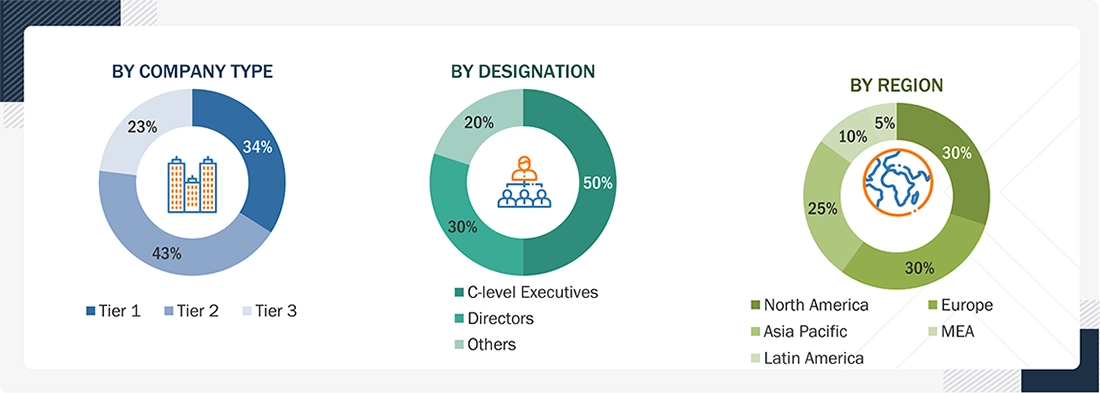
Note 1: Tier 1 companies have revenues of more than USD 10 billion; tier 2 companies’ revenue ranges from USD 1 billion to USD 10 billion; and tier 3 companies’ revenue ranges from USD 500 million to USD 1 billion
To know about the assumptions considered for the study, download the pdf brochure
Market Size Estimation
In the market engineering process, the top-down and bottom-up approaches were used, along with multiple data triangulation methods, to estimate and validate the size of the Fleet management Market and other dependent submarkets. The research methodology used to estimate market sizes includes the following:
- Initially, MarketsandMarkets focused on top-line investments and spending within the ecosystems. Further, significant developments in the critical market area have been considered
- Tracking recent and upcoming developments in the fleet management market, including investments, R&D activities, product launches, collaborations, mergers and acquisitions, and partnerships, and forecasting market size based on these developments and other critical parameters
- Conducting multiple discussions with key opinion leaders to learn about the types of authentication and brand protection offerings used and the applications for which they are used, and to analyze the breakdown of the scope of work carried out by major companies
- Segmenting the market by technology type and application, determining where each type is used, and deriving the size of the global fleet management market
- Segmenting the overall market into various market segments
- Validating the estimates at every level through discussions with key opinion leaders, such as chief executives (CXOs), directors, and operations managers, and finally with the domain experts at MarketsandMarkets
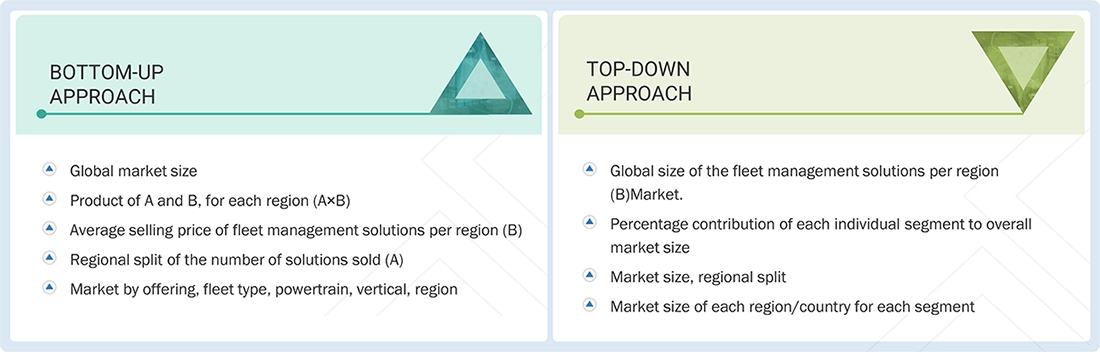
Data Triangulation
After arriving at the overall market size from the above estimation process, the fleet management market has been split into several segments and sub-segments. To complete the overall market engineering process and arrive at the exact statistics for all segments and sub-segments, data triangulation and market breakdown procedures have been used, wherever applicable. The data has been triangulated by studying various factors and trends from both the demand and supply sides.
Market Definition
Fleet management encompasses all actions required to keep a fleet running efficiently, on time, and within budget. It is the process fleet managers use to monitor fleet activities and make decisions about asset management, dispatch and routing, and vehicle acquisition and disposal. Fleet management helps ensure a fleet meets compliance requirements, continuously improves efficiency, and reduces costs. As an asset management discipline, fleet management enables companies to manage the entire fleet operation, resulting in controlled costs, maximized profitability, improved fleet efficiency, and mitigation of fleet-related risks and compliance with government regulations. The fleet management solution assists in organizing, managing, and coordinating fleet operations through a centralized information system. It uses connectivity technologies to enable data and information flow between fleets and back-end systems, accessible to fleet owners and managers.
According to Teletrac Navman, fleet management is a set of processes that enables organizations to see and manage all information associated with their vehicles and other assets, from acquisition through end of life. As technology has advanced, more businesses have turned to fleet management software to improve visibility into vehicle and asset utilization, enhance maintenance planning, and manage the cost of ownership.
Key Stakeholders
- Fleet associations
- Automotive suppliers
- Government agencies
- Cloud service providers
- Third-party logistics providers
- Transportation service providers
- Telematics device manufacturers
- Investors and venture capitalists
- Fleet management software providers
- Information Technology (IT) companies
- Fleet safety and compliance authorities
- Professional and managed service providers
- Value-added Resellers (VARs) and distributors
Report Objectives
- To determine, segment, and forecast the fleet management market on the basis of offering (solutions, and services), fleet type, powertrain vertical and region in terms of value
- To forecast the size of the market segments with respect to five main regions: North America, Europe, Asia Pacific, Middle East & Africa, and Latin America
- To provide detailed information about the major factors (drivers, restraints, opportunities, and challenges) influencing the growth of the market
- To study the complete value chain and related industry segments and perform a value chain analysis of the market landscape
- To strategically analyze the macro and micromarkets with respect to individual growth trends, prospects, and contributions to the total market
- To analyze the industry trends, pricing data, patents, and innovations related to the market
- To analyze the opportunities for stakeholders by identifying the high-growth segments of the market
- To profile key players in the market and comprehensively analyze their market share/ranking and core competencies
- To analyze competitive developments, such as mergers & acquisitions, product launches & developments, partnerships, agreements, collaborations, business expansions, and R&D activities.
Available customizations:
With the given market data, MarketsandMarkets offers customizations per the company’s specific needs. The following customization options are available for the report:
Geographic Analysis
- Further break-up of the Asia Pacific market into countries contributing 75% to the regional market size
- Further break-up of the North American market into countries contributing 75% to the regional market size
- Further break-up of the Latin American market into countries contributing 75% to the regional market size
- Further break-up of the Middle East African market into countries contributing 75% to the regional market size
- Further break-up of the European market into countries contributing 75% to the regional market size
Company Information
- Detailed analysis and profiling of additional market players (up to 5)
Key Questions Addressed by the Report
What is the projected size of the Fleet Management Market?
The global Fleet Management Market is projected to grow from USD 43.56 billion in 2026 to USD 88.49 billion by 2032, at a CAGR of 12.5% during the forecast period (2026–2032).
What is driving the growth of the Fleet Management Market?
The market is driven by the expanding scale of commercial vehicle operations across logistics, construction, utilities, and field services, along with increasing demand for cost control, regulatory compliance, and improved operational efficiency.
Which component is expected to grow the fastest in the Fleet Management Market?
The services segment is expected to register the highest growth rate during the forecast period, with a projected CAGR of 15.3%, driven by increasing demand for implementation, integration, consulting, and managed services.
Which fleet type is expected to witness the highest growth?
The commercial vehicles segment is projected to grow at the fastest rate between 2025 and 2030 due to increasing fleet digitization and the rising need for efficient fleet operations across commercial transportation industries.
Which region is expected to grow the fastest in the Fleet Management Market?
Asia Pacific is expected to be the fastest-growing regional market, supported by the rapid expansion of commercial vehicle fleets and increasing adoption of digital fleet management technologies across emerging economies.
Which powertrain segment is expected to dominate the Fleet Management Market?
The internal combustion engine (ICE) segment is expected to dominate the Fleet Management Market during the forecast period due to its large installed vehicle base across commercial fleet operations.
Fact checked
Personalize This Research
- Triangulate with your Own Data
- Get Data as per your Format and Definition
- Gain a Deeper Dive on a Specific Application, Geography, Customer or Competitor
- Any level of Personalization
Let Us Help You
- What are the Known and Unknown Adjacencies Impacting the Fleet Management Market
- What will your New Revenue Sources be?
- Who will be your Top Customer; what will make them switch?
- Defend your Market Share or Win Competitors
- Get a Scorecard for Target Partners

Custom Market Research Services
We Will Customise The Research For You, In Case The Report Listed Above Does Not Meet With Your Requirements
Get 10% Free CustomisationTESTIMONIALS
- Canada Fleet Management Market
- US Fleet Management Market
- Italy Fleet Management Market
- China Fleet Management Market
- Brazil Fleet Management Market
- France Fleet Management Market
- Germany Fleet Management Market
- Rest Of Europe Fleet Management Market
- Spain Fleet Management Market
- UK Fleet Management Market






Growth opportunities and latent adjacency in Fleet Management Market