Food Enzymes Market Size, Share & Growth Forecast 2026-2031

Food Enzymes Market by Type (Carbohydrases, Proteases, Lipases, Polymerases, Nucleases), Application (Food, Beverages), Source (Microorganisms, Animals, Plants), Formulation, Functional Role, and Region - Global Forecast to 2031




OVERVIEW
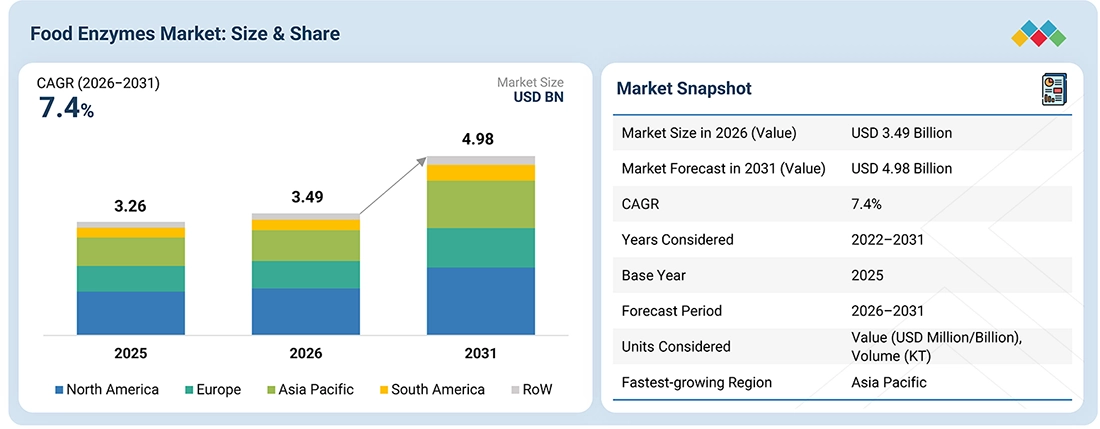
The food enzymes market is projected to reach USD 4.98 billion by 2031 from USD 3.49 billion in 2026, at a CAGR of 7.4%. The expanding food processing sector in Asia Pacific countries is a significant driver, with enzymes playing a crucial role in enhancing production efficiency and product quality.
Source: Secondary Research, Interviews with Experts, MarketsandMarkets Analysis
KEY TAKEAWAYS
-
By RegionThe Asia Pacific region is projected to register the highest CAGR of 9.3% during the forecast period.
-
By TypeCarbohydrases are expected to dominate the food enzymes market with the largest market share.
-
By SourceThe plant segment is expected to register the highest CAGR of 8.2% during the forecast period.
-
By ApplicationBeverage applications are expected to grow at the fastest rate of CAGR of 8.1% for the forecasted period.
-
By FormulationLyophilized powder is expected to hold the largest market share in the food enzymes market for the forecasted period.
-
COMPETITIVE LANDSCAPE - KEY PLAYERSInternational Flavors and Fragrances Inc. (US), Associated British Foods plc (UK), dsm-firmenich (Netherlands), Novonesis Group (Denmark), and Kerry Group plc (Ireland) are some of the star companies identified in the food enzymes market.
-
COMPETITIVE LANDSCAPE - STARTUPS/SMESSunson Industry Group Co., Ltd. (China), Aumgene Biosciences (Bioscience), and Futura Ingredients (Singapore) are progressive startups/SMEs operating in the food enzymes market.
The food enzymes market is being shaped by the increasing use of enzyme-based processing across bakery & confectionery, dairy, meat products, beverages, nutraceuticals, and other food applications. Food manufacturers are adopting enzymes to address specific processing requirements, including improving texture and consistency, enhancing yields, supporting flavor development, and extending product shelf life. The shift toward clean-label and minimally processed products is further encouraging the use of enzymes as processing aids.
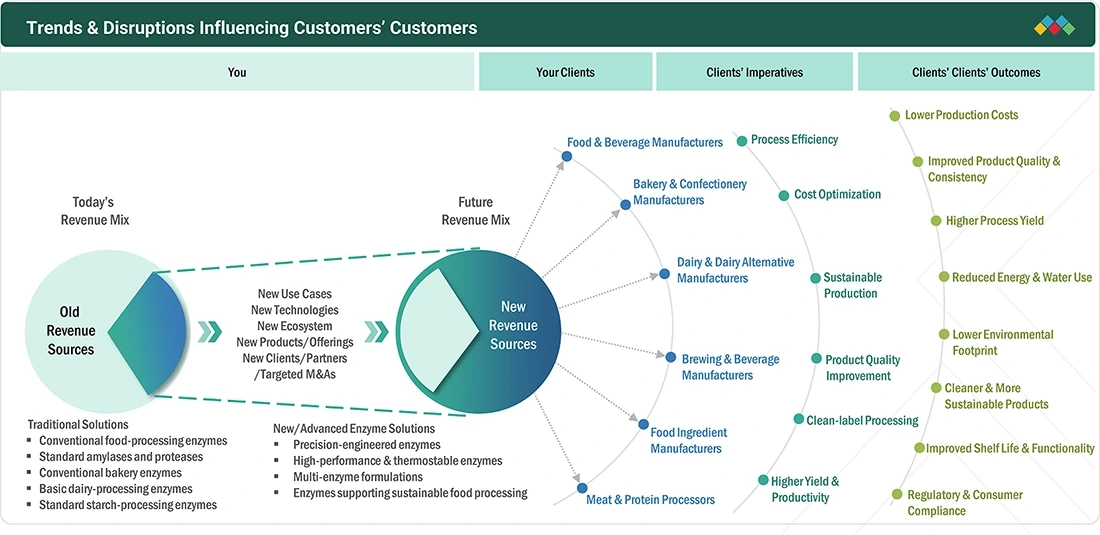
TRENDS & DISRUPTIONS IMPACTING CUSTOMERS' CUSTOMERS
Changes in consumer trends or industry disruptions influence the operations of food and beverage companies. These shifts impact the revenues of end users such as bakery, dairy, and processed food manufacturers. Consequently, the revenue impact on end users is expected to affect the demand for food enzymes, thereby influencing the revenues of food enzyme suppliers and manufacturers.
Source: Secondary Research, Interviews with Experts, MarketsandMarkets Analysis
MARKET DYNAMICS

Level
-
Growth in clean-label & natural ingredient trends

-
Advancements in enzyme engineering & biotechnology


Level
-
Enzyme instability

-
High production & development cost


Level
-
Functional/fortified food innovations

-
Plant-based & alternative protein growth


Level
-
Difficulty of preserving enzyme functionality

-
Scale-up challenges from lab to commercial production

Source: Secondary Research, Interviews with Experts, MarketsandMarkets Analysis
Driver: Growth in clean-label & natural ingredient trends
The rising demand for clean-label and natural ingredients is emerging as a significant driver in the food enzymes market. As consumers increasingly prioritize transparency, health, and sustainability in their food choices, manufacturers are under pressure to eliminate artificial additives and adopt more natural, easily recognizable ingredients. Enzymes, being naturally derived and often exempt from mandatory labeling, present an ideal solution—enabling improvements in product texture, shelf life, and processing efficiency without compromising label simplicity or consumer trust. Strategic industry developments further reinforce this shift.
Restraint: Enzyme instability
Enzyme instability, particularly under high-temperature conditions, poses a significant restraint for the food enzymes market. For instance, wild-type amylases derived from Bacillus spp. exhibit thermal instability, losing substantial activity above 80–90°C—limiting their effectiveness in industrial processes like starch liquefaction and saccharification. The inability to maintain consistent enzyme activity across varied food manufacturing conditions restricts scalability and broader adoption, hindering the market’s growth until more thermally stable and commercially viable enzyme variants become available.
Opportunity: Functional/fortified food innovations
The rising demand for functional and fortified food products is creating substantial growth opportunities for the food enzymes market. With consumers increasingly focused on nutrition-rich, value-added staples, enzymes are emerging as essential tools to enhance protein quality and nutrient bioavailability. Utilizing protease enzymes, the protein profile of wheat flour is improved through increased availability of essential amino acids such as lysine, addressing nutritional gaps, particularly in regions prone to protein deficiency. This innovation aligns with broader industry trends toward functional foods that deliver both health benefits and performance.
Challenge: Difficulty of preserving enzyme functionality
A critical challenge facing the food enzymes market is the difficulty of preserving enzyme functionality across diverse processing conditions. Enzymes are inherently sensitive to factors such as heat, pH variations, and moisture levels—common in industrial food manufacturing environments. In high-temperature processes like baking, pasteurization, or extrusion, enzyme denaturation can occur before their intended function is fully realized, leading to inconsistent product outcomes. To address this, manufacturers often require specialized delivery systems such as encapsulation or controlled-release formulations, which add complexity and increase production costs.
FOOD ENZYMES MARKET: COMMERCIAL USE CASES ACROSS INDUSTRIES
| COMPANY | USE CASE DESCRIPTION | BENEFITS |
|---|---|---|
 |
Novonesis develops enzyme solutions for key food-processing applications, particularly dairy, baking, brewing, and other food & beverage products. Its lactase enzymes are used to hydrolyze lactose in dairy products, while other enzyme solutions support processing efficiency, texture, product consistency, and quality. The company combines enzyme technology and fermentation expertise to develop application-specific solutions for food manufacturers. | Enables lactose-free and reduced-lactose products, improves processing efficiency and product consistency, and helps manufacturers develop products aligned with changing consumer preferences |
 |
Kerry provides enzyme solutions for food and beverage applications, including fruit juice processing and fermentation. Its enzymes support the breakdown and modification of food components during processing, helping manufacturers improve clarification, extraction, fermentation performance, and overall product quality. These solutions are integrated with Kerry's broader food ingredient and biotechnology expertise to address specific processing requirements. | Improves juice yield and clarification, supports efficient fermentation, enhances product consistency, and helps manufacturers optimize processing performance and raw material utilization |
 |
dsm-firmenich supplies enzyme solutions for food applications, including lipases used in cheese making and flavor development. Lipase enzymes facilitate the controlled hydrolysis of milk fat during cheese production and maturation, contributing to the development of desired flavor characteristics. The company uses its enzyme and food application expertise to develop solutions suited to specific dairy-processing requirements. | Supports controlled flavor development and cheese maturation, improves product consistency, and enables manufacturers to achieve targeted sensory characteristics in dairy products |
Logos and trademarks shown above are the property of their respective owners. Their use here is for informational and illustrative purposes only.
MARKET ECOSYSTEM
The food enzymes market ecosystem involves interconnected relationships among key stakeholders, including raw material suppliers, enzyme manufacturers, distributors, and end users across food and beverage industries. Raw material suppliers provide microbial, plant, or animal-based sources used in enzyme production. Manufacturers process these inputs into specific enzyme formulations such as amylases, proteases, and lipases. Distributors and suppliers act as intermediaries, linking manufacturers with end users like bakeries, dairy processors, and beverage companies, thereby streamlining the supply chain to enhance efficiency, product quality, and profitability.
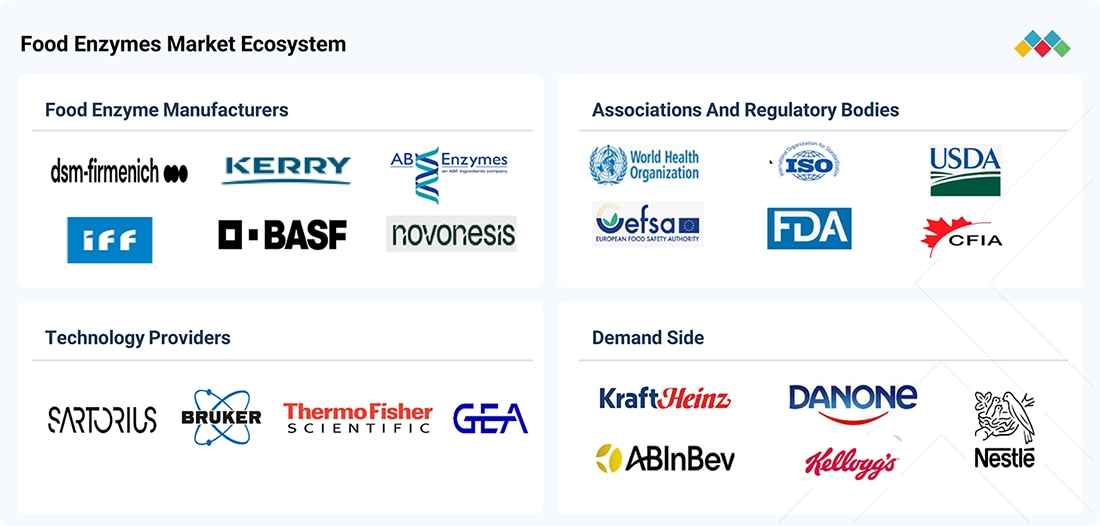
Logos and trademarks shown above are the property of their respective owners. Their use here is for informational and illustrative purposes only.
MARKET SEGMENTS
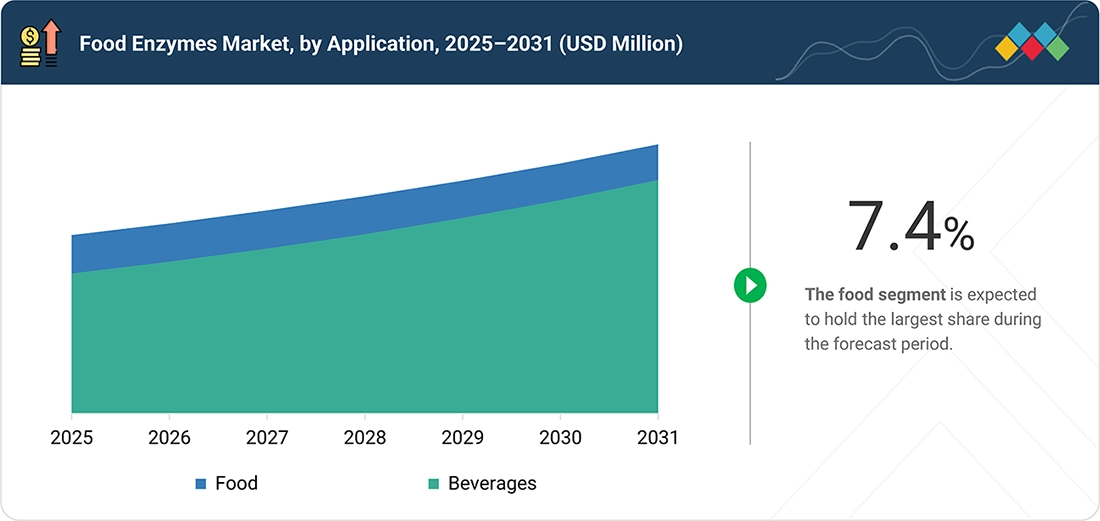
Source: Secondary Research, Interviews with Experts, MarketsandMarkets Analysis
Food Enzymes Market, by Type
Carbohydrases, as a crucial class of enzymes, play a significant role in the food industry, specifically in enhancing the texture and flavor of various products. Their extensive application in bakery and confectionery allows for improved dough manipulation and fermentation processes, leading to superior baked goods. In the dairy sector, these enzymes aid in lactose reduction, making products more digestible for lactose-intolerant consumers. The beverage industry also benefits from carbohydrases, as they facilitate the clarification and stabilization of drinks, ensuring a visually appealing final product. As demand for processed foods continues to rise globally, the market for carbohydrases is expected to grow correspondingly, cementing their position as a key ingredient in food processing.
Food Enzymes Market, by Source
Microorganisms play a pivotal role in various industrial applications, primarily due to their ability to scale up production processes efficiently. Their consistent enzyme production ensures high-quality outputs, making them ideal for sectors such as pharmaceuticals, food, and biofuels. Moreover, the controlled fermentation processes they facilitate allow for precise manipulation of conditions, leading to optimized yields. As industries continue to prioritize sustainability and innovation, the use of microorganisms is likely to expand, further solidifying their dominance in the market.
Food Enzymes Market, by Application
The rising demand for high-quality beverages has led to a significant increase in the use of enzymes in various production processes, enhancing the overall flavor and texture of products. Additionally, enzymes play a crucial role in improving processing efficiency, reducing waste, and optimizing the extraction of flavors and nutrients from raw materials. As consumers continue to prioritize health and quality, the beverage industry is expected to invest more in enzyme technologies, further fueling this growth trend.
Food Enzymes Market, by Formulation
Other formulations are expected to register the highest CAGR during the forecast period, supported by demand for specialized enzyme delivery formats designed to improve stability, handling, dosing, and application performance.
REGION
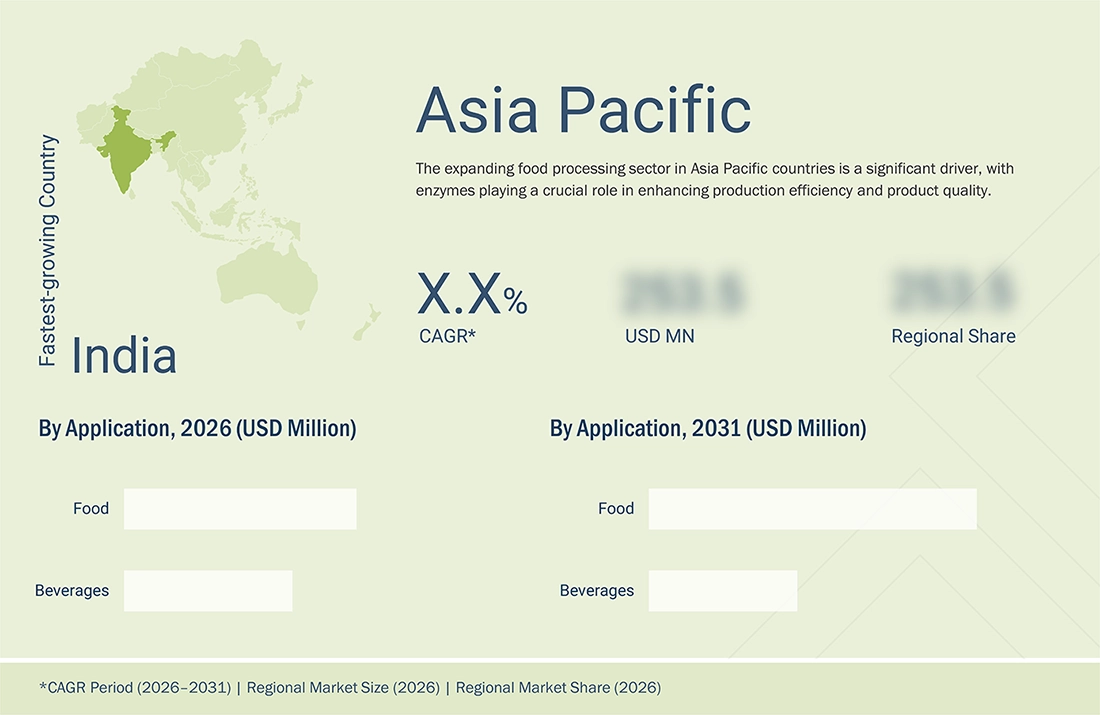
Asia Pacific is projected to grow at the highest CAGR
The Asia Pacific region is poised to experience robust growth driven by several key factors. The expanding food processing industry in countries such as China and India is a significant catalyst, as these nations seek to enhance efficiency and quality to meet increasing consumer expectations. Coupled with a surge in global food demand, particularly from a burgeoning population and changing dietary preferences, the region is witnessing an uptick in the adoption of food enzymes. These enzymes play a crucial role in improving food preservation, flavor enhancement, and nutritional value, making them increasingly attractive to manufacturers looking to innovate and stay competitive. As emerging economies continue to invest in technology and infrastructure, the synergy between food processing advancements and enzyme utilization positions the Asia Pacific as a dynamic landscape for future growth in the food sector.
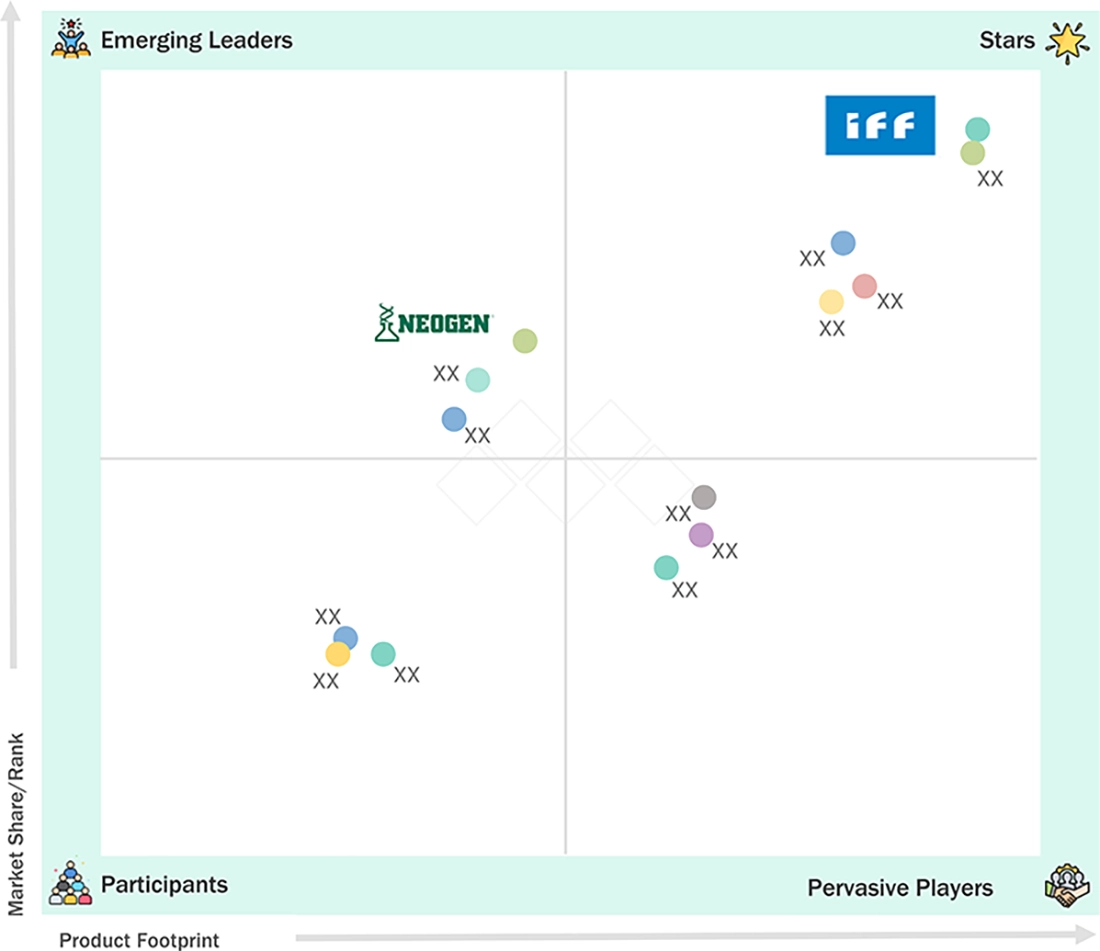
FOOD ENZYMES MARKET: COMPANY EVALUATION MATRIX
In the food enzymes market matrix, International Flavors and Fragrances Inc. (US), Associated British Foods plc (UK), dsm-firmenich (Netherlands), and Novonesis Group (Denmark) are identified as star players, supported by their strong global presence, extensive food enzyme portfolio, broad application coverage, and integrated R&D and manufacturing capabilities. Meanwhile, ADM (US), Advanced Enzyme Technologies (India), Neogen Corporation (US), and Lesaffre Corporation (France) are emerging leaders, strengthening their market positions through diversified food and beverage enzyme portfolios, application-specific solutions, customer partnerships, advanced technology capabilities, and expansion across various applications and types.
Source: Secondary Research, Interviews with Experts, MarketsandMarkets Analysis
KEY MARKET PLAYERS
- International Flavors and Fragrances Inc. (US)
- Associated British Foods plc (UK)
- dsm-firmenich (Netherlands)
- Novonesis Group (Denmark)
- Kerry Group plc (Ireland)
- ADM (US)
- Advanced Enzyme Technologies (India)
- Boli Bioproducts (China)
- Amano Enzyme Inc. (Japan)
- Lesaffre Corporation (France)
- Neogen Corporation (US)
- Enzyme Development Corporation (US)
- Lallemand Inc (Canada)
- K-Genix Group (India)
- Biocatalysts (UK)
MARKET SCOPE
| REPORT METRIC | DETAILS |
|---|---|
| Market Size in 2025 (Value) | USD 3.26 Billion |
| Market Size in 2026 (Value) | USD 3.49 Billion |
| Market Forecast in 2031 (Value) | USD 4.98 Billion |
| Growth Rate | CAGR of 7.4% from 2026 to 2031 |
| Years Considered | 2022–2031 |
| Base Year | 2025 |
| Forecast Period | 2026–2031 |
| Units Considered | Value (USD Million/Billion), Volume (KT) |
| Report Coverage | Revenue Forecast, Company Ranking, Competitive Landscape, Growth Factors, and Trends |
| Segments Covered |
|
| Regions Covered | North America, Asia Pacific, Europe, South America, Rest of the World (RoW) |
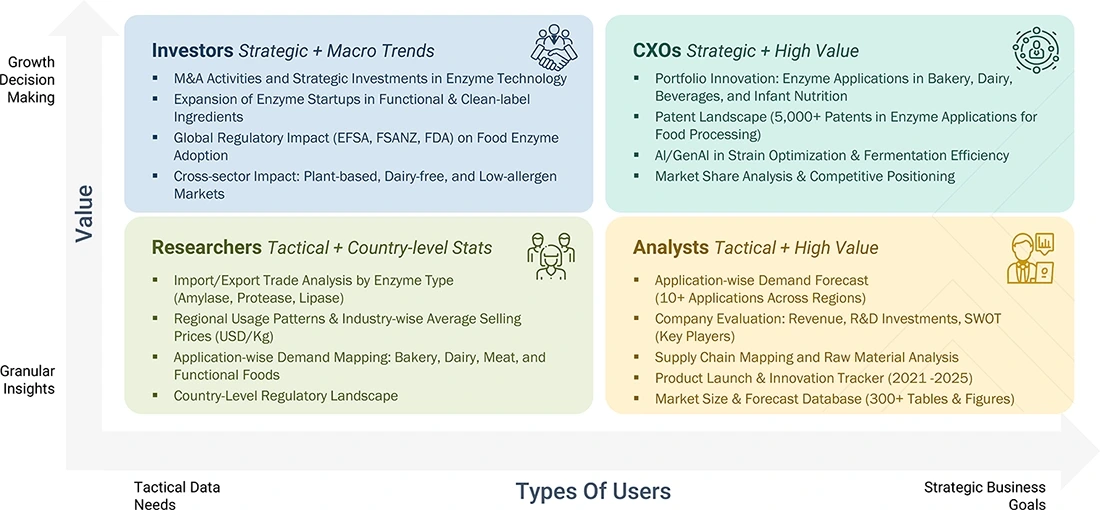
WHAT IS IN IT FOR YOU: FOOD ENZYMES MARKET REPORT CONTENT GUIDE
DELIVERED CUSTOMIZATIONS
We have successfully delivered the following deep-dive customizations:
| CLIENT REQUEST | CUSTOMIZATION DELIVERED | VALUE ADDS |
|---|---|---|
| FoodEnzymes Market | Detailed analysis of food enzyme types, sources, applications, formulations, functional roles, competitive landscape, and company benchmarking |
|
| Food Enzymes Market Assessment |
|
|
RECENT DEVELOPMENTS
- October 2024 : Lesaffre Corporation completed the acquisition of dsm-firmenich’s yeast extract business, integrating yeast-derivative processing technologies, products, and 46 employees into its Biospringer business unit. The acquisition strengthened Lesaffre’s fermentation capabilities and expanded its ability to serve customers across savory ingredients and other fermentation-based applications through its global manufacturing and supply network.
- June 2024 : Lallemand acquired BASF's bioenergy enzymes business, including the Spartec portfolio and related pipeline technologies, through its subsidiaries Danstar Ferment AG and Lallemand Specialties Inc. The business was integrated into Lallemand Biofuels & Distilled Spirits (LBDS), expanding its enzyme portfolio and strengthening its capabilities in fuel ethanol and distilled spirits applications.
- December 2023 : Kerry Group plc agreed to acquire the global lactase enzymes business for EUR 150 million (USD 162.3 million), adding NOLA lactase technology and strengthening its enzyme solutions for lactose-free and sugar-reduced dairy products.
Table of Contents
 Exclusive indicates content/data unique to MarketsandMarkets and not available with any competitors.
Methodology
This study employed two primary approaches to estimate the current size of the food enzymes market. Exhaustive secondary research was carried out to collect information on the type, source, application, functional role, and formulation of the market. The next step involved validating these findings, assumptions, and sizing with industry experts across the value chain through primary research. The top-down and bottom-up approaches were employed to estimate the complete market size. Thereafter, data triangulation was used to estimate the market size of segments and subsegments.
Secondary Research
This research study used extensive secondary sources—directories and databases such as Bloomberg Businessweek and Factiva—to identify and collect information for a technical, market-oriented, and commercial market study. In the secondary research process, sources such as annual reports, press releases & investor presentations of companies, white papers, enzymes and enzyme technology-related journals, certified publications, articles from recognized authors, directories, and databases were referred to identify and collect information. Secondary research was mainly used to obtain key information about the industry’s supply chain, the pool of key players, and market classification and segmentation based on industry trends to the bottom-most level, regional markets, and key developments from market- and technology-oriented perspectives.
Primary Research
Extensive primary research was conducted after obtaining information regarding the food enzymes market scenario through secondary research. Several primary interviews were conducted with market experts from the demand and supply sides across all regions. Primary data was collected through questionnaires, emails, and telephonic interviews. The primary sources from the supply side included various industry experts, such as chief experience officers (CXOs), vice presidents (VPs), directors from business development, marketing, research, and development teams, and related key executives from distributors and key opinion leaders.
Primary interviews were conducted to gather insights, including market statistics, revenue data from products and services, market breakdowns, market size estimations, market forecasting, and data triangulation. Primary research also helped to understand the various trends related to type, source, application, formulation, functional role, and region. Stakeholders from the demand side were suppliers, and to understand the buyers’ perspective on suppliers, products, and the outlook for their business, which will impact the overall market.
Breakdown of Primary Interviews
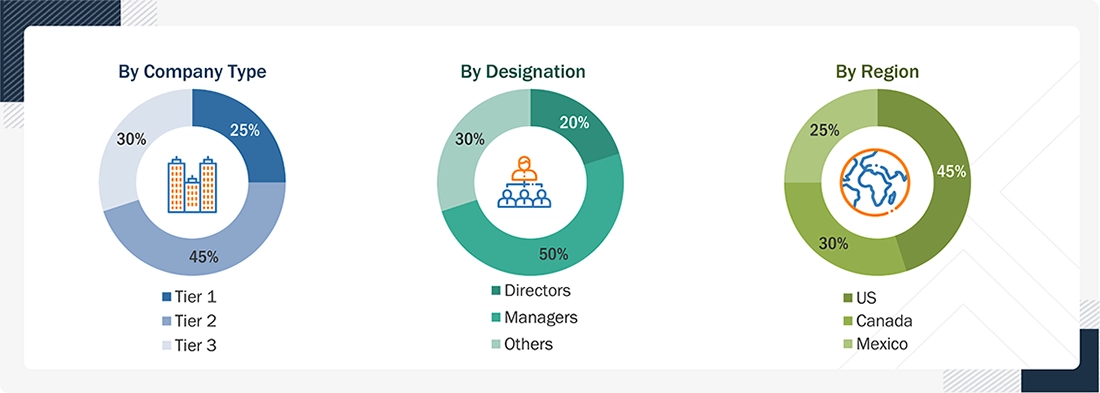
Note: The three tiers of the companies are defined based on their total revenues in 2024 or 2025, based on the availability of financial data: Tier 1: Revenue >USD 1 billion; Tier 2: USD 100 million ≤ revenue ≤ USD 1 billion; Tier 3: Revenue <USD 100 million.
|
COMPANY |
DESIGNATION |
|
ADM (US) |
Regional Sales Manager |
|
International Flavors & Fragrances Inc. (US) |
Marketing Manager |
|
dsm-firmenich (Switzerland) |
General Manager |
|
Associated British Foods plc (England) |
Sales Manager |
|
Novonesis Group (Denmark) |
Sales Manager |
|
Kerry Group plc (Ireland) |
Sales Executive |
To know about the assumptions considered for the study, download the pdf brochure
Market Size Estimation
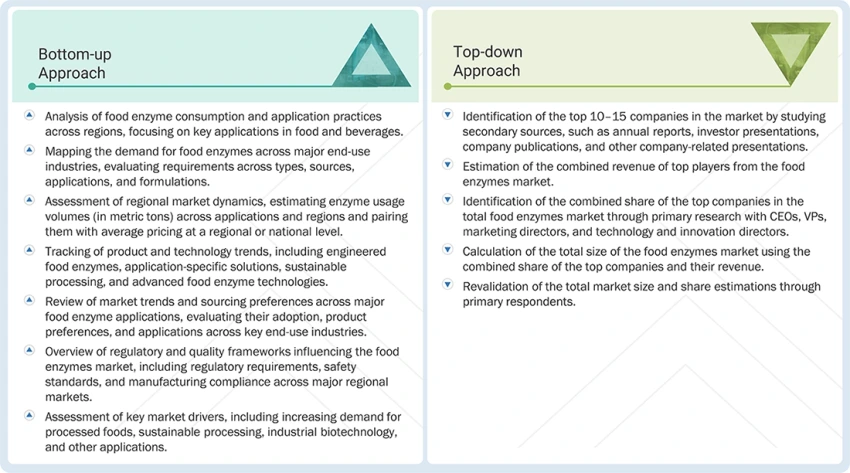
The top-down and bottom-up approaches were used to estimate and validate the total size of the food enzymes market. These approaches were also used extensively to determine the size of various subsegments in the market. The research methodology used to estimate the market size includes the following details:
- The key players in the industry and the overall market were identified through extensive secondary research.
- All shares, splits, and breakdowns were determined using secondary sources and verified through primary sources.
- All possible parameters that affect the market covered in this research study were accounted for, viewed in extensive detail, verified through primary research, and analyzed to obtain final quantitative and qualitative data.
- The research included the study of reports, reviews, and newsletters of top market players, along with extensive interviews for opinions from leaders, such as CEOs, directors, and marketing executives.
Food Enzymes Market : Top-Down and Bottom-Up Approach
Data Triangulation
After determining the overall market size from the estimation process explained above, the total market was split into several segments and subsegments. The data triangulation procedure was employed, wherever applicable, to estimate the overall food enzymes market and obtain precise statistics for all segments and subsegments. The data were triangulated by studying various factors and trends from the demand and supply sides. The market size was also validated using the top-down and bottom-up approaches.
Market Definition
According to the European Food Safety Authority (EFSA), “Enzymes are protein molecules that are present in all living things. They speed up and target chemical reactions, in many cases increasing the rate of reaction millions of times. For example, they aid digestion, metabolize and eliminate waste in humans and animals, and play a crucial role in muscle contraction.”
Key Stakeholders
-
Enzyme raw material suppliers
-
Food enzyme manufacturers
-
Specialty enzyme manufacturers
-
Intermediate suppliers, such as traders and distributors of enzymes
-
Government and research organizations
-
Associations and industry bodies:
- European communities
- World Health Organization (WHO)
- Association of Manufacturers & Formulators of Enzyme Products (AMFEP)
- Enzyme Technical Association (ETA)
- OECD-FAO Agricultural Outlook
- United States Department of Agriculture (USDA)
Report Objectives
- To determine, define, and project the size of the food enzymes market, with respect to type, source, formulation, application, functional role, and regional markets, over a five-year period, ranging from 2026 to 2031
- To identify the attractive opportunities in the market by determining the largest and fastest-growing segments across regions
- To provide detailed information about the key factors influencing the growth of the market (drivers, restraints, opportunities, and challenges)
- To analyze the micro markets with respect to individual growth trends, prospects, and their contribution to the total market
- To strategically profile key market players and comprehensively analyze their core competencies in each segment
- To track and analyze competitive developments, such as alliances, joint ventures, new product developments, mergers, and acquisitions, in the food enzymes market
Available customizations:
With the given market data, MarketsandMarkets offers customizations according to company-specific scientific needs. The following customization options are available for the report:
Product Analysis
-
Product matrix, which gives a detailed comparison of the product portfolio of each company.
Segmental Analysis
With the given market data, MarketsandMarkets offers customizations according to company-specific scientific needs.
- Further breakdown of other types of food enzymes market by type
- Further breakdown of other functional roles of food enzymes
Company Information
-
Detailed analyses and profiling of additional market players (up to five)
Key Questions Addressed by the Report
What is the size of the food enzymes market?
The food enzymes market is projected to reach USD 4.98 billion by 2031, growing from USD 3.49 billion in 2026, at a CAGR of 7.4% from 2026 to 2031.
What are the key factors driving the food enzymes market?
The food enzymes market is driven by the growing demand for clean-label and natural ingredients, along with advancements in enzyme engineering and biotechnology. Food enzymes help manufacturers improve processing efficiency, product quality, texture, flavor, yield, and shelf life.
Which type of food enzyme is expected to dominate the market?
Carbohydrases are expected to account for the largest market share during the forecast period. They are widely used in applications such as bakery and confectionery, dairy, and beverages.
Which source segment is expected to grow at the highest rate in the food enzymes market?
The plant source segment is projected to register the highest CAGR of 8.2% during the forecast period.
Which region is expected to have the highest growth rate in the food enzymes market?
Asia Pacific is projected to register the highest CAGR of 9.3% during the forecast period. Growth is supported by the expanding food processing industries in countries such as China and India and increasing adoption of enzyme technologies.
What opportunities exist in the food enzymes market?
Key opportunities include the development of functional and fortified foods and the growth of plant-based and alternative protein products. Enzymes can support improvements in protein quality, nutrient bioavailability, and food-processing performance.
Who are the key players in the food enzymes market?
Key companies identified on the MarketsandMarkets page include International Flavors and Fragrances Inc., Associated British Foods plc, dsm-firmenich, Novonesis Group, Kerry Group plc, ADM, Advanced Enzyme Technologies, Boli Bioproducts, Amano Enzyme Inc., Lesaffre Corporation, Neogen Corporation, Enzyme Development Corporation, Lallemand Inc., K-Genix Group, and Biocatalysts.


Personalize This Research
- Triangulate with your Own Data
- Get Data as per your Format and Definition
- Gain a Deeper Dive on a Specific Application, Geography, Customer or Competitor
- Any level of Personalization
Let Us Help You
- What are the Known and Unknown Adjacencies Impacting the Food Enzymes Market
- What will your New Revenue Sources be?
- Who will be your Top Customer; what will make them switch?
- Defend your Market Share or Win Competitors
- Get a Scorecard for Target Partners

Custom Market Research Services
We Will Customise The Research For You, In Case The Report Listed Above Does Not Meet With Your Requirements
Get 10% Free CustomisationTESTIMONIALS

Business Innovation Director
US Based Leading Agribusiness,
Food and Ingredients ManufacturerI highly appreciate the team's efficiency for a well conducted study that helped us clarify some blind spots in food and agricultural niche markets. Although compiling information for B2B markets is very difficult, the MnM team pulled out the task successfully. The quality of research, level of insights, and responsiveness of team were commendable.
- Rest Of Europe Food Enzymes Market
- US Food Enzymes Market
- Canada Food Enzymes Market
- Mexico Food Enzymes Market
- Germany Food Enzymes Market
- France Food Enzymes Market
- Italy Food Enzymes Market
- Spain Food Enzymes Market
- UK Food Enzymes Market
- China Food Enzymes Market
- India Food Enzymes Market
- Japan Food Enzymes Market
- South Korea Food Enzymes Market
- Malaysia Food Enzymes Market
- Singapore Food Enzymes Market
- Indonesia Food Enzymes Market
- Vietnam Food Enzymes Market
- Philippines Food Enzymes Market
- Brazil Food Enzymes Market
- Argentina Food Enzymes Market






Growth opportunities and latent adjacency in Food Enzymes Market