
India 3D Cell Culture Market (2025-2030)

The India 3D Cell Culture Market was valued at $27 Million in 2025 and projected to reach to $50 Million by 2030, representing a compound annual growth rate of 13.1%. India's 3D cell culture market is positioned for significant growth, expanding from $27.0 million in 2025 to $50.0 million by 2030.


| Market Size in | USD 26.32 MN |
| Market Forecast in | |
| CAGR | |
| Forecast Period | |
| Units Considered | Value (USD MN) |
India 3D Cell Culture Market Trends and Insights
- India is emerging as a significant hub for advanced cell culture technologies, driven by increasing investments in biotechnology research, pharmaceutical development, and regenerative medicine initiatives.
- The growth trajectory reflects India's strengthening position within the Asia Pacific region as a center for life sciences innovation and contract research services. The expansion of India's 3D cell culture market is underpinned by rising demand from pharmaceutical companies, academic institutions, and contract research organizations seeking cost-effective solutions for drug discovery and toxicology testing.
- India's growing biotechnology sector, coupled with government support for healthcare innovation and skilled workforce availability, positions the country as an attractive market for 3D cell culture adoption.
- Between 2025 and 2030, India is expected to capture increasing market share as local manufacturers and international players establish operations to serve both domestic and regional demand..
Key Market Statistics
- CAGR (2025-2030) 13.1% CAGR
- Market Size, 2025 ~USD 27 Million
- Forecast, 2030 ~USD 50 Million
- Country India
India 3D Cell Culture Market Overview
Rapid Market Expansion :
India's 3D cell culture market is growing at 13.1% CAGR, outpacing the global rate of 11.7%, driven by increased R&D investments and pharmaceutical sector modernization across major biotech hubs.
Government Support & Initiatives :
Indian government's focus on biotechnology through schemes like Make in India and Startup India is accelerating adoption of advanced cell culture technologies in research institutions and pharmaceutical companies.
Rising Regenerative Medicine Demand :
Growing interest in stem cell research, tissue engineering, and personalized medicine in India is creating substantial demand for 3D cell culture platforms among academic and clinical research centers.
Cost-Effective Manufacturing Hub :
India's competitive advantage in biotech manufacturing and research services is attracting global pharmaceutical companies to establish 3D cell culture facilities, boosting local market growth.
India 3D Cell Culture Market Dynamics
- This expansion is fueled by increasing biotechnology investments, growing pharmaceutical R&D activities, and rising adoption of advanced cell culture technologies in drug discovery and development.
- The country's emerging status as a biotech innovation hub, combined with government support and cost advantages, creates favorable conditions for market players. Key drivers include expanding research collaborations between Indian institutions and global pharmaceutical companies, rising demand for personalized medicine solutions, and increasing focus on regenerative medicine applications.
- With a growing number of biotech startups and established pharmaceutical companies investing in 3D cell culture capabilities, India is expected to become a critical market for cell culture technology providers and service providers in the coming years..
Market Ecosystem
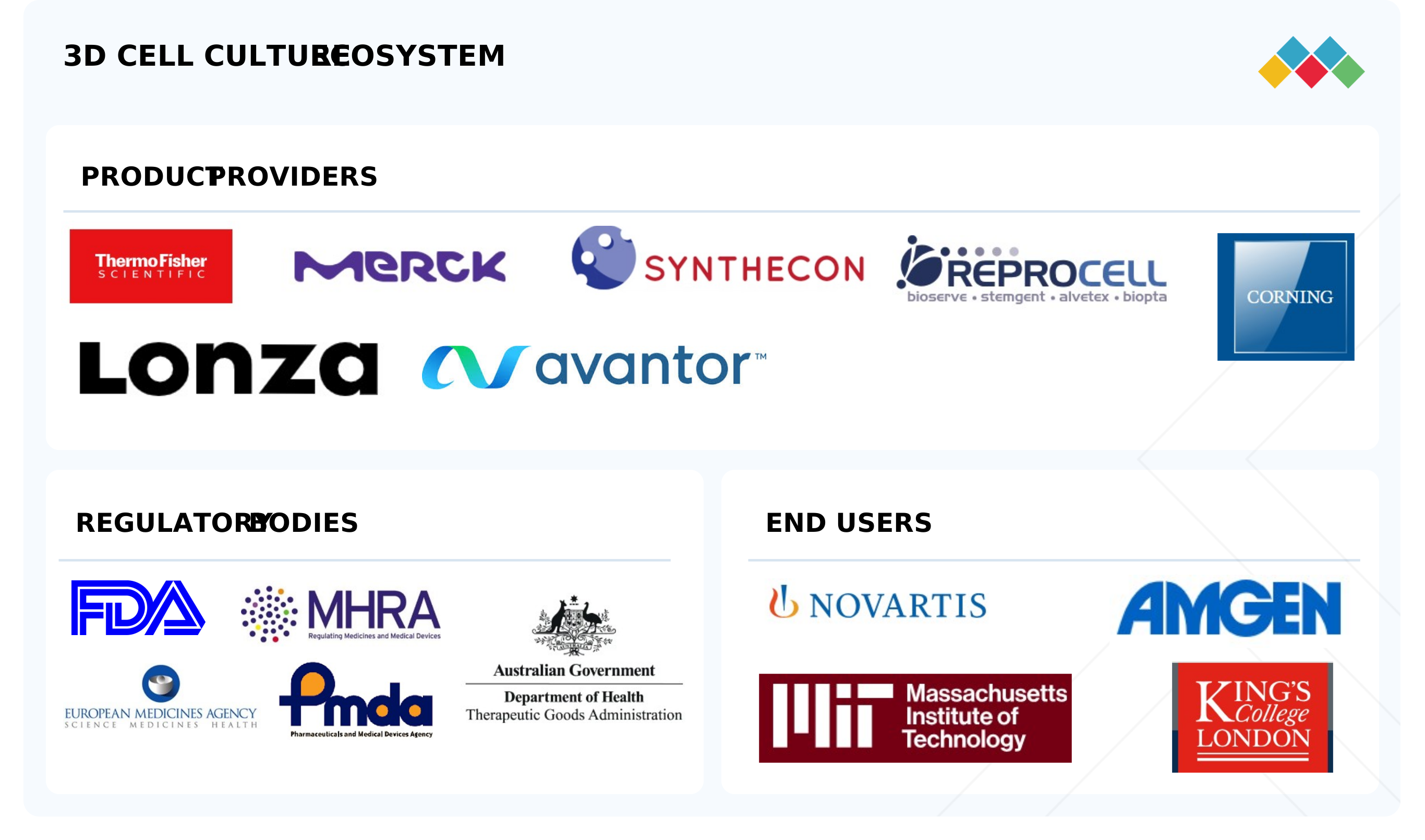
3D Cell Culture Market: COMMERCIAL USE CASES ACROSS INDUSTRIES
| COMPANY | USE CASE DESCRIPTION | BENEFITS |
|---|---|---|
 |
Integrated automated workflows using Akura PLUS Hanging Drop Plates and Akura 96 Spheroid Plates for scalable production of 3D microtissues | Enhanced reproducibility and throughput in drug discovery, enabling consistent generation of complex 3D models for predictive toxicity and efficacy testing |
 |
Collaborated with SPT Labtech to automate forskolin-induced swelling assays of human intestinal organoids using Dragonfly Discovery dispensing technology and Corning Matrigel matrix | Streamlined high-throughput screening of gastrointestinal drug candidates, improving efficiency and consistency in organoid-based assays |
Logos and trademarks shown above are the property of their respective owners. Their use here is for informational and illustrative purposes only.
Related Ecosystem
Biotechnology
- Reagents
- Polymerase Chain Reaction (PCR)
- Stem Cells
- Assay Kits
- Flow Cytometers
- Thermo Fisher Scientific Inc.
- Merck KGaA
- Danaher Corporation
- Agilent Technologies, Inc.
- Bio-Rad Laboratories, Inc.
Key Takeaways
- India's 3D cell culture market is valued at $27.0 million in 2025 and is forecast to grow to $50.0 million by 2030 at a 13.1% CAGR.
- India's cost-effective research capabilities and growing biotechnology sector are driving adoption of 3D cell culture technologies across pharmaceutical and academic institutions.
- Government initiatives supporting healthcare innovation and a skilled scientific workforce position India as a regional leader in advanced cell culture solutions.
- India's market growth outpaces the global average, reflecting increasing demand from contract research organizations and domestic pharmaceutical companies.
3D Cell Culture Market Report Scope
| Report Metric | Details |
|---|---|
| Base Year | 2025 |
| Fastest Growing Segment | CANCER & STEM CELL RESEARCH (Application) |
| Forecast Period | 2025–2030 |
| Growth Rate | CAGR of 11.7% from 2025 to 2030 |
| Largest Segment | PHARMACEUTICAL & BIOTECHNOLOGY COMPANIES (End User) |
| Market Size Base Year (Billions) | ~USD 1.3 (2025) |
| Revenue Forecast (Billions) | ~USD 2.26 (2030) |
| Segments Covered | Type, Application, Model Type, End User |
India 3D Cell Culture Market Report Segmentation
4 segment dimensions are covered across the global market.
By Type
- 3D Bioreactors
- 3D Petri Dishes
- Hanging Drop Plates
- Hydrogels/Ecm Analogs
- Low-Attachment Plates
- Magnetic & Bioprinted 3D Cell Cultures
- Microfluidics-Based 3D Cell Cultures
- Micropatterned Surfaces
- Scaffold-Based 3D Cell Cultures
- Scaffold-Free 3D Cell Cultures
- Solid Scaffolds
By Application
- Cancer & Stem Cell Research
- Drug Discovery & Toxicology Testing
- Tissue Engineering & Regenerative Medicine
By Model Type
- Engineered Tissues/Bioconstructs
- Organ-On-Chip
- Organoids
- Spheroids
By End User
- Cosmetics Industry
- Other End Users
- Pharmaceutical & Biotechnology Companies
- Research Institutes
INDIA: 3D CELL CULTURE MARKET, BY END USER, 2023–2030
| Segment | 2023 | 2024 | 2025 | 2026 | 2027 | 2028 | 2029 | 2030 | CAGR (%) |
|---|---|---|---|---|---|---|---|---|---|
| COSMETICS INDUSTRY | 2.9 | 3 | 3.3 | 3.6 | 3.9 | 4.3 | 4.8 | 5.4 | 10.3 |
| OTHER END USERS | 2 | 2.1 | 2.3 | 2.5 | 2.7 | 2.9 | 3.2 | 3.6 | 9.8 |
| PHARMACEUTICAL & BIOTECHNOLOGY COMPANIES | 25.2 | 27 | 30.1 | 33.7 | 37.9 | 42.8 | 49 | 56.5 | 13.4 |
| RESEARCH INSTITUTES | 12.5 | 13.3 | 14.8 | 16.5 | 18.5 | 20.8 | 23.7 | 27.3 | 13.1 |
| TOTAL | 42.6 | 45.5 | 50.4 | 56.3 | 63 | 70.9 | 80.8 | 92.8 | 13 |
Target Audience
- Pharmaceutical Companies : Indian and multinational pharma firms need market insights to assess 3D cell culture adoption rates, identify technology gaps, and plan R&D investments in drug discovery and development.
- Biotech Startups & SMEs : Emerging biotech companies require India-specific market data to understand competitive positioning, funding opportunities, and customer demand for 3D cell culture solutions and services.
- Research Institutions & Universities : Academic and research centers need market intelligence to justify technology investments, identify collaboration opportunities, and align research initiatives with industry trends in India.
- Technology & Equipment Providers : Cell culture platform manufacturers and suppliers need India market analysis to develop localized strategies, identify distribution channels, and forecast demand for their products.
- Investment & Venture Capital Firms : Investors and venture capitalists require India-focused market data to evaluate biotech investment opportunities, assess portfolio company growth potential, and identify emerging market trends.
Key Companies in the India 3D Cell Culture Market
| Company | HQ | Ownership | Strongest segments |
|---|---|---|---|
| REPROCELL INC. | Japan | Public Company | Scaffolds - Hydrogels and Atelocollagen (including KOKEN atelocollagen),Scaffolds - Solid Scaffolds (Alvetex 3D and advanced tissue bioengineering system),Scaffold-free - Low Attachment Plates (EZSPHERE multiwell dishes and plates), |
| UPM | Finland | Public Company | Scaffolds - Hydrogels (NFC-based and related biomaterials),Scaffolds - Solid Scaffolds and composites,Scaffold-free Enabling Materials (used with low-attachment plates and microfluidics), |
REPROCELL INC.
ReprocCell Inc is a Japanese biotechnology company founded in 2003 with 101 employees that develops and provides cell-based products and services for regenerative medicine and research.
UPM
UPM is a Finnish public company founded in 1871 with 13665 employees operating as a diversified forest industry company producing bioproducts, energy, and materials.
Reasons to Buy this Report
- Market Size & Growth Validation : Obtain precise market valuation ($27M in 2025) and verified growth projections ($50M by 2030) specific to India, enabling accurate business planning and investment decisions in the region.
- Competitive Landscape Intelligence : Understand India-specific market dynamics, key players, and competitive positioning to identify partnership opportunities and market entry strategies tailored to the Indian biotech ecosystem.
- Investment & Expansion Planning : Access India-focused insights on government initiatives, funding trends, and regulatory environment to support strategic expansion, facility setup, and resource allocation decisions.
- Customer Segmentation Data : Identify and prioritize high-potential customer segments within India including pharmaceutical companies, research institutions, and biotech startups with specific growth trajectories.
- Risk Mitigation & Opportunity Assessment : Evaluate India-specific market risks, regulatory requirements, and emerging opportunities to develop informed go-to-market strategies and optimize resource deployment.
Frequently asked questions
What is the current market size of 3D cell culture in India?
India's 3D cell culture market is valued at $27.0 million in 2025 and is projected to reach $50.0 million by 2030.
What is the expected growth rate for India's 3D cell culture market?
India's 3D cell culture market is expected to grow at a compound annual growth rate (CAGR) of 13.1% from 2025 to 2030.
What factors are driving growth in India's 3D cell culture market?
Growth in India's 3D cell culture market is driven by increasing pharmaceutical R&D investments, rising demand from contract research organizations, government support for biotechnology, and the availability of skilled scientific talent.
Which sectors are the primary adopters of 3D cell culture technology in India?
Primary adopters in India include pharmaceutical companies, contract research organizations, academic institutions, and biotechnology firms engaged in drug discovery, toxicology testing, and regenerative medicine research.
How does India's 3D cell culture market compare to global trends?
India's 3D cell culture market is growing at 13.1% CAGR, which exceeds the global average of 11.7%, positioning India as a faster-growing market within the Asia Pacific region.
RESEARCH METHODOLOGY
This research study extensively used secondary sources, directories, and databases to identify and collect valuable information to analyze the global 3D cell culture market. In-depth interviews were conducted with various primary respondents, including key industry participants, subject-matter experts (SMEs), C-level executives of key market players, and industry consultants, to obtain and verify critical qualitative & quantitative information and assess the market's growth prospects. The global market size estimated through secondary research was then triangulated with inputs from primary research to arrive at the final market size.
Secondary Research
Secondary research was used primarily to identify & collect information for the extensive, technical, market-oriented, and commercial study. The secondary sources used for this study include World Health Organization (WHO), American Society for Cell Biology (ASCB), American Society for Gene and Cell Therapy (ASGCT), Centers of Disease Control and Prevention (CDC), and Japan Agency for Medical Research and Development, ClinicalTrials.gov, Annual Reports, SEC Filings, Investor Presentations, Research Journals, Press Releases, and financial statements. These sources also obtained key information about major players, market classification, and segmentation according to industry trends, regional/country-level markets, market developments, and technology perspectives.
Primary Research
In-depth interviews were conducted with various primary respondents, including key industry participants, subject-matter experts (SMEs), C-level executives of key market players, and industry consultants, to obtain and verify the critical qualitative & quantitative information and assess the prospects of the market. Various primary sources from both the supply & demand sides of the market were interviewed to obtain qualitative and quantitative information. The following is a breakdown of the primary respondents:
The following is a breakdown of the primary respondents:
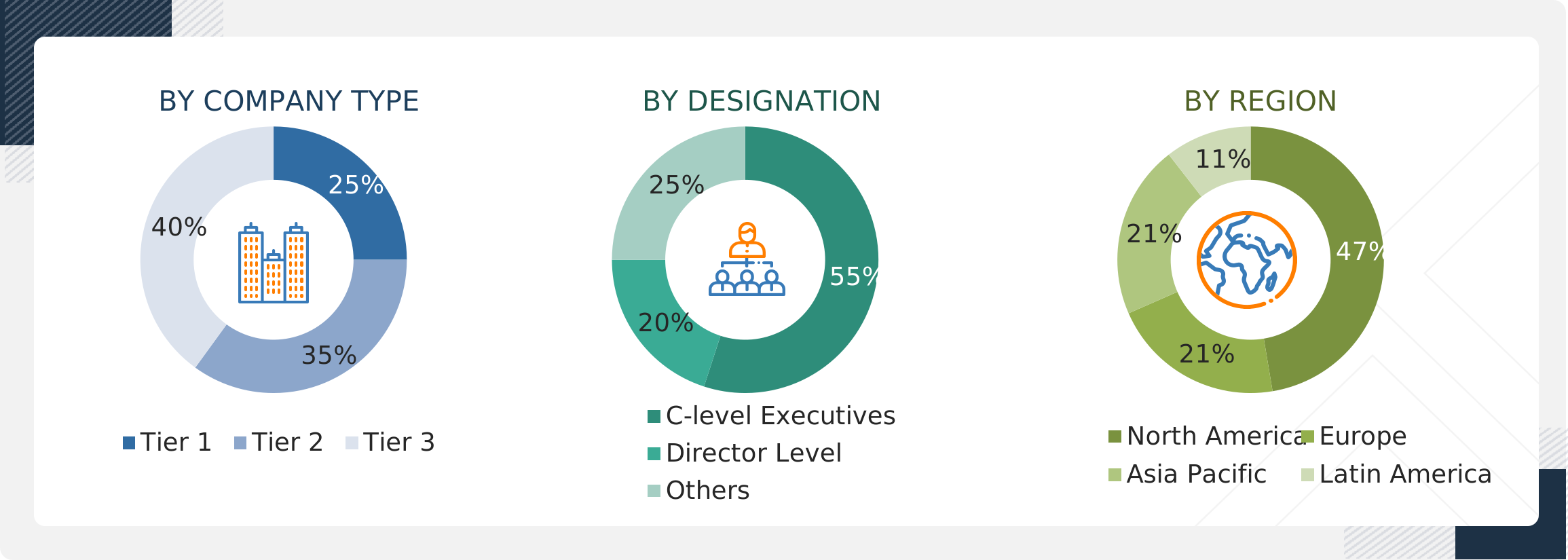
To know about the assumptions considered for the study, download the pdf brochure
Market Size Estimation
Both top-down and bottom-up approaches were used to estimate & validate the total size of the 3D cell culture market. These methods were also used extensively to estimate the size of various subsegments in the market. The research methodology used to estimate the market size includes the following:
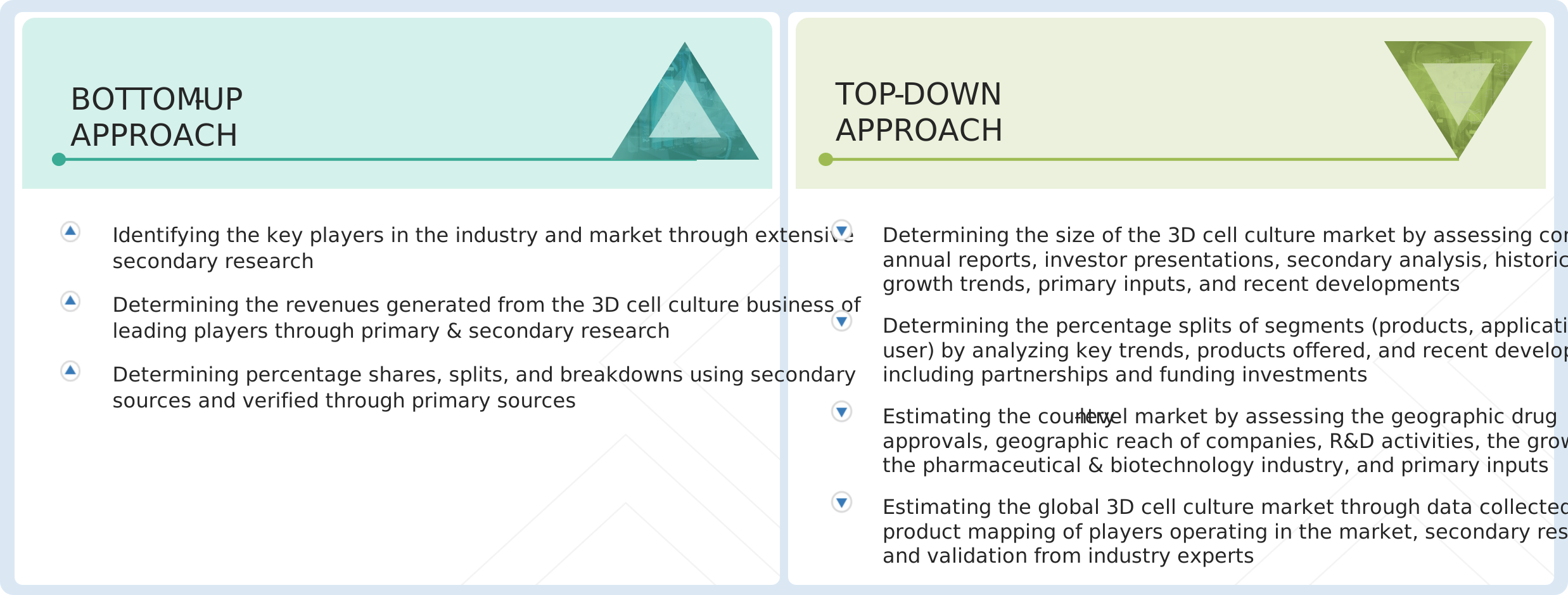
Data Triangulation
The total market was split into several segments and subsegments after arriving at the overall market size from the estimation process. Where applicable, data triangulation and market breakdown procedures were employed to complete the overall market engineering process and arrive at the exact statistics for all segments and subsegments. The data was triangulated by studying various factors and trends from both the demand and supply sides.
Market Definition
3D cell culture refers to the cultivation of cells in an environment that closely mimics the three-dimensional structure and conditions found in living tissues or organs. In 3D cell culture, cells are grown within a matrix or scaffold that provides a three-dimensional framework, allowing cells to interact with each other and their environment more realistically. This can include using hydrogels, sponges, scaffolds, or even specialized bioprinting techniques to create a structure that supports cell growth and tissue formation.
The study provides an in-depth analysis of the 3D cell culture market based on contemporary market trends and developments, as well as its potential growth from 2025 to 2030. It includes detailed market trends, the competitive landscape, market size, forecasts, and the analysis of the key companies.
Stakeholders
- 3D Cell Culture Product Manufacturers
- Academic Research Institutes
- Pharmaceutical & Biotechnology Companies
- Life Science Companies
- Venture Capitalists and Investors
- Government Organizations
- Private Research Firms
- Contract Research Organizations (CROs)
- Contract Development and Manufacturing Organizations (CDMOs)
- Research & Development Companies
Report Objectives
- To define, describe, and forecast the 3D cell culture market based on product, application, end user, and region
- To provide detailed information regarding the major factors influencing the market growth (such as drivers, restraints, opportunities, and challenges)
- To strategically analyze micromarkets with respect to individual growth trends, prospects, and contributions to the overall 3D cell culture market
- To analyze the opportunities in the market for stakeholders and provide details of the competitive landscape for market leaders
- To forecast the size of the market segments with respect to six main regions, namely, North America, Europe, the Asia Pacific, Latin America, the Middle East, and Africa
- To strategically profile the key players in the 3D cell culture market and comprehensively analyze their core competencies and market rankings
- To track and analyze competitive developments such as product launches, acquisitions, expansions, agreements, partnerships, and collaborations in the 3D cell culture market
- To benchmark players within the 3D cell culture market using the ‘Company Evaluation Matrix' framework, which analyzes market players based on various parameters within the broad categories of business and product strategy
Get the Full 3D Cell Culture Market Report
Full forecast, segment splits, and company analysis for all 3D Cell Culture Market.
- Spain 3D Cell Culture Market
- China 3D Cell Culture Market
- Japan 3D Cell Culture Market
- South Korea 3D Cell Culture Market
- Australia 3D Cell Culture Market
- Brazil 3D Cell Culture Market
- Mexico 3D Cell Culture Market
- Saudi Arabia 3D Cell Culture Market
- UAE 3D Cell Culture Market
- Rest Of Europe 3D Cell Culture Market
- Rest Of Asia Pacific 3D Cell Culture Market
- Rest Of Latin America 3D Cell Culture Market
- Rest Of GCC Countries 3D Cell Culture Market
- Canada 3D Cell Culture Market
- US 3D Cell Culture Market
- Germany 3D Cell Culture Market
- UK 3D Cell Culture Market
- France 3D Cell Culture Market
- Italy 3D Cell Culture Market
Need a Tailored Report?
Customize this report to your needs
Get 10% FREE Customization
Customize This Report
