
Brazil Acoustic Insulation Market (2025-2030)

The Brazil Acoustic Insulation Market was valued at $2226.4 Million in 2025 and projected to reach to $2508.4 Million by 2030, representing a compound annual growth rate of CAGR 5.4%. Brazil's acoustic insulation market demonstrates strong growth momentum, driven by expanding industrial sectors and rising awareness of workplace noise management.


| Market Size in | USD 26.32 MN |
| Market Forecast in | |
| CAGR | |
| Forecast Period | |
| Units Considered | Value (USD MN) |
Brazil Acoustic Insulation Market Trends and Insights
- Elastomeric Foam is engineered to provide superior sound dampening and vibration isolation across diverse industrial and commercial applications.
- The segment is projected to expand to $2,508.4 million by 2030, driven by increasing demand for noise reduction solutions in HVAC systems, automotive components, and building construction.
- Elastomeric Foam's resilience, flexibility, and thermal stability make it the preferred choice for applications requiring both acoustic and thermal performance.
- Growth in construction activity and stricter noise regulations are accelerating adoption of Elastomeric Foam across developed and emerging markets.
- The material's compatibility with various substrates and ease of installation further enhance its market penetration..
Key Market Statistics
- CAGR (2025-2030) CAGR 5.4%
- Market Size, 2025 ~USD 2226.4 Million
- Forecast, 2030 ~USD 2508.4 Million
- Country Brazil
Brazil Acoustic Insulation Market Overview
Market Size & Growth :
Brazil's acoustic insulation market, particularly elastomeric foam segment, reached USD 2,226.4 million in 2025 with a robust 5.4% CAGR, outpacing the global growth rate of 4.8%.
Industrial Demand Drivers :
Rapid expansion in Brazil's automotive, construction, and manufacturing sectors is fueling demand for advanced noise reduction solutions and vibration isolation technologies in industrial applications.
Forecast Expansion :
The market is projected to grow to USD 2,508.4 million by 2030, representing significant investment opportunities in elastomeric foam production and distribution across Brazilian industrial hubs.
Regional Infrastructure Growth :
Increasing urbanization and infrastructure development in Brazil's major metropolitan areas are driving adoption of acoustic insulation materials in commercial buildings and transportation systems.
Brazil Acoustic Insulation Market Dynamics
- The elastomeric foam segment benefits from increased adoption in automotive manufacturing, HVAC systems, and commercial construction projects across São Paulo, Rio de Janeiro, and emerging industrial regions.
- Government infrastructure initiatives and stricter occupational safety regulations are accelerating market penetration. Looking ahead to 2030, Brazil's market is positioned for sustained expansion as manufacturers invest in advanced noise reduction technologies and sustainable acoustic solutions.
- Growing middle-class consumption, coupled with industrial modernization efforts, will continue to support demand for high-performance elastomeric foam products across diverse applications..
Market Ecosystem
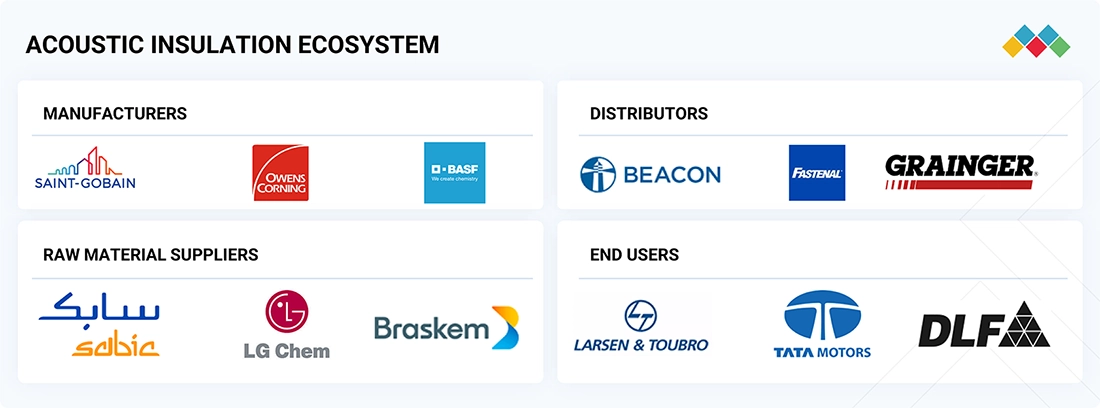
ACOUSTIC INSULATION MARKET: COMMERCIAL USE CASES ACROSS INDUSTRIES
| COMPANY | USE CASE DESCRIPTION | BENEFITS |
|---|---|---|
 |
Implements acoustic insulation solutions in large-scale residential, commercial, and infrastructure projects to control indoor and external noise levels | Enhances occupant comfort | Ensures compliance with building standards | Improves overall building quality and value |
 |
Integrates acoustic insulation materials in vehicle cabins and engine compartments to reduce noise and vibration | Improves passenger comfort | Enhances driving experience | Supports compliance with noise regulations |
 |
Applies acoustic insulation in industrial equipment and manufacturing facilities to manage operational noise | Reduces workplace noise levels | Improves worker safety | Enhances operational efficiency |
 |
Uses acoustic insulation in residential and commercial buildings to create quieter indoor environments | Increases property value | Improves tenant satisfaction | Supports premium positioning |
 |
Incorporates acoustic insulation in aircraft cabins and structures to minimize noise during operation | Enhances passenger comfort | Improves cabin experience | Meets aviation noise standards |
Logos and trademarks shown above are the property of their respective owners. Their use here is for informational and illustrative purposes only.
Related Ecosystem
Electric Hybrid Vehicles
- Battery Electric Vehicle (BEV)
- Fuel Cell Electric Vehicle (FCEV)
- Light Commercial Vehicles (LCVs)
- Hybrid Electric Vehicle (HEV)
- Agricultural Tractors
- Visteon Corporation
- Byd company ltd.
- BOSCH LIMITED
- Tesla, Inc.
- FORD MOTOR COMPANY
Foam And Insulation
- Fiberglass
- Acoustic Insulation
- Elastomeric Foam
- HVAC System
- Flexible Foam
- Basf se
- Saint-gobain
- ARMACELL INTERNATIONAL
- THE WOODBRIDGE GROUP
- Sekisui Chemical Co., Ltd.
Infrastructure Material
- Alumina Ceramics
- Ceramic Coatings
- Monolithic Ceramics
- Polyphenylene Sulfide (PPS)
- Titanate Ceramics
- Saint-gobain
- Simpson Manufacturing Co., Inc.
- Basf se
- Sika ag
- DOW CHEMICAL COMPANY
Key Takeaways
- Elastomeric Foam market is valued at $2,226.4 million in 2025 and expected to reach $2,508.4 million by 2030, representing a 5.4% CAGR.
- Elastomeric Foam outperforms the global acoustic insulation market growth rate of 4.8%, indicating strong segment-specific demand drivers.
- Elastomeric Foam applications span HVAC, automotive, construction, and industrial sectors, with expanding regulatory requirements supporting market expansion.
- Elastomeric Foam's superior acoustic performance combined with thermal insulation properties positions it as a premium material choice in the acoustic insulation landscape.
Acoustic Insulation Market Report Scope
| Report Metric | Details |
|---|---|
| Base Year | 2025 |
| Fastest Growing Segment | BUILDING & CONSTRUCTION (End-Use Industry) |
| Forecast Period | 2025–2030 |
| Growth Rate | CAGR of 4.8% from 2025 to 2030 |
| Largest Segment | BUILDING & CONSTRUCTION (End-Use Industry) |
| Market Size Base Year (Billions) | ~USD 16.9 (2025) |
| Revenue Forecast (Billions) | ~USD 21.36 (2030) |
| Segments Covered | Material, End-Use Industry |
Brazil Acoustic Insulation Market Report Segmentation
2 segment dimensions are covered across the global market.
By Material
- Elastomeric Foam
- Foamed Plastics
- Glass Wool
- Other Materials
- Rock Wool
By End-Use Industry
- Building & Construction
- Energy & Utilities
- Industrial & OEM
- Oil & Gas And Petrochemical
- Transportation
BRAZIL: ACOUSTIC INSULATION MARKET, BY END-USE INDUSTRY, 2026–2031
| Segment | 2026 | 2027 | 2028 | 2029 | 2030 | 2031 | CAGR (%) |
|---|---|---|---|---|---|---|---|
| BUILDING & CONSTRUCTION | 84.8 | 92.4 | 95.1 | 92.2 | 100.4 | 109.2 | 5.2 |
| ENERGY & UTILITIES | 13.2 | 13.9 | 14.7 | 15.6 | 16.5 | 17.4 | 5.7 |
| INDUSTRIAL & OEM | 22.2 | 23.4 | 24.8 | 26.2 | 27.7 | 29.4 | 5.8 |
| OIL & GAS AND PETROCHEMICAL | 27.4 | 28.7 | 30.1 | 31.6 | 33.2 | 34.9 | 5 |
| TRANSPORTATION | 42.4 | 44.9 | 47.6 | 50.6 | 53.8 | 57.2 | 6.2 |
| TOTAL | 189.9 | 203.3 | 212.3 | 216.1 | 231.5 | 248.1 | 5.5 |
Target Audience
- Acoustic Material Manufacturers : Manufacturers need Brazil-specific market data to assess production capacity requirements, identify regional demand hotspots, and develop localized elastomeric foam product portfolios.
- Construction & Real Estate Developers : Developers require insights into acoustic insulation adoption trends and regulatory requirements to incorporate noise reduction solutions in commercial and residential projects across Brazil.
- Automotive & Industrial Suppliers : Suppliers need market intelligence on elastomeric foam demand in automotive manufacturing and industrial applications to optimize supply chain strategies and expand customer relationships.
- Distributors & Wholesalers : Distribution partners require Brazil market forecasts and growth drivers to plan inventory, identify emerging regional markets, and develop effective sales strategies for acoustic materials.
- Investment & Private Equity Firms : Investors need comprehensive Brazil market analysis to evaluate acquisition targets, assess growth potential, and identify strategic investment opportunities in the acoustic insulation sector.
Key Companies in the Brazil Acoustic Insulation Market
| Company | HQ | Ownership | Strongest segments |
|---|---|---|---|
| SEKISUI CHEMICAL CO., LTD | Japan | Public Company | High performance plastics and industrial tapes,Housing and residential services,Urban infrastructure and environmental products, |
| CORNING, INC. | United States | Public Company | Optical communications (fiber, cable, hardware, components),Display glass substrates (LCD, OLED),Specialty materials (mobile, semiconductor optics, radiation shielding, sunglasses), |
| SAINT-GOBAIN | France | Public Company | Plasterboard and Interior Systems (Placo, Rigips, Gyproc),Insulation Solutions (Isover, CertainTeed, Izocam),Mortars and Construction Chemicals (Weber, Chryso, GCP), |
| ROCKWOOL A/S | Denmark | Public Company | Building insulation (roof, façade, wall, floor, basement, attic, garage, shed),Technical, HVAC, industrial, marine and offshore insulation,Acoustic ceilings and walls (Rockfon) and cladding boards (Rockpanel), |
| HUNTSMAN INTERNATIONAL LLC | United States | Private Company | MDI, polyols, and TPU,Amines and maleic anhydride,Epoxy, phenoxy, and acrylic systems, |
| OWENS CORNING | United States | Public Company | Roofing (laminate and strip asphalt shingles, roofing components, oxidized asphalt),Insulation (PINK, Next Gen, FIBERGLAS, FOAMULAR, FOAMGLAS, Paroc, spray foam, loosefill, duct and pipe insulation),Doors (residential interior and exterior doors, glass/fiberglass/metal, components), |
| KINGSPAN GROUP | Ireland | Public Company | Insulated panels and building envelopes,Insulation boards (Kooltherm and related),Roofing, waterproofing, and PowerPanel solar, |
| BASF SE | Germany | Public Company | Chemicals (Petrochemicals & Intermediates),Materials (Isocyanates, Polyamides, Inorganics),Industrial Solutions, |
| JOHNS MANVILLE | United States | Private Company | Building insulation (residential and commercial),Commercial roofing systems,Mechanical and industrial insulation, |
| 3M | United States | Public Company | Safety and Industrial,Transportation and Electronics,Consumer, |
| TRELLEBORG | Sweden | Public Company | Sealing solutions (profiles, flat gaskets, pipe and tunnel seals),Antivibration, noise, and damping systems,Marine and offshore (fenders, docking, floatover, mooring, oil sands), |
SEKISUI CHEMICAL CO., LTD
Sekisui Chemical Co., Ltd. is a Japanese public company founded in 1947 that employs 26,752 people. The company operates in the chemical and materials sector.
CORNING, INC.
Corning, Inc. is a United States-based public company founded in 1851 with 67,200 employees. The company is a global leader in materials science and specialty glass products.
SAINT-GOBAIN
Saint-Gobain is a French public company founded in 1665 with 158,616 employees. The company is a global leader in building materials, construction products, and high-performance materials.
ROCKWOOL A/S
Rockwool A/S is a Danish public company founded in 1909 with 11,827 employees. The company is a global manufacturer of stone wool insulation and fire safety products.
HUNTSMAN INTERNATIONAL LLC
Huntsman International LLC is a United States-based private company founded in 1970 with 6,000 employees. The company operates in the chemical and specialty materials industry.
OWENS CORNING
Owens Corning is a United States-based public company founded in 1938 with 25,000 employees. The company is a global leader in insulation, roofing, and fiberglass composites.
KINGSPAN GROUP
Kingspan Group is an Ireland-based public company founded in 1965 with 27,526 employees. The company is a global manufacturer of high-performance insulation and building envelope solutions.
BASF SE
BASF SE is a German public company founded in 1865 with 106,428 employees. The company is one of the world's largest chemical producers offering a diverse portfolio of products.
JOHNS MANVILLE
Johns Manville is a United States-based private company founded in 1858 with 9,740 employees. The company manufactures insulation, roofing, and engineered products for building and industrial applications.
3M
3M is a United States-based public company founded in 1902 with 60,500 employees. The company is a diversified technology and manufacturing conglomerate with products across multiple industries.
TRELLEBORG
Trelleborg is a Swedish public company founded in 1905 with 15,756 employees. The company is a global leader in engineered polymer solutions and sealing systems.
Reasons to Buy this Report
- Market-Specific Growth Data : Access Brazil-exclusive market sizing, CAGR analysis, and 5-year forecasts to identify high-growth opportunities in the elastomeric foam segment within Latin America's largest economy.
- Competitive Landscape Intelligence : Understand Brazil's key market players, regional manufacturers, and distribution networks to develop targeted go-to-market strategies and partnership opportunities in this expanding market.
- Sector-Specific Demand Insights : Gain detailed analysis of acoustic insulation demand across Brazil's automotive, construction, industrial, and commercial sectors to prioritize investment and product development initiatives.
- Regulatory & Compliance Framework : Navigate Brazil-specific occupational safety standards, environmental regulations, and building codes that drive acoustic insulation adoption and influence market dynamics.
- Strategic Investment Guidance : Leverage Brazil market projections and growth drivers to make informed decisions on manufacturing facilities, distribution partnerships, and market entry strategies through 2030.
Frequently asked questions
What is the market size of Elastomeric Foam in 2025?
Elastomeric Foam is valued at $2,226.4 million in 2025, representing a significant portion of the global acoustic insulation market.
What is the projected market size for Elastomeric Foam by 2030?
Elastomeric Foam is forecasted to reach $2,508.4 million by 2030, reflecting a compound annual growth rate of 5.4%.
What are the primary applications of Elastomeric Foam?
Elastomeric Foam is widely used in HVAC systems, automotive components, building insulation, industrial equipment, and vibration isolation applications.
Why is Elastomeric Foam growing faster than the overall acoustic insulation market?
Elastomeric Foam's 5.4% CAGR exceeds the global market's 4.8% due to its superior acoustic and thermal properties, regulatory compliance benefits, and expanding end-use applications.
What factors are driving demand for Elastomeric Foam?
Key drivers include stricter noise regulations, increased construction activity, automotive industry expansion, rising awareness of workplace safety, and the material's superior performance characteristics.
RESEARCH METHODOLOGY
The study involved four major activities in estimating the market size for the acoustic insulation market. Exhaustive secondary research was done to collect information on the market, the peer market, and the parent market. The next step was to validate these findings, assumptions, and sizing with industry experts across the value chain through primary research. Both top-down and bottom-up approaches were employed to estimate the complete market size. After that, the market breakdown and data triangulation procedures were used to estimate the market size of the segments and subsegments.
Secondary Research
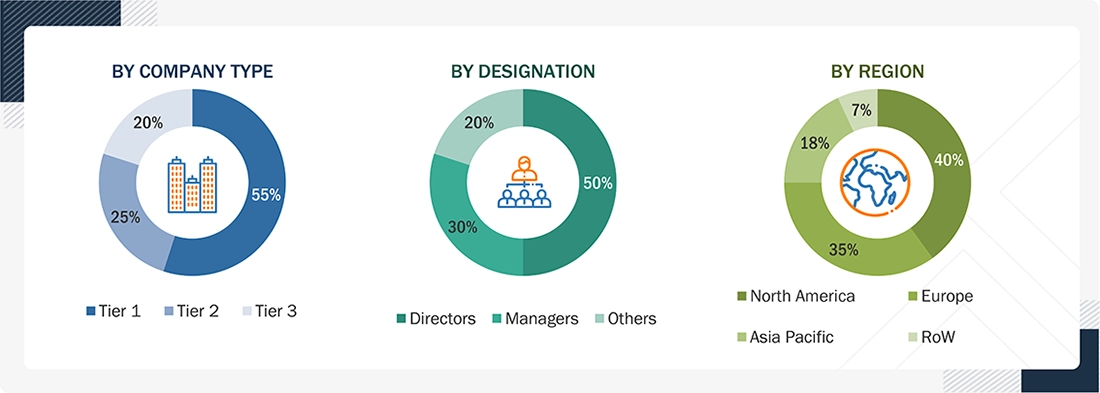
Secondary sources used in this study included annual reports, press releases, and investor presentations of companies; white papers; certified publications; articles from recognized authors; and gold-standard and silver-standard websites, such as Factiva, ICIS, and Bloomberg. The findings of this study were verified through primary research, which involved conducting extensive interviews with key officials, including CEOs, VPs, directors, and other executives. The breakdown of profiles of the primary interviewees is illustrated in the figure below.
Primary Research
The acoustic insulation market comprises several stakeholders, such as raw material suppliers, end-product manufacturers, and regulatory organizations in the supply chain. The demand side of this market is characterized by key opinion leaders in various end-use industries for the acoustic insulation market. The supply side is characterized by advancements in technology and diverse application areas. Various primary sources from the supply and demand sides of the market were interviewed to obtain qualitative and quantitative information.
Breakup of Primary Research:
To know about the assumptions considered for the study, download the pdf brochure
Market Size Estimation
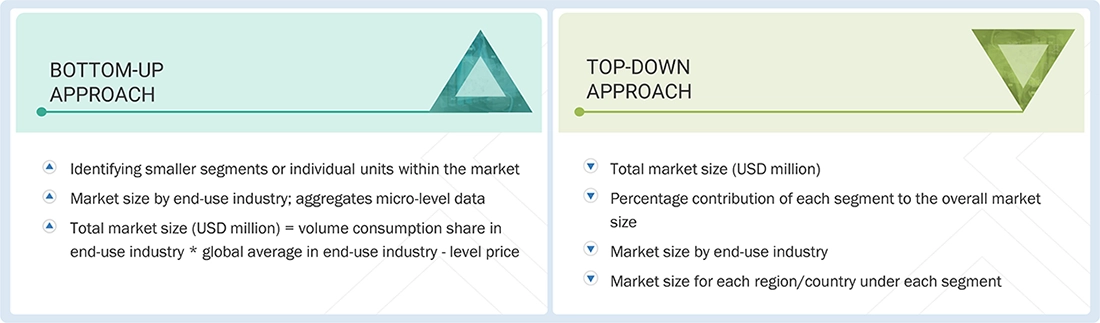
Both top-down and bottom-up approaches were used to estimate and validate the total size of the acoustic insulation market. These methods were also used extensively to estimate the size of various subsegments in the market. The research methodology used to estimate the market size includes the following:
- Key players in the industry have been identified through extensive secondary research
- The supply chain of the industry has been determined through primary and secondary research
- All percentage shares, splits, and breakdowns have been determined using secondary sources and verified through primary sources
- All possible parameters that affect the markets covered in this research study have been accounted for, viewed in extensive detail, verified through primary research, and analyzed to obtain the final quantitative and qualitative data
Acoustic Insulation Market : Top-Down and Bottom-Up Approach
Data Triangulation
After determining the overall market size using the market size estimation processes explained above, the market was divided into several segments and subsegments. To complete the overall market engineering process and determine the exact statistics for each market segment and subsegment, data triangulation and market breakdown procedures were employed, as applicable. The data was triangulated by studying various factors and trends from both the demand and supply sides in the acoustic insulation market.
Market Definition
Acoustic insulation is defined as the ability of the insulation material to reduce the sound pressure with respect to a specified sound source and receptor. It is mainly used to limit or absorb sound for the comfort of receptors. Acoustic insulation is used to reflect or absorb sounds to achieve acoustic comfort and is the most cost-effective measure to achieve energy efficiency. Acoustic insulation products help in reducing noise pollution and provide a comfortable environment for day-to-day life. They mainly reduce noise pollution and provide a safer workplace environment in areas where noise can cause serious hearing damage.
Key Stakeholders
- Acoustic Insulation Manufacturers
- Raw Material Suppliers
- Government and Industry Associations
- Acoustic Insulation Distributors
- End Users
- Government and Research Organizations
- R&D Institutes
Report Objectives
- To analyze and forecast the size of the global acoustic insulation market in terms of value and volume
- To provide detailed information about the key drivers, restraints, challenges, and opportunities influencing market growth
- To define, describe, and segment the market based on material, end-use industry, and region
- To forecast the size of the market segments based on regions such as Asia Pacific, North America, Europe, the Middle East & Africa, and South America
- To strategically analyze the segmented markets with respect to individual growth trends, prospects, and contributions to the overall market
- To identify and analyze opportunities for stakeholders in the market
- To analyze competitive developments such as expansions, partnerships & collaborations, mergers & acquisitions, agreements, and product launches
- To strategically profile the key companies and comprehensively analyze their core competencies
Available customizations:
Along with the given market data, MarketsandMarkets offers customizations according to the company’s specific needs. The following customization options are available for the report:
Regional Analysis
- Further breakdown of a region with respect to a particular country or additional application
Get the Full Acoustic Insulation Market Report
Full forecast, segment splits, and company analysis for all Acoustic Insulation Market.
- South Korea Acoustic Insulation Market
- India Acoustic Insulation Market
- Australia Acoustic Insulation Market
- Saudi Arabia Acoustic Insulation Market
- UAE Acoustic Insulation Market
- Turkey Acoustic Insulation Market
- Argentina Acoustic Insulation Market
- South America Acoustic Insulation Market
- Benelux Acoustic Insulation Market
- Nordic Countries Acoustic Insulation Market
- Rest Of Europe Acoustic Insulation Market
- Asean Countries Acoustic Insulation Market
- Rest Of Asia Pacific Acoustic Insulation Market
- GCC Countries Acoustic Insulation Market
- US Acoustic Insulation Market
- Canada Acoustic Insulation Market
- Mexico Acoustic Insulation Market
- Germany Acoustic Insulation Market
- France Acoustic Insulation Market
- UK Acoustic Insulation Market
- Italy Acoustic Insulation Market
- Spain Acoustic Insulation Market
- Poland Acoustic Insulation Market
- Switzerland Acoustic Insulation Market
- China Acoustic Insulation Market
- Japan Acoustic Insulation Market
Need a Tailored Report?
Customize this report to your needs
Get 10% FREE Customization
Customize This Report
