
Canada Aerogel Market (2026-2031)

The Canada Aerogel Market was valued at $21.25 Million in 2026 and projected to reach to $29.55 Million by 2031, representing a compound annual growth rate of 6.8%. Canada's aerogel market is positioned for steady growth through 2031, driven by the country's commitment to energy efficiency standards and the expansion of aerospace manufacturing.


| Market Size in | USD 26.32 MN |
| Market Forecast in | |
| CAGR | |
| Forecast Period | |
| Units Considered | Value (USD MN) |
Canada Aerogel Market Trends and Insights
- This steady expansion reflects Canada's increasing adoption of aerogel materials across insulation, aerospace, and industrial applications.
- Canada's position within North America positions it as a key market for advanced material innovation and sustainable building solutions. The Canadian aerogel market benefits from strong demand in the construction and energy sectors, where thermal insulation efficiency is critical.
- Canada's climate and regulatory focus on energy efficiency drive adoption of high-performance insulation materials.
- Between 2026 and 2031, Canada is expected to see accelerated market penetration as manufacturers expand production capacity and supply chains strengthen across the country. Canada's aerogel market growth is supported by investments in R&D, rising awareness of lightweight composite materials in aerospace, and government incentives for energy-efficient building standards.
- The forecast period through 2031 indicates sustained momentum as Canada continues to integrate aerogel solutions into mainstream industrial and commercial applications..
Key Market Statistics
- CAGR (2026-2031) 6.8% CAGR
- Market Size, 2026 ~USD 21.25 Million
- Forecast, 2031 ~USD 29.55 Million
- Country Canada
Canada Aerogel Market Overview
Market Size & Growth :
Canada's aerogel market is valued at $21.25 million in 2026 and is projected to reach $29.55 million by 2031, with a CAGR of 6.8%, reflecting steady adoption across multiple industrial sectors.
Key Application Areas :
Canadian demand for aerogel is driven by insulation applications in building construction, aerospace component manufacturing, and industrial thermal management, leveraging the country's advanced manufacturing capabilities.
Regional Positioning :
As a major North American market, Canada benefits from proximity to U.S. supply chains, established aerospace hubs, and growing emphasis on energy-efficient building materials aligned with federal sustainability initiatives.
Growth Drivers :
Increasing investment in green building standards, expansion of aerospace and defense sectors, and rising demand for high-performance insulation materials in extreme climate conditions are propelling market expansion.
Canada Aerogel Market Dynamics
- The market benefits from strong industrial infrastructure and increasing adoption of advanced materials in construction and industrial applications.
- Government incentives for sustainable building practices and the presence of major aerospace manufacturers create sustained demand for high-performance aerogel products.
- Regional climate conditions necessitate superior insulation solutions, further supporting market penetration across residential and commercial sectors..
Market Ecosystem
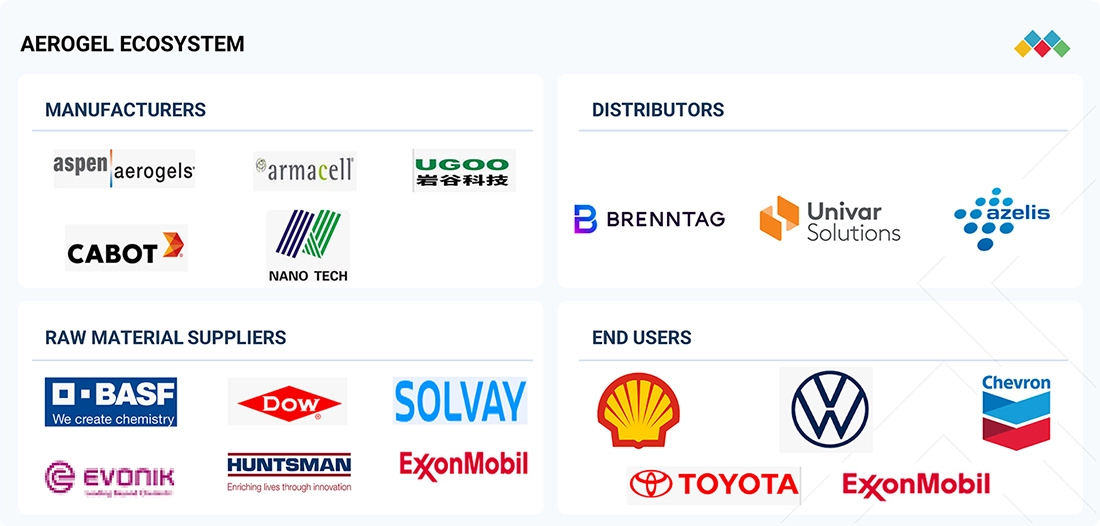
AEROGEL MARKET: COMMERCIAL USE CASES ACROSS INDUSTRIES
| COMPANY | USE CASE DESCRIPTION | BENEFITS |
|---|---|---|
 |
Utilization of aerogel insulation materials in EV battery packs and thermal management systems to improve safety and energy efficiency. | Enhanced thermal runaway protection, lightweight design, improved battery performance, extended driving range, and increased passenger safety. |
 |
Application of aerogel blankets in oil & gas pipelines, LNG facilities, and process equipment for high-performance insulation. | Superior thermal insulation, reduced energy loss, corrosion under insulation (CUI) mitigation, lower maintenance costs, and improved operational efficiency. |
 |
Use of aerogel materials in aircraft insulation systems, cabin panels, and aerospace components to reduce weight and improve thermal performance. | Significant weight reduction, improved fuel efficiency, enhanced thermal and acoustic insulation, and greater passenger comfort. |
 |
Integration of aerogel products into building envelopes, wall systems, roofing, and energy-efficient construction materials. | Improved building energy efficiency, thinner insulation profiles, enhanced fire resistance, reduced HVAC costs, and support for sustainable construction. |
Logos and trademarks shown above are the property of their respective owners. Their use here is for informational and illustrative purposes only.
Related Ecosystem
Automotive Materials
- Light Commercial Vehicles (LCVs)
- Battery Electric Vehicle (BEV)
- Hybrid Electric Vehicle (HEV)
- Fuel Cell Electric Vehicle (FCEV)
- Agricultural Tractors
- GORKOVSKY AVTOMOBILNY ZAVOD
- AISIN CORPORATION
- Continental ag
- Basf se
- BOSCH LIMITED
Foam And Insulation
- Fiberglass
- Acoustic Insulation
- Elastomeric Foam
- HVAC System
- Flexible Foam
- Basf se
- Saint-gobain
- ARMACELL INTERNATIONAL
- THE WOODBRIDGE GROUP
- Sekisui Chemical Co., Ltd.
Key Takeaways
- Canada's aerogel market is valued at $21.25 million in 2026 and will reach $29.55 million by 2031, growing at 6.8% CAGR.
- Canada's cold climate and energy efficiency regulations drive strong demand for high-performance thermal insulation materials.
- Canada's aerospace and industrial sectors are increasingly adopting lightweight aerogel composites for performance and sustainability.
- Canada's market growth is supported by R&D investments, government incentives, and expanding manufacturing capacity through 2031.
Aerogel Market Report Scope
| Report Metric | Details |
|---|---|
| Base Year | 2026 |
| Fastest Growing Segment | TRANSPORTATION (Application) |
| Forecast Period | 2026–2031 |
| Growth Rate | CAGR of 13.63% from 2026 to 2031 |
| Largest Segment | SILICA (Type) |
| Market Size Base Year (Billions) | ~USD 1.12 (2026) |
| Revenue Forecast (Billions) | ~USD 2.13 (2031) |
| Segments Covered | Form, Type, Processing, Application, Material Type |
Canada Aerogel Market Report Segmentation
5 segment dimensions are covered across the global market.
By Form
- Blanket
- Monolith
- Panel
- Particle
By Type
- Carbon
- Polymer
- Silica
By Processing
- Additives
- As Manufactured
- Composites
By Application
- Architecture & Construction
- Energy Industrial
- Other Applications
- Transportation
By Material Type
- Fef
- Mineral Wool
- Other Materials
- Puf
Target Audience
- Aerogel Manufacturers & Suppliers : Require detailed Canadian market data to assess market entry strategies, competitive positioning, and revenue forecasting for production and distribution planning.
- Construction & Building Material Companies : Need insights into Canadian insulation demand, building code compliance requirements, and market trends to develop and market aerogel-based insulation products.
- Aerospace & Defense Contractors : Seek market intelligence on aerogel adoption in Canadian aerospace manufacturing to optimize supply chain decisions and identify component integration opportunities.
- Investment & Private Equity Firms : Require comprehensive market analysis and growth projections to evaluate investment opportunities in Canadian aerogel companies and advanced materials ventures.
- Government & Policy Organizations : Need market data to inform sustainability initiatives, industrial policy development, and support programs for advanced materials adoption in Canada.
Key Companies in the Canada Aerogel Market
| Company | HQ | Ownership | Strongest segments |
|---|---|---|---|
| ASPEN AEROGELS, INC. | United States | Public Company | Silica Aerogel Blankets (Pyrogel, Cryogel, Spaceloft Subsea),EV Thermal Barrier Composites (PyroThin and related systems),Other Forms and Applications (Panels, Particles, Monoliths, Architecture & Construction), |
| CABOT CORPORATION | United States | Public Company | Silica Aerogel – Particle, As-Manufactured,Silica Aerogel – Composites (Blankets, Panels),Polymer Aerogel (Forms and Composites), |
| BEERENBERG AS | Norway | Private Company | Silica aerogel blankets and composite systems,Silica aerogel panels and boards,Aerogel particles and fills, |
| ENERSENS | Finland | Public Company | Silica aerogel blankets and panels (integration in energy industrial assets),Aerogel composites and systems for architecture & construction,Transportation-related aerogel applications, |
| SVENSKA AEROGEL HOLDING AB | Sweden | Public Company | Silica / Quartzene (particles and powders for composites and coatings),Panels, blankets, and formed insulation solutions,SeaQare for antifouling paints, |
ASPEN AEROGELS, INC.
Aspen Aerogels, Inc. is a publicly traded United States company founded in 2001 with 854 employees.
CABOT CORPORATION
Cabot Corporation is a publicly traded United States company founded in 1882 with 4,064 employees.
BEERENBERG AS
Beerenberg AS is a Norway-based private company founded in 1977 with 1,627 employees.
ENERSENS
Enersens is a Finland-based publicly traded company founded in 1986 with 1,700 employees.
SVENSKA AEROGEL HOLDING AB
Svenska Aerogel Holding AB is a Sweden-based publicly traded company founded in 2000 with 11 employees.
Reasons to Buy this Report
- Market-Specific Sizing & Forecasts : Access precise valuation data for Canada's aerogel market with detailed projections through 2031, enabling accurate budgeting and investment planning specific to this regional market.
- Competitive Landscape Intelligence : Understand key players, market share distribution, and competitive dynamics within Canada's aerogel sector to identify partnership and expansion opportunities.
- Application & End-Use Segmentation : Detailed breakdown of Canadian demand across insulation, aerospace, industrial, and emerging applications helps target product development and marketing strategies effectively.
- Regulatory & Policy Insights : Comprehensive analysis of Canadian building codes, sustainability standards, and government incentives driving aerogel adoption in construction and industrial sectors.
- Growth Opportunity Identification : Pinpoint high-growth segments and emerging applications within Canada's market to prioritize resource allocation and capture first-mover advantages in underserved niches.
Frequently asked questions
What is the current size of Canada's aerogel market?
Canada's aerogel market is estimated at $21.25 million in 2026 and is projected to reach $29.55 million by 2031.
What is the growth rate of Canada's aerogel market?
Canada's aerogel market is expected to grow at a compound annual growth rate (CAGR) of 6.8% from 2026 to 2031.
Which industries drive demand for aerogel in Canada?
Canada's primary demand drivers include construction and building insulation, aerospace manufacturing, industrial applications, and energy-efficient building standards.
Why is Canada's climate important for aerogel adoption?
Canada's cold climate and stringent energy efficiency regulations create strong demand for high-performance thermal insulation materials like aerogel.
What factors will support Canada's aerogel market growth through 2031?
Canada's market growth will be supported by R&D investments, government incentives for energy efficiency, expanding manufacturing capacity, and increased adoption in aerospace and industrial sectors.
RESEARCH METHODOLOGY
The study involved four major activities in estimating the market size for the aerogel market. Exhaustive secondary research was done to collect information on the market, the peer market, and the parent market. The next step was to validate these findings, assumptions, and sizing with industry experts across the value chain through primary research. Both top-down and bottom-up approaches were employed to estimate the complete market size. After that, the market breakdown and data triangulation procedures were used to estimate the market size of the segments and subsegments.
Secondary Research
Secondary sources used in this study included annual reports, press releases, and investor presentations of companies; white papers; certified publications; articles from recognized authors; and gold-standard and silver-standard websites, such as Factiva, ICIS, Bloomberg, and others. The findings of this study were verified through primary research, which involved conducting extensive interviews with key officials, including CEOs, VPs, directors, and other executives. The breakdown of profiles of the primary interviewees is illustrated in the figure below:
Primary Research
The aerogel market comprises several stakeholders, such as raw material suppliers, end-product manufacturers, and regulatory organizations in the supply chain. Various primary sources from both the supply and demand sides of the market were interviewed to obtain qualitative and quantitative information.
BREAKDOWN OF PRIMARY PARTICIPANTS
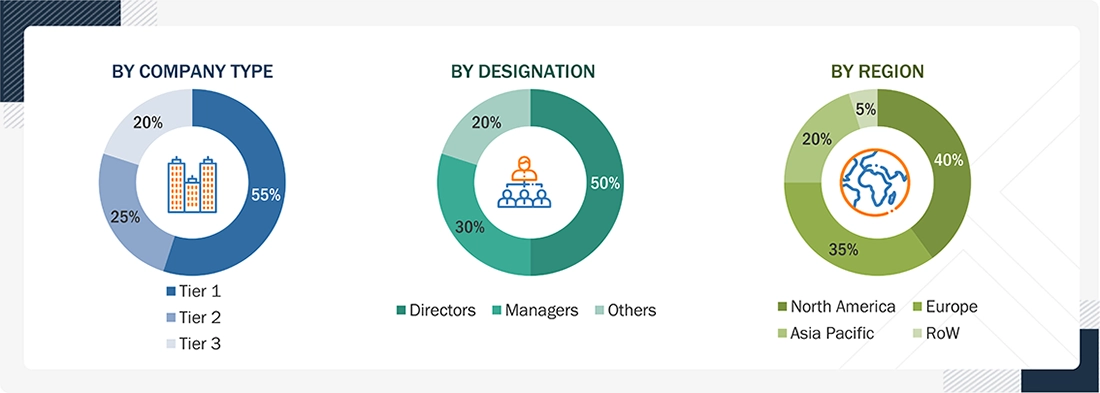
Notes: Tier 1, Tier 2, and Tier 3 companies are classified based on their market revenue in 2024/2025, available in the public domain, product portfolios, and geographical presence.
Other designations include consultants and sales, marketing, and procurement managers.
|
COMPANY NAME |
DESIGNATION |
|
Aspen Aerogel, Inc. |
Senior Manager |
|
Cabot Corporation |
Innovation Manager |
|
Aerogel-it GmbH |
Vice-President |
|
Aerogel Technologies, LLC |
Production Supervisor |
|
Beerenberg AS |
Sales Manager |
To know about the assumptions considered for the study, download the pdf brochure
Market Size Estimation
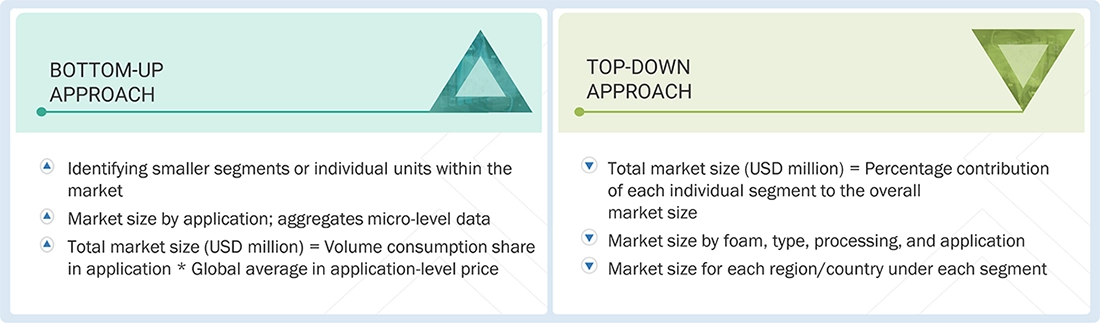
Both top-down and bottom-up approaches were used to estimate and validate the total size of the aerogel market. These methods were also used extensively to estimate the size of various subsegments in the market. The research methodology used to estimate the market size includes the following:
- The key players in the industry have been identified through extensive secondary research.
- The supply chain of the industry has been determined through primary and secondary research.
- All percentage shares, splits, and breakdowns have been determined using secondary sources and verified through primary sources.
- All possible parameters that affect the markets covered in this research study have been accounted for, viewed in extensive detail, verified through primary research, and analyzed to obtain the final quantitative and qualitative data.
Aerogel Market : Top-Down and Bottom-Up Approach
Data Triangulation
After determining the overall market size using the market size estimation processes explained above, the market was divided into several segments and subsegments. To complete the overall market engineering process and determine the exact statistics for each market segment and subsegment, data triangulation and market breakdown procedures were employed, as applicable. The data was triangulated by studying various factors and trends from both the demand and supply sides in the aerogel industry.
Market Definition
The aerogel market can be defined as the sector that generates, manufactures, and applies ultralight materials with a large amount of empty spaces–aerogels. Such material is highly used for its thermal insulation and can be used in architecture & construction, the transportation industry, oil and gas, electronics, and even in the healthcare industry. Aerogels are used in applications that relate to energy savings, thermal control, and environmental cleanup; they are a large part of the high-value materials market internationally.
Key Stakeholders
- Aerogel manufacturers
- Aerogel suppliers
- Raw material suppliers
- Service providers
- Application sector companies
- Government and research organizations
Report Objectives
- To analyze and forecast the size of the global aerogel market in terms of value and volume
- To provide detailed information about the major drivers, restraints, challenges, and opportunities influencing market growth
- To define, describe, and segment the market based on type, form, processing, application, and region
- To forecast the size of the market segments based on regions such as Asia Pacific, North America, Europe, the Middle East & Africa, and South America
- To strategically analyze micromarkets1 with respect to individual growth trends, prospects, and their contribution to the overall market
- To strategically analyze the segmented markets with respect to individual growth trends, prospects, and contributions to the overall market
- To identify and analyze opportunities for stakeholders in the market
- To analyze competitive developments such as mergers, acquisitions, collaborations, expansions, and partnerships in the market
- To strategically profile the key companies and comprehensively analyze their core competencies
Available customizations:
Along with the given market data, MarketsandMarkets offers customizations according to the company’s specific needs. The following customization options are available for the report:
Regional Analysis
- Further breakdown of a region with respect to a particular country or additional end-use industry
Company Information
- Detailed analysis and profiles of additional market players (up to five)
Get the Full Aerogel Market Report
Full forecast, segment splits, and company analysis for all Aerogel Market.
Need a Tailored Report?
Customize this report to your needs
Get 10% FREE Customization
Customize This Report
