
North America AI in Biotechnology Market (2030-2035)

The North America AI in Biotechnology Market was valued at $1841.7 Million in 2030 and projected to reach to $4418.5 Million by 2035, representing a compound annual growth rate of 19.3%. North America's AI in biotechnology market is poised for exceptional growth, expanding from $1,841.7 million in 2030 to $4,418.5 million by 2035, representing a robust 19.3% CAGR.


| Market Size in | USD 26.32 MN |
| Market Forecast in | |
| CAGR | |
| Forecast Period | |
| Units Considered | Value (USD MN) |
North America AI in Biotechnology Market Trends and Insights
- The region is experiencing robust growth driven by advanced healthcare infrastructure, substantial R&D investments, and early adoption of artificial intelligence technologies across drug discovery and development pipelines.
- North America's biotechnology sector benefits from a concentration of leading pharmaceutical companies, academic research institutions, and AI-focused startups that are accelerating innovation in precision medicine and genomics. By 2035, North America's AI in biotechnology market is forecast to expand to $4,418.5 million, representing a compound annual growth rate (CAGR) of 19.3% over the five-year period.
- This accelerated expansion reflects North America's commitment to integrating machine learning, predictive analytics, and automation into clinical trials, biomarker discovery, and personalized treatment strategies.
- North America's regulatory environment and venture capital ecosystem continue to support the commercialization of AI-driven biotechnology solutions, positioning the region as a global leader in this transformative sector..
Key Market Statistics
- CAGR (2030-2035) 19.3% CAGR
- Market Size, 2030 ~USD 1841.7 Million
- Forecast, 2035 ~USD 4418.5 Million
- Geography North America
North America AI in Biotechnology Market Overview
Market Leadership Position :
North America dominates the global AI in biotechnology market with commanding market share, driven by the region's concentration of leading biotech firms, pharmaceutical giants, and innovative startups leveraging AI for competitive advantage.
Robust R&D Investment Ecosystem :
The region benefits from substantial government funding, venture capital influx, and corporate R&D spending, with major institutions and companies investing heavily in AI-powered drug discovery, genomics analysis, and personalized medicine initiatives.
Advanced Healthcare Infrastructure :
North America's sophisticated healthcare systems, regulatory frameworks, and digital health adoption create an ideal environment for AI biotechnology deployment, enabling rapid clinical validation and market commercialization of AI-driven solutions.
Early Technology Adoption :
The region demonstrates early and widespread adoption of artificial intelligence across drug discovery pipelines, clinical trials, and biomarker identification, positioning North America as the innovation hub for AI biotechnology applications.
North America AI in Biotechnology Market Dynamics
- This accelerated growth trajectory reflects increasing integration of machine learning algorithms in drug development, rising demand for precision medicine solutions, and expanding applications in genomic sequencing and protein structure prediction. The region's competitive advantage stems from its concentration of biotech talent, substantial venture funding, and collaborative ecosystems between academia and industry.
- Continued investments in AI infrastructure, regulatory clarity around AI-driven therapeutics, and successful commercialization of AI-discovered drugs will further propel market expansion.
- North America is expected to maintain its global leadership position throughout the forecast period..
Market Ecosystem
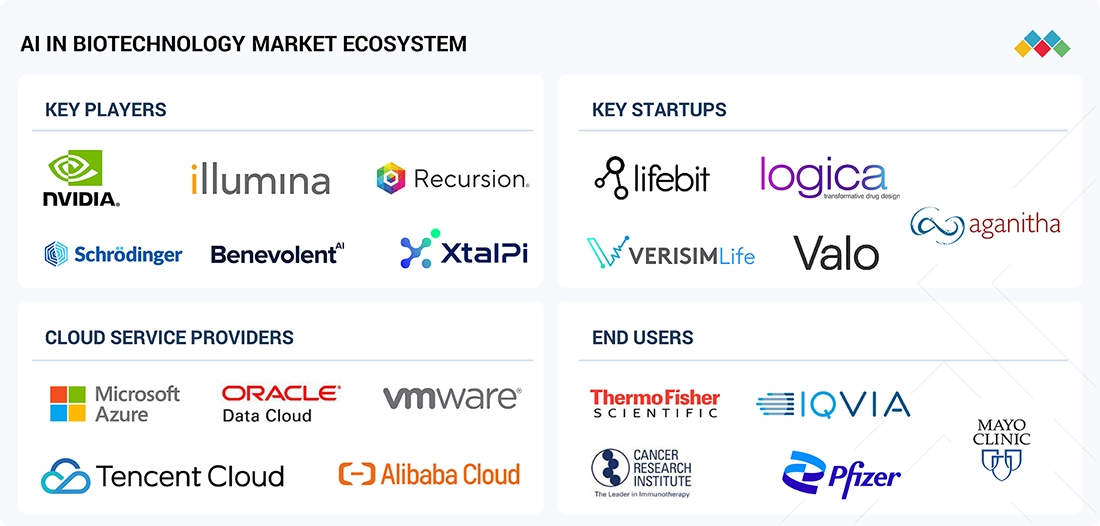
AI in Biotechnology Market: COMMERCIAL USE CASES ACROSS INDUSTRIES
| COMPANY | USE CASE DESCRIPTION | BENEFITS |
|---|---|---|
 |
Provides GPU-accelerated AI platforms for genomics, bioinformatics, and drug discovery | Drives research, boosts scalability, and accelerates drug discovery |
 |
Uses AI to enhance sequencing data analysis and genome interpretation | Improves accuracy, enables faster insights, and supports precision medicine |
 |
Combines AI, automation, and imaging for large-scale biological analysis | Enables faster discovery, target identification, and efficiency gains |
 |
Uses AI and physics-based modeling for virtual screening and drug design | Improves prediction accuracy and streamlines compound optimization |
 |
AI-enabled biomedical knowledge graph for target identification, drug repurposing, and clinical trial prediction | Improved discovery of therapeutic targets, accelerated pipeline development, and increased efficiency in translational research |
Logos and trademarks shown above are the property of their respective owners. Their use here is for informational and illustrative purposes only.
Related Ecosystem
Biotechnology
- Reagents
- Polymerase Chain Reaction (PCR)
- Stem Cells
- Assay Kits
- Flow Cytometers
- Thermo Fisher Scientific Inc.
- Merck KGaA
- Danaher Corporation
- Agilent Technologies, Inc.
- Bio-Rad Laboratories, Inc.
Healthcare It
- Computed Tomography (CT)
- Machine Learning
- Magnetic Resonance Imaging (MRI)
- Natural Language Processing (NLP)
- Predictive Analytics
- CERNER CORPORATION
- PHILIPS HEALTHCARE
- Oracle Corporation
- GE HealthCare Technologies Inc.
- Siemens healthineers
Key Takeaways
- North America's AI in biotechnology market is valued at $1,841.7 million in 2030 and is projected to reach $4,418.5 million by 2035, growing at a 19.3% CAGR.
- North America leads in AI adoption within biotechnology due to its advanced healthcare infrastructure, robust R&D funding, and concentration of innovative companies and research institutions.
- Machine learning, predictive analytics, and automation are transforming North America's drug discovery, clinical trials, and personalized medicine capabilities.
- North America's favorable regulatory environment and strong venture capital support are accelerating the commercialization and deployment of AI-driven biotechnology solutions.
AI in Biotechnology Market Report Scope
| Report Metric | Details |
|---|---|
| Base Year | 2030 |
| Fastest Growing Segment | DRUG DISCOVERY (Type) |
| Forecast Period | 2030–2035 |
| Growth Rate | CAGR of 18.5% from 2030 to 2035 |
| Largest Segment | CLOUD-BASED SOLUTIONS (Deployment Mode) |
| Market Size Base Year (Billions) | ~USD 9.72 (2030) |
| Revenue Forecast (Billions) | ~USD 22.72 (2035) |
| Segments Covered | Offering, Function, Type, Deployment Mode, End User |
North America AI in Biotechnology Market Report Segmentation
5 segment dimensions are covered across the global market.
By Offering
- End-To-End Solutions
- Niche Solutions
- Services
- Technologies
- Technology
By Function
- Corporate
- Launch & Commercial
- Manufacturing & Supply Chain
- Post-Marketing Surveillance & Patient Support
- Regulatory Compliance
- Research & Development
By Type
- Adverse Event Reporting
- Biomarker Discovery
- Clinical Data Assessment
- Clinical Development
- Compliance Monitoring
- Consulting Services
- Demand Forecasting
- Drug Discovery
- Hybrid Cloud
- Implementation Services & Ongoing It Support
- Inventory Management
- Launch Coordination
- Logistics Optimization
- Marketing Operations
- Medication Adherence
- Molecular Design & Optimization
- Monitoring & Drug Adherence
- Multi Cloud
- Other Corporate Functions
- Other Manufacturing & Supply Chain Functions
- Patient Engagement
- Patient Monitoring
- Patient Support Programs
- Post-Sales & Maintenance Services
- Predictive Maintenance
- Predictive Pricing
- Predictive Toxicity & Risk Monitoring
- Private Cloud
- Public Cloud
- Real-World Evidence (Rwe) Analysis
- Real-World Evidence(Rwe) Analysis
- Recruitment
- Risk Management
- Sales Force Optimization
- Site Selection
- Structure-Activity Relationship (Sar) Modeling
- Supply Chain Planning
- Training & Education Services
- Trial Design
By Deployment Mode
- Cloud-Based Solutions
- On-Premises Solutions
By End User
- Biotechnology Companies
- Clinical Research Organizations
- Contract Research Organizations
- Healthcare Providers
- Pharmaceutical Companies
- Research Institutes & Labs
Target Audience
- Biotech & Pharmaceutical Companies : North American biotech firms and pharma corporations need regional market intelligence to optimize AI investments in drug discovery, assess competitive positioning, and identify acquisition or partnership opportunities within their geographic market.
- AI & Software Solution Providers : Technology companies developing AI platforms for biotechnology require North America-specific market data to validate demand, understand customer segments, and develop region-tailored solutions for drug discovery and genomics applications.
- Venture Capital & Private Equity Firms : Investment firms targeting North American biotech AI startups need detailed market forecasts, funding trends, and growth drivers to identify promising investment opportunities and assess portfolio company valuations in this high-growth sector.
- Healthcare & Research Institutions : Academic medical centers and research organizations in North America require market insights to guide R&D priorities, secure funding, and understand commercialization pathways for AI biotechnology innovations developed within their institutions.
- Strategic Consultants & Analysts : Management consulting firms and market research professionals need comprehensive North America AI biotechnology data to advise clients on market entry, competitive strategy, and investment decisions in this rapidly evolving regional market.
Key Companies in the North America AI in Biotechnology Market
| Company | HQ | Ownership | Strongest segments |
|---|---|---|---|
| NVIDIA CORPORATION | United States | Public Company | Data Center AI Compute & Networking,Gaming GPUs (GeForce),Professional Visualization (RTX/Quadro), |
| ILLUMINA, INC. | United States | Public Company | Sequencing instruments,Sequencing consumables (reagents, flow cells, library prep),Arrays and genotyping consumables, |
| RECURSION | United States | Public Company | Platform collaboration and milestones,Internal pipeline R&D funding (capitalized/other income),Other services and data partnerships, |
| SCHRöDINGER, INC. | United States | Public Company | Software,Drug Discovery – Collaborations (e.g., Novartis and others),Drug Discovery – Internal Pipeline, |
| BENEVOLENTAI | United Kingdom | Private Company | AI discovery platform and licenses,Collaborative R&D projects and services,Custom data/ontology and analytics solutions, |
| QIAGEN | Netherlands | Public Company | Sample technology consumables and instruments,Molecular diagnostics assays (TB, oncology, sexual and reproductive health, transplant, viral load),PCR and digital PCR instruments and consumables, |
| TEMPUS | United States | Public Company | Oncology NGS diagnostics (xT, xR, solid tumor and hematologic panels),Other diagnostics (PCR profiling, pathology, inherited conditions, pharmacogenomics nP),Data licensing and software (Insights, Lens, Hub, Next, Algos, Organoids, Trials), |
| SOPHIA GENETICS | Switzerland | Public Company | SOPHiA DDM platform subscriptions and usage-based analytics,Implementation, support, and workflow services,Biopharma collaborations and data-driven research solutions, |
| PREDICTIVE ONCOLOGY | United States | Public Company | Compute Services and Treasury Management,Drug Discovery Services, |
| XTALPI INC. | China | Public Company | AI-driven drug discovery solutions (hit discovery, optimization, biology, PepiX),Computational software platforms (XFEP, XMolGen, PatSight, XtalGazer),Automation hardware and integrated workstations (XmartChem, ChemPlus), |
NVIDIA CORPORATION
NVIDIA Corporation is a publicly traded technology company founded in 1993 and headquartered in the United States. With 42,000 employees, the company designs and manufactures graphics processing units and system-on-chip units. NVIDIA serves markets including gaming, professional visualization, data centers, and artificial intelligence.
ILLUMINA, INC.
Illumina, Inc. is a publicly traded genomics company founded in 1998 and based in the United States. The company employs 8,625 people and specializes in DNA sequencing and array-based technologies. Illumina's platforms are used for applications in research, clinical diagnostics, and precision medicine.
RECURSION
Recursion is a publicly traded biotechnology company founded in 2013 and headquartered in the United States. With 600 employees, the company uses machine learning and high-throughput biology to discover and develop therapeutics. Recursion focuses on identifying novel drug candidates through computational and experimental approaches.
SCHRöDINGER, INC.
Schrödinger, Inc. is a publicly traded computational chemistry and drug discovery company founded in 1990 and based in the United States. The company employs 850 people and develops software platforms for molecular simulation and drug design. Schrödinger's tools are used by pharmaceutical and biotechnology companies to accelerate drug development.
BENEVOLENTAI
BenevolentAI is a privately held artificial intelligence company founded in 2013 and headquartered in the United Kingdom. With 173 employees, the company applies machine learning and AI to drug discovery and development. BenevolentAI focuses on identifying new therapeutic targets and repurposing existing drugs for various diseases.
QIAGEN
QIAGEN is a publicly traded life sciences company founded in 1984 and headquartered in the Netherlands. With 5,500 employees, the company develops and manufactures sample preparation and molecular testing technologies. QIAGEN serves customers in molecular diagnostics, applied testing, and academic research.
TEMPUS
Tempus is a publicly traded artificial intelligence and precision medicine company founded in 2015 and based in the United States. With 3,800 employees, the company leverages machine learning and data analytics to improve cancer treatment and outcomes. Tempus analyzes clinical and molecular data to provide actionable insights for oncology care.
SOPHIA GENETICS
Sophia Genetics is a publicly traded digital health company founded in 2011 and headquartered in Switzerland. With 415 employees, the company develops AI-powered platforms for genomic data interpretation and clinical decision support. Sophia Genetics serves hospitals, diagnostic laboratories, and research institutions globally.
PREDICTIVE ONCOLOGY
Predictive Oncology is a publicly traded cancer diagnostics and treatment company founded in 2002 and based in the United States. With 14 employees, the company develops personalized medicine solutions for oncology patients. Predictive Oncology focuses on tumor profiling and treatment prediction technologies.
XTALPI INC.
XtalPi Inc. is a publicly traded artificial intelligence and drug discovery company founded in 2015 and headquartered in China. The company uses machine learning and computational chemistry to accelerate drug discovery and development. XtalPi focuses on molecular simulation and structure-based drug design.
Countries within North America - compare and drill down
| Country | 2025 size (native) |
|---|---|
| US | USD 8715.3 Million |
| Canada | USD 436.6 Million |
Country market size visualization
Reasons to Buy this Report
- Regional Market Sizing & Forecasts : Obtain precise market valuations for North America with detailed projections through 2035, enabling accurate budget allocation and strategic planning specific to the region's growth trajectory and investment opportunities.
- Country-Level Competitive Intelligence : Access granular data on US and Canadian markets separately, identifying which country offers superior growth potential, regulatory advantages, and market entry opportunities for your biotechnology AI solutions.
- Investment & Funding Landscape : Understand North America's R&D spending patterns, venture capital trends, and government funding initiatives driving AI biotechnology adoption, critical for securing partnerships and investment in the region.
- Regulatory & Commercialization Insights : Gain region-specific intelligence on FDA approval pathways, regulatory frameworks, and commercialization timelines for AI-driven therapeutics and diagnostics in North America's advanced healthcare ecosystem.
- Competitive Positioning Strategy : Benchmark your organization against North American leaders in AI biotechnology, identify market gaps, and develop targeted go-to-market strategies to capture share in this high-growth, innovation-driven region.
Frequently asked questions
What is the current size of the AI in biotechnology market in North America?
North America's AI in biotechnology market is estimated at $1,841.7 million in 2030, representing a substantial portion of global market activity.
What is the projected market size for North America by 2035?
North America's AI in biotechnology market is forecast to reach $4,418.5 million by 2035, reflecting strong regional growth momentum.
What is the CAGR for North America's AI in biotechnology market?
North America's AI in biotechnology market is expected to grow at a compound annual growth rate of 19.3% from 2030 to 2035.
What factors are driving growth in North America's AI biotechnology sector?
North America's growth is driven by advanced healthcare infrastructure, substantial pharmaceutical R&D investments, early AI adoption, and a robust ecosystem of startups and academic institutions.
How does North America's market compare to global trends?
North America's 19.3% CAGR exceeds the global average of 18.5%, demonstrating the region's accelerated adoption and leadership in AI-driven biotechnology innovation.
RESEARCH METHODOLOGY
This market research study primarily relied on secondary sources, directories, and databases to collect information for this technical, market-oriented, and financial analysis of the AI in biotechnology market. In-depth interviews were conducted with various primary respondents, including key industry participants, subject-matter experts (SMEs), C-level executives from major market players, and industry consultants, among others, to gather and verify critical qualitative and quantitative data and assess market prospects. The size of the AI in biotechnology market was estimated using multiple secondary research methods and confirmed with inputs from primary research to determine the final market size.
Secondary Research
The secondary research process involved extensively using secondary sources, including directories, databases (such as Bloomberg Businessweek, Factiva, and D&B Hoovers), white papers, annual reports, company house documents, investor presentations, and SEC filings of companies. Some non-exclusive secondary sources include the World Health Organization (WHO), the Organization for Economic Co-operation and Development (OECD), Healthcare Information and Management Systems Society (HIMSS), Centers for Disease Control and Prevention (CDC), ClinicalTrials.gov, expert interviews, and MarketsandMarkets analysis.
Secondary research was conducted to gather information for the detailed, technical, market-focused, and commercial analysis of the AI in biotechnology market. It was also used to collect key information about major players, market classification, and segmentation based on industry trends, down to the most detailed level, along with significant developments related to market and technology perspectives. Additionally, a database of leading industry players was compiled using secondary research.
Primary Research
During the primary research process, various sources from both the supply and demand sides were interviewed to gather qualitative and quantitative information for this report. Primary sources mainly include industry experts from core and related industries, preferred suppliers, manufacturers, distributors, technology developers, researchers, and organizations involved in all segments of this industry’s value chain. In-depth interviews were conducted with various primary respondents, such as key industry participants, subject-matter experts (SMEs), C-level executives of leading market players, and industry consultants, among other specialists, to obtain and verify critical qualitative and quantitative information as well as assess prospects.
Primary research was conducted to identify segmentation types, industry trends, key players, and key market dynamics such as drivers, restraints, opportunities, challenges, and strategies adopted by key players.
After completing the market engineering process- which includes calculations for market statistics, market breakdown, size estimations, forecasting, and data triangulation- extensive primary research was carried out. This research aimed to gather information and verify the key numbers obtained during the market analysis. Additionally, primary research was used to identify different types of market segmentation, analyze industry trends, evaluate the competitive landscape of AI solutions for biotechnology offered by various players, and understand key market dynamics such as drivers, restraints, opportunities, challenges, industry trends, and strategies employed by key market players.
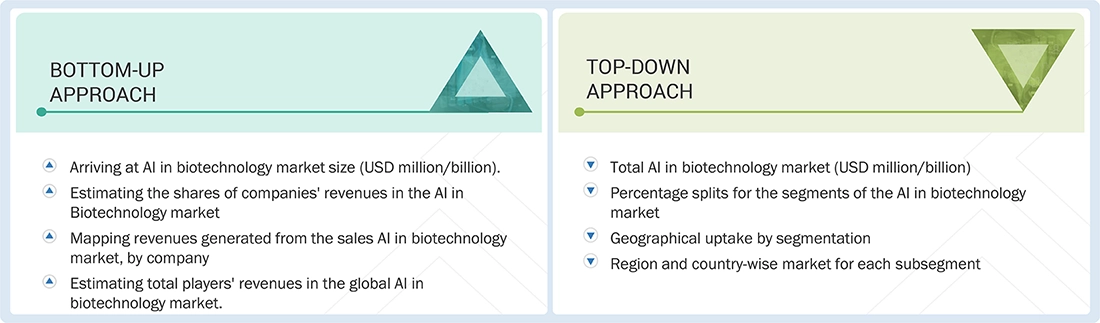
In the complete market engineering process, the top-down and bottom-up approaches, along with several data triangulation methods, were extensively used to estimate and forecast the market segments and subsegments listed in this report. Extensive qualitative and quantitative analysis was conducted on the entire market engineering process to identify key information and insights throughout the report.
Breakdown of Primary Interviews
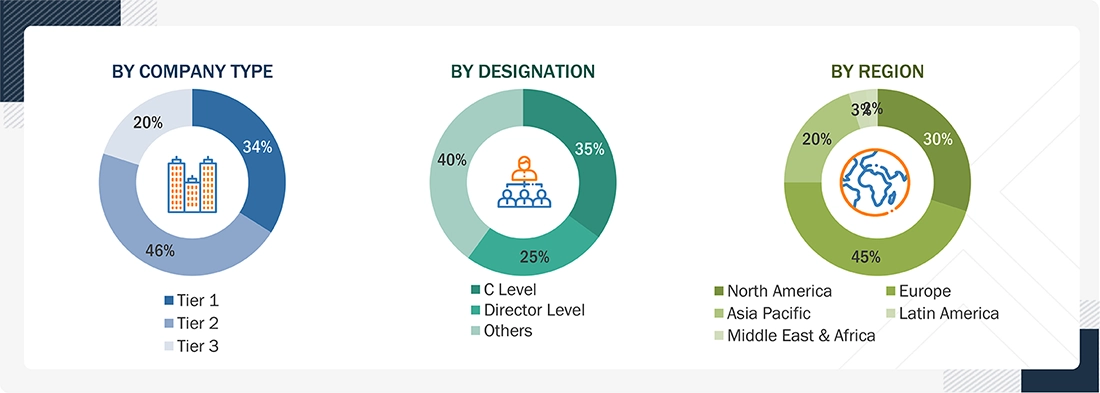
Note 1: Others include sales, marketing, and product managers.
Note 2: Tiers are defined based on a company’s total revenue, as of 2024: Tier 1 = >USD 1 billion, Tier 2 = USD 500 million to USD 1 billion, and Tier 3 = < USD 500 million.
To know about the assumptions considered for the study, download the pdf brochure
Market Size Estimation
The market size estimates and forecasts in this study are based on a combination of the bottom-up approach (revenue share analysis of leading players) and the top-down approach (evaluation of utilization, adoption, and penetration trends by offering, function, deployment mode, end user, and region).
Data Triangulation
After determining the overall market size from the estimation process described above, the market for AI in biotechnology was divided into various segments and subsegments. To finalize the overall market analysis and obtain accurate statistics for all segments and subsegments, data triangulation and market breakdown techniques were used whenever applicable. The data was cross-verified by examining different factors and trends from both the demand and supply sides of the market for AI in biotechnology.
Market Definition
The AI in biotechnology market includes technologies that use artificial intelligence to advance drug discovery, genomics, and personalized medicine. This market is defined by the growing utilization of machine learning and data analytics to improve research and development efficiency.
Stakeholders
- Healthcare IT service providers
- Pharmaceutical/Biopharmaceutical companies
- Biotechnology firms
- AI technology providers
- Academic & research institutions
- Academic medical centers/universities/hospitals
- Regulatory agencies
- Clinical research organizations (CROs)
- Genomic testing labs
- Government agencies
- Startups in AI and biotech
- Pharmaceutical supply chain partners
- Consulting firms
- Clinical trial management system providers
- Bioinformatics companies
- Advocacy groups
- Investors & financial institutions
Report Objectives
- To define, describe, and forecast the AI in biotechnology market by offering, function, deployment mode, end user, and region
- To provide detailed information regarding the major drivers, restraints, opportunities, and challenges influencing market growth
- To strategically analyze micromarkets with respect to individual growth trends, prospects, and contributions to the overall AI in biotechnology market
- To analyze market opportunities for stakeholders and provide details of the competitive landscape for key players
- To forecast the size of the AI in biotechnology market in five main regions (and their respective countries): North America, Europe, Asia Pacific, the Middle East & Africa, and Latin America
- To provide key industry insights, such as value chain, regulatory, patent, and recession impact analysis
- To profile the key players in the market and comprehensively analyze their core competencies
- To track and analyze competitive developments, such as product launches & upgrades, collaborations, partnerships, acquisitions, investments, contracts, agreements, alliances, mergers, funding, and expansions of the leading players in the market
- To benchmark players within the market using the company evaluation matrix, which analyzes market players on various parameters within the broad categories of business strategy, market share, and product offering
Get the Full AI in Biotechnology Market Report
Full forecast, segment splits, and company analysis for all AI in Biotechnology Market.
- US AI in Biotechnology Market
- Canada AI in Biotechnology Market
- UK AI in Biotechnology Market
- Germany AI in Biotechnology Market
- France AI in Biotechnology Market
- Italy AI in Biotechnology Market
- Spain AI in Biotechnology Market
- Japan AI in Biotechnology Market
- China AI in Biotechnology Market
- India AI in Biotechnology Market
- South Korea AI in Biotechnology Market
- Australia AI in Biotechnology Market
- Brazil AI in Biotechnology Market
- Mexico AI in Biotechnology Market
- Rest Of Europe AI in Biotechnology Market
Need a Tailored Report?
Customize this report to your needs
Get 10% FREE Customization
Customize This Report
