Laboratory Software Market

Laboratory Software Market by Solution (LIMS, ELN, LES, EDC, QMS), Technology (AI), Function (Workflow, Quality, Compliance, Analytics, Reporting), Industry (Pharma, Biotech, NGS, Genomics, Chemical, Petro, Agri, FnB, Oil, Gas) - Global Forecast to 2031



LABORATORY SOFTWARE MARKET SIZE, SHARE & GROWTH SNAPSHOT
Source: Secondary Research, Interviews with Experts, MarketsandMarkets Analysis
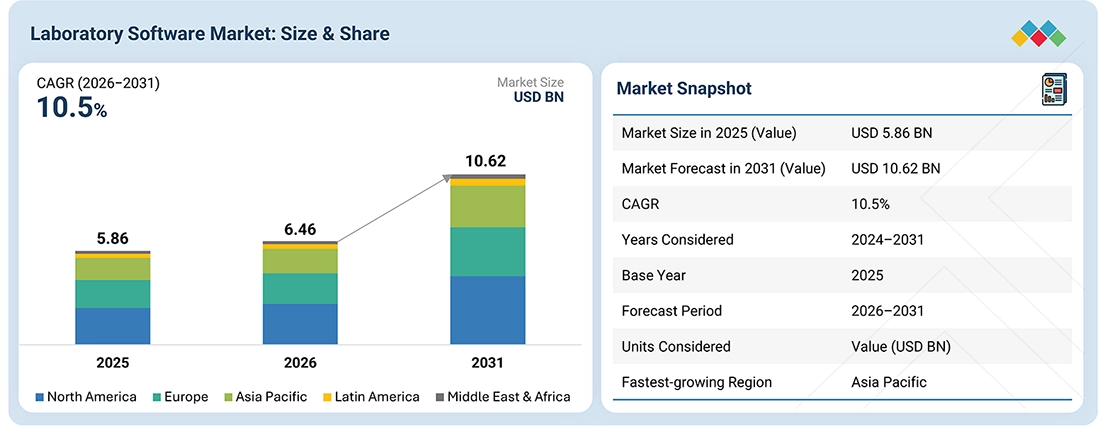
The global laboratory software market is projected to grow from USD 6.46 billion in 2026 to USD 10.62 billion by 2031, at a CAGR of 10.5% during the forecast period. The market was valued at USD 5.86 billion in 2025. The market is fueled by the rise in the demand for laboratory automation, increasing integration of laboratory informatics solutions, increased investment in research and development, and the stringent regulatory environment for clinical testing. Labs are increasingly using laboratory software that automates sample and workflow management, instrumentation integration, scientific data management, traceability, and quality management process. Increasing use of LIMS, ELN, LES, CDS and other laboratory informatics solutions is further fueling the market growth owing to the migration of labs from manual, fragmented, and paper-based processes to digital workflow processes. Further, increasing demand for data access in real time, analytics, and AI-based solutions is creating opportunities for more integrated and intelligent laboratory environment.
KEY TAKEAWAYS
-
MARKET SNAPSHOT:
Base Year Market Size (2025): USD 5.86 Billion
Current Market Size (2026): USD 6.46 Billion
Forecast Market Size (2031): USD 10.62 Billion
CAGR (2026–2031): 10.5% -
SEGMENT LEADERSHIP:
Regional Leader: North America dominates the market, with a share of 39.4% of the global laboratory software market in 2025.
Solution Type Leader: Laboratory Information Management Systems is projected to grow at the fastest rate during the forecast period.
Service Leader: Services held the largest share of 39.1% of the laboratory software market in 2025.
Technology Leader: AI-enabled lab software is projected to register the highest CAGR of 19.3% during the forecast period.
Function Leader: Sample & workflow management accounted for the largest share of the laboratory software market in 2025.
Industry Leader: Life science industries held the largest share of the laboratory software market. -
MARKET OUTLOOK & COMPETITIVE LANDSCAPE:
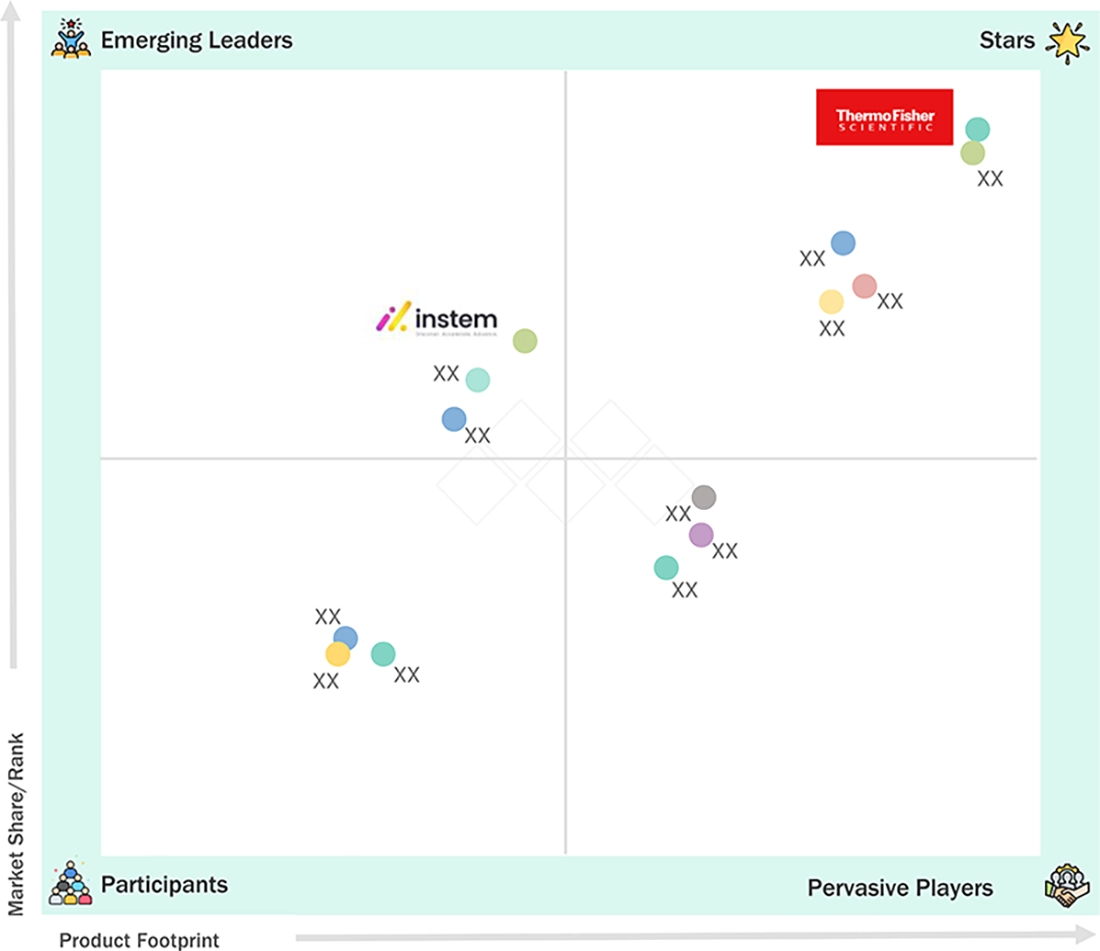
Thermo Fisher Scientific Inc., Labvantage Solutions Inc., LabWare, and STARLIMS Corporation were identified as some of the star players in the laboratory software market (global), given their strong market share and product footprint.
Benchling, CloudLIMS, Qbench Inc., and others have distinguished themselves among startups and SMEs by securing strong footholds in specialized niche areas, underscoring their potential as emerging market leaders.
The laboratory software market is driven by the rising need for efficient data management, increasing lab automation to boost productivity, and growing regulatory requirements for data integrity. Additionally, the expansion of R&D activities in pharmaceuticals, biotechnology and diagnostics along with the shift toward cloud-based and AI-enabled solutions is accelerating adoption.
TRENDS & DISRUPTIONS IMPACTING CUSTOMERS' CUSTOMERS
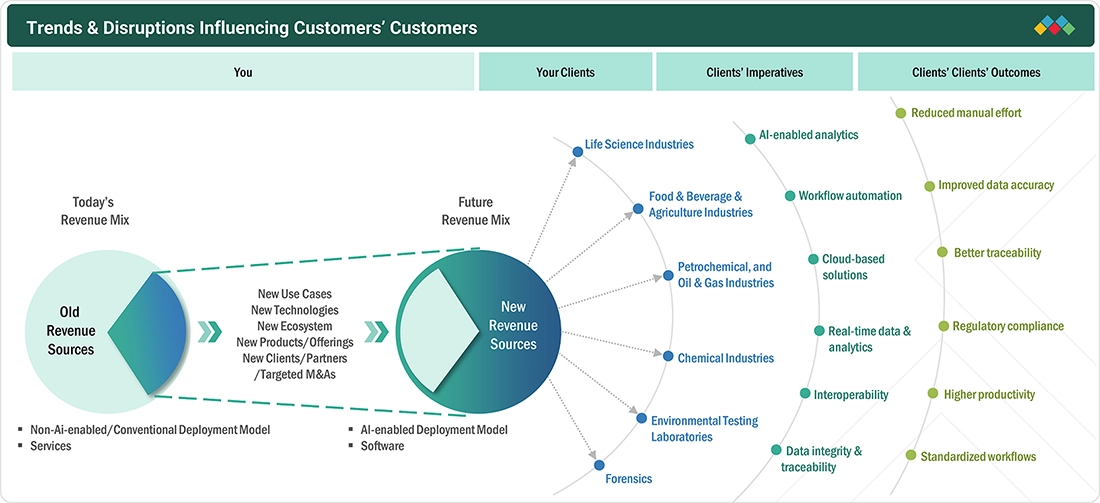
The laboratory software market is evolving rapidly as laboratories increasingly adopt automation, cloud-based platforms and AI-enabled tools. It addresses growing data volumes and improves operational efficiency. The rising focus on data integrity, regulatory compliance, and timely results is encouraging organizations to replace fragmented processes with connected digital workflows. As it enables standardized operations, improved data accessibility, and advanced analytics. These developments are transforming laboratory operations by creating more automated, connected, and data-driven environments.
Source: Secondary Research, Interviews with Experts, MarketsandMarkets Analysis
MARKET DYNAMICS

Level
-
Growing need for laboratory automation

-
Increasing adoption of integrated lab informatics solutions


Level
-
High implementation, maintenance, and service costs

-
Integration and Interoperability challenges


Level
-
Rising demand for real-time data and analytics

-
Rapid adoption of AI-enabled laboratory informatics


Level
-
Shortage of skilled medical laboratory technicians

-
Limited adoption of lab informatics solutions in SMEs

Source: Secondary Research, Interviews with Experts, MarketsandMarkets Analysis
Driver: Growing need for laboratory automation
As there is an increasing need for laboratory automation, laboratories are trying to reduce inefficient manual operations by automating them. Operations such as pipetting, specimen manipulation, plate transport, and data entry may be more prone to mistakes when done manually. Automated workstations and laboratory systems allow laboratories to reduce the likelihood of mistakes, boost throughput, and use their skilled labor force in doing more complex jobs. At the same time, the increasing use of automated instruments is generating larger volumes of laboratory data, creating a need for effective tools to capture, organize, analyze and share information. Laboratory software plays an important role in connecting instruments, workflows, and data, helping laboratories manage growing workloads while improving overall productivity and efficiency.
Restraint: High implementation, maintenance, and service costs
Even though the use of laboratory software can assist the lab in being more efficient and better at managing its data, the expenses associated with putting the systems into operation can be too high. Labs are required to buy software licenses, configure the system, integrate instruments, migrate data, validate and get regular technical support. All this can add substantial costs especially for small labs that with limited budget allocated. Also, maintenance, upgrading and special support can add up to overall budget. Therefore, the laboratories should calculate all the possible gains from the use of such a system, and only then decide whether to invest in informatics or not.
Opportunity: Rising demand for real-time data and analytics
Growing requirements for timely access to accurate laboratory information and analysis are opening up some interesting prospects for suppliers of laboratory software solutions. Data and need for its processing are constantly growing in laboratories of life sciences, pharmaceuticals, food and beverages, and chemical industries. LIMS, ELN, and CDS software solutions will allow unifying laboratory processes in order to monitor them, detect issues, perform analysis, and prepare reports. With growing attention of laboratories to timely decision-making, efficiency, data visualization and regulatory compliance, demand for software with real-time data access and advanced analytics capabilities is expected to increase.
Challenge: Shortage of skilled medical laboratory technicians
With increasing digitization and automation in the laboratory process, laboratories require employees that can work efficiently with informatics tools, handle laboratory data and make sense out of increasingly complex data. However, the challenge is to find such professionals who possess both the knowledge and skills to use digital tools or perform analytical tasks. Such skills gaps can impede organizations from adopting laboratory software and fully utilizing the potential of their informatics tools. Laboratories that have constrained budgets might face difficulties in recruiting such professionals. Therefore, the lack of skilled individuals can be an impediment in the adoption of laboratory software and utilization of digital technologies.
LABORATORY SOFTWARE MARKET: COMMERCIAL USE CASES ACROSS INDUSTRIES
| COMPANY | USE CASE DESCRIPTION | BENEFITS |
|---|---|---|
 |
Integrated laboratory informatics supporting sample management, laboratory automation, instrument connectivity, scientific data management, and multi-site laboratory workflows across life sciences and testing environments. | Improves laboratory efficiency and sample traceability, reduces manual data handling, strengthens data integrity, and enables better coordination across laboratory workflows. |
 |
Comprehensive laboratory informatics supporting sample and workflow management, data integration, laboratory automation, analytics, and quality processes across pharmaceutical, biotechnology, diagnostics, research, and testing laboratories. | Improves data accessibility and workflow visibility, reduces repetitive manual tasks, supports standardized processes, and helps laboratories make faster data-driven decisions. |
 |
Integrated laboratory management and automation supporting sample tracking, workflow execution, instrument connectivity, data management, quality control, and standardized laboratory processes across diverse industries. | Streamlines routine laboratory activities, improves data accuracy and traceability, reduces manual intervention, and supports consistent quality and regulatory compliance. |
 |
Digital laboratory informatics supporting sample and testing workflows, laboratory data management, quality processes, inventory, analytics, and regulatory compliance across clinical, life sciences, and testing environments. | Enhances sample visibility and traceability, simplifies laboratory workflows, improves data management, and supports quality, compliance, and operational efficiency. |
 |
Integrated analytical laboratory workflows supporting instrument connectivity, data acquisition and analysis, digital procedure execution, and standardized laboratory processes across pharmaceutical, chemical, and research applications. | Reduces manual steps, improves consistency and data integrity, simplifies analytical workflows, and enables laboratories to manage testing activities more efficiently. |
Logos and trademarks shown above are the property of their respective owners. Their use here is for informational and illustrative purposes only.
MARKET ECOSYSTEM
The laboratory software market ecosystem comprises key players such as (Thermo Fisher Scientific Inc., LabVantage Solutions Inc., LabWare, STARLIMS Corporation, and Agilent Technologies, Inc.) which provide laboratory software and informatics solutions across diverse laboratory environments. Other players, including (CloudLIMS, SciNote LLC, L7 Informatics, Inc., and QBench Inc.) contribute specialized and cloud-based laboratory solutions. Government and regulatory bodies (U.S. Food and Drug Administration (FDA),Eruopean Union (EU), National Institutes of Health (NIH), Centers for Medicare & Medicaid Services (CMS), and Centers for Disease Control and Prevention (CDC)) influence laboratory data standards, interoperability, quality, and regulatory requirements. The ecosystem also includes end users (Mayo Clinic, AstraZeneca, Novo Nordisk, Cleveland Clinic, and Eurofins) which implement laboratory software to support clinical, research, testing, and pharmaceutical workflows.
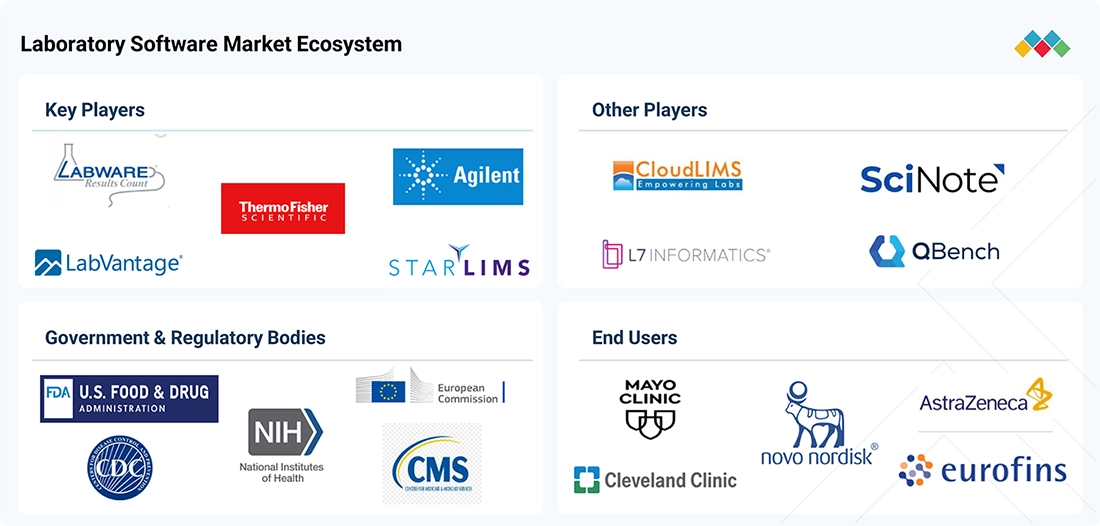
Logos and trademarks shown above are the property of their respective owners. Their use here is for informational and illustrative purposes only.
MARKET SEGMENTS
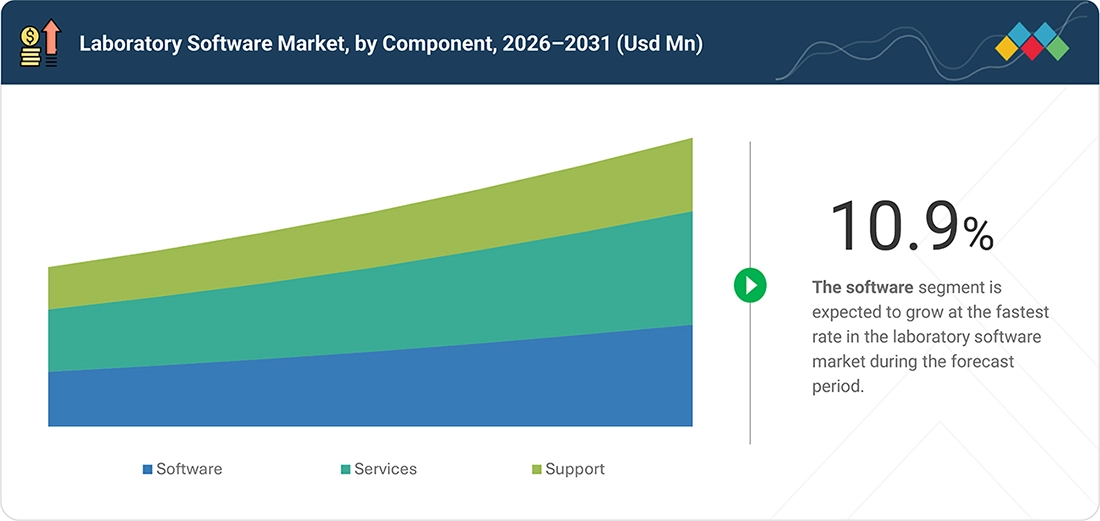
Source: Secondary Research, Interviews with Experts, MarketsandMarkets Analysis
Laboratory Software Market, By Solution Type
In 2025, Laboratory Information Management Systems (LIMS) held the largest market share within the laboratory software market due to their extensive use as an essential system that manages sample handling, laboratory operations, and data generation. LIMS enables laboratories to manage huge amounts of information, automate processes, integrate with lab instrumentation, and ensure traceability during the entire process. With its broad scope of application in pharmaceutical and biotechnological, diagnostic, food and beverages, chemical, environmental, and research laboratories, LIMS can be considered crucial for modern laboratory practice.
Laboratory Software Market, By Component
In 2025, the service segment held the largest share in the laboratory software market due to the practical requirements that laboratories have for support in implementing and managing their software systems. Software implementation often includes tasks such as configuration, integration, migration of data, validation, training, support and maintenance. All these become particularly important when laboratories need to integrate the software with instruments, existing systems, and processes. Along with the growing complexity of the processes in laboratories and increasing demands concerning data integrity from regulators, organizations are increasingly turning to specific services to ensure proper functioning of the system and comply with the standards. Cloud- and SaaS-oriented solutions further fuel the demand for implementation, integration, customization, and migration services.
Laboratory Software Market, By Technology Maturity
As of 2025, non-AI-enabled/Conventional laboratory software accounted for the largest market share since many laboratories still depend on existing systems to manage their processes, samples, data, quality procedures, and reports. Many laboratories do not integrate artificial intelligence into their software as they have existing systems and validated processes that meet their demands without the use of artificial intelligence. There are also factors like implementation costs, system integration, data readiness, validation needs, and expertise needed that may lead laboratories to adopt artificial intelligence gradually. However, more laboratories are looking into the capabilities of artificial intelligence in terms of automation, analysis, anomaly detection, and decision-making, thus supporting AI-enabled software during the forecast period.
Laboratory Software Market, By Function
In 2025, Sample and Workflow Management accounted for the largest share of the laboratory software market. This is justified by the increased requirement to handle increasing sample volumes efficiently and effectively. There is an increasing trend among laboratories towards using digital tools for the purpose of sample registration, tracking, processing, and workflow management. With an increasing trend of laboratory automation, integration of instrumentation, and digital workflows, the demand for sample and workflow management is expected to grow even further.
Laboratory Software Market, By Industry
In 2025, life science industries accounted for the largest share of the laboratory software market. It is supported by extensive research, development, testing and quality-control activities across industries. These organizations handle large volumes of laboratory data, rely on digital systems to manage samples, automate workflows, connect instruments and maintain data integrity. The growing development of biologics, genomics, personalized medicine and other advanced therapies is further increasing the complexity of laboratory operations and the need for effective informatics solutions. In addition, stringent quality and regulatory requirements encourage life science organizations to use laboratory software to improve traceability, standardize processes and support efficient research activities.
REGION
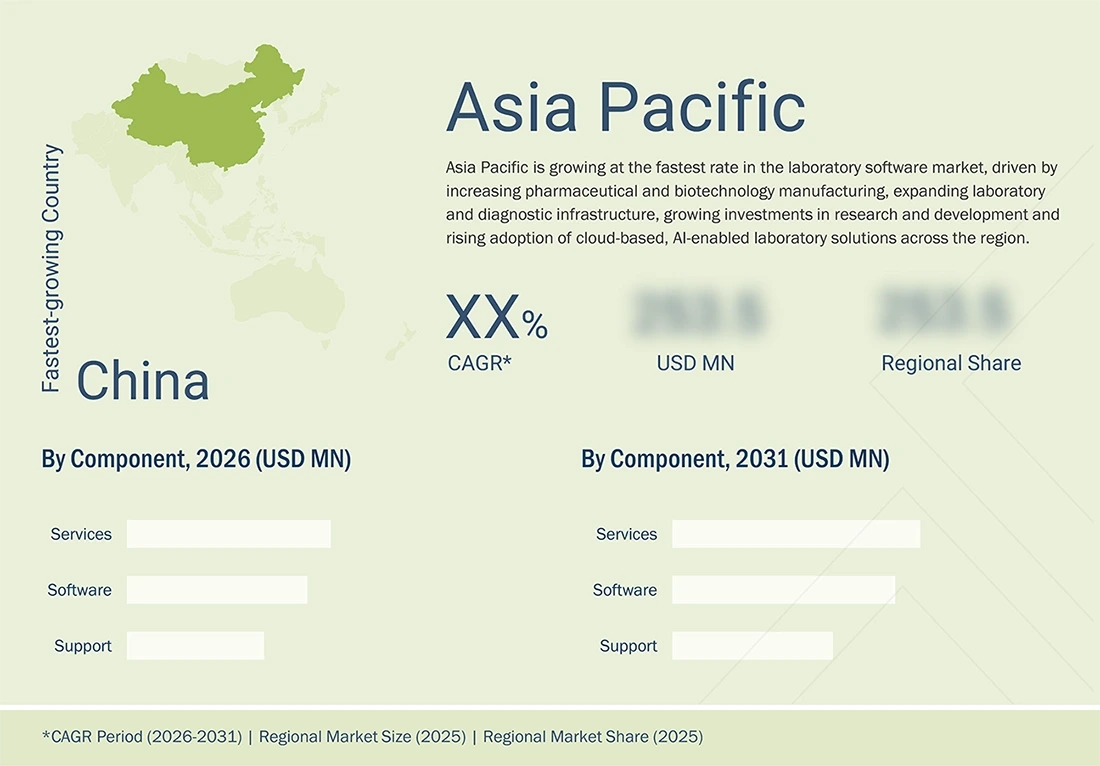
Asia Pacific to be fastest-growing region in laboratory software market during forecast period
Asia Pacific is expected to register the fastest growth in the Laboratory Software market during the forecast period. This growth is supported by the expansion of pharma-biotechnology activities, increasing R&D investments and the gradual modernization of laboratory infrastructure across the region. Growing adoption of automation and digital technologies is encouraging laboratories to move from manual and fragmented processes toward more connected workflows. The expansion of CROs, CDMOs, clinical laboratories and research institutions is also creating greater demand for software. In addition, increasing investments in healthcare and life sciences and the growing focus on improving laboratory efficiency are expected to support the adoption of laboratory software across major Asia Pacific markets.
LABORATORY SOFTWARE MARKET: COMPANY EVALUATION MATRIX
In the laboratory software market matrix, Thermo Fisher Scientific Inc. (Star) maintains a strong market position. It is supported by its broad laboratory informatics portfolio, established customer base, global presence and capabilities across laboratory data management, workflow automation, instrument connectivity and laboratory operations. The company serves a wide range of industries, including pharmaceuticals, biotechnology, diagnostics and testing laboratories.Instem (Emerging Leader) is gaining momentum through its focus on laboratory transformation and compliant laboratory operations. Its solutions support laboratory workflow management, data integrity, instrument integration, quality processes and analytics, while its growing focus on AI-enabled capabilities further strengthens its innovation profile.
Source: Secondary Research, Interviews with Experts, MarketsandMarkets Analysis
KEY MARKET PLAYERS
- Thermo Fisher Scientific Inc. (US)
- LabVantage Solutions Inc. (US)
- LabWare (US)
- STARLIMS Corporation (US)
- Agilent Technologies, Inc. (US)
- Waters Corporation (US)
- LabLynx, Inc. (US)
- Dassault Systèmes (France)
- Revvity (Perkinelmer) (US)
- Confience (US)
- Labworks (US)
- IDBS (UK)
- Instem (UK)
- Novatek International Inc. (Canada)
- Agaram Technologies Pvt Ltd (India)
- Siemens (Germany)
- Caliber Technologies (US)
- Clinsys,Inc. (US)
- Labtrack (US)
- Labkey (US)
- Benchling (US)
MARKET SCOPE
| REPORT METRIC | DETAILS |
|---|---|
| Market Size in 2025 (Value) | USD 5.86 BN |
| Market Size in 2026 (Value) | USD 6.46 BN |
| Market Forecast in 2031 (value) | USD 10.62 BN |
| Growth Rate | CAGR of 10.5% from 2026-2031 |
| Years Considered | 2024-2031 |
| Base Year | 2025 |
| Forecast Period | 2026-2031 |
| Units Considered | Value (USD Billion) |
| Report Coverage | Revenue forecast, company ranking, competitive landscape, growth factors, and trends. |
| Segments Covered |
|
| Regions Covered | North America, Asia Pacific, Europe, Latin America, Middle East & Africa |
WHAT IS IN IT FOR YOU: LABORATORY SOFTWARE MARKET REPORT CONTENT GUIDE
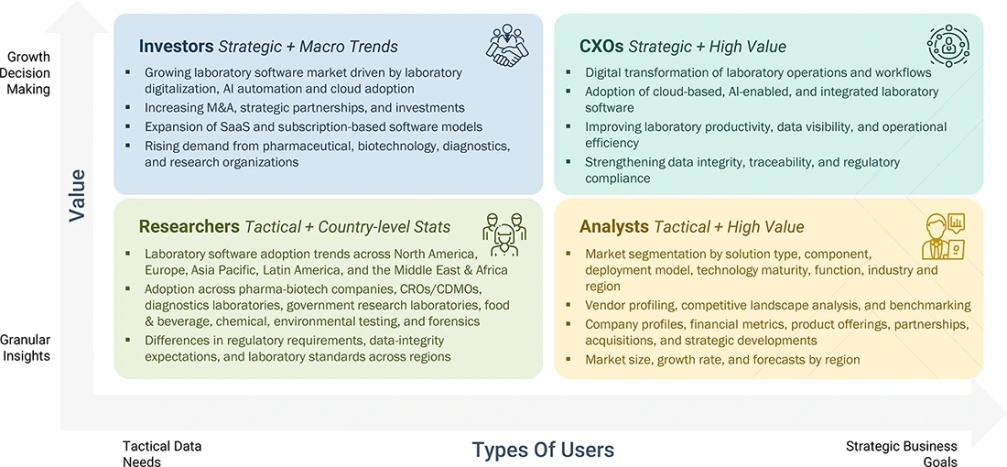
DELIVERED CUSTOMIZATIONS
We have successfully delivered the following deep-dive customizations:
| CLIENT REQUEST | CUSTOMIZATION DELIVERED | VALUE ADDS |
|---|---|---|
| Local Competitive Landscape | Profiling of leading laboratory software providers, including Thermo Fisher Scientific Inc., LabVantage Solutions Inc., LabWare, STARLIMS Corporation, Agilent Technologies Inc. along with other relevant providers. The assessment covers laboratory software portfolios, solution capabilities, AI adoption, deployment models, workflow functionality, integration and interoperability, industries served, and geographic presence. | Enables competitive benchmarking, identifies differences in product breadth and technology capabilities, supports vendor shortlisting and partnership evaluation, and helps assess companies based on laboratory workflow coverage, AI capabilities, deployment flexibility, integration capabilities, and industry reach. |
| Regional Market Entry Strategy | Assessment of laboratory software adoption across North America, Europe, Asia Pacific, Latin America, and the Middle East & Africa, considering laboratory digitalization, pharmaceutical and biotechnology activity, research and testing infrastructure, regulatory requirements, automation adoption, cloud migration, and the presence of CROs, CDMOs, clinical laboratories, and other laboratory-intensive organizations. | Helps identify regional growth opportunities, evaluate market-entry requirements, and support localization of laboratory software strategies according to laboratory infrastructure, regulatory expectations, digital maturity, industry composition, and demand for automation and connected laboratory workflows. |
| Local Risk & Opportunity Assessment | Evaluation of laboratory software adoption barriers and opportunities, including high implementation and maintenance costs, integration and interoperability challenges, data migration, validation requirements, cybersecurity and data governance, shortage of skilled laboratory professionals, and limited adoption among smaller laboratories. Opportunities assessed include cloud-based deployment, SaaS models, AI-enabled analytics, workflow automation, real-time data access, and increasing demand for integrated laboratory informatics. | Supports risk assessment and investment planning by identifying barriers that may delay software adoption and highlighting areas where technology, integration, services, or deployment models can address unmet laboratory needs. |
| Technology Adoption by Region | Assessment of regional adoption of AI-enabled and conventional laboratory software, cloud-based and on-premise deployment, laboratory automation, advanced analytics, instrument integration, interoperability, and connected laboratory workflows. The analysis considers differences in digital maturity, regulatory requirements, laboratory infrastructure, and adoption patterns across major markets. | Supports region-specific technology strategies and product roadmaps, helps prioritize investments in AI, cloud, automation, and interoperability, and identifies emerging opportunities for laboratory software providers across developed and developing laboratory markets. |
RECENT DEVELOPMENTS
- May 2026 : Agilent Technologies introduced OpenLab Sync, a Lab Execution System designed to provide guided, standardized, and traceable digital execution of laboratory procedures. The platform also incorporates AI-supported capabilities for instrument integration, workflow configuration, system monitoring, semantic search, and activity summarization, reinforcing the industry's shift toward intelligent and digitally executed laboratory workflows.
- May 2026 : STARLIMS completed the acquisition of Lonza’s MODA Platform, strengthening its laboratory informatics portfolio and expanding its capabilities across manufacturing execution and quality workflows. The transaction enhances the integration of laboratory, quality, and manufacturing processes, supporting more connected and streamlined operations within regulated industries.
- March 2026 : LabVantage Solutions introduced LabVantage CORTEX, an AI, analytics, and automation platform integrated with its LIMS. The platform uses agentic AI and cloud-native automation to support laboratory workflows, including sample management, stability studies, predictive quality control, and compliance monitoring. The development highlights the increasing integration of AI and automation into core laboratory informatics platforms.
- July 2025 : Clinisys completed the acquisition of Orchard Software from Francisco Partners, bringing Orchard’s laboratory information systems together with Clinisys’ broader laboratory informatics capabilities. The transaction expanded Clinisys’ presence across healthcare, life sciences, public health, and diagnostic laboratory settings, while strengthening its ability to support diverse laboratory workflows.
- July 2025 : Instem completed the acquisition of Xybion Digital, adding its Pristima preclinical study-management capabilities to Instem’s portfolio. The transaction strengthened Instem’s position in preclinical research and expanded its software capabilities for life sciences R&D and laboratory-based research workflows.
Table of Contents
 Exclusive indicates content/data unique to MarketsandMarkets and not available with any competitors.
Methodology
The study involved several key activities to estimate the current size of the laboratory software market. Extensive secondary research was conducted to gather information on this market. The next step was to validate the findings, assumptions, and size estimates by consulting industry experts throughout the value chain through primary research. Various methods were employed, including top-down and bottom-up approaches, to estimate the overall market size. Following this, market segmentation and data triangulation techniques were utilized to determine the size of specific segments and subsegments within the laboratory software market.
Secondary Research
This research study involved the wide use of secondary sources, directories, databases such as Dun & Bradstreet, Bloomberg Businessweek, and Factiva; white papers, annual reports, and companies’ house documents, investor presentations; and the SEC filings of companies. Secondary research was used to identify and collect information useful for an extensive, technical, market-oriented, and commercial study of the laboratory informatics market. It was also used to obtain important information about the key players and market classification & segmentation according to industry trends to the bottom-most level and key developments related to market and technology perspectives. A database of the key industry leaders was also prepared using secondary research.
Some of the key secondary sources referred to for this study include:
- U.S. Food and Drug Administration (FDA)
- European Medicines Agency (EMA)
- International Organization for Standardization (ISO)
- Clinical and Laboratory Standards Institute (CLSI)
- World Health Organization (WHO)
- International Council for Harmonisation of Technical Requirements for Pharmaceuticals for Human Use (ICH)
- International Society for Pharmaceutical Engineering (ISPE)
- Society for Laboratory Automation and Screening (SLAS)
- U.S. Centers for Medicare & Medicaid Services (CMS)
- U.S. Centers for Disease Control and Prevention (CDC)
- U.S. Securities and Exchange Commission
- Investor Presentations, SEC Filings, and Company Annual Reports
- White Papers, Scientific Journals/Magazines, and News Articles
- Paid Databases, such as Factiva, D&B Hoovers, and Bloomberg
Primary Research
In the primary research process, various sources from both the supply and demand sides were interviewed to obtain qualitative and quantitative information for this report. Primary sources are mainly industry experts from the core and related industries and preferred suppliers, manufacturers, distributors, technology developers, researchers, and organizations related to all segments of this industry’s value chain. In-depth interviews were conducted with various primary respondents, including key industry participants, subject-matter experts (SMEs), C-level executives of key market players, and industry consultants, among other experts, to obtain and verify the critical qualitative and quantitative information as well as assess prospects.
Primary research was conducted to identify segmentation types; industry trends; key players; and key market dynamics such as drivers, restraints, opportunities, challenges, industry trends, and strategies adopted by key players.
Breakdown of the Primary Respondents:
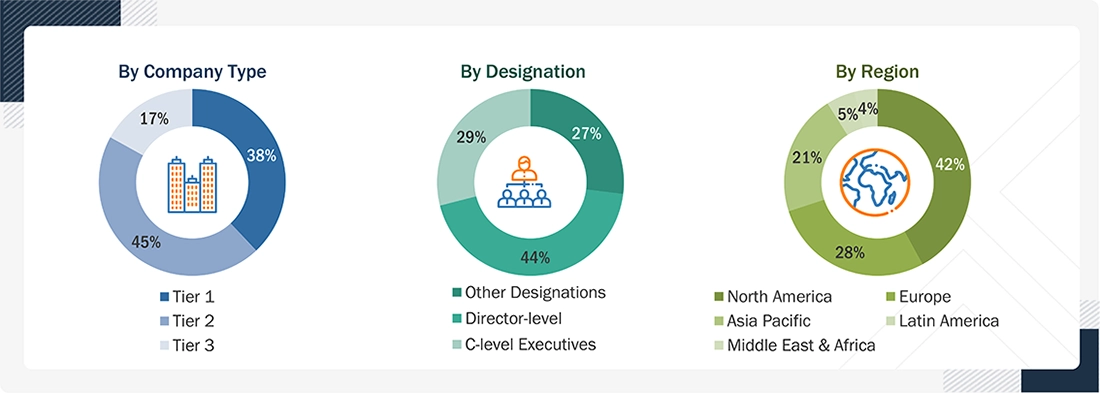
*Others include sales managers, marketing managers, and product managers.
Note: Tiers are defined based on a company’s total revenue, as of 2025: Tier 1 = >USD 1 billion, Tier 2 = USD 500 million to USD 1 billion, and Tier 3 = <USD 500 million.
To know about the assumptions considered for the study, download the pdf brochure
Market Size Estimation
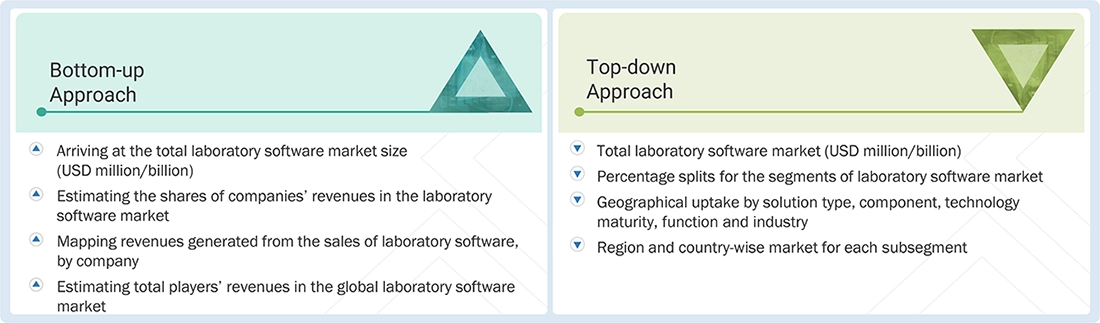
The market size estimates and forecasts provided in this study are derived through a mix of the bottom-up approach (revenue share analysis of leading players) and top-down approach (assessment of utilization/adoption/penetration trends, by solution type, component, technology maturity, function, industry, and region).
Laboratory Software Market : Top-Down and Bottom-Up Approach
Data Triangulation
After arriving at the overall market size using the market size estimation processes, the market was split into several segments and subsegments. To complete the overall market engineering process and arrive at the exact statistics of each market segment and sub-segment, the data triangulation and market breakdown procedures were employed, wherever applicable. The data was triangulated by studying various factors and trends from both the demand and supply sides in the laboratory software market.
Market Definition
Laboratory software refers to solutions designed specifically to support laboratory operations, including the management of scientific data, laboratory workflows, instruments, compliance, and documentation. It encompasses data acquisition, lab automation, instrument interfacing, laboratory networking, data processing, specialized data management systems, laboratory information management systems, scientific data management systems (including data mining and data warehousing), and knowledge management (including the use of electronic laboratory notebooks), among others.
Key Stakeholders
- Laboratory software providers
- Platform providers
- Technology providers
- System integrators
- Healthcare IT service providers
- Pharmaceutical & biotechnology companies
- Research and consulting firms
- Process industries
- Forums, alliances, and associations
- Distributors
- Venture capitalists
- Government organizations
- Academic research institutes
- Institutional investors and investment banks
- Investors/Shareholders
- Consulting companies in the sector
- Raw material and component manufacturers
Report Objectives
- To define, describe, and forecast the global Laboratory Software market based on solution type, component, technology maturity, function, industry, and region
- To provide detailed information regarding the major factors influencing the growth of the market (drivers, restraints, opportunities, and challenges)
- To strategically analyze micro markets with respect to individual growth trends, prospects, and contributions to the overall market
- To analyze the opportunities in the market for stakeholders and provide details of the competitive landscape for market leaders
- To forecast the size of the market segments with respect to five main regions, namely, North America, Europe, Asia, Latin America and Middle East & Africa
- To profile key market players and comprehensively analyze their product portfolios, market positions, and core competencies
- To track and analyze competitive developments such as acquisitions; product launches and upgrades; expansions; agreements, partnerships, and acquisitions; and R&D activities in the Laboratory Software market
Available customizations:
With the given market data, MarketsandMarkets offers customizations as per your company’s specific needs. The following customization options are available for the report:
Company Information
- Detailed analysis and profiling of additional market players (up to 5)
Geographic Analysis
- Further breakdown of the Rest of Asia Pacific radiation dose management market into Taiwan, New Zealand, Thailand, Singapore, Malaysia, and other countries.
- Further breakdown of the Rest of Europe radiation dose management market into Russia, Austria, Finland, Turkey, Norway, Poland, Portugal, Romania, Denmark, and other countries.


Personalize This Research
- Triangulate with your Own Data
- Get Data as per your Format and Definition
- Gain a Deeper Dive on a Specific Application, Geography, Customer or Competitor
- Any level of Personalization
Let Us Help You
- What are the Known and Unknown Adjacencies Impacting the Laboratory Software Market
- What will your New Revenue Sources be?
- Who will be your Top Customer; what will make them switch?
- Defend your Market Share or Win Competitors
- Get a Scorecard for Target Partners

Custom Market Research Services
We Will Customise The Research For You, In Case The Report Listed Above Does Not Meet With Your Requirements
Get 10% Free CustomisationTESTIMONIALS

JAYANT RAJPUROHIT
Director of Market Insights, Data and Analytics
SFI Health,
Leading Pharmaceutical Companywww.sfihealth.com/

We at SFI Health approached MarketsandMarkets for an Opportunity Assessment on "Incidence and Prevalence of Focus Indications" as we wanted to know the most attractive HCPs like Physician, Functional MD, Naturopath and Pharmacist. The project was critical for us to ensure our focus on the right target which would enable sustainable growth and profitability for SFI Health. The business insights provided exceeded our expectations and we were extremely impressed. The team at MarketsandMarkets is highly professional and detail oriented and very well understood our business needs. MarketsandMarkets offers a unique combination of expertise and dedicated engagement model. We identified 2 new products to be launched in coming months, based on the research findings provided by MarketsandMarkets. We are happy with the services and would strongly recommend MarketsandMarkets to my peers in the industry.

BEATRIZ DE LA CALLE
Head of Commercial Analytics
Qualicaps,
Leading Pharmaceutical Companywww.qualicaps.com/

We partnered with MarketsandMarkets for an assessment study on hard empty capsules. The team was extremely professional in understanding our business requirements and we received timely responses to all our queries. The market intelligence and the recommendations has met our business requirements. We were extremely impressed to see the final study results; it really exceeded our expectations. The market intelligence offered by MarketsandMarkets, and clarity on next steps will help us achieve our business objective for the Year 2021. We are happy with the services and would strongly recommend MarketsandMarkets to my peers in the industry.

Bob Williams,
Senior Director Business Development & Innovation
Bracco Diagnostics Inc.,
Italian Multinational in life sciences sector and a World Leader in imaging diagnosticsimaging.bracco.com/us-en
We were pleased with targeted insights that MarketsandMarkets identified from a custom study on the 'Radiation Dose Management Solutions Market'. Your team identified and characterized the market participants as well as underlying trends accurately. This study was useful to Bracco in formulating business strategies for our dose monitoring product lines and we thank MarketsandMarkets for the job well done.
Cody Coonradt,
Market Development and Strategy Manager
3M Health Information Systems,
Leader in Health care Coding, Payment & Analytics Solutions.www.3m.com/3M/en_US/health-information-systems-us
The value for our organization comes from three things: depth of research, specificity of segments and being easy to work with. As important as the first two are, the third can't be underestimated. MarketsandMarkets, maybe more than any other research vendor, wants to know what is top of mind for our team and what big questions we are grappling to answer.
Their customer first approach and high value engagement model, have given us great analysis and excellent value for money
- Canada Laboratory Informatics Market
- US Laboratory Informatics Market
- Germany Laboratory Informatics Market
- UK Laboratory Informatics Market
- France Laboratory Informatics Market
- Italy Laboratory Informatics Market
- Spain Laboratory Informatics Market
- Japan Laboratory Informatics Market
- China Laboratory Informatics Market
- India Laboratory Informatics Market
- Brazil Laboratory Informatics Market
- Mexico Laboratory Informatics Market
- Rest Of Europe Laboratory Informatics Market
- Rest Of Asia Pacific Laboratory Informatics Market
- Rest Of Latin America Laboratory Informatics Market
Growth opportunities and latent adjacency in Laboratory Software Market






Freddie
Jun, 2022
Which are the major growth influencing factors for the Laboratory Informatics Market?.
William
Jun, 2022
Which are the major growth boosting factors for the North American region in the Laboratory Informatics Market?.
Archie
Jun, 2022
By type of solutions, which of the segment will hold the major share of the Laboratory Informatics Market?.