
Europe Analytical Standards Market (2024-2029)

The Europe Analytical Standards Market was valued at $59 Million in 2024 and projected to reach to $77.2 Million by 2029, representing a compound annual growth rate of 4.6%. Europe's XRF/XRD Spectroscopy analytical standards market is positioned for consistent growth through 2029, supported by robust pharmaceutical manufacturing, medical device production, and stringent regulatory frameworks.


| Market Size in | USD 26.32 MN |
| Market Forecast in | |
| CAGR | |
| Forecast Period | |
| Units Considered | Value (USD MN) |
Europe Analytical Standards Market Trends and Insights
- Xrf/Xrd Spectroscopy technologies are critical for material composition analysis and quality assurance in healthcare applications, driving demand for certified analytical standards.
- The 4.6% compound annual growth rate reflects increasing adoption of Xrf/Xrd Spectroscopy across pharmaceutical, clinical diagnostics, and medical device manufacturing sectors. Xrf/Xrd Spectroscopy enables precise elemental and crystalline phase identification, essential for validating pharmaceutical formulations and ensuring compliance with regulatory standards.
- Between 2024 and 2029, Xrf/Xrd Spectroscopy is expected to benefit from heightened quality control requirements and technological advancements in analytical instrumentation.
- The segment's growth trajectory underscores the healthcare industry's commitment to leveraging Xrf/Xrd Spectroscopy for enhanced product safety and efficacy verification..
Key Market Statistics
- CAGR (2024-2029) 4.6% CAGR
- Market Size, 2024 ~USD 59 Million
- Forecast, 2029 ~USD 77.2 Million
- Geography Europe
Europe Analytical Standards Market Overview
Market Valuation :
Europe's XRF/XRD Spectroscopy segment in the Analytical Standards Market is valued at $59.0 million in 2024, representing a significant portion of healthcare quality assurance infrastructure across the region.
Growth Trajectory :
The European market is projected to grow from $59.0 million (2024) to $77.2 million (2029) at a 4.6% CAGR, demonstrating steady expansion driven by regulatory compliance and material analysis demands.
Regional Leadership :
Germany leads European adoption with $133.5 million in market size, followed by the UK at $106.8 million, reflecting strong pharmaceutical and medical device manufacturing sectors requiring certified analytical standards.
Regulatory Drivers :
Stringent European healthcare regulations and ISO/CE certification requirements are propelling demand for XRF/XRD spectroscopy standards, ensuring product quality and safety across medical applications.
Europe Analytical Standards Market Dynamics
- The region's emphasis on quality assurance and material composition analysis in healthcare applications continues to drive certified standard adoption across laboratories and manufacturing facilities. Key European markets, particularly Germany and the UK, are experiencing increased investment in analytical infrastructure.
- The 4.6% CAGR reflects steady demand from healthcare institutions, contract research organizations, and medical device manufacturers seeking compliance with European regulatory standards.
- This growth trajectory is expected to continue as healthcare quality standards become increasingly sophisticated..
Market Ecosystem
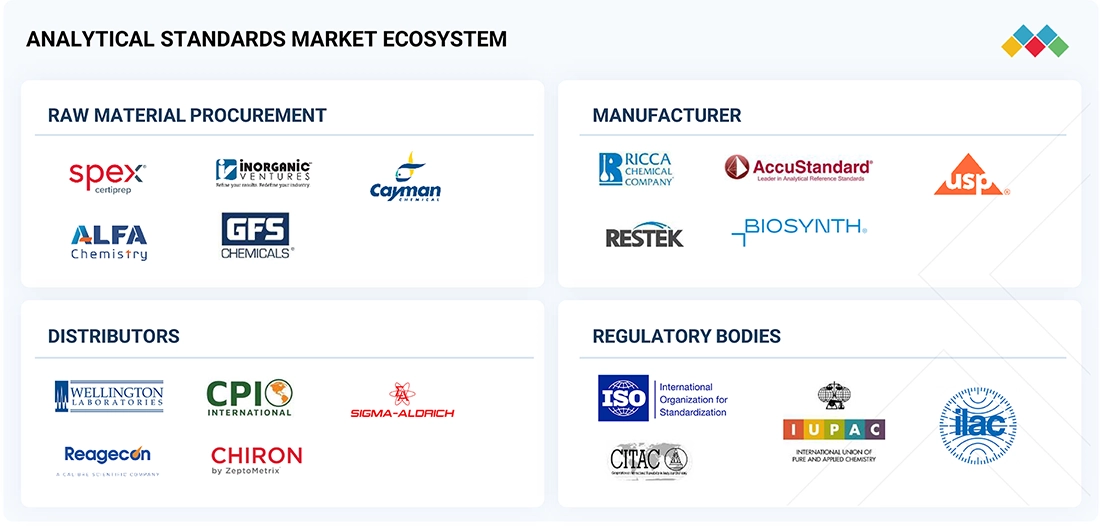
ANALYTICAL STANDARDS MARKET: GROWTH, SIZE, SHARE, AND TRENDS: COMMERCIAL USE CASES ACROSS INDUSTRIES
| COMPANY | USE CASE DESCRIPTION | BENEFITS |
|---|---|---|
 |
Merck launched ChemisTwin, a digital reference materials platform that automates sample identification, purity verification, and degradation analysis through calibrated digital algorithms. | The platform helps labs enhance traceability, speed up testing, and reduce repetitive manual tasks. By converting physical reference materials into secure digital records, users can detect inconsistencies faster, improve data reliability, and ensure regulatory compliance across pharma, food, and environmental applications. |
 |
Restek developed the Michigan/Missouri Residual Solvents Standard Mix to support state-specific cannabis and environmental testing protocols. The standard includes 24 compounds formulated at precise concentrations, helping labs validate GC and GC-MS methods for volatile organic compound (VOC) and residual solvent monitoring in soil, air, and plant matrices. | The mix offers verified accuracy, reproducibility, and extended stability, enabling labs to create flexible calibration curves and maintain data integrity. |
 |
Agilent’s cannabis and hemp testing standards are being widely adopted by environmental and food safety labs to detect contaminants such as residual solvents, heavy metals, pesticides, and mycotoxins in plant-based and derivative products. | Enables reliable quantification of trace contaminants, ensuring product safety and regulatory compliance. Labs benefit from consistent calibration and higher confidence in test accuracy. |
 |
Spex CertiPrep provides high-quality Certified Reference Materials (CRMs) and calibration standards that are widely used by environmental and industrial testing labs for elemental, inorganic, and organic analysis. | Enables precise trace-metal and organic contaminant analysis, improving data reliability and regulatory compliance. Labs benefit from faster turnaround, minimized retesting, and consistent quality control. |
Logos and trademarks shown above are the property of their respective owners. Their use here is for informational and illustrative purposes only.
Related Ecosystem
Analytical And Scientific Instrumentation
- Environmental Testing
- Gas Chromatography
- Polymerase Chain Reaction (PCR)
- Automated Liquid Handling Systems
- Flow Cytometry
- Thermo Fisher Scientific Inc.
- Danaher Corporation
- Agilent Technologies, Inc.
- Shimadzu Corporation
- Merck KGaA
Biotechnology
- Reagents
- Polymerase Chain Reaction (PCR)
- Stem Cells
- Assay Kits
- Flow Cytometers
- Thermo Fisher Scientific Inc.
- Merck KGaA
- Danaher Corporation
- Agilent Technologies, Inc.
- Bio-Rad Laboratories, Inc.
Key Takeaways
- Xrf/Xrd Spectroscopy segment valued at $59.0M in 2024, expanding to $77.2M by 2029 at 4.6% CAGR
- Xrf/Xrd Spectroscopy is essential for elemental analysis and phase identification in pharmaceutical quality control
- Regulatory compliance and heightened safety standards are primary drivers of Xrf/Xrd Spectroscopy adoption in healthcare
- Technological advancements in Xrf/Xrd Spectroscopy instrumentation are accelerating market penetration through 2029
Analytical Standards Market Report Scope
| Report Metric | Details |
|---|---|
| Base Year | 2024 |
| Fastest Growing Segment | MASS SPECTROSCOPY (Type) |
| Forecast Period | 2024–2029 |
| Growth Rate | CAGR of 5.9% from 2024 to 2029 |
| Largest Segment | SPECTROSCOPY (Technique) |
| Market Size Base Year (Billions) | ~USD 1.53 (2024) |
| Revenue Forecast (Billions) | ~USD 2.16 (2029) |
| Segments Covered | Technique, Type, Category, Application, Methodology |
Europe Analytical Standards Market Report Segmentation
5 segment dimensions are covered across the global market.
By Technique
- Chromatography
- Physical Property Testing
- Spectroscopy
- Titrimetry
By Type
- Antibiotic Standards
- Aroclor/Pcb And Dioxin Standards
- Atomic Absorption Spectroscopy
- Biofuel Standards
- Biomarker Standards
- Carbohydrate Standards
- Clinical Toxicology Standards
- Color Reference Testing
- Cosmetic Standards
- Doping Standards
- Drugs-Of-Abuse Standards
- Fatty Acid/Lipid Standards
- Flame Retardants Standards
- Flavor & Fragrance Standards
- Fluorescent Microparticle Standards
- Food Additive Standards
- Gas Chromatography
- Gasoline, Diesel, And Petroleum Standards
- Gmo (Genetically Modified Organism) Standards
- Gmo Standards
- Herbal Drug/Phytopharmaceutical Standards
- Hormone Standards
- Hormone Testing Standards
- Ion Chromatography
- Ir Spectroscopy
- Liquid Chromatography
- Mass Spectroscopy
- Microplastic Testing Standards
- Mycotoxin Standards
- Nuclear Magnetic Resonance Spectrometry
- Nuclear Magnetic Resonance Spectroscopy
- Other Chromatography Standards
- Other Clinical Diagnostics Standards
- Other Environment Standards
- Other Food & Beverage Standards
- Other Forensic Standards
- Other Physical Property Testing Standards
- Other Spectrometry Standards
- Other Spectroscopy Standards
- Peptide/Amino Acid Standards
- Pesticide Standards
- Pfas Testing Standards
- Pharmaceutical Impurity Reference Standards
- Pharmaceutical Secondary Standards
- Pharmacopoeia Standards
- Semi-Volatile Standards
- Sieve Calibration & Particle Size Testing
- Thin-Layer Chromatography
- Uv/Visible Spectroscopy
- Viscosity Testing
- Vitamin Standards
- Volatile Standards
- Xrf/Xrd Spectroscopy
By Category
- Inorganic Analytical Standards
- Inorganic Standards
- Organic Analytical Standards
- Organic Standards
By Application
- Clinical Diagnostics Standards
- Environmental Standards
- Food & Beverage Standards
- Forensic Standards
- Petrochemical Standards
- Pharmaceutical & Life Science Standards
- Veterinary Drug Standards
By Methodology
- Bioanalytical Testing
- Dissolution Testing
- Other Methodologies
- Raw Material Testing
- Stability Testing
EUROPE: ANALYTICAL STANDARDS MARKET, BY APPLICATION, 2022–2030
| Segment | 2022 | 2023 | 2024 | 2025 | 2027 | 2028 | 2029 | 2030 | CAGR (%) |
|---|---|---|---|---|---|---|---|---|---|
| CLINICAL DIAGNOSTICS STANDARDS | 34.3 | 34.2 | 36.3 | 38.4 | 43.1 | 45.6 | 48.3 | 51.1 | 5.9 |
| ENVIRONMENTAL | 77.8 | 77.3 | 81.5 | 85.9 | 95.5 | 100.6 | 106 | 111.7 | 5.4 |
| FOOD & BEVERAGE STANDARDS | 79.1 | 78.2 | 82 | 86.1 | 94.6 | 99.2 | 104 | 109 | 4.8 |
| FORENSIC STANDARDS | 27.7 | 26.9 | 27.6 | 28.4 | 29.9 | 30.7 | 31.5 | 32.3 | 2.6 |
| PETROCHEMICAL STANDARDS | 68.5 | 67.1 | 69.6 | 72.3 | 77.8 | 80.6 | 83.6 | 86.7 | 3.7 |
| PHARMACEUTICAL & LIFE SCIENCE STANDARDS | 89.6 | 89.3 | 94.3 | 99.7 | 111.2 | 117.4 | 123.9 | 130.8 | 5.6 |
| VETERINARY DRUG STANDARDS | 18.5 | 17.8 | 18.2 | 18.5 | 19.3 | 19.6 | 19.9 | 20.2 | 1.8 |
| TOTAL | 395.4 | 390.9 | 409.6 | 429.2 | 471.3 | 493.8 | 517.3 | 541.8 | 4.8 |
Target Audience
- Pharmaceutical Manufacturers : European pharma companies require certified analytical standards for quality control, regulatory compliance, and material composition verification in drug development and production.
- Medical Device Manufacturers : Device producers need XRF/XRD spectroscopy standards to ensure material purity, composition accuracy, and compliance with European medical device directives and ISO standards.
- Contract Research Organizations : CROs conducting analytical testing and material characterization for healthcare clients require access to certified standards for accurate, compliant laboratory operations.
- Laboratory Service Providers : Independent testing laboratories and quality assurance facilities need comprehensive analytical standards to support healthcare industry clients across Europe.
- Healthcare Regulatory Bodies : European regulatory agencies and standards organizations require market intelligence to develop policies, guidelines, and certification frameworks for analytical standards in healthcare.
Key Companies in the Europe Analytical Standards Market
| Company | HQ | Ownership | Strongest segments |
|---|---|---|---|
| BRUKER CORPORATION | United States | Public Company | BSI BioSpin (NMR/EPR and preclinical imaging),BSI CALID (mass spectrometry and diagnostics),BSI Nano (X-ray, AFM, nanoanalysis, optical microscopy), |
| CONSORT MEDICAL | United Kingdom | Private Company | Inhalation drug delivery devices and combination products,Injectable devices (autoinjectors, pens, related combination products),Nasal and other specialty delivery platforms, |
| MERCK & CO. | United States | Public Company | Oncology (Keytruda, Keytruda Qlex, Welireg, Lynparza collaboration, deruxtecan ADCs),Vaccines (Gardasil, ProQuad, M-M-R II, Varivax, Vaxneuvance, Capvaxive, RotaTeq, Pneumovax 23),Cardiovascular, pulmonary hypertension, and specialty (Winrevair, Adempas/Verquvo, Ohtuvayre, Bridion, Prevymis, Dificid, Zerbaxa), |
| NOVACHEM CORPORATION LTD | Canada | Private Company | Polyethylene resins (rigid and flexible packaging, pipes, containers),Styrenics and expandable polystyrene (EPS, ARCEL, styrene polymers),Ethylene and chemical co-products (propylene, benzene, butadiene), |
| MERCK KGAA | Germany | Public Company | Life Science (reagents, consumables, bioprocessing, CDMO/testing services),Healthcare (prescription drugs and biopharmaceuticals),Electronics (semiconductor and display materials, gases, delivery equipment), |
| LGC LIMITED | South Korea | Public Company | Ethylene-based synthetic resins (PE, EVA, UNIQABLE),Styrene-based resins (ABS, EPS, PS, SAN),High-performance plastics and engineering materials, |
| AGILENT TECHNOLOGIES, INC. | United States | Public Company | Life Sciences and Diagnostics Markets,Agilent CrossLab,Applied Markets, |
| WATERS CORPORATION | United States | Public Company | Liquid Chromatography Systems and Columns,Mass Spectrometry Systems,TA Instruments (Thermal, Rheometry, Calorimetry), |
| THERMO FISHER SCIENTIFIC INC. | United States | Public Company | Life Sciences Solutions,Analytical Instruments,Specialty Diagnostics, |
| MALLINCKRODT | Ireland | Private Company | Autoimmune and rare disease therapies (neurology, rheumatology, nephrology, pulmonology, ophthalmology),Immunotherapy and neonatal respiratory critical care,Analgesics, |
| PERKINELMER | United States | Public Company | Diagnostics (prenatal, neonatal, infectious disease, immunodiagnostics),Life science reagents, assay platforms, and research tools,Instruments, imaging, and detection systems, |
BRUKER CORPORATION
Bruker Corporation is a U.S.-based public company founded in 1960 that employs 11,085 people. The company operates in scientific instrumentation and analytical technology sectors.
CONSORT MEDICAL
Consort Medical is a United Kingdom-based private company established in 1938 with 2,000 employees. The company operates in the medical device and healthcare sectors.
MERCK & CO.
Merck & Co. is a U.S.-based public pharmaceutical company founded in 1891 with 74,000 employees. The company is a major player in prescription medicines, vaccines, and healthcare products.
NOVACHEM CORPORATION LTD
Novachem Corporation Ltd is a Canadian private company founded in 1954 with 2,600 employees. The company operates in the chemical and specialty chemicals sectors.
MERCK KGAA
Merck KGaA is a German public company founded in 1668 with 59,077 employees. The company operates in pharmaceuticals, chemicals, and life sciences sectors.
LGC LIMITED
LGC Limited is a South Korean public company founded in 1947 with 14,019 employees. The company operates in laboratory services, testing, and life sciences sectors.
AGILENT TECHNOLOGIES, INC.
Agilent Technologies, Inc. is a U.S.-based public company founded in 1999 with 18,000 employees. The company specializes in life sciences, diagnostics, and applied chemical markets.
WATERS CORPORATION
Waters Corporation is a U.S.-based public company founded in 1958 with 7,900 employees. The company manufactures analytical instruments and software for laboratory use.
THERMO FISHER SCIENTIFIC INC.
Thermo Fisher Scientific Inc. is a U.S.-based public company founded in 1956 with 125,000 employees. The company is a global leader in life sciences, analytical instruments, and laboratory services.
MALLINCKRODT
Mallinckrodt is an Ireland-based private company founded in 1867 with 2,687 employees. The company operates in specialty pharmaceuticals and medical imaging sectors.
PERKINELMER
PerkinElmer is a U.S.-based public company founded in 1937 with 11,000 employees. The company provides instruments, software, and services for diagnostics and life sciences research.
Countries within Europe - compare and drill down
| Country | 2025 size (native) |
|---|---|
| Germany | USD 133.5 Million |
| UK | USD 106.8 Million |
| France | USD 39.8 Million |
| Italy | USD 21.1 Million |
| Spain | USD 15.1 Million |
Country market size visualization
Reasons to Buy this Report
- Regional Market Sizing : Obtain precise market valuations for Europe's XRF/XRD spectroscopy segment with country-level breakdowns for Germany, UK, France, Italy, and Spain to inform localized business strategies.
- Growth Forecasting : Access 5-year projections (2024-2029) with 4.6% CAGR data enabling accurate revenue forecasting and investment planning for European market expansion.
- Competitive Landscape : Understand market dynamics across Europe's leading pharmaceutical and medical device hubs, identifying opportunities in high-growth segments and underserved markets.
- Regulatory Insights : Gain intelligence on European regulatory drivers, ISO/CE certification requirements, and quality assurance standards shaping demand for analytical standards.
- Strategic Positioning : Benchmark against regional competitors and identify market entry points, partnership opportunities, and customer segments across Europe's fragmented healthcare landscape.
Frequently asked questions
What is the market size of Xrf/Xrd Spectroscopy in 2024?
Xrf/Xrd Spectroscopy segment is valued at $59.0 million in 2024 within the global Analytical Standards Market.
What is the projected market size for Xrf/Xrd Spectroscopy by 2029?
Xrf/Xrd Spectroscopy is forecast to reach $77.2 million by 2029, representing a 4.6% CAGR from 2024.
Why is Xrf/Xrd Spectroscopy important in healthcare analytics?
Xrf/Xrd Spectroscopy provides precise elemental and crystalline phase identification critical for pharmaceutical formulation validation and regulatory compliance.
What drives growth in the Xrf/Xrd Spectroscopy segment?
Growth in Xrf/Xrd Spectroscopy is driven by stringent quality control requirements, regulatory mandates, and technological advancements in analytical instrumentation.
Which healthcare sectors utilize Xrf/Xrd Spectroscopy standards?
Xrf/Xrd Spectroscopy standards are utilized across pharmaceutical manufacturing, clinical diagnostics, and medical device production for quality assurance.
RESEARCH METHODOLOGY
This study involved the extensive use of both primary and secondary sources. Exhaustive secondary research was done to collect information on the analytical standards industry. The next step was to validate these findings, assumptions and sizing with industry experts across the value chain using primary research. Different approaches, such as top-down and bottom-up where employed to estimate the total market size. After that, the market breakup and data triangulation procedures were used to estimate the market size of the segments and sub segments of the analytical standards market. The research process involved the study of various factors affecting the industry to identify the segmentation types, industry trends, key players, competitive landscape, key market dynamics, and key player strategies.
Secondary Research
The secondary research process involves the widespread use of secondary sources, directories, databases (such as Bloomberg Businessweek, Factiva, and D&B Hoovers), white papers, annual reports, company house documents, investor presentations, and SEC filings of companies. Secondary research was used to identify and collect information useful for the extensive, technical, market-oriented, and commercial study of the analytical standards market. It was also used to obtain important information about the key players and market classification & segmentation according to industry trends to the bottom-most level and key developments related to market and technology perspectives. A database of the key industry leaders was also prepared using secondary research.
The market for the companies offering analytical standards is arrived at by secondary data available through paid and unpaid sources analysing the product portfolios of the major companies in the ecosystem and rating the companies by their performance and quality. Various sources were referred to in the secondary research process to identify and collect information for this study full. The secondary research was used to obtain critical information on the industries value chain, the total pool of key players, market classification and segmentation from the market and technology oriented perspectives.
Primary Research
In the primary research process, various sources from both the supply and demand sides were interviewed to obtain qualitative and quantitative information for this report. The primary sources from the supply side include industry experts such as CEOs, vice presidents, marketing and sales directors, technology & innovation directors, and related key executives from various key companies and organizations in the analytical standards market. The primary sources from the demand side include OEMs, private and contract testing organizations and service providers, among others. Primary research was conducted to validate the market segmentation, identify key players in the market, and gather insights on key industry trends & key market dynamics.
After the complete market engineering (calculations for market statistics, market breakdown, market estimation, market forecasting and data triangulation), extensive primary research was conducted to gather information and verify and validate the critical numbers arrived at fill primary research was also conducted to identify the segmentation types industry trends competitive landscape of analytical standards offered by various market players and key market dynamics such as drivers, restraints, opportunities, challenges, industry trends and key players strategies.
In the complete market engineering process, the top down and bottom up approaches were extensively used along with several data regulation methods, to perform the market estimation and market forecasting for the overall market segments and subsegments listed in this report. Extensive qualitative and quantitative analysis was performed on the complete market engineering process to list the key information/ insights through the report.
A breakdown of the primary respondents is provided below:
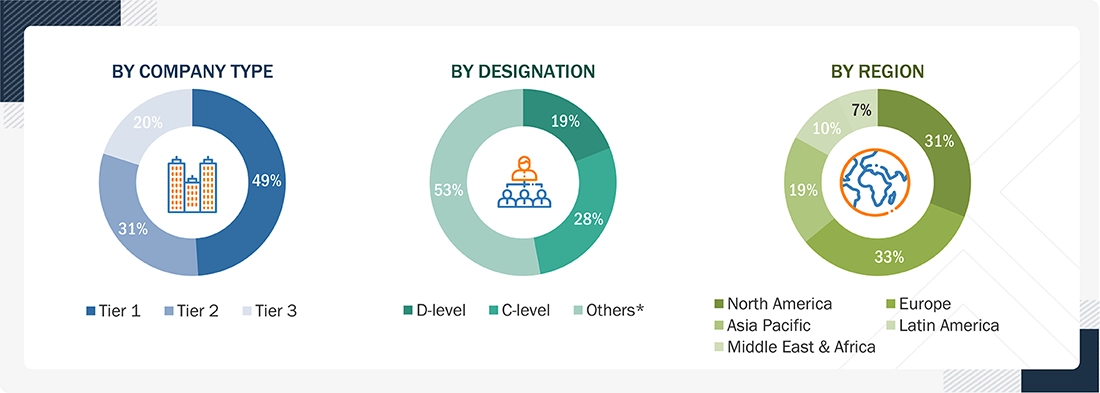
*Others include sales managers, marketing managers, business development managers, product managers, distributors, and suppliers.
Note: Companies are classified into tiers based on their total revenue. As of 2023, Tier 1 = >USD 2 billion, Tier 2 = USD 50 million to USD 2 billion, and Tier 3 = < USD 50 million.
To know about the assumptions considered for the study, download the pdf brochure
Market Size Estimation
Both top-down and bottom-up approaches were used to estimate and validate the total size of the analytical standards market. These methods were also used extensively to estimate the size of various segments in the market.
To determine the size of the global analytical standards market, revenue share analysis was employed in relation to the leading players. In this case, key players in the market have been identified, with their analytical standards, business revenues determined through various insights gathered during the primary and secondary research phases. Secondary research included the study of top market players' annual and financial reports. On the other hand, primary research incorporated in-depth interviews with key opinion leaders, in particular, chief executive officers, directors, and key marketing executives.
The research methodology used to estimate the market size includes the following:
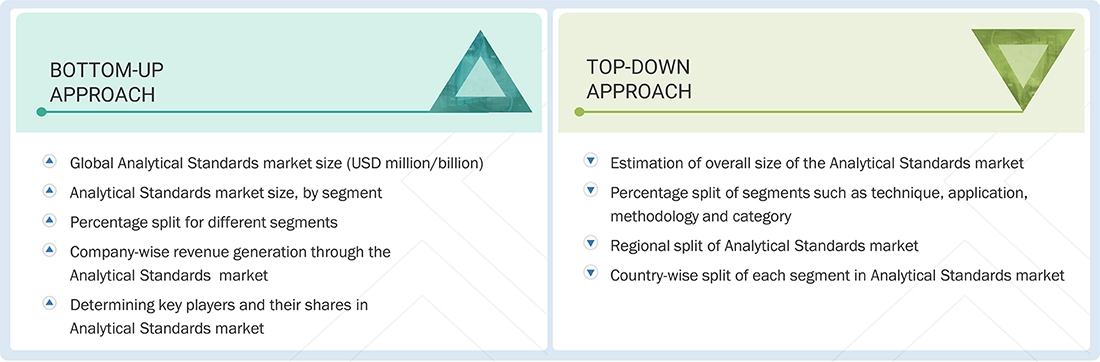
Data Triangulation
After arriving at the overall market size from the market size estimation process explained above, the global analytical standards market was split into segments. Data triangulation and market breakdown procedures were employed to complete the overall market engineering process and arrive at the exact statistics for all segments. The data was triangulated by studying various factors and trends from both the demand and supply sides. Additionally, the analytical standards market was validated using both top-down and bottom-up approaches.
Market Definition
Analytical standards are chemical reagents used to calibrate analytical instruments and determine the unknown concentration of analytes in samples. These standards differ from laboratory reagents in their traceability & certification and are produced under stringent manufacturing procedures.
Stakeholders
- Analytical Standard Manufacturing Companies
- Food & Beverage Manufacturing Companies
- Pharmaceutical Companies
- Environmental Monitoring Product Manufacturers
- Air Quality Monitoring Product Manufacturers
- Petrochemical Product Manufacturers
- Forensic Laboratories
- Pollution Monitoring Manufacturers
- Product Sales & Distribution Companies
- Government Regulatory Authorities
- Research Laboratories and Academic Institutes
- Clinical Research Organizations (CROs)
- Research & Development Companies
- Market Research & Consulting Firms
Report Objectives
- To define, describe, and forecast the analytical standards market on the basis of on technique, application, category, methodology and region.
- To provide detailed information regarding the major factors influencing the growth potential of the global analytical standards market (drivers, restraints, opportunities, challenges, and trends).
- To analyze the micro markets with respect to individual growth trends, future prospects, and contributions to the global analytical standards market.
- To analyze key growth opportunities in the global analytical standards market for key stakeholders and provide details of the competitive landscape for market leaders.
- To forecast the size of market segments and/or subsegments with respect to five major regions, namely, North America (the US and Canada), Europe (Germany, the UK, France, Italy, Spain and Rest of Europe), Asia Pacific (Japan, China, India, Australia, South Korea, and Rest of Asia Pacific), Latin America (Brazil, Mexico, and Rest of Latin America), and the Middle East and Africa (GCC Countries and Rest of MEA).
- To profile the key players in the global analytical standards market and comprehensively analyze their market shares and core competencies.
- To track and analyze the competitive developments undertaken in the global analytical standards market, such as agreements, expansions, and product launches.
Get the Full Analytical Standards Market Report
Full forecast, segment splits, and company analysis for all Analytical Standards Market.
- US Analytical Standards Market
- Canada Analytical Standards Market
- Germany Analytical Standards Market
- UK Analytical Standards Market
- France Analytical Standards Market
- Italy Analytical Standards Market
- Spain Analytical Standards Market
- Japan Analytical Standards Market
- China Analytical Standards Market
- India Analytical Standards Market
- Australia Analytical Standards Market
- South Korea Analytical Standards Market
- Brazil Analytical Standards Market
- Mexico Analytical Standards Market
Need a Tailored Report?
Customize this report to your needs
Get 10% FREE Customization
Customize This Report
