
Europe Autonomous Train Market (2024-2029)

The Europe Autonomous Train Market was valued at $5411 Million in 2024 and projected to reach to $7332 Million by 2029, representing a compound annual growth rate of 5.2%. Europe's autonomous train market is positioned for sustained growth as the continent prioritizes rail modernization and sustainability goals.


| Market Size in | USD 26.32 MN |
| Market Forecast in | |
| CAGR | |
| Forecast Period | |
| Units Considered | Value (USD MN) |
Europe Autonomous Train Market Trends and Insights
- This 5.2% compound annual growth rate reflects Europe's commitment to modernizing rail infrastructure and adopting advanced automation technologies across its extensive rail networks.
- Europe's mature transportation sector and regulatory frameworks are driving investment in autonomous train solutions to enhance operational efficiency and safety. The European autonomous train market is characterized by strong government support and significant infrastructure investments aimed at reducing operational costs and improving passenger experience.
- Europe's focus on sustainability and carbon reduction targets is accelerating the adoption of autonomous rail technologies, particularly in freight and urban transit applications.
- Between 2024 and 2029, Europe is expected to see increased deployment of autonomous systems across both legacy and new rail corridors, supported by collaborative initiatives among European nations and private rail operators..
Key Market Statistics
- CAGR (2024-2029) 5.2% CAGR
- Market Size, 2024 ~USD 5411 Million
- Forecast, 2029 ~USD 7332 Million
- Geography Europe
Europe Autonomous Train Market Overview
Market Valuation :
Europe's autonomous train market is valued at $5,411 million in 2024, with projections reaching $7,332 million by 2029, representing a steady 5.2% CAGR driven by infrastructure modernization initiatives across the continent.
Regulatory Framework Advantage :
Europe's mature regulatory environment and standardized rail protocols provide a competitive advantage for autonomous train adoption, with EU directives supporting interoperability and safety standards across member states.
Infrastructure Investment :
Significant EU funding through Connecting Europe Facility (CEF) and national rail modernization programs are accelerating the deployment of autonomous technologies across Europe's extensive and aging rail networks.
Technology Integration :
European rail operators are increasingly integrating AI, IoT, and real-time monitoring systems to enhance operational efficiency, reduce labor costs, and improve passenger safety across urban and freight rail networks.
Europe Autonomous Train Market Dynamics
- The region's established transportation infrastructure, combined with strong regulatory support and EU funding mechanisms, creates a favorable environment for autonomous technology adoption.
- Key drivers include labor cost reduction, improved operational efficiency, and alignment with Europe's carbon neutrality targets by 2050. The market will be shaped by ongoing investments in digital rail corridors, particularly in Western and Central Europe.
- Challenges such as legacy system integration and cross-border standardization will be addressed through collaborative EU initiatives.
- By 2029, autonomous trains are expected to become increasingly prevalent in both passenger and freight operations, with Northern Europe leading adoption rates..
Market Ecosystem
Related Ecosystem
Key Takeaways
- Europe's autonomous train market is valued at $5,411 million in 2024 and will grow to $7,332 million by 2029, representing a 5.2% CAGR.
- Europe's regulatory environment and government support are key drivers enabling autonomous train adoption across the region.
- Sustainability goals and operational efficiency improvements are primary motivators for European rail operators investing in autonomous technologies.
- Europe's extensive rail infrastructure and collaborative cross-border initiatives position the region as a leader in autonomous train deployment.
Autonomous Train Market Report Scope
| Report Metric | Details |
|---|---|
| Base Year | 2024 |
| Fastest Growing Segment | GOA4 (Goa) |
| Forecast Period | 2024-2029 |
| Growth Rate | CAGR of 5.7% from 2024 to 2029 |
| Largest Segment | GOA2 (Goa) |
| Market Size Base Year (Billions) | ~USD 13.55 (2024) |
| Revenue Forecast (Billions) | ~USD 17.88 (2029) |
| Segments Covered | Goa, Train Type, Technology, Component |
Europe Autonomous Train Market Report Segmentation
4 segment dimensions are covered across the global market.
By Goa
- Goa1
- Goa2
- Goa3
- Goa4
By Train Type
- High-Speed Rail/ Bullet Train
- High-Speed Rail/Bullet Train
- Light Rail
- Metro/Monorail
By Technology
- Automatic Train Control (Atc)
- Communications-Based Train Control (Cbtc)
- European Railway Traffic Management System (Ertms)
- Positive Train Control (Ptc)
By Component
- Accelerometer
- Antenna
- Camera
- Doppler
- Lidar
- Odometer
- Radar
- Radio Set
- Tachometer
Target Audience
- Rail Operators & Transit Authorities : European rail companies and public transit operators need market intelligence to evaluate autonomous technology investments, understand competitive positioning, and plan fleet modernization strategies aligned with regulatory requirements.
- Technology & Automation Vendors : Autonomous train system providers and software developers require detailed market data to identify growth regions, assess demand for specific solutions, and develop targeted go-to-market strategies for European customers.
- Infrastructure & Investment Firms : Private equity, infrastructure funds, and institutional investors need comprehensive market analysis to evaluate investment opportunities in European rail automation projects and identify high-potential acquisition targets.
- Government & Policy Makers : EU and national transportation officials require market insights to inform policy development, funding allocation decisions, and strategic planning for sustainable rail infrastructure modernization across member states.
- Consulting & Strategic Planning Teams : Management consultants and corporate strategy teams advising transportation clients need Europe-specific market data to develop business cases, competitive strategies, and long-term roadmaps for autonomous rail adoption.
Countries within Europe - compare and drill down
| Country | 2025 size (native) |
|---|
Country market size visualization
Reasons to Buy this Report
- Regional Market Sizing : Obtain precise market valuation data specific to Europe, including country-level breakdowns and segment analysis to identify high-growth opportunities within the continent's diverse rail markets.
- Competitive Landscape Intelligence : Understand key European players, their market positioning, technology capabilities, and strategic initiatives to benchmark against competitors and identify partnership or acquisition opportunities.
- Regulatory & Policy Insights : Access detailed analysis of EU regulations, national policies, and funding mechanisms (CEF, Horizon Europe) that directly impact autonomous train deployment timelines and investment decisions.
- Growth Forecasting by Segment : Leverage 5-year projections segmented by passenger vs. freight operations, country-specific trends, and technology adoption rates to inform strategic planning and resource allocation.
- Investment Decision Support : Make informed capital allocation decisions with comprehensive data on market drivers, barriers to entry, risk factors, and emerging opportunities across Europe's autonomous rail ecosystem.
Frequently asked questions
What is the current size of Europe's autonomous train market?
Europe's autonomous train market was valued at $5,411 million in 2024 and is projected to reach $7,332 million by 2029.
What is the growth rate of the autonomous train market in Europe?
Europe's autonomous train market is growing at a compound annual growth rate (CAGR) of 5.2% from 2024 to 2029.
What factors are driving autonomous train adoption in Europe?
Key drivers include government support, sustainability targets, operational efficiency improvements, safety enhancements, and extensive rail infrastructure modernization initiatives across Europe.
Which European countries are leading in autonomous train deployment?
Europe's leading nations include Germany, France, and the United Kingdom, which have invested heavily in autonomous rail technologies and pilot programs.
What applications are autonomous trains being used for in Europe?
Europe is deploying autonomous trains for both freight transportation and urban transit applications, with emphasis on reducing operational costs and improving service reliability.
RESEARCH METHODOLOGY
The study involved four major activities in estimating the current market size of the autonomous train market. Exhaustive secondary research was done to collect information on the market, the peer market, and the parent market. The next step was to validate these findings, assumptions, and sizing with the industry experts across value chains through primary research. The top-down and bottom-up approaches were employed to estimate the complete market size. Thereafter, market breakdown and data triangulation processes were used to estimate the market size of segments and subsegments.
Secondary Research
In the secondary research process, various secondary sources such as company annual reports/presentations, press releases, industry association publications such as The European Rail Industry (UNIFE), International Union of Railways, Federal Railroad Administration, Association of American Railroads, International Association of Railway Operation Research etc., railway magazine articles, directories, technical handbooks, world economic outlook, trade websites, technical articles, and databases (Marklines, Factiva etc.) have been used to identify and collect for an extensive commercial study of the global autonomous train market.
Primary Research
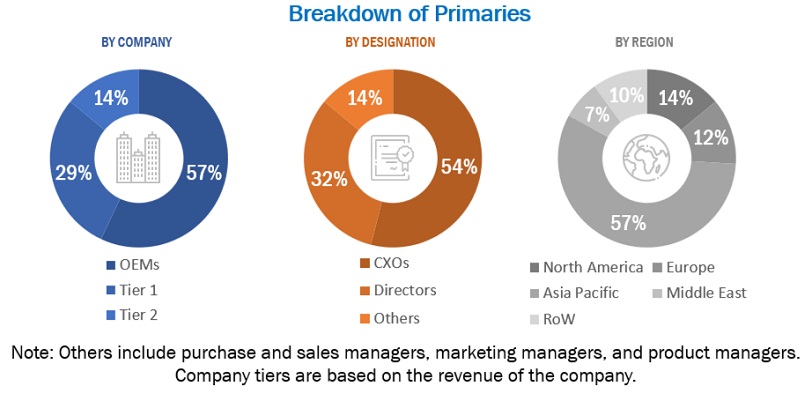
Extensive primary research has been conducted after acquiring an understanding of this market scenario through secondary research. Several primary interviews have been conducted with market experts from the demand- and supply-side OEMs (in terms of component supply, country-level government associations, and trade associations) and component manufacturers across major regions, namely, Asia Pacific, Europe, North America, Middle East & Africa and Rest of the World. Approximately 30% and 70% of primary interviews have been conducted from the demand and supply side, respectively. Primary data has been collected through questionnaires, emails, LinkedIn, and telephonic interviews. In the canvassing of primaries, we have strived to cover various departments within organizations, such as sales, operations, and administration, to provide a holistic viewpoint in our report.
After interacting with industry experts, we conducted brief sessions with highly experienced independent consultants to reinforce the findings from our primaries. This, along with the in-house subject matter experts’ opinions, has led us to the findings as described in the remainder of this report. Following is the breakdown of primary respondents.
To know about the assumptions considered for the study, download the pdf brochure
Market Size Estimation
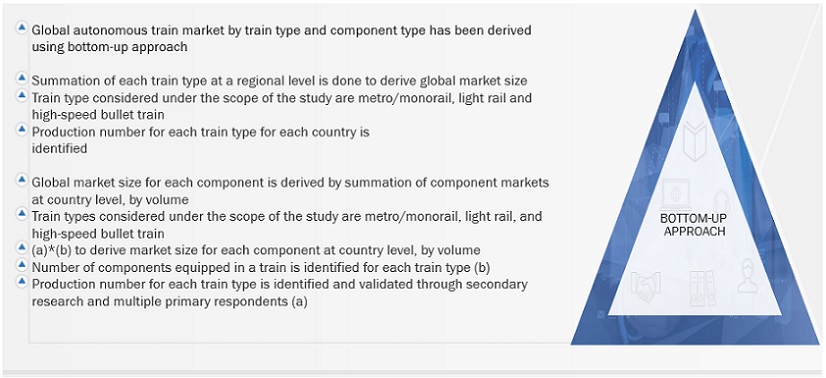
Global autonomous train market by train type & component has been derived using bottom-up approach. To derive global market size, summation of each train type, component type is studied at a regional level. Production numbers are identified and validated through secondary research and multiple primary respondents.
To know about the assumptions considered for the study, Request for Free Sample Report
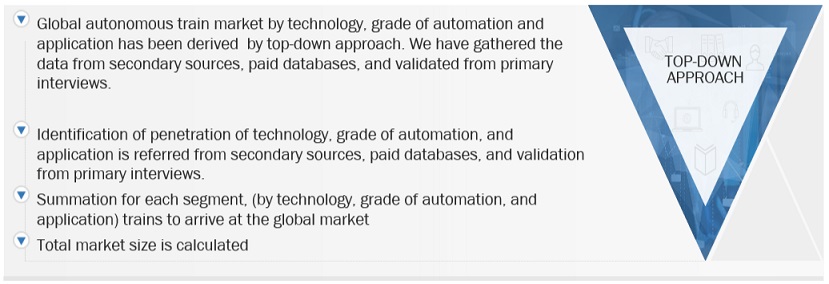
The top-down approach was used to estimate and validate the total market size. This method was also used extensively to estimate the size of various subsegments in the market. The research methodology used to estimate the market size includes the following:
- Key players in the autonomous train market were identified through secondary research, and their market shares were determined through primary and secondary research
- The research methodology included the study of the annual and quarterly financial reports & regulatory filings of major market players, as well as interviews with industry experts for detailed market insights
- All major penetration rates, percentage shares, splits, and breakdowns for the autonomous train market were determined using secondary sources and verified through primary sources
- All key macro indicators affecting the revenue growth of the market segments and subsegments were accounted for, viewed in extensive detail, verified through primary research, and analyzed to get the validated and verified quantitative & qualitative data
- The gathered market data was consolidated and added with detailed inputs, analyzed, and presented in this report
Data Triangulation
After arriving at the overall market size—using the market size estimation processes as explained above—the market was split into several segments and subsegments. To complete the overall market engineering process and arrive at the exact statistics of each market segment and subsegment, data triangulation and market breakdown procedures were employed, wherever applicable. The data was triangulated by studying various factors and trends from both the demand and supply sides.
Market Definition
The autonomous train market is the market for trains that have the ability to operate without human intervention. This includes trains that can automatically start, stop, and navigate tracks, as well as detect and avoid obstacles. The market is a relatively new market, but it is expected to grow rapidly in the coming years, driven by factors such as increasing urbanization, rising labor costs, and the need for improved safety and efficiency in the rail industry.
List of Key Stakeholders
- Government Authorities related to Railway Infrastructure Services
- Independent Software Vendors
- Independent Technology/Solution Providers
- National Railway Governing Authorities/Regulators/Bodies
- Rail Infrastructure Hardware and Device Suppliers
- Rail Manufacturers/OEMs
- Rail Transportation Technology Solution Providers
- Railway Associations
- Railway Management Companies (private/public)
- Railway Operations Management Service Providers
- Railway Operations Management Solution Vendors
- Railway Operators Signaling Vendors
- Transportation Research Authorities, NGOs, Governments, Investment Banks, Venture Capitalists, and Private Equity Firms
- Legal and Regulatory Authorities
- Manufacturers of Rail Components
- Rail Leasing Authorities
- Rail Service Providers
- Railway Contractors
- Railway Industry Associations
- Railways Organizations/Associations
- Raw Material Suppliers for Autonomous Trains
- Traders, Distributors, and Suppliers of Autonomous Trains
Report Objectives
- To analyze and forecast the size of the autonomous train market, in terms of volume (units/thousand units), from 2024 to 2030
- To analyze and forecast the size of the market, in terms of volume (units), based on the grade of automation (grade of automation 1, grade of automation 2, grade of automation 3, and grade of automation 4) from 2024 to 2030
-
To analyze and forecast the size of the market, in terms of value
(USD billion/million), based on technology (Automatic Train Control (ATC), Communication-based Train Control (CBTC), Positive Train Control (PTC), and European Railway Traffic Management System (ERTMS) from 2024 to 2030 - To analyze and forecast the size of the market, in terms of volume (units) and USD billion, based on train type (metro/monorail, light rail, and high-speed rail/bullet train) from 2024 to 2030
- To analyze and forecast the size of the market, in terms of volume (units), based on component (tachometer, doppler, accelerometer, sensor, camera, antenna, odometer, radar, lidar) from 2024 to 2030
- To analyze and forecast the size of the market, in terms of volume (units), based on application (passenger and freight) from 2024 to 2030
- To qualitatively analyze market, in terms of GoA 4 systems for different regions.
- To identify the market dynamics, including drivers, restraints, opportunities, and challenges, and analyze their impact on the market.
- To define, describe, and project the size of the market, in terms of volume (units), based on region (Asia Pacific, Europe, North America, the Middle East & Africa, and Rest of the World (RoW)) from 2024 to 2030
- To analyze the competitive leadership map for the key players operating in the market based on their business strategies from 2019-2023.
- To track and analyze competitive developments such as, new product developments, deals and other industry-related activities carried out by the key players to strengthen their position in the autonomous train market.
- To analyze the opportunities offered by various segments of the market to its stakeholders
- To analyze and forecast the trends and orientation for autonomous train in the global rail industry
- To track and analyze competitive developments such as new product development, deals, and other industry activities carried out by key industry participants
- To analyze opportunities for stakeholders and the competitive landscape for market leaders
- To strategically profile key players and comprehensively analyze their respective market share and core competencies
- To provide detailed information regarding the major factors influencing the market growth (drivers, challenges, restraints, and opportunities)
- To strategically analyze the market with respect to individual growth trends, prospects, and contributions to the total market
Available Customizations
MarketsandMarkets offers the following customizations for this market:
- Autonomous train market, additional components
- Profiling of additional market players (Up to 3)
Get the Full Autonomous Train Market Report
Full forecast, segment splits, and company analysis for all Autonomous Train Market.
Need a Tailored Report?
Customize this report to your needs
Get 10% FREE Customization
Customize This Report
