
Australia Biobanking Market (2025-2030)

The Australia Biobanking Market was valued at $60.6 Million in 2025 and projected to reach to $86.6 Million by 2030, representing a compound annual growth rate of 7.4%. Australia's biobanking market is positioned for sustained growth driven by increasing adoption of personalized healthcare solutions and precision medicine initiatives.


| Market Size in | USD 26.32 MN |
| Market Forecast in | |
| CAGR | |
| Forecast Period | |
| Units Considered | Value (USD MN) |
Australia Biobanking Market Trends and Insights
- Australia's biobanking sector is driven by increasing investment in precision medicine, growing demand for personalized healthcare solutions, and strengthening regulatory frameworks that support sample collection and storage.
- Australia's position as a developed healthcare economy with advanced research infrastructure positions it as a key player in the Asia Pacific biobanking landscape. The Australian biobanking market benefits from robust government funding for medical research, expanding clinical trial activities, and rising adoption of genomic technologies across healthcare institutions.
- Australia's commitment to biomedical innovation and collaborative research initiatives supports market expansion throughout the forecast period.
- Australia's biobanking infrastructure continues to evolve with enhanced data management systems and improved sample quality standards, attracting both domestic and international research partnerships..
Key Market Statistics
- CAGR (2025-2030) 7.4% CAGR
- Market Size, 2025 ~USD 60.6 Million
- Forecast, 2030 ~USD 86.6 Million
- Country Australia
Australia Biobanking Market Overview
Market Valuation Growth :
Australia's biobanking market is valued at $60.6 million in 2025, with a projected CAGR of 7.4% through 2030, reaching $86.6 million. This steady growth trajectory reflects increasing healthcare investments and infrastructure development across the country.
Precision Medicine Adoption :
Australian healthcare institutions are increasingly investing in precision medicine initiatives, driving demand for advanced biobanking solutions. This shift enables personalized treatment approaches and improved patient outcomes across major medical centers and research facilities.
Regulatory Framework Strengthening :
Australia's evolving regulatory environment supports biobanking operations through enhanced guidelines for sample collection, storage, and data management. These frameworks ensure compliance and build confidence among healthcare providers and research institutions in biobanking infrastructure.
Developed Healthcare Infrastructure :
As a developed nation, Australia possesses advanced healthcare systems and research capabilities that support biobanking expansion. Strong institutional partnerships and government backing facilitate investment in state-of-the-art biobanking facilities and technologies.
Australia Biobanking Market Dynamics
- Healthcare providers and research institutions are investing in advanced biobanking infrastructure to support genomic research and clinical applications.
- The strengthening regulatory framework provides a stable foundation for market expansion, encouraging both public and private sector participation in biobanking development. Looking ahead, Australia's biobanking sector will benefit from growing collaboration between academic institutions, hospitals, and biotechnology companies.
- Increased government funding for medical research and rising patient awareness of personalized medicine will further accelerate market growth.
- The market's 7.4% CAGR reflects Australia's commitment to advancing healthcare innovation and establishing itself as a regional leader in biobanking capabilities..
Market Ecosystem
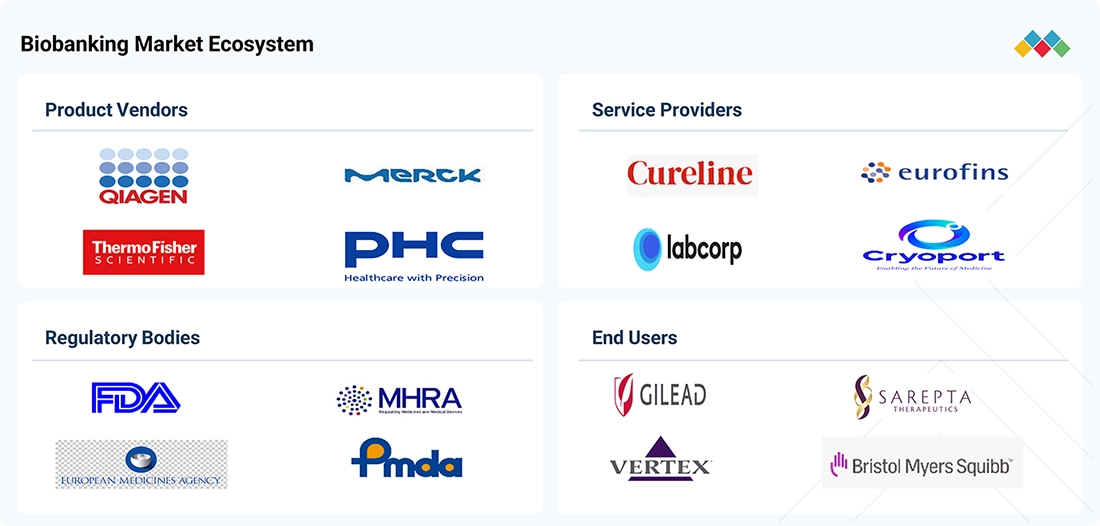
BIOBANKING MARKET: COMMERCIAL USE CASES ACROSS INDUSTRIES
| COMPANY | USE CASE DESCRIPTION | BENEFITS |
|---|---|---|
 |
Provides biobanking solutions including sample collection and preparation equipment, cryogenic tubes and containers, ultra-low-temperature freezers, automated sample handling, cold-chain logistics, and data management solutions for research and clinical biobanks | Enables secure preservation and traceability of biological samples while supporting standardized collection, processing, storage, transport, and inventory management across biobanking workflows |
 |
Provides automated and outsourced biobanking solutions covering biological sample storage, biorepository services, sample tracking, cold-chain logistics, automated retrieval, and Limfinity® biobanking LIMS for lifecycle management of research and clinical samples | Improves sample integrity, traceability, retrieval efficiency, and inventory visibility while enabling compliant, scalable management of biological samples across multiple storage locations |
Logos and trademarks shown above are the property of their respective owners. Their use here is for informational and illustrative purposes only.
Related Ecosystem
Biotechnology
- Reagents
- Polymerase Chain Reaction (PCR)
- Stem Cells
- Assay Kits
- Flow Cytometers
- Thermo Fisher Scientific Inc.
- Merck KGaA
- Danaher Corporation
- Agilent Technologies, Inc.
- Bio-Rad Laboratories, Inc.
Key Takeaways
- Australia's biobanking market is valued at $60.6 million in 2025 and expected to reach $86.6 million by 2030, representing a 7.4% CAGR.
- Australia's market growth is supported by increased government funding for medical research and expanding precision medicine initiatives.
- Australia's advanced healthcare infrastructure and regulatory environment create favorable conditions for biobank development and international collaboration.
- Australia's biobanking sector is experiencing rising demand from clinical trials, genomic research, and personalized medicine applications.
Biobanking Market Report Scope
| Report Metric | Details |
|---|---|
| Base Year | 2025 |
| Fastest Growing Segment | SOFTWARE (Offering) |
| Forecast Period | 2025–2030 |
| Growth Rate | CAGR of 9.1% from 2025 to 2030 |
| Largest Segment | PRODUCTS (Offering) |
| Market Size Base Year (Billions) | ~USD 7.65 (2025) |
| Revenue Forecast (Billions) | ~USD 11.82 (2030) |
| Segments Covered | Offering, Type, Operation Type, Workflow, Sample Type, Ownership, Application, End User |
Australia Biobanking Market Report Segmentation
8 segment dimensions are covered across the global market.
By Offering
- Products
- Services
- Software
By Type
- Alarm & Monitoring Systems
- Clinical Research
- Consumables
- Cryogenic Storage Systems
- Equipment
- Freezers & Refrigerators
- Life Science Research
- Life Sciences Research
- Other Equipment & Accessories
- Other Services
- Physical Biobanking Services
- Temperature & Humidity Control Systems
- Thawing Equipment
- Virtual Biobanking Services
By Operation Type
- Automated Equipment
- Automated Operations
- Manual Equipment
- Manual Operations
By Workflow
- Sample Analysis
- Sample Collection & Storage
- Sample Processing
- Transport & Logistics
By Sample Type
- Biological Fluids
- Blood Products
- Human Waste Products
- Nucleic Acids
- Solid Tissues & Organs
- Stem Cells & Cell Lines
By Ownership
- Academic & Research Institution Biobanks
- Hybrid/Ppp Model
- National/Regional Agencies
- Other Ownership Models
- Private/ Commercial Biobanks
By Application
- Diagnostic Applications
- Other Applications
- Research Applications
- Therapeutic Applications
By End User
- Academic & Research Institutes
- Biobanks
- Cros
- Hospitals & Diagnostic Laboratories
- Pharma-Biotech Companies & Cros
AUSTRALIA: BIOBANKING SERVICES MARKET, BY END USER, 2023–2030
| Segment | 2023 | 2024 | 2025 | 2026 | 2027 | 2028 | 2029 | 2030 | CAGR (%) |
|---|---|---|---|---|---|---|---|---|---|
| ACADEMIC & RESEARCH INSTITUTES | 7.5 | 7.7 | 8.3 | 9 | 9.8 | 10.7 | 11.8 | 12.9 | 9.4 |
| HOSPITALS & DIAGNOSTIC LABORATORIES | 4.8 | 4.9 | 5.3 | 5.7 | 6.2 | 6.7 | 7.4 | 8.1 | 9 |
| PHARMA-BIOTECH COMPANIES & CROS | 18 | 18.5 | 20 | 21.8 | 23.9 | 26.2 | 28.9 | 31.8 | 9.7 |
| TOTAL | 30.3 | 31.1 | 33.5 | 36.5 | 39.9 | 43.7 | 48 | 52.8 | 9.5 |
AUSTRALIA: BIOBANKING PRODUCTS MARKET, BY END USER, 2023–2030
| Segment | 2023 | 2024 | 2025 | 2026 | 2027 | 2028 | 2029 | 2030 | CAGR (%) |
|---|---|---|---|---|---|---|---|---|---|
| BIOBANKS | 43.8 | 44.6 | 47 | 50.1 | 53.7 | 57.8 | 62.4 | 67.7 | 7.6 |
| CROS | 12.8 | 13 | 13.6 | 14.4 | 15.3 | 16.4 | 17.6 | 19 | 6.9 |
| TOTAL | 56.7 | 57.6 | 60.6 | 64.5 | 69 | 74.2 | 80 | 86.6 | 7.4 |
Target Audience
- Healthcare Providers & Hospital Networks : Australian hospitals and healthcare networks need market intelligence to develop biobanking capabilities and integrate precision medicine services. This data supports infrastructure investment decisions and strategic planning for personalized healthcare delivery.
- Biotech & Diagnostics Companies : Biotech firms and diagnostic companies operating in Australia require market insights to identify growth opportunities and develop targeted solutions. Understanding market size, growth rates, and regulatory requirements is critical for market entry and expansion strategies.
- Research Institutions & Universities : Australian academic and research institutions need market data to secure funding, establish biobanking facilities, and collaborate with industry partners. Market projections support grant applications and strategic research planning initiatives.
- Government & Policy Makers : Australian health authorities and policymakers require market analysis to inform healthcare policy, allocate research funding, and develop regulatory frameworks. This data supports evidence-based decision-making for biobanking infrastructure development.
- Investors & Private Equity Firms : Investment firms evaluating opportunities in Australian healthcare need comprehensive market data on biobanking growth potential, CAGR trends, and competitive landscape. This intelligence informs investment decisions and portfolio development in the healthcare sector.
Key Companies in the Australia Biobanking Market
| Company | HQ | Ownership | Strongest segments |
|---|---|---|---|
| MAXCYTE, INC | United States | Public Company | ExPERT ATx and STx instruments,ExPERT GTx and VLx instruments,Disposable processing assemblies (PAs), |
| HDFC BANK | India | Public Company | Retail Banking (deposits, consumer and home loans, cards),Wholesale Banking (corporate, SME, supply chain, trade),Treasury and Markets (money market, derivatives, investments), |
| STANDARD CHARTERED | United Kingdom | Private Company | Financial Markets (FX, rates, commodities, credit),Transaction Banking (trade, cash, liquidity, custody),Corporate & Structured Finance, |
| YES BANK | India | Public Company | Retail banking (deposits, cards, consumer loans),Corporate and wholesale banking,MSME and business banking, |
| CHOLAMANDALAM INVESTMENT AND FINANCE COMPANY LIMITED | India | Public Company | Vehicle Finance (CV, PV, 2W/3W, tractors, construction equipment),Loan Against Property (LAP) and SME Secured Loans,Home Loans and Home Extensions, |
| AXIS MUTUAL FUND | India | Private Company | Actively managed equity funds,Hybrid and asset allocation funds,Debt and money market funds, |
| THERMO FISHER SCIENTIFIC INC. | United States | Public Company | Life Sciences Solutions,Analytical Instruments,Specialty Diagnostics, |
| PHC HOLDINGS CORPORATION | Japan | Public Company | Diabetes Management,Diagnostic and Life Sciences,Healthcare Solutions (EMR, billing, pharmacy, wellness), |
| QIAGEN | Netherlands | Public Company | Sample technology consumables and instruments,Immune response and infectious disease diagnostics,Oncology and sexual & reproductive health assays, |
| MERCK KGAA | Germany | Public Company | Life Science (reagents, consumables, bioprocessing, CDMO/testing),Healthcare (prescription drugs and biopharmaceuticals),Electronics (semiconductor and display materials, specialty gases, equipment), |
| AVANTOR, INC. | United States | Public Company | Materials and consumables,Equipment and instrumentation,Services and specialty procurements, |
| CRYOPORT | United States | Public Company | Life Sciences Services (logistics, biostorage, bioservices, consulting),Life Sciences Products (cryogenic freezers, dewars, accessories),IoT and digital monitoring solutions, |
| AGILENT TECHNOLOGIES, INC. | United States | Public Company | Life Sciences and Diagnostics Markets,Agilent CrossLab,Applied Markets, |
| LABCORP | United States | Public Company | Routine and chronic-disease diagnostics (chemistry, hematology, A1C, thyroid, PSA, urinalysis),Specialty and esoteric testing (gene-based, oncology, cardiovascular, endocrinology, infectious disease),Biopharma Laboratory Services and clinical trial support, |
| EUROFINS SCIENTIFIC | Luxembourg | Public Company | Food and Feed Testing,Environment Testing,Biopharma and Clinical Diagnostics, |
| HAIER BIOMEDICAL | China | Public Company | ULT freezers and low-temperature storage,Pharmacy and vaccine refrigerators/freezers, cold rooms,Blood bank and transfusion chain equipment, |
| HAMILTON COMPANY | United States | Public Investment Firm | Fund-of-funds (primary and secondary),Direct credit,Direct and co-investments / buyouts, |
MAXCYTE, INC
MAXCYTE, INC is a public company based in the United States that was founded in 1998 and currently employs 91 people.
HDFC BANK
HDFC BANK is a public company based in India that was founded in 1994 and currently employs 212,958 people.
STANDARD CHARTERED
STANDARD CHARTERED is a private company based in the United Kingdom that was founded in 1853 and currently employs 66,524 people.
YES BANK
YES BANK is a public company based in India that was founded in 2003 and currently employs 29,577 people.
CHOLAMANDALAM INVESTMENT AND FINANCE COMPANY LIMITED
CHOLAMANDALAM INVESTMENT AND FINANCE COMPANY LIMITED is a public company based in India that was founded in 1978 and currently employs 51,320 people.
AXIS MUTUAL FUND
AXIS MUTUAL FUND is a private company based in India that was founded in 2009.
THERMO FISHER SCIENTIFIC INC.
THERMO FISHER SCIENTIFIC INC. is a public company based in the United States that was founded in 1956 and currently employs 125,000 people.
PHC HOLDINGS CORPORATION
PHC HOLDINGS CORPORATION is a public company based in Japan that was founded in 1948 and currently employs 8,647 people.
QIAGEN
QIAGEN is a public company based in the Netherlands that was founded in 1984 and currently employs 5,500 people.
MERCK KGAA
MERCK KGAA is a public company based in Germany that was founded in 1668 and currently employs 59,077 people.
AVANTOR, INC.
AVANTOR, INC. is a public company based in the United States that was founded in 1904 and currently employs 13,500 people.
CRYOPORT
CRYOPORT is a public company based in the United States that was founded in 1999 and currently employs 688 people.
AGILENT TECHNOLOGIES, INC.
AGILENT TECHNOLOGIES, INC. is a public company based in the United States that was founded in 1999 and currently employs 18,000 people.
LABCORP
LABCORP is a public company based in the United States that was founded in 1995 and currently employs 66,385 people.
EUROFINS SCIENTIFIC
EUROFINS SCIENTIFIC is a public company based in Luxembourg that was founded in 1987 and currently employs 65,694 people.
HAIER BIOMEDICAL
HAIER BIOMEDICAL is a public company based in China that was founded in 2005 and currently employs 2,945 people.
HAMILTON COMPANY
HAMILTON COMPANY is a public investment firm based in the United States that was founded in 1991 and currently employs 785 people.
Reasons to Buy this Report
- Market Size & Growth Projections : Access detailed valuation data showing Australia's biobanking market at $60.6M (2025) growing to $86.6M (2030). Understand market dynamics and growth drivers specific to the Australian healthcare landscape for accurate forecasting and investment planning.
- Regulatory Landscape Analysis : Gain insights into Australia's strengthening regulatory frameworks governing biobanking operations. Understand compliance requirements, sample collection standards, and data management protocols essential for market entry and operational success in Australia.
- Competitive Positioning Strategy : Identify key market opportunities and competitive gaps within Australia's biobanking sector. Benchmark against regional developments and understand how to position products and services to capture market share in this growing healthcare segment.
- Investment & Partnership Opportunities : Discover institutional partnerships, government funding initiatives, and investment trends specific to Australian biobanking. Identify collaboration opportunities with research institutions, hospitals, and biotechnology companies driving market expansion.
- Precision Medicine Integration : Understand how Australian healthcare providers are integrating biobanking with precision medicine initiatives. Learn about demand drivers for personalized healthcare solutions and align your offerings with emerging clinical and research requirements.
Frequently asked questions
What is the current size of Australia's biobanking market?
Australia's biobanking market was valued at $60.6 million in 2025 and is projected to grow to $86.6 million by 2030.
What is the growth rate of Australia's biobanking market?
Australia's biobanking market is expected to grow at a compound annual growth rate (CAGR) of 7.4% from 2025 to 2030.
What factors are driving growth in Australia's biobanking market?
Australia's biobanking market growth is driven by increased investment in precision medicine, government funding for medical research, expanding clinical trials, and rising adoption of genomic technologies.
How does Australia's biobanking market compare to the Asia Pacific region?
Australia represents a significant developed market within Asia Pacific, with advanced healthcare infrastructure and regulatory frameworks supporting biobanking operations and international research collaborations.
What opportunities exist in Australia's biobanking sector?
Australia's biobanking sector offers opportunities in precision medicine development, genomic research expansion, clinical trial support, and international partnerships leveraging Australia's research capabilities.
RESEARCH METHODOLOGY
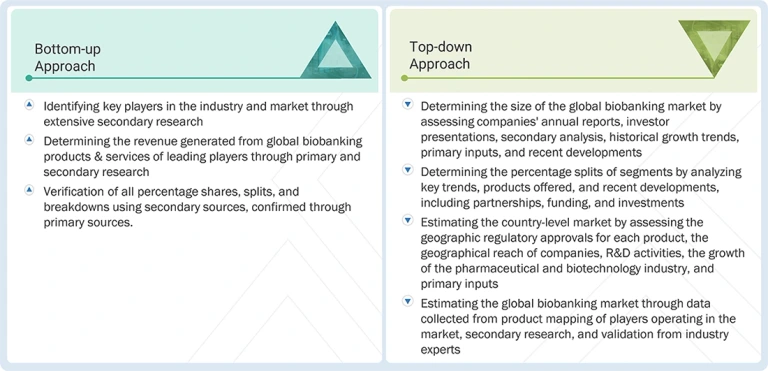
This study involved four major activities to estimate the current size of the biobanking market. Exhaustive secondary research was conducted to gather information on the market, its peer markets, and its parent market. These findings, assumptions, and sizing were then validated with industry experts across the value chain through primary research. Both top-down and bottom-up approaches were employed to estimate the total market size. Following this, data triangulation was used to estimate the market size of segments and subsegments.
Secondary Research
Secondary research was primarily used to identify and gather information for the extensive, technical, market-oriented, and commercial study. Secondary sources for this study included publications from government sources, such as the European, Middle Eastern & African Society for Biopreservation and Biobanking (ESBB), Biobanking and BioMolecular Resources Research Infrastructure - European Research Infrastructure Consortium (BBMRI-ERIC), International Society for Biological and Environmental Repositories (ISBER), National Institutes of Health (NIH), and the US Food and Drug Administration (US FDA), as well as ScienceDirect and several others. Secondary sources also included corporate and regulatory filings (such as annual reports, SEC filings, investor presentations, and financial statements); business magazines and research journals; press releases; and trade, business, and professional associations. These sources were used to obtain key information on major players, global product revenues, market classification, and segmentation by industry trends, regional/country-level markets, market developments, and technology perspectives. Secondary data were collected and analyzed to determine the overall size of the global Biobanking market, and the findings were validated through primary research.
Primary Research
In-depth interviews were conducted with primary respondents, including key industry participants, subject-matter experts (SMEs), C-level executives of key market players, and industry consultants, among others, to obtain and verify critical qualitative and quantitative information and to assess market prospects. Primary sources from both the supply and demand sides of the market were interviewed to gather qualitative and quantitative data. The following is a breakdown of the primary respondents:
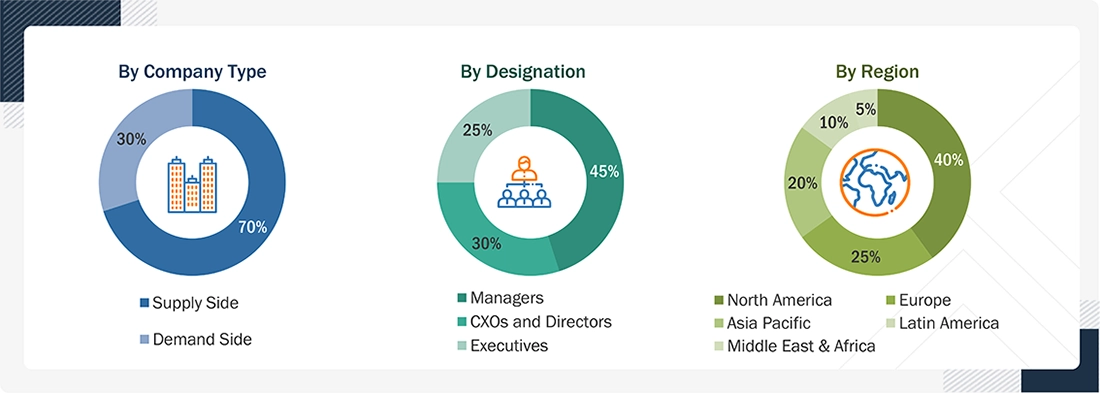
To know about the assumptions considered for the study, download the pdf brochure
Market Size Estimation
The global size of the biobanking market was estimated using multiple approaches. A detailed market estimation approach was used to estimate and validate the market value and other dependent submarkets. These methods were also used extensively to estimate the size of various subsegments in the market. The research methodology used to estimate the market size includes the following:
Biobanking Market : Top-Down and Bottom-Up Approach
Data Triangulation
After estimating the overall market size through the market size estimation process, the total market was divided into several segments. To complete the overall market engineering process and arrive at the exact statistics for all segments, the data triangulation procedure was employed; it involved analyzing various factors and trends from both the demand and supply sides.
Market Definition
Biobanking involves collecting, processing, storing, and managing biological samples—such as blood, tissues, stem cells, nucleic acids, and other human-derived materials—for research, diagnostic, and therapeutic applications. The market includes equipment, consumables, software, and services used by CROs, biobanks, pharmaceutical and biotechnology companies, and academic and research institutions. These entities manage diverse sample types, including blood products, human tissues, stem cells and cell lines, nucleic acids, biological fluids, and human waste products, using manual or automated systems depending on technological adoption. The market is also segmented by ownership models, including academic and research institutions, national and regional agencies, private organizations, and other entities.
Key Stakeholders
- Academic & Research Institutes
- Biobanks
- Contract Research Organizations (CROs)
- Market Research and Consulting Firms
- Pharmaceutical and Biotechnology Companies
- Regulatory Agencies
- Venture Capitalists
- Forensics Labs
- Government organizations
- Private research firms
- Hospitals and Diagnostic Laboratories
Report Objectives
- To define, describe, and forecast the biobanking market by offering, equipment-operation type, service-ownership, product-sample type, application, product-end user, service-end user, and region
- To provide detailed information regarding the major factors influencing market growth (such as drivers, restraints, opportunities, and challenges)
- To analyze micromarkets with respect to individual growth trends, prospects, and contributions to the overall biobanking market
- To analyze opportunities for stakeholders and provide details of the competitive landscape for market leaders
- To forecast the size of the market segments with respect to six regions: North America (US and Canada), Europe (Germany, France, the UK, Italy, Spain, and the Rest of Europe), Asia Pacific (China, Japan, India, South Korea, Australia, and the Rest of Asia Pacific), Latin America (Brazil, Mexico, Argentina, and the Rest of Latin America), the Middle East [GCC Countries (Saudi Arabia (KSA), United Arab Emirates (UAE), and the Rest of GCC Countries) and the Rest of Middle East], and Africa
- To profile the key players and analyze their market share and core competencies
- To analyze competitive developments, such as product launches, partnerships, agreements, collaborations, and expansions
- To benchmark players within the market using the proprietary “Company Evaluation Matrix” framework, which analyzes market players on various parameters within the broad categories of business and product excellence strategy
Available customizations:
With the given market data, MarketsandMarkets offers customization as per the company’s specific needs. The following options are available for the report:
Geographical Analysis
- Further breakdown of Rest of Europe biobanking market, by country
- Further breakdown of Rest of Asia Pacific biobanking market, by country
Comapany Information
- Detailed analysis and profiling of additional market players (up to five)
Segment Analysis
- Cross-segment analysis
Get the Full Biobanking Market Report
Full forecast, segment splits, and company analysis for all Biobanking Market.
- Canada Biobanking Market
- US Biobanking Market
- Germany Biobanking Market
- UK Biobanking Market
- France Biobanking Market
- Italy Biobanking Market
- Spain Biobanking Market
- China Biobanking Market
- Japan Biobanking Market
- India Biobanking Market
- South Korea Biobanking Market
- Brazil Biobanking Market
- Mexico Biobanking Market
- UAE Biobanking Market
- Rest Of Europe Biobanking Market
- Rest Of Asia Pacific Biobanking Market
- Rest Of Latin America Biobanking Market
- Ksa Biobanking Market
- Rest Of GCC Countries Biobanking Market
Need a Tailored Report?
Customize this report to your needs
Get 10% FREE Customization
Customize This Report
