
Canada Biorefinery Market (2024-2029)

The Canada Biorefinery Market was valued at $4660.6 Million in 2024 and projected to reach to $7984.5 Million by 2029, representing a compound annual growth rate of 11.4%. Canada's biorefinery market is positioned for accelerated growth through 2029, supported by stringent environmental regulations and government commitments to carbon neutrality.


| Market Size in | USD 26.32 MN |
| Market Forecast in | |
| CAGR | |
| Forecast Period | |
| Units Considered | Value (USD MN) |
Canada Biorefinery Market Trends and Insights
- This acceleration in Canada reflects strong government support for renewable energy initiatives and biomass utilization policies that position the country as a leader in sustainable fuel production.
- Canada's abundant forestry resources and agricultural feedstock provide a competitive advantage, driving investment in advanced biorefinery technologies and infrastructure development throughout 2024-2029. The Canadian biorefinery sector is benefiting from increasing demand for biofuels, biochemicals, and bioenergy solutions as industries transition away from fossil fuels.
- Canada's commitment to carbon neutrality and renewable energy targets is catalyzing capital deployment into biorefinery facilities across multiple provinces.
- Strategic partnerships between government, private sector, and research institutions are accelerating innovation in Canada's biorefinery landscape, supporting the market's projected growth trajectory through 2029..
Key Market Statistics
- CAGR (2024-2029) 11.4% CAGR
- Market Size, 2024 ~USD 4660.6 Million
- Forecast, 2029 ~USD 7984.5 Million
- Country Canada
Canada Biorefinery Market Overview
Strong CAGR Growth :
Canada's biorefinery market is growing at 11.4% CAGR from 2024-2029, outpacing the global average of 8.2%, driven by aggressive renewable energy targets and biomass policy support.
Government Policy Support :
Federal and provincial initiatives including carbon pricing, clean fuel standards, and biomass incentives are accelerating biorefinery investments across Canada's energy sector.
Biomass Resource Availability :
Canada's abundant forestry and agricultural residues provide a sustainable feedstock base, positioning the country as a competitive biorefinery hub for North American markets.
Market Expansion Trajectory :
Market valuation is projected to grow from $4,660.6 million in 2024 to $7,984.5 million by 2029, representing a $3.3 billion expansion opportunity in sustainable fuel production.
Canada Biorefinery Market Dynamics
- Provincial governments and federal agencies are actively promoting biomass utilization and renewable fuel production, creating favorable conditions for biorefinery development across multiple regions.
- The availability of forestry residues and agricultural waste provides a competitive advantage for feedstock sourcing. Investment in biorefinery infrastructure is expected to intensify as major energy companies transition toward sustainable fuel portfolios.
- Strategic partnerships between technology providers, energy producers, and government bodies will drive innovation in conversion processes and product diversification.
- Canada's biorefinery sector is poised to become a key supplier of biofuels and biochemicals to North American markets, capitalizing on its natural resources and policy-driven demand..
Market Ecosystem
Related Ecosystem
Decarbonization
- Battery Electric Vehicle (BEV)
- Energy Management Systems
- Fuel Cell
- Fuel Cell Electric Vehicle (FCEV)
- Geographical Information System (GIS)
- TotalEnergies SE
- Siemens ag
- Mitsui & Co., Ltd.
- General Electric Company
- Thyssenkrupp ag
Fandb Processing And Technology
- Dairy Products
- Bakery Products
- Filtration Equipment
- Heat Exchanger
- Acetic Acid
- Gea group
- John Bean Technologies Corporation
- Alfa Laval Corporate AB
- AZELIS HOLDINGS SA
- SPX FLOW INC
Key Takeaways
- Canada's biorefinery market is projected to grow from $4,660.6 million in 2024 to $7,984.5 million by 2029 at an 11.4% CAGR.
- Canada's abundant forestry and agricultural resources provide significant feedstock advantages for biorefinery development and scaling.
- Government policies and carbon neutrality commitments in Canada are driving substantial investment in renewable fuel infrastructure.
- Canada's biorefinery sector is expanding through strategic public-private partnerships and technological innovation across multiple provinces.
Biorefinery Market Report Scope
| Report Metric | Details |
|---|---|
| Base Year | 2024 |
| Fastest Growing Segment | MATERIAL DRIVEN (Product) |
| Forecast Period | 2024-2029 |
| Growth Rate | CAGR of 8.2% from 2024 to 2029 |
| Largest Segment | ENERGY DRIVEN (Product) |
| Market Size Base Year (Billions) | ~USD 212.15 (2024) |
| Revenue Forecast (Billions) | ~USD 314.62 (2029) |
| Segments Covered | Technology, Product, Product Type, Type, Feedstock |
Canada Biorefinery Market Report Segmentation
5 segment dimensions are covered across the global market.
By Technology
- Industrial Biotechnology
- Physico-Chemical
- Thermochemical
By Product
- Energy Driven
- Material Driven
By Product Type
- Biodiesel
- Bioethanol
- Biomethane
- Renewable Diesel
- Sustainable Aviation Fuel
By Type
- First Generation
- Second Generation
- Third Generation
By Feedstock
- Algae
- Corn
- Residues
- Sugarcane
- Used Cooking Oil
- Vegetable Oils
Target Audience
- Energy & Utility Companies : Canadian and international energy producers need market intelligence to evaluate biorefinery investments, assess feedstock availability, and align renewable fuel strategies with government mandates.
- Investment & Private Equity Firms : Investors targeting Canada's clean energy sector require detailed market sizing, growth projections, and risk assessments to identify high-potential biorefinery projects and portfolio companies.
- Technology & Equipment Providers : Biorefinery technology vendors need Canadian market data to understand demand drivers, competitive landscape, and customer requirements for conversion systems and processing equipment.
- Government & Policy Makers : Federal and provincial agencies use market research to evaluate policy effectiveness, forecast sector growth, and design incentive programs supporting Canada's biorefinery development.
- Feedstock Suppliers & Aggregators : Forestry companies, agricultural processors, and waste management firms need market insights to understand biorefinery demand, pricing trends, and long-term supply contract opportunities in Canada.
Reasons to Buy this Report
- Market Size & Growth Data : Access precise valuation metrics for Canada's biorefinery market with detailed 2024-2029 forecasts, enabling accurate investment planning and competitive benchmarking specific to the Canadian landscape.
- Policy & Regulatory Insights : Understand federal and provincial biorefinery policies, carbon pricing mechanisms, and clean fuel standards that directly impact market dynamics and investment opportunities in Canada.
- Feedstock & Resource Analysis : Gain intelligence on Canada's biomass availability, forestry residue volumes, and agricultural waste streams that support biorefinery operations and supply chain development.
- Competitive Positioning : Identify key players, emerging biorefinery projects, and regional market concentrations across Canada to inform strategic partnerships and market entry strategies.
- Investment Decision Support : Leverage comprehensive market data to evaluate biorefinery expansion opportunities, technology adoption trends, and capital allocation priorities specific to the Canadian market.
Frequently asked questions
What is the current size of Canada's biorefinery market?
Canada's biorefinery market was valued at $4,660.6 million in 2024 and is expected to reach $7,984.5 million by 2029.
What is the growth rate of Canada's biorefinery market?
Canada's biorefinery market is growing at a compound annual growth rate (CAGR) of 11.4% from 2024 to 2029.
What are the primary drivers of growth in Canada's biorefinery sector?
Key drivers include Canada's abundant forestry and agricultural feedstock, government renewable energy policies, carbon neutrality commitments, and increasing demand for sustainable biofuels and biochemicals.
Which feedstocks are most utilized in Canada's biorefinery operations?
Canada's biorefinery sector primarily utilizes forestry residues, agricultural waste, and biomass from Canada's extensive forest and farming regions to produce biofuels and biochemicals.
How are government policies supporting Canada's biorefinery market expansion?
Canada's government supports biorefinery development through renewable fuel mandates, carbon pricing mechanisms, research funding, and infrastructure investments aligned with the country's net-zero emissions targets.
RESEARCH METHODOLOGY
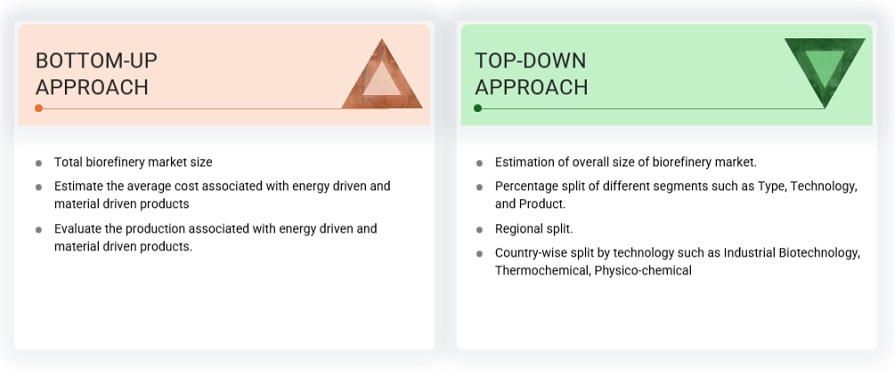
The study involved major activities in estimating the current size of the biorefinery market. Exhaustive secondary research was done to collect information on the peer and parent markets. The next step was to validate these findings, assumptions, and sizing with industry experts across the value chain through primary research. Both top-down and bottom-up approaches were employed to estimate the total market size. Thereafter, market breakdown and data triangulation were used to estimate the market size of the segments and subsegments.
Secondary Research
Secondary sources referred to for this research study include annual reports, press releases, and investor presentations of companies; white papers; certified publications; articles by recognized authors; and databases of various companies and associations. Secondary research was mainly used to obtain key information about the industry’s supply chain, the total pool of key players, market classification, and segmentation according to industry trends to the bottom-most level, regional markets, and key developments from both, market- and technology-oriented perspectives.
Primary Research
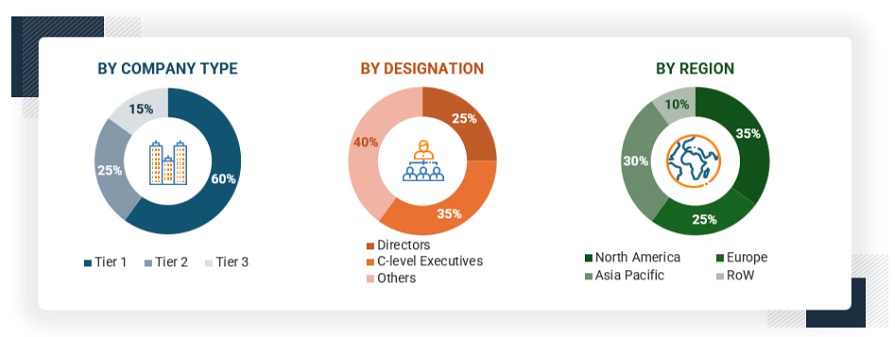
In the primary research process, various primary sources from the supply and demand sides were interviewed to obtain qualitative and quantitative information for this report. Primary sources from the supply side include industry experts such as chief executive officers (CEOs), vice presidents (VPs), marketing directors, and related key executives from various companies and organizations operating in the biorefinerys market.
In the complete market engineering process, the top-down and bottom-up approaches, along with several data triangulation methods, were extensively used to perform the market size estimations and forecasts for all segments and subsegments listed in this report. Extensive qualitative and quantitative analyses were conducted to complete the market engineering process and list key information/insights throughout the report. Following is the breakdown of primary respondents:
To know about the assumptions considered for the study, download the pdf brochure
Market Size Estimation
Both top-down and bottom-up approaches were used to estimate and validate the size of the biorefinery market. These methods were also used extensively to estimate the size of various subsegments in the market. The research methodology used to estimate the market size includes the following:
To know about the assumptions considered for the study, Request for Free Sample Report
Data Triangulation
After arriving at the overall market size from the estimation process explained below, the total market was split into several segments and subsegments. The data triangulation and market breakdown procedures were employed, wherever applicable, to complete the overall market engineering process and arrive at the exact statistics for all segments and subsegments. The data was triangulated by studying various factors and trends from both the demand and supply sides. The market size was validated using the top-down and bottom-up approaches.
Market Definition
Biorefinery is a facility that converts biomass into bioenergy and bio-based products. Biorefineries can provide a variety of chemicals by fractionating an initial raw material (biomass) into numerous intermediates, such as carbohydrates, proteins, and triglycerides, that can then be further processed into value-added products. The use of biomass as feedstock leads to low emissions of pollutants or hazardous compounds, thus minimizing harmful effects on the environment.
The biorefinery market represents the annual capacity of major companies to produce bioenergy (especially biofuels) and bio-based products. The regions considered for the biorefinery market study include North America, Europe, Asia Pacific, and the Rest of the World (RoW).
Research Objectives
- To define, describe, segment, and forecast the biorefinery market by product, type, technology, and region, in terms of value
- To forecast the biorefinery market by energy driven product, in terms of volume
- To forecast the market size for four key regions: North America, Europe, Asia Pacific, and the Rest of the World (RoW), along with their country-level market sizes, in terms of value
- To provide detailed information regarding key drivers, restraints, opportunities, and challenges influencing the market growth
- To strategically analyze the micromarkets1 with respect to individual growth trends, prospects, and contributions to the overall market size
- To provide value chain analysis, ecosystem analysis, case study analysis, patent analysis, trade analysis, technology analysis, average selling price (ASP) analysis, Porter’s five forces analysis, and regulations pertaining to the biorefinery market
- To analyze opportunities for stakeholders in the biorefinery market and draw a competitive landscape for market players
- To strategically analyze the ecosystem, regulations, patents, and trading scenarios pertaining to the biorefinery market
- To benchmark players within the market using the company evaluation matrix, which analyzes market players on various parameters within the broad categories of business and product strategies
- To compare key market players with respect to their market share, product specifications, and applications
- To strategically profile key players and comprehensively analyze their market rankings and core competencies2
- To analyze competitive developments, such as contracts & agreements, investments & expansions, mergers & acquisitions, partnerships, and collaborations, in the biorefinery market
- To study the impact of AI/Gen AI on the market under study, along with the global macroeconomic outlook
Key Stakeholders
- Biofuel vendors
- Bioenergy association
- Bio-based products and bioenergy dealers and suppliers
- Consulting companies in the energy & power sector
- Consulting companies related to the energy & power sector
- Energy regulators
- Government and research organizations
- Power and energy associations
- Repairs and maintenance service providers
- State and national regulatory authorities
- Research and consulting companies in the clean energy generation sector
- Organizations, forums, alliances, and associations
- Industrial authorities and associations
- State and national regulatory authorities
- Biorefinery operators
- Universities and Research institutes
Available Customizations:
With the given market data, MarketsandMarkets offers customizations according to the specific requirements of companies. The following customization options are available for the report:
PRODUCT ANALYSIS
- Product Matrix, which provides a detailed comparison of the product portfolio of each company
COMPANY INFORMATION
- Detailed analyses and profiling of additional market players
Get the Full Biorefinery Market Report
Full forecast, segment splits, and company analysis for all Biorefinery Market.
- Thailand Biorefinery Market
- India Biorefinery Market
- Brazil Biorefinery Market
- Rest Of Europe Biorefinery Market
- Rest Of Asia Pacific Biorefinery Market
- Other Countries Biorefinery Market
- US Biorefinery Market
- Germany Biorefinery Market
- France Biorefinery Market
- Italy Biorefinery Market
- Netherlands Biorefinery Market
- Spain Biorefinery Market
- UK Biorefinery Market
- Poland Biorefinery Market
- China Biorefinery Market
- Indonesia Biorefinery Market
Need a Tailored Report?
Customize this report to your needs
Get 10% FREE Customization
Customize This Report
