
Asia Pacific Surfactants Market (2026-2031)

The Asia Pacific Surfactants Market was valued at $21219.2 Million in 2026 and projected to reach to $29452.7 Million by 2031, representing a compound annual growth rate of 6.78%. Asia Pacific's surfactants market is positioned for robust expansion, growing from USD 21.2 billion in 2026 to USD 29.5 billion by 2031.


| Market Size in | USD 26.32 MN |
| Market Forecast in | |
| CAGR | |
| Forecast Period | |
| Units Considered | Value (USD MN) |
Asia Pacific Surfactants Market Trends and Insights
- This 6.78% compound annual growth rate significantly outpaces the global average, driven by rapid industrialization, rising consumer demand for personal care and household products, and expanding manufacturing capabilities across the region.
- Asia Pacific's dominance is fueled by large population bases, increasing disposable incomes, and growing adoption of premium cleaning and cosmetic formulations. The Asia Pacific surfactants market benefits from robust demand across multiple end-use industries, including detergents, personal care, textiles, and agrochemicals.
- Key markets such as China, India, and Southeast Asia are experiencing accelerated growth due to urbanization and changing consumer preferences toward sustainable and bio-based surfactant solutions.
- Asia Pacific's competitive manufacturing landscape and cost advantages position the region as both a major consumer and production center for surfactant applications through 2031..
Key Market Statistics
- CAGR (2026-2031) 6.78% CAGR
- Market Size, 2026 ~USD 21219.2 Million
- Forecast, 2031 ~USD 29452.7 Million
- Geography Asia Pacific
Asia Pacific Surfactants Market Overview
Dominant Regional Market :
Asia Pacific commands the largest share of global surfactants demand, with China and India together accounting for over USD 20.8 billion of the region's USD 21.2 billion market in 2026, reflecting the region's manufacturing prowess and consumer base.
Outpacing Global Growth :
At 6.78% CAGR through 2031, Asia Pacific's surfactants market grows 33% faster than the global average of 5.08%, driven by rapid industrialization, rising middle-class consumption, and expanding textile, detergent, and personal care sectors.
Strategic Manufacturing Hub :
The region hosts major surfactant production facilities serving both domestic and export markets, with China leading as the world's largest producer and consumer, while India emerges as a high-growth secondary market with increasing capacity investments.
Diverse End-Use Applications :
Asia Pacific's surfactants market benefits from booming demand across personal care, household cleaning, industrial applications, textiles, and agrochemicals, with emerging economies driving consumption growth in previously underpenetrated segments.
Asia Pacific Surfactants Market Dynamics
- This accelerated growth trajectory is underpinned by rapid urbanization, rising disposable incomes, and increasing consumer awareness of hygiene and personal care products across emerging economies.
- China remains the market anchor, while India and Southeast Asian nations present significant untapped opportunities. The region's growth is further catalyzed by expanding manufacturing capabilities, favorable regulatory environments, and strategic investments in production infrastructure.
- Rising demand from textile, detergent, and cosmetics industries, combined with growing adoption of bio-based and sustainable surfactants, will drive market diversification.
- Companies establishing regional hubs and localizing product portfolios are well-positioned to capitalize on Asia Pacific's structural growth drivers and demographic tailwinds..
Market Ecosystem
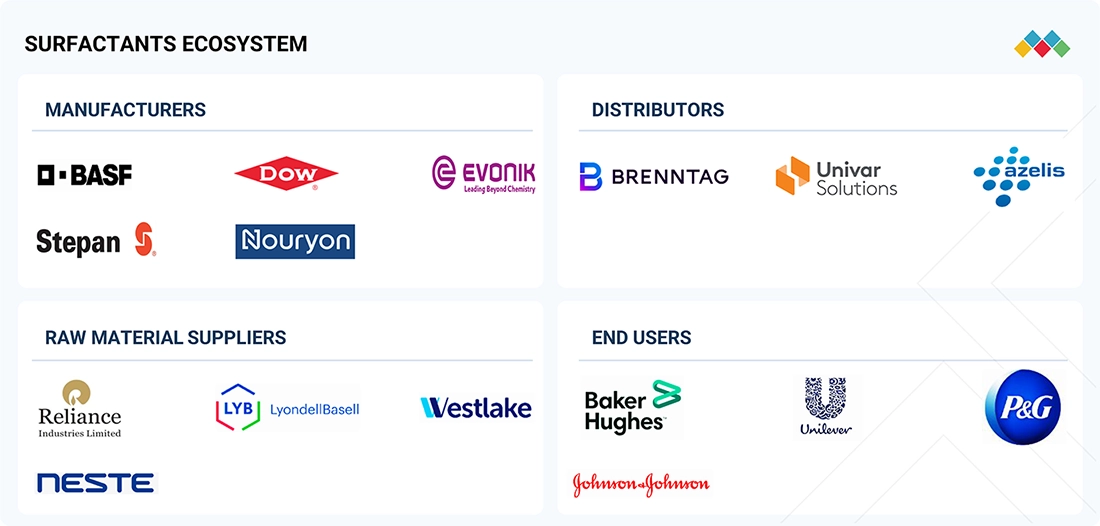
SURFACTANTS MARKET: COMMERCIAL USE CASES ACROSS INDUSTRIES
| COMPANY | USE CASE DESCRIPTION | BENEFITS |
|---|---|---|
 |
Use of biodegradable surfactants in laundry detergents and household cleaning formulations for enhanced soil and grease removal | Improved cleaning performance, reduced environmental impact, better foaming characteristics, and compatibility with sustainable formulations |
 |
Integration of specialty surfactants in personal care and fabric care products to improve cleansing efficiency and product stability | Enhanced emulsification, superior sensory experience, improved formulation stability, and consistent product performance |
 |
Application of surfactants in enhanced oil recovery, drilling fluids, and well stimulation operations to optimize fluid performance | Improved oil recovery efficiency, reduced interfacial tension, enhanced fluid mobility, and greater operational effectiveness in challenging reservoirs |
 |
Use of mild surfactants in skincare, baby care, and healthcare cleansing products for gentle cleansing and ingredient delivery | Effective yet mild cleansing, reduced skin irritation, improved formulation compatibility, and enhanced consumer safety and comfort |
Logos and trademarks shown above are the property of their respective owners. Their use here is for informational and illustrative purposes only.
Related Ecosystem
Agricultural Biologicals
- Bionematicides
- Auxins
- Cytokinins
- Ethylene
- Humic Substances
- Corteva, Inc.
- NICHINO INDIA PVT LTD.
- Basf se
- AZELIS HOLDINGS SA
- BAYER AG
Bulk Chemicals And Inorganics
- Corrosion Inhibitors
- Glycol Ethers
- Acetic Acid
- Acetone
- Ammonium Nitrate
- Basf se
- DOW CHEMICAL COMPANY
- Exxon Mobil Corporation
- AZELIS HOLDINGS SA
- Sinopec limited
Surfactants
- Amphoacetates
- Amphopropionates
- Amphoteric Surfactants
- Betaine
- Nonionic Surfactants
- Stepan Company
- AZELIS HOLDINGS SA
- Basf se
- Evonik industries ag
- INNOSPEC SPECIALTY CHEMICALS
Key Takeaways
- Asia Pacific surfactants market is valued at USD 21,219.2 million in 2026, growing at 6.78% CAGR through 2031.
- The region's growth rate outpaces the global average of 5.08%, driven by industrialization and rising consumer demand.
- Key growth drivers in Asia Pacific include urbanization, expanding personal care adoption, and sustainable product innovation.
- Asia Pacific is positioned as both a major consumption and production center for surfactants globally by 2031.
Surfactants Market Report Scope
| Report Metric | Details |
|---|---|
| Base Year | 2026 |
| Fastest Growing Segment | AGROCHEMICALS (Application) |
| Forecast Period | 2026-2031 |
| Growth Rate | CAGR of 5.08% from 2026 to 2031 |
| Largest Segment | HOME CARE (Application) |
| Market Size Base Year (Billions) | ~USD 52.26 (2026) |
| Revenue Forecast (Billions) | ~USD 66.95 (2031) |
| Segments Covered | Type, Application |
Asia Pacific Surfactants Market Report Segmentation
2 segment dimensions are covered across the global market.
By Type
- Amphoteric Surfactants
- Anionic Surfactants
- Cationic Surfactants
- Non-Ionic Surfactants
By Application
- Agrochemicals
- Elastomers & Plastics
- Food & Beverage
- Home Care
- I&I Cleaners
- Oilfield Chemicals
- Other Applications
- Personal Care
- Textiles
Target Audience
- Chemical Manufacturers & Producers : Optimize production capacity planning, regional sourcing strategies, and market entry timing by understanding Asia Pacific's country-level demand dynamics, competitive intensity, and growth trajectories through 2031.
- Personal Care & Cosmetics Companies : Align product development and marketing strategies with Asia Pacific's rapidly evolving consumer preferences, regulatory requirements, and segment-specific growth drivers in skincare, haircare, and premium beauty categories.
- Household & Industrial Cleaning Brands : Identify regional expansion opportunities and optimize distribution networks by analyzing country-specific demand for detergents, disinfectants, and industrial cleaning surfactants across Asia Pacific's diverse markets.
- Investment & Private Equity Firms : Evaluate acquisition targets, assess market valuations, and identify high-return investment opportunities in Asia Pacific's surfactants sector, supported by detailed growth forecasts and competitive landscape analysis.
- Supply Chain & Procurement Professionals : Optimize sourcing decisions, negotiate supplier contracts, and manage inventory risk by understanding regional production capacity, pricing trends, and supply-demand imbalances across Asia Pacific's key markets.
Countries within Asia Pacific - compare and drill down
| Country | 2025 size (native) |
|---|---|
| China | USD 15770.6 Million |
| India | USD 5125.9 Million |
| Japan | USD 1383.9 Million |
| Rest Of Asia Pacific | USD 7172.4 Million |
Country market size visualization
Reasons to Buy this Report
- Identify High-Growth Opportunities : Pinpoint which Asia Pacific countries and segments offer the fastest growth potential, with detailed market sizing for China, India, Japan, and Rest of Asia Pacific to guide investment and expansion decisions.
- Benchmark Against Regional Leaders : Understand competitive positioning relative to the region's dominant players and manufacturing hubs, enabling strategic market entry and competitive differentiation in the world's fastest-growing surfactants region.
- Forecast Demand Trends : Access granular 2026–2031 projections specific to Asia Pacific's unique industrial, consumer, and regulatory landscape, supporting accurate demand planning and supply chain optimization across the region.
- Capitalize on Emerging Segments : Discover untapped opportunities in bio-based surfactants, specialty applications, and underserved markets within Asia Pacific, where regulatory tailwinds and sustainability trends are reshaping competitive dynamics.
- Inform Strategic Partnerships : Leverage country-level and segment-specific insights to identify ideal joint venture partners, acquisition targets, and distribution channels within Asia Pacific's fragmented but rapidly consolidating market.
Frequently asked questions
What is the current market size of surfactants in Asia Pacific?
Asia Pacific's surfactants market is valued at USD 21,219.2 million in 2026, representing significant regional demand across detergents, personal care, and industrial applications.
What is the projected market size for Asia Pacific surfactants by 2031?
Asia Pacific's surfactants market is forecast to reach USD 29,452.7 million by 2031, reflecting sustained regional growth and expanding end-use applications.
What is the CAGR for Asia Pacific surfactants market?
Asia Pacific's surfactants market is expected to grow at a 6.78% CAGR from 2026 to 2031, outpacing the global average growth rate.
Which countries drive the Asia Pacific surfactants market?
China, India, and Southeast Asian nations are primary growth drivers for Asia Pacific's surfactants market due to rapid industrialization, urbanization, and rising consumer spending.
What end-use industries dominate Asia Pacific surfactants demand?
Detergents, personal care products, textiles, and agrochemicals are the leading end-use sectors driving surfactant consumption across Asia Pacific.
RESEARCH METHODOLOGY
The study involved four major activities in estimating the market size for surfactants. Exhaustive secondary research was done to collect information on the market, the peer market, and the parent market. The next step was to validate these findings, assumptions, and sizing with industry experts across the value chain through primary research. Both top-down and bottom-up approaches were employed to estimate the complete market size. After that, the market breakdown and data triangulation procedures were used to estimate the market size of the segments and subsegments.
Secondary Research
Secondary sources used in this study included annual reports, press releases, and investor presentations of companies; white papers; certified publications; articles from recognized authors; and gold-standard and silver-standard websites, such as Factiva, ICIS, Bloomberg, and others. The findings of this study were verified through primary research, which involved conducting extensive interviews with key officials, including CEOs, VPs, directors, and other executives. The breakdown of profiles of the primary interviewees is illustrated in the figure below:
Primary Research
The surfactants market comprises several stakeholders, such as raw material suppliers, end-product manufacturers, and regulatory organizations in the supply chain. Various primary sources from both the supply and demand sides of the market were interviewed to obtain qualitative and quantitative information.
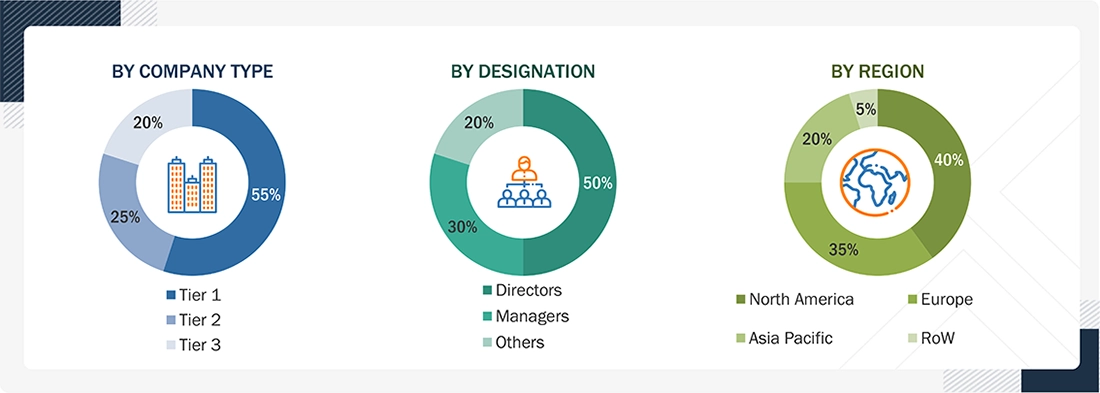
Notes: Tier 1, Tier 2, and Tier 3 companies are classified based on their market revenue in 2024/2025 available in the public domain, product portfolios, and geographical presence.
|
COMPANY NAME |
DESIGNATION |
|
BASF SE |
Senior Manager |
|
Stepan Company |
Innovation Manager |
|
Dow Inc. |
Vice-President |
|
Evonik Industries AG |
Production Supervisor |
|
Nouryon |
Sales Manager |
To know about the assumptions considered for the study, download the pdf brochure
Market Size Estimation
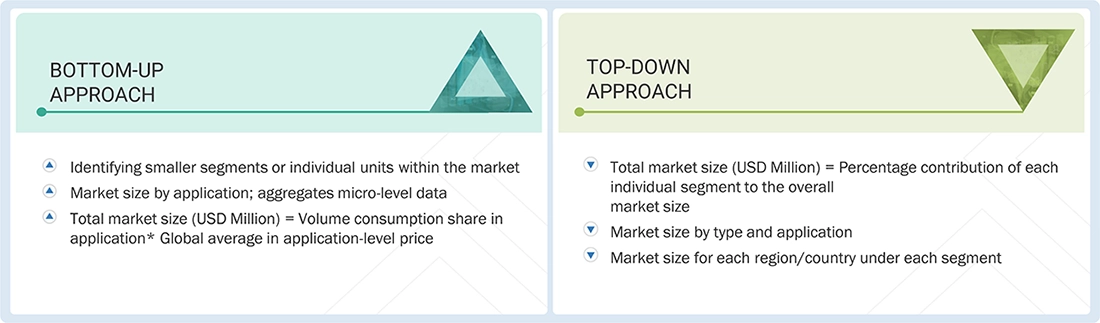
Both top-down and bottom-up approaches were used to estimate and validate the total size of the surfactants market. These methods were also used extensively to estimate the size of various subsegments in the market. The research methodology used to estimate the market size includes the following:
- The key players in the industry have been identified through extensive secondary research.
- The supply chain of the industry has been determined through primary and secondary research.
- All percentage shares, splits, and breakdowns have been determined using secondary sources and verified through primary sources.
- All possible parameters that affect the markets covered in this research study have been accounted for, viewed in extensive detail, verified through primary research, and analyzed to obtain the final quantitative and qualitative data.
SURFACTANTS MARKET: BOTTOM-UP APPROACH
Data Triangulation
After determining the overall market size using the market size estimation processes explained above, the market was divided into several segments and subsegments. To complete the overall market engineering process and determine the exact statistics for each market segment and subsegment, data triangulation and market breakdown procedures were employed, as applicable. The data was triangulated by studying various factors and trends from both the demand and supply sides in the surfactants industry.
Market Definition
According to the European Chemicals Agency (ECHA), surfactants are surface-active agents that are capable of reducing the surface tension between two liquids or between a liquid and a solid. They help in increasing the wetting properties of the liquid. They are made from two types of raw materials, namely, petroleum and oleochemicals. Surfactants are mainly used to separate dirt, oil, and stains from various surfaces. They have various uses as detergents, wetting agents, emulsifiers, foaming agents, anti-static agents, stabilizers, and dispersants in personal care, home care, industrial & institutional (I&I) cleaning, food & beverage, oilfield chemicals, agrochemicals, textiles, and other applications.
Key Stakeholders
- Surfactant manufacturers
- Surfactant distributors
- Raw material suppliers
- Government and research organizations
- Investment banks and private equity firms
Report Objectives
- To analyze and forecast the size of the global surfactants market in terms of value and volume
- To provide detailed information about the major drivers, restraints, challenges, and opportunities influencing the market growth
- To define, describe, and segment the market based on type, application, and region
- To forecast the size of the market segments based on regions such as Asia Pacific, North America, Europe, the Middle East & Africa, and South America
- To strategically analyze micromarkets with respect to individual growth trends, prospects, and their contribution to the overall market
- To strategically analyze the segmented markets with respect to individual growth trends, prospects, and contributions to the overall market
- To identify and analyze opportunities for stakeholders in the market
- To analyze competitive developments such as expansions, partnerships, joint ventures, mergers & acquisitions, agreements, and product launches in the market
- To strategically profile the key companies and comprehensively analyze their core competencies
Available customizations:
Along with the given market data, MarketsandMarkets offers customizations according to the company’s specific needs. The following customization options are available for the report:
Regional Analysis
- Further breakdown of a region with respect to a particular country or additional application
Company Information
- Detailed analysis and profiles of additional market players (up to five)
Get the Full Surfactants Market Report
Full forecast, segment splits, and company analysis for all Surfactants Market.
- China Surfactants Market
- India Surfactants Market
- Japan Surfactants Market
- Canada Surfactants Market
- Mexico Surfactants Market
- US Surfactants Market
- Germany Surfactants Market
- France Surfactants Market
- UK Surfactants Market
- Italy Surfactants Market
- Spain Surfactants Market
- Poland Surfactants Market
- Netherlands Surfactants Market
- Saudi Arabia Surfactants Market
- UAE Surfactants Market
- South Africa Surfactants Market
- Egypt Surfactants Market
- Brazil Surfactants Market
- Argentina Surfactants Market
- Rest Of Europe Surfactants Market
- Rest Of Asia Pacific Surfactants Market
- Rest Of South America Surfactants Market
Need a Tailored Report?
Customize this report to your needs
Get 10% FREE Customization
Customize This Report
