
Europe Botulinum Toxins Market (2025-2030)

The Europe Botulinum Toxins Market was valued at $2200.2 Million in 2025 and projected to reach to $3937.6 Million by 2030, representing a compound annual growth rate of 12.3%. Europe's botulinum toxins market demonstrates robust growth momentum, driven by increasing consumer awareness of aesthetic treatments, an aging demographic seeking anti-aging solutions, and expanding therapeutic applications in clinical settings.


| Market Size in | USD 26.32 MN |
| Market Forecast in | |
| CAGR | |
| Forecast Period | |
| Units Considered | Value (USD MN) |
Europe Botulinum Toxins Market Trends and Insights
- This 12.3% compound annual growth rate reflects Europe's strong demand for both aesthetic and therapeutic applications of botulinum toxins.
- Europe leads in regulatory maturity and clinical adoption, with established reimbursement frameworks supporting market expansion across cosmetic dermatology, neurology, and ophthalmology sectors. The European market benefits from advanced healthcare infrastructure, high consumer awareness, and favorable demographic trends including an aging population seeking anti-aging treatments.
- Europe's stringent regulatory environment ensures product quality and safety, fostering consumer confidence and sustained demand.
- Key markets within Europe, including Germany, France, and the United Kingdom, are driving innovation and clinical adoption of botulinum toxin therapies. By 2030, Europe is expected to maintain its position as a premium market with continued investment in research, development, and clinical applications.
- The region's emphasis on minimally invasive procedures and preventative aesthetics positions Europe as a growth engine for the global botulinum toxins market..
Key Market Statistics
- CAGR (2025-2030) 12.3% CAGR
- Market Size, 2025 ~USD 2200.2 Million
- Forecast, 2030 ~USD 3937.6 Million
- Geography Europe
Europe Botulinum Toxins Market Overview
Market Leadership Position :
Europe commands a significant share of the global botulinum toxins market, valued at $2,200.2 million in 2025 with a 12.3% CAGR, outpacing the global growth rate of 11.7% and demonstrating strong regional demand.
Regulatory Maturity & Clinical Adoption :
Europe's established regulatory frameworks and mature healthcare infrastructure enable rapid clinical adoption of botulinum toxins across both aesthetic and therapeutic applications, supported by comprehensive reimbursement policies.
Dual Application Growth :
Strong demand spans aesthetic procedures (anti-aging treatments) and therapeutic applications (migraine, spasticity, hyperhidrosis), with Europe's aging population and high cosmetic procedure acceptance driving sustained market expansion.
Forecast Expansion Trajectory :
The European market is projected to reach $3,937.6 million by 2030, representing a 79% increase from 2025 levels and reflecting continued investment in aesthetic medicine and therapeutic innovations across the region.
Europe Botulinum Toxins Market Dynamics
- The region's mature healthcare infrastructure, stringent regulatory standards, and established reimbursement frameworks create a favorable environment for market expansion.
- Germany, France, and the UK lead regional demand, supported by high disposable incomes and strong adoption of cosmetic procedures. Looking ahead to 2030, Europe's market is expected to benefit from technological advancements, new product launches, and growing acceptance of minimally invasive procedures.
- Emerging markets within Eastern Europe present untapped growth opportunities, while established Western European markets continue to drive volume through repeat treatments and expanding therapeutic indications.
- The region's focus on safety standards and clinical evidence will maintain its competitive advantage globally..
Market Ecosystem
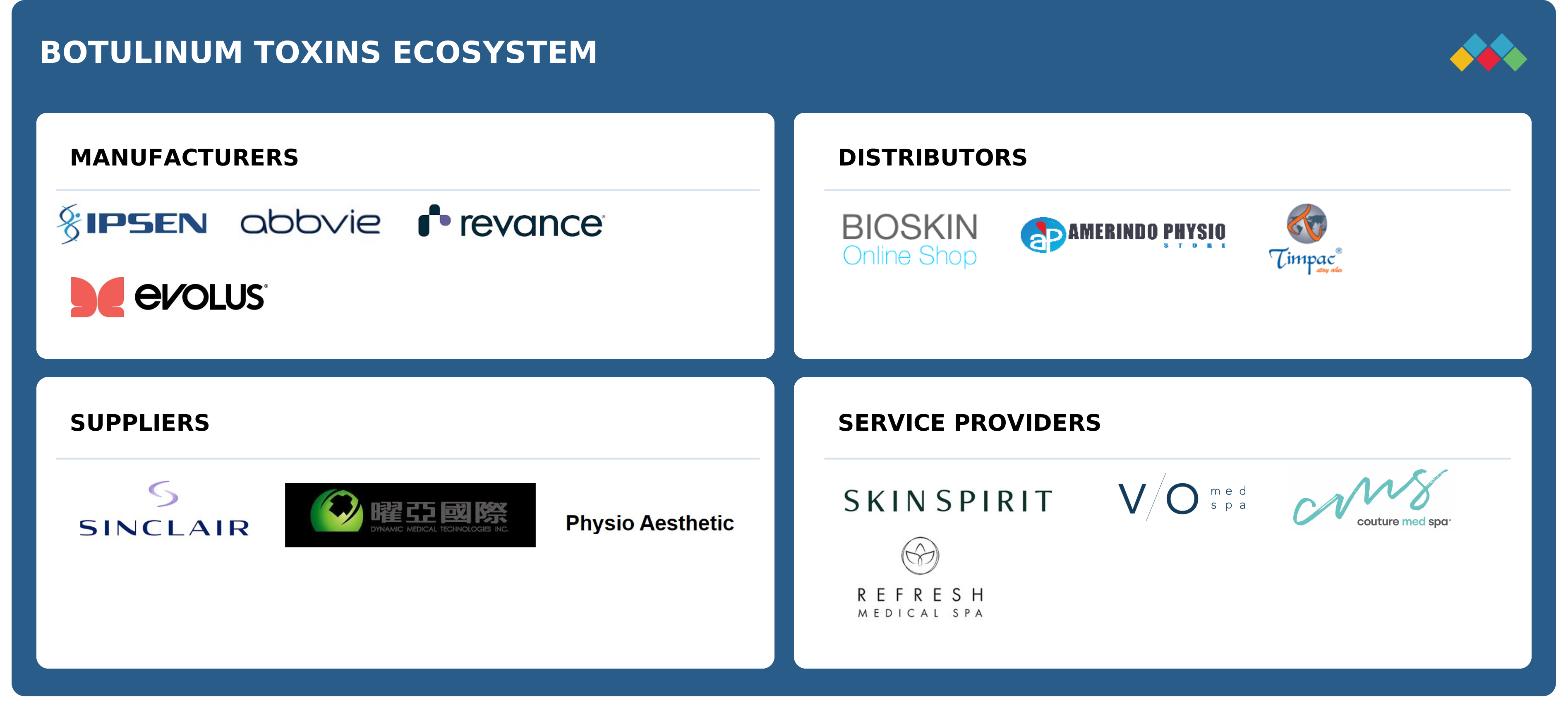
Botulinum Toxins Market: COMMERCIAL USE CASES ACROSS INDUSTRIES
| COMPANY | USE CASE DESCRIPTION | BENEFITS |
|---|---|---|
 |
Offers Botox, Dysport, and Jeuveau injections for wrinkle reduction, facial contouring, and skin rejuvenation | Large footprint across states (over 40+ clinics) enables standardized patient experience. |
 |
Offers fine-line smoothing, facial rejuvenation with neurotoxin injectables and preventative aging, self-care trend | Cost-effective therapy and attracts younger demographics (millennials/Gen Z) seeking “affordable luxury.” |
 |
Providing toxin treatments in a spa-like setting at more affordable pricing compared to dermatology clinics. | Attracts cost-conscious consumers seeking non-surgical beauty solutions. Strengthens brand identity as an affordable luxury provider. |
 |
Positioning botulinum toxin not just as a medical treatment but as part of a self-care and lifestyle service. | Expands clinic portfolio with a high-demand, high-margin service and differentiates Refresh as a “beauty + wellness destination.” |
Logos and trademarks shown above are the property of their respective owners. Their use here is for informational and illustrative purposes only.
Related Ecosystem
Pharmaceuticals
- Bioreactors
- Analytical Testing
- Bioanalytical Testing Services
- Cell Counters
- Data Management Services
- Thermo Fisher Scientific Inc.
- Merck KGaA
- SANOFI
- Pfizer Inc.
- NOVARTIS
Key Takeaways
- Europe's botulinum toxins market will grow from $2,200.2M (2025) to $3,937.6M (2030) at a 12.3% CAGR, outpacing global growth.
- Europe's mature regulatory framework and reimbursement systems drive adoption across aesthetic, neurological, and ophthalmological applications.
- An aging European population and high consumer awareness of minimally invasive procedures fuel sustained market expansion.
- Germany, France, and the United Kingdom are key growth drivers within Europe's botulinum toxins market landscape.
Botulinum Toxins Market Report Scope
| Report Metric | Details |
|---|---|
| Base Year | 2025 |
| Fastest Growing Segment | 18-34 YEARS (Age Group) |
| Forecast Period | 2025-2030 |
| Growth Rate | CAGR of 11.7% from 2025 to 2030 |
| Largest Segment | TYPE A BOTULINUM TOXINS (Type) |
| Market Size Base Year (Billions) | ~USD 9.03 (2025) |
| Revenue Forecast (Billions) | ~USD 15.7 (2030) |
| Segments Covered | Product, Type, Application, End User, Age Group |
Europe Botulinum Toxins Market Report Segmentation
5 segment dimensions are covered across the global market.
By Product
- Botox
- Dysport
- Jeuveau
- Myobloc
- Other Products
- Xeomin
By Type
- Cervical Dystonia
- Chronic Migraine
- Facial Contouring
- Overactive Bladder
- Pain Management
- Skin Rejuvenation
- Spasticity
- Type A Botulinum Toxins
- Type B Botulinum Toxins
- Wrinkle Removal
By Application
- Cosmetic Applications
- Other Applications
- Therapeutic Applications
By End User
- Beauty Centers
- Dermatology Clinics & Hospitals
- Dermatology Clinics And Hospitals
- Medical Spas
- Other End Users
By Age Group
- 17 Years Or Younger
- 18-34 Years
- 35-50 Years
- 51-64 Years
- 51-64 Years Old
- 65 Years Or Older
EUROPE: BOTULINUM TOXINS MARKET, BY END USER, 2023–2030
| Segment | 2023 | 2024 | 2025 | 2026 | 2027 | 2028 | 2029 | 2030 | CAGR (%) |
|---|---|---|---|---|---|---|---|---|---|
| BEAUTY CENTERS | 460.8 | 498.4 | 551.6 | 613.2 | 684.7 | 771.5 | 873.1 | 1001.2 | 12.7 |
| DERMATOLOGY CLINICS & HOSPITALS | 971 | 1044.4 | 1149.2 | 1270.2 | 1410.3 | 1580 | 1777.9 | 2027.2 | 12 |
| MEDICAL SPAS | 537.7 | 589.3 | 660.7 | 743.9 | 841.1 | 959.4 | 1099 | 1275.4 | 14.1 |
| OTHER END USERS | 132.2 | 135.9 | 142.6 | 149.8 | 157.7 | 166.8 | 176.6 | 188.6 | 5.7 |
| TOTAL | 2101.6 | 2268.1 | 2504.1 | 2777.1 | 3093.8 | 3477.7 | 3926.6 | 4492.5 | 12.4 |
Target Audience
- Pharmaceutical & Biotech Companies : Manufacturers and distributors of botulinum toxins require detailed European market data to optimize product portfolios, plan clinical trials, navigate regulatory approvals, and develop region-specific commercialization strategies.
- Medical Device & Aesthetics Providers : Clinics, hospitals, and aesthetic centers need market insights to understand demand trends, competitive positioning, reimbursement eligibility, and patient demographics to drive service expansion and revenue growth.
- Healthcare Investors & Private Equity : Investment firms evaluating European healthcare assets require comprehensive market sizing, growth forecasts, and regional dynamics to assess investment returns, identify acquisition targets, and support portfolio companies.
- Market Research & Consulting Firms : Research organizations and consultants leverage detailed European market data to support client advisory services, competitive benchmarking, market entry strategies, and industry trend analysis.
- Healthcare Policy & Regulatory Bodies : Government agencies and regulatory organizations use market intelligence to inform reimbursement policies, clinical guidelines, safety monitoring, and healthcare resource allocation across European markets.
Countries within Europe - compare and drill down
| Country | 2025 size (native) |
|---|---|
| Germany | USD 1565.2 Million |
| UK | USD 449.5 Million |
| France | USD 947.35 Million |
| Italy | USD 668.45 Million |
| Spain | USD 407.68 Million |
| Rest Of Europe | USD 451.68 Million |
Country market size visualization
Reasons to Buy this Report
- Country-Level Market Segmentation : Access detailed market sizing for Germany, UK, France, Italy, Spain, and Rest of Europe, enabling precise market entry strategies and competitive positioning within specific European territories.
- Regulatory & Reimbursement Insights : Understand Europe's mature regulatory landscape and reimbursement frameworks that differentiate the region, critical for product approval timelines, pricing strategies, and market access planning.
- Aesthetic vs. Therapeutic Split Analysis : Identify growth drivers across both aesthetic applications (anti-aging, cosmetic procedures) and therapeutic uses (migraine, spasticity), allowing targeted marketing and product development strategies.
- Competitive Landscape & Market Dynamics : Gain intelligence on regional competitors, market consolidation trends, and emerging players across Europe's fragmented market, essential for strategic partnerships and M&A planning.
- Growth Forecasts & Investment Opportunities : Leverage 2025-2030 projections showing 79% market expansion to identify high-growth segments, emerging markets within Eastern Europe, and optimal timing for market entry or expansion.
Frequently asked questions
What is the projected size of Europe's botulinum toxins market by 2030?
Europe's botulinum toxins market is projected to reach $3,937.6 million by 2030, growing from $2,200.2 million in 2025.
What is the CAGR for Europe's botulinum toxins market?
Europe's botulinum toxins market is expected to grow at a compound annual growth rate of 12.3% between 2025 and 2030.
Which European countries are leading the botulinum toxins market?
Germany, France, and the United Kingdom are among the leading markets for botulinum toxins in Europe, driven by advanced healthcare infrastructure and high consumer demand.
What applications drive Europe's botulinum toxins market growth?
Europe's market is driven by aesthetic applications (anti-aging treatments), therapeutic uses in neurology, and ophthalmological applications, supported by established reimbursement frameworks.
How does Europe's regulatory environment impact the botulinum toxins market?
Europe's stringent regulatory standards ensure product quality and safety, fostering consumer confidence and supporting sustained market growth across approved therapeutic and aesthetic indications.
RESEARCH METHODOLOGY
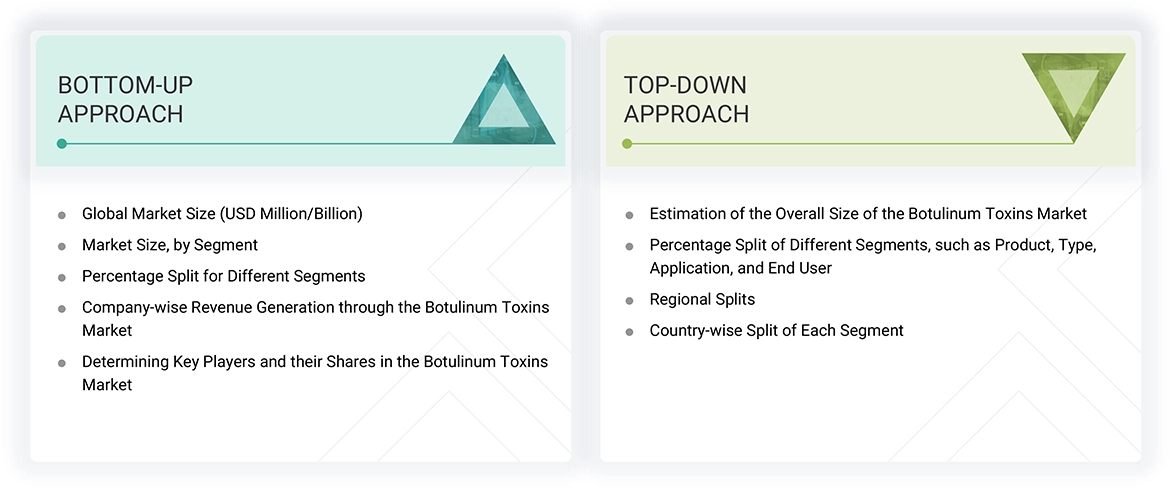
This study balanced primary and secondary research for the botulinum toxins market by analyzing various market variables affecting small, medium, and large businesses. The next step involved conducting primary research with industry experts along the value chain to validate the findings, assumptions, and market sizing. Multiple methodologies were employed to estimate the overall market size, including both top-down and bottom-up approaches.
The study encompasses significant market segments, evolving trends, regulatory frameworks, and competitive dynamics. It also examines leading market players and the strategies they employ in this sector. In conclusion, the total market size was estimated using a combination of top-down and bottom-up approaches, and data triangulation, to finalize the market size. Primary research was conducted throughout the study to validate and test each hypothesis.
Secondary Research
During the study, secondary research utilized a range of sources, including directories and databases like Bloomberg Businessweek, D&B Hoovers, and Factiva. Additional materials included white papers, annual reports, SEC filings, and investor presentations. This research approach was adopted to collect and analyze data that provides comprehensive, technical, and market-focused insights into the botulinum toxins market. The findings offer insights into key players and market segmentation based on recent industry trends, as well as significant developments within the market. A database comprising leading industry figures was also created as part of this secondary research.
Primary Research
Primary research involved activities designed to gather both qualitative and quantitative data. A variety of individuals from both the supply and demand sides were questioned during this phase. On the supply side, key figures such as CEOs, vice presidents, directors of marketing and sales, directors of technology and innovation, and other important leaders were interviewed by industry experts. On the demand side, primary sources included academic institutions and research organizations. This research aimed to validate market segmentation, identify prominent market participants, and gain insights into significant industry trends and market dynamics through a real-world primary study.
A breakdown of the primary respondents is provided below:
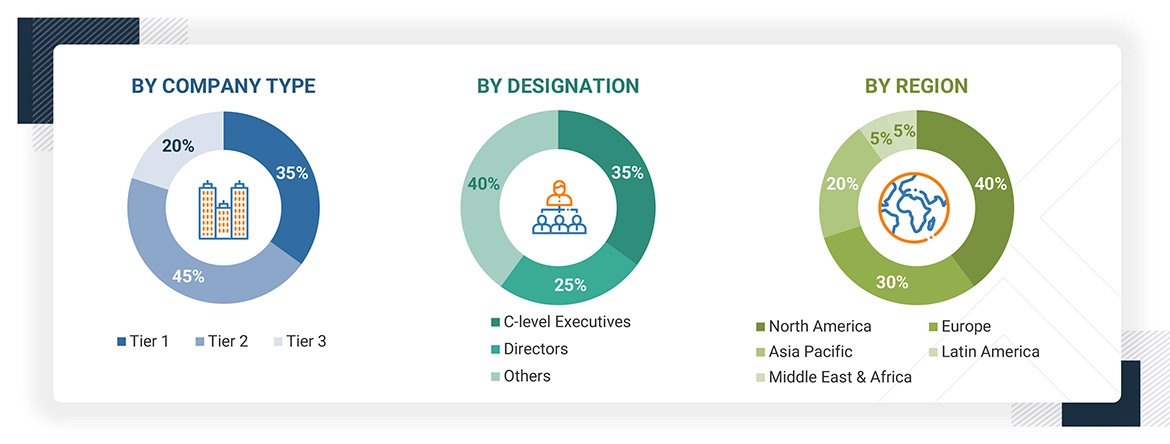
Note 1: Others include distributors, suppliers, product managers, business development managers, marketing managers, and sales managers.
Note 2: Companies are categorized into tiers based on their total revenue. As of 2024, Tier 1 = >USD 1,000 million, Tier 2 = USD 500–1,000 million, and Tier 3 = < USD 500 million.
To know about the assumptions considered for the study, download the pdf brochure
Market Size Estimation
This report provides an analysis of the global botulinum toxins market size by reviewing the revenue shares of prominent companies. Key players with significant market shares were identified through secondary research, and their revenue from botulinum toxin sales was calculated and subsequently validated through primary research. The secondary research included an analysis of annual and financial reports from leading market participants. Meanwhile, the primary research involved in-depth interviews with key thought leaders, such as directors, CEOs, and marketing executives.
Segmental revenues were determined based on the revenue mapping of service and product providers to calculate the global market value. The process involved the following steps:
- Generating a list of key players that operate in the botulinum toxins market at the regional or global levels.
- Mapping the products of manufacturers of botulinum toxins and related product lines at the regional level.
- Mapping the revenues of listed players from botulinum toxins and related products.
- Mapping the revenues of major players to cover at least ~90% of the global market share as of 2024.
- Extrapolating the mapped revenues of players to arrive at the global market value for the respective segment.
- Summing up the market value for all segments and subsegments to achieve the actual value of the global botulinum toxins market.
Data Triangulation
After estimating the overall market size, the botulinum toxins market was divided into segments and subsegments. The overall market engineering process was finalized using data triangulation and market segmentation techniques to obtain accurate statistics for all segments and subsegments. This triangulation involved studying and analyzing various trends and factors from both the demand and supply sides. Furthermore, the botulinum toxins market data were verified and validated using both top-down and bottom-up approaches.
Market Definition
Botulinum toxins are neurotoxic proteins produced by the bacterium Clostridium botulinum. They block signaling between nerves and muscles, resulting in temporary muscle relaxation. This substance is used in both aesthetic procedures and therapeutic treatments. Additionally, it is regulated as a prescription biologic in most markets.
Stakeholders
- Medical Aesthetic Clinics
- Cosmetic Product Manufacturers
- Aesthetic Device Manufacturers
- Pharmaceutical Companies
- Hospitals and Surgical Centers
- Aesthetic Product Retailers
- Medical Spas and Beauty Spas
- Cosmetologists and Plastic Surgeons
- Media and Influencers
- Medical Aesthetics Device Distributors and Suppliers
- Market Research and Consulting Firms
Report Objectives
- To define, describe, and forecast the size of the botulinum toxins market based on product, type, application, end user, and region
- To provide detailed information regarding the major factors influencing the growth potential of the global botulinum toxins market (drivers, restraints, opportunities, challenges, and trends)
- To analyze the micromarkets with respect to individual growth trends, prospects, and contributions to the global botulinum toxins market
- To analyze key growth opportunities in the global botulinum toxins market for key stakeholders and provide details of the competitive landscape for market leaders
- To forecast the size of market segments and/or subsegments with respect to five major regions: North America (US and Canada), Europe (Germany, France, the UK, Spain, Italy, and the RoE), Asia Pacific (Japan, China, India, Australia, South Korea, and the RoAPAC), Latin America (Brazil, Mexico, RoLA), and the Middle East & Africa (GCC Countries and RoMEA)
- To profile the key players in the botulinum toxins market and comprehensively analyze their market shares and core competencies
- To track and analyze the competitive developments undertaken in the global botulinum toxins market, such as product launches, agreements, expansions, and mergers & acquisitions
Get the Full Botulinum Toxins Market Report
Full forecast, segment splits, and company analysis for all Botulinum Toxins Market.
- US Botulinum Toxins Market
- Canada Botulinum Toxins Market
- Germany Botulinum Toxins Market
- UK Botulinum Toxins Market
- France Botulinum Toxins Market
- Italy Botulinum Toxins Market
- Spain Botulinum Toxins Market
- Japan Botulinum Toxins Market
- China Botulinum Toxins Market
- India Botulinum Toxins Market
- Australia Botulinum Toxins Market
- South Korea Botulinum Toxins Market
- Brazil Botulinum Toxins Market
- Mexico Botulinum Toxins Market
- Rest Of Europe Botulinum Toxins Market
- Rest Of Asia Pacific Botulinum Toxins Market
- Rest Of Latin America Botulinum Toxins Market
Need a Tailored Report?
Customize this report to your needs
Get 10% FREE Customization
Customize This Report
