
Asia Pacific Cancer Diagnostics Market (2021-2026)

The Asia Pacific Cancer Diagnostics Market was valued at $3729.3 Million in 2021 and projected to reach to $7200.7 Million by 2026, representing a compound annual growth rate of 14.1%. The Asia Pacific cancer diagnostics market is poised for sustained high-growth expansion through 2026, driven by escalating cancer incidence rates, aging populations, and substantial healthcare infrastructure investments.


| Market Size in | USD 26.32 MN |
| Market Forecast in | |
| CAGR | |
| Forecast Period | |
| Units Considered | Value (USD MN) |
Asia Pacific Cancer Diagnostics Market Trends and Insights
- Asia Pacific's 14.1% compound annual growth rate significantly outpaces global trends, reflecting rising cancer incidence, improving healthcare infrastructure, and increased adoption of advanced diagnostic technologies across the region.
- This accelerated growth in Asia Pacific underscores the region's pivotal role in the global cancer diagnostics landscape. Asia Pacific's market expansion is driven by demographic shifts, including aging populations and lifestyle changes that elevate cancer risk across multiple countries.
- Asia Pacific nations are investing heavily in early detection programs and precision medicine initiatives, which amplify demand for innovative diagnostic solutions.
- The competitive intensity in Asia Pacific continues to intensify as both established and emerging players recognize the region's high-growth potential and expanding patient populations requiring timely cancer diagnosis..
Key Market Statistics
- CAGR (2021-2026) 14.1% CAGR
- Market Size, 2021 ~USD 3729.3 Million
- Forecast, 2026 ~USD 7200.7 Million
- Geography Asia Pacific
Asia Pacific Cancer Diagnostics Market Overview
Exceptional Growth Trajectory :
Asia Pacific cancer diagnostics market is expanding at 14.1% CAGR, significantly outpacing the global rate of 11.5%, driven by rising cancer prevalence and healthcare modernization across the region.
Market Doubling in Five Years :
The market is projected to nearly double from $3,729.3 million in 2021 to $7,200.7 million by 2026, reflecting strong investment in diagnostic infrastructure and technology adoption across Asia Pacific nations.
China's Dominant Market Position :
China represents the largest market within Asia Pacific at $3,833.8 million, accounting for over half of the regional market and serving as a key growth engine for advanced cancer diagnostic technologies.
Emerging Healthcare Infrastructure :
Rapid expansion of healthcare facilities, increased government funding for cancer screening programs, and growing awareness of early detection are accelerating diagnostic technology adoption across India, Southeast Asia, and other emerging markets.
Asia Pacific Cancer Diagnostics Market Dynamics
- Countries like China, India, and Japan are increasingly adopting advanced diagnostic modalities including molecular testing, imaging technologies, and liquid biopsy solutions.
- Government initiatives promoting early cancer detection and improved healthcare accessibility are creating favorable market conditions. Key growth catalysts include rising disposable incomes, expanding private healthcare sectors, and technology transfer from developed markets.
- The region's 14.1% CAGR reflects both market maturation in developed Asia Pacific economies and rapid adoption in emerging markets.
- Strategic partnerships between international diagnostic companies and regional healthcare providers are expected to accelerate market penetration and innovation throughout the forecast period..
Market Ecosystem
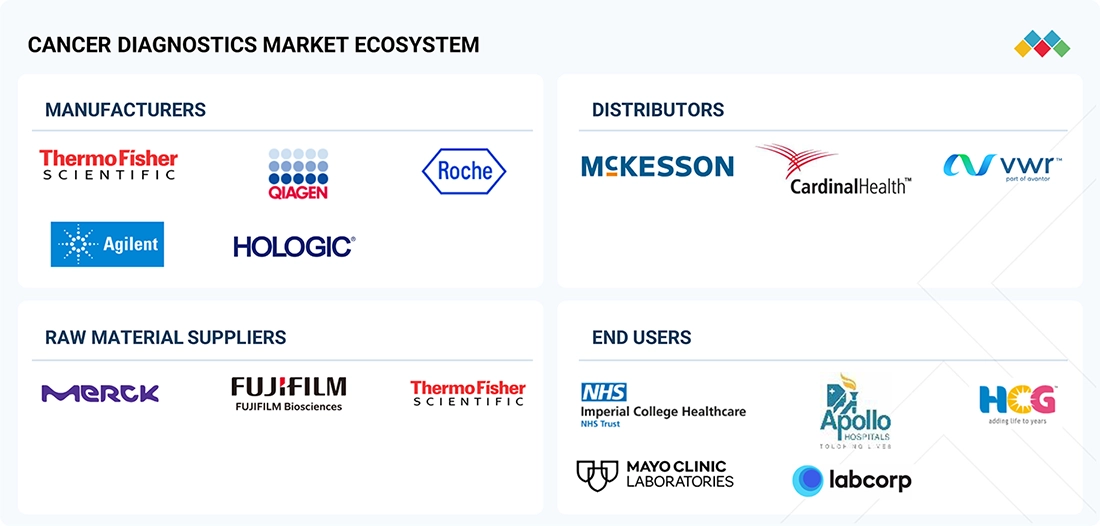
CANCER DIAGNOSTICS MARKET: COMMERCIAL USE CASES ACROSS INDUSTRIES
| COMPANY | USE CASE DESCRIPTION | BENEFITS |
|---|---|---|
 |
Develops molecular and tissue-based cancer diagnostic solutions, including companion diagnostics, PCR-based assays, next-generation sequencing (NGS), immunohistochemistry (IHC), and digital pathology for oncology applications. | Enables early and accurate cancer detection, supports personalized treatment selection, improves diagnostic confidence, and enhances patient outcomes through precision medicine. |
 |
Develops advanced cancer diagnostic solutions, including molecular diagnostics, HPV testing, cervical cytology, breast imaging (3D mammography/tomosynthesis), biopsy systems, and digital pathology technologies for early cancer detection, diagnosis, and treatment guidance. | Enables early and accurate cancer detection, improves screening and diagnostic accuracy, supports personalized treatment decisions, enhances workflow efficiency, and improves patient outcomes through comprehensive oncology diagnostics. |
 |
Provides molecular oncology testing, digital pathology, tissue diagnostics, flow cytometry, and NGS solutions for detecting cancer biomarkers, monitoring disease progression, and guiding targeted therapies. | Delivers rapid and precise cancer diagnosis, improves laboratory efficiency, supports personalized oncology care, and enables informed treatment decisions. |
 |
Provides advanced imaging technologies, laboratory diagnostics, molecular testing, and AI-enabled solutions for cancer screening, diagnosis, staging, and therapy monitoring. | Enhances early cancer detection, improves diagnostic precision, supports treatment planning, and streamlines oncology workflows. |
 |
Develops molecular diagnostic kits, sample preparation technologies, companion diagnostics, and NGS workflows for identifying cancer-related genetic mutations and biomarkers. | Enables accurate biomarker detection, supports precision oncology, accelerates molecular testing, and improves patient stratification for targeted therapies. |
Logos and trademarks shown above are the property of their respective owners. Their use here is for informational and illustrative purposes only.
Related Ecosystem
In Vitro Diagnostics
- Polymerase Chain Reaction (PCR)
- Enzyme-Linked Immunosorbent Assay (ELISA)
- Dna Microarrays
- Assay Kits
- Microarrays
- ROCHE HOLDINGS AG
- Thermo Fisher Scientific Inc.
- Danaher Corporation
- Abbott Laboratories
- Biomerieux s.a.
Medical Devices
- Polymerase Chain Reaction (PCR)
- Magnetic Resonance Imaging (MRI)
- Disposable Autoinjectors
- Pulse Oximeters
- Blood Pressure Monitors
- Medtronic plc
- Abbott Laboratories
- Stryker Corporation
- Becton, Dickinson and Company
- CONMED Corporation
Key Takeaways
- Asia Pacific cancer diagnostics market is projected to nearly double from $3,729.3M (2021) to $7,200.7M (2026), representing a 14.1% CAGR.
- Asia Pacific's growth rate of 14.1% significantly exceeds the global CAGR of 11.5%, positioning the region as a high-priority market for diagnostic innovation.
- Rising cancer prevalence, aging demographics, and healthcare infrastructure improvements across Asia Pacific are primary catalysts for market acceleration.
- Asia Pacific's expanding middle class and increased healthcare spending are driving adoption of advanced diagnostic technologies and precision medicine approaches.
Cancer Diagnostics Market Report Scope
| Report Metric | Details |
|---|---|
| Base Year | 2021 |
| Fastest Growing Segment | BREAST CANCER (Application) |
| Forecast Period | 2021-2026 |
| Growth Rate | CAGR of 11.5% from 2021 to 2026 |
| Largest Segment | HOSPITALS (End User) |
| Market Size Base Year (Billions) | ~USD 15.44 (2021) |
| Revenue Forecast (Billions) | ~USD 26.6 (2026) |
| Segments Covered | Product, Type, Technology, Application, End User |
Asia Pacific Cancer Diagnostics Market Report Segmentation
5 segment dimensions are covered across the global market.
By Product
- Consumables
- Instruments
By Type
- Antibodies
- Biopsy Instruments
- Cell Processors
- Ct
- Ct Systems
- Flow Cytometry
- Ihc
- Imaging Instruments
- Immunoassay
- Ish
- Kits & Reagents
- Mammography
- Mammography Systems
- Microarray
- Microarrays
- Microarrays Instruments
- Mri
- Mri Systems
- Ngs
- Ngs Instruments
- Nuclear Imaging
- Nuclear Imaging Systems
- Other Consumables
- Other Ivd Technologies
- Other Pathology-Based Instruments
- Pathology-Based Instruments
- Pcr
- Pcr Instruments
- Probes
- Slide Staining Systems
- Tissue Processing Systems
- Ultrasound
- Ultrasound Systems
By Technology
- Biopsies
- Imaging Technologies
- Ivd Testing
By Application
- Breast Cancer
- Colorectal Cancer
- Lung Cancer
- Melanoma
- Other Cancers
By End User
- Diagnostic Laboratories
- Hospitals
Target Audience
- Diagnostic Equipment Manufacturers : Need Asia Pacific market data to identify expansion opportunities, assess competitive positioning, and develop region-specific product strategies for cancer diagnostic devices and platforms.
- Healthcare Investment Firms : Require detailed market sizing and growth forecasts for Asia Pacific to evaluate investment opportunities in cancer diagnostics companies, infrastructure, and technology ventures.
- Pharmaceutical & Biotech Companies : Seek regional market intelligence to guide companion diagnostic development, commercialization strategies, and partnership opportunities in high-growth Asia Pacific markets.
- Healthcare Providers & Hospital Networks : Need market insights to inform capital expenditure decisions, technology adoption strategies, and service expansion plans for cancer diagnostic capabilities across Asia Pacific facilities.
- Market Consultants & Strategy Advisors : Require comprehensive Asia Pacific data to support client advisory services, competitive analysis, and strategic planning for healthcare organizations entering or expanding in the region.
Countries within Asia Pacific - compare and drill down
| Country | 2025 size (native) |
|---|---|
| China | USD 3833.8 Million |
| Japan | USD 680.7 Million |
| India | USD 931.4 Million |
| Rest of Asia Pacific | USD 1754.9 Million |
Country market size visualization
Reasons to Buy this Report
- Regional Market Quantification : Obtain precise market sizing and forecasting data specific to Asia Pacific, including country-level breakdowns for China, Japan, India, and Rest of Asia Pacific to inform regional expansion strategies.
- Competitive Landscape Intelligence : Understand market dynamics, competitive positioning, and growth opportunities unique to Asia Pacific's cancer diagnostics sector, enabling targeted market entry and partnership strategies.
- Growth Driver Analysis : Identify key factors accelerating the 14.1% CAGR in Asia Pacific including regulatory changes, healthcare infrastructure development, and technology adoption patterns across different country markets.
- Investment Decision Support : Make informed investment and resource allocation decisions based on comprehensive Asia Pacific market data, country-specific trends, and forecast projections through 2026.
- Strategic Planning Insights : Develop region-specific go-to-market strategies leveraging detailed insights into emerging opportunities, market gaps, and high-growth segments within Asia Pacific cancer diagnostics.
Frequently asked questions
What is the projected market size for cancer diagnostics in Asia Pacific by 2026?
Asia Pacific's cancer diagnostics market is forecasted to reach $7,200.7 million by 2026, nearly doubling from the 2021 baseline of $3,729.3 million.
How does Asia Pacific's growth rate compare to global trends?
Asia Pacific's 14.1% CAGR outpaces the global cancer diagnostics market CAGR of 11.5%, making Asia Pacific one of the fastest-growing regions.
What factors are driving cancer diagnostics market growth in Asia Pacific?
Key drivers include rising cancer incidence, aging populations, improved healthcare infrastructure, increased healthcare spending, and growing adoption of precision medicine and early detection programs across Asia Pacific.
Which countries in Asia Pacific are leading market growth?
Asia Pacific's largest markets include China, Japan, India, and South Korea, where healthcare investments, population size, and cancer prevalence are driving significant diagnostic demand.
What diagnostic technologies are most in demand across Asia Pacific?
Asia Pacific shows strong demand for molecular diagnostics, imaging technologies, liquid biopsies, and AI-enabled diagnostic solutions that support early cancer detection and personalized treatment planning.
RESEARCH METHODOLOGY
The study involved major activities in estimating the current market size for the Cancer Diagnostics market. Exhaustive secondary research was done to collect information on the Cancer Diagnostics market. The next step was to validate these findings, assumptions, and sizing with industry experts across the value chain using primary research. Different approaches, such as top-down and bottom-up, were employed to estimate the total market size. After that, the market breakup and data triangulation procedures were used to estimate the market size of the segments and subsegments of the Cancer Diagnostics market.
Secondary Research
This research study involved the wide use of secondary sources, directories, databases such as Dun & Bradstreet, Bloomberg Businessweek, Factiva, whitepapers, and companies’ house documents. Secondary research was undertaken to identify and collect information for this extensive, technical, market-oriented, and commercial study of the Cancer Diagnostics market. It was also used to obtain important information about the top players, market classification, and segmentation according to industry trends to the bottom-most level, geographic markets, and key developments related to the market. A database of the key industry leaders was also prepared using secondary research.
Primary Research
In the primary research process, various supply- and demand-side sources were interviewed to obtain qualitative and quantitative information for this report. Primary sources from the supply side included industry experts such as CEOs, VPs/Managing Directors, Marketing Heads/Directors and Sales Directors, Marketing/Sales Managers, Regional/Area Sales Managers, Export/Import Heads/Managers, and Other Cancer Diagnostics Market Related Personnel from various companies and organizations operating in the Cancer Diagnostics market. Primary sources from the demand side included Law Enforcement Agencies Vice Presidents,C-level Executives, Department Heads, Enterprises, Individuals, Supply Management Team of Hospitals, Clinic Personnel, and Laboratory Technicians.
Breakdown of Primary Interviews
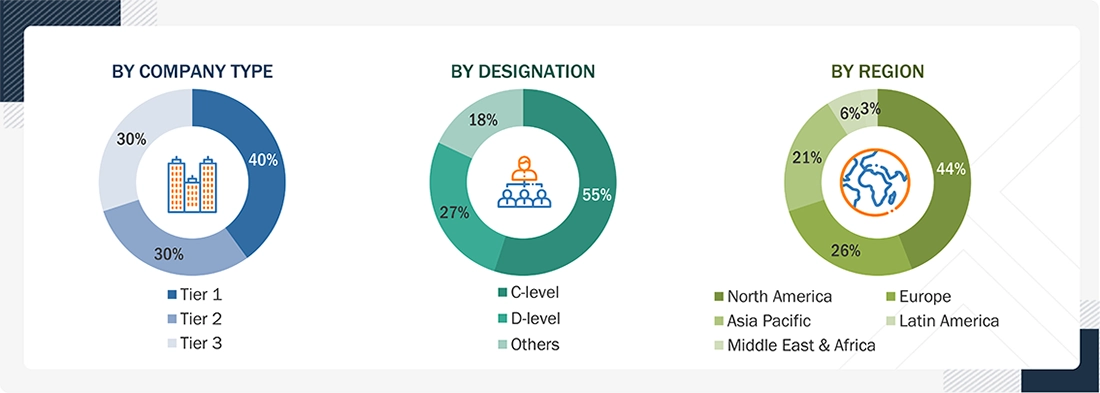
Note 1: C-level primaries include CEOs, COOs, CTOs, and VPs.
Note 2: Other primaries include sales, marketing, and product managers.
Note 3: Companies are classified into tiers based on their total revenue. As of 2025: Tier 1 = >USD 1 billion, Tier 2 = USD 500 million to USD 1 billion, and Tier 3 = <USD 500 million.
To know about the assumptions considered for the study, download the pdf brochure
Market Size Estimation
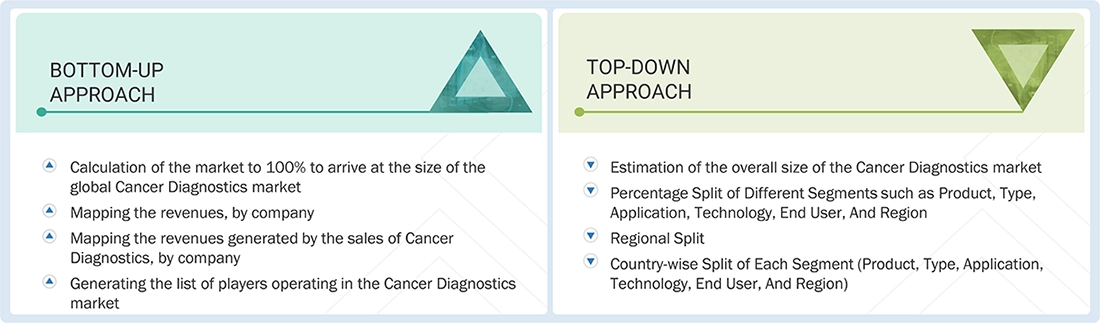
Both top-down and bottom-up approaches were used to estimate and validate the total size of the Cancer Diagnostics market. These methods were also used extensively to estimate the size of various subsegments in the market. The research methodology used to estimate the market size includes the following:
Cancer Diagnostics Market : Top-Down and Bottom-Up Approach
Data Triangulation
The entire market was split into two segments when the market size was determined. Data triangulation and market breakdown processes were used where necessary to complete the entire market engineering process and arrive at precise statistics for all segments.
Approach to derive the market size and estimate market growth.
Using secondary data from paid and unpaid sources, the market rankings for the major players were determined following a thorough analysis of their sales of Cancer Diagnostics . Due to data restrictions, the revenue share in certain cases was determined after a thorough analysis of the product portfolio of big corporations and their individual sales performance. This information was verified at each stage by in-depth interviews with professionals in the field.
Market Definition
Cancer diagnostics refers to the tests, technologies, and procedures used to detect, diagnose, characterize, and monitor cancer, enabling early detection, accurate diagnosis, treatment selection, and disease monitoring. The market includes imaging, molecular diagnostics, biopsy-based testing, immunohistochemistry (IHC), next-generation sequencing (NGS), liquid biopsy, and companion diagnostics, serving hospitals, diagnostic laboratories, cancer centers, and research institutes.
Key Stakeholders
- Diagnostic test and kit manufacturers
- Medical device and imaging equipment manufacturers
- Molecular diagnostics and genomics companies
- Hospitals and healthcare systems
- Diagnostic laboratories (clinical and reference laboratories)
- Cancer centers and oncology clinics
- Physicians (oncologists, pathologists, radiologists, and primary care physicians)
- Academic and research institutes
- Pharmaceutical and biotechnology companies (companion diagnostics and precision medicine)
- Contract research organizations (CROs)
- Government and public health agencies
- Regulatory authorities
- Health insurance providers and payers
- Patients and patient advocacy organizations
- Distributors and healthcare suppliers
Report Objectives
- To describe, analyze, and forecast the Cancer Diagnostics market, by product, type, application, technology, end user, and region.
- To describe and forecast the Cancer Diagnostics market for key regions, namely, North America, Europe, the Asia Pacific, Latin America and Middle East and Africa
- To provide detailed information regarding drivers, restraints, opportunities, and challenges influencing the growth of the Cancer Diagnostics market
- To strategically analyze the ecosystem, regulations, patenting trend, value chain, Porter’s five forces, and prices pertaining to the market under study
- To strategically analyze micromarkets1 with respect to individual growth trends, prospects, and contributions to the overall market
- To analyze market opportunities for stakeholders and provide details of the competitive landscape for market players
- To profile key players and comprehensively analyze their market shares and core competencies2 in the Cancer Diagnostics market
- To analyze competitive developments such as collaborations, acquisitions, product launches, expansions, and R&D activities in the Cancer Diagnostics market
Available customizations:
With the given market data, MarketsandMarkets offers customizations as per your company’s specific needs. The following customization options are available for the report:
Company Information
- Detailed analysis and profiling of additional market players (up to 5)
Product Analysis
- Product matrix, which gives a detailed comparison of the product portfolios of each company
Geographic Analysis
- Further breakdown of the Rest of Asia Pacific Cancer Diagnostics market into Vietnam, New Zealand, and others.
- Further breakdown of the Rest of Latin America Cancer Diagnostics market into Columbia, Chile, Ecuador, and others.
- Further breakdown of the Rest of Europe Cancer Diagnostics market into Belgium, Russia, Netherlands, Switzerland, and others.
Get the Full Cancer Diagnostics Market Report
Full forecast, segment splits, and company analysis for all Cancer Diagnostics Market.
- US Cancer Diagnostics Market
- Canada Cancer Diagnostics Market
- UK Cancer Diagnostics Market
- Germany Cancer Diagnostics Market
- France Cancer Diagnostics Market
- Italy Cancer Diagnostics Market
- Spain Cancer Diagnostics Market
- China Cancer Diagnostics Market
- Japan Cancer Diagnostics Market
- India Cancer Diagnostics Market
- Rest Of Europe Cancer Diagnostics Market
- Roapac Cancer Diagnostics Market
Need a Tailored Report?
Customize this report to your needs
Get 10% FREE Customization
Customize This Report
