
US CAR T-Cell Therapy Market (2026-2031)

The US CAR T-Cell Therapy Market was valued at $235.2 Million in 2026 and projected to reach to $441.2 Million by 2031, representing a compound annual growth rate of 13.4%. The US CAR T-Cell Therapy Market is positioned for sustained growth through 2031, driven by FDA approvals, expanding reimbursement coverage, and increasing physician adoption across major cancer centers.


| Market Size in | USD 26.32 MN |
| Market Forecast in | |
| CAGR | |
| Forecast Period | |
| Units Considered | Value (USD MN) |
US CAR T-Cell Therapy Market Trends and Insights
- The US market benefits from advanced healthcare infrastructure, robust regulatory frameworks, and significant investment in oncology innovation.
- Strong adoption of CAR T-cell therapies across hematologic malignancies and emerging solid tumor applications is driving expansion in the US. In the US, clinical efficacy and FDA approvals continue to accelerate market penetration among leading cancer centers and academic medical institutions.
- The US market is characterized by high treatment costs, expanding insurance coverage, and growing patient awareness of personalized immunotherapy options.
- By 2031, the US is expected to maintain its position as a leading market for CAR T-cell therapeutics, supported by ongoing clinical trials and manufacturing capacity improvements..
Key Market Statistics
- CAGR (2026-2031) 13.4% CAGR
- Market Size, 2026 ~USD 235.2 Million
- Forecast, 2031 ~USD 441.2 Million
- Country US
US CAR T-Cell Therapy Market Overview
Market Valuation Growth :
The US CAR T-Cell Therapy Market is valued at $235.2 million in 2026 and is projected to reach $441.2 million by 2031, demonstrating robust expansion driven by increasing adoption and clinical approvals.
Strong CAGR Performance :
The US market is growing at a 13.4% CAGR from 2026 to 2031, outpacing many other therapeutic segments and reflecting strong demand for innovative cancer immunotherapies in the American healthcare system.
Advanced Healthcare Infrastructure :
The US benefits from world-class medical facilities, cutting-edge research institutions, and established CAR T-cell manufacturing capabilities that support rapid commercialization and patient access.
Expanding Clinical Applications :
Beyond hematologic malignancies, US healthcare providers are increasingly exploring CAR T-cell therapies for solid tumors and other cancer types, broadening the addressable patient population and market opportunities.
US CAR T-Cell Therapy Market Dynamics
- The robust regulatory environment and strong healthcare spending support accelerated market penetration.
- Key growth drivers include improved manufacturing efficiency, reduced treatment costs, and successful clinical outcomes in both approved and investigational indications.
- Healthcare providers and payers are increasingly recognizing CAR T-cell therapies as standard-of-care options, particularly for relapsed and refractory cancers.
- The competitive landscape will intensify as more manufacturers enter the market and existing players expand their product portfolios.
- Investment in next-generation CAR T technologies and combination therapies will further enhance market dynamics through 2031..
Market Ecosystem
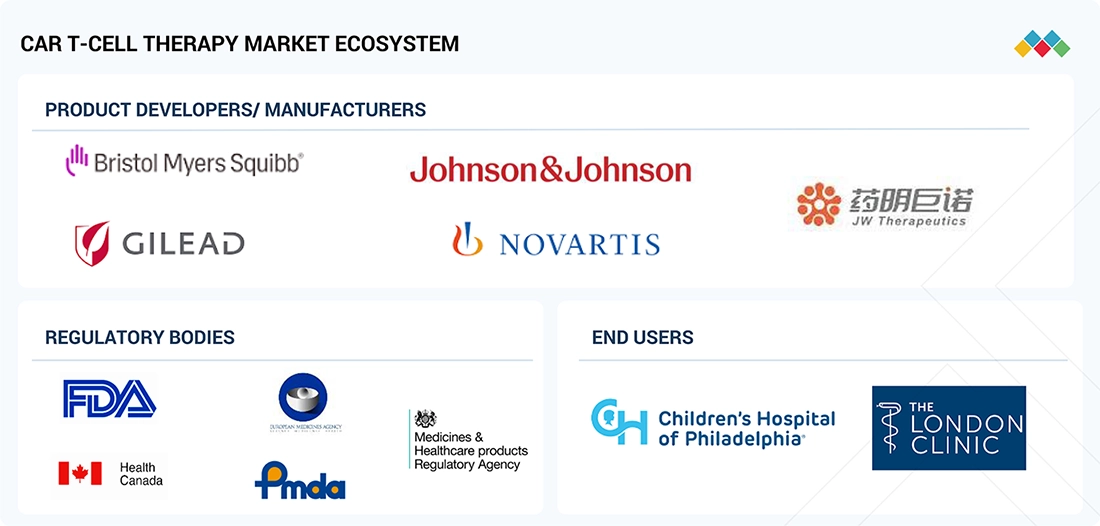
CAR T-CELL THERAPY MARKET: COMMERCIAL USE CASES ACROSS INDUSTRIES
| COMPANY | USE CASE DESCRIPTION | BENEFITS |
|---|---|---|
.svg) |
CHOP’s Cancer Immunotherapy Program has been a leading clinical site in advancing CAR-T for pediatric/young adult leukemia, including early investigation of tisagenlecleucel (Kymriah) in collaboration with industry and academic partners. | Faster translation of CAR-T innovations into pediatric care pathways. Strong clinical confidence through deep protocol experience. Improved standardization of monitoring and follow-up in high-risk patients. |
Logos and trademarks shown above are the property of their respective owners. Their use here is for informational and illustrative purposes only.
Related Ecosystem
Biotechnology
- Reagents
- Polymerase Chain Reaction (PCR)
- Stem Cells
- Assay Kits
- Flow Cytometers
- Thermo Fisher Scientific Inc.
- Merck KGaA
- Danaher Corporation
- Agilent Technologies, Inc.
- Bio-Rad Laboratories, Inc.
Pharmaceuticals
- Bioreactors
- Analytical Testing
- Bioanalytical Testing Services
- Cell Counters
- Data Management Services
- Merck KGaA
- Thermo Fisher Scientific Inc.
- SANOFI
- NOVARTIS
- Pfizer Inc.
Key Takeaways
- The US CAR T-Cell Therapy Market is valued at $235.2 million in 2026 and is forecast to reach $441.2 million by 2031, growing at a 13.4% CAGR.
- The US market is driven by FDA approvals, expanding clinical applications, and increasing adoption in leading cancer treatment centers.
- High treatment costs and insurance reimbursement challenges remain key barriers to broader US market penetration.
- The US is expected to lead global CAR T-cell innovation through continued clinical trials and manufacturing advancements by 2031.
CAR T-Cell Therapy Market Report Scope
| Report Metric | Details |
|---|---|
| Base Year | 2026 |
| Fastest Growing Segment | CD19/20 (Target) |
| Forecast Period | 2026–2031 |
| Growth Rate | CAGR of 13.7% from 2026 to 2031 |
| Largest Segment | CD19 (Target) |
| Market Size Base Year (Billions) | ~USD 7.25 (2026) |
| Revenue Forecast (Billions) | ~USD 13.78 (2031) |
| Segments Covered | Product, Target, Indication |
US CAR T-Cell Therapy Market Report Segmentation
3 segment dimensions are covered across the global market.
By Product
- Abecma
- Breyanzi
- Carvykti
- Kymriah
- Other Products
- Tecartus
- Yescarta
By Target
- Bcma
- Cd19
- Cd19/20
- Cd7
- Other Targets
By Indication
- Acute Lymphoblastic Leukemia (All)
- B-Cell Lymphoma (Bcl)
- Multiple Myeloma
- Other Indications
US: CAR T-CELL THERAPY MARKET, BY END USER, 2024–2031
| Segment | 2024 | 2025 | 2026 | 2027 | 2028 | 2029 | 2030 | 2031 | CAGR (%) |
|---|---|---|---|---|---|---|---|---|---|
| HOSPITALS | 1780.4 | 2406.7 | 2779 | 3225.8 | 3755 | 4385.5 | 5157.4 | 6110.2 | 17.1 |
| LONG-TERM CARE FACILITIES | 123 | 176.3 | 195 | 216.4 | 240.5 | 267.5 | 299 | 336 | 11.5 |
| SPECIALTY CENTERS | 858.6 | 1054.8 | 1213.3 | 1402.9 | 1626.8 | 1892.7 | 2217.4 | 2617 | 16.6 |
| TOTAL | 2761.9 | 3637.8 | 4187.3 | 4845.2 | 5622.3 | 6545.8 | 7673.8 | 9063.2 | 16.7 |
Target Audience
- Pharmaceutical & Biotech Companies : Manufacturers and developers of CAR T-cell therapies need detailed US market insights to guide product development, commercialization strategies, pricing models, and competitive positioning in this high-growth oncology segment.
- Healthcare Providers & Hospital Systems : US cancer centers and hospital networks require market data to evaluate CAR T-cell therapy adoption, assess patient demand, plan infrastructure investments, and negotiate pricing with manufacturers and payers.
- Payers & Insurance Companies : US health insurers and managed care organizations need market forecasts and clinical evidence to develop reimbursement policies, budget for CAR T-cell therapies, and manage cost-effectiveness across their member populations.
- Investment & Private Equity Firms : Investors evaluating opportunities in US healthcare and oncology require comprehensive market sizing, growth projections, and competitive analysis to identify attractive acquisition targets and portfolio companies in the CAR T-cell space.
- Healthcare Consultants & Analysts : Strategy consultants and market research professionals need validated US market data, CAGR metrics, and trend analysis to support client advisory work, due diligence projects, and industry benchmarking initiatives.
Key Companies in the US CAR T-Cell Therapy Market
| Company | HQ | Ownership | Strongest segments |
|---|---|---|---|
| JOHNSON & JOHNSON | United States | Public Company | Oncology and Immunology (Innovative Medicine),Neuroscience, Cardiovascular & Metabolism, Pulmonary Hypertension, Infectious Diseases,Surgery and Interventional (instrumentation, energy, stapling, wound closure, biosurgery, robotic and digital), |
| GILEAD SCIENCES, INC. | United States | Public Company | HIV portfolio (Biktarvy, Descovy, Genvoya, Odefsey, Sunlenca, Symtuza, Yeztugo),Liver disease and other antivirals (Epclusa, Livdelzi, Vemlidy, AmBisome),COVID-19 (Veklury), |
| BRISTOL-MYERS SQUIBB COMPANY | United States | Public Company | Eliquis (anticoagulation),Immuno-oncology (Opdivo, Yervoy, Opdualag, Opdivo Qvantig),Hematology (Revlimid, Pomalyst/Imnovid, Reblozyl, Abecma, Breyanzi), |
| NOVARTIS AG | Switzerland | Public Company | Oncology & Hematology (Kisqali, Tafinlar+Mekinist, Jakavi, Pluvicto, Lutathera, Scemblix, Fabhalta),Immunology & Neuroscience (Cosentyx, Xolair, Ilaris, neurology assets),Cardiovascular, Renal & Metabolic (Entresto, Leqvio, other CVRM), |
| AUTOLUS THERAPEUTICS | United Kingdom | Public Company | CD19 CAR-T franchise (AUCATZYL / obe-cel – oncology),Autoimmune CD19 programs (obe-cel in SLE, MS, lupus nephritis),Next-generation oncology pipeline (AUTO1/22, AUTO8, AUTO6NG), |
| JW (CAYMAN) THERAPEUTICS CO., LTD. | China | Public Company | Commercial and late-stage CAR-T for hematologic malignancies (Carteyva, JWCAR201, JWCAR239),Autoimmune indications (relma-cel for SLE and related programs),Solid tumor pipeline (JWATM204/214/203/213, JWTCR001, JWCAR031), |
| CARSGEN THERAPEUTICS HOLDINGS LIMITED | China | Public Company | Zevor-cel (CT053) – BCMA CAR-T for R/R multiple myeloma,Autologous solid-tumor CAR-T (CT041, CT011, CT071, CT0590/CT0596),Autoimmune and B-cell malignancy pipeline (KJ-C2219, KJ-C2320, KJ-C2529), |
| CARTESIAN THERAPEUTICS, INC. | United States | Public Company | Descartes-08 (autoimmune and rare pediatric indications),Descartes-15 (multiple myeloma),Platform and other mRNA cell therapy programs/services, |
| LYELL IMMUNOPHARMA, INC. | United States | Public Company | Hematologic CAR T programs (ronde-cel and platform),Solid tumor CAR T programs (LYL273 and related),Platform technologies and enabling IP (c-Jun, NR4A3 KO, Epi-R, CD62L enrichment), |
JOHNSON & JOHNSON
Johnson & Johnson is a diversified healthcare company founded in 1886 and headquartered in the United States. With 138,200 employees, it operates as a public company serving global markets.
GILEAD SCIENCES, INC.
Gilead Sciences, Inc. is a United States-based biopharmaceutical company founded in 1987. The public company employs 17,000 people and focuses on developing innovative therapeutics.
BRISTOL-MYERS SQUIBB COMPANY
Bristol-Myers Squibb Company is a pharmaceutical company established in 1887 in the United States. As a public company with 32,500 employees, it develops and manufactures pharmaceutical products.
NOVARTIS AG
Novartis AG is a Swiss multinational pharmaceutical company founded in 1996. The public company employs 75,267 people and operates globally in the healthcare sector.
AUTOLUS THERAPEUTICS
Autolus Therapeutics is a United Kingdom-based biopharmaceutical company founded in 2014. The public company has 753 employees and focuses on cell therapy development.
JW (CAYMAN) THERAPEUTICS CO., LTD.
JW (Cayman) Therapeutics Co., Ltd. is a China-based pharmaceutical company founded in 2016. The public company employs 314 people and operates in the therapeutic development sector.
CARSGEN THERAPEUTICS HOLDINGS LIMITED
Carsgen Therapeutics Holdings Limited is a China-based biopharmaceutical company founded in 2014. The public company has 355 employees and specializes in cell therapy development.
CARTESIAN THERAPEUTICS, INC.
Cartesian Therapeutics, Inc. is a United States-based public biopharmaceutical company with 75 employees. The company specializes in cell therapy and therapeutic development.
LYELL IMMUNOPHARMA, INC.
Lyell Immunopharma, Inc. is a United States-based public immunotherapy company founded in 2018. The company has 161 employees and develops cell-based immunotherapies.
Reasons to Buy this Report
- Market Size & Growth Validation : Obtain precise US market valuation ($235.2M in 2026) and verified forecast data ($441.2M by 2031) to support strategic planning, investment decisions, and competitive positioning in the American CAR T-cell therapy landscape.
- Regulatory & Reimbursement Insights : Understand the US FDA approval landscape, Medicare/Medicaid coverage policies, and private payer reimbursement trends that directly impact market access, pricing strategies, and revenue projections for CAR T-cell products.
- Competitive Landscape Analysis : Identify key US market players, their product portfolios, clinical pipelines, and market share dynamics to benchmark performance and identify partnership or acquisition opportunities in the rapidly evolving sector.
- Clinical Application Expansion : Analyze emerging use cases beyond hematologic malignancies, including solid tumors and combination therapies, to identify new revenue streams and market segments with high growth potential in the US healthcare system.
- Investment & Partnership Strategy : Leverage comprehensive US market data to evaluate investment opportunities, identify strategic partnerships with manufacturers and healthcare providers, and optimize resource allocation for market entry or expansion.
Frequently asked questions
What is the current size of the US CAR T-Cell Therapy Market?
The US CAR T-Cell Therapy Market is valued at $235.2 million in 2026 and is projected to grow to $441.2 million by 2031.
What is the growth rate of the US CAR T-Cell Therapy Market?
The US market is expected to grow at a compound annual growth rate (CAGR) of 13.4% from 2026 to 2031.
What are the main drivers of growth in the US CAR T-Cell Therapy Market?
Key drivers in the US include FDA approvals, expanding clinical applications beyond hematologic malignancies, increasing adoption at leading cancer centers, and growing patient awareness of personalized immunotherapy.
What challenges does the US CAR T-Cell Therapy Market face?
The US market faces challenges including high treatment costs, insurance reimbursement limitations, manufacturing complexity, and the need for specialized medical infrastructure.
Which cancer types are driving US CAR T-Cell Therapy adoption?
In the US, hematologic malignancies such as acute lymphoblastic leukemia and non-Hodgkin lymphoma are primary drivers, with emerging applications in solid tumors expanding the addressable market.
RESEARCH METHODOLOGY
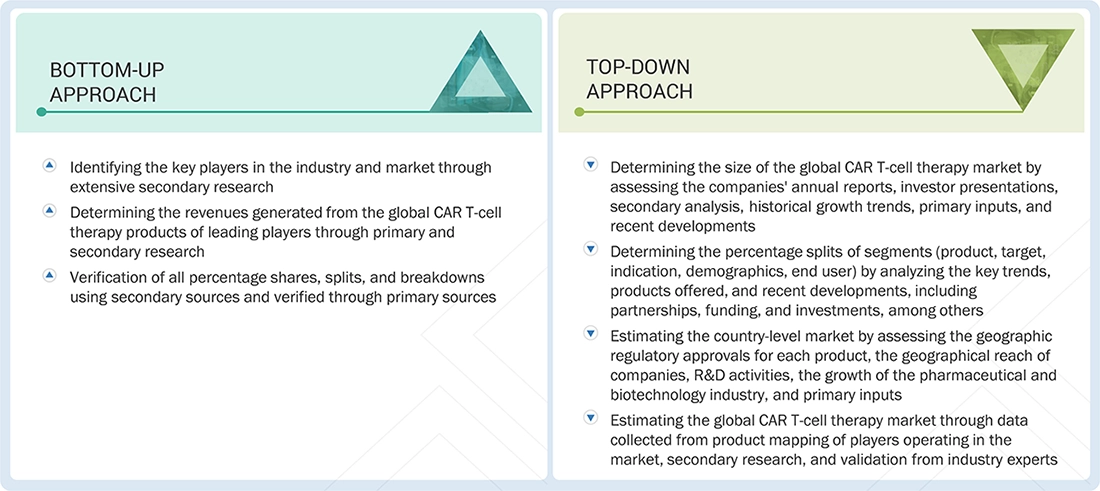
This study involved four major activities in estimating the current size of the CAR T-cell therapy market. Exhaustive secondary research was carried out to collect information on the market, its peer markets, and its parent market. These findings, assumptions, and sizing were then validated with industry experts across the value chain through primary research. Both top-down and bottom-up approaches were employed to estimate the complete market size. Following this, market breakdown and data triangulation procedures were used to estimate the market size of segments and subsegments.
Secondary Research
Secondary research was used mainly to identify and collect information for the extensive, technical, market-oriented, and commercial study. The secondary sources referred for this research study include publications from government sources, such as the National Center for Biotechnology Information (NCBI), National Institutes of Health (NIH), World Health Organization (WHO), United States Food and Drug Administration (US FDA), American Society of Gene & Cell Therapy (ASGCT), European Medicines Agency (EMA), Industry Association of Synthetic Biology (IASB), International Society for Cell & Gene Therapy (ISCT), National Center for Complementary and Integrative Health (NCCIH), BioPharm International, ScienceDirect, News Articles, Journals, Press Releases, Paid Databases, Expert Interviews, and MarketsandMarkets Analysis, among others. Secondary sources also included corporate and regulatory filings (such as annual reports, SEC filings, investor presentations, and financial statements); business magazines and research journals; press releases; and trade, business, and professional associations. These sources were also used to obtain key information about major players, global product revenues, market classification, and segmentation according to industry trends, regional/country-level markets, market developments, and technology perspectives. Secondary data was collected and analyzed to arrive at the overall size of the global CAR T-cell therapy market, which was validated through primary research.
Primary Research
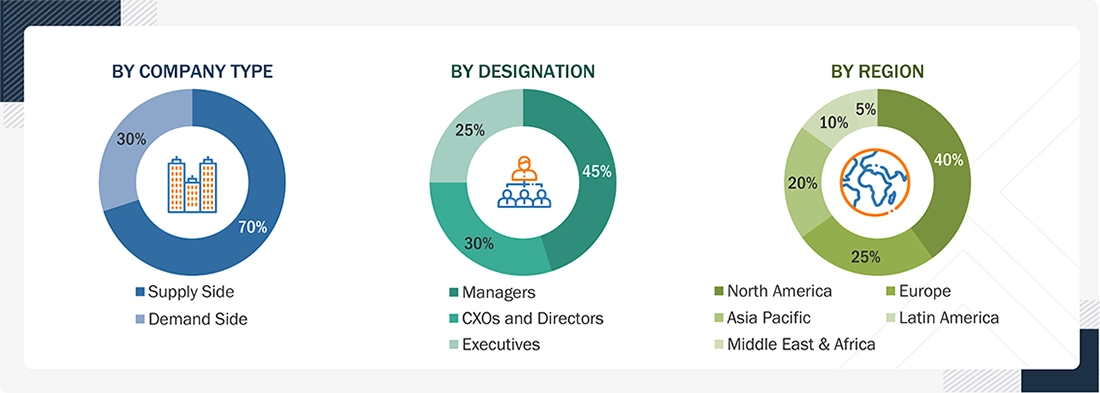
In-depth interviews were conducted with various primary respondents, including key industry participants, subject-matter experts (SMEs), C-level executives of key market players, and industry consultants, among other experts, to obtain and verify the critical qualitative and quantitative information as well as assess future prospects of the market. Various primary sources from both the supply and demand sides of the market were interviewed to obtain qualitative and quantitative information. The following is a breakdown of the primary respondents:
To know about the assumptions considered for the study, download the pdf brochure
Market Size Estimation
The global size of the CAR T-cell therapy market was estimated through multiple approaches. A detailed market estimation approach was followed to estimate and validate the value of the market and other dependent submarkets. These methods were also used extensively to estimate the size of various subsegments in the market. The research methodology used to estimate the market size includes the following:
CAR T-Cell Therapy Market Size: Bottom-up Approach and Top-down Approach
Data Triangulation
After estimating the overall market size from the market size estimation process, the total market was split into several segments. To complete the overall market engineering process and arrive at the exact statistics for all segments, data triangulation and market breakdown procedures were employed, wherever applicable. The data was triangulated by studying various factors and trends from both the demand and supply sides.
Market Definition
CAR T-cell therapy is a treatment method wherein a patient’s T-cells (a type of immune system cell) undergo modification in a laboratory to target and attack cancer cells effectively. Initially, T-cells are extracted from the patient’s bloodstream. Then the gene for a special receptor that binds to a specific protein on the patient’s cancer cells is added to the T cells in the laboratory. The special receptor is known as a chimeric antigen receptor (CAR). Following this modification process, the CAR T-cells are cultured and multiplied in large quantities. Finally, the amplified CAR T-cells are administered to the patient via infusion. This therapeutic approach is predominantly utilized in the management of specific blood cancers, and ongoing research is exploring its potential applications in treating other forms of cancer. The CAR T-Cell therapy market includes approved and pipeline CAR T-cell products for therapeutic purposes.
Key Stakeholders
- Pharmaceutical Companies
- Biotechnology Companies
- Clinical Research Organizations (CROs)
- Regulatory Authorities
- Healthcare Providers
- Patients and Patient Advocacy Groups
- Investors and Venture Capital Firms
- Research & Development Companies
- Research Laboratories & Academic Institutes.
- Market Research & Consulting Firms
Report Objectives
- To define, describe, and forecast the CAR T-cell therapy market by value for product, target, indication, demographic, end user, and region
- To define, describe, and forecast the CAR T-cell therapy market by volume for the product segment at the global level
- To provide detailed information regarding the major drivers, restraints, opportunities, and challenges, influencing the market growth
- To analyze the micromarkets with respect to individual growth trends, prospects, and contributions to the overall CAR T-cell therapy market
- To analyze the opportunities for stakeholders and provide details of the competitive landscape for market leaders
- To forecast the size of the market segments with respect to five regions: North America, Europe, the Asia Pacific, Latin America, and the Middle East & Africa
- To profile the key players and analyze their market shares and core competencies
- To track and analyze competitive developments, such as product launches, partnerships, agreements, collaborations, and expansions
- To benchmark players within the market using the proprietary “Company Evaluation Matrix” framework, which analyzes market players on various parameters within the broad categories of business and product excellence strategy
- To provide an overview of the market with specialized analysis such as trends/disruptions impacting customers’ business, pricing analysis, value/ supply chain analysis,ecosystem analysis, technology analysis, patent analysis, key conferences & events 2026-2027, regulatory landscape, Porter’s five forces analysis, key stakeholders and buying criteria, and investment and funding scenario
Available customizations:
- With the given market data, MarketsandMarkets offers customizations as per the company’s specific needs. The following customization options are available for the report:
Geographic Analysis
- Further breakdown of the Rest of Europe CAR T-cell therapy market, by country
- Further breakdown of the Rest of Asia Pacific CAR T-cell therapy market, by count
Company Information
- Detailed analysis and profiling of additional market players (up to five
Segment Analysis
- Cross-segment analysis
Get the Full CAR T-Cell Therapy Market Report
Full forecast, segment splits, and company analysis for all CAR T-Cell Therapy Market.
- GCC Countries CAR T-Cell Therapy Market
- Rest Of Middle East CAR T-Cell Therapy Market
- Kingdom Of Saudi Arabia CAR T-Cell Therapy Market
- Rest Of GCC Countries CAR T-Cell Therapy Market
- Canada CAR T-Cell Therapy Market
- Germany CAR T-Cell Therapy Market
- UK CAR T-Cell Therapy Market
- France CAR T-Cell Therapy Market
- Italy CAR T-Cell Therapy Market
- Spain CAR T-Cell Therapy Market
- China CAR T-Cell Therapy Market
- Japan CAR T-Cell Therapy Market
- India CAR T-Cell Therapy Market
- Australia CAR T-Cell Therapy Market
- South Korea CAR T-Cell Therapy Market
- Brazil CAR T-Cell Therapy Market
- UAE CAR T-Cell Therapy Market
- Rest Of Europe CAR T-Cell Therapy Market
- Rest Of Asia Pacific CAR T-Cell Therapy Market
- Rest Of Latin America CAR T-Cell Therapy Market
Need a Tailored Report?
Customize this report to your needs
Get 10% FREE Customization
Customize This Report
