
UK Cell Therapy Technologies Market (2025-2030)

The UK Cell Therapy Technologies Market was valued at $127.5 Million in 2025 and projected to reach to $238.3 Million by 2030, representing a compound annual growth rate of 13.3%. The UK cell therapy technologies market is poised for sustained expansion driven by increasing clinical adoption, growing investment in regenerative medicine, and the country's position as a leading biotech hub.


| Market Size in | USD 26.32 MN |
| Market Forecast in | |
| CAGR | |
| Forecast Period | |
| Units Considered | Value (USD MN) |
UK Cell Therapy Technologies Market Trends and Insights
- The UK's advanced healthcare infrastructure, strong regulatory framework through the MHRA, and significant investment in regenerative medicine research are driving adoption of cell therapy solutions across clinical and research settings.
- The UK's position as a global leader in life sciences innovation positions it favorably within the European cell therapy landscape. Key drivers of growth in the UK include increasing prevalence of chronic diseases, rising healthcare expenditure, and growing clinical trial activity for cell-based therapeutics.
- The UK's National Health Service (NHS) commitment to precision medicine and the establishment of cell therapy manufacturing hubs are accelerating market penetration.
- Between 2025 and 2030, the UK market is expected to benefit from regulatory approvals of new cell therapies and expanded reimbursement pathways, supporting the 13.3% compound annual growth rate. The UK cell therapy market reflects strong institutional support from academic medical centers, biotech companies, and government initiatives focused on advancing cellular medicine.
- This ecosystem positions the UK as a critical hub for cell therapy innovation and commercialization within Europe..
Key Market Statistics
- CAGR (2025-2030) 13.3% CAGR
- Market Size, 2025 ~USD 127.5 Million
- Forecast, 2030 ~USD 238.3 Million
- Country UK
UK Cell Therapy Technologies Market Overview
Market Valuation Growth :
The UK cell therapy technologies market is valued at $127.5 million in 2025, with a projected CAGR of 13.3%, reaching $238.3 million by 2030, outpacing the global growth rate of 12.4%.
Regulatory Excellence :
The UK's robust regulatory framework through the MHRA (Medicines and Healthcare products Regulatory Agency) provides a competitive advantage, enabling faster approval pathways for innovative cell therapy products and attracting international biotech investments.
Research & Innovation Hub :
The UK hosts world-leading regenerative medicine research institutions and significant government funding initiatives, positioning it as a global center for cell therapy innovation and clinical trial development.
Healthcare Infrastructure :
The NHS's advanced healthcare infrastructure and established clinical networks provide ideal conditions for cell therapy adoption, implementation, and real-world evidence generation across multiple therapeutic areas.
UK Cell Therapy Technologies Market Dynamics
- The MHRA's streamlined regulatory pathways and the NHS's commitment to innovative treatments are accelerating market penetration across oncology, immunology, and regenerative medicine applications. Over the forecast period, the UK market will benefit from expanding manufacturing capabilities, rising healthcare expenditure on advanced therapies, and collaborative partnerships between academic institutions and commercial entities.
- Strategic government initiatives supporting cell therapy development and increasing patient awareness will further propel market growth, establishing the UK as a key European market for cell therapy technologies..
Market Ecosystem
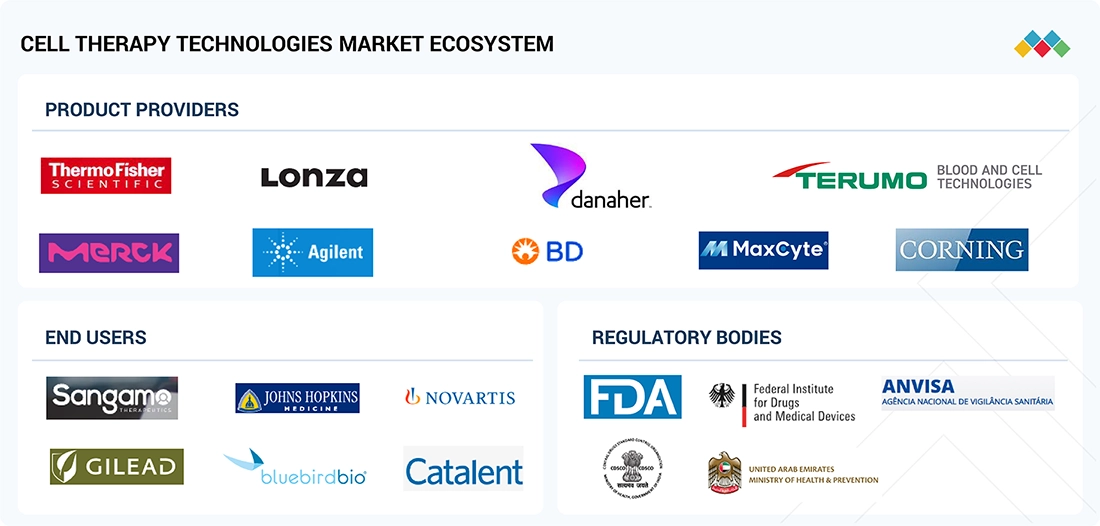
Cell Therapy Technologies Market: COMMERCIAL USE CASES ACROSS INDUSTRIES
| COMPANY | USE CASE DESCRIPTION | BENEFITS |
|---|---|---|
 |
Implemented Cytiva’s wave/Xuri cell expansion system with Cell bag bioreactors as a closed, rocking-bag platform to expand CD19-targeted CAR-T cells (CTL019) to clinically relevant doses. | Achieved high-fold expansion and viability of CAR-T cells with reduced manual labor versus static flasks; established a scalable, GMP-compatible expansion step that supported technology transfer of the CTL019 process. |
 |
Used Thermo Fisher’s Gibco CTS rotea counterflow centrifugation system with single-use kits to automate buffer exchange, washing, and volume reduction for MSCs and other cell types in small-volume, autologous processes. | Enabled closed, automated handling of delicate cells with high recovery and preserved function; reduced manual, open processing steps and supported a scalable workflow that can translate from academic development to GMP-style manufacturing. |
Logos and trademarks shown above are the property of their respective owners. Their use here is for informational and illustrative purposes only.
Related Ecosystem
Biotechnology
- Reagents
- Polymerase Chain Reaction (PCR)
- Stem Cells
- Assay Kits
- Flow Cytometers
- Thermo Fisher Scientific Inc.
- Merck KGaA
- Danaher Corporation
- Agilent Technologies, Inc.
- Bio-Rad Laboratories, Inc.
Key Takeaways
- The UK cell therapy technologies market is valued at $127.5 million in 2025 and is forecast to reach $238.3 million by 2030, representing a 13.3% CAGR.
- The UK's robust regulatory environment, NHS support, and strong life sciences ecosystem are key drivers of cell therapy adoption and market expansion.
- Clinical trial activity and manufacturing infrastructure development in the UK are accelerating commercialization of cell-based therapeutics.
- The UK market is positioned as a leading European hub for cell therapy innovation, supported by academic institutions and government investment in precision medicine.
Cell Therapy Technologies Market Report Scope
| Report Metric | Details |
|---|---|
| Base Year | 2025 |
| Fastest Growing Segment | MEDIA, SERA, AND REAGENTS (Product) |
| Forecast Period | 2025–2030 |
| Growth Rate | CAGR of 12.4% from 2025 to 2030 |
| Largest Segment | T-CELLS (Cell Type) |
| Market Size Base Year (Billions) | ~USD 4.41 (2025) |
| Revenue Forecast (Billions) | ~USD 7.91 (2030) |
| Segments Covered | Product, Type, Process, Cell Type |
UK Cell Therapy Technologies Market Report Segmentation
4 segment dimensions are covered across the global market.
By Product
- Cell Culture Vessels
- Cell Engineering Products
- Cell Therapy Equipment
- Media, Sera, And Reagents
- Other Products
- Systems & Software
By Type
- Cell Characterization
- Cell Collection
- Cell Expansion
- Cell Isolation
- Cell Processing Equipment
- Other Cell Therapy Equipment
- Single-Use Equipment
By Process
- Cell Distribution
- Cell Handling
- Cell Preservation
- Cell Processing
- Process Monitoring And Quality Control
By Cell Type
- Other Cells
- Stem Cells
- T-Cells
UK: CELL THERAPY TECHNOLOGIES MARKET, BY END USER, 2023–2030
| Segment | 2023 | 2024 | 2025 | 2026 | 2027 | 2028 | 2029 | 2030 | CAGR (%) |
|---|---|---|---|---|---|---|---|---|---|
| BIOPHARMACEUTICAL & BIOTECHNOLOGY COMPANIES | 108.5 | 111.3 | 122.2 | 135.5 | 151.7 | 171.8 | 197.3 | 230.3 | 13.5 |
| CELL BANKS | 18.3 | 18.7 | 19.9 | 21.4 | 23.1 | 25.4 | 28.1 | 31.7 | 9.8 |
| CROS & CMOS | 88.2 | 90.7 | 98.4 | 107.8 | 119.3 | 133.6 | 151.6 | 175 | 12.2 |
| RESEARCH INSTITUTES | 30.5 | 31 | 33.4 | 36.3 | 39.9 | 44.3 | 49.9 | 57.1 | 11.3 |
| TOTAL | 245.4 | 251.8 | 274 | 300.9 | 334 | 375 | 426.9 | 494.1 | 12.5 |
Target Audience
- Pharmaceutical & Biotech Companies : UK and international cell therapy developers need market-specific data to assess commercial viability, plan UK market entry strategies, and identify partnership opportunities with NHS trusts and research institutions.
- Healthcare Investors & PE Firms : Investment professionals require UK market forecasts, growth drivers, and competitive dynamics to evaluate funding opportunities in cell therapy startups and established players operating in the British market.
- NHS Trusts & Hospital Networks : Healthcare administrators need market intelligence on cell therapy adoption trends, clinical efficacy data, and cost-benefit analyses to inform procurement decisions and treatment protocol development.
- Regulatory & Compliance Consultants : Regulatory professionals require UK-specific MHRA guidance, approval timelines, and compliance frameworks to advise clients on navigating the British cell therapy regulatory environment effectively.
- Academic & Research Institutions : UK research centers need market data to identify funding opportunities, commercialization pathways, and collaboration prospects with industry partners to translate cell therapy innovations into clinical applications.
Key Companies in the UK Cell Therapy Technologies Market
| Company | HQ | Ownership | Strongest segments |
|---|---|---|---|
| GENERAL ELECTRIC | United States | Public Company | Commercial Engines & Services,Defense & Propulsion Technologies,Additive, Components, and Other Systems, |
| MERCK KGAA | Germany | Public Company | Life Science (reagents, consumables, instruments, bioprocessing, CDMO/testing services),Healthcare (prescription drugs and biopharmaceuticals),Electronics (semiconductor materials, specialty gases, display and OLED materials, delivery equipment), |
| SARTORIUS AG | Germany | Public Company | Bioprocess solutions (bioreactors, filtration, fluid management, process chromatography),Lab products and services (weighing, pipettes, lab filtration, water systems, microbiological testing),Advanced analytics and PAT (BLI, cytometry screening, SPR, live-cell imaging, data analytics), |
| FRESENIUS SE & CO. KGAA | Germany | Public Company | Fresenius Helios (hospitals and care centers),IV generics and IV fluids,Clinical nutrition (enteral and parenteral), |
| CORNING INCORPORATED | United States | Public Company | Optical communications (fiber, cable, hardware, connectivity),Display glass substrates (LCD and OLED),Specialty materials (mobile, semiconductor optics, aerospace, defense, sunglasses, shielding), |
| TERUMO CORPORATION | Japan | Public Company | Cardiac and Vascular Company,Medical Care Solutions Company,Blood and Cell Technologies Company, |
| BIO-TECHNE | United States | Public Company | Protein Sciences reagents and proteomic tools,Diagnostics controls, calibrators, and assays,Spatial biology and advanced genomic assays, |
| GENSCRIPT | Hong Kong | Public Company | Life Science Services and Products,Biologics Development Services,Industrial Synthetic Biology Products, |
| MAXCYTE | United States | Public Company | ExPERT GTx and VLx (large and very large scale therapeutic applications),ExPERT STx (flow electroporation for protein production and drug development),ExPERT ATx (static electroporation for small to medium scale), |
GENERAL ELECTRIC
General Electric is a diversified American industrial conglomerate founded in 1892 that operates across multiple sectors including power, renewable energy, aviation, and healthcare. As a public company, GE employs approximately 57,000 people globally and maintains a significant presence in industrial manufacturing and technology.
MERCK KGAA
Merck KGaA is a German pharmaceutical, chemical, and life sciences company founded in 1668 with approximately 59,077 employees worldwide. Operating as a public company, Merck KGaA serves customers across the healthcare, life science, and performance materials sectors.
SARTORIUS AG
Sartorius AG is a German life sciences and laboratory equipment company founded in 1870 with 14,242 employees. As a public company, Sartorius specializes in bioprocess solutions, laboratory instruments, and weighing technology for pharmaceutical and biotechnology industries.
FRESENIUS SE & CO. KGAA
Fresenius SE & Co. KGaA is a German healthcare company founded in 1912 with 177,783 employees, making it one of the largest healthcare service providers globally. Operating as a public company, Fresenius provides dialysis products and services, hospital care, and pharmaceutical products.
CORNING INCORPORATED
Corning Incorporated is an American materials science company founded in 1851 with 67,200 employees that specializes in glass, ceramics, and optical physics. As a public company, Corning serves industries including telecommunications, display technology, environmental solutions, and life sciences.
TERUMO CORPORATION
Terumo Corporation is a Japanese medical device and pharmaceutical company founded in 1921 with 30,591 employees. As a public company, Terumo develops and manufactures products for cardiovascular systems, general hospital care, transfusion and cell therapy, and vascular intervention.
BIO-TECHNE
Bio-Techne is an American life sciences company founded in 1976 with 3,100 employees that provides tools and reagents for research and diagnostics. Operating as a public company, Bio-Techne serves the biotechnology, pharmaceutical, and academic research sectors.
GENSCRIPT
GenScript is a Hong Kong-based biotechnology company founded in 2002 with 6,165 employees specializing in synthetic biology and life science research services. As a public company, GenScript provides gene synthesis, protein production, and drug discovery solutions to pharmaceutical and research organizations.
MAXCYTE
MaxCyte is a small American biotechnology company founded in 1998 with 91 employees focused on cell engineering and manufacturing technologies. Operating as a public company, MaxCyte develops platforms for ex vivo cell therapy production.
Reasons to Buy this Report
- UK-Specific Market Sizing : Access precise valuation data for the UK market ($127.5M in 2025) with country-specific CAGR projections, enabling accurate financial forecasting and investment planning tailored to the British healthcare landscape.
- Regulatory Pathway Intelligence : Gain insights into MHRA approval processes, regulatory timelines, and compliance requirements specific to UK cell therapy commercialization, reducing market entry risks and accelerating product launches.
- NHS Integration Strategy : Understand NHS procurement patterns, reimbursement mechanisms, and adoption barriers specific to the UK healthcare system, essential for developing effective market penetration strategies.
- Competitive Landscape Analysis : Identify UK-based and international competitors operating in the British market, their market positioning, partnerships, and strategic initiatives to inform competitive strategy and partnership opportunities.
- Investment & Growth Opportunities : Discover high-potential segments, emerging therapeutic applications, and geographic hotspots within the UK where cell therapy adoption is accelerating, guiding capital allocation and expansion decisions.
Frequently asked questions
What is the current size of the UK cell therapy technologies market?
The UK cell therapy technologies market is valued at $127.5 million in 2025 and is projected to grow to $238.3 million by 2030.
What is the growth rate of the UK cell therapy market?
The UK cell therapy technologies market is growing at a compound annual growth rate (CAGR) of 13.3% from 2025 to 2030.
What factors are driving growth in the UK cell therapy market?
Key growth drivers in the UK include the NHS commitment to precision medicine, strong regulatory support from the MHRA, increasing clinical trial activity, and expanding manufacturing infrastructure for cell therapies.
How does the UK cell therapy market compare to Europe?
The UK is positioned as a leading hub for cell therapy innovation within Europe, supported by advanced healthcare infrastructure, strong academic institutions, and government investment in regenerative medicine research.
What are the main applications of cell therapy technologies in the UK?
Cell therapy applications in the UK span oncology, immunology, regenerative medicine, and rare genetic disorders, with growing adoption across NHS trusts and private healthcare providers.
RESEARCH METHODOLOGY
This research study utilized extensive secondary sources, directories, and databases to identify and collect valuable information for analyzing the global cell therapy technologies market. In-depth interviews were conducted with various primary respondents, including key industry participants, subject-matter experts (SMEs), C-level executives of key market players, and industry consultants, to gather and verify critical qualitative and quantitative information and assess the market's growth prospects. The global market size estimated through secondary research was then triangulated with inputs from primary research to arrive at the final market size.
Secondary Research
Secondary research was primarily used to identify and collect information for the comprehensive, technical, market-oriented, and commercial study of the cell therapy technologies market. The secondary sources used for this study include FDA (US Food and Drug Administration), EMA (European Medicines Agency), NIH (National Institutes of Health), ClinicalTrials.gov, PMDA (Pharmaceuticals and Medical Devices Agency, Japan), MHRA (Medicines and Healthcare products Regulatory Agency, UK), European Society of Gene and Cell Therapy (ESGCT), California Institute for Regenerative Medicine (CIRM), World Health Organization (WHO), International Society for Cell & Gene Therapy (ISCT), CBER (Center for Biologics Evaluation and Research), NIH Regenerative Medicine Program, National Medical Products Administration (NMPA), China, Health Canada – Biologics and Genetic Therapies Directorate (BGTD), Eurostat, Factiva, and GLOBOCAN, ScienceDirect; research journals; corporate filings, such as annual reports, SEC filings, investor presentations, and financial statements; press releases; and trade, business, and professional associations, among others. These sources were also utilized to gather key information about major players, market classification, and segmentation, as well as industry trends, regional/country-level markets, market developments, and technological perspectives.
Primary Research
After acquiring foundational knowledge about the global cell therapy technologies market through secondary research, extensive primary research was conducted. Multiple interviews were held with market experts from the demand side, including representatives from biopharmaceutical & biotechnology companies, CROs and CMOs, research institutes, and cell banks. Additionally, experts from the supply side were interviewed, including C-level and D-level executives, product managers, and marketing and sales managers from key manufacturers, distributors, and channel partners.
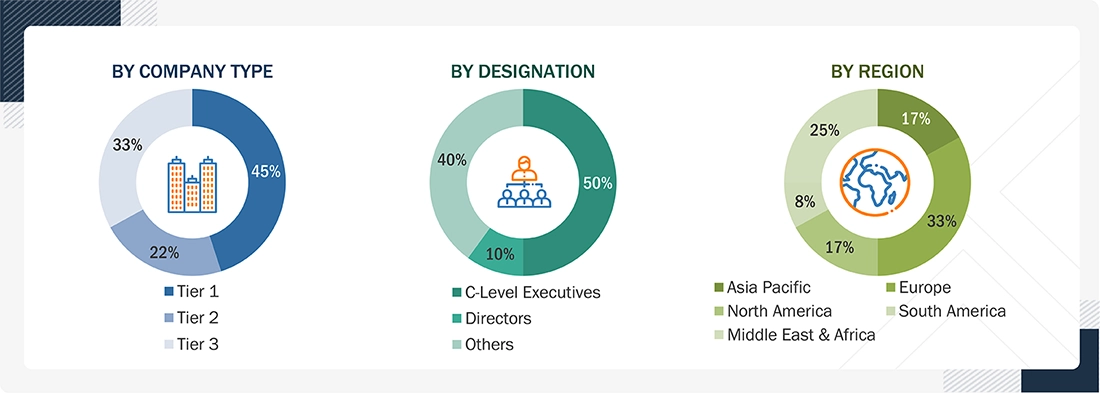
These interviews spanned six major regions: North America, Europe, Asia Pacific, Latin America, the Middle East, and Africa. Approximately 70% of the primary interviews were conducted with supply-side participants, while the remaining 30% were with demand-side participants. The primary data was collected through various methods, including questionnaires, emails, online surveys, personal interviews, and telephone interviews.
The following is a breakdown of the primary respondents:
To know about the assumptions considered for the study, download the pdf brochure
Market Size Estimation
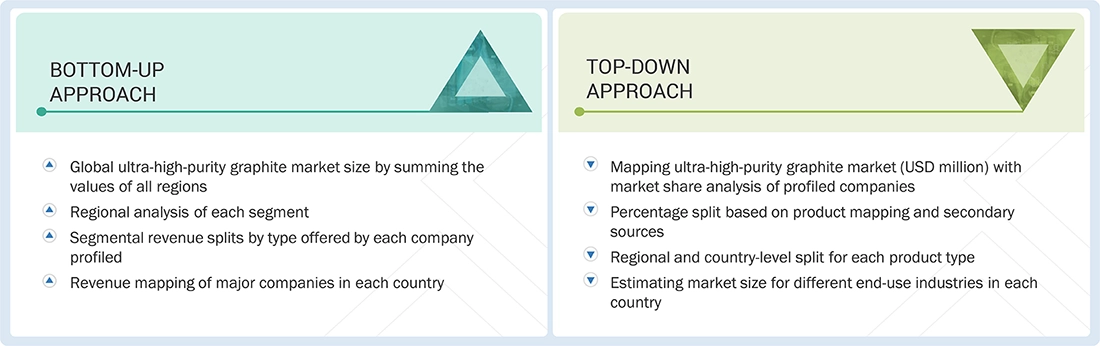
Both top-down and bottom-up approaches were used to estimate and validate the total size of the cell therapy technologies market. These methods were also used extensively to estimate the size of various market segments. The research methodology used to estimate the market size includes the following:
After determining the overall market size through the estimation process, the total market was divided into several segments and subsegments.
Data Triangulation
After determining the market size through the estimation process explained above, the total market was divided into several segments and subsegments. To complete the overall market engineering process and obtain precise statistics for all segments and subsegments, data triangulation and market breakdown procedures were employed, as applicable. The data was triangulated by studying various factors and trends from both the demand and supply sides.
Market Definition
Cell therapy is a transformative area that represents a groundbreaking advancement in modern medicine, leveraging living cells to repair, replace, or regenerate damaged tissues and treat a wide range of diseases. This innovative approach involves introducing functional cells into a patient’s body to restore health, offering solutions for conditions that were once considered untreatable. With applications spanning autologous therapies, which utilize a patient’s cells, and allogeneic therapies, offering scalable off-the-shelf solutions, cell therapy is transforming healthcare delivery. The report encompasses a range of media, sera, reagents, cell engineering products, cell therapy equipment, software, and other products utilized at various stages of cell therapy, including cell collection, manufacturing, expansion, and storage.
Stakeholders
- Cell therapy product manufacturers, suppliers, and processors
- Distributors and suppliers of cell therapy products
- Biotechnology and biopharmaceutical companies
- Contract manufacturing organizations (CMOs)
- Suppliers and distributors of pharmaceutical products
- Research and development (R&D) companies
- Pharmaceutical/medical associations
- Trade associations and industry bodies
- Regulatory bodies and government agencies
- Research institutes and government organizations
- Venture capitalists and investors
- Business research and consulting service providers
- Market research and consulting firms
Report Objectives
- To define, describe, and forecast the cell therapy technologies market based on product, process, cell type, application, end user, and region
- To provide detailed information regarding the major factors influencing market growth (such as drivers, restraints, opportunities, and challenges)
- To strategically analyze micromarkets1 with respect to individual growth trends, prospects, and contributions to the overall cell therapy technologies market
- To analyze the opportunities in the market for stakeholders and provide details of the competitive landscape for market leaders
- To forecast the size of the market segments with respect to six main regions: North America, Europe, the Asia Pacific, Latin America, the Middle East, and Africa
- To profile the key players in the global cell therapy technologies market and comprehensively analyze their product portfolios, market positions, and core competencies2
- To track and analyze competitive developments such as product launches, acquisitions, partnerships, expansions, agreements, and collaborations in the cell therapy technologies market
- To benchmark players within the cell therapy technologies market using the ‘Company Evaluation Matrix' framework, which analyzes market players based on various parameters within the broad categories of business and business strategy
Get the Full Cell Therapy Technologies Market Report
Full forecast, segment splits, and company analysis for all Cell Therapy Technologies Market.
- Canada Cell Therapy Technologies Market
- US Cell Therapy Technologies Market
- Germany Cell Therapy Technologies Market
- France Cell Therapy Technologies Market
- Italy Cell Therapy Technologies Market
- Spain Cell Therapy Technologies Market
- China Cell Therapy Technologies Market
- Japan Cell Therapy Technologies Market
- India Cell Therapy Technologies Market
- South Korea Cell Therapy Technologies Market
- Australia Cell Therapy Technologies Market
- Brazil Cell Therapy Technologies Market
- Mexico Cell Therapy Technologies Market
- UAE Cell Therapy Technologies Market
- Rest Of Europe Cell Therapy Technologies Market
- Rest Of Asia Pacific Cell Therapy Technologies Market
- Rest Of Latin America Cell Therapy Technologies Market
- Kingdom Of Saudi Arabia Cell Therapy Technologies Market
- Rest Of GCC Countries Cell Therapy Technologies Market
Need a Tailored Report?
Customize this report to your needs
Get 10% FREE Customization
Customize This Report
