
Vietnam Ceramic Tiles Market (2025-2030)

The Vietnam Ceramic Tiles Market was valued at $5719.4 Million in 2025 and projected to reach to $7328.3 Million by 2030, representing a compound annual growth rate of 5.08%. Vietnam's ceramic tiles market is poised for sustained growth through 2030, driven by robust construction activity and rising domestic consumption patterns.


| Market Size in | USD 26.32 MN |
| Market Forecast in | |
| CAGR | |
| Forecast Period | |
| Units Considered | Value (USD MN) |
Vietnam Ceramic Tiles Market Trends and Insights
- This 5.08% compound annual growth rate significantly outpaces global market expansion, reflecting Vietnam's accelerating construction activity and rising domestic demand.
- Vietnam's strategic position in Asia Pacific, combined with increasing urbanization and infrastructure investment, positions the country as a key growth engine for ceramic tile consumption across residential, commercial, and industrial applications. The forecast period from 2025 to 2030 will be critical for Vietnam's ceramic tiles sector, driven by rapid urban development, renovation projects, and export-oriented manufacturing.
- Vietnam's competitive manufacturing base and cost advantages have established the nation as both a major consumer and producer of ceramic tiles.
- Market dynamics in Vietnam are shaped by rising disposable incomes, government infrastructure initiatives, and growing adoption of premium tile products in high-end residential and hospitality segments..
Key Market Statistics
- CAGR (2025-2030) 5.08% CAGR
- Market Size, 2025 ~USD 5719.4 Million
- Forecast, 2030 ~USD 7328.3 Million
- Country Vietnam
Vietnam Ceramic Tiles Market Overview
Rapid Market Expansion :
Vietnam's ceramic tiles market is projected to grow from USD 5,719.4 million in 2025 to USD 7,328.3 million by 2030, representing a robust 5.08% CAGR that significantly outpaces the global growth rate of 3%.
Construction Boom Driver :
Accelerating construction activity across residential, commercial, and infrastructure projects in Vietnam is fueling unprecedented demand for ceramic tiles, positioning the country as a key growth engine in the Asia Pacific region.
Strategic Asia Pacific Position :
Vietnam's geographic location and manufacturing capabilities make it a critical hub for ceramic tile production and distribution, attracting both domestic investment and regional supply chain integration.
Rising Domestic Consumption :
Increasing urbanization rates and growing middle-class purchasing power in Vietnam are driving higher demand for quality ceramic tiles in both residential renovations and new construction projects.
Vietnam Ceramic Tiles Market Dynamics
- The country's 5.08% CAGR reflects strong fundamentals including urbanization trends, infrastructure development, and increasing consumer spending on home improvement.
- Government initiatives supporting real estate development and foreign direct investment further strengthen market prospects. The Vietnamese market benefits from competitive manufacturing advantages and strategic positioning within Asia Pacific supply chains.
- With expanding middle-class demographics and ongoing urban development projects, ceramic tiles demand will remain resilient across residential, commercial, and industrial applications.
- Market players should capitalize on Vietnam's growth trajectory while navigating evolving regulatory standards and sustainability requirements..
Market Ecosystem
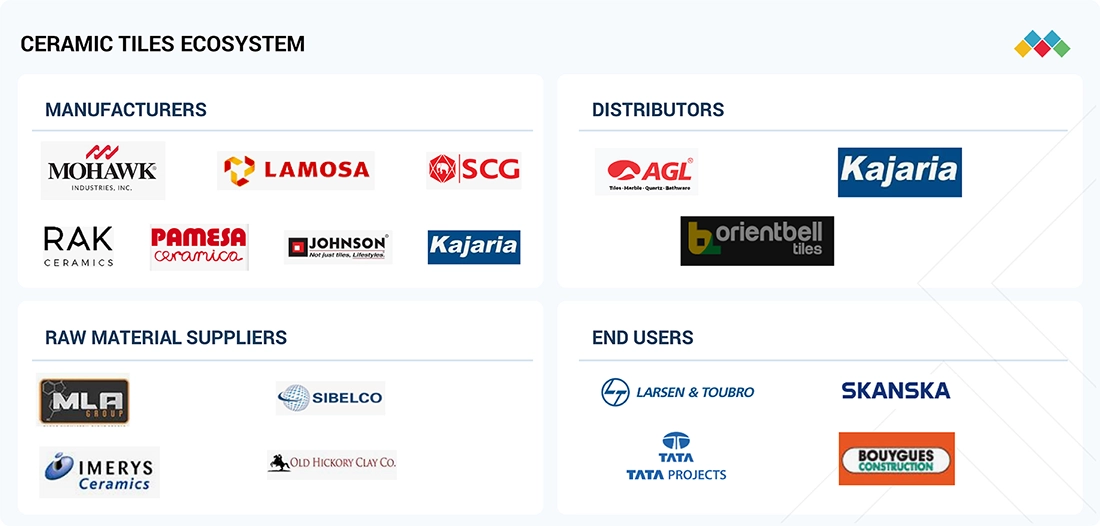
Ceramic Tiles Market: COMMERCIAL USE CASES ACROSS INDUSTRIES
| COMPANY | USE CASE DESCRIPTION | BENEFITS |
|---|---|---|
 |
Developed bio-based ceramic tiles eliminating the need for high-temperature kiln firing; incorporated graphene for added strength and durability | 80–90% lower carbon emissions vs. traditional tiles, reduced energy consumption, improved tile strength (+20%), enhanced durability, and eco-friendly positioning |
Logos and trademarks shown above are the property of their respective owners. Their use here is for informational and illustrative purposes only.
Related Ecosystem
Ceramics And Glass
- Zirconia
- Alumina Ceramics
- Silicon Carbide
- Silicon Nitride
- Titanate Ceramics
- Saint-gobain
- 3M COMPANY
- Kyocera Corporation
- COORSTEK INCORPORATED
- CERAMTEC GMBH
Building And Construction
- HVAC System
- Acoustic Insulation
- Alkyd Resins
- Fiberglass
- Thermal Insulation
- Snc-lavalin group inc.
- Saint-gobain
- LHOIST S.A
- USG CORPORATION
- Basf se
Key Takeaways
- Vietnam's ceramic tiles market will grow from USD 5,719.4 million in 2025 to USD 7,328.3 million by 2030, representing a 5.08% CAGR.
- Vietnam's growth rate outpaces the global ceramic tiles market CAGR of 3%, driven by rapid urbanization and construction expansion.
- Vietnam's dual role as a major consumer and exporter strengthens its position as a critical Asia Pacific market for ceramic tile manufacturers.
- Rising disposable incomes and premium product adoption in Vietnam are reshaping demand patterns toward higher-value ceramic tile segments.
Ceramic Tiles Market Report Scope
| Report Metric | Details |
|---|---|
| Base Year | 2025 |
| Fastest Growing Segment | PORCELAIN (Type) |
| Forecast Period | 2025-2030 |
| Growth Rate | CAGR of 3% from 2025 to 2030 |
| Largest Segment | PORCELAIN (Type) |
| Market Size Base Year (Billions) | ~USD 196.52 (2025) |
| Revenue Forecast (Billions) | ~USD 227.82 (2030) |
| Segments Covered | Application, Type, End-Use Sector |
Vietnam Ceramic Tiles Market Report Segmentation
3 segment dimensions are covered across the global market.
By Application
- External Walls
- Flooring
- Internal Walls
By Type
- Ceramic
- Porcelain
By End-Use Sector
- Non-Residential
- Residential
Target Audience
- Construction & Real Estate Developers : Need market sizing and growth forecasts to plan material procurement, project budgets, and supply chain strategies for residential and commercial developments across Vietnam.
- Ceramic Tile Manufacturers : Require competitive intelligence on Vietnam's market dynamics, demand drivers, and growth opportunities to optimize production capacity, pricing strategies, and market positioning.
- Distribution & Retail Partners : Seek insights into consumer demand patterns, regional growth hotspots, and market trends to guide inventory management, channel expansion, and sales forecasting in Vietnam.
- Investment & Private Equity Firms : Need comprehensive market data and growth projections to evaluate investment opportunities, assess portfolio company potential, and identify acquisition targets in Vietnam's ceramic tiles sector.
- Government & Policy Makers : Require market intelligence to inform infrastructure planning, trade policies, manufacturing incentives, and sustainability regulations affecting Vietnam's ceramic tiles industry development.
Reasons to Buy this Report
- Outpacing Global Growth : Vietnam's 5.08% CAGR significantly exceeds the global 3% growth rate, offering investors and businesses exposure to one of Asia's fastest-growing ceramic tiles markets with superior expansion potential.
- Construction Sector Insights : Gain detailed understanding of Vietnam's accelerating construction activity, including residential, commercial, and infrastructure projects driving ceramic tile demand across multiple end-use segments.
- Market Entry Strategy : Comprehensive data on Vietnam's market dynamics, competitive landscape, and consumer preferences enables informed market entry strategies and localized business planning for manufacturers and distributors.
- Supply Chain Opportunities : Identify strategic opportunities within Vietnam's manufacturing ecosystem and regional supply chain positioning, critical for optimizing sourcing, production, and distribution networks in Asia Pacific.
- Forecast-Driven Planning : Leverage detailed 2025-2030 projections (USD 5.7B to USD 7.3B) to align product development, capacity planning, and investment decisions with Vietnam's high-growth market trajectory.
Frequently asked questions
What is the current size of Vietnam's ceramic tiles market?
Vietnam's ceramic tiles market is valued at USD 5,719.4 million in 2025, with strong growth momentum expected through 2030.
What is the projected market size for Vietnam's ceramic tiles by 2030?
Vietnam's ceramic tiles market is forecast to reach USD 7,328.3 million by 2030, representing a 5.08% compound annual growth rate.
How does Vietnam's ceramic tiles market growth compare to global trends?
Vietnam's 5.08% CAGR significantly exceeds the global ceramic tiles market CAGR of 3%, making Vietnam one of the fastest-growing regional markets.
What factors are driving growth in Vietnam's ceramic tiles market?
Key drivers include rapid urbanization, government infrastructure investments, rising disposable incomes, and increased adoption of premium ceramic tiles in residential and commercial sectors.
What is Vietnam's role in the Asia Pacific ceramic tiles market?
Vietnam serves as both a major consumer and exporter of ceramic tiles in Asia Pacific, leveraging its competitive manufacturing base and cost advantages to capture significant regional market share.
RESEARCH METHODOLOGY
The study involved four main activities to estimate the current global size of the ceramic tiles market. Extensive secondary research was conducted to collect information on the market, its peer markets, and the parent market. The next step was to validate these findings, assumptions, and sizes with industry experts across the ceramic tiles value chain through primary research. Both top-down and bottom-up approaches were used to estimate the overall size of the ceramic tiles market. Subsequently, market segmentation and data triangulation procedures were applied to determine the size of different segments and sub-segments of the market.
Secondary Research
During the secondary research process, various sources such as D&B Hoovers, Factiva, Bloomberg BusinessWeek, and Dun & Bradstreet were used to gather information for this study on the ceramic tiles market. These sources included annual reports, press releases and investor presentations of companies, white papers, certified publications, articles by recognized authors, regulatory bodies, trade directories, and databases. The secondary research helped obtain essential information on the industry’s value chain, the key players, market classification, and segmentation from both market and technology perspectives.
Primary Research
Various primary sources from both the supply and demand sides of the ceramic tiles market were interviewed to gather qualitative and quantitative information. The primary sources from the supply side included industry experts such as Chief Executive Officers (CEOs), vice presidents, marketing directors, sales professionals, and other key executives from leading companies and organizations in the ceramic tiles industry. The breakdown of the profiles of primary respondents is as follows:
The following is a breakdown of the primary respondents:
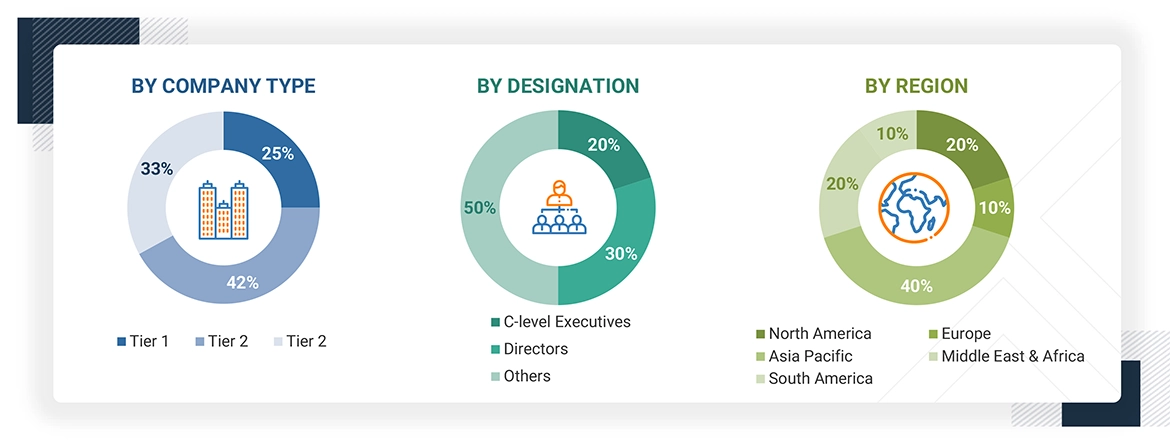
Notes: Companies are classified based on their revenue–Tier 1 = >USD 7 billion, Tier 2 = USD 500 million to USD 7 billion, and Tier 3 = < USD 500 million.
Other designations include sales, marketing, and product managers.
To know about the assumptions considered for the study, download the pdf brochure
Market Size Estimation
Both the top-down and bottom-up approaches were employed to estimate and validate the global ceramic tiles market size. These methods were also widely used to measure the size of various related market segments. The research methodology used to estimate the market size included the following details:
- The key players were identified through comprehensive secondary research.
- In terms of value, the industry’s supply chain and market size were determined through primary and secondary research methods.
- All percentage shares, splits, and breakdowns were derived from secondary sources and confirmed through primary sources.
- All relevant parameters affecting the markets covered in this study were thoroughly considered, examined in detail, verified through primary research, and analyzed to produce final quantitative and qualitative data.
- The research includes analyzing reports, reviews, and newsletters of major industry players and in-depth interviews with key officials such as directors and marketing executives.
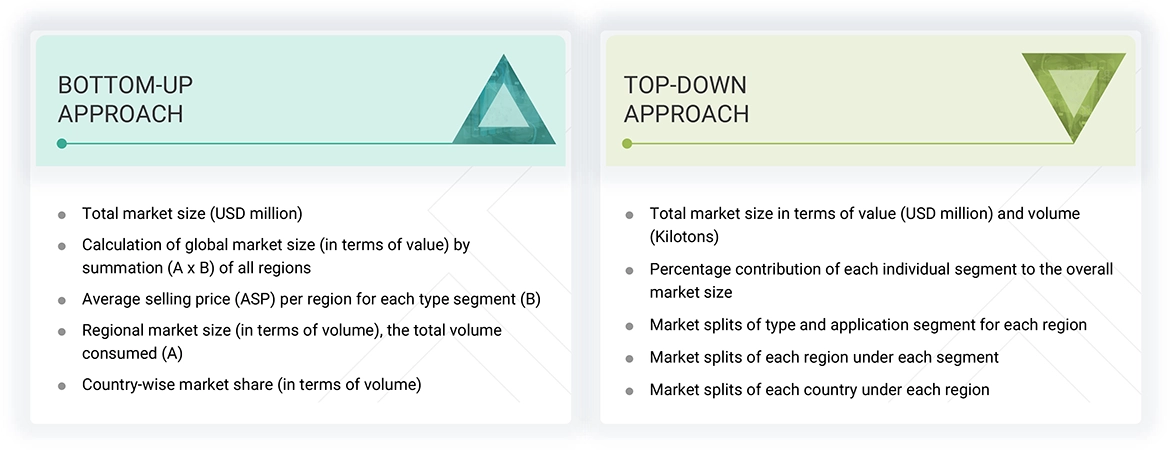
Data Triangulation
After determining the overall market size through the estimation process described above, the total market was divided into several segments and sub-segments. Data triangulation and market breakdown methods were used, where applicable, to complete the overall market analysis and determine accurate statistics for all segments and sub-segments of the ceramic tiles market. The data was triangulated by examining various factors and trends from both the demand and supply sides.
Furthermore, the market size was validated using both top-down and bottom-up approaches. It was then confirmed through primary interviews. Therefore, for each data segment, there are three sources—top-down approach, bottom-up approach, and expert interviews. The data were considered accurate when the values from the three sources aligned.
Market Definition
The ceramic tiles includes a broad range of products primarily made from clay and other natural materials, used for flooring, interior and exterior walls, and various architectural applications in both residential and commercial sectors. This global market is fueled by factors such as urbanization, construction activity, and interior design trends, with regional differences shaped by economic conditions and cultural preferences. Major trends involve technological advances in production, increasing demand for eco-friendly products, and the adoption of innovative designs.
Stakeholders
- Raw material suppliers
- Ceramic tile manufacturers
- Government & regulatory bodies
- Research organizations
- Associations and industry bodies
- End-use sectors
- Traders and distributors
Report Objectives
- To estimate and forecast the ceramic tiles market, in terms of value and volume
- To provide detailed information about the major factors (drivers, restraints, opportunities, and challenges) influencing the market growth
- To define, describe, and forecast the market size, based on type, application, end-use sector, and region
- To forecast the market size along with segments and submarkets, in key regions: North America, Europe, Asia Pacific, Middle East & Africa, and South America, along with their key countries
- To strategically analyze micromarkets, with respect to individual growth trends, prospects, and their contribution to the total market
- To analyze growth opportunities in the market for stakeholders and provide details on the competitive landscape for market leaders
- To strategically profile key players and comprehensively analyze their market shares and core competencies
- To analyze competitive developments, such as mergers & acquisitions, expansions & investments, and agreements in the ceramic tiles market
- To provide the impact of AI/Gen AI on the market
Get the Full Ceramic Tiles Market Report
Full forecast, segment splits, and company analysis for all Ceramic Tiles Market.
- China Ceramic Tiles Market
- India Ceramic Tiles Market
- Japan Ceramic Tiles Market
- Thailand Ceramic Tiles Market
- Indonesia Ceramic Tiles Market
- Germany Ceramic Tiles Market
- UK Ceramic Tiles Market
- France Ceramic Tiles Market
- Russia Ceramic Tiles Market
- Spain Ceramic Tiles Market
- Italy Ceramic Tiles Market
- Canada Ceramic Tiles Market
- Mexico Ceramic Tiles Market
- US Ceramic Tiles Market
- Turkey Ceramic Tiles Market
- Egypt Ceramic Tiles Market
- Iran Ceramic Tiles Market
- Brazil Ceramic Tiles Market
- Argentina Ceramic Tiles Market
- Rest Of Europe Ceramic Tiles Market
- Rest Of Asia Pacific Ceramic Tiles Market
Need a Tailored Report?
Customize this report to your needs
Get 10% FREE Customization
Customize This Report
