
Argentina Ceramic Tiles Market (2025-2030)

The Argentina Ceramic Tiles Market was valued at $1283.1 Million in 2025 and projected to reach to $1554.2 Million by 2030, representing a compound annual growth rate of 3.91%. Argentina's ceramic tiles market demonstrates resilience with steady growth projected through 2030.


| Market Size in | USD 26.32 MN |
| Market Forecast in | |
| CAGR | |
| Forecast Period | |
| Units Considered | Value (USD MN) |
Argentina Ceramic Tiles Market Trends and Insights
- This steady expansion reflects Argentina's ongoing construction activity and infrastructure development across residential, commercial, and industrial sectors.
- Argentina's ceramic tiles demand is driven by renovation projects, new housing developments, and increased adoption in commercial spaces throughout the forecast period. The Argentine ceramic tiles market benefits from rising consumer preferences for durable, aesthetically versatile flooring and wall solutions.
- Argentina's construction industry recovery and government infrastructure initiatives are expected to sustain market momentum through 2030.
- Additionally, Argentina's growing middle-class consumer base and urbanization trends support increased tile consumption in both urban and emerging regional markets..
Key Market Statistics
- CAGR (2025-2030) 3.91% CAGR
- Market Size, 2025 ~USD 1283.1 Million
- Forecast, 2030 ~USD 1554.2 Million
- Country Argentina
Argentina Ceramic Tiles Market Overview
Market Size & Growth :
Argentina's ceramic tiles market is valued at USD 1,283.1 million in 2025, with a projected CAGR of 3.91% through 2030, reaching USD 1,554.2 million. This outpaces the global growth rate of 3%, indicating stronger regional demand dynamics.
Construction Sector Momentum :
Argentina's ceramic tiles market is primarily driven by robust construction activity in residential and commercial segments. Infrastructure development projects and urban renewal initiatives continue to fuel steady demand across the country's major metropolitan areas.
Renovation & Modernization Trends :
Renovation projects in Argentina's aging housing stock represent a significant growth opportunity. Homeowners and commercial property developers increasingly invest in ceramic tile upgrades for aesthetic and functional improvements, supporting market expansion.
Regional Market Concentration :
Buenos Aires and surrounding provinces dominate Argentina's ceramic tiles consumption. Urban development and higher disposable incomes in these regions drive premium tile adoption, while interior provinces show emerging growth potential.
Argentina Ceramic Tiles Market Dynamics
- The 3.91% CAGR reflects sustained construction activity, infrastructure investments, and residential renovation demand across the country.
- Economic stabilization efforts and increased consumer spending on home improvement are expected to support market expansion in both urban and developing regions. The market outlook remains positive as Argentina's construction sector recovers and modernizes.
- Commercial real estate development, coupled with government infrastructure initiatives, will drive ceramic tile consumption.
- Additionally, growing awareness of sustainable building materials and premium tile aesthetics among Argentine consumers presents opportunities for market diversification and value-added product segments..
Market Ecosystem
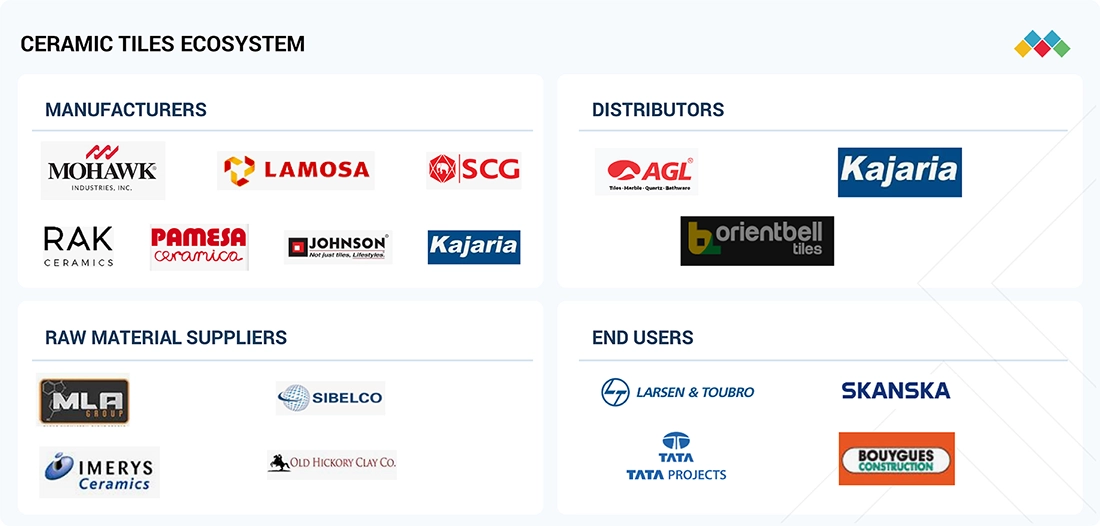
Ceramic Tiles Market: COMMERCIAL USE CASES ACROSS INDUSTRIES
| COMPANY | USE CASE DESCRIPTION | BENEFITS |
|---|---|---|
 |
Developed bio-based ceramic tiles eliminating the need for high-temperature kiln firing; incorporated graphene for added strength and durability | 80–90% lower carbon emissions vs. traditional tiles, reduced energy consumption, improved tile strength (+20%), enhanced durability, and eco-friendly positioning |
Logos and trademarks shown above are the property of their respective owners. Their use here is for informational and illustrative purposes only.
Related Ecosystem
Ceramics And Glass
- Zirconia
- Alumina Ceramics
- Silicon Carbide
- Silicon Nitride
- Titanate Ceramics
- Saint-gobain
- 3M COMPANY
- Kyocera Corporation
- COORSTEK INCORPORATED
- CERAMTEC GMBH
Building And Construction
- HVAC System
- Acoustic Insulation
- Alkyd Resins
- Fiberglass
- Thermal Insulation
- Snc-lavalin group inc.
- Saint-gobain
- LHOIST S.A
- USG CORPORATION
- Basf se
Key Takeaways
- Argentina's ceramic tiles market will grow from USD 1,283.1M (2025) to USD 1,554.2M (2030) at a 3.91% CAGR.
- Argentina's construction sector recovery and residential renovation demand are primary growth catalysts through 2030.
- Argentina's ceramic tiles market is supported by urbanization, infrastructure investment, and consumer preference for durable materials.
- Argentina's market expansion is driven by both new construction projects and replacement demand in established urban centers.
Ceramic Tiles Market Report Scope
| Report Metric | Details |
|---|---|
| Base Year | 2025 |
| Fastest Growing Segment | PORCELAIN (Type) |
| Forecast Period | 2025-2030 |
| Growth Rate | CAGR of 3% from 2025 to 2030 |
| Largest Segment | PORCELAIN (Type) |
| Market Size Base Year (Billions) | ~USD 196.52 (2025) |
| Revenue Forecast (Billions) | ~USD 227.82 (2030) |
| Segments Covered | Application, Type, End-Use Sector |
Argentina Ceramic Tiles Market Report Segmentation
3 segment dimensions are covered across the global market.
By Application
- External Walls
- Flooring
- Internal Walls
By Type
- Ceramic
- Porcelain
By End-Use Sector
- Non-Residential
- Residential
Target Audience
- Ceramic Tile Manufacturers : Manufacturers need Argentina-specific market data to assess production capacity requirements, identify distribution opportunities, and develop localized product strategies. Understanding regional demand patterns and growth forecasts enables strategic expansion planning in South America.
- Construction & Real Estate Developers : Developers require insights into ceramic tiles market trends to optimize material sourcing, manage project budgets, and identify supplier partnerships. Argentina market data helps forecast material costs and availability for residential and commercial projects.
- Distributors & Retailers : Distributors and retailers need Argentina market intelligence to stock appropriate inventory levels, identify high-demand regions, and plan expansion strategies. Detailed forecasts enable better supply chain management and sales forecasting for ceramic tile products.
- Investment & Private Equity Firms : Investors evaluating opportunities in Argentina's construction materials sector require comprehensive market data. This analysis supports due diligence, valuation models, and investment decisions for ceramic tiles companies or construction-related ventures in Argentina.
- Market Consultants & Analysts : Consultants advising clients on Argentina's construction and materials sectors need reliable market data and forecasts. This report provides evidence-based insights for strategic recommendations, feasibility studies, and market assessments for stakeholders across the value chain.
Reasons to Buy this Report
- Localized Market Intelligence : Gain Argentina-specific insights on market size, growth rates, and regional dynamics. Understand how local construction trends, economic conditions, and consumer preferences shape ceramic tiles demand across different provinces and urban centers.
- Competitive Positioning Strategy : Identify market opportunities and competitive gaps specific to Argentina. Benchmark your products and pricing against local competitors, and understand distribution channels, retail preferences, and customer segments unique to the Argentine market.
- Investment & Expansion Planning : Make informed decisions on market entry, expansion, or partnership opportunities in Argentina. Leverage accurate forecasts through 2030 to plan capacity investments, supply chain development, and resource allocation for the Argentine ceramic tiles sector.
- Sector-Specific Growth Drivers : Understand Argentina-specific growth catalysts including residential renovation trends, commercial construction pipelines, and infrastructure projects. Identify which segments (residential, commercial, industrial) offer the highest growth potential for your business.
- Risk Mitigation & Market Timing : Assess Argentina's economic stability, regulatory environment, and market maturity. Use detailed forecasts to time market entry, optimize inventory management, and develop contingency strategies aligned with Argentina's unique market conditions and growth trajectory.
Frequently asked questions
What is the current size of Argentina's ceramic tiles market?
Argentina's ceramic tiles market is valued at USD 1,283.1 million in 2025 and is expected to reach USD 1,554.2 million by 2030.
What is the projected growth rate for Argentina's ceramic tiles market?
Argentina's ceramic tiles market is projected to grow at a compound annual growth rate (CAGR) of 3.91% from 2025 to 2030.
What are the main drivers of Argentina's ceramic tiles market growth?
Argentina's market growth is driven by construction sector recovery, residential renovation projects, urbanization, infrastructure development, and increasing consumer demand for durable flooring solutions.
Which sectors contribute most to Argentina's ceramic tiles demand?
Argentina's ceramic tiles demand is primarily driven by residential construction, commercial real estate development, and industrial applications across the country.
How does Argentina's ceramic tiles market compare to regional trends?
Argentina's 3.91% CAGR reflects strong regional performance within South America, supported by the country's construction recovery and infrastructure modernization initiatives.
RESEARCH METHODOLOGY
The study involved four main activities to estimate the current global size of the ceramic tiles market. Extensive secondary research was conducted to collect information on the market, its peer markets, and the parent market. The next step was to validate these findings, assumptions, and sizes with industry experts across the ceramic tiles value chain through primary research. Both top-down and bottom-up approaches were used to estimate the overall size of the ceramic tiles market. Subsequently, market segmentation and data triangulation procedures were applied to determine the size of different segments and sub-segments of the market.
Secondary Research
During the secondary research process, various sources such as D&B Hoovers, Factiva, Bloomberg BusinessWeek, and Dun & Bradstreet were used to gather information for this study on the ceramic tiles market. These sources included annual reports, press releases and investor presentations of companies, white papers, certified publications, articles by recognized authors, regulatory bodies, trade directories, and databases. The secondary research helped obtain essential information on the industry’s value chain, the key players, market classification, and segmentation from both market and technology perspectives.
Primary Research
Various primary sources from both the supply and demand sides of the ceramic tiles market were interviewed to gather qualitative and quantitative information. The primary sources from the supply side included industry experts such as Chief Executive Officers (CEOs), vice presidents, marketing directors, sales professionals, and other key executives from leading companies and organizations in the ceramic tiles industry. The breakdown of the profiles of primary respondents is as follows:
The following is a breakdown of the primary respondents:
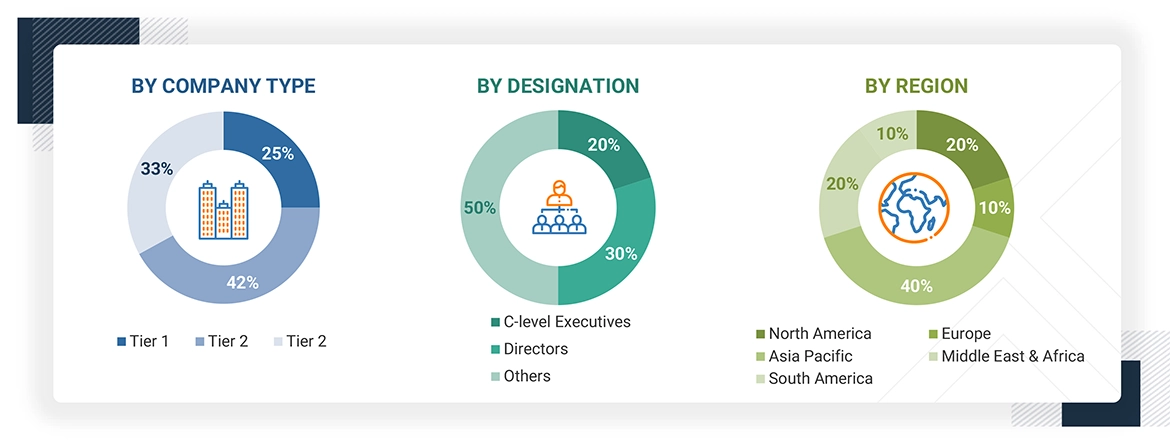
Notes: Companies are classified based on their revenue–Tier 1 = >USD 7 billion, Tier 2 = USD 500 million to USD 7 billion, and Tier 3 = < USD 500 million.
Other designations include sales, marketing, and product managers.
To know about the assumptions considered for the study, download the pdf brochure
Market Size Estimation
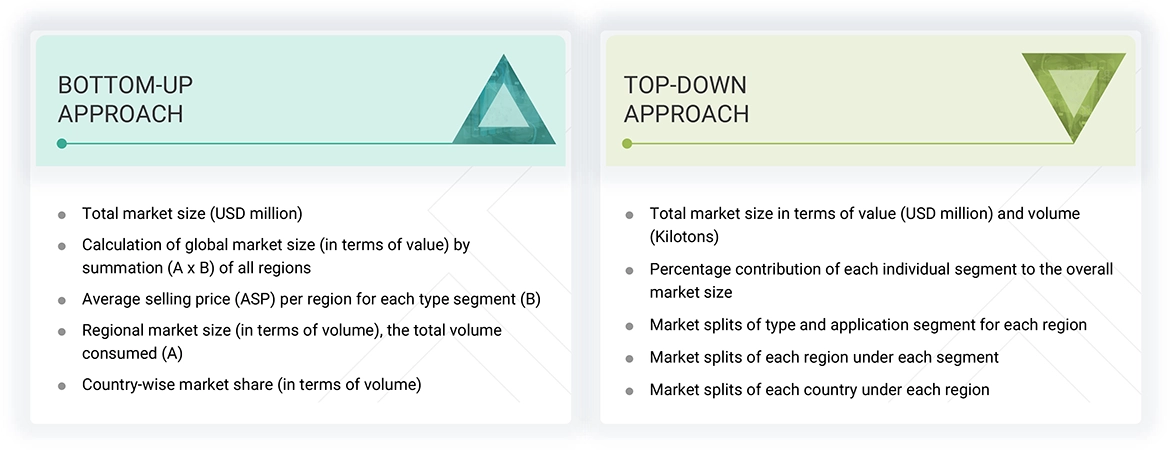
Both the top-down and bottom-up approaches were employed to estimate and validate the global ceramic tiles market size. These methods were also widely used to measure the size of various related market segments. The research methodology used to estimate the market size included the following details:
- The key players were identified through comprehensive secondary research.
- In terms of value, the industry’s supply chain and market size were determined through primary and secondary research methods.
- All percentage shares, splits, and breakdowns were derived from secondary sources and confirmed through primary sources.
- All relevant parameters affecting the markets covered in this study were thoroughly considered, examined in detail, verified through primary research, and analyzed to produce final quantitative and qualitative data.
- The research includes analyzing reports, reviews, and newsletters of major industry players and in-depth interviews with key officials such as directors and marketing executives.
Data Triangulation
After determining the overall market size through the estimation process described above, the total market was divided into several segments and sub-segments. Data triangulation and market breakdown methods were used, where applicable, to complete the overall market analysis and determine accurate statistics for all segments and sub-segments of the ceramic tiles market. The data was triangulated by examining various factors and trends from both the demand and supply sides.
Furthermore, the market size was validated using both top-down and bottom-up approaches. It was then confirmed through primary interviews. Therefore, for each data segment, there are three sources—top-down approach, bottom-up approach, and expert interviews. The data were considered accurate when the values from the three sources aligned.
Market Definition
The ceramic tiles includes a broad range of products primarily made from clay and other natural materials, used for flooring, interior and exterior walls, and various architectural applications in both residential and commercial sectors. This global market is fueled by factors such as urbanization, construction activity, and interior design trends, with regional differences shaped by economic conditions and cultural preferences. Major trends involve technological advances in production, increasing demand for eco-friendly products, and the adoption of innovative designs.
Stakeholders
- Raw material suppliers
- Ceramic tile manufacturers
- Government & regulatory bodies
- Research organizations
- Associations and industry bodies
- End-use sectors
- Traders and distributors
Report Objectives
- To estimate and forecast the ceramic tiles market, in terms of value and volume
- To provide detailed information about the major factors (drivers, restraints, opportunities, and challenges) influencing the market growth
- To define, describe, and forecast the market size, based on type, application, end-use sector, and region
- To forecast the market size along with segments and submarkets, in key regions: North America, Europe, Asia Pacific, Middle East & Africa, and South America, along with their key countries
- To strategically analyze micromarkets, with respect to individual growth trends, prospects, and their contribution to the total market
- To analyze growth opportunities in the market for stakeholders and provide details on the competitive landscape for market leaders
- To strategically profile key players and comprehensively analyze their market shares and core competencies
- To analyze competitive developments, such as mergers & acquisitions, expansions & investments, and agreements in the ceramic tiles market
- To provide the impact of AI/Gen AI on the market
Get the Full Ceramic Tiles Market Report
Full forecast, segment splits, and company analysis for all Ceramic Tiles Market.
- China Ceramic Tiles Market
- India Ceramic Tiles Market
- Japan Ceramic Tiles Market
- Vietnam Ceramic Tiles Market
- Thailand Ceramic Tiles Market
- Indonesia Ceramic Tiles Market
- Germany Ceramic Tiles Market
- UK Ceramic Tiles Market
- France Ceramic Tiles Market
- Russia Ceramic Tiles Market
- Spain Ceramic Tiles Market
- Italy Ceramic Tiles Market
- Canada Ceramic Tiles Market
- Mexico Ceramic Tiles Market
- US Ceramic Tiles Market
- Turkey Ceramic Tiles Market
- Egypt Ceramic Tiles Market
- Iran Ceramic Tiles Market
- Brazil Ceramic Tiles Market
- Rest Of Europe Ceramic Tiles Market
- Rest Of Asia Pacific Ceramic Tiles Market
Need a Tailored Report?
Customize this report to your needs
Get 10% FREE Customization
Customize This Report
