
Rest Of Asia Pacific Construction Plastics Market (2025-2030)

The Rest Of Asia Pacific Construction Plastics Market was valued at $11007.9 Million in 2025 and projected to reach to $16609.5 Million by 2030, representing a compound annual growth rate of 8.6%. Rest Of Asia Pacific's construction plastics market is poised for substantial growth, expanding from USD 11,007.9 million in 2025 to USD 16,609.5 million by 2030, representing a robust 8.6% CAGR.


| Market Size in | USD 26.32 MN |
| Market Forecast in | |
| CAGR | |
| Forecast Period | |
| Units Considered | Value (USD MN) |
Rest Of Asia Pacific Construction Plastics Market Trends and Insights
- This region is experiencing robust growth driven by rapid urbanization, infrastructure development, and increasing adoption of lightweight, durable plastic materials in construction applications.
- Rest Of Asia Pacific's 8.6% compound annual growth rate outpaces the global average, reflecting strong demand for cost-effective building solutions across emerging economies. The construction plastics market in Rest Of Asia Pacific is benefiting from rising investments in residential and commercial infrastructure, coupled with growing awareness of plastic materials' advantages in thermal insulation, corrosion resistance, and ease of installation.
- Rest Of Asia Pacific's expanding middle class and government-backed development initiatives are accelerating the transition from traditional materials to advanced plastic composites.
- Between 2025 and 2030, Rest Of Asia Pacific is expected to capture significant market share as manufacturers establish regional production facilities and supply chains strengthen..
Key Market Statistics
- CAGR (2025-2030) 8.6% CAGR
- Market Size, 2025 ~USD 11007.9 Million
- Forecast, 2030 ~USD 16609.5 Million
- Country Rest Of Asia Pacific
Rest Of Asia Pacific Construction Plastics Market Overview
Rapid Urbanization Driving Demand :
Rest Of Asia Pacific is experiencing accelerated urban development, with countries investing heavily in residential and commercial infrastructure. This urbanization trend is significantly boosting demand for construction plastics in piping, insulation, and structural applications.
Infrastructure Development Initiatives :
Government-backed infrastructure projects across emerging economies in the region are creating substantial opportunities for construction plastic materials. These initiatives focus on transportation networks, water management systems, and smart city developments.
Cost-Effective Material Adoption :
Construction companies in Rest Of Asia Pacific are increasingly replacing traditional materials with lightweight, durable plastic alternatives. This shift reduces construction costs, improves installation efficiency, and extends building lifespan.
Sustainability and Regulatory Push :
Growing environmental awareness and stricter building codes in the region are promoting the use of recyclable and eco-friendly construction plastics, creating new market opportunities for sustainable product innovations.
Rest Of Asia Pacific Construction Plastics Market Dynamics
- This outpaces the global growth rate of 7.9%, reflecting the region's accelerated infrastructure development and urbanization momentum.
- Emerging economies within the region are prioritizing construction modernization, driving adoption of plastic materials in pipes, fittings, insulation, and roofing applications. The market's expansion is underpinned by increasing foreign direct investment, rising disposable incomes, and government initiatives supporting smart city development.
- Key growth drivers include the shift toward lightweight materials that reduce construction timelines and costs, coupled with growing awareness of plastic materials' durability and weather resistance.
- As regulatory frameworks evolve to emphasize sustainability, manufacturers are innovating with recycled and bio-based construction plastics, positioning Rest Of Asia Pacific as a high-growth market with significant long-term potential..
Market Ecosystem
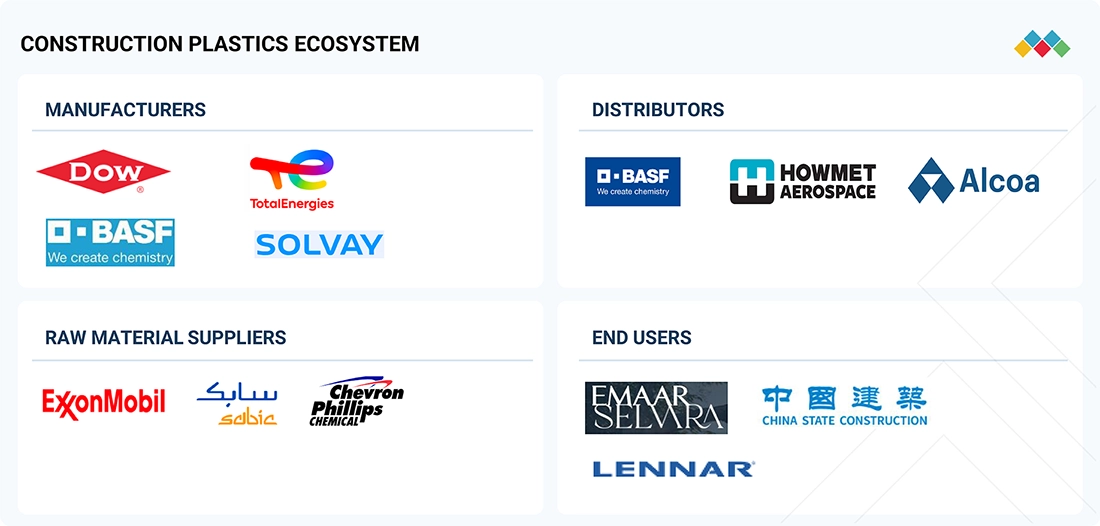
Construction Plastics Market: COMMERCIAL USE CASES ACROSS INDUSTRIES
| COMPANY | USE CASE DESCRIPTION | BENEFITS |
|---|---|---|
 |
Developed Ultramid polyamide compounds for durable building panels, pipes, and insulation components | High strength, impact-resistant, long service life, suitable for demanding construction applications |
 |
Developed STYROFOAM extruded polystyrene (XPS) insulation boards for walls, roofing, and foundations | High thermal insulation, moisture resistance, long-term energy savings, and easy installation |
 |
Provided Total Cray Valley resins and PE/PP compounds for construction panels and insulation films | Lightweight, chemically resistant, and customizable for specific construction applications |
 |
Developed Solvay Amodel PPA (polyphthalamide) compounds for high-temperature construction components | High mechanical strength, heat resistance, and flame retardancy for demanding applications |
Logos and trademarks shown above are the property of their respective owners. Their use here is for informational and illustrative purposes only.
Related Ecosystem
Building And Construction
- HVAC System
- Acoustic Insulation
- Alkyd Resins
- Fiberglass
- Thermal Insulation
- Snc-lavalin group inc.
- Saint-gobain
- LHOIST S.A
- USG CORPORATION
- Basf se
Key Takeaways
- Rest Of Asia Pacific construction plastics market is valued at USD 11,007.9 million in 2025, growing at 8.6% CAGR through 2030.
- Rest Of Asia Pacific's growth rate exceeds the global average, driven by urbanization and infrastructure investment across emerging economies.
- Rest Of Asia Pacific benefits from cost advantages and material properties that favor plastic adoption over traditional construction materials.
- Rest Of Asia Pacific is expected to reach USD 16,609.5 million by 2030, representing significant regional market expansion and opportunity.
Construction Plastics Market Report Scope
| Report Metric | Details |
|---|---|
| Base Year | 2025 |
| Fastest Growing Segment | PU (Plastic Type) |
| Forecast Period | 2025-2030 |
| Growth Rate | CAGR of 7.9% from 2025 to 2030 |
| Largest Segment | PVC (Plastic Type) |
| Market Size Base Year (Billions) | ~USD 126.86 (2025) |
| Revenue Forecast (Billions) | ~USD 185.54 (2030) |
| Segments Covered | Plastic Type, Application, End-Use Industry |
Rest Of Asia Pacific Construction Plastics Market Report Segmentation
3 segment dimensions are covered across the global market.
By Plastic Type
- Other Plastic Types
- Pc
- Pe
- Pp
- Ps
- Pu
- Pvc
By Application
- Ducts
- Flooring
- Insulation Materials
- Other Applications
- Pipes
- Roofing
- Walls
- Windows & Doors
By End-Use Industry
- Non-Residential
- Residential
Target Audience
- Construction Material Manufacturers : Manufacturers need Rest Of Asia Pacific-specific data to identify growth segments, optimize production capacity, and develop region-tailored product portfolios aligned with local infrastructure demands and regulatory requirements.
- Construction and Real Estate Developers : Developers require market insights to source cost-effective plastic materials, understand supply chain dynamics, and make informed procurement decisions that enhance project profitability and construction timelines in the region.
- Investment and Private Equity Firms : Investors need detailed market analysis to identify acquisition targets, assess growth potential, and evaluate investment returns in Rest Of Asia Pacific's construction plastics sector amid rapid urbanization trends.
- Distribution and Supply Chain Partners : Distributors and logistics providers require market forecasts and regional demand patterns to optimize inventory management, expand distribution networks, and capitalize on emerging opportunities across Rest Of Asia Pacific.
- Government and Policy Makers : Policymakers need market intelligence to develop infrastructure strategies, set sustainability standards, and create regulatory frameworks that support the construction plastics industry's growth while promoting environmental responsibility.
Reasons to Buy this Report
- Regional Growth Opportunity Assessment : Gain detailed insights into Rest Of Asia Pacific's 8.6% CAGR trajectory, enabling strategic market entry and expansion planning. Understand country-specific growth drivers and investment opportunities within this high-potential region.
- Competitive Landscape Intelligence : Identify key players, market consolidation trends, and competitive positioning specific to Rest Of Asia Pacific. Benchmark your offerings against regional competitors and discover market gaps for differentiation.
- Infrastructure Investment Tracking : Monitor government-backed infrastructure projects and urbanization initiatives driving construction plastic demand. Align product development and marketing strategies with region-specific infrastructure priorities and timelines.
- Regulatory and Sustainability Compliance : Stay informed on evolving building codes, environmental regulations, and sustainability standards across Rest Of Asia Pacific countries. Ensure product compliance and capitalize on the growing demand for eco-friendly construction plastics.
- Market Sizing and Forecast Accuracy : Access precise market valuations (USD 11,007.9M in 2025) and 2030 projections (USD 16,609.5M) for accurate financial planning and ROI forecasting. Make data-driven investment decisions with region-specific market intelligence.
Frequently asked questions
What is the current market size of construction plastics in Rest Of Asia Pacific?
Rest Of Asia Pacific's construction plastics market is valued at USD 11,007.9 million in 2025 and is projected to grow to USD 16,609.5 million by 2030.
What is the CAGR for construction plastics in Rest Of Asia Pacific?
Rest Of Asia Pacific's construction plastics market is growing at a compound annual growth rate of 8.6% from 2025 to 2030.
What factors are driving growth in Rest Of Asia Pacific's construction plastics market?
Rest Of Asia Pacific's market growth is driven by rapid urbanization, infrastructure development, rising disposable incomes, government investment in construction projects, and the material advantages of plastics including durability, cost-effectiveness, and ease of installation.
How does Rest Of Asia Pacific's growth compare to the global construction plastics market?
Rest Of Asia Pacific's 8.6% CAGR outpaces the global market CAGR of 7.9%, indicating stronger regional demand and market expansion opportunities.
What applications drive demand for construction plastics in Rest Of Asia Pacific?
Rest Of Asia Pacific's construction plastics demand is driven by applications in pipes, fittings, insulation materials, roofing, flooring, windows, and structural components across residential, commercial, and industrial construction projects.
RESEARCH METHODOLOGY
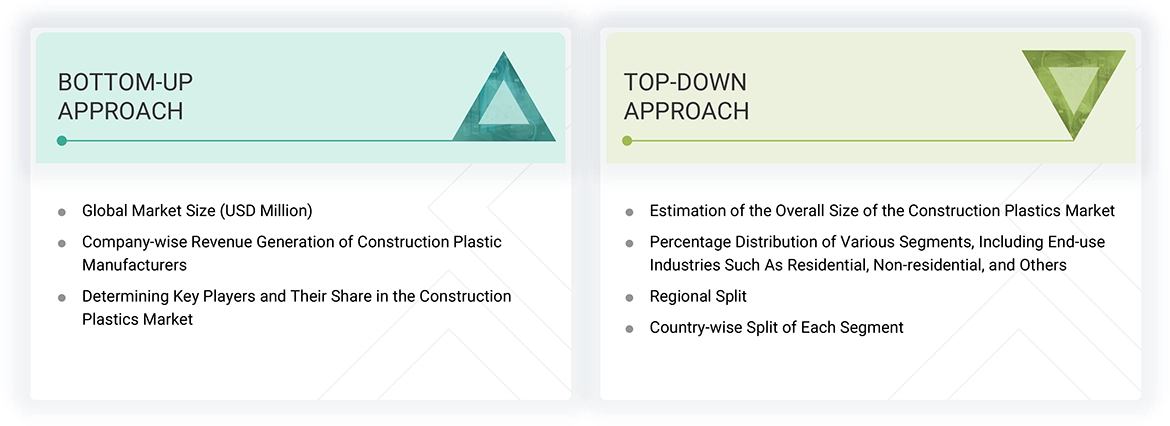
The study involves two major activities in estimating the current market size for the construction plastics market. Exhaustive secondary research was done to collect information on the market, peer market, and parent market. The next step was to validate these findings, assumptions, and sizing with industry experts across the value chain through primary research. Both top-down and bottom-up approaches were employed to estimate the complete market size. After that, market breakdown and data triangulation were used to estimate the market size of segments and subsegments.
Secondary Research
Secondary sources referred to for this research study include financial statements of companies offering construction plastics and information from various trade, business, and professional associations. Secondary research has been used to obtain critical information about the industry’s value chain, the total pool of key players, and market classification and segmentation according to industry trends, to the bottom-most level, and regional markets. The secondary data was collected and analyzed to arrive at the overall size of the construction plastics market, which was validated by primary respondents.
Primary Research
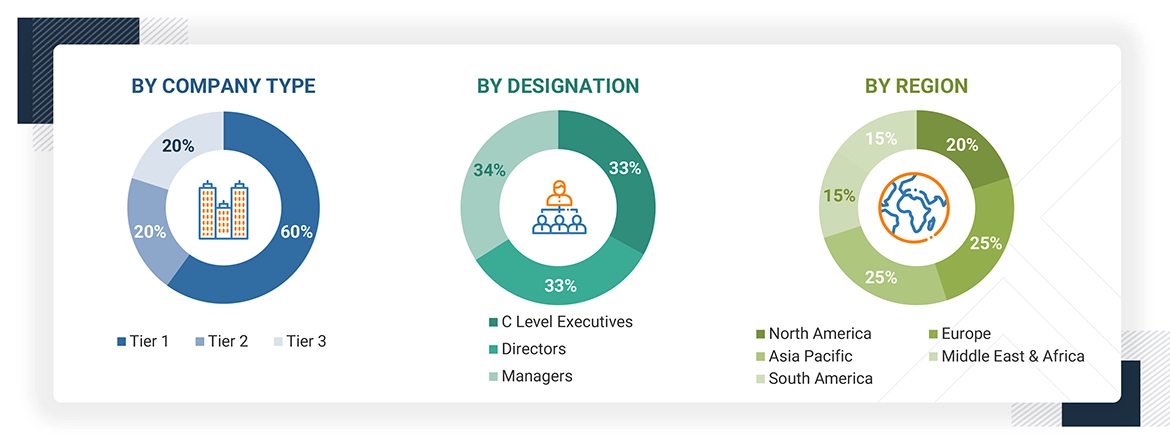
Extensive primary research was conducted after obtaining information regarding the construction plastics market scenario through secondary research. Several primary interviews were conducted with market experts from both the demand and supply sides across major countries of North America, Europe, Asia Pacific, the Middle East & Africa, and South America. Primary data was collected through questionnaires, emails, and telephonic interviews. The primary sources from the supply side included various industry experts, such as chief experience officers (CXOs), vice presidents (VPs), directors from business development & marketing, product development/innovation teams, and related key executives from the construction plastics industry, such as vendors, material providers, distributors, and key opinion leaders. Primary interviews were conducted to gather insights such as market statistics, data on revenue collected from the products and services, market breakdowns, market size estimations, market forecasting, and data triangulation. Primary research also helped in understanding the various trends related to plastic type, application, end-use industry, and region. Stakeholders from the demand side, such as CIOs, CTOs, CSOs, and installation teams of the customer/end users who are seeking construction plastic services, were interviewed to understand the buyer’s perspective on the suppliers, products, component providers, and their current usage of construction plastics and future outlook of their business, which will affect the overall market.
The Breakup of Primary Research
To know about the assumptions considered for the study, download the pdf brochure
Market Size Estimation
The research methodology employed to estimate the size of the construction plastics market includes the following details. The market sizing approach was based on demand analysis. The demand for construction plastics was assessed across various end-use industries at the regional level. This approach provided insights into the demand aspects of the construction plastics industry for each application. For every end-use category, all potential segments of the construction plastics market were integrated and mapped.
Data Triangulation
After arriving at the overall size from the market size estimation process explained above, the total market was split into several segments and subsegments. The data triangulation and market breakdown procedures explained below were implemented, wherever applicable, to complete the overall market engineering process and arrive at the exact statistics for various market segments and subsegments. The data was triangulated by studying various factors and trends from the demand and supply sides. Along with this, the market size was validated using both the top-down and bottom-up approaches.
Market Definition
Construction plastics refer to a diverse range of synthetic polymer-based materials specifically engineered for use in building and infrastructure applications due to their unique combination of durability, flexibility, and cost-effectiveness. These materials, which include polyvinyl chloride (PVC), polyethylene (PE), polypropylene (PP), and polystyrene (PS), are widely utilized in pipes, insulation, window profiles, roofing, flooring, and wall coverings. Their inherent advantages, such as resistance to corrosion, moisture, and chemicals, lightweight structure, and ease of installation, make them a preferred alternative to traditional construction materials like wood, steel, or concrete in many applications. Beyond functionality, construction plastics also contribute to improved energy efficiency through insulation and weatherproofing, supporting modern green building standards. Their adaptability in design and compatibility with modular and prefabricated construction enhance project efficiency and cost savings. While environmental concerns regarding waste management and recyclability pose challenges, advancements in sustainable formulations and recycling technologies are expanding their role in eco-friendly construction. Overall, construction plastics serve as essential materials in modern infrastructure and housing development, aligning with the global demand for durable, efficient, and innovative building solutions.
Stakeholders
- Construction Plastic Manufacturers
- Construction Plastic Distributors and Suppliers
- End-use Industries
- Universities, Governments, and Research Organizations
- Associations and Industrial Bodies
- R&D Institutes
- Environmental Support Agencies
- Investment Banks and Private Equity Firms
- Research and Consulting Firms
Report Objectives
- To define, describe, and forecast the construction plastics market size in terms of volume and value
- To provide detailed information regarding the key factors, such as drivers, restraints, opportunities, and challenges, influencing market growth
- To analyze and project the global construction plastics market by plastic type, application, end-use industry, and region
- To forecast the market size concerning five main regions (along with country-level data), namely, North America, Europe, Asia Pacific, Middle East & Africa, and South America, and analyze the significant region-specific trends
- To strategically analyze micromarkets with respect to individual growth trends, prospects, and contributions of the submarkets to the overall market
- To analyze the market opportunities and the competitive landscape for stakeholders and market leaders
- To assess recent market developments and competitive strategies, such as agreements, contracts, acquisitions, partnerships, collaborations, and product developments/product launches, to draw the competitive landscape
- To strategically profile the key market players and comprehensively analyze their core competencies
Get the Full Construction Plastics Market Report
Full forecast, segment splits, and company analysis for all Construction Plastics Market.
- US Construction Plastics Market
- Canada Construction Plastics Market
- Mexico Construction Plastics Market
- Germany Construction Plastics Market
- France Construction Plastics Market
- UK Construction Plastics Market
- Italy Construction Plastics Market
- Spain Construction Plastics Market
- China Construction Plastics Market
- Japan Construction Plastics Market
- India Construction Plastics Market
- South Korea Construction Plastics Market
- South Africa Construction Plastics Market
- Brazil Construction Plastics Market
- Argentina Construction Plastics Market
- Rest Of Europe Construction Plastics Market
- GCC Countries Construction Plastics Market
- -Rest Of GCC Countries Construction Plastics Market
- Rest Of South America Construction Plastics Market
Need a Tailored Report?
Customize this report to your needs
Get 10% FREE Customization
Customize This Report
