
Europe CRISPR Market (2025-2030)

The Europe CRISPR Market was valued at $784.2 Million in 2025 and projected to reach to $1339.9 Million by 2030, representing a compound annual growth rate of 11.2%. Europe's CRISPR market is poised for sustained expansion through 2030, driven by increasing clinical trial approvals, growing therapeutic applications, and rising healthcare expenditure.


| Market Size in | USD 26.32 MN |
| Market Forecast in | |
| CAGR | |
| Forecast Period | |
| Units Considered | Value (USD MN) |
Europe CRISPR Market Trends and Insights
- Europe is establishing itself as a critical hub for gene-editing innovation, driven by strong regulatory frameworks, substantial R&D investments, and a concentration of leading biotech firms across the United Kingdom, Germany, and Switzerland.
- The region's commitment to precision medicine and advanced therapeutics is accelerating CRISPR adoption across oncology, rare genetic disorders, and immunotherapy applications. During the 2025-2030 forecast period, Europe's CRISPR market will benefit from increasing clinical trial activity, growing partnerships between academic institutions and industry players, and expanding reimbursement pathways for gene-editing therapies.
- Europe's regulatory environment, particularly under the European Medicines Agency (EMA), is becoming more conducive to CRISPR-based treatments, supporting faster market entry and commercialization.
- This trajectory positions Europe as a key growth engine within the global CRISPR landscape..
Key Market Statistics
- CAGR (2025-2030) 11.2% CAGR
- Market Size, 2025 ~USD 784.2 Million
- Forecast, 2030 ~USD 1339.9 Million
- Geography Europe
Europe CRISPR Market Overview
Market Valuation & Growth :
Europe's CRISPR market is valued at $784.2 million in 2025, with a projected expansion to $1,339.9 million by 2030, representing an 11.2% CAGR. This robust growth trajectory positions Europe as a critical player in the global gene-editing landscape.
Regulatory Leadership :
Europe benefits from well-established regulatory frameworks that facilitate innovation while ensuring safety standards. The European Medicines Agency (EMA) provides clear pathways for CRISPR-based therapeutics, attracting significant investment and clinical trial activity across the region.
Biotech Hub Concentration :
Germany, the United Kingdom, and Switzerland serve as epicenters of CRISPR innovation in Europe. These countries host leading biotech firms, research institutions, and venture capital funding, driving technological advancement and commercialization of gene-editing therapies.
R&D Investment Momentum :
Substantial public and private R&D investments across European nations fuel CRISPR development. Government funding initiatives, EU research programs, and corporate partnerships accelerate the translation of CRISPR technology from laboratory to clinical applications.
Europe CRISPR Market Dynamics
- The region's commitment to precision medicine and gene therapy innovation creates a favorable environment for market growth.
- Strong intellectual property protections and collaborative research ecosystems further enhance Europe's competitive advantage in CRISPR development. Key growth catalysts include the emergence of next-generation CRISPR platforms, expanded treatment indications for genetic disorders, and increasing adoption by pharmaceutical companies.
- European healthcare systems' emphasis on advanced therapeutics and patient outcomes will continue to support market penetration.
- Strategic partnerships between academic institutions and industry players will accelerate commercialization timelines and market value creation..
Market Ecosystem
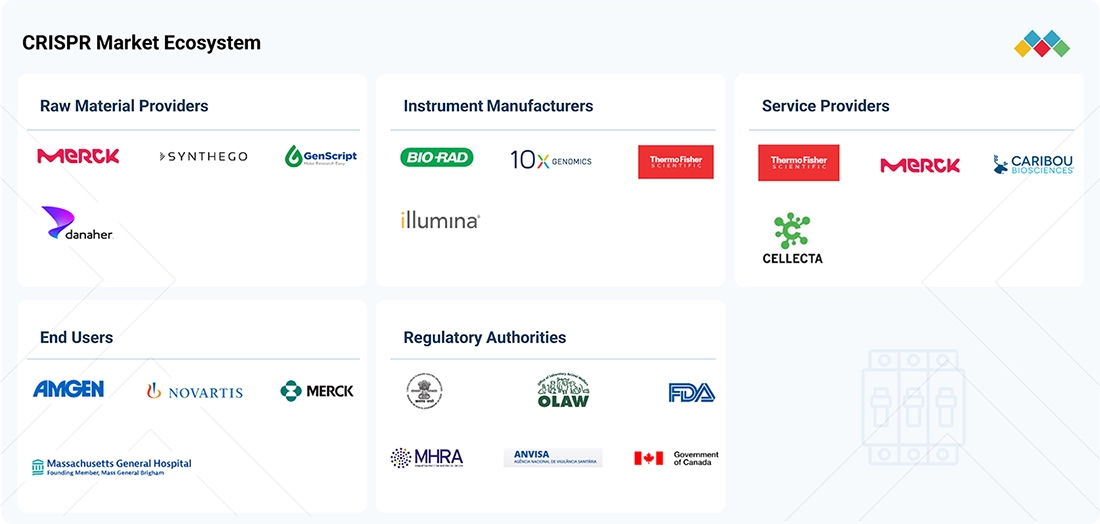
CRISPR MARKET: COMMERCIAL USE CASES ACROSS INDUSTRIES
| COMPANY | USE CASE DESCRIPTION | BENEFITS |
|---|---|---|
 |
CRISPR gene editing and large-scale CRISPR screening are used across functional genomics and drug discovery to identify and validate disease targets, develop disease models, and investigate drug-resistance mechanisms, including in oncology. | Faster target identification and validation | Improved disease models | Supports discovery of new therapeutic targets |
 |
Genome editing, including CRISPR-enabled approaches, is being applied in agricultural R&D to develop improved crop traits. Bayer highlights applications involving yield, crop quality, disease resistance, resilience, and plant architecture. | Faster development of desired crop traits | Improved resilience and disease resistance | Supports crop productivity and quality |
Logos and trademarks shown above are the property of their respective owners. Their use here is for informational and illustrative purposes only.
Related Ecosystem
Advanced Genetic Sequencing
- Polymerase Chain Reaction (PCR)
- Reagents
- Assay Kits
- Bioinformatics
- Flow Cytometry
- Thermo Fisher Scientific Inc.
- Illumina, Inc.
- Agilent Technologies, Inc.
- Qiagen N.V.
- Danaher Corporation
Key Takeaways
- Europe's CRISPR market will grow from $784.2M (2025) to $1,339.9M (2030) at an 11.2% CAGR, reflecting strong regional demand for gene-editing therapeutics.
- Europe hosts world-leading CRISPR research institutions and biotech companies, creating a competitive ecosystem that drives innovation and clinical advancement.
- Regulatory clarity from the EMA and expanding reimbursement frameworks are accelerating CRISPR therapy commercialization across Europe's healthcare systems.
- Europe's focus on rare genetic disorders and precision oncology is positioning the region as a preferred market for CRISPR-based therapeutic launches.
CRISPR Market Report Scope
| Report Metric | Details |
|---|---|
| Base Year | 2025 |
| Fastest Growing Segment | GRNA SYNTHESIS & CELL LINE DEVELOPMENT (Service) |
| Forecast Period | 2025-2030 |
| Growth Rate | CAGR of 11.2% from 2025 to 2030 |
| Largest Segment | PRODUCT (Offering) |
| Market Size Base Year (Billions) | ~USD 3.22 (2025) |
| Revenue Forecast (Billions) | ~USD 5.47 (2030) |
| Segments Covered | Offering, Type, End User, Service, Application, Product |
Europe CRISPR Market Report Segmentation
6 segment dimensions are covered across the global market.
By Offering
- Product
- Products
- Service
- Services
By Type
- Crispr Kits & Enzymes
- Crispr Libraries
- Other Products
By End User
- Academic & Research Institutes
- Other End Users
- Pharmaceutical & Biotechnological Companies
- Pharmaceutical & Biotechnology Companies
By Service
- Grna Synthesis & Cell Line Development
- Other Services
- Screening & Validation
By Application
- Agriculture
- Drug Discovery & Development
- Other Applications
By Product
- Crispr Kits & Enzymes
- Crispr Libraries
- Other Products
REST OF EUROPE: CRISPR PRODUCTS MARKET, BY END USER, 2023–2030
| Segment | 2023 | 2024 | 2025 | 2026 | 2027 | 2028 | 2029 | 2030 | CAGR (%) |
|---|---|---|---|---|---|---|---|---|---|
| ACADEMIC & RESEARCH INSTITUTES | 26.1 | 27.4 | 30.1 | 33.3 | 36.8 | 40.7 | 45 | 49.8 | 10.6 |
| OTHER END USERS | 36.1 | 37.9 | 41.7 | 46 | 50.7 | 56 | 61.9 | 68.4 | 10.4 |
| PHARMACEUTICAL & BIOTECHNOLOGY COMPANIES | 37.3 | 39.2 | 43.3 | 48 | 53.2 | 59 | 65.5 | 72.7 | 11 |
| TOTAL | 99.5 | 104.4 | 115.1 | 127.3 | 140.7 | 155.6 | 172.4 | 190.9 | 10.7 |
EUROPE: CRISPR SERVICES MARKET, BY END USER, 2023–2030
| Segment | 2023 | 2024 | 2025 | 2026 | 2027 | 2028 | 2029 | 2030 | CAGR (%) |
|---|---|---|---|---|---|---|---|---|---|
| ACADEMIC & RESEARCH INSTITUTES | 55.6 | 60.3 | 67.2 | 75.3 | 84.2 | 94.2 | 105.5 | 118.3 | 12 |
| OTHER END USERS | 60.7 | 65.6 | 72.4 | 80.3 | 88.9 | 98.4 | 109.1 | 121 | 10.8 |
| PHARMACEUTICAL & BIOTECHNOLOGY COMPANIES | 74 | 80.3 | 89.7 | 100.7 | 112.9 | 126.6 | 142.2 | 159.8 | 12.2 |
| TOTAL | 190.3 | 206.2 | 229.4 | 256.3 | 285.9 | 319.2 | 356.9 | 399.1 | 11.7 |
Target Audience
- Pharmaceutical & Biotech Companies : Strategic decision-makers need Europe-specific market data to guide R&D investments, clinical trial planning, and market entry strategies. Understanding regional dynamics enables competitive positioning and partnership identification.
- Healthcare Investors & Venture Capitalists : Investment professionals require detailed European market insights to identify high-growth opportunities, evaluate portfolio companies, and assess regional funding trends in CRISPR therapeutics.
- Regulatory & Government Affairs Teams : Compliance and policy professionals need comprehensive understanding of EMA regulations, national approval processes, and reimbursement frameworks to navigate European market requirements effectively.
- Healthcare Providers & Hospital Networks : Clinical leaders and hospital administrators require market intelligence on CRISPR therapeutic availability, adoption rates, and treatment costs across European healthcare systems for patient care planning.
- Market Research & Consulting Firms : Research professionals need granular European market data, country-level insights, and competitive intelligence to support client advisory services and strategic recommendations in the CRISPR sector.
Countries within Europe - compare and drill down
| Country | 2025 size (native) |
|---|---|
| Germany | USD 376.9 Million |
| UK | USD 284.7 Million |
| France | USD 152.1 Million |
| Italy | USD 84.8 Million |
| Spain | USD 54 Million |
| Rest Of Europe | USD 190.9 Million |
Country market size visualization
Reasons to Buy this Report
- Country-Level Market Breakdown : Access detailed market sizing for Germany, UK, France, Italy, Spain, and Rest of Europe. Understand regional variations in CRISPR adoption, regulatory environments, and investment patterns to identify high-opportunity markets.
- Competitive Landscape Intelligence : Gain insights into leading European biotech firms, their CRISPR pipelines, and market positioning. Identify key players in Germany, UK, and Switzerland driving innovation and commercialization strategies.
- Regulatory & Reimbursement Analysis : Understand EMA approval pathways, national health authority requirements, and reimbursement mechanisms across European markets. Navigate regulatory complexities to accelerate market entry and product launches.
- Investment & Partnership Opportunities : Identify funding trends, venture capital activity, and strategic partnership opportunities across European CRISPR companies. Discover collaboration potential with leading research institutions and biotech firms.
- Clinical Trial & Pipeline Insights : Track active CRISPR clinical trials, therapeutic indications in development, and commercialization timelines across Europe. Anticipate market-moving approvals and emerging treatment opportunities.
Frequently asked questions
What is the projected size of Europe's CRISPR market by 2030?
Europe's CRISPR market is projected to reach $1,339.9 million by 2030, growing from $784.2 million in 2025 at an 11.2% CAGR.
Which European countries are leading CRISPR innovation?
The United Kingdom, Germany, and Switzerland are leading CRISPR innovation in Europe, hosting major biotech firms, research institutions, and clinical trial centers.
What regulatory factors are driving CRISPR adoption in Europe?
The European Medicines Agency (EMA) is establishing clearer pathways for CRISPR therapy approval, and expanding reimbursement frameworks are supporting faster commercialization across European healthcare systems.
Which therapeutic areas are driving Europe's CRISPR market growth?
Oncology, rare genetic disorders, and immunotherapy are the primary therapeutic areas driving CRISPR adoption and market expansion in Europe.
How does Europe's CRISPR market compare to other regions?
Europe represents a significant portion of the global CRISPR market, with strong R&D capabilities, regulatory support, and clinical infrastructure positioning it as a key regional growth driver alongside North America and Asia-Pacific.
RESEARCH METHODOLOGY
This research study extensively utilized secondary sources, directories, and databases to identify and collect valuable information for analyzing the global CRISPR market. In-depth interviews were conducted with various primary respondents, including key industry participants, subject-matter experts (SMEs), C-level executives of key market players, and industry consultants, to obtain and verify critical qualitative & quantitative information and assess the growth prospects of the market. The global market size estimated through secondary research was triangulated with primary research inputs to determine the final market size.
Secondary Research
Secondary research was primarily used to identify and collect information for the comprehensive technical, market-oriented, and commercial study of the CRISPR market. The secondary sources used for this study include the Broad Institute, Innovative Genomics Institute (IGI), National Institute of Food and Agriculture, International Chromosome and Genome Society (ICGS), National Human Genome Research Institute (NHGRI), Asia Pacific Society of Human Genetics (APSHG), Genetics Society of America (GSA), European Society of Human Genetics (ESHG), Centers for Common Disease Genomics (CDDG), Center for Cellular and Molecular Biology (CCMB) in India, and the Department of Biotechnology (DBT) in India, corporate filings such as annual reports, SEC filings, investor presentations, and financial statements; research journals; press releases; and trade, business, professional associations, and among others. These sources were also used to gather key information on major players, market classification, and segmentation based on industry trends, regional/country-level markets, market developments, and technology perspectives.
Primary Research
In-depth interviews were conducted with various primary respondents, including key industry participants, subject-matter experts (SMEs), C-level executives of key market players, and industry consultants, to obtain and verify critical qualitative & quantitative information and assess the market’s prospects. Various primary sources from the supply & demand sides of the market were interviewed to obtain qualitative and quantitative information.
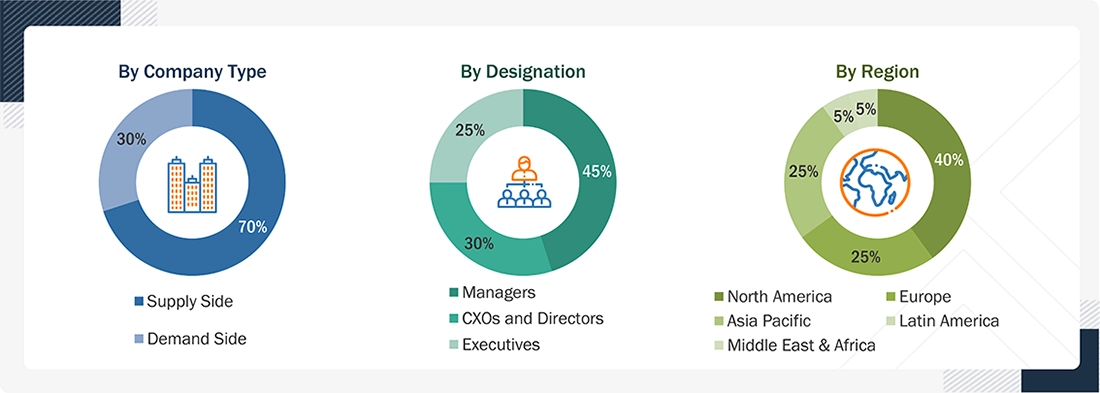
To know about the assumptions considered for the study, download the pdf brochure
Market Size Estimation
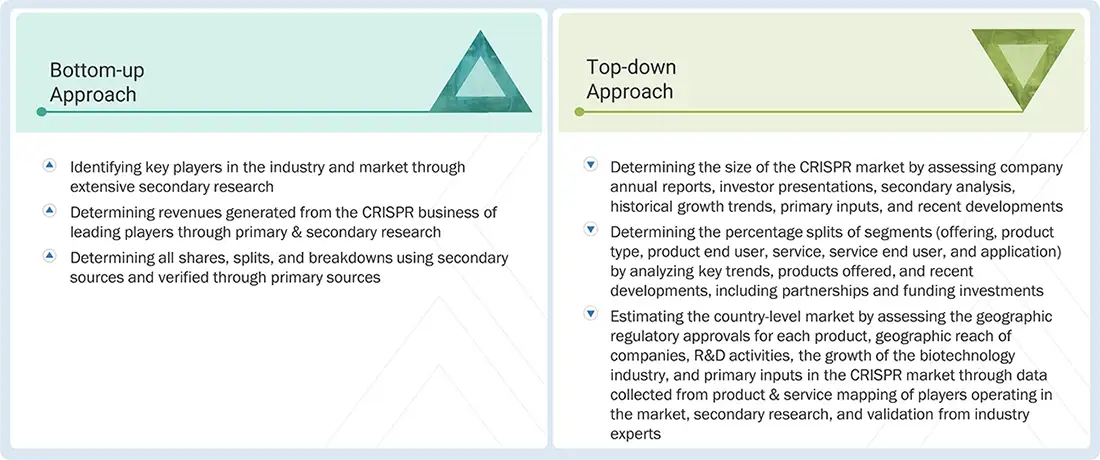
The top-down and bottom-up approaches were used to estimate & validate the total size of the CRISPR market. These methods were also used extensively to estimate the size of various market segments.
Data Triangulation
After evaluating the overall market size through the market size estimation process, the total market was divided into several segments and subsegments. Data triangulation and market breakdown procedures were used, whenever applicable, to complete the overall market engineering process and obtain precise statistics for all segments and subsegments. The data was triangulated by analyzing various factors and trends from the demand and supply sides.
Market Definition
Clustered Regularly Interspaced Short Palindromic Repeats (CRISPR) is a revolutionary tool used to edit genes in a way that resembles traditional GMO techniques. The use of the Cas9 enzyme differentiates CRISPR from other forms of genetic modification. CRISPR edits and rearranges genes by cutting out damaged or unwanted DNA, allowing the remaining DNA to be rearranged in a new way.
The report provides a comprehensive analysis of the CRISPR market, covering a wide range of products & services such as CRISPR kits & enzymes, CRISPR libraries, gRNA synthesis, cell line development, and screening & validation.
Key Stakeholders
- Genome editing/Genome engineering product manufacturers
- CRISPR editing/Genome engineering product manufacturers
- Suppliers and distributors of genomic instruments/systems and consumables
- Contract manufacturing organizations
- Pharmaceutical and biotechnology companies
- Diagnostic centers and medical colleges
- Contract research organizations
- Government associations and research institutes
- Regulatory authorities
- Business research firms
Report Objectives
- To define, describe, and forecast the CRISPR market based on offering, product type, product end user, service, service end user, and application
- To provide detailed information regarding the major factors influencing the market growth (such as drivers, restraints, opportunities, and challenges)
- To strategically analyze micromarkets concerning individual growth trends, prospects, and contributions to the overall CRISPR market
- To analyze the opportunities in the market for stakeholders and provide details of the competitive landscape for market leaders
- To forecast the size of the market segments concerning six main regions, namely, North America, Europe, the Asia Pacific, Latin America, the Middle East, and Africa
- To strategically profile the key players in the CRISPR market and comprehensively analyze their core competencies and market rankings
- To track and analyze competitive developments such as product launches, acquisitions, expansions, agreements, partnerships, and collaborations in the CRISPR market
- To benchmark players within the CRISPR market using the “Company Evaluation Matrix” framework, which analyzes market players based on various parameters within the broad categories of business and product/service strategy
Available customizations:
With the given market data, MarketsandMarkets offers customizations per the company’s specific needs. The following customization options are available for this report:
Geographical Analysis
- Further breakdown of the Rest of Europe CRISPR market, by country
- Further breakdown of the Rest of Asia Pacific CRISPR market, by country
- Further breakdown of the Rest of Latin America CRISPR market, by country
- Further breakdown of the Rest of Middle East CRISPR market, by country
Company Information
- Detailed analysis and profiling of additional market players (up to five)
Get the Full CRISPR Market Report
Full forecast, segment splits, and company analysis for all CRISPR Market.
- US CRISPR Market
- Canada CRISPR Market
- Germany CRISPR Market
- UK CRISPR Market
- France CRISPR Market
- Italy CRISPR Market
- Spain CRISPR Market
- China CRISPR Market
- Japan CRISPR Market
- India CRISPR Market
- Brazil CRISPR Market
- Rest Of Europe CRISPR Market
- Rest Of Asia Pacific CRISPR Market
- Rest Of Latin America CRISPR Market
Need a Tailored Report?
Customize this report to your needs
Get 10% FREE Customization
Customize This Report
