
India Digital Transformation Market (2025-2030)

The India Digital Transformation Market was valued at $46420 Million in 2025 and projected to reach to $99370 Million by 2030, representing a compound annual growth rate of 13.5%. India's digital transformation market is poised for accelerated expansion, driven by government initiatives, rising digital literacy, and increasing enterprise investment in cloud and AI technologies.


| Market Size in | USD 26.32 MN |
| Market Forecast in | |
| CAGR | |
| Forecast Period | |
| Units Considered | Value (USD MN) |
India Digital Transformation Market Trends and Insights
- This 13.5% compound annual growth rate reflects India's accelerating adoption of cloud computing, artificial intelligence, and enterprise automation across sectors.
- India's digital transformation momentum is driven by increasing government digitalization initiatives, rising smartphone penetration, and enterprise modernization efforts among large corporations and SMEs. The Indian market benefits from a large talent pool in software development and IT services, positioning India as a hub for digital innovation.
- India's competitive advantage in cost-effective digital solutions attracts multinational investments and supports domestic startups.
- By 2030, India is expected to capture significant market share within Asia Pacific's digital transformation landscape, with enterprises across banking, retail, healthcare, and manufacturing sectors prioritizing digital-first strategies. India's regulatory environment, including data localization requirements and emerging cybersecurity frameworks, shapes digital transformation investments.
- India's growing middle class and digital literacy create sustained demand for cloud services, e-commerce platforms, and digital payment solutions, reinforcing the market's expansion trajectory through 2030..
Key Market Statistics
- CAGR (2025-2030) 13.5% CAGR
- Market Size, 2025 ~USD 46420 Million
- Forecast, 2030 ~USD 99370 Million
- Country India
India Digital Transformation Market Overview
Market Valuation & Growth :
India's digital transformation market is valued at $46.42 billion in 2025, with a robust 13.5% CAGR projected through 2030, significantly outpacing the global growth rate of 9.1%.
Government Digital Initiatives :
Government-backed programs like Digital India and Make in India are accelerating enterprise adoption of digital technologies across public and private sectors, creating substantial market opportunities.
Technology Adoption Drivers :
Cloud computing, artificial intelligence, and enterprise automation are becoming mainstream across Indian enterprises, driven by cost efficiency, competitive pressures, and digital-first business models.
Sectoral Expansion :
Digital transformation is spreading beyond IT services to banking, healthcare, retail, manufacturing, and government sectors, creating diverse growth opportunities across India's economy.
India Digital Transformation Market Dynamics
- The 13.5% CAGR reflects India's position as a global digital innovation hub, with growing demand from both multinational corporations and domestic enterprises seeking modernization.
- By 2030, the market is expected to reach $99.37 billion, nearly doubling from 2025 levels. Key growth catalysts include the proliferation of 5G infrastructure, expanding startup ecosystems, and increasing venture capital funding for digital solutions.
- India's young demographic, coupled with rising smartphone penetration and digital payment adoption, creates a favorable environment for digital transformation services.
- Enterprises across sectors are prioritizing digital-first strategies to enhance operational efficiency, customer engagement, and competitive positioning in an increasingly digital economy..
Market Ecosystem
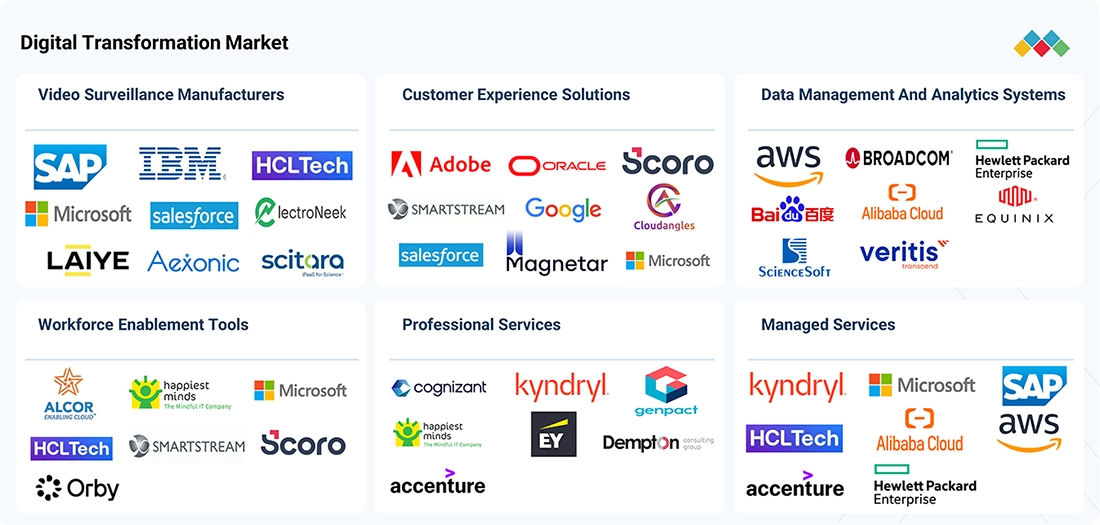
DIGITAL TRANSFORMATION MARKET: COMMERCIAL USE CASES ACROSS INDUSTRIES
| COMPANY | USE CASE DESCRIPTION | BENEFITS |
|---|---|---|
 |
Air India undertook a cloud-led digital transformation by migrating critical workloads, applications, databases, and networking systems from its legacy data centers to a cloud infrastructure. The initiative supported modernization of its IT environment, improved system performance, and enabled the use of advanced analytics and AI platforms across airline operations. | Achieved approximately 20% cost savings through cloud resource optimization and infrastructure right-sizing. The migration also improved system performance, scalability, security, and customer experience. |
 |
Apollo Hospitals implemented a unified data platform to address fragmented systems, data delays, and limited operational visibility across its healthcare network. The initiative enabled clinical teams to access integrated operational information, coordinate resources, and prioritize patient care using a more comprehensive view of hospital operations. | Reduced manual work by 25% and increased order conversions by 60%. The transformation also improved data visibility, operational coordination, and resource allocation across the healthcare network. |
 |
Voltas modernized its legacy IT environment by migrating more than 250 on-premises VMware applications to a cloud infrastructure and transitioning to SAP-based enterprise applications. The initiative was undertaken to improve infrastructure scalability, strengthen security, and support business continuity while modernizing enterprise applications. | Expanded cloud adoption from 0% in 2022 to 60% in 2024. The migration was completed without operational disruption, while improving infrastructure agility, security, and business continuity. |
 |
Cynergy Bank transformed its customer service ecosystem by addressing fragmented knowledge bases, manual processes, limited customer insights, and inadequate integration between front-office and back-office systems. The initiative involved digitizing workflows and improving contact center and back-office operations through AI, automation, and cloud-enabled technologies. | Reduced customer complaints by more than 50%, improved workforce optimization by 8%, and enhanced overall customer experience scores by 25%. |
Logos and trademarks shown above are the property of their respective owners. Their use here is for informational and illustrative purposes only.
Related Ecosystem
Key Takeaways
- India's digital transformation market will more than double from $46.42 billion in 2025 to $99.37 billion by 2030, driven by enterprise modernization and government digitalization.
- India's 13.5% CAGR significantly outpaces global growth, reflecting accelerated cloud adoption, AI integration, and automation across banking, retail, and manufacturing sectors.
- India's cost-competitive IT services ecosystem and large developer talent pool position the country as a preferred destination for digital transformation outsourcing and innovation.
- India's regulatory frameworks around data localization and cybersecurity are shaping enterprise digital strategies, creating both compliance challenges and market opportunities through 2030.
Digital Transformation Market Report Scope
| Report Metric | Details |
|---|---|
| Base Year | 2025 |
| Fastest Growing Segment | INFRASTRUCTURE MODERNIZATION (Professional Service) |
| Forecast Period | 2025–2030 |
| Growth Rate | CAGR of 9.1% from 2025 to 2030 |
| Largest Segment | LARGE ENTERPRISES (Organization Size) |
| Market Size Base Year (Billions) | ~USD 1102.97 (2025) |
| Revenue Forecast (Billions) | ~USD 1704.86 (2030) |
| Segments Covered | Offering, Solution, Service, Professional Service, Transformation Focus Area, Technology, Organization Size, Vertical |
India Digital Transformation Market Report Segmentation
8 segment dimensions are covered across the global market.
By Offering
- Services
- Solution
- Solutions
By Solution
- Customer Experience Solutions
- Data Management & Analytics Systems
- Process Automation Platforms
- Workforce Enablement Tools
By Service
- Managed
- Professional
By Professional Service
- Application Modernization
- Infrastructure Modernization
- Support & Maintenance
- System Integration & Implementation
- Training, Strategy, And Consulting
By Transformation Focus Area
- Customer-Centric
- Financial
- Operational
- R&D
- R&D Transformation
- Workforce
By Technology
- AI & Analytics
- Blockchain
- Cloud Computing
- Cybersecurity
- Internet Of Things (IoT)
- Other Technologies
By Organization Size
- Large Enterprises
- Smes
By Vertical
- Bfsi
- Construction & Real Estate
- Education
- Energy & Utilities
- Government & Defense
- Healthcare, Life Sciences, And Pharmaceuticals
- It & Ites
- Manufacturing
- Media & Entertainment
- Other Verticals
- Other Verticals (Travel & Hospitality, Agriculture)
- Retail & Ecommerce
- Telecommunications
- Transportation & Logistics
Target Audience
- Enterprise IT Decision Makers : CIOs and IT directors in Indian enterprises need market insights to justify digital transformation investments, benchmark against peers, and align technology strategies with market trends.
- Technology Solution Providers : Software vendors, cloud providers, and consulting firms require India-specific market data to develop localized offerings, identify growth segments, and optimize go-to-market strategies.
- Investment & Private Equity Firms : Investors evaluating opportunities in India's digital economy need validated market sizing, growth projections, and sector analysis to support funding decisions and portfolio strategy.
- Government & Policy Bodies : Indian government agencies and policy makers use market research to assess digital transformation progress, evaluate program effectiveness, and guide future digital economy initiatives.
- Market Analysts & Consultants : Research professionals and management consultants require comprehensive India market data to support client advisory, competitive analysis, and strategic planning engagements.
Key Companies in the India Digital Transformation Market
| Company | HQ | Ownership | Strongest segments |
|---|---|---|---|
| BMC SOFTWARE INC. | United States | Private Company | Enterprise Service Management (ESM) / ITSM,Mainframe Service Management (MSM),Control-M Workload Automation and Orchestration, |
| OOREDOO | Qatar | Public Company | Mobile connectivity (voice and data),Fixed broadband and connectivity,Enterprise ICT and cloud (hosting, security, SD-WAN, IoT), |
| NUCLEUS SOFTWARE | India | Public Company | FinnOne Neo (Lending Suite),FinnAxia (Transaction Banking),Digital Payments & PaySe, |
| BITTIUM CORPORATION | Finland | Public Company | Defense & Security (Tough Mobile, SDR, Tactical Networks, VoIP, Secure Suite),Medical (Faros, OmegaSnap, Cardiac Navigator, MedicalSuite, Respiro, BrainStatus, NeurOne),Engineering Services (product design, development, testing, certification, ramp-up), |
| BOOZ ALLEN HAMILTON | United States | Public Company | AI and Advanced Analytics Solutions,Cybersecurity and Cyber Operations,Cloud, Data Platforms, and Software Modernization, |
| ZENSAR TECHNOLOGIES LTD | India | Public Company | Digital and Application Services,Data Engineering and Analytics,Cloud Infrastructure and Security, |
| ALTRAN | France | Private Company | Engineering & R&D Services,Organization & IT Systems Consulting,Embedded Systems & Next-Gen Connectivity Projects, |
| NETSCOUT SYSTEMS, INC | United States | Public Company | Service Assurance & nGeniusONE Platform (including ISNG, vSTREAM, Infinistream, test access points),DDoS & Arbor Cybersecurity (Sightline, TMS, Edge Defense, Omnis Cyber Intelligence),Omnis Insights & Observability / Analytics Integrations, |
| LARSEN & TOUBRO LTD. | India | Public Company | Infrastructure Projects,Energy Projects,Hi-Tech Manufacturing, |
| PCCW | Hong Kong | Public Company | Telecom Connectivity (fixed, mobile, broadband, international),Enterprise Solutions, Outsourcing, and Managed Services,Media and OTT (Viu, TV, advertising), |
| SWISSCOM AG | Switzerland | Public Company | Consumer mobile, broadband, and TV,Enterprise telecom & ICT services,Wholesale, infrastructure, and trust services, |
| PERSISTENT SYSTEMS | India | Public Company | Software Engineering & Product Development,Cloud & Infrastructure / CloudOps,CX & Salesforce-led Transformation, |
| APPLE INC | United States | Public Company | iPhone,Mac,iPad, |
BMC SOFTWARE INC.
BMC SOFTWARE INC. is a private software company established in 1980 in the United States with 6,700 employees.
OOREDOO
OOREDOO is a public telecommunications company based in Qatar, founded in 1987 and operating with 16,717 employees.
NUCLEUS SOFTWARE
NUCLEUS SOFTWARE is a public software company established in India in 1986, employing 1,917 professionals.
BITTIUM CORPORATION
BITTIUM CORPORATION is a public Finnish technology company founded in 1985 with 528 employees.
BOOZ ALLEN HAMILTON
BOOZ ALLEN HAMILTON is a public consulting and engineering services firm founded in 1914 in the United States, employing 31,500 people.
ZENSAR TECHNOLOGIES LTD
ZENSAR TECHNOLOGIES LTD is a public Indian information technology services company founded in 1963 with 10,066 employees.
ALTRAN
ALTRAN is a private engineering and technology consulting company founded in France in 1970, employing 50,124 professionals.
NETSCOUT SYSTEMS, INC
NETSCOUT SYSTEMS, INC is a public software and analytics company founded in 1984 in the United States with 2,063 employees.
LARSEN & TOUBRO LTD.
LARSEN & TOUBRO LTD. is a public Indian multinational conglomerate founded in 1938, employing 55,662 people across engineering and construction sectors.
PCCW
PCCW is a public telecommunications and technology services company based in Hong Kong, founded in 1925 with 14,600 employees.
SWISSCOM AG
SWISSCOM AG is a public Swiss telecommunications company founded in 1998, operating with 23,073 employees.
PERSISTENT SYSTEMS
PERSISTENT SYSTEMS is a public Indian information technology services company founded in 1990 with 22,205 employees.
APPLE INC
APPLE INC is a public technology company founded in 1976 in the United States, employing 166,000 people globally.
Reasons to Buy this Report
- Market Size & Growth Validation : Obtain precise market valuation data for India ($46.42B in 2025) and verified forecasts through 2030, enabling accurate business planning and investment decisions in this high-growth market.
- Competitive Benchmarking : Compare India's 13.5% CAGR against global 9.1% growth to identify competitive advantages and market positioning opportunities specific to the Indian digital transformation landscape.
- Sector-Specific Insights : Access detailed analysis of digital transformation adoption across Indian sectors including banking, healthcare, retail, and manufacturing to identify high-potential vertical markets.
- Government Policy Impact : Understand how Digital India and Make in India initiatives influence market dynamics, regulatory environment, and enterprise spending patterns to inform market entry and expansion strategies.
- Investment & Partnership Strategy : Leverage comprehensive India market data to identify partnership opportunities, acquisition targets, and investment priorities aligned with the country's digital transformation trajectory.
Frequently asked questions
What is the projected size of India's digital transformation market by 2030?
India's digital transformation market is projected to reach $99.37 billion by 2030, more than doubling from $46.42 billion in 2025.
What is India's digital transformation market CAGR?
India's digital transformation market is growing at a compound annual growth rate of 13.5% from 2025 to 2030.
Which sectors are driving digital transformation growth in India?
Banking, retail, healthcare, manufacturing, and e-commerce sectors are primary drivers of India's digital transformation adoption and investment.
Why is India a hub for digital transformation services?
India benefits from a large skilled IT workforce, cost-competitive solutions, established software development infrastructure, and growing domestic demand for digital services.
What regulatory factors impact India's digital transformation market?
India's data localization requirements, cybersecurity frameworks, and government digitalization policies significantly influence enterprise digital transformation strategies and investments.
RESEARCH METHODOLOGY
The research methodology for the global digital transformation market involved extensive secondary research, supported by primary interviews and market engineering to identify, collect, validate, and analyze information relevant to the market. The study covered digital transformation solutions and services, including process automation platforms, customer experience solutions, data management and analytics systems, workforce enablement tools, professional services, and managed services. In-depth interviews were conducted with industry participants, including technology vendors, cloud service providers, enterprise software providers, system integrators, IT consulting firms, managed service providers, and enterprise end users. Discussions with senior executives, product managers, technology specialists, and industry consultants helped validate qualitative and quantitative information, assess technology adoption patterns, and evaluate market prospects across different industries and regions.
Secondary Research
In the secondary research process, various authoritative sources were referred to for identifying and collecting information for the study. The secondary sources included annual reports, investor presentations, financial statements, SEC filings, company press releases, product announcements, corporate websites, product documentation, technical white papers, developer documentation, and official case studies published by companies operating in the digital transformation ecosystem. Information was collected from leading technology providers, including Microsoft, IBM, SAP, Oracle, Google, Salesforce, Adobe, Amazon Web Services (AWS), HPE, HCLTech, Broadcom, and Cisco, to understand their product portfolios, technology developments, strategic partnerships, acquisitions, and business expansion initiatives.
Secondary research also involved reviewing publications, reports, and technical documentation from recognized technology organizations and industry associations, including the International Organization for Standardization (ISO), International Electrotechnical Commission (IEC), National Institute of Standards and Technology (NIST), Organisation for Economic Co-operation and Development (OECD), European Commission, World Economic Forum (WEF), and International Telecommunication Union (ITU). Government publications and regulatory resources related to digital infrastructure, cloud adoption, cybersecurity, data protection, artificial intelligence, and enterprise technology modernization were also examined. These sources were supplemented with official publications and technical documentation covering cloud computing, artificial intelligence and analytics, cybersecurity, blockchain, Internet of Things (IoT), robotic process automation, digital twins, enterprise applications, and digital workplace technologies.
The secondary research was used to obtain key information about the digital transformation industry's value chain, market structure, monetary chain, ecosystem participants, market classification, and segmentation according to technology adoption and industry requirements. It also helped identify the overall pool of key solution and service providers, their competitive positioning, product offerings, revenue contributions, strategic developments, and regional market dynamics. The research further examined enterprise adoption patterns across BFSI, retail and e-commerce, IT/ITES, media and entertainment, manufacturing, healthcare and life sciences, energy and utilities, government and defense, telecommunications, education, transportation and logistics, and construction and real estate.
Primary Research
In the primary research process, a diverse range of stakeholders from both the supply and demand sides of the digital transformation ecosystem were interviewed to gather qualitative and quantitative insights specific to the market. On the supply side, key industry participants, including chief executive officers (CEOs), vice presidents (VPs), marketing directors, product managers, technology specialists, and business development executives from companies offering digital transformation solutions and services, were consulted. Additionally, system integrators, IT consulting firms, cloud service providers, enterprise software vendors, professional service providers, and managed service providers were included in the study. On the demand side, input from CIOs, CTOs, chief digital officers (CDOs), IT directors, digital transformation heads, procurement managers, and business unit leaders of enterprise end users was collected to understand technology adoption patterns, investment priorities, implementation requirements, and challenges across targeted industries.
The primary research process considered all major parameters affecting the digital transformation market, including technological advancements, evolving enterprise requirements, and emerging use cases across cloud computing, AI and analytics, cybersecurity, blockchain, IoT, robotic process automation, digital twins, and enterprise applications. Discussions also covered digital strategy development, legacy infrastructure modernization, cloud migration, systems integration, application modernization, workflow automation, customer experience management, workforce enablement, data governance, cybersecurity, and managed IT services. Each factor was analyzed and validated through primary interviews to obtain quantitative and qualitative data related to market demand, technology adoption, implementation priorities, and enterprise spending patterns.
Once the initial phase of market engineering was completed, including detailed calculations for market statistics, segment-specific growth forecasts, and data triangulation, an additional round of primary research was undertaken. This step was essential for refining and validating critical data points, including the adoption of digital transformation solutions and services, technology-wise demand, enterprise spending patterns, vertical-wise adoption, competitive developments, and regional growth trends. The discussions also helped validate market dynamics such as drivers (increasing enterprise investments in cloud computing, AI adoption, and business process automation), restraints (high implementation costs, integration complexity, and return-on-investment concerns), opportunities (generative AI, agentic AI, intelligent automation, and connected enterprise platforms), and challenges (legacy system integration, data silos, cybersecurity risks, and shortage of skilled professionals). The final findings were cross-verified with secondary research to improve the reliability and consistency of the market estimates.
Breakup of primary profiles
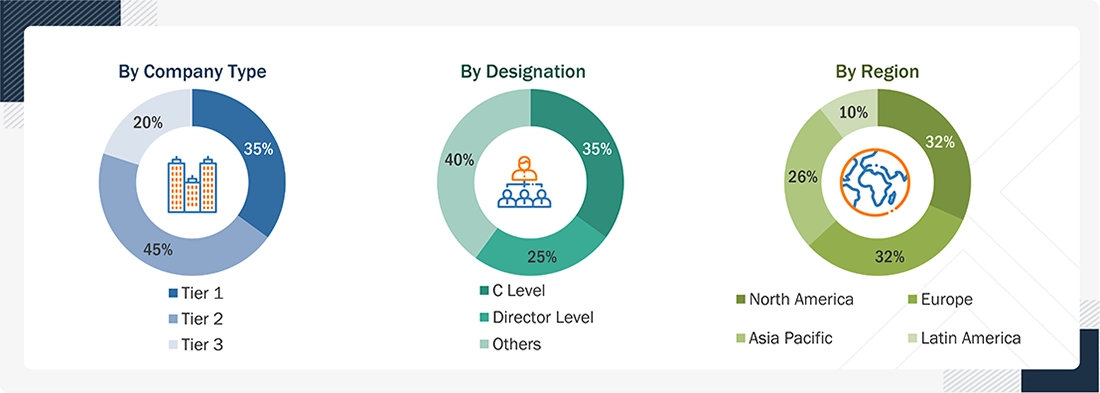
Note: Tier 1 companies’ revenues are more than USD 10 billion; tier 2 companies’ revenues range between USD 1 and 10 billion; and tier 3 companies’ revenues range between USD 500 million and USD 1 billion. Other designations include sales managers, marketing managers, and product managers.
Source: Industry Experts
To know about the assumptions considered for the study, download the pdf brochure
Market Size Estimation
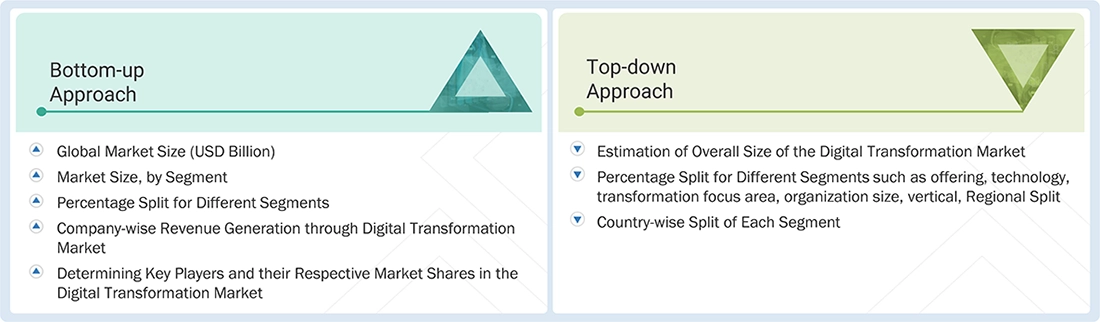
The top-down and bottom-up approaches were employed to estimate and forecast the digital transformation market, as well as its dependent submarkets. This multi-layered analysis was further reinforced through data triangulation, which incorporated primary and secondary research inputs. The market figures were also validated against the existing MarketsandMarkets repository for accuracy.
Digital Transformation Market: Top-Down and Bottom-Up Approach
Data Triangulation
After determining the overall market size using the market size estimation processes as explained above, the market was split into several segments and subsegments. Data triangulation and market breakup procedures were employed, wherever applicable, to complete the overall market engineering process and determine the exact statistics of each market segment and subsegment. The overall market size was used in the top-down procedure to estimate the size of other individual markets via percentage splits of the market segmentation.
Market Definition
The digital transformation market encompasses the adoption and implementation of digital technologies, solutions, and services by organizations to modernize business operations, improve operational efficiency, enhance customer experiences, and enable data-driven decision-making. It includes technologies such as artificial intelligence (AI) and analytics, cloud computing, blockchain, cybersecurity, and the Internet of Things (IoT), along with solutions for process automation, customer experience management, data management, and workforce enablement. The market also covers professional and managed services that support digital strategy, system integration, cloud migration, application modernization, and ongoing technology management. Digital transformation enables organizations to integrate digital capabilities across business functions, optimize workflows, improve business agility, and develop innovative business models.
Key Stakeholders
- Digital Transformation Software Providers
- Cybersecurity Firms
- Business Analysts
- Cloud Service Providers
- Consulting Service Providers
- Enterprise End Users
- Distributors and Value-added Resellers (VARs)
- Government Agencies
- Independent Software Vendors (ISV)
- Managed Service Providers
- Market Research and Consulting Firms
- Support & Maintenance Service Providers
- System Integrators (SIs)/Migration Service Providers
- Technology Providers
Report Objectives
- To define, describe, and forecast the digital transformation market by offering, technology, transformation focus area, organization size, vertical, and region
- To provide detailed information related to major factors (drivers, restraints, opportunities, and industry-specific challenges) influencing market growth
- To analyze micro markets with respect to individual growth trends, prospects, and their contribution to the total market
- To analyze the opportunities in the market for stakeholders by identifying the high-growth segments of the digital transformation market
- To analyze opportunities in the digital transformation market and provide details of the competitive landscape for stakeholders and market leaders
- To forecast the market size of segments for the five main regions: North America, Europe, Asia Pacific, the Middle East & Africa, and Latin America
- To profile the key players and comprehensively analyze their market ranking and core competencies
- To analyze competitive developments, such as partnerships, product launches, mergers, and acquisitions, in the digital transformation market
Available customizations:
With the given market data, MarketsandMarkets offers customizations to meet the company’s specific needs. The following customization options are available for the report:
Product/Brand Comparative Analysis
- Brand comparative analysis of additional vendors, including a detailed comparison of the product portfolio of each company
Geographic Analysis
- Inclusion of additional European countries, with breakup by offering, technology, transformation focus area, organization size, and vertical segments
- Inclusion of additional Asia Pacific countries, with breakup by offering, technology, transformation focus area, organization size, and vertical segments
- Breakup of Middle East & Africa by countries, with breakup by offering, technology, transformation focus area, organization size, and vertical segments
- Breakup of Latin America by countries, with breakup by offering, technology, transformation focus area, organization size, and vertical segments
Company Informarion
-
Detailed analysis and profiling of additional market players (up to five)
Get the Full Digital Transformation Market Report
Full forecast, segment splits, and company analysis for all Digital Transformation Market.
- Canada Digital Transformation Market
- US Digital Transformation Market
- UK Digital Transformation Market
- Germany Digital Transformation Market
- Finland Digital Transformation Market
- Sweden Digital Transformation Market
- China Digital Transformation Market
- South Korea Digital Transformation Market
- Singapore Digital Transformation Market
- Saudi Arabia Digital Transformation Market
- UAE Digital Transformation Market
- South Africa Digital Transformation Market
- Brazil Digital Transformation Market
- Mexico Digital Transformation Market
- Rest Of Europe Digital Transformation Market
Need a Tailored Report?
Customize this report to your needs
Get 10% FREE Customization
Customize This Report
