
South America Electric Heat Tracing Market (2024-2029)

The South America Electric Heat Tracing Market was valued at $82.6 Million in 2024 and projected to reach to $100.7 Million by 2029, representing a compound annual growth rate of 4.0%. South America's electric heat tracing market is positioned for sustained growth as industrial sectors prioritize operational reliability and infrastructure modernization.


| Market Size in | USD 26.32 MN |
| Market Forecast in | |
| CAGR | |
| Forecast Period | |
| Units Considered | Value (USD MN) |
South America Electric Heat Tracing Market Trends and Insights
- This 4.0% compound annual growth rate reflects South America's increasing adoption of heat tracing solutions across industrial, oil & gas, and chemical processing sectors.
- South America's market expansion is driven by infrastructure modernization, rising energy efficiency standards, and growing demand for process temperature management in emerging economies throughout the region. The electric heat tracing market in South America is characterized by moderate but consistent demand growth compared to global benchmarks.
- South America's industrial base, particularly in Brazil and other major economies, continues to invest in advanced thermal management technologies.
- Between 2024 and 2029, South America is expected to see incremental market penetration as end-users prioritize operational reliability and cost optimization in their heating systems..
Key Market Statistics
- CAGR (2024-2029) 4.0% CAGR
- Market Size, 2024 ~USD 82.6 Million
- Forecast, 2029 ~USD 100.7 Million
- Country South America
South America Electric Heat Tracing Market Overview
Steady Regional Growth :
South America's electric heat tracing market is valued at $82.6 million in 2024, with a projected CAGR of 4.0% through 2029, reaching $100.7 million. This consistent growth outpaces many emerging markets in the region.
Industrial Sector Expansion :
Increasing adoption across oil & gas, chemical processing, and industrial manufacturing sectors in South America is driving demand for reliable heat tracing solutions to maintain operational efficiency in harsh climates.
Infrastructure Modernization :
South American countries are investing heavily in infrastructure upgrades and industrial facility renovations, creating significant opportunities for electric heat tracing system installations and replacements.
Climate & Geographic Factors :
South America's diverse climate zones and challenging geographic terrain necessitate robust heat tracing solutions for pipeline protection, freeze prevention, and temperature maintenance across remote industrial operations.
South America Electric Heat Tracing Market Dynamics
- The region's oil & gas and chemical processing industries are increasingly adopting advanced heat tracing technologies to optimize production efficiency and reduce downtime.
- Investment in industrial facilities and pipeline infrastructure across major economies like Brazil, Argentina, and Chile is expected to accelerate market expansion through 2029. The 4.0% CAGR reflects South America's gradual but consistent market maturation, supported by rising energy costs and regulatory compliance requirements.
- Regional manufacturers and distributors are expanding their product portfolios to meet local demand, while international players are establishing stronger market presence.
- Emerging opportunities in renewable energy infrastructure and industrial automation will further drive adoption of electric heat tracing solutions throughout the forecast period..
Market Ecosystem
Related Ecosystem
Electrical System And Components
- Natural Language Processing (NLP)
- Sensors
- Machine Learning
- Temperature Sensors
- Actuators
- ABB India Limited
- Siemens ag
- SCHNEIDER ELECTRIC SE
- Eaton Corporation plc
- Lenovo
Industrial Automation
- Sensors
- Image Sensors
- Manufacturing Execution System (MES)
- Actuators
- Flow Sensors
- Siemens ag
- ABB India Limited
- Emerson Electric Co.
- HONEYWELL INTERNATIONAL INC.
- SCHNEIDER ELECTRIC SE
Key Takeaways
- South America's electric heat tracing market is valued at $82.6 million in 2024 and will reach $100.7 million by 2029, representing a 4.0% CAGR.
- South America's market growth is driven by industrial modernization, oil & gas infrastructure expansion, and increased focus on energy efficiency across the region.
- South America's growth rate of 4.0% is below the global average of 7.9%, indicating a more conservative adoption pace in the region.
- South America's market expansion is supported by rising demand from chemical processing, food & beverage, and pharmaceutical industries requiring reliable thermal management.
Electric Heat Tracing Market Report Scope
| Report Metric | Details |
|---|---|
| Base Year | 2024 |
| Fastest Growing Segment | OIL & GAS (Vertical 2020-2023) |
| Forecast Period | 2024-2029 |
| Growth Rate | CAGR of 7.9% from 2024 to 2029 |
| Largest Segment | FREEZE PROTECTION AND PROCESS TEMPERATURE MAINTENANCE (Application) |
| Market Size Base Year (Billions) | ~USD 2.94 (2024) |
| Revenue Forecast (Billions) | ~USD 4.3 (2029) |
| Segments Covered | Component, Type 2020-2023, Type 2024-2029, Vertical, Application, Vertical 2020-2023, Vertical 2024-2029, Type, North America, Europe, Asia Pacific, Row |
South America Electric Heat Tracing Market Report Segmentation
12 segment dimensions are covered across the global market.
By Component
- Control And Monitoring Systems
- Electric Heat Tracing Cables
- Other Components
- Power Connection Kits
- Thermal Insulation Materials
By Type 2020-2023
- Constant Wattage
- Mineral Insulated
- Self Regulating
- Skin Effect
By Type 2024-2029
- Constant Wattage
- Mineral Insulated
- Self Regulating
- Skin Effect
By Vertical
- Chemicals
- Commercial
- Food & Beverages
- Oil & Gas
- Other Verticals
- Pharmaceuticals
- Power & Energy
- Residential
- Water & Wastewater Management
By Application
- Floor Heating
- Freeze Protection And Process Temperature Maintenance
- Other Applications
- Roof And Gutter De-Icing
By Vertical 2020-2023
- Chemicals
- Commercial
- Food & Beverages
- Oil & Gas
- Other Verticals
- Pharmaceuticals
- Power & Energy
- Residential
- Water & Wastewater Management
By Vertical 2024-2029
- Chemicals
- Commercial
- Food & Beverages
- Oil & Gas
- Other Verticals
- Pharmaceuticals
- Power & Energy
- Residential
- Water & Wastewater Management
By Type
- Constant Wattage
- Mineral Insulated
- Self Regulating
- Skin Effect
By North America
- Canada
- Mexico
- US
By Europe
- France
- Germany
- Rest Of Europe
- Russia
- UK
By Asia Pacific
- China
- Japan
- Rest Of Asia Pacific
- South Korea
By Row
- Africa
- Middle East
- South America
Target Audience
- Industrial Equipment Manufacturers : South American manufacturers need regional market data to develop localized heat tracing products, understand competitive positioning, and identify growth opportunities in oil & gas and chemical sectors.
- Oil & Gas Operators : Regional oil & gas companies require market insights to evaluate heat tracing technology investments, benchmark costs, and plan infrastructure upgrades across South American operations.
- System Integrators & Distributors : Local and international distributors need South America-specific market intelligence to optimize inventory, identify high-growth segments, and develop targeted go-to-market strategies for the region.
- Chemical & Processing Facilities : South American chemical and industrial processing plants need data on heat tracing solutions to improve operational efficiency, ensure regulatory compliance, and reduce production downtime.
- Investment & Strategy Consultants : Business consultants and investors require detailed South America market analysis to assess investment opportunities, evaluate market entry strategies, and support M&A decisions in the heat tracing sector.
Reasons to Buy this Report
- Regional Market Sizing & Forecasts : Obtain precise market valuations specific to South America ($82.6M in 2024) with detailed 5-year forecasts, enabling accurate budget allocation and investment planning for regional operations.
- Sector-Specific Growth Drivers : Understand which South American industries (oil & gas, chemicals, industrial) are driving heat tracing adoption, allowing targeted sales strategies and product development aligned with regional demand patterns.
- Competitive Landscape Intelligence : Gain insights into regional market dynamics, key players, and competitive positioning specific to South America, helping identify partnership opportunities and market entry strategies.
- Infrastructure Investment Trends : Access data on South American infrastructure modernization initiatives and industrial facility upgrades that create immediate opportunities for heat tracing system deployments and replacements.
- Risk & Opportunity Assessment : Evaluate regional economic factors, regulatory environments, and climate-related challenges specific to South America to make informed decisions on market expansion and resource allocation.
Frequently asked questions
What is the current size of South America's electric heat tracing market?
South America's electric heat tracing market was valued at $82.6 million in 2024 and is projected to grow to $100.7 million by 2029.
What is the expected growth rate for South America's electric heat tracing market?
South America's electric heat tracing market is expected to grow at a compound annual growth rate (CAGR) of 4.0% from 2024 to 2029.
Which industries in South America are driving electric heat tracing demand?
South America's primary demand drivers include oil & gas, chemical processing, food & beverage, pharmaceutical, and industrial manufacturing sectors requiring temperature-controlled piping systems.
How does South America's market growth compare to global trends?
South America's 4.0% CAGR is below the global average of 7.9%, indicating a more measured adoption rate in the region compared to other geographies.
What factors are contributing to growth in South America's electric heat tracing market?
South America's market growth is supported by infrastructure modernization, stricter energy efficiency regulations, increased industrial investment, and rising demand for reliable process heating solutions.
RESEARCH METHODOLOGY
The study involved four major activities in estimating the current size of the electric heat tracing market. Exhaustive secondary research was done to collect information on the market, peer market, and parent market. The next step was to validate these findings, assumptions, and sizing with industry experts across the value chain through primary research. Both top-down and bottom-up approaches were employed to estimate the complete market size. After that, market breakdown and data triangulation were used to estimate the market size of segments and subsegments.
Secondary Research
Secondary sources for this research study included corporate filings (such as annual reports, investor presentations, and financial statements); trade, business, and professional associations; white papers; certified publications; articles by recognized authors; directories; and databases. The secondary data was collected and analyzed to determine the overall market size, further validated through primary research.
List of major secondary sources
|
SOURCE |
WEB LINK |
|
European Committee for Electrotechnical Standardization (CENELEC) |
https://www.cencenelec.eu/ |
|
International Electrotechnical Commission (IEC) |
https://www.iea.org/ |
|
German Institute for Standardization (DIN) |
https://www.din.de/en |
|
International Energy Agency(IEA) |
https://www.iea.org/ |
Primary Research
Extensive primary research was conducted after gaining knowledge about the current scenario of the electric heat tracing market through secondary research. Several primary interviews were conducted with experts from both demand and supply sides across four major regions—North America, Europe, Asia Pacific, and RoW. This primary data was collected through questionnaires, emails, and telephonic interviews.
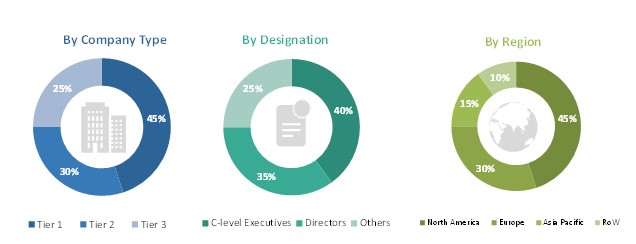
To know about the assumptions considered for the study, download the pdf brochure
Market Size Estimation
Both top-down and bottom-up approaches were used to estimate and validate the size of the electric heat tracing market and its various dependent submarkets. The key players in the market were identified through secondary research, and their market share in the respective regions was determined through primary and secondary research. This entire procedure involved the study of annual and financial reports of top players and extensive interviews with industry leaders such as chief executive officers (CEOs), vice presidents (VPs), directors, and marketing executives. All percentage shares and breakdowns were determined using secondary sources and verified through primary sources. All the possible parameters that affect the markets covered in this research study were accounted for, viewed in extensive detail, verified through primary research, and analyzed to obtain the final quantitative and qualitative data. This data was consolidated and supplemented with detailed inputs and analysis from MarketsandMarkets and presented in this report.
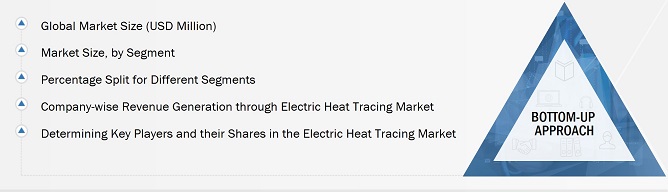
Bottom-Up Approach
The bottom-up approach was used to arrive at the overall size of the electric heat tracing market from the revenues of the key players and their shares in the market. The overall market size was calculated based on the revenues of the key players identified in the market.
- Identifying various verticals using or expected to implement Electric heat tracing systems
- Analyzing each verticals, along with the major related companies and Electric heat tracing system providers
- Estimating the Electric heat tracing market for verticals
- Understanding the demand generated by companies operating across different verticals
- Tracking the ongoing and upcoming implementation of projects based on electric heat tracing technology by vertical and forecasting the market based on these developments and other critical parameters
- Carrying out multiple discussions with the key opinion leaders to understand the type of Heat tracing products designed and developed vertically. This information would help analyze the breakdown of the scope of work carried out by each major company in the electric heat tracing system market
- Arriving at the market estimates by analyzing electric heat tracing companies as per their countries and subsequently combining this information to arrive at the market estimates by region
- Verifying and cross-checking the estimates at every level through discussions with the key opinion leaders, including CXOs, directors, and operations managers, and finally with domain experts at MarketsandMarkets
- Studying various paid and unpaid sources of information, such as annual reports, press releases, white papers, and databases
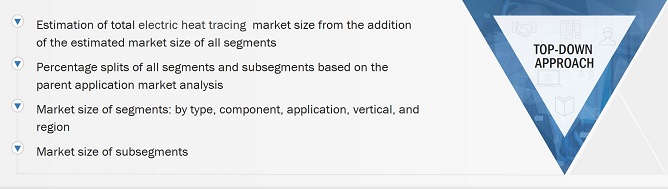
Top-Down Approach
In the top-down approach, the overall market size has been used to estimate the size of the individual markets (mentioned in the market segmentation) through percentage splits from secondary and primary research.
To calculate the market size of specific segments, the most appropriate immediate parent market size has been used to implement the top-down approach. The top-down approach was implemented for the data extracted from the secondary research to validate the market size obtained.
The market share of each company was estimated to verify the revenue shares used earlier in the top-down approach. The overall parent market size and individual market sizes were determined and confirmed in this study by the data triangulation method and the validation of data through primaries. The data triangulation method used in this study is explained in the next section.
- Focusing on top-line investments and expenditures being made in the ecosystems of various verticals.
- Building and developing the information related to the market revenue generated by key electric heat tracing system manufacturers
- Conducting multiple on-field discussions with the key opinion leaders involved in the development of Electric heat tracing products in various verticals
- Estimating geographic splits using secondary sources based on various factors, such as the number of players in a specific country and region, the offering of Electric heat tracing, and the level of solutions offered in verticals
- The impact of the recession on the steps mentioned above has also been considered.
Data Triangulation
After arriving at the overall market size from the estimation process explained above, the overall market has been split into several segments and subsegments. To complete the overall market engineering process and arrive at the exact statistics for all segments and subsegments, the data triangulation procedure has been employed wherever applicable. The data has been triangulated by studying various factors and trends from both demand and supply sides. Along with this, the market size has been validated using top-down and bottom-up approaches.
Market Definition
Electric heat tracing refers to a system that uses electrical cables to generate heat for the purpose of maintaining or controlling temperatures in pipelines, tanks, or other equipment. It is commonly employed in industrial, commercial, and residential settings to prevent freezing, maintain process temperatures, or control viscosity in fluids. The system typically involves self-regulating heating cables that automatically adjust their heat output based on ambient conditions, providing an efficient and reliable solution for temperature-related challenges in various applications.
Key Stakeholders
- Component Manufacturers
- End-User Organizations
- System Integrators
- Consumers
- Regulatory Bodies and Compliance Agencies
- Research Institutions
- Distributors and Resellers
- Industry Associations and Organizations
- Investors and Financial Institutions
Report Objectives
- To define, describe, and forecast the electric heat tracing market based on product type, application, by component, vertical, and region.
- To forecast the shipment data of electric heat tracing cables.
- To forecast the size of the market segments for four major regions—North America, Europe, Asia Pacific (APAC), and the Rest of the World (RoW)
- To provide detailed information regarding the major factors influencing the growth of the market (drivers, restraints, opportunities, and challenges)
- To strategically analyze micro-markets with respect to individual growth trends, prospects, and contributions to the total market
- To study the complete value chain and allied industry segments and perform a value chain analysis of the market
- To strategically profile the key players and comprehensively analyze their market shares and core competencies
- To analyze the opportunities in the market for stakeholders and describe the competitive landscape of the market
- To analyze competitive developments such as collaborations, partnerships, product developments, and research & development (R&D) in the market
- To analyze the impact of the recession on the Electric heat tracing market
Available Customizations
With the given market data, MarketsandMarkets offers customizations according to the specific requirements of companies. The following customization options are available for the report:
- Detailed analysis and profiling of additional market players (up to 5)
- Additional country-level analysis of the Electric heat tracing market
Product Analysis
- Product matrix, which provides a detailed comparison of the product portfolio of each company in the Electric heat tracing market.
Get the Full Electric Heat Tracing Market Report
Full forecast, segment splits, and company analysis for all Electric Heat Tracing Market.
- Africa Electric Heat Tracing Market
- Canada Electric Heat Tracing Market
- China Electric Heat Tracing Market
- France Electric Heat Tracing Market
- Germany Electric Heat Tracing Market
- Japan Electric Heat Tracing Market
- Mexico Electric Heat Tracing Market
- Rest Of Asia Pacific Electric Heat Tracing Market
- Rest Of Europe Electric Heat Tracing Market
- Russia Electric Heat Tracing Market
- South Korea Electric Heat Tracing Market
- UK Electric Heat Tracing Market
- US Electric Heat Tracing Market
Need a Tailored Report?
Customize this report to your needs
Get 10% FREE Customization
Customize This Report
