
Europe Endoscope Reprocessing Market (2025-2030)

The Europe Endoscope Reprocessing Market was valued at $734.2 Million in 2025 and projected to reach to $1179.5 Million by 2030, representing a compound annual growth rate of 9.9%. Europe's endoscope reprocessing market is positioned for sustained growth driven by increasingly stringent regulatory frameworks, particularly across EU member states, which mandate advanced sterilization and infection control protocols.


| Market Size in | USD 26.32 MN |
| Market Forecast in | |
| CAGR | |
| Forecast Period | |
| Units Considered | Value (USD MN) |
Europe Endoscope Reprocessing Market Trends and Insights
- This expansion reflects Europe's stringent regulatory standards for infection control and medical device sterilization, which drive demand for advanced reprocessing solutions across hospitals and surgical centers.
- Europe's aging population and increasing endoscopic procedures further accelerate market adoption. The European market benefits from well-established healthcare infrastructure and high compliance requirements under EU Medical Device Regulations.
- Europe's emphasis on patient safety and contamination prevention has positioned endoscope reprocessing as a critical operational priority.
- The 9.9% compound annual growth rate in Europe outpaces the global average, underscoring the region's commitment to upgrading reprocessing technologies and automation systems. Key European markets, including Germany, France, and the United Kingdom, are investing heavily in next-generation reprocessing equipment and consumables.
- Europe's competitive landscape features both established medical device manufacturers and specialized reprocessing solution providers, all competing to meet the region's evolving clinical and regulatory demands through 2030..
Key Market Statistics
- CAGR (2025-2030) 9.9% CAGR
- Market Size, 2025 ~USD 734.2 Million
- Forecast, 2030 ~USD 1179.5 Million
- Geography Europe
Europe Endoscope Reprocessing Market Overview
Regulatory Compliance Driving Growth :
Europe's stringent EU regulations on infection control and medical device sterilization standards are primary growth catalysts, mandating advanced endoscope reprocessing solutions across all healthcare facilities.
Aging Population Increases Procedure Demand :
Europe's demographic shift toward an older population is driving higher volumes of endoscopic procedures, directly increasing demand for efficient and reliable reprocessing equipment and services.
Germany Leads European Market :
Germany dominates Europe's endoscope reprocessing market with $374.0 million in 2025, reflecting strong healthcare infrastructure, high surgical volumes, and strict quality standards across medical institutions.
Rapid Market Expansion Through 2030 :
The European market is projected to grow from $734.2 million in 2025 to $1,179.5 million by 2030, representing a 9.9% CAGR, outpacing the global average of 9.4%.
Europe Endoscope Reprocessing Market Dynamics
- The region's well-established healthcare infrastructure and high adoption rates of minimally invasive procedures create consistent demand for sophisticated reprocessing solutions.
- Healthcare facilities are investing in automated and technologically advanced systems to meet compliance requirements and improve operational efficiency. The forecast period through 2030 will see accelerated market expansion as hospitals and surgical centers upgrade aging equipment and adopt next-generation reprocessing technologies.
- Europe's aging demographic profile will continue to drive endoscopic procedure volumes, while increasing focus on patient safety and infection prevention will sustain investment in premium reprocessing solutions.
- Regional consolidation among healthcare providers may also drive bulk purchasing of standardized reprocessing systems..
Market Ecosystem
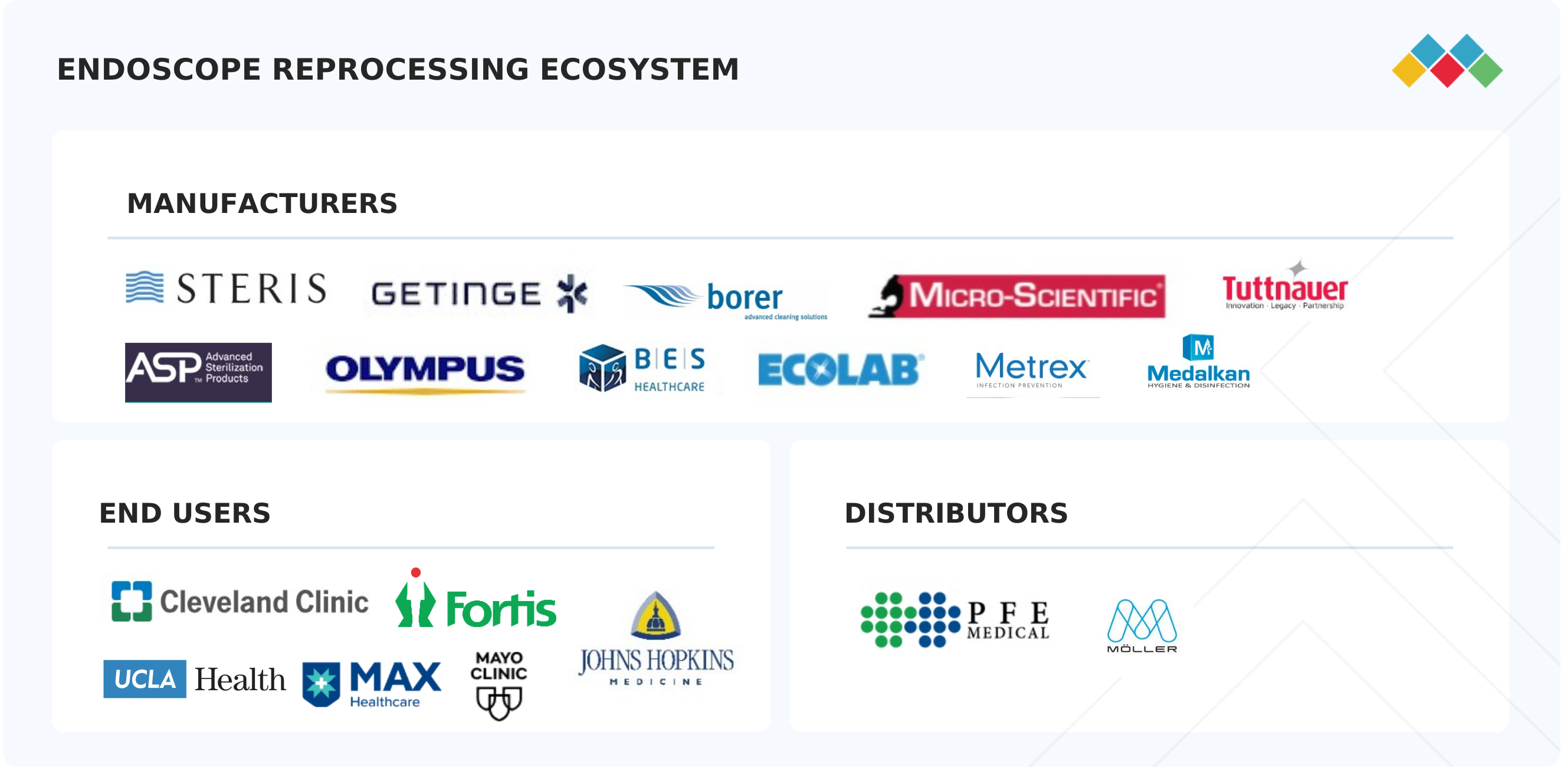
Endoscope Reprocessing Market: COMMERCIAL USE CASES ACROSS INDUSTRIES
| COMPANY | USE CASE DESCRIPTION | BENEFITS |
|---|---|---|
 |
Provides a comprehensive range of endoscope reprocessing solutions, including AERs, high-level disinfectants, drying and storage cabinets, and integrated tracking software | Enhances patient safety through consistent disinfection, improves workflow efficiency, and ensures full traceability and regulatory compliance |
 |
Offers the AEROFLEX Automatic Endoscope Reprocessor system, which automates endoscope washing and high-level disinfection with fast cycle times and built-in chemical concentration monitoring | Reduces reprocessing time, minimizes manual intervention, and improves safety and consistency in high-level disinfection |
 |
Provides fully integrated reprocessing solutions such as washer-disinfectors (ETD Series), AERs (OER-Mini, OER-Elite), drying cabinets, and Olympus-compatible chemistries | Delivers optimized performance for Olympus endoscopes, ensures reprocessing quality, and increases operational reliability |
 |
Offers endoscope washer-disinfectors and advanced drying/storage cabinets (EDS8), supported by T-DOC software for digital traceability and documentation | Improves infection control, extends the microbiological safety window of stored scopes, and facilitates compliance with reprocessing standards |
 |
Provides Soluscope-branded automated washer-disinfectors, enzymatic detergents, high-level disinfectants, drying cabinets, and endoscope transport solutions | Ensures effective cleaning and disinfection, supports fast turnaround, and helps maintain compliance with regulatory and safety standards |
Logos and trademarks shown above are the property of their respective owners. Their use here is for informational and illustrative purposes only.
Related Ecosystem
Medical Devices
- Polymerase Chain Reaction (PCR)
- Magnetic Resonance Imaging (MRI)
- Disposable Autoinjectors
- Pulse Oximeters
- Blood Pressure Monitors
- Medtronic plc
- Abbott Laboratories
- Stryker Corporation
- Becton, Dickinson and Company
- JOHNSON & JOHNSON
Key Takeaways
- Europe's endoscope reprocessing market will grow from $734.2M (2025) to $1,179.5M (2030) at a 9.9% CAGR, outpacing global growth.
- Europe's strict EU Medical Device Regulations and infection control standards drive sustained demand for advanced reprocessing technologies.
- Europe's aging population and rising endoscopic procedure volumes create long-term growth opportunities for reprocessing solution providers.
- European healthcare systems prioritize automation and compliance-driven upgrades, attracting both multinational and specialized regional competitors.
Endoscope Reprocessing Market Report Scope
| Report Metric | Details |
|---|---|
| Base Year | 2025 |
| Fastest Growing Segment | FLEXIBLE ENDOSCOPES (Type) |
| Forecast Period | 2025-2030 |
| Growth Rate | CAGR of 9.4% from 2025 to 2030 |
| Largest Segment | HOSPITALS & ASCS (End User) |
| Market Size Base Year (Billions) | ~USD 2.71 (2025) |
| Revenue Forecast (Billions) | ~USD 4.24 (2030) |
| Segments Covered | Product, Type, Portability, Type Of Endoscope, End User |
Europe Endoscope Reprocessing Market Report Segmentation
5 segment dimensions are covered across the global market.
By Product
- Endoscope Reprocessing Consumables
- Endoscope Reprocessing Equipment
- Endoscope Tracking Solutions
By Type
- Automated Endoscope Reprocessors (Aer)
- Detergents & Wipes
- Double-Basin Automated Endoscope Reprocessors
- Endoscope Drying, Storage, & Transport Systems
- Endoscope Drying, Storage, And Transport Systems
- High-Level Disinfectants & Test Strips
- High-Level Disinfectants And Test Strips
- Other Products
- Single-Basin Automated Endoscope Reprocessors
By Portability
- Portable Aers
- Portable Automated Endoscope Reprocessors
- Standalone Aers
- Standalone Automated Endoscope Reprocessors
By Type Of Endoscope
- Flexible Endoscopes
- Rigid Endoscopes
By End User
- Hospitals & Ascs
- Other End Users
- Specialty Clinics
EUROPE: ENDOSCOPE REPROCESSING MARKET, BY END USER, 2023–2030
| Segment | 2023 | 2024 | 2025 | 2026 | 2027 | 2028 | 2029 | 2030 | CAGR (%) |
|---|---|---|---|---|---|---|---|---|---|
| HOSPITALS & ASCS | 497.2 | 544 | 596.2 | 654.6 | 720.1 | 793.5 | 876 | 968.8 | 10.2 |
| OTHER END USERS | 38 | 40.9 | 44 | 47.5 | 51.3 | 55.5 | 60.2 | 65.3 | 8.2 |
| SPECIALTY CLINICS | 80 | 86.6 | 94 | 102.2 | 111.3 | 121.5 | 132.8 | 145.4 | 9.1 |
| TOTAL | 615.2 | 671.4 | 734.2 | 804.3 | 882.6 | 970.4 | 1068.9 | 1179.5 | 9.9 |
REST OF EUROPE: ENDOSCOPE REPROCESSING MARKET, BY END USER, 2023–2030
| Segment | 2023 | 2024 | 2025 | 2026 | 2027 | 2028 | 2029 | 2030 | CAGR (%) |
|---|---|---|---|---|---|---|---|---|---|
| HOSPITALS & ASCS | 115.8 | 125.2 | 135.5 | 147 | 159.8 | 174 | 189.8 | 207.4 | 8.9 |
| OTHER END USERS | 8.8 | 9.4 | 10 | 10.6 | 11.3 | 12.1 | 13 | 13.9 | 6.9 |
| SPECIALTY CLINICS | 18 | 19.2 | 20.6 | 22.1 | 23.8 | 25.6 | 27.7 | 29.9 | 7.8 |
| TOTAL | 142.6 | 153.8 | 166.1 | 179.8 | 194.9 | 211.8 | 230.4 | 251.2 | 8.6 |
Target Audience
- Medical Device Manufacturers : Manufacturers of endoscope reprocessing equipment need Europe-specific market data to develop compliant products, identify distribution partnerships, and optimize go-to-market strategies across diverse regulatory environments.
- Healthcare Facility Administrators : Hospital and surgical center leaders require market insights to benchmark reprocessing costs, evaluate equipment investments, and ensure compliance with evolving EU infection control standards.
- Reprocessing Service Providers : Third-party sterilization and reprocessing service companies need regional market analysis to identify growth opportunities, assess competitive positioning, and plan service expansion across European markets.
- Healthcare Investors & PE Firms : Investment professionals evaluating healthcare sector opportunities need Europe market data to assess portfolio companies, identify acquisition targets, and understand growth potential in medical device reprocessing.
- Regulatory & Compliance Consultants : Consultants advising healthcare organizations on EU compliance need detailed market intelligence to guide clients on best practices, equipment selection, and regulatory requirement implementation across Europe.
Countries within Europe - compare and drill down
| Country | 2025 size (native) |
|---|---|
| Germany | USD 374 Million |
| UK | USD 209 Million |
| France | USD 44.1 Million |
| Italy | USD 32.6 Million |
| Spain | USD 19.5 Million |
| Rest Of Europe | USD 69.1 Million |
Country market size visualization
Reasons to Buy this Report
- Regional Market Segmentation : Gain detailed insights into Europe's $734.2M market with country-level breakdowns including Germany ($374.0M), UK ($209.0M), and France ($44.1M) to identify high-opportunity markets.
- Regulatory Landscape Analysis : Understand EU-specific compliance requirements and infection control standards that shape purchasing decisions and create barriers to entry for market participants across European healthcare systems.
- Growth Trajectory Forecasting : Access 5-year projections showing 9.9% CAGR growth through 2030, enabling strategic planning for market entry, expansion, and product development tailored to European demand patterns.
- Competitive Positioning Intelligence : Benchmark your offerings against regional competitors and identify market gaps in specific European countries where reprocessing solutions are underserved or experiencing rapid adoption.
- Investment Decision Support : Make informed capital allocation decisions with comprehensive data on market size, growth rates, and demographic drivers specific to Europe's healthcare sector and endoscopy market dynamics.
Frequently asked questions
What is the current size of Europe's endoscope reprocessing market?
Europe's endoscope reprocessing market was valued at $734.2 million in 2025 and is expected to reach $1,179.5 million by 2030.
What is the growth rate for endoscope reprocessing in Europe?
Europe's endoscope reprocessing market is growing at a compound annual growth rate (CAGR) of 9.9% from 2025 to 2030.
Why is Europe's endoscope reprocessing market growing faster than the global average?
Europe's stringent EU Medical Device Regulations, high infection control standards, aging population, and healthcare system investments in automation drive faster growth compared to the global 9.4% CAGR.
Which European countries are leading the endoscope reprocessing market?
Germany, France, and the United Kingdom are among Europe's key markets, with significant investments in advanced reprocessing equipment and compliance-driven upgrades.
What factors are driving demand for endoscope reprocessing solutions in Europe?
Key drivers include strict regulatory compliance requirements, rising endoscopic procedure volumes, aging demographics, emphasis on patient safety, and healthcare system modernization initiatives across Europe.
RESEARCH METHODOLOGY
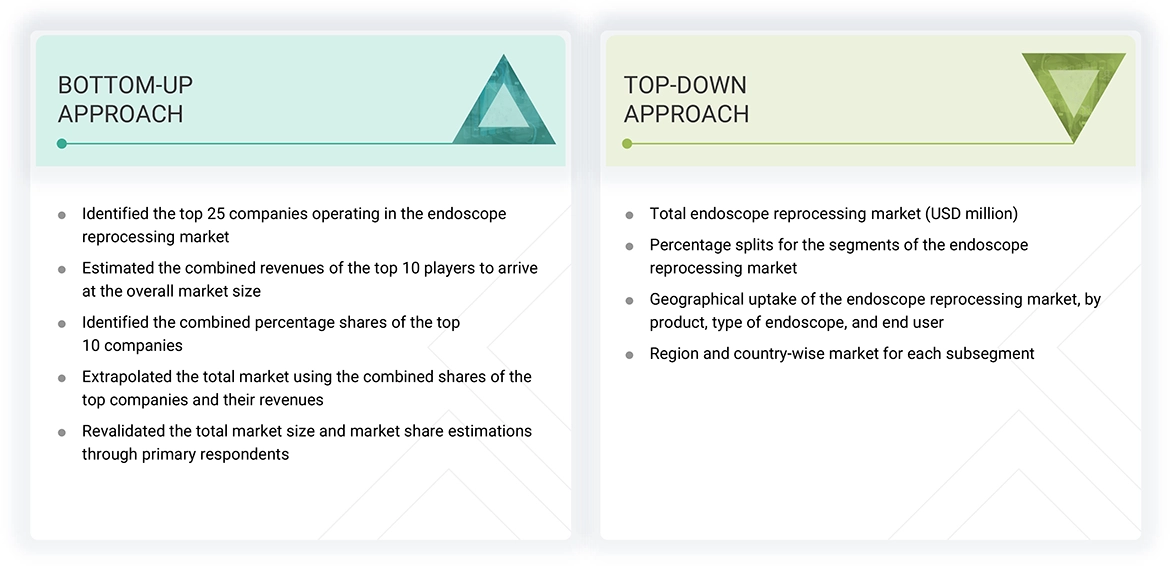
The study involved key activities in estimating the current market size for the endoscope reprocessing market. Extensive secondary research was conducted to gather information on this sector. The next step was to validate these findings, assumptions, and size estimates with industry experts across the value chain through primary research. Different approaches, such as top-down and bottom-up methods, were used to calculate the total market size. Subsequently, market segmentation and data triangulation techniques were applied to estimate the size of various segments and subsegments within the endoscope reprocessing market.
The four steps involved in estimating the market size are:
Secondary Research
The secondary research process involves the widespread use of secondary sources, directories, databases (such as Bloomberg Businessweek, Factiva, and D&B Hoovers), white papers, annual reports, investor presentations, SEC filings of companies and publications from government sources [such as National Institutes of Health (NIH), US FDA, US Census Bureau, World Health Organization (WHO), , Global Burden of Disease Study, and Centers for Medicare and Medicaid Services (CMS) were referred to identify and collect information for the global endoscope reprocessing market study. It was also used to obtain important information about the key players and market classification & segmentation according to industry trends, to the bottom-most level, and key developments related to market and technology perspectives. A database of the key industry leaders was also prepared using secondary research.
Primary Research
During the primary research process for the endoscope reprocessing market, various stakeholders from both supply and demand sides were interviewed to gather qualitative and quantitative insights. On the supply side, primary sources included industry experts such as CEOs, vice presidents, marketing and sales directors, product development managers, and heads of technology and innovation from leading companies offering endoscope reprocessing equipment, consumables, and tracking systems. On the demand side, respondents included infection control specialists, hospital procurement officers, sterilization technicians, and representatives from ambulatory surgical centers (ASCs), specialty clinics, and hospitals. The primary research aimed to validate the segmentation framework, identify key players and their strategies, and understand current and emerging trends, challenges, and market dynamics impacting the endoscope reprocessing industry.
The following is a breakdown of the primary respondents:
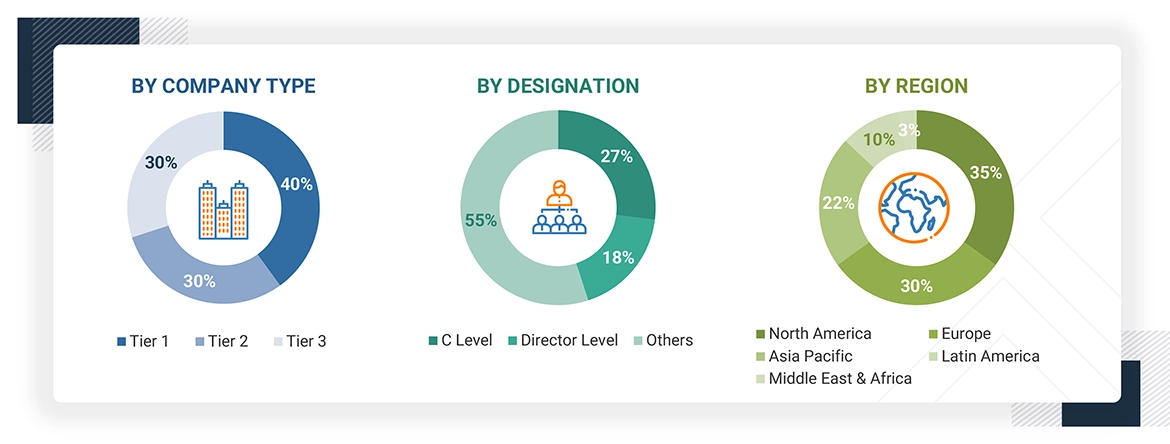
Note 1: Other designations include sales managers, marketing managers, and product managers.
Note 2: Companies are classified into tiers based on their total revenues. As of 2024, Tier 1 = >USD 100 million, Tier 2 = USD 10 million to USD 100 million, and Tier 3 = < USD 10 million.
To know about the assumptions considered for the study, download the pdf brochure
Market Size Estimation
For the global market value, annual revenues were determined based on revenue mapping of leading product manufacturers and OEMs active in the worldwide endoscope reprocessing market. All key service providers were identified at the global, national, and/or national/regional levels. Revenue mapping for the respective business segments and sub-segments was conducted for the major players. The global endoscope reprocessing market was split into various segments and subsegments based on:
- List of major players operating in the products market at the regional and/or country level
- Product mapping of endoscope reprocessing providers at the regional and/or country level
- Mapping of annual revenue generated by listed major players from endoscope reprocessing (or the nearest reported business unit/product category)
- Extrapolation of the revenue mapping of the listed major players to derive the global market value of the respective segments/subsegments
- Summation of the market value of all segments/subsegments to arrive at the global endoscope reprocessing market
The above-mentioned data was consolidated and added with detailed inputs and analysis from MarketsandMarkets and presented in this report.
The research methodology used to estimate the market size includes the following:
Data Triangulation
After determining the overall market size using the process outlined above, the total market was divided into several segments. To complete the market engineering process and obtain precise data for all segments and subsegments, data triangulation and market breakdown methods were used wherever applicable. The data was triangulated by examining various factors and trends from both the demand and supply sides.
Market Definition
Endoscope reprocessing involves cleaning, high-level disinfection, or sterilization of reusable endoscopes to ensure safe reuse and prevent cross-contamination. The market includes automated reprocessing equipment (such as automated endoscope reprocessors (AER) and endoscope drying, storage, and transport systems), consumables (such as detergents, wipes, and disinfectants), and tracking systems that help maintain compliance with infection control standards. These solutions are essential for reducing healthcare-associated infections (HAIs) and are commonly used across hospitals, ambulatory surgical centers, and specialty settings clinics.
Stakeholders
- Endoscope Reprocessing Equipment and Consumables Manufacturers
- Hospitals and Ambulatory Surgical Centers (ASCs)
- Endoscopy Units and Clinics
- Distributors and Suppliers of Endoscope Reprocessing Solutions
- Contract Manufacturers of Endoscope Reprocessing Devices
- Research & Consulting Firms Focused on Infection Control and Reprocessing
- Regulatory Bodies and Government Health Organizations
- Venture Capitalists and Investors
- Government Organizations
Report Objectives
- To define, describe, segment, and forecast the endoscope reprocessing market by product, type of endoscope, end user, and region
- To provide detailed information regarding the major factors influencing market growth (such as drivers, restraints, opportunities, and challenges)
- To analyze the micromarkets with respect to individual growth trends, prospects, and contributions to the overall endoscope reprocessing market
- To analyze market opportunities for stakeholders and provide details of the competitive landscape for key players
- To forecast the size of the market segments with respect to five regions: North America, Europe, the Asia Pacific, Latin America, and the Middle East & Africa
- To profile the key players and comprehensively analyze their product portfolios, market positions, and core competencies
- To benchmark players within the market using the proprietary Company Evaluation Matrix framework, which analyzes market players on various parameters within the broad categories of business and product excellence
- To study the impact of AI/Gen AI on the market, along with the macroeconomic outlook for each region
Get the Full Endoscope Reprocessing Market Report
Full forecast, segment splits, and company analysis for all Endoscope Reprocessing Market.
- Germany Endoscope Reprocessing Market
- UK Endoscope Reprocessing Market
- France Endoscope Reprocessing Market
- Italy Endoscope Reprocessing Market
- Spain Endoscope Reprocessing Market
- Japan Endoscope Reprocessing Market
- China Endoscope Reprocessing Market
- India Endoscope Reprocessing Market
- Australia Endoscope Reprocessing Market
- Brazil Endoscope Reprocessing Market
- Mexico Endoscope Reprocessing Market
- Rest Of Europe Endoscope Reprocessing Market
- Rest Of Asia Pacific Endoscope Reprocessing Market
- Rest Of Latin America Endoscope Reprocessing Market
- US Endoscope Reprocessing Market
- Canada Endoscope Reprocessing Market
Need a Tailored Report?
Customize this report to your needs
Get 10% FREE Customization
Customize This Report
