
Asia Pacific ESG Reporting Software Market (2024-2029)

The Asia Pacific ESG Reporting Software Market was valued at $236.6 Million in 2024 and projected to reach to $569.6 Million by 2029, representing a compound annual growth rate of 19.2%. Asia Pacific's ESG reporting software market is positioned for exceptional growth through 2029, driven by tightening regulatory frameworks and heightened corporate accountability standards across the region.


| Market Size in | USD 26.32 MN |
| Market Forecast in | |
| CAGR | |
| Forecast Period | |
| Units Considered | Value (USD MN) |
Asia Pacific ESG Reporting Software Market Trends and Insights
- Asia Pacific's accelerating regulatory requirements and corporate sustainability commitments are driving widespread adoption of ESG reporting solutions across the region.
- The 19.2% compound annual growth rate reflects Asia Pacific's emergence as a critical hub for environmental, social, and governance compliance technology. Asia Pacific organizations are increasingly recognizing ESG reporting as essential to stakeholder engagement, risk management, and competitive positioning.
- Between 2024 and 2029, Asia Pacific enterprises across financial services, manufacturing, and technology sectors are expected to significantly increase their investment in automated ESG reporting platforms.
- This growth trajectory positions Asia Pacific as one of the fastest-growing regions for ESG software adoption globally..
Key Market Statistics
- CAGR (2024-2029) 19.2% CAGR
- Market Size, 2024 ~USD 236.6 Million
- Forecast, 2029 ~USD 569.6 Million
- Geography Asia Pacific
Asia Pacific ESG Reporting Software Market Overview
Rapid Market Expansion :
Asia Pacific's ESG reporting software market is valued at $236.6 million in 2024, with projections to reach $569.6 million by 2029, representing a robust 19.2% CAGR that outpaces the global average of 17%.
Regulatory Acceleration :
Accelerating regulatory requirements across Asia Pacific nations are compelling organizations to adopt comprehensive ESG reporting solutions to meet compliance mandates and stakeholder expectations.
Corporate Sustainability Commitments :
Major corporations throughout Asia Pacific are intensifying sustainability commitments, driving widespread adoption of ESG reporting software to track, measure, and communicate environmental and social impact initiatives.
Emerging Market Leadership :
Asia Pacific is establishing itself as an emerging leader in ESG adoption, with China and Japan driving significant market growth through increased investor pressure and government-mandated sustainability reporting frameworks.
Asia Pacific ESG Reporting Software Market Dynamics
- Countries including China, Japan, and Southeast Asian economies are implementing mandatory ESG disclosure requirements, compelling enterprises to invest in sophisticated reporting infrastructure.
- The region's 19.2% CAGR reflects strong momentum as multinational corporations and domestic enterprises alike prioritize sustainability transparency to attract ESG-focused investors and meet evolving stakeholder demands. The market outlook remains highly positive as Asia Pacific governments continue strengthening environmental policies and social governance standards.
- Financial institutions, manufacturing sectors, and technology companies are leading adoption rates, with mid-market enterprises increasingly recognizing ESG reporting as essential for competitive positioning.
- Integration of AI-driven analytics and real-time monitoring capabilities will further accelerate market penetration, positioning Asia Pacific as a critical growth engine for the global ESG reporting software industry..
Market Ecosystem

ESG REPORTING SOFTWARE MARKET: COMMERCIAL USE CASES ACROSS INDUSTRIES
| COMPANY | USE CASE DESCRIPTION | BENEFITS |
|---|---|---|
 |
The Mosaic Company partnered with PwC to evaluate how climate change could impact its global operations and support its ESG disclosure readiness. Using the TCFD framework, PwC conducted qualitative risk assessments and quantitative scenario analysis to identify key physical and transition climate risks affecting Mosaic’s facilities and supply chain. | Helps better understand climate-related risks and integrate sustainability considerations into long-term strategic planning | Strengthens organizational awareness of climate issues | Helps comply with future ESG reporting requirements while improving transparency for investors and stakeholders |
 |
Southwest Airlines implemented the Workiva platform to streamline complex financial and ESG reporting processes across multiple teams. The company used Workiva to centralize data, improve collaboration between departments, and manage reporting tasks such as SEC filings, internal reports, and sustainability disclosures on a single platform. | Helps improve reporting efficiency | Ensures consistent data across departments | Reduces manual processes through automated data linking and collaboration features | Enables teams to save time on reporting tasks | Enhances transparency and accuracy in financial and ESG disclosures |
 |
Melbourne Water adopted the IBM Envizi ESG Suite to replace its legacy data management system and improve the tracking of energy consumption and ESG performance across its operations. The platform consolidated data from multiple facilities and automated ESG data collection, enabling the organization to create a centralized system for sustainability reporting and energy management. | Enables Melbourne Water to generate sustainability reports within a few hours instead of days | Helps gain better visibility into energy consumption across facilities | Helps identify energy efficiency opportunities | Reduces operational costs | Supports the organization’s long-term goal of achieving net-zero emissions |
 |
Northrop Grumman implemented Sphera’s Chemical Management solution to replace its manual and fragmented system for managing safety data sheets (SDS) and chemical compliance data. The new platform integrated with the company’s ERP system and enabled centralized management of chemical data across multiple operational sites. | Allows Northrop Grumman to manage over 20,000 active safety data sheets and 50,000 material specifications while improving transparency across more than 50 sites | Reduces data redundancies | Improves compliance with global regulations such as GHS | Saves time and operational costs through automated data management |
Logos and trademarks shown above are the property of their respective owners. Their use here is for informational and illustrative purposes only.
Related Ecosystem
Analytics
- Natural Language Processing (NLP)
- Machine Learning
- Supply Chain Management
- Predictive Analytics
- Image Sensors
- International Business Machines Corporation
- MICROSOFT CORPORATION
- Oracle Corporation
- SAP SE
Software And Services
- Natural Language Processing (NLP)
- Machine Learning
- Supply Chain Management
- Predictive Analytics
- Image Sensors
- International Business Machines Corporation
- MICROSOFT CORPORATION
- Oracle Corporation
- SAP SE
- Amazon.com, Inc.
Ngn Sdx
- Software-Defined Networking (SDN)
- Antennas
- Customer Analytics
- Digital Signal Processor (DSP)
- Fixed Wing Aircraft
- MITSUBISHI ELECTRIC INFORMATION NETWORK CORPORATION
- MITSUBISHI ELECTRIC INFORMATION SYSTEMS CORPORATION
- Cisco Systems, Inc.
- Hewlett Packard Enterprise Company
- International Business Machines Corporation
Key Takeaways
- Asia Pacific's ESG reporting software market will grow from $236.6M (2024) to $569.6M (2029), representing a 19.2% CAGR.
- Asia Pacific regulatory frameworks and investor pressure are accelerating ESG software adoption across multiple industries.
- Asia Pacific enterprises prioritize integrated reporting solutions that address regional compliance and sustainability disclosure standards.
- Asia Pacific's market growth outpaces global trends, positioning the region as a key driver of ESG software innovation and investment.
ESG Reporting Software Market Report Scope
| Report Metric | Details |
|---|---|
| Base Year | 2024 |
| Fastest Growing Segment | RETAIL & CONSUMER GOODS (Vertical) |
| Forecast Period | 2024-2030 |
| Growth Rate | CAGR of 17% from 2024 to 2030 |
| Largest Segment | ON-PREMISES (Deployment Type) |
| Market Size Base Year (Billions) | ~USD 0.96 (2024) |
| Revenue Forecast (Billions) | ~USD 2.46 (2030) |
| Segments Covered | Offering, Software, Deployment Type, Organization Size, Vertical |
Asia Pacific ESG Reporting Software Market Report Segmentation
5 segment dimensions are covered across the global market.
By Offering
- Services
- Software
By Software
- Environmental Esg Reporting Software
- Governance Esg Reporting Software
- Social Esg Reporting Software
By Deployment Type
- Cloud
- On-Premises
By Organization Size
- Large Enterprises
- Smes
By Vertical
- Bfsi
- Chemicals & Materials
- Construction & Engineering
- Energy & Utilities
- Food & Beverages
- Government & Defense
- Government, Public Sector, And Non-Profit
- Healthcare & Life Sciences
- Manufacturing
- Other Verticals
- Retail & Consumer Goods
Target Audience
- ESG Software Vendors : Software providers need Asia Pacific market data to develop region-specific solutions, understand regulatory requirements, and identify expansion opportunities in high-growth markets like China and Japan.
- Enterprise Sustainability Officers : Corporate sustainability leaders require market insights to benchmark ESG reporting practices, understand regional compliance obligations, and justify investments in reporting infrastructure across Asia Pacific operations.
- Management Consultants : Consulting firms advising multinational corporations on ESG strategy need Asia Pacific market intelligence to guide clients through regional regulatory landscapes and identify best-practice reporting solutions.
- Investment Firms & Asset Managers : Investors and asset managers focused on ESG-compliant portfolios need market data to understand ESG reporting adoption rates and corporate sustainability maturity across Asia Pacific markets.
- Government & Regulatory Bodies : Policymakers and regulatory agencies in Asia Pacific require market insights to inform ESG disclosure framework development and assess corporate compliance with emerging sustainability reporting standards.
Countries within Asia Pacific - compare and drill down
| Country | 2025 size (native) |
|---|---|
| China | USD 196.9 Million |
| Japan | USD 152.6 Million |
| Rest Of Asia Pacific | USD 220 Million |
Country market size visualization
Reasons to Buy this Report
- Regional Market Intelligence : Gain comprehensive insights into Asia Pacific's $236.6M ESG reporting software market with country-level breakdowns, enabling precise market entry and expansion strategies tailored to regional dynamics.
- Regulatory Landscape Analysis : Understand accelerating regulatory requirements across Asia Pacific nations, including mandatory ESG disclosure frameworks in China, Japan, and emerging markets, to ensure compliance-ready solution development.
- Growth Opportunity Identification : Identify high-growth segments and emerging opportunities within Asia Pacific's 19.2% CAGR market, with forecasts through 2029 to support long-term strategic planning and investment decisions.
- Competitive Positioning : Benchmark your ESG reporting solutions against regional competitors and understand market penetration rates across Asia Pacific's diverse economies to optimize go-to-market strategies.
- Investor and Stakeholder Insights : Access data on corporate sustainability commitments and investor pressure driving ESG adoption across Asia Pacific, supporting business case development and stakeholder communication strategies.
Frequently asked questions
What is the current size of the Asia Pacific ESG reporting software market?
The Asia Pacific ESG reporting software market was valued at $236.6 million in 2024 and is expected to grow to $569.6 million by 2029.
What is the projected growth rate for Asia Pacific ESG reporting software?
Asia Pacific's ESG reporting software market is projected to grow at a compound annual growth rate (CAGR) of 19.2% from 2024 to 2029.
Which industries in Asia Pacific are driving ESG software adoption?
Financial services, manufacturing, technology, and energy sectors in Asia Pacific are leading ESG software adoption due to regulatory requirements and investor expectations.
What regulatory factors are influencing Asia Pacific's ESG software market?
Asia Pacific's ESG software market is driven by emerging sustainability disclosure standards, carbon reporting mandates, and investor pressure for transparent environmental and social governance reporting.
How does Asia Pacific's ESG software market growth compare to global trends?
Asia Pacific's 19.2% CAGR significantly exceeds the global market CAGR of 17%, making the region one of the fastest-growing markets for ESG reporting solutions worldwide.
RESEARCH METHODOLOGY
This research study on the ESG reporting software market involved extensive secondary sources, directories, IEEE Communication-Efficient: Algorithms and Systems, International Journal of Innovation and Technology Management, and paid databases. Primary sources were mainly industry experts from the core and related industries, third-party service providers, consulting service providers, end users, and other commercial enterprises. In-depth interviews with primary respondents, including key industry participants and subject matter experts, were conducted to obtain and verify critical qualitative and quantitative information and assess the market’s prospects.
Secondary Research
In the secondary research process, various sources were referred to identify and collect information for this study. Secondary sources included annual reports, press releases, and investor presentations of companies; white papers, journals, and certified publications; and articles from recognized authors, directories, and databases. The data was also collected from other secondary sources, such as journals, government websites, blogs, and vendors’ websites.
Primary Research
During the primary research process, various sources from the supply and demand sides were interviewed to gather qualitative and quantitative information on the market. The primary sources from the supply side included various industry experts, such as chief experience officers (CXOs), vice presidents (VPs), and directors specializing in business development, marketing, and ESG reporting software providers. It also included key executives from system integrators (SIs), professional service providers, industry associations, and other key opinion leaders.
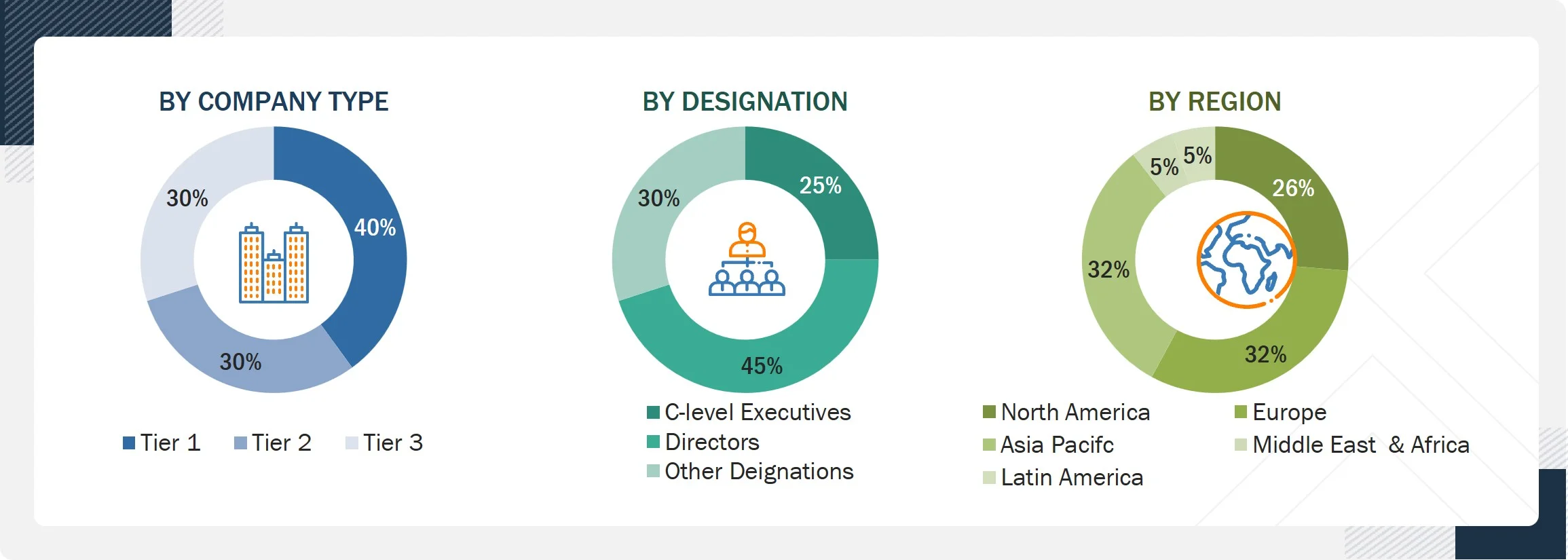
Note: Tier 1 companies’ revenues are more than USD 10 billion; tier 2 companies’ revenues range between USD 1 and 10 billion; and tier 3 companies’ revenues range between USD 500 million and USD 1 billion. Other designations include sales managers, marketing managers, and product managers.
Source: Industry Experts
To know about the assumptions considered for the study, download the pdf brochure
Market Size Estimation
Multiple approaches were adopted to estimate and forecast the ESG reporting software market. The first approach involved estimating the market size by the companies’ revenue generated through the sales of the market.
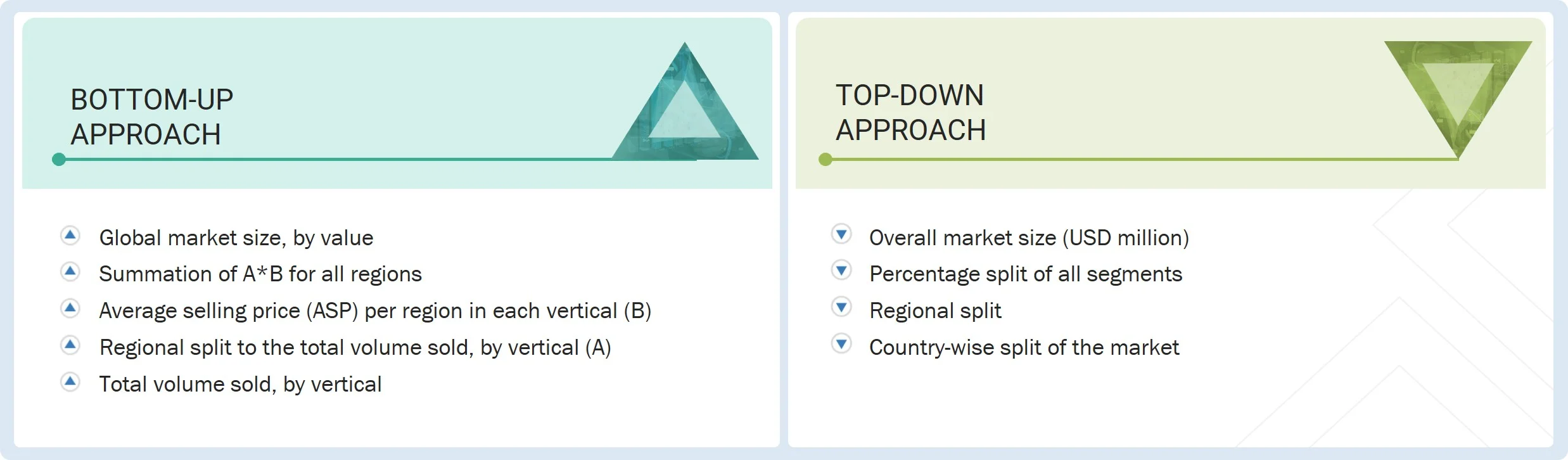
Market Size Estimation Methodology: Top-down Approach
The top-down approach estimates the overall ESG reporting software market size by starting with a macro-level view, such as total IT spending or expenditures related to digital transformation. High-level industry or market values are divided and allocated into segments based on identified proportions by offering, deployment type, organization size, vertical, or geography using researched splits. This approach uses broad market trends, industry reports, and expert insights to proportionately distribute the total value among various sub-markets, regions, and countries. It ensures that the overall estimation remains aligned with recognized industry benchmarks, enabling accurate segmentation and a holistic market perspective.
Market Size Estimation Methodology: Bottom-up Approach
The bottom-up approach for estimating the ESG reporting software market size involves aggregating data at the most granular level, such as company revenues, to build up to the global figure. This process begins by collecting company-wise revenue data directly related to ESG reporting software solutions and services. By analyzing the market share and revenue of key players and integrating percentage splits for different segments, such as by service line or industry, the total market size is calculated. Additional segmentation is performed by region or vertical, ensuring comprehensive coverage. The method then validates market estimates by comparing and consolidating segment results, providing a robust and detailed market size assessment derived from concrete, ground-level business activity.
ESG Reporting Software Market: Top-Down and Bottom-Up Approach
Data Triangulation
After determining the overall market size using the market size estimation processes as explained above, the market was split into several segments and subsegments. Data triangulation and market breakup procedures were employed, wherever applicable, to complete the overall market engineering process and determine the exact statistics of each market segment and subsegment. The overall market size was then used in the top-down approach to estimate the size of other individual markets by applying percentage splits to the market segmentation.
Market Definition
The ESG reporting software market comprises software solutions designed to help organizations collect, consolidate, manage, analyze, monitor, and disclose environmental, social, and governance (ESG) data in accordance with regulatory requirements and sustainability reporting frameworks. These solutions enable organizations to automate ESG data collection, track sustainability performance, measure Scope 1, Scope 2, and Scope 3 greenhouse gas emissions, manage compliance requirements, and generate accurate, transparent, and audit-ready sustainability disclosures. ESG reporting software supports alignment with established frameworks and standards, including GRI, SASB, ISSB/IFRS Sustainability Disclosure Standards, and ESRS. The software also integrates with enterprise systems, such as ERP, financial reporting, HR, and supply-chain management platforms, to improve data accuracy, traceability, and reporting efficiency.
Key Stakeholders
- ESG solution and service providers
- Reselling companies
- Third-party providers
- Consultants/Consultancies/Advisory firms
- Support and maintenance service providers
- Information technology (IT) infrastructure providers
- System integrators (SIs)
- Governments and standardization bodies
- Cloud providers
- Regional associations
- Independent software vendors
Report Objectives
- To define, describe, and forecast the ESG reporting software market, by offering, deployment mode, organization size, and vertical, in terms of value
- To forecast the market size of five major regional segments: North America, Europe, Asia Pacific, the Middle East & Africa, and Latin America, in terms of value
- To strategically analyze the market subsegments concerning individual growth trends, prospects, and contributions to the total market
- To provide detailed information related to the major factors, such as drivers, restraints, opportunities, and challenges, influencing the market growth
- To strategically analyze macro and micro markets with respect to growth trends, prospects, and their contributions to the overall market
- To analyze industry trends, patents and innovations, and pricing data related to the market
- To analyze the opportunities in the market for stakeholders and provide details of the competitive landscape for major players
- To analyze the impact of AI/generative AI on the market
- To profile key players in the market and comprehensively analyze their market share/ranking and core competencies
- To track and analyze competitive developments such as mergers & acquisitions, product launches, and partnerships & collaborations in the market
Customization Options
With the given market data, MarketsandMarkets offers customizations as per the company’s specific needs. The following customization options are available for the report:
Product Analysis
- The product matrix provides a detailed comparison of the product portfolio of each company.
Geographic Analysis Based on Feasibility
- Further breakdown of the North American ESG reporting software market
- Further breakdown of the European ESG reporting software market
- Further breakdown of the Asia Pacific ESG reporting software market
- Further breakup of the Middle East & Africa ESG reporting software market
- Further breakup of the Latin American ESG reporting software market
Company Information
- Detailed analysis and profiling of additional market players (up to five)
Get the Full ESG Reporting Software Market Report
Full forecast, segment splits, and company analysis for all ESG Reporting Software Market.
- Canada ESG Reporting Software Market
- US ESG Reporting Software Market
- UK ESG Reporting Software Market
- Germany ESG Reporting Software Market
- Italy ESG Reporting Software Market
- China ESG Reporting Software Market
- Japan ESG Reporting Software Market
- Brazil ESG Reporting Software Market
- Rest Of Europe ESG Reporting Software Market
- Rest Of Asia Pacific ESG Reporting Software Market
- Rest Of Latin America ESG Reporting Software Market
Need a Tailored Report?
Customize this report to your needs
Get 10% FREE Customization
Customize This Report
