
Croatia Europe Refrigerants Market (2026-2031)

The Croatia Europe Refrigerants Market was valued at $12.36 Million in 2026 and projected to reach to $15.03 Million by 2031, representing a compound annual growth rate of 3.99%. Croatia's refrigerants market is poised for steady growth through 2031, driven by increasing cooling demand across commercial, industrial, and residential sectors.


| Market Size in | USD 26.32 MN |
| Market Forecast in | |
| CAGR | |
| Forecast Period | |
| Units Considered | Value (USD MN) |
Croatia Europe Refrigerants Market Trends and Insights
- This steady expansion in Croatia is driven by increasing demand for cooling solutions across commercial, industrial, and residential sectors, alongside regulatory compliance with European environmental standards.
- Croatia's market growth is supported by modernization of HVAC infrastructure and rising adoption of low-GWP refrigerants in line with EU directives. The refrigerants sector in Croatia faces both opportunities and challenges as the country aligns with broader European sustainability goals.
- Croatia's market dynamics are shaped by the transition from high-GWP to environmentally friendly alternatives, driven by the F-Gas Regulation and Kigali Amendment compliance.
- Between 2026 and 2031, Croatia is expected to see increased investment in refrigeration technology upgrades, particularly in the food and beverage, pharmaceutical, and cold chain logistics industries. Croatia's position within the European refrigerants market reflects the country's growing industrial base and commitment to environmental protection.
- The forecasted growth to USD 15.03 million by 2031 underscores Croatia's role in the continent's transition toward sustainable cooling solutions and circular economy principles..
Key Market Statistics
- CAGR (2026-2031) 3.99% CAGR
- Market Size, 2026 ~USD 12.36 Million
- Forecast, 2031 ~USD 15.03 Million
- Country Croatia
Croatia Europe Refrigerants Market Overview
Market Size & Growth :
Croatia's refrigerants market is valued at USD 12.36 million in 2026 and is projected to reach USD 15.03 million by 2031, with a CAGR of 3.99%, indicating steady market expansion.
Regulatory Compliance Driver :
Alignment with European environmental standards and EU refrigerant regulations (F-Gas Regulation) is a primary growth catalyst, pushing businesses toward compliant cooling solutions in Croatia.
Sector Diversification :
Demand spans commercial refrigeration, industrial cooling systems, and residential air conditioning applications across Croatia's growing hospitality, food processing, and construction sectors.
Below-Global Growth Rate :
Croatia's 3.99% CAGR trails the global market's 6.53%, reflecting a more mature, stable market with moderate expansion potential compared to faster-growing regions.
Croatia Europe Refrigerants Market Dynamics
- The country's commitment to EU environmental standards and the F-Gas Regulation compliance requirements are accelerating the transition toward low-GWP and eco-friendly refrigerant solutions.
- Investment in modern cooling infrastructure, particularly in hospitality and food storage facilities, supports market expansion. The market's moderate 3.99% CAGR reflects Croatia's position as a developing EU economy with established regulatory frameworks.
- Future growth will be sustained by retrofitting existing systems, rising temperatures driving air conditioning adoption, and stricter environmental enforcement.
- However, market maturity and price competition may limit aggressive expansion compared to emerging European markets..
Market Ecosystem
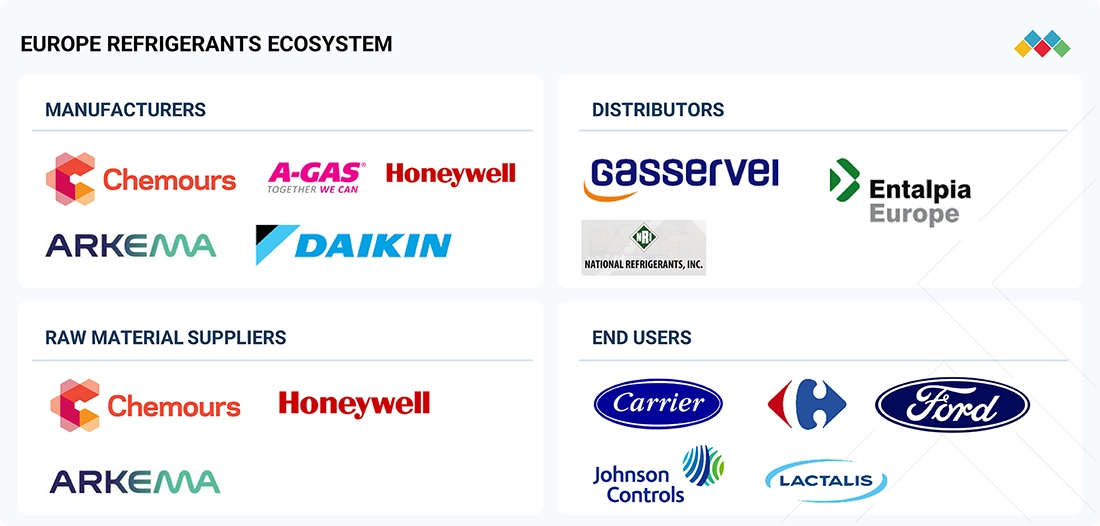
EUROPE REFRIGERANTS MARKET: COMMERCIAL USE CASES ACROSS INDUSTRIES
| COMPANY | USE CASE DESCRIPTION | BENEFITS |
|---|---|---|
 |
Bosch is shifting its heat pumps to propane (R-290) and other natural refrigerants. | It is also designing systems that use very small amounts of refrigerant and keep everything fully sealed to prevent leaks. | Full compliance with EU F-Gas regulations, reduced direct emissions, and improved seasonal energy efficiency |
 |
Carrier is switching to new, low-GWP refrigerants in its chillers and HVAC systems. | It is also adding smart sensors that quickly detect leaks and alert technicians. | Improved regulatory compliance, better energy performance, and lower service costs through early leak detection |
 |
Arcelik is using natural refrigerants like R-600a and R-290 in home refrigerators. | It has upgraded its factories with safer filling equipment and enhanced safety controls for handling flammable refrigerants. | Reduced environmental impact, lower flammability risk due to improved protocols, and increased energy efficiency in household appliances |
Logos and trademarks shown above are the property of their respective owners. Their use here is for informational and illustrative purposes only.
Related Ecosystem
Key Takeaways
- Croatia's refrigerants market is valued at USD 12.36 million in 2026 and will reach USD 15.03 million by 2031, growing at a 3.99% CAGR.
- Croatia is transitioning toward low-GWP refrigerants to comply with EU F-Gas Regulation and the Kigali Amendment.
- Key growth drivers in Croatia include modernization of HVAC systems, expansion of cold chain logistics, and increased industrial cooling demand.
- Croatia's market reflects the broader European shift toward sustainable refrigeration solutions and environmental compliance.
Europe Refrigerants Market Report Scope
| Report Metric | Details |
|---|---|
| Base Year | 2026 |
| Fastest Growing Segment | HEAT PUMPS (Application) |
| Forecast Period | 2026-2031 |
| Growth Rate | CAGR of 6.53% from 2026 to 2031 |
| Largest Segment | HYDROFLUOROOLEFIN (HFO) & BLENDS (Type) |
| Market Size Base Year (Billions) | ~USD 3.07 (2026) |
| Revenue Forecast (Billions) | ~USD 4.21 (2031) |
| Segments Covered | Type, Application |
Croatia Europe Refrigerants Market Report Segmentation
2 segment dimensions are covered across the global market.
By Type
- Ammonia
- Carbon Dioxide & Water
- Hydrofluorocarbons (Hfc) & Blends
- Hydrofluoroolefin (Hfo) & Blends
- Isobutane
- Propane And Propene/Propylene
By Application
- Air-Conditioning Systems
- Heat Pumps
- Macs
- Refrigeration Systems
- -Buses & Coaches
- -Commercial Refrigerators
- -Domestic Refrigerators
- -Heavy Trucks
- -Industrial Refrigerators
- -Light Commercial Vehicles
- -Others
- -Passenger Cars
- -Split Ac
- -Vrf
Target Audience
- Refrigerant Manufacturers & Suppliers : Need Croatia-specific demand forecasts and regulatory compliance data to optimize product portfolios, plan production capacity, and identify distribution partnerships in the Croatian market.
- HVAC & Cooling Equipment Distributors : Require localized market sizing and sector analysis to forecast inventory needs, negotiate supplier contracts, and develop sales strategies tailored to Croatian commercial and industrial customers.
- EU Environmental Compliance Consultants : Utilize Croatia-specific regulatory insights and market trends to advise clients on F-Gas Regulation compliance, refrigerant transitions, and sustainable cooling solutions in the Croatian market.
- Investment & Private Equity Firms : Need detailed Croatia market data to evaluate acquisition targets, assess growth potential, and make informed investment decisions in the regional refrigerants and cooling solutions sector.
- Commercial & Industrial Facility Managers : Require market intelligence on refrigerant availability, pricing trends, and compliance requirements in Croatia to optimize cooling system maintenance, upgrades, and operational cost management.
Reasons to Buy this Report
- Localized Market Sizing : Obtain precise market valuation for Croatia (USD 12.36M in 2026) with country-specific forecasts through 2031, enabling accurate budgeting and investment planning for Croatian operations.
- Regulatory Landscape Intelligence : Understand Croatia's EU compliance requirements and F-Gas Regulation implementation, critical for product development, market entry strategy, and competitive positioning in the Croatian market.
- Sector-Specific Demand Analysis : Identify growth opportunities across commercial, industrial, and residential refrigeration segments unique to Croatia's economy, including hospitality and food processing industries.
- Competitive Benchmarking : Compare Croatia's 3.99% CAGR against global 6.53% growth to assess market maturity, competitive intensity, and realistic expansion expectations for Croatian market penetration.
- Strategic Market Entry Planning : Leverage Croatia-specific insights to develop targeted go-to-market strategies, partnership opportunities, and distribution channel optimization for sustainable business growth in the region.
Frequently asked questions
What is the current size of Croatia's refrigerants market?
Croatia's refrigerants market is estimated at USD 12.36 million in 2026 and is projected to grow to USD 15.03 million by 2031.
What is the expected growth rate for refrigerants in Croatia?
Croatia's refrigerants market is expected to grow at a compound annual growth rate (CAGR) of 3.99% from 2026 to 2031.
Which regulations are driving Croatia's refrigerants market?
Croatia's market is primarily driven by the EU F-Gas Regulation and the Kigali Amendment, which mandate the phase-down of high-GWP refrigerants and adoption of environmentally friendly alternatives.
What industries are the primary consumers of refrigerants in Croatia?
Key industries in Croatia consuming refrigerants include food and beverage processing, pharmaceutical manufacturing, cold chain logistics, commercial HVAC, and industrial cooling applications.
How does Croatia's refrigerants market compare to the European average?
Croatia's CAGR of 3.99% is lower than the global European refrigerants market CAGR of 6.53%, reflecting Croatia's smaller market size and gradual industrial expansion.
RESEARCH METHODOLOGY
The study involved four major activities in estimating the market size for refrigerants in Europe. Exhaustive secondary research was done to collect information on the market, the peer market, and the parent market. The next step was to validate these findings, assumptions, and sizing with industry experts across the value chain through primary research. Both top-down and bottom-up approaches were employed to estimate the complete market size. After that, the market breakdown and data triangulation procedures were used to estimate the market size of the segments and subsegments.
Secondary Research
Secondary sources used in this study included annual reports, press releases, and investor presentations of companies; white papers; certified publications; articles from recognized authors; and gold-standard and silver-standard websites, such as Factiva, ICIS, Bloomberg, and others. The findings of this study were verified through primary research, which involved conducting extensive interviews with key officials, including CEOs, VPs, directors, and other executives. The breakdown of profiles of the primary interviewees is illustrated in the figure below:
Primary Research
The Europe refrigerants market comprises several stakeholders, such as raw material suppliers, end-product manufacturers, and regulatory organizations in the supply chain. Various primary sources from both the supply and demand sides of the market were interviewed to obtain qualitative and quantitative information.
BREAKDOWN OF PRIMARY PARTICIPANTS
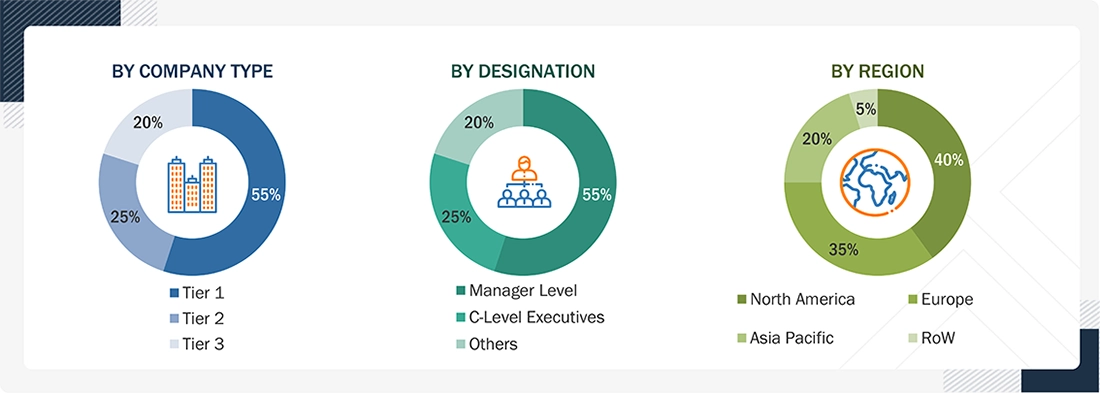
Notes: Tier 1, Tier 2, and Tier 3 companies are classified based on their market revenue in 2023/2024, available in the public domain, product portfolios, and geographical presence.
Other designations include consultants and sales, marketing, and procurement managers.
|
COMPANY NAME |
DESIGNATION |
|
Air Liquide |
Senior Manager |
|
Linde plc |
Innovation Manager |
|
The Chemours Company |
Vice-President |
|
Honeywell International Inc. |
Production Supervisor |
|
Arkema |
Sales Manager |
To know about the assumptions considered for the study, download the pdf brochure
Market Size Estimation
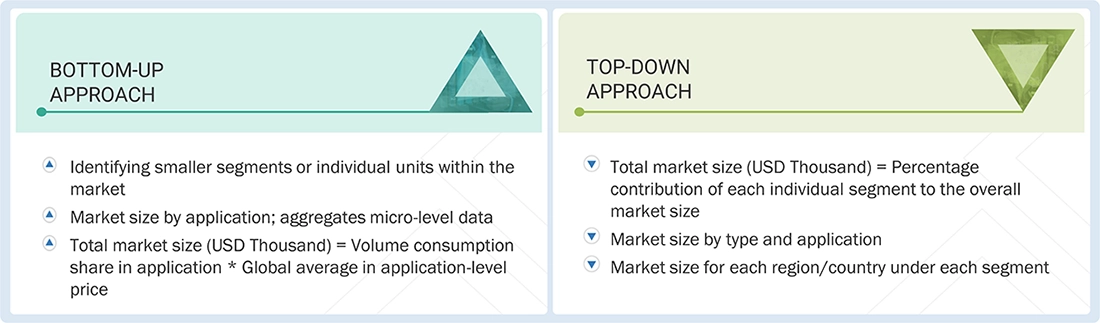
Both top-down and bottom-up approaches were used to estimate and validate the total size of the Europe refrigerants market. These methods were also used extensively to estimate the size of various subsegments in the market. The research methodology used to estimate the market size includes the following:
- The key players in the industry have been identified through extensive secondary research.
- The supply chain of the industry has been determined through primary and secondary research.
- All percentage shares, splits, and breakdowns have been determined using secondary sources and verified through primary sources.
- All possible parameters that affect the markets covered in this research study have been accounted for, viewed in extensive detail, verified through primary research, and analyzed to obtain the final quantitative and qualitative data.
Europe Refrigerants Market: Top-Down and Bottom-Up Approach
Data Triangulation
After determining the overall market size using the market size estimation processes explained above, the market was divided into several segments and subsegments. To complete the overall market engineering process and determine the exact statistics for each market segment and subsegment, data triangulation and market breakdown procedures were employed, as applicable. The data was triangulated by studying various factors and trends from both the demand and supply sides in the Europe refrigerants industry.
Market Definition
After determining the overall market size using the market size estimation processes explained above, the market was divided into several segments and subsegments. To complete the overall market engineering process and determine the exact statistics for each market segment and subsegment, data triangulation and market breakdown procedures were employed, as applicable. The data was triangulated by studying various factors and trends from both the demand and supply sides in the Europe refrigerants industry.
Key Stakeholders
- Europe refrigerant manufacturers
- Europe refrigerant distributors
- Raw material suppliers
- Government and research organizations
- Investment banks and private equity firms
Report Objectives
- To analyze and forecast the size of the global Europe refrigerants market in terms of value and volume
- To provide detailed information about the major drivers, restraints, challenges, and opportunities influencing the market growth
- To define, describe, and segment the market based on type and application
- To strategically analyze micromarkets with respect to individual growth trends, prospects, and their contribution to the overall market
- To strategically analyze the segmented markets with respect to individual growth trends, prospects, and contributions to the overall market
- To identify and analyze opportunities for stakeholders in the market
- To analyze competitive developments such as expansions, partnerships, joint ventures, mergers & acquisitions, agreements, and product launches in the market
- To strategically profile the key companies and comprehensively analyze their core competencies
Available customizations:
Along with the given market data, MarketsandMarkets offers customizations according to the company’s specific needs. The following customization options are available for the report:
Regional Analysis
- Further breakdown of a region with respect to a particular country or additional application
Company Information
- Detailed analysis and profiles of additional market players (up to five)
Get the Full Europe Refrigerants Market Report
Full forecast, segment splits, and company analysis for all Europe Refrigerants Market.
- Germany Europe Refrigerants Market
- UK Europe Refrigerants Market
- Italy Europe Refrigerants Market
- France Europe Refrigerants Market
- Spain Europe Refrigerants Market
- Poland Europe Refrigerants Market
- Austria Europe Refrigerants Market
- Switzerland Europe Refrigerants Market
- Denmark Europe Refrigerants Market
- Finland Europe Refrigerants Market
- Czech Republic Europe Refrigerants Market
- Greece Europe Refrigerants Market
- Romania Europe Refrigerants Market
- Latvia Europe Refrigerants Market
- Benelux Europe Refrigerants Market
- Bulgaria Europe Refrigerants Market
- Estonia Europe Refrigerants Market
- Lithuania Europe Refrigerants Market
- Rest Of Europe Europe Refrigerants Market
Need a Tailored Report?
Customize this report to your needs
Get 10% FREE Customization
Customize This Report
