
India EV Magnet Market (2025-2030)

The India EV Magnet Market was valued at $256 Million in 2025 and projected to reach to $469.6 Million by 2030, representing a compound annual growth rate of 12.9%. India's EV magnet market is poised for significant expansion as the country accelerates its transition toward electric mobility.


| Market Size in | USD 26.32 MN |
| Market Forecast in | |
| CAGR | |
| Forecast Period | |
| Units Considered | Value (USD MN) |
India EV Magnet Market Trends and Insights
- This growth trajectory reflects India's accelerating electric vehicle adoption and the corresponding demand for high-performance magnetic materials essential to EV powertrains.
- India's 12.9% compound annual growth rate outpaces the global average, positioning the country as a critical hub for EV magnet production and consumption within the Asia Pacific region. The expansion of India's EV magnet market is driven by government incentives, rising EV manufacturing capacity, and increasing domestic battery and motor production.
- India's automotive sector is rapidly transitioning toward electrification, with both domestic and international OEMs establishing manufacturing facilities that require advanced magnet solutions.
- Between 2025 and 2030, India is expected to capture significant market share as supply chain localization and cost competitiveness strengthen the country's position in the global EV magnet ecosystem..
Key Market Statistics
- CAGR (2025-2030) 12.9% CAGR
- Market Size, 2025 ~USD 256 Million
- Forecast, 2030 ~USD 469.6 Million
- Country India
India EV Magnet Market Overview
Market Valuation Growth :
India's EV magnet market is valued at USD 256.0 million in 2025 and is projected to reach USD 469.6 million by 2030, representing an 83.4% increase over five years.
Above-Average CAGR Performance :
India's market is growing at 12.9% CAGR, outpacing the global average of 12.4%, driven by rapid EV adoption and government incentives supporting electric vehicle manufacturing.
EV Adoption Acceleration :
India's electric vehicle sector is expanding rapidly with increasing domestic EV production, creating sustained demand for high-performance magnetic materials in powertrains and motor systems.
Strategic Manufacturing Hub :
India is positioning itself as a key EV manufacturing hub in Asia, attracting global OEMs and component suppliers, thereby boosting demand for specialized magnet materials.
India EV Magnet Market Dynamics
- Government initiatives like the Production-Linked Incentive (PLI) scheme and ambitious EV adoption targets are catalyzing domestic manufacturing capabilities and attracting foreign investment in the EV supply chain.
- The growing localization of EV component production will reduce import dependency and strengthen the magnet market ecosystem. By 2030, India's market is expected to benefit from increased vehicle electrification, technological advancements in magnet materials, and rising consumer demand for EVs.
- The convergence of supportive policies, infrastructure development, and competitive manufacturing costs positions India as a critical player in the global EV magnet supply chain, with sustained double-digit growth anticipated throughout the forecast period..
Market Ecosystem

EV MAGNET MARKET: COMMERCIAL USE CASES ACROSS INDUSTRIES
| COMPANY | USE CASE DESCRIPTION | BENEFITS |
|---|---|---|
 |
Permanent magnets integrated in electric bus and passenger EV propulsion systems | High power output, improved energy efficiency, and reliable performance in heavy-duty applications |
 |
High-performance NdFeB permanent magnets used in traction motors for battery electric vehicles | Higher torque density, improved driving range, enhanced motor efficiency, and compact drivetrain design |
 |
Magnet-based motor systems in hybrid and plug-in hybrid vehicles | Optimized fuel efficiency, reduced rare-earth dependency (advanced magnet designs), and improved thermal stability |
Logos and trademarks shown above are the property of their respective owners. Their use here is for informational and illustrative purposes only.
Related Ecosystem
Bulk Chemicals And Inorganics
- Corrosion Inhibitors
- Glycol Ethers
- Acetic Acid
- Acetone
- Ammonium Nitrate
- Basf se
- DOW CHEMICAL COMPANY
- Exxon Mobil Corporation
- AZELIS HOLDINGS SA
- Sinopec limited
Key Takeaways
- India's EV magnet market is valued at USD 256.0 million in 2025 and is forecast to grow to USD 469.6 million by 2030, representing an 83% increase over five years.
- India's 12.9% CAGR exceeds the global average of 12.4%, indicating accelerated market penetration driven by domestic EV adoption and manufacturing expansion.
- Government policies, supply chain localization, and cost competitiveness position India as a strategic hub for EV magnet production within Asia Pacific.
- Rising EV manufacturing capacity and battery production in India are creating sustained demand for high-performance magnetic materials through 2030.
EV Magnet Market Report Scope
| Report Metric | Details |
|---|---|
| Base Year | 2025 |
| Fastest Growing Segment | ELECTRIC BUSES & TRUCKS (Vehicle Type) |
| Forecast Period | 2025–2030 |
| Growth Rate | CAGR of 12.4% from 2025 to 2030 |
| Largest Segment | NDFEB (Magnet Type) |
| Market Size Base Year (Billions) | ~USD 5.3 (2025) |
| Revenue Forecast (Billions) | ~USD 9.5 (2030) |
| Segments Covered | Magnet Type, Vehicle Type, Application, Power Rating |
India EV Magnet Market Report Segmentation
4 segment dimensions are covered across the global market.
By Magnet Type
- Alnico
- Ferrite
- Ndfeb
- Other Types
- Smco
By Vehicle Type
- Buses & Trucks
- Electric Buses & Trucks
- Other Vehicle Types
- Passenger Cars
- Passenger Evs
By Application
- Battery & Charging Systems
- Control & Sensing Systems
- Electric Motor Cores & Drive Motors
- Other Applications
- Powertrain Components
By Power Rating
- High-Power Motors
- Low-Power Motors
- Medium-Power Motors
INDIA: EV MAGNET MARKET, BY APPLICATION, 2023–2030
| Segment | 2023 | 2024 | 2025 | 2026 | 2027 | 2028 | 2029 | 2030 | CAGR (%) |
|---|---|---|---|---|---|---|---|---|---|
| BATTERY & CHARGING SYSTEMS | 7.3 | 9.7 | 13.3 | 14.9 | 16.6 | 18.5 | 20.7 | 23.1 | 11.7 |
| CONTROL & SENSING SYSTEMS | 6.8 | 9.2 | 12.8 | 14.5 | 16.5 | 18.8 | 21.4 | 24.3 | 13.7 |
| ELECTRIC MOTOR CORES & DRIVE MOTORS | 99.8 | 135.1 | 186.9 | 211.5 | 239.2 | 270.7 | 306.2 | 346.3 | 13.1 |
| OTHER APPLICATIONS | 5.7 | 7.5 | 10.2 | 11.1 | 12.2 | 13.4 | 14.7 | 16.1 | 9.7 |
| POWERTRAIN COMPONENTS | 17.6 | 23.8 | 32.8 | 37 | 41.7 | 47 | 52.9 | 59.7 | 12.7 |
| TOTAL | 137.2 | 185.4 | 256 | 289 | 326.3 | 368.4 | 415.9 | 469.6 | 12.9 |
Target Audience
- EV Component Manufacturers : Manufacturers seeking to establish or expand operations in India need detailed market sizing and growth projections to justify capital investments and production capacity planning in the Indian magnet sector.
- Raw Material & Magnet Suppliers : Suppliers of rare earth elements and magnet materials require India-specific demand forecasts to optimize inventory management, pricing strategies, and supply agreements with Indian OEMs and Tier-1 suppliers.
- Automotive OEMs & Tier-1 Suppliers : Indian and international automotive manufacturers need localized market intelligence to guide sourcing decisions, supplier selection, and strategic partnerships within India's growing EV magnet ecosystem.
- Investment & Private Equity Firms : Investors evaluating opportunities in India's EV supply chain require validated market data and growth trajectories to assess portfolio companies, identify acquisition targets, and evaluate return potential.
- Government & Policy Bodies : Indian government agencies and policy makers need comprehensive market analysis to evaluate the effectiveness of EV incentive programs, guide industrial policy, and support strategic manufacturing initiatives.
Key Companies in the India EV Magnet Market
| Company | HQ | Ownership | Strongest segments |
|---|---|---|---|
| PROTERIAL, LTD. | Japan | Private Company | Specialty steel, molds, rolls, and tool steels,Automotive castings and components (ICE and EV),Magnetic materials and power electronics materials, |
| TDK CORPORATION | Japan | Public Company | Passive Components,Sensor Application Products,Magnetic Application Products, |
| SHIN-ETSU CHEMICAL CO., LTD. | Japan | Public Company | PVC and chlor-alkali chain (polyvinyl chloride, caustic soda, methanol, chloromethanes),Semiconductor materials (silicon wafers, encapsulants, photoresists, photomask blanks, synthetic quartz, pellicles),Silicones and functional materials (silicones, cellulose derivatives, vinyl chloride-vinyl acetate copolymers, liquid fluoroelastomers, synthetic pheromones), |
| JL MAG RARE-EARTH CO., LTD. | China | Public Company | NdFeB magnets for new energy vehicles and auto parts,Magnets for energy-saving variable-frequency air-conditioners,Wind power generation magnets, |
| NINGBO YUNSHENG CO., LTD. | China | Public Company | Sintered NdFeB magnets,Bonded NdFeB magnets,Magnetic assemblies (tiles, rings, rotors, linear motors), |
| BAOTOU TIANHE MAGNETICS TECHNOLOGY CO., LTD. | China | Public Company | Neodymium-iron-boron permanent magnets,Samarium-cobalt permanent magnets,Compression-molded magnets, |
| DAIDO STEEL CO., LTD | Japan | Public Company | Specialty steel for automotive and industrial machinery,Tool steel, mold steel, and die forging products,Stainless steel, nickel-based alloys, and superalloys, |
PROTERIAL, LTD.
PROTERIAL, LTD. is a Japanese private company founded in 1910 with 26,496 employees. The company operates as a major industrial manufacturer based in Japan.
TDK CORPORATION
TDK CORPORATION is a Japanese public company founded in 1935 with 106,545 employees. It is one of Japan's largest industrial corporations.
SHIN-ETSU CHEMICAL CO., LTD.
SHIN-ETSU CHEMICAL CO., LTD. is a Japanese public company founded in 1926 with 27,342 employees. The company operates as a major chemical manufacturer in Japan.
JL MAG RARE-EARTH CO., LTD.
JL MAG RARE-EARTH CO., LTD. is a Chinese public company founded in 2008 with 7,302 employees. The company specializes in rare-earth materials and related products.
NINGBO YUNSHENG CO., LTD.
NINGBO YUNSHENG CO., LTD. is a Chinese public company founded in 1994 with 3,581 employees. The company operates as an industrial manufacturer in China.
BAOTOU TIANHE MAGNETICS TECHNOLOGY CO., LTD.
BAOTOU TIANHE MAGNETICS TECHNOLOGY CO., LTD. is a Chinese public company founded in 2008 with 1,226 employees. The company specializes in magnetic materials and technology.
DAIDO STEEL CO., LTD
DAIDO STEEL CO., LTD is a Japanese public company founded in 1916 with 12,729 employees. The company is a major steel manufacturer based in Japan.
Reasons to Buy this Report
- Market Size & Growth Validation : Obtain precise market valuation data for India's EV magnet sector with verified CAGR of 12.9%, enabling accurate financial forecasting and investment decision-making for the 2025-2030 period.
- Competitive Positioning Intelligence : Understand India's market performance relative to global benchmarks (12.4% global CAGR) to identify competitive advantages and strategic opportunities in the rapidly growing Indian EV ecosystem.
- Supply Chain Localization Insights : Access detailed analysis of India's shift toward domestic magnet production, helping suppliers and manufacturers optimize supply chain strategies and capitalize on localization trends.
- Investment & Expansion Planning : Leverage comprehensive India-specific market data to evaluate expansion opportunities, assess market entry strategies, and identify high-growth segments within the Indian EV magnet value chain.
- Policy & Regulatory Context : Gain insights into India-specific government initiatives, PLI schemes, and regulatory frameworks driving market growth, essential for strategic planning and compliance in the Indian market.
Frequently asked questions
What is the current size of India's EV magnet market in 2025?
India's EV magnet market is valued at USD 256.0 million in 2025, reflecting strong demand from the country's growing electric vehicle sector.
What is the projected market size for India's EV magnet market by 2030?
India's EV magnet market is forecast to reach USD 469.6 million by 2030, representing significant growth over the five-year forecast period.
What is India's CAGR for the EV magnet market?
India's EV magnet market is expected to grow at a compound annual growth rate of 12.9% from 2025 to 2030, outpacing the global average.
What factors are driving growth in India's EV magnet market?
Key drivers include government EV incentives, expanding domestic EV manufacturing capacity, battery production growth, and supply chain localization initiatives across India.
How does India's EV magnet market compare to global trends?
India's 12.9% CAGR exceeds the global 12.4% average, demonstrating India's accelerated adoption of electric vehicles and magnetic material demand relative to worldwide markets.
RESEARCH METHODOLOGY
The study involves two major activities to estimate the current market size for the EV magnet market. Exhaustive secondary research was conducted to collect information on the market, the peer market, and the parent market. The next step was to validate these findings, assumptions, and sizing with industry experts across the value chain through primary research. Both top-down and bottom-up approaches were employed to estimate the total market size. After that, market breakdown and data triangulation were used to estimate the market size of segments and subsegments.
Secondary Research
Secondary sources for this research study include financial statements of companies offering EV magnets and information from various trade, business, and professional associations. Secondary research was used to obtain critical information about the industry’s value chain, the total pool of key players, market classification, and segmentation by industry trends down to the bottom-most level and by regional markets. The secondary data was collected and analyzed to determine the overall size of the EV magnet market, which was validated by primary respondents.
Primary Research
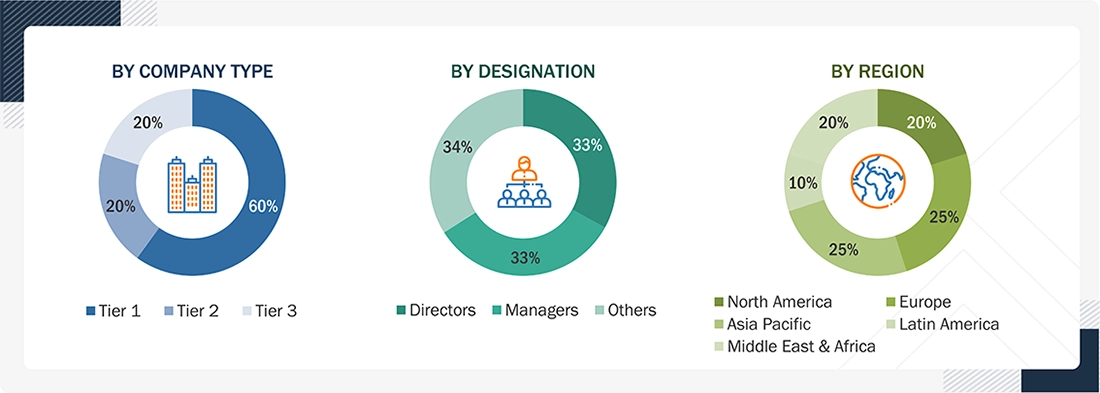
Extensive primary research was conducted after gathering information on the EV magnet market through secondary research. Several primary interviews were conducted with market experts from both the demand and supply sides across major countries in North America, Europe, the Asia-Pacific region, the Middle East & Africa, and Latin America. Primary data was collected through questionnaires, emails, and telephonic interviews. The primary sources from the supply side included industry experts such as Chief X Officers (CXOs), Vice Presidents (VPs), Directors from business development, marketing, and product development/innovation teams, and related key executives from EV magnet industry vendors; system integrators; component providers; distributors; and key opinion leaders.
Interviews were conducted to gather insights such as market statistics, revenue data for products and services, market breakdowns, market size estimates, market forecasts, and data triangulation. Primary research also helped in understanding the various trends related to magnet type, vehicle type, power rating, application, and region.
Stakeholders on the demand side, such as CIOs, CTOs, CSOs, and installation teams of customers/end users who use EV magnet, were interviewed to understand the buyer’s perspective on suppliers, products, component providers, current usage of EV magnet, and the future outlook of their business, which will affect the overall market.
The following is the breakdown of primary respondents:
Market Size Estimation
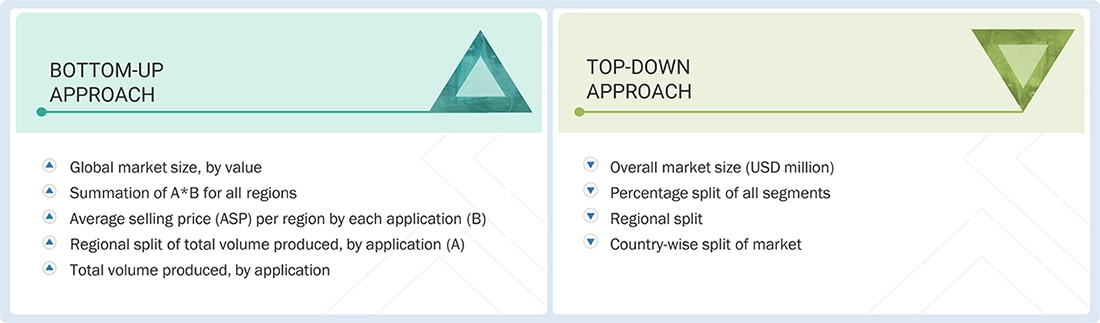
The research methodology used to estimate the size of the EV magnet market includes the following details. The market size was estimated from the demand side. It was upsized based on procurement and modernization activities for EV magnets across different applications at the regional level. These procurements provide information on the aspects of the EV magnet industry for each application. For each application, all possible segments of the EV magnet market were integrated and mapped.
Data Triangulation
After arriving at the overall market size through the market size estimation process described above, the total market was divided into several segments and subsegments. The data triangulation and market breakdown procedures described below were implemented, wherever applicable, to complete the overall market engineering process and arrive at the exact statistics for various market segments and subsegments. The data was triangulated by analyzing factors and trends from both the demand and supply sides. In addition, the market size was validated using both the top-down and bottom-up approaches.
Market Definition
The EV magnet market refers to the global market for permanent magnets specifically designed and manufactured for use in electric-vehicle propulsion systems. These magnets are primarily Neodymium Iron Boron (NdFeB) and, in select applications, Samarium Cobalt (SmCo). They are integrated into traction motors, such as permanent magnet synchronous motors (PMSMs), to enable high torque density, compact motor design, improved energy efficiency, and extended driving range.
The market encompasses the production, processing, and supply of rare-earth magnetic materials; magnet fabrication (sintering, bonding, coating, and precision machining); and their integration into electric drivetrains across passenger EVs, light commercial EVs, and electric buses. It also covers advancements in heavy rare-earth optimization, magnet recycling, and localized manufacturing to strengthen supply chain security and support large-scale EV electrification globally.
Key Stakeholders
- EV Magnet Manufacturers
- Government and Research Organizations
- National and Local Government Organizations
- Institutional Investors
Report Objectives
- To define, describe, and forecast the EV magnet market size in terms of volume and value
- To provide detailed information regarding the key factors, such as drivers, restraints, opportunities, and challenges influencing market growth
- To analyze and project the global EV magnet market by magnet type, by vehicle type, power rating, application, and region
- To forecast the market size concerning main regions (along with country-level data), namely, Europe, North America, Asia Pacific, Middle East & Africa, Latin America, and to analyze the significant region-specific trends
- To strategically analyze micromarkets with respect to individual growth trends, prospects, and contributions of the submarkets to the overall market
- To analyze market opportunities and the competitive landscape for stakeholders and market leaders
- To assess recent market developments and competitive strategies, such as agreements, contracts, acquisitions, and product developments/product launches, to draw the competitive landscape
- To strategically profile the key market players and comprehensively analyze their core competencies
Available customizations:
MarketsandMarkets offers the following customizations for this market report:
- Additional country-level analysis of the EV magnet market
Product Analysis
- Product matrix, which provides a detailed comparison of the product portfolio of each company’s market
Get the Full EV Magnet Market Report
Full forecast, segment splits, and company analysis for all EV Magnet Market.
- US EV Magnet Market
- Canada EV Magnet Market
- Germany EV Magnet Market
- France EV Magnet Market
- UK EV Magnet Market
- Spain EV Magnet Market
- Italy EV Magnet Market
- China EV Magnet Market
- Japan EV Magnet Market
- South Korea EV Magnet Market
- Brazil EV Magnet Market
- Mexico EV Magnet Market
- South Africa EV Magnet Market
- Rest Of Europe EV Magnet Market
- Rest Of Asia Pacific EV Magnet Market
- Rest Of Latin America EV Magnet Market
- GCC EV Magnet Market
- –Rest Of GCC EV Magnet Market
Need a Tailored Report?
Customize this report to your needs
Get 10% FREE Customization
Customize This Report
