
South Korea Gastrointestinal Products Market (2024-2029)

The South Korea Gastrointestinal Products Market was valued at $90.3 Million in 2024 and projected to reach to $120.6 Million by 2029, representing a compound annual growth rate of 6.0%. South Korea's gastrointestinal products market is positioned for steady growth, expanding from USD 90.3 million in 2024 to USD 120.6 million by 2029 at a 6.0% CAGR.


| Market Size in | USD 26.32 MN |
| Market Forecast in | |
| CAGR | |
| Forecast Period | |
| Units Considered | Value (USD MN) |
South Korea Gastrointestinal Products Market Trends and Insights
- South Korea's aging population and rising prevalence of digestive disorders are driving demand for innovative GI therapeutics and diagnostic solutions.
- The market in South Korea benefits from advanced healthcare infrastructure, strong pharmaceutical R&D capabilities, and increasing consumer awareness of gastrointestinal health. South Korea's gastrointestinal products sector is characterized by a competitive landscape dominated by both domestic and international players.
- South Korea's regulatory environment supports rapid product approvals and market entry, fostering innovation in treatment options for conditions such as irritable bowel syndrome, gastroesophageal reflux disease, and inflammatory bowel disease.
- Between 2024 and 2029, South Korea is expected to see accelerated adoption of biologics and personalized medicine approaches in GI care..
Key Market Statistics
- CAGR (2024-2029) 6.0% CAGR
- Market Size, 2024 ~USD 90.3 Million
- Forecast, 2029 ~USD 120.6 Million
- Country South Korea
South Korea Gastrointestinal Products Market Overview
Aging Population Driving Growth :
South Korea's rapidly aging demographic, with over 18% of the population aged 65+, is significantly increasing demand for gastrointestinal therapeutics and preventive care solutions tailored to elderly patients.
Advanced Healthcare Infrastructure :
South Korea's world-class healthcare system and high adoption of cutting-edge medical technologies create a favorable environment for innovative GI diagnostic and treatment products.
Rising Digestive Disorder Prevalence :
Increasing incidence of irritable bowel syndrome, gastroesophageal reflux disease, and inflammatory bowel conditions among South Korean consumers is fueling market expansion and product innovation.
Strong Pharmaceutical R&D Ecosystem :
South Korea's robust pharmaceutical and biotech sector, supported by government initiatives, is accelerating development of novel GI therapeutics and personalized treatment options.
South Korea Gastrointestinal Products Market Dynamics
- The market is driven by demographic shifts, increased healthcare spending, and growing consumer awareness of digestive health.
- Advanced diagnostic technologies and prescription medications dominate the market landscape. Future growth will be supported by continued investment in GI research, expansion of over-the-counter wellness products, and integration of digital health solutions for patient management.
- South Korea's competitive pharmaceutical market and strong regulatory framework ensure sustained innovation and market development through 2029..
Market Ecosystem
Related Ecosystem
Medical Devices
- Polymerase Chain Reaction (PCR)
- Magnetic Resonance Imaging (MRI)
- Disposable Autoinjectors
- Pulse Oximeters
- Blood Pressure Monitors
- Medtronic plc
- Abbott Laboratories
- Stryker Corporation
- Becton, Dickinson and Company
- CONMED Corporation
Key Takeaways
- South Korea's gastrointestinal products market is valued at USD 90.3 million in 2024 and will reach USD 120.6 million by 2029.
- South Korea's market is growing at a 6.0% CAGR, driven by an aging population and increased prevalence of digestive disorders.
- South Korea's advanced healthcare infrastructure and strong pharmaceutical R&D ecosystem support rapid innovation and product adoption.
- South Korea's regulatory environment enables faster market entry for biologics and personalized medicine solutions in gastrointestinal care.
Gastrointestinal Products Market Report Scope
| Report Metric | Details |
|---|---|
| Base Year | 2024 |
| Fastest Growing Segment | IRRITABLE BOWEL SYNDROME (IBS) (Disease) |
| Forecast Period | 2024-2029 |
| Growth Rate | CAGR of 6.1% from 2024 to 2029 |
| Largest Segment | ENDOSCOPY DEVICES (Device) |
| Market Size Base Year (Billions) | ~USD 14.65 (2024) |
| Revenue Forecast (Billions) | ~USD 19.7 (2029) |
| Segments Covered | Device, Type, Disease, End User |
South Korea Gastrointestinal Products Market Report Segmentation
4 segment dimensions are covered across the global market.
By Device
- Ablation Devices
- Biopsy Devices
- Endoscopy Devices
- Motility Testing Devices
- Other Gastroenterology/ Gastrointestinal Devices
- Other Gastroenterology/Gastrointestinal Devices
- Ph Monitoring Devices
- Stenting Devices
By Type
- 4-Hour Ph Impedance Testing Devices
- Ambulatory Ph Monitoring Systems
- Anorectal Manometry Devices
- Biliary Stents
- Capsule Endoscopes
- Colonic Stents
- Cryoablation Devices
- Duodenal Stents
- Esophageal Manometry Devices
- Esophageal Ph Monitoring Catheters
- Esophageal Stents
- Flexible Endoscopes
- Gastric Balloons
- Gastrointestinal Tubes
- Hemorrhoid Treatment Devices
- Laser Ablation Devices
- Microwave Ablation Devices
- Needle Biopsy Devices
- Other Ablation Devices
- Other Biopsy Devices
- Other Endoscopy Devices
- Other Motility Testing Devices
- Pancreatic Stents
- Radiofrequency Ablation Devices
- Rigid Endoscopes
- Wireless Ph Monitoring Capsules
By Disease
- Gastroesophageal Reflux Disease (Gerd)
- Gastrointestinal Cancers
- Inflammatory Bowel Disease (Ibd)
- Irritable Bowel Syndrome (Ibs)
- Other Diseases
By End User
- Ambulatory Surgical Centers & Independent Diagnostic Centers
- Clinics
- Hospitals
- Other End Users
Target Audience
- Pharmaceutical Manufacturers : South Korean and international pharma companies need market-specific data to develop GI product portfolios, optimize pricing strategies, and navigate South Korea's competitive regulatory environment.
- Medical Device Companies : Diagnostic and therapeutic device manufacturers require insights into South Korea's advanced healthcare infrastructure and adoption rates to commercialize GI diagnostic and treatment innovations.
- Healthcare Investors & PE Firms : Investment professionals evaluating opportunities in South Korea's healthcare sector need detailed market analysis, growth projections, and competitive dynamics to assess GI market investments.
- Healthcare Consultants & Advisors : Strategy consultants supporting clients in South Korea's healthcare industry require country-specific market intelligence to develop informed business strategies and market recommendations.
- Government & Policy Makers : South Korean health authorities and policymakers need market data to inform healthcare policy, reimbursement decisions, and resource allocation for gastrointestinal disease management.
Reasons to Buy this Report
- Demographic Insights for South Korea : Understand how South Korea's aging population structure directly impacts GI product demand, enabling targeted product development and market positioning strategies specific to Korean consumer needs.
- Competitive Landscape Analysis : Gain detailed intelligence on South Korean pharmaceutical competitors, market share distribution, and competitive positioning to inform strategic market entry or expansion decisions.
- Regulatory & Reimbursement Framework : Access critical information on South Korea's unique regulatory pathways, pricing controls, and insurance reimbursement policies essential for successful product commercialization.
- Growth Opportunity Identification : Identify high-potential segments within South Korea's GI market, including emerging therapeutic areas and underserved patient populations for targeted investment and innovation.
- Market Sizing & Forecasting : Leverage precise market valuation data and 5-year forecasts specific to South Korea to support business planning, financial projections, and resource allocation decisions.
Frequently asked questions
What is the current size of South Korea's gastrointestinal products market?
South Korea's gastrointestinal products market was valued at USD 90.3 million in 2024.
What is the projected market size for South Korea by 2029?
South Korea's gastrointestinal products market is projected to reach USD 120.6 million by 2029.
What is the CAGR for South Korea's gastrointestinal products market?
South Korea's gastrointestinal products market is expected to grow at a CAGR of 6.0% from 2024 to 2029.
What factors are driving growth in South Korea's gastrointestinal products market?
South Korea's market growth is driven by an aging population, rising prevalence of digestive disorders, advanced healthcare infrastructure, and strong pharmaceutical R&D capabilities.
Which gastrointestinal conditions are most prevalent in South Korea?
South Korea experiences significant prevalence of irritable bowel syndrome, gastroesophageal reflux disease, and inflammatory bowel disease, driving demand for targeted treatments.
RESEARCH METHODOLOGY
The study involved four major activities to estimate the current size of the gastroenterology products market. Exhaustive secondary research was done to collect information on the market and its different subsegments. The next step was to validate these findings, assumptions, and sizing with industry experts across the value chain through primary research. Both top-down and bottom-up approaches were employed to estimate the complete market size. Thereafter, market breakdown and data triangulation procedures were used to estimate the market size of the segments and subsegments.
Secondary Research
In the secondary research process, various secondary sources such as annual reports, press releases & investor presentations of companies, white papers, certified publications, articles by recognized authors, gold-standard & silver-standard websites, regulatory bodies, and databases (such as D&B Hoovers, Bloomberg Business, and Factiva) were referred to to identify and collect information for the study of Gastrointestinal Products Market. It was also used to obtain important information about the top players, market classification, and segmentation according to industry trends to the bottom-most level, geographic markets, and key developments related to the market. A database of the key industry leaders was also prepared using secondary research.
Primary Research
Extensive primary research was conducted after obtaining information regarding the Gastroenterology Products Market scenario through secondary research. Several primary interviews were conducted with market experts from both the demand and supply sides across major countries of North America, Europe, Asia Pacific, Latin America, and the Middle East & Africa. Primary data was collected through questionnaires, emails, and telephonic interviews. The primary sources from the supply side included various industry experts, such as Chief X Officers (CXOs), Vice Presidents (VPs), Directors from business development, marketing, product development/innovation teams, and related key executives from manufacturers; distributors operating in the gastrointestinal products market.; and key opinion leaders.
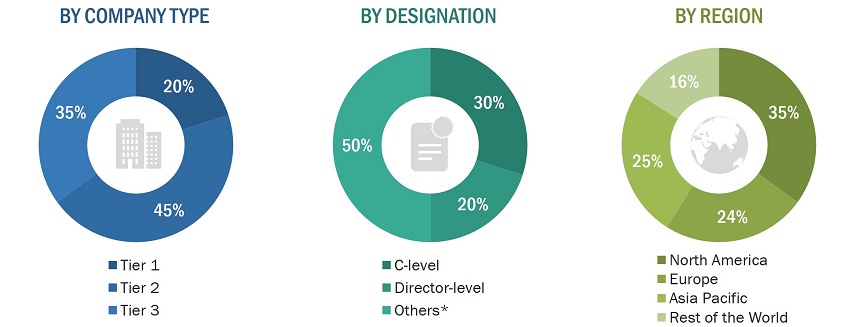
Primary interviews were conducted to gather insights such as market statistics, data on revenue collected from the products and services, market breakdowns, market size estimations, market forecasting, and data triangulation. Primary research also helped in understanding the various trends related to technology, application, vertical, and region. Stakeholders from the demand side customers/end users who are using infection control products were interviewed to understand the buyer’s perspective on the suppliers, products, and their current usage and the future outlook of their business, which will affect the overall market. the following is a breakdown of the primary respondents:
To know about the assumptions considered for the study, download the pdf brochure
Market Size Estimation
The research methodology used to estimate the size of the gastrointestinal products market includes the following details. The market sizing of the market was undertaken from the global side.
Country-Level Analysis
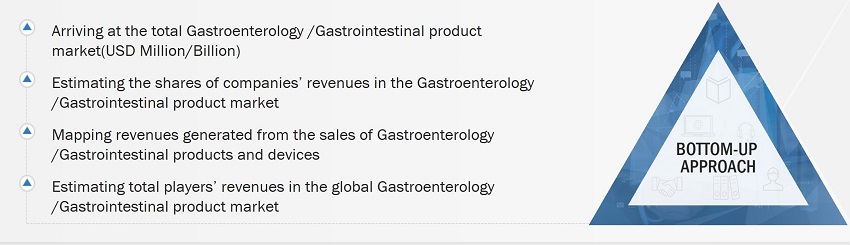
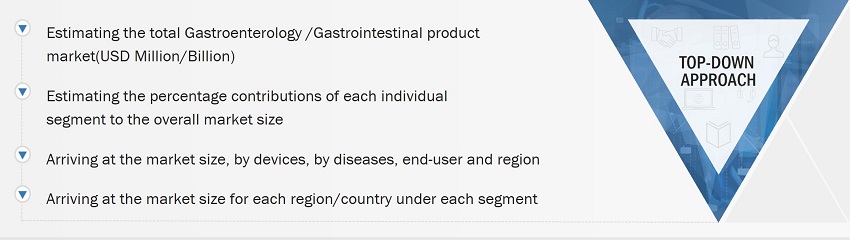
The size of the gastrointestinal products market was obtained from the annual presentations of leading players and secondary data available in the public domain. The share of products in the overall gastrointestinal products market was obtained from secondary data and validated by primary participants to arrive at the total gastroenterology products market. Primary participants further validated the numbers.
Geographic Market Assessment (By Region & Country)
-
Approach 1:
- Geographic revenue contributions/splits of leading players in the market (wherever available) and respective growth trends.
-
Approach 2:
- Geographic adoption trends for individual product segments by end users and growth prospects for each of the segments (assumptions and indicative estimates validated from primary interviews).
At each point, the assumptions and approaches were validated through industry experts contacted during primary research. Considering the limitations of data available from secondary research, revenue estimates for individual companies (for the overall Gastroenterology/Gastrointestinal Products Market and geographic market assessment) were ascertained based on a detailed analysis of their respective product offerings, geographic reach/strength (direct or through distributors or suppliers), and the shares of the leading players in a particular region or country.
Global Gastrointestinal Products Market Size: Bottom-Up Approach
Global Gastrointestinal Products Market Size: Top-Down Approach
To know about the assumptions considered for the study, Request for Free Sample Report
Data Triangulation
After arriving at the overall market size—using the market size estimation processes—the market was split into several segments and subsegments. To complete the overall market engineering process and arrive at the exact statistics of each market segment and sub-segment, data triangulation and market breakdown procedures were employed, wherever applicable. The data was triangulated by studying various factors and trends from both the demand and supply sides in the gastrointestinal products market.
Market Definition
Gastroenterology products encompass a variety of medical devices, diagnostic tools, and pharmaceuticals designed to diagnose, treat, and manage diseases and disorders of the gastrointestinal tract. These products include endoscopes, capsule endoscopy systems, ablation devices, stents, and specialized medications aimed at conditions like GERD, IBD, and colorectal cancer. Their purpose is to improve patient outcomes by offering advanced solutions for both diagnostic and therapeutic procedures within the GI tract.
Key Stakeholders
- Medical Device Manufacturers
- Healthcare Institutions (hospitals and outpatient clinics)
- Distributors and Suppliers
- Research Institutes
- Health Insurance Payers
- Market Research and Consulting Firms
Report Objectives
- To define, describe, segment, and forecast the global gastrointestinal Products Market by devices, diseases end users, and region.
- To provide detailed information about the factors influencing market growth (such as drivers, restraints, opportunities, and challenges)
- To analyze micromarkets1 concerning individual growth trends, prospects, and contributions to the overall gastrointestinal products market.
- To analyze market opportunities for stakeholders and provide details of the competitive landscape for key players.
- To forecast the size of the gastroenterology products market in five main regions along with their respective key countries, namely, North America, Europe, the Asia Pacific, Latin America, and the Middle East & Africa
- To profile key players in the global gastrointestinal products market and comprehensively analyze their core competencies2 and market shares.
- To track and analyze competitive developments such as acquisitions, expansions, partnerships, agreements, and collaborations; and product launches and approvals.
- To benchmark players within the gastrointestinal products market using the "Competitive Leadership Mapping" framework, which analyzes market players on various parameters within the broad categories of business and product strategy.
Available Customizations
With the given market data, MarketsandMarkets offers customizations as per the company’s specific needs. The following customization options are available for the report:
Product Analysis
- Product matrix, which gives a detailed comparison of the product portfolios of each company
Geographic Analysis
- Further breakdown of the Latin American apheresis into specific countries and, the Middle East, and Africa apheresis into specific countries and further breakdown of the European apheresis into specific countries
Get the Full Gastrointestinal Products Market Report
Full forecast, segment splits, and company analysis for all Gastrointestinal Products Market.
- Canada Gastrointestinal Products Market
- US Gastrointestinal Products Market
- Germany Gastrointestinal Products Market
- UK Gastrointestinal Products Market
- France Gastrointestinal Products Market
- Italy Gastrointestinal Products Market
- Spain Gastrointestinal Products Market
- Japan Gastrointestinal Products Market
- China Gastrointestinal Products Market
- India Gastrointestinal Products Market
- Australia Gastrointestinal Products Market
- Brazil Gastrointestinal Products Market
- Mexico Gastrointestinal Products Market
- Rest Of Asia Pacific Gastrointestinal Products Market
- -Rest Of Europe Gastrointestinal Products Market
- -Rest Of Latin America Gastrointestinal Products Market
Need a Tailored Report?
Customize this report to your needs
Get 10% FREE Customization
Customize This Report
