
Europe Gastrointestinal Products Market (2024-2029)

The Europe Gastrointestinal Products Market was valued at $4128.9 Million in 2024 and projected to reach to $5438 Million by 2029, representing a compound annual growth rate of 5.7%. Europe's gastrointestinal products market is positioned for steady growth, driven by demographic shifts toward an older population with higher incidence of digestive disorders.


| Market Size in | USD 26.32 MN |
| Market Forecast in | |
| CAGR | |
| Forecast Period | |
| Units Considered | Value (USD MN) |
Europe Gastrointestinal Products Market Trends and Insights
- This steady growth reflects Europe's aging population, rising prevalence of digestive disorders, and increasing healthcare expenditure across the region.
- Europe maintains a mature and well-regulated market with strong adoption of advanced therapeutic solutions and diagnostic tools for gastrointestinal conditions. The European market benefits from robust healthcare infrastructure, high awareness of gastrointestinal health, and significant investment in pharmaceutical and medical device innovation.
- Europe's regulatory frameworks, including those established by the European Medicines Agency (EMA), ensure product quality and safety, driving consumer confidence.
- Between 2024 and 2029, Europe is expected to see accelerated demand driven by lifestyle-related digestive disorders, increased endoscopic procedures, and the expansion of over-the-counter gastrointestinal remedies across the continent..
Key Market Statistics
- CAGR (2024-2029) 5.7% CAGR
- Market Size, 2024 ~USD 4128.9 Million
- Forecast, 2029 ~USD 5438 Million
- Geography Europe
Europe Gastrointestinal Products Market Overview
Aging Population Driving Demand :
Europe's rapidly aging demographic is significantly increasing the prevalence of gastrointestinal disorders, creating sustained demand for diagnostic and therapeutic GI products across the region.
Germany Leads European Market :
Germany dominates Europe's GI products market with a valuation of $945.8 million in 2024, reflecting strong healthcare infrastructure and high adoption of advanced gastrointestinal treatments.
Mature Regulatory Framework :
Europe's well-established regulatory environment, including CE marking and EMA approval processes, ensures product quality and safety, fostering consumer confidence and market stability.
Rising Healthcare Expenditure :
Increasing healthcare spending across European nations supports investment in GI product innovation and accessibility, contributing to the market's projected 5.7% CAGR through 2029.
Europe Gastrointestinal Products Market Dynamics
- The region's mature healthcare systems and robust reimbursement policies create a favorable environment for both established and innovative GI solutions.
- Key European markets including Germany, UK, and France continue to invest in advanced diagnostic and therapeutic technologies. The forecast period through 2029 anticipates sustained expansion at 5.7% CAGR, supported by increasing awareness of gastrointestinal health, rising prevalence of conditions like IBS and GERD, and growing adoption of minimally invasive procedures.
- Europe's stringent regulatory standards and emphasis on evidence-based medicine will continue to shape product development and market dynamics..
Market Ecosystem
Related Ecosystem
Medical Devices
- Polymerase Chain Reaction (PCR)
- Magnetic Resonance Imaging (MRI)
- Disposable Autoinjectors
- Pulse Oximeters
- Blood Pressure Monitors
- Medtronic plc
- Abbott Laboratories
- Stryker Corporation
- Becton, Dickinson and Company
- CONMED Corporation
Key Takeaways
- Europe's gastrointestinal products market is valued at $4,128.9 million in 2024 and will reach $5,438.0 million by 2029, growing at 5.7% CAGR.
- Europe's aging demographic and rising prevalence of digestive disorders are primary drivers of sustained market expansion through 2029.
- Strong regulatory oversight and healthcare infrastructure in Europe support high product adoption and consumer trust in gastrointestinal solutions.
- Europe's market growth is fueled by increased endoscopic procedures, lifestyle-related conditions, and expanding OTC gastrointestinal product availability.
Gastrointestinal Products Market Report Scope
| Report Metric | Details |
|---|---|
| Base Year | 2024 |
| Fastest Growing Segment | IRRITABLE BOWEL SYNDROME (IBS) (Disease) |
| Forecast Period | 2024-2029 |
| Growth Rate | CAGR of 6.1% from 2024 to 2029 |
| Largest Segment | ENDOSCOPY DEVICES (Device) |
| Market Size Base Year (Billions) | ~USD 14.65 (2024) |
| Revenue Forecast (Billions) | ~USD 19.7 (2029) |
| Segments Covered | Device, Type, Disease, End User |
Europe Gastrointestinal Products Market Report Segmentation
4 segment dimensions are covered across the global market.
By Device
- Ablation Devices
- Biopsy Devices
- Endoscopy Devices
- Motility Testing Devices
- Other Gastroenterology/ Gastrointestinal Devices
- Other Gastroenterology/Gastrointestinal Devices
- Ph Monitoring Devices
- Stenting Devices
By Type
- 4-Hour Ph Impedance Testing Devices
- Ambulatory Ph Monitoring Systems
- Anorectal Manometry Devices
- Biliary Stents
- Capsule Endoscopes
- Colonic Stents
- Cryoablation Devices
- Duodenal Stents
- Esophageal Manometry Devices
- Esophageal Ph Monitoring Catheters
- Esophageal Stents
- Flexible Endoscopes
- Gastric Balloons
- Gastrointestinal Tubes
- Hemorrhoid Treatment Devices
- Laser Ablation Devices
- Microwave Ablation Devices
- Needle Biopsy Devices
- Other Ablation Devices
- Other Biopsy Devices
- Other Endoscopy Devices
- Other Motility Testing Devices
- Pancreatic Stents
- Radiofrequency Ablation Devices
- Rigid Endoscopes
- Wireless Ph Monitoring Capsules
By Disease
- Gastroesophageal Reflux Disease (Gerd)
- Gastrointestinal Cancers
- Inflammatory Bowel Disease (Ibd)
- Irritable Bowel Syndrome (Ibs)
- Other Diseases
By End User
- Ambulatory Surgical Centers & Independent Diagnostic Centers
- Clinics
- Hospitals
- Other End Users
EUROPE: GASTROENTEROLOGY/GASTROINTESTINAL PRODUCTS MARKET, BY END USER, 2022–2029
| Segment | 2022 | 2023 | 2024 | 2025 | 2026 | 2027 | 2028 | 2029 | CAGR (%) |
|---|---|---|---|---|---|---|---|---|---|
| AMBULATORY SURGICAL CENTERS & INDEPENDENT DIAGNOSTIC CENTERS | 1183.1 | 1242.6 | 1310.2 | 1383.2 | 1460.7 | 1543.3 | 1631 | 1917.4 | 7.9 |
| CLINICS | 508.8 | 523.9 | 541.5 | 560.5 | 580.3 | 601.1 | 622.8 | 717.8 | 5.8 |
| HOSPITALS | 1588.8 | 1685.3 | 1794.7 | 1913.5 | 2040.8 | 2177.7 | 2324.3 | 2154.3 | 3.7 |
| OTHER END USERS | 450.7 | 465.3 | 482.4 | 500.7 | 519.8 | 540 | 561 | 648.5 | 6.1 |
| TOTAL | 3731.4 | 3917.1 | 4128.9 | 4357.8 | 4601.7 | 4862.1 | 5139.1 | 5438 | 5.7 |
REST OF EUROPE: GASTROENTEROLOGY/GASTROINTESTINAL PRODUCTS MARKET, BY END USER, 2022–2029
| Segment | 2022 | 2023 | 2024 | 2025 | 2026 | 2027 | 2028 | 2029 | CAGR (%) |
|---|---|---|---|---|---|---|---|---|---|
| AMBULATORY SURGICAL CENTERS & INDEPENDENT DIAGNOSTIC CENTERS | 211 | 219.3 | 228.7 | 238.9 | 249.5 | 260.8 | 272.6 | 316.9 | 6.7 |
| CLINICS | 91 | 92.7 | 94.8 | 97.1 | 99.4 | 101.8 | 104.4 | 119 | 4.6 |
| HOSPITALS | 271.4 | 284.8 | 300 | 316.3 | 333.7 | 352.1 | 371.6 | 338.1 | 2.4 |
| OTHER END USERS | 80.8 | 82.6 | 84.7 | 86.9 | 89.3 | 91.8 | 94.3 | 107.8 | 4.9 |
| TOTAL | 654.2 | 679.3 | 708.2 | 739.2 | 771.9 | 806.5 | 842.8 | 881.8 | 4.5 |
Target Audience
- Pharmaceutical & Medical Device Manufacturers : Manufacturers need detailed European market data to develop region-specific product strategies, identify high-growth country markets, and navigate regulatory requirements for market entry.
- Healthcare Investors & Private Equity : Investors require comprehensive market sizing and growth forecasts for Europe to evaluate acquisition targets, assess portfolio companies, and identify emerging opportunities in GI healthcare.
- Hospital & Clinical Networks : Healthcare providers need market intelligence on GI product availability, pricing trends, and adoption rates across European countries to optimize procurement and clinical outcomes.
- Market Consultants & Strategy Firms : Consultants leverage European market data to support client advisory work, competitive analysis, and strategic planning for healthcare organizations operating across multiple European markets.
- Government & Health Policy Bodies : Policymakers and health authorities use market research to inform healthcare spending decisions, reimbursement policies, and regulatory frameworks for gastrointestinal products in Europe.
Countries within Europe - compare and drill down
| Country | 2025 size (native) |
|---|---|
| Germany | USD 945.8 Million |
| UK | USD 550.3 Million |
| France | USD 395.5 Million |
| Italy | USD 303.5 Million |
| Spain | USD 183.1 Million |
| Rest Of Europe | USD 489.1 Million |
Country market size visualization
Reasons to Buy this Report
- Country-Level Market Insights : Access detailed market valuations for Germany ($945.8M), UK ($550.3M), France ($395.5M), Italy ($303.5M), and Spain ($183.1M) to identify high-opportunity markets within Europe.
- Demographic & Epidemiological Analysis : Understand Europe's aging population trends and rising prevalence of gastrointestinal disorders to forecast demand and tailor product strategies for specific European markets.
- Regulatory & Reimbursement Landscape : Gain insights into Europe's mature regulatory framework, CE marking requirements, and country-specific reimbursement policies that influence market entry and pricing strategies.
- Competitive Positioning : Benchmark your products and strategies against established competitors in Europe's well-regulated market to identify gaps and opportunities for differentiation and growth.
- 5-Year Growth Projections : Leverage accurate forecasts showing Europe's GI market expansion from $4,128.9M to $5,438M by 2029 to support investment decisions and long-term business planning.
Frequently asked questions
What is the current size of Europe's gastrointestinal products market?
Europe's gastrointestinal products market was valued at $4,128.9 million in 2024 and is expected to grow to $5,438.0 million by 2029.
What is the projected growth rate for Europe's gastrointestinal products market?
Europe's gastrointestinal products market is projected to grow at a CAGR of 5.7% from 2024 to 2029.
What factors are driving growth in Europe's gastrointestinal products market?
Key drivers include Europe's aging population, rising prevalence of digestive disorders, increased endoscopic procedures, lifestyle-related conditions, and expanding OTC product availability.
How does Europe's regulatory environment impact the gastrointestinal products market?
Europe's stringent regulatory frameworks, including EMA oversight, ensure high product quality and safety standards, which build consumer confidence and support market growth.
Which segments are expected to grow fastest in Europe's gastrointestinal products market?
Advanced therapeutic solutions, diagnostic tools, and over-the-counter gastrointestinal remedies are expected to experience accelerated growth across Europe through 2029.
RESEARCH METHODOLOGY
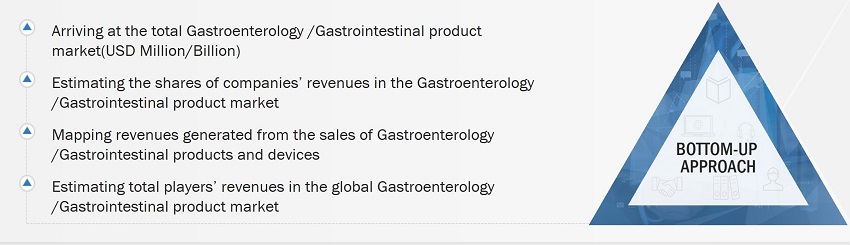
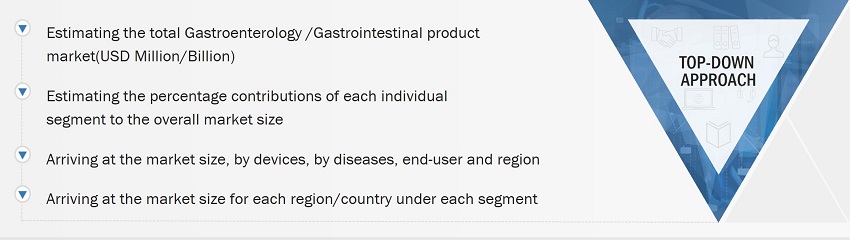
The study involved four major activities to estimate the current size of the gastroenterology products market. Exhaustive secondary research was done to collect information on the market and its different subsegments. The next step was to validate these findings, assumptions, and sizing with industry experts across the value chain through primary research. Both top-down and bottom-up approaches were employed to estimate the complete market size. Thereafter, market breakdown and data triangulation procedures were used to estimate the market size of the segments and subsegments.
Secondary Research
In the secondary research process, various secondary sources such as annual reports, press releases & investor presentations of companies, white papers, certified publications, articles by recognized authors, gold-standard & silver-standard websites, regulatory bodies, and databases (such as D&B Hoovers, Bloomberg Business, and Factiva) were referred to to identify and collect information for the study of Gastrointestinal Products Market. It was also used to obtain important information about the top players, market classification, and segmentation according to industry trends to the bottom-most level, geographic markets, and key developments related to the market. A database of the key industry leaders was also prepared using secondary research.
Primary Research
Extensive primary research was conducted after obtaining information regarding the Gastroenterology Products Market scenario through secondary research. Several primary interviews were conducted with market experts from both the demand and supply sides across major countries of North America, Europe, Asia Pacific, Latin America, and the Middle East & Africa. Primary data was collected through questionnaires, emails, and telephonic interviews. The primary sources from the supply side included various industry experts, such as Chief X Officers (CXOs), Vice Presidents (VPs), Directors from business development, marketing, product development/innovation teams, and related key executives from manufacturers; distributors operating in the gastrointestinal products market.; and key opinion leaders.
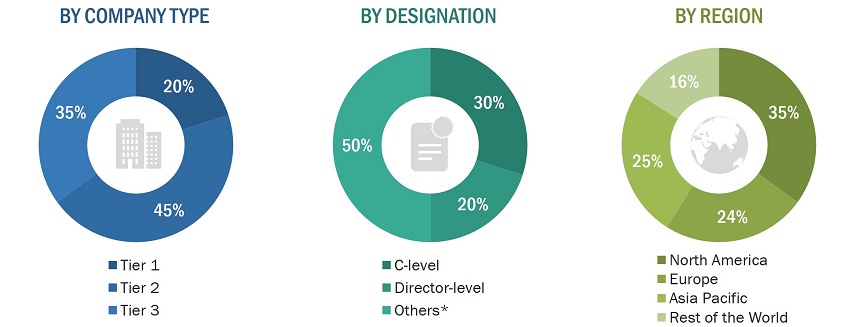
Primary interviews were conducted to gather insights such as market statistics, data on revenue collected from the products and services, market breakdowns, market size estimations, market forecasting, and data triangulation. Primary research also helped in understanding the various trends related to technology, application, vertical, and region. Stakeholders from the demand side customers/end users who are using infection control products were interviewed to understand the buyer’s perspective on the suppliers, products, and their current usage and the future outlook of their business, which will affect the overall market. the following is a breakdown of the primary respondents:
To know about the assumptions considered for the study, download the pdf brochure
Market Size Estimation
The research methodology used to estimate the size of the gastrointestinal products market includes the following details. The market sizing of the market was undertaken from the global side.
Country-Level Analysis
The size of the gastrointestinal products market was obtained from the annual presentations of leading players and secondary data available in the public domain. The share of products in the overall gastrointestinal products market was obtained from secondary data and validated by primary participants to arrive at the total gastroenterology products market. Primary participants further validated the numbers.
Geographic Market Assessment (By Region & Country)
-
Approach 1:
- Geographic revenue contributions/splits of leading players in the market (wherever available) and respective growth trends.
-
Approach 2:
- Geographic adoption trends for individual product segments by end users and growth prospects for each of the segments (assumptions and indicative estimates validated from primary interviews).
At each point, the assumptions and approaches were validated through industry experts contacted during primary research. Considering the limitations of data available from secondary research, revenue estimates for individual companies (for the overall Gastroenterology/Gastrointestinal Products Market and geographic market assessment) were ascertained based on a detailed analysis of their respective product offerings, geographic reach/strength (direct or through distributors or suppliers), and the shares of the leading players in a particular region or country.
Global Gastrointestinal Products Market Size: Bottom-Up Approach
Global Gastrointestinal Products Market Size: Top-Down Approach
To know about the assumptions considered for the study, Request for Free Sample Report
Data Triangulation
After arriving at the overall market size—using the market size estimation processes—the market was split into several segments and subsegments. To complete the overall market engineering process and arrive at the exact statistics of each market segment and sub-segment, data triangulation and market breakdown procedures were employed, wherever applicable. The data was triangulated by studying various factors and trends from both the demand and supply sides in the gastrointestinal products market.
Market Definition
Gastroenterology products encompass a variety of medical devices, diagnostic tools, and pharmaceuticals designed to diagnose, treat, and manage diseases and disorders of the gastrointestinal tract. These products include endoscopes, capsule endoscopy systems, ablation devices, stents, and specialized medications aimed at conditions like GERD, IBD, and colorectal cancer. Their purpose is to improve patient outcomes by offering advanced solutions for both diagnostic and therapeutic procedures within the GI tract.
Key Stakeholders
- Medical Device Manufacturers
- Healthcare Institutions (hospitals and outpatient clinics)
- Distributors and Suppliers
- Research Institutes
- Health Insurance Payers
- Market Research and Consulting Firms
Report Objectives
- To define, describe, segment, and forecast the global gastrointestinal Products Market by devices, diseases end users, and region.
- To provide detailed information about the factors influencing market growth (such as drivers, restraints, opportunities, and challenges)
- To analyze micromarkets1 concerning individual growth trends, prospects, and contributions to the overall gastrointestinal products market.
- To analyze market opportunities for stakeholders and provide details of the competitive landscape for key players.
- To forecast the size of the gastroenterology products market in five main regions along with their respective key countries, namely, North America, Europe, the Asia Pacific, Latin America, and the Middle East & Africa
- To profile key players in the global gastrointestinal products market and comprehensively analyze their core competencies2 and market shares.
- To track and analyze competitive developments such as acquisitions, expansions, partnerships, agreements, and collaborations; and product launches and approvals.
- To benchmark players within the gastrointestinal products market using the "Competitive Leadership Mapping" framework, which analyzes market players on various parameters within the broad categories of business and product strategy.
Available Customizations
With the given market data, MarketsandMarkets offers customizations as per the company’s specific needs. The following customization options are available for the report:
Product Analysis
- Product matrix, which gives a detailed comparison of the product portfolios of each company
Geographic Analysis
- Further breakdown of the Latin American apheresis into specific countries and, the Middle East, and Africa apheresis into specific countries and further breakdown of the European apheresis into specific countries
Get the Full Gastrointestinal Products Market Report
Full forecast, segment splits, and company analysis for all Gastrointestinal Products Market.
- Canada Gastrointestinal Products Market
- US Gastrointestinal Products Market
- Germany Gastrointestinal Products Market
- UK Gastrointestinal Products Market
- France Gastrointestinal Products Market
- Italy Gastrointestinal Products Market
- Spain Gastrointestinal Products Market
- Japan Gastrointestinal Products Market
- China Gastrointestinal Products Market
- India Gastrointestinal Products Market
- Australia Gastrointestinal Products Market
- South Korea Gastrointestinal Products Market
- Brazil Gastrointestinal Products Market
- Mexico Gastrointestinal Products Market
- Rest Of Asia Pacific Gastrointestinal Products Market
- -Rest Of Europe Gastrointestinal Products Market
- -Rest Of Latin America Gastrointestinal Products Market
Need a Tailored Report?
Customize this report to your needs
Get 10% FREE Customization
Customize This Report
