
Brazil Genotyping Assay Market (2024-2029)

The Brazil Genotyping Assay Market was valued at $201.8 Million in 2024 and projected to reach to $374.6 Million by 2029, representing a compound annual growth rate of 13.2%. Brazil's genotyping assay market is positioned for sustained expansion driven by healthcare modernization, increased precision medicine adoption, and growing genomic research investments.


| Market Size in | USD 26.32 MN |
| Market Forecast in | |
| CAGR | |
| Forecast Period | |
| Units Considered | Value (USD MN) |
Brazil Genotyping Assay Market Trends and Insights
- This growth trajectory reflects Brazil's increasing adoption of precision medicine and genomic testing across clinical diagnostics, pharmaceutical development, and personalized healthcare applications.
- Brazil's healthcare infrastructure modernization and rising investment in biotechnology research are driving demand for advanced genotyping technologies. The Brazilian market benefits from a growing patient population seeking genetic testing for disease risk assessment and treatment optimization.
- Brazil's regulatory environment and expanding laboratory capabilities are enabling wider deployment of genotyping assays across public and private healthcare sectors.
- With a compound annual growth rate of 13.2% through 2029, Brazil is positioning itself as a key Latin American hub for genomic diagnostics and precision medicine innovation..
Key Market Statistics
- CAGR (2024-2029) 13.2% CAGR
- Market Size, 2024 ~USD 201.8 Million
- Forecast, 2029 ~USD 374.6 Million
- Country Brazil
Brazil Genotyping Assay Market Overview
Market Valuation & Growth :
Brazil's genotyping assay market reached USD 201.8 million in 2024, with a robust CAGR of 13.2% projected through 2029, reaching USD 374.6 million. This growth outpaces many emerging markets due to increasing healthcare investments and genomic research initiatives.
Precision Medicine Adoption :
Brazilian healthcare institutions are rapidly integrating precision medicine and genomic testing into clinical practice. Major hospitals and diagnostic centers in São Paulo, Rio de Janeiro, and Brasília are expanding genotyping capabilities for cancer diagnostics, pharmacogenomics, and rare disease identification.
Regulatory & Infrastructure Development :
Brazil's ANVISA (National Health Surveillance Agency) has streamlined approvals for advanced diagnostic assays. Concurrent modernization of laboratory infrastructure and increased government funding for genomic research centers are accelerating market penetration across public and private healthcare sectors.
Pharmaceutical & Clinical Applications :
Growing demand for genotyping assays in pharmaceutical development, clinical trials, and personalized treatment protocols is driving market expansion. Brazilian biotech companies and CROs are increasingly adopting genotyping technologies for drug efficacy studies and patient stratification.
Brazil Genotyping Assay Market Dynamics
- The country's large population and rising prevalence of chronic diseases create significant demand for personalized diagnostic solutions.
- Public-private partnerships and government initiatives supporting genomic infrastructure development are expected to accelerate market growth through 2029. Key growth drivers include expanding clinical laboratory networks, rising awareness among healthcare providers, and increasing patient demand for personalized treatment options.
- Investment in genomic research centers and collaborations with international biotech firms will further strengthen Brazil's market position.
- The convergence of improved reimbursement policies and technological accessibility will make genotyping assays more widely available across urban and emerging healthcare markets..
Market Ecosystem
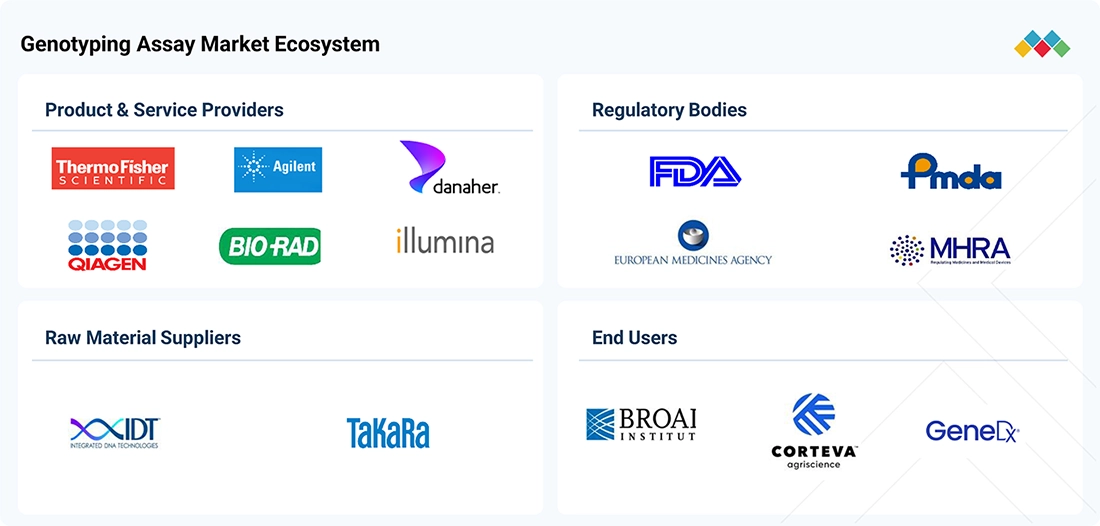
GENOTYPING ASSAY MARKET: COMMERCIAL USE CASES ACROSS INDUSTRIES
| COMPANY | USE CASE DESCRIPTION | BENEFITS |
|---|---|---|
 |
Provides genotyping technologies, including TaqMan SNP Genotyping Assays and Applied Biosystems real-time PCR platforms, for detecting genetic variations in research, pharmacogenomics, and clinical applications | Enables accurate detection of genetic variants, supports high-throughput genotyping workflows, and facilitates applications in drug discovery, genetic research, and personalized medicine |
 |
Provides microarray-based genotyping solutions, including Infinium arrays, and sequencing technologies for genome-wide association studies, population genomics, and genetic variation analysis | Supports high-throughput genetic analysis, enables large-scale population studies, and facilitates research into disease susceptibility, pharmacogenomics, and precision medicine |
Logos and trademarks shown above are the property of their respective owners. Their use here is for informational and illustrative purposes only.
Related Ecosystem
Advanced Genetic Sequencing
- Polymerase Chain Reaction (PCR)
- Reagents
- Assay Kits
- Bioinformatics
- Flow Cytometry
- Thermo Fisher Scientific Inc.
- Illumina, Inc.
- Qiagen N.V.
- Agilent Technologies, Inc.
- Danaher Corporation
Key Takeaways
- Brazil's genotyping assay market is valued at USD 201.8 million in 2024 and will nearly double to USD 374.6 million by 2029.
- Brazil is experiencing a 13.2% compound annual growth rate, driven by precision medicine adoption and genomic testing expansion.
- Brazil's healthcare modernization and biotechnology investments are accelerating demand for advanced genotyping technologies.
- Brazil is emerging as a leading Latin American market for genomic diagnostics and personalized healthcare solutions.
Genotyping Assay Market Report Scope
| Report Metric | Details |
|---|---|
| Base Year | 2024 |
| Fastest Growing Segment | PHARMACOGENOMICS (Application) |
| Forecast Period | 2024–2029 |
| Growth Rate | CAGR of 13.8% from 2024 to 2029 |
| Largest Segment | REAGENTS & KITS (Product & Service) |
| Market Size Base Year (Billions) | ~USD 19.44 (2024) |
| Revenue Forecast (Billions) | ~USD 37.1 (2029) |
| Segments Covered | Product & Service, Type, Technology, Application, End User |
Brazil Genotyping Assay Market Report Segmentation
5 segment dimensions are covered across the global market.
By Product & Service
- Bioinformatics
- Genotyping Services
- Instruments
- Reagents & Kits
By Type
- Amplified Fragment Length Polymorphism
- Analyzers
- Digital Polymerase Chain Reaction
- Next-Generation Sequencing
- Pyrosequencing
- Real-Time Polymerase Chain Reaction
- Restriction Fragment Length Polymorphism
- Sanger Sequencing
- Sequencers & Amplifiers
- Services
- Single-Strand Confirmation Polymorphism
- Software
By Technology
- Capillary Electrophoresis
- Matrix-Assisted Laser Desorption/Ionization-Time Of Flight Mass Spectrometry
- Microarrays
- Other Technologies
- Polymerase Chain Reaction
- Sequencing
By Application
- Agricultural Biotechnology
- Animal Genetics
- Diagnostics & Personalized Medicines
- Other Applications
- Pharmacogenomics
By End User
- Academic & Research Institutes
- Diagnostic Laboratories
- Other End Users
- Pharmaceutical & Biopharmaceutical Companies
BRAZIL: GENOTYPING ASSAY MARKET, BY END USER, 2022–2029
| Segment | 2022 | 2023 | 2024 | 2025 | 2026 | 2027 | 2028 | 2029 | CAGR (%) |
|---|---|---|---|---|---|---|---|---|---|
| ACADEMIC & RESEARCH INSTITUTES | 66.9 | 92.2 | 101.2 | 111.8 | 124.3 | 139 | 156.4 | 177.1 | 11.8 |
| DIAGNOSTIC LABORATORIES | 81.8 | 89.8 | 99.3 | 110.5 | 123.7 | 139.3 | 157.9 | 180.1 | 12.6 |
| OTHER END USERS | 78.1 | 65.4 | 71.4 | 78.3 | 86.5 | 96.1 | 107.4 | 120.8 | 11.1 |
| PHARMACEUTICAL & BIOPHARMACEUTICAL COMPANIES | 108.7 | 120.6 | 134.7 | 151.3 | 171 | 194.4 | 222.3 | 255.7 | 13.7 |
| TOTAL | 335.4 | 368 | 406.6 | 451.9 | 505.5 | 568.8 | 644 | 733.6 | 12.5 |
Target Audience
- Diagnostic Laboratory Operators : Brazilian diagnostic centers and clinical laboratories need market data to expand genotyping service offerings, optimize capital investments in genomic equipment, and understand competitive positioning within the rapidly growing precision medicine segment.
- Pharmaceutical & Biotech Companies : Brazilian and international pharma firms require market intelligence to identify partnership opportunities, assess clinical trial genotyping requirements, and develop pharmacogenomics-based drug development strategies tailored to the Brazilian population.
- Healthcare System Administrators : Hospital networks and public healthcare administrators need insights into genotyping assay adoption trends, reimbursement models, and infrastructure requirements to make informed decisions about integrating genomic diagnostics into patient care pathways.
- Medical Device & Assay Manufacturers : Equipment and reagent suppliers targeting Brazil need detailed market forecasts, regulatory requirements, and customer demand patterns to optimize product development, pricing strategies, and distribution channel selection for the Brazilian market.
- Healthcare Investors & Consultants : Investment firms and management consultants evaluating opportunities in Brazilian healthcare require comprehensive market data, growth projections, and competitive analysis to support due diligence, portfolio decisions, and strategic advisory recommendations.
Key Companies in the Brazil Genotyping Assay Market
| Company | HQ | Ownership | Strongest segments |
|---|---|---|---|
| SEQUENOM,INC. | United States | Private Company | MaterniT21 PLUS and VisibiliT NIPT,MaterniT21 GENOME and microarray (NextView),HerediT carrier screening (CF, Ashkenazi, SMA, fragile X), |
| DECODE GENETICS | Iceland | Private Company | Target discovery and validation for Amgen pipeline,Large-scale genome sequencing and analytics services,Data access, licensing, and collaborative research programs, |
| TRANSGENOMIC, INC. | United States | Public Company | Oncology and pharmacogenomics clinical trial services,Clinical oncology testing services (patient diagnostics and monitoring),Multiplexed ICE COLD-PCR reagents and technology licensing, |
| IMMUCOR, INC. | United States | Private Company | Transfusion serology reagents (manual and Capture),Automated serology instruments (NEO, Echo, Capture Workstation),Transplant & molecular assays (HEA/HPA typing, Array Imaging System, BASIS), |
| GENERAL ELECTRIC | United States | Public Company | Commercial Engines OE,Commercial Engines Services & MRO,Defense & Propulsion Technologies – Engines, |
| THERMO FISHER SCIENTIFIC INC. | United States | Public Company | Life Sciences Solutions,Analytical Instruments,Specialty Diagnostics, |
| ILLUMINA, INC. | United States | Public Company | Sequencing consumables (reagents, flow cells, library prep),Sequencing instruments,Array-based instruments and consumables, |
| DANAHER CORPORATION | United States | Public Company | Biotechnology,Life Sciences,Diagnostics, |
| QIAGEN | Netherlands | Public Company | Sample technology consumables and instruments,Molecular diagnostics assays (TB, oncology, sexual and reproductive health),PCR and enzymes (qPCR, dPCR, research PCR kits), |
| EUROFINS SCIENTIFIC | Luxembourg | Public Company | Food and Feed Testing,Environment Testing,Biopharma and Clinical Diagnostics, |
| AGILENT TECHNOLOGIES, INC. | United States | Public Company | Life Sciences and Diagnostics Markets,Agilent CrossLab,Applied Markets, |
| BIO-RAD LABORATORIES, INC. | United States | Public Company | Clinical Diagnostics,Life Science Research Tools,Other / Services and Software, |
| MERCK KGAA | Germany | Public Company | Life Science (lab reagents, consumables, bioprocessing, CDMO/testing),Healthcare (oncology, neurology, immunology, fertility, rare diseases),Electronics (semiconductor materials, specialty gases, display and OLED materials), |
| STANDARD BIOTOOLS | United States | Public Company | Proteomics platforms and consumables (SomaScan, CyTOF, Hyperion),Genomics and qPCR systems (Biomark X9 and related assays),Services, software, and other consumables, |
| REVVITY | United States | Public Company | Diagnostics instruments and automation (AutoDELFIA, GSP, EUROIMMUN, IDS-iSYS, EUROLabWorkstation),Diagnostics reagents, assays, and kits (prenatal, newborn, autoimmune, infectious disease, T-SPOT),Life science reagents and consumables (BioLegend, Dharmacon, NEXTFLEX, AlphaLISA portfolio), |
| PACBIO | United States | Public Company | Long-read instruments (Revio, Sequel, Vega),Long-read consumables (SMRT cells, library prep, binding and sequencing kits),Short-read instruments and consumables (Onso platform), |
| OXFORD NANOPORE TECHNOLOGIES PLC | United Kingdom | Public Company | PromethION platforms and consumables,MinION and portable platforms,GridION and mid-throughput systems, |
SEQUENOM,INC.
Sequenom, Inc. is a private molecular diagnostics company founded in 1994 in the United States with 434 employees. The company specializes in genetic testing and analysis.
DECODE GENETICS
Decode Genetics is a private genomics and biotechnology company founded in 1996 in Iceland with 331 employees. The company conducts genetic research and develops diagnostics based on genomic data.
TRANSGENOMIC, INC.
Transgenomic, Inc. is a public molecular diagnostics company founded in 1997 in the United States with 19 employees. The company develops genetic testing and analysis technologies.
IMMUCOR, INC.
Immucor, Inc. is a private blood bank and transfusion diagnostics company founded in 1982 in the United States with 1,125 employees. The company provides immunohematology and transfusion medicine solutions.
GENERAL ELECTRIC
General Electric is a public multinational conglomerate founded in 1892 in the United States with 57,000 employees. The company operates across diverse industries including healthcare, energy, and industrial sectors.
THERMO FISHER SCIENTIFIC INC.
Thermo Fisher Scientific Inc. is a public life sciences and diagnostics company founded in 1956 in the United States with 125,000 employees. The company provides laboratory equipment, reagents, and analytical instruments globally.
ILLUMINA, INC.
Illumina, Inc. is a public genomics and sequencing company founded in 1998 in the United States with 8,625 employees. The company develops DNA sequencing and genetic analysis technologies.
DANAHER CORPORATION
Danaher Corporation is a public diversified conglomerate founded in 1969 in the United States with 59,000 employees. The company operates across life sciences, diagnostics, and environmental solutions.
QIAGEN
Qiagen is a public molecular diagnostics and life sciences company founded in 1984 in the Netherlands with 5,500 employees. The company provides sample preparation, assay, and sequencing technologies.
EUROFINS SCIENTIFIC
Eurofins Scientific is a public laboratory services and diagnostics company founded in 1987 in Luxembourg with 65,694 employees. The company operates a global network of laboratories providing testing and analysis services.
AGILENT TECHNOLOGIES, INC.
Agilent Technologies, Inc. is a public life sciences and diagnostics company founded in 1999 in the United States with 18,000 employees. The company manufactures analytical instruments and laboratory equipment.
BIO-RAD LABORATORIES, INC.
Bio-Rad Laboratories, Inc. is a public life sciences and diagnostics company founded in 1952 in the United States with 7,450 employees. The company develops and manufactures clinical diagnostics and life science research products.
MERCK KGAA
Merck KGaA is a public pharmaceutical and life sciences company founded in 1668 in Germany with 59,077 employees. The company provides pharmaceuticals, chemicals, and laboratory solutions globally.
STANDARD BIOTOOLS
Standard Biotools is a public life sciences instrumentation company founded in 1999 in the United States with 387 employees. The company develops microfluidics and single-cell analysis technologies.
REVVITY
Revvity is a public life sciences and diagnostics company founded in 1937 in the United States with 11,000 employees. The company provides analytical instruments, reagents, and software solutions.
PACBIO
PacBio is a public genomics sequencing company founded in 2000 in the United States with 485 employees. The company develops long-read DNA sequencing technologies.
OXFORD NANOPORE TECHNOLOGIES PLC
Oxford Nanopore Technologies PLC is a public genomics sequencing company founded in 2005 in the United Kingdom with 1,316 employees. The company develops portable DNA and RNA sequencing technologies.
Reasons to Buy this Report
- Market Size & Growth Validation : Obtain precise market valuation data for Brazil's genotyping assay sector with verified CAGR of 13.2% through 2029. Validate investment decisions and revenue projections with country-specific market intelligence and competitive positioning analysis.
- Regional Expansion Strategy : Develop targeted market entry strategies for Brazil with insights into regional healthcare infrastructure, regulatory landscape, and adoption patterns. Identify high-growth segments and geographic hotspots within major Brazilian cities and emerging markets.
- Competitive Landscape Intelligence : Understand Brazil-specific competitive dynamics, key market players, and differentiation opportunities. Benchmark your offerings against local and international competitors operating in the Brazilian genotyping assay market.
- Regulatory & Reimbursement Insights : Navigate Brazil's ANVISA approval processes, reimbursement policies, and healthcare system requirements. Access actionable guidance on regulatory compliance and market access strategies specific to Brazilian diagnostic and pharmaceutical sectors.
- Customer Segmentation & Demand Analysis : Identify and prioritize target customer segments including hospitals, diagnostic laboratories, pharmaceutical companies, and research institutions in Brazil. Understand their specific genotyping assay needs and purchasing behaviors for effective market penetration.
Frequently asked questions
What is the current size of Brazil's genotyping assay market?
Brazil's genotyping assay market was valued at USD 201.8 million in 2024 and is expected to grow to USD 374.6 million by 2029.
What is the growth rate of Brazil's genotyping assay market?
Brazil's genotyping assay market is growing at a compound annual growth rate of 13.2% from 2024 to 2029.
What factors are driving growth in Brazil's genotyping assay market?
Growth in Brazil is driven by increased adoption of precision medicine, expanding healthcare infrastructure, rising biotechnology investments, and growing demand for personalized genetic testing.
Which applications are most prominent in Brazil's genotyping assay market?
Brazil's market is dominated by clinical diagnostics, pharmaceutical development, disease risk assessment, and personalized treatment optimization applications.
How does Brazil's genotyping assay market compare to other Latin American countries?
Brazil represents the largest and fastest-growing genotyping assay market in Latin America, positioning itself as a regional hub for genomic diagnostics and precision medicine.
RESEARCH METHODOLOGY
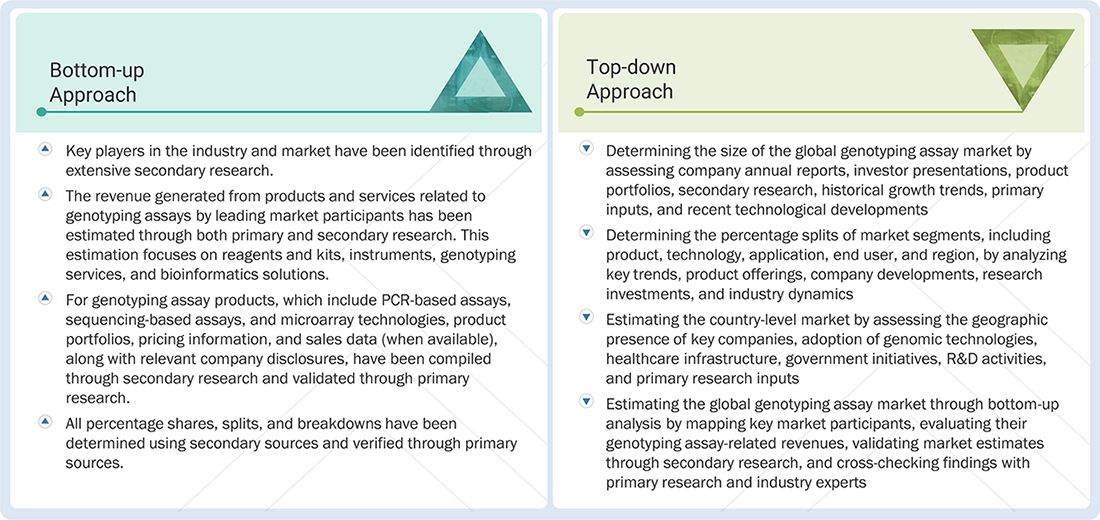
This study involved four major activities to estimate the current size of the genotyping assay market. Exhaustive secondary research was conducted to gather information on the market, its peer markets, and its parent market. These findings, assumptions, and sizing were then validated with industry experts across the value chain through primary research. Both top-down and bottom-up approaches were employed to estimate the total market size. Following this, data triangulation was used to estimate the market size of segments and subsegments.
Secondary Research
Secondary research was primarily used to identify and gather information for the extensive, technical, market-oriented, and commercial study. Secondary sources for this study included publications from government agencies, such as the National Center for Biotechnology Information (NCBI), National Institutes of Health (NIH), World Health Organization (WHO), Food and Drug Administration (FDA), European Medicines Agency (EMA), Pharmaceutical Research and Manufacturers of America (PhRMA), Global Cancer Observatory (GLOBOCAN), Centers for Disease Control and Prevention (CDC), and European Federation of Biotechnology. Secondary sources also included corporate and regulatory filings (such as annual reports, SEC filings, investor presentations, and financial statements); business magazines and research journals; press releases; and trade, business, and professional associations. These sources were used to obtain key information on major players, global product revenues, market classification, segmentation by industry trends and regional/country-level markets, market developments, and technology perspectives. Secondary data were collected and analyzed to determine the overall size of the global genotyping assay market, and the findings were validated through primary research.
Primary Research
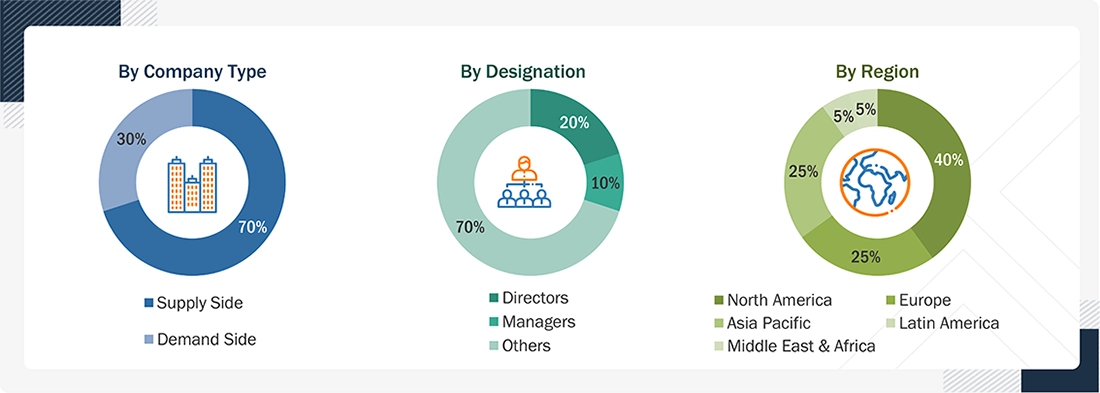
In-depth interviews were conducted with primary respondents, including key industry participants, subject-matter experts (SMEs), C-level executives of key market players, and industry consultants, among others, to obtain and verify critical qualitative and quantitative information and to assess market prospects. Primary sources from both the supply and demand sides of the market were interviewed to gather qualitative and quantitative data. The following is a breakdown of the primary respondents:
To know about the assumptions considered for the study, download the pdf brochure
Market Size Estimation
The global size of the genotyping assay market was estimated using multiple approaches. A detailed market estimation approach was used to estimate and validate the market value and other dependent submarkets. These methods were also used extensively to estimate the size of various subsegments in the market. The research methodology used to estimate the market size includes the following:
Genotyping Assay Market : Top-Down and Bottom-Up Approach
Data Triangulation
After estimating the overall market size through the market size estimation process, the total market was divided into several segments. To complete the overall market engineering process and arrive at the exact statistics for all segments, the data triangulation procedure was employed; it involved analyzing various factors and trends from both the demand and supply sides.
Market Definition
Genotyping assays are laboratory techniques that identify genetic variations in an individual's DNA. These assays detect single-nucleotide polymorphisms (SNPs), insertions, deletions, and other variants using technologies such as polymerase chain reaction (PCR), microarrays, and DNA sequencing. Genotyping assays are widely used in clinical diagnostics, personalized medicine, pharmacogenomics, drug discovery and development, and genetic research. They also have applications in agricultural biotechnology and animal genetics, supporting crop improvement, livestock breeding, and genetic trait identification. Increasing demand for precision medicine, advances in genomic technologies, and the growing use of genetic analysis in biomedical research are driving the adoption of genotyping assays across healthcare, pharmaceutical, biotechnology, and research industries.
Key Stakeholders
- Academic Research Institutes
- Raw Materials Manufacturers & Distributors
- Contract Research Organizations (CROs)
- Manufacturer Service Providers
- Market Research and Consulting Firms
- Pharmaceutical & Biotechnology Companies
- Regulatory Agencies
- Venture Capitalists
- Government organizations
- Private Research Firms
- Contract Development and Manufacturing Organizations (CDMOs)
Report Objectives
- To define, describe, and forecast the genotyping assays market by product & service, technology, application, end user, and region
- To provide detailed information regarding the major factors influencing market growth (such as drivers, restraints, opportunities, and challenges)
- To analyze the micromarkets with respect to individual growth trends, prospects, and contributions to the overall lipid nanoparticles market
- To analyze opportunities for stakeholders and provide details of the competitive landscape for market leaders
- To forecast the size of the market segments with respect to six regions: North America (US and Canada), Europe (Germany, France, the UK, Italy, Spain, and the Rest of Europe), Asia Pacific (China, Japan, India, and Rest of Asia Pacific), Latin America (Brazil, Mexico, and Rest of Latin America), Middle East and Africa
- To profile the key players and analyze their market share and core competencies
- To analyze competitive developments, such as product launches, partnerships, agreements, collaborations, and expansions
- To benchmark players within the market using the proprietary “Company Evaluation Matrix” framework, which analyzes market players on various parameters within the broad categories of business and product excellence strategy
Available customizations:
With the given market data, MarketsandMarkets offers customizations as per the company’s specific needs. The following customization options are available for the report:
Geographical Analysis
- Further breakdown of the Rest of genotyping assay market, by country
- Further breakdown of the Rest of Asia Pacific genotyping assay market, by country
Company Information
- Detailed analysis and profiling of additional market players (up to five)
Segment Analysis
-
Cross-segment analysis
Get the Full Genotyping Assay Market Report
Full forecast, segment splits, and company analysis for all Genotyping Assay Market.
- US Genotyping Assay Market
- Canada Genotyping Assay Market
- Germany Genotyping Assay Market
- UK Genotyping Assay Market
- France Genotyping Assay Market
- Italy Genotyping Assay Market
- Spain Genotyping Assay Market
- China Genotyping Assay Market
- Japan Genotyping Assay Market
- India Genotyping Assay Market
- Mexico Genotyping Assay Market
Need a Tailored Report?
Customize this report to your needs
Get 10% FREE Customization
Customize This Report
