
Australia Grow Lights Market (2024-2029)

The Australia Grow Lights Market was valued at $47.3 Million in 2024 and projected to reach to $169.9 Million by 2029, representing a compound annual growth rate of 29.1%. Australia's grow lights market is positioned for exceptional growth through 2029, driven by the nation's commitment to agricultural self-sufficiency and technological advancement in controlled environment farming.


| Market Size in | USD 26.32 MN |
| Market Forecast in | |
| CAGR | |
| Forecast Period | |
| Units Considered | Value (USD MN) |
Australia Grow Lights Market Trends and Insights
- This represents a compound annual growth rate of 29.1%, significantly outpacing global trends.
- Australia's market growth is driven by increasing adoption of controlled environment agriculture, rising demand for locally-grown produce, and supportive government policies promoting sustainable farming practices. The Australian grow lights sector benefits from the country's advanced horticultural infrastructure and growing investment in indoor farming technologies.
- Between 2024 and 2029, Australia is expected to see substantial expansion in both commercial and residential applications of grow light systems.
- Key drivers include climate variability concerns, labor shortages in traditional agriculture, and consumer preference for year-round local produce availability. Australia's strategic position in the Asia Pacific region positions it as a hub for grow light innovation and adoption.
- The market's strong growth trajectory reflects broader regional trends toward food security and agricultural modernization, with Australia leading adoption rates among developed markets in the region..
Key Market Statistics
- CAGR (2024-2029) 29.1% CAGR
- Market Size, 2024 ~USD 47.3 Million
- Forecast, 2029 ~USD 169.9 Million
- Country Australia
Australia Grow Lights Market Overview
Exceptional Growth Trajectory :
Australia's grow lights market is expanding at 29.1% CAGR, significantly outpacing the global rate of 26.5%, demonstrating strong regional momentum and market maturation.
Rapid Market Expansion :
Market valuation is projected to grow from $47.3 million in 2024 to $169.9 million by 2029, representing a 259% increase over five years driven by local agricultural innovation.
Controlled Environment Agriculture Adoption :
Increasing investment in CEA facilities across Australia is fueling demand for advanced grow light technologies, supported by favorable climate conditions and urban farming initiatives.
Government Support & Local Production :
Australian government policies promoting food security and locally-grown produce are creating favorable conditions for grow light adoption among commercial and emerging vertical farming operations.
Australia Grow Lights Market Dynamics
- The 29.1% CAGR reflects strong demand from both established horticultural operations and emerging vertical farming ventures seeking to optimize crop yields and reduce water consumption.
- Government incentives for sustainable agriculture and increasing consumer preference for locally-sourced produce are accelerating market penetration across urban and regional centers. The forecast expansion to $169.9 million by 2029 indicates robust investment in LED and advanced lighting technologies tailored to Australian growing conditions.
- Key growth drivers include rising labor costs making automation attractive, climate variability necessitating controlled environments, and export opportunities for premium produce.
- Market participants should anticipate increased competition, technological innovation in spectrum optimization, and consolidation among regional suppliers as the market matures..
Market Ecosystem
Related Ecosystem
Smart Lighting
- Fiber Laser
- Fluorescent Lighting
- Gas Lasers
- Sensors
- 3D Sensors
- Zumtobel group ag
- Nedap n.v.
- Acuity Brands, Inc.
- OSRAM Licht AG
- Philips
Digitalization And Iot
- Sensors
- Remote Monitoring
- Supply Chain Management
- Passenger Information System (PIS)
- Platform as A Service (PaaS)
- International Business Machines Corporation
- Cisco Systems, Inc.
- MICROSOFT CORPORATION
- Oracle Corporation
- HUAWEI TECHNOLOGIES CO LTD
Key Takeaways
- Australia's grow lights market is projected to grow from $47.3 million in 2024 to $169.9 million by 2029, representing a 29.1% CAGR.
- Australia's market growth rate significantly exceeds global averages, driven by advanced agricultural infrastructure and climate resilience needs.
- Controlled environment agriculture adoption in Australia is accelerating due to water scarcity, labor constraints, and year-round produce demand.
- Australia's position as a developed Asia Pacific economy makes it a key market for premium grow light technologies and innovation.
Grow Lights Market Report Scope
| Report Metric | Details |
|---|---|
| Base Year | 2024 |
| Fastest Growing Segment | DIRECT SALES CHANNELS (Sales Channel) |
| Forecast Period | 2024-2029 |
| Growth Rate | CAGR of 26.5% from 2024 to 2029 |
| Largest Segment | TOP LIGHTING (Lighting Type) |
| Market Size Base Year (Billions) | ~USD 1.98 (2024) |
| Revenue Forecast (Billions) | ~USD 6.4 (2029) |
| Segments Covered | Offering, Application, Wattage, Spectrum, Cultivated Plant, Installation Type, Lighting Type, Sales Channel |
Australia Grow Lights Market Report Segmentation
8 segment dimensions are covered across the global market.
By Offering
- Hardware
- Software & Services
By Application
- Greenhouses
- Indoor Farming
- Other Applications
- Vertical Farming
By Wattage
- <300 Watts
- >=300 Watts
By Spectrum
- Full Spectrum
- Limited Spectrum
By Cultivated Plant
- Cannabis
- Flowers
- Fruits & Vegetables
By Installation Type
- New Installations
- Retrofit Installations
By Lighting Type
- Interlighting
- Top Lighting
By Sales Channel
- Direct Sales Channels
- Distribution Channels
- E-Commerce Channels
Target Audience
- Agricultural Equipment Manufacturers : Develop region-specific product lines and distribution strategies by understanding Australia's unique market dynamics, customer preferences, and the accelerating shift toward controlled environment agriculture.
- LED & Lighting Technology Providers : Identify market expansion opportunities in Australia's high-growth segment, optimize spectrum solutions for local crops, and establish partnerships with regional distributors and integrators.
- Vertical Farming & CEA Operators : Make informed investment decisions regarding grow light technology adoption, supplier selection, and capital budgeting by understanding market trends, pricing dynamics, and technology innovations in Australia.
- Investment & Private Equity Firms : Evaluate acquisition targets, funding opportunities, and portfolio companies in Australia's high-growth agricultural technology sector with detailed market sizing and competitive intelligence.
- Government & Policy Organizations : Develop evidence-based agricultural policies and sustainability initiatives by understanding market adoption rates, technology trends, and the economic impact of grow light investments across Australian regions.
Reasons to Buy this Report
- Market-Specific Growth Intelligence : Gain detailed insights into Australia's 29.1% CAGR trajectory, understanding regional drivers distinct from global trends and identifying high-growth segments within the local market.
- Investment & Expansion Planning : Leverage comprehensive market sizing ($47.3M to $169.9M forecast) to evaluate entry strategies, capital allocation, and partnership opportunities in Australia's rapidly expanding grow lights sector.
- Competitive Landscape Analysis : Understand local competitor positioning, market consolidation patterns, and technology preferences specific to Australian growers, farmers, and agricultural enterprises.
- Government Policy & Regulatory Insights : Access analysis of Australian government support mechanisms, sustainability incentives, and regulatory frameworks driving adoption of advanced grow light technologies in the region.
- Customer Segmentation & Demand Drivers : Identify key customer segments including vertical farmers, commercial horticulturists, and urban agriculture operators, with tailored insights into their specific lighting requirements and purchasing behaviors.
Frequently asked questions
What is the current size of Australia's grow lights market?
Australia's grow lights market was valued at $47.3 million in 2024 and is expected to reach $169.9 million by 2029.
What is the growth rate of Australia's grow lights market?
Australia's grow lights market is growing at a compound annual growth rate (CAGR) of 29.1% from 2024 to 2029.
What factors are driving growth in Australia's grow lights market?
Key drivers include increasing adoption of controlled environment agriculture, climate variability concerns, water scarcity, labor shortages, and rising consumer demand for locally-grown produce in Australia.
How does Australia's grow lights market compare to global trends?
Australia's market growth rate of 29.1% CAGR significantly exceeds the global average of 26.5%, reflecting strong regional demand and advanced agricultural adoption.
What applications are driving Australia's grow lights market expansion?
Both commercial indoor farming operations and residential horticultural applications are expanding in Australia, supported by technological advancement and sustainability initiatives.
RESEARCH METHODOLOGY
The research report includes four major activities, estimating the size of the grow lights market. Secondary research has been done to gather important information about the market and peer markets. To validate the findings, assumptions, and sizing with the primary research with industry experts across the supply chain is the next step. Both bottom-up and top-down approaches have been used to estimate the market size. After this, the market breakdown and data triangulation have been adopted to estimate the market sizes of segments and sub-segments
Secondary Research
During the secondary research phase, a diverse array of secondary sources was consulted to gather pertinent information for this study. These sources included corporate filings such as annual reports, press releases, investor presentations, and financial statements, as well as data from trade, business, and professional associations. Additionally, white papers, location-based marketing journals, accredited publications, articles authored by recognized experts, directories, and databases were utilized.
The primary objective of the secondary research was to obtain crucial insights into the industry's supply chain, market monetary flow, and the comprehensive landscape of key players. It also facilitated the segmentation of the market according to prevailing industry trends, reaching down to granular levels. Moreover, it involved the analysis of geographic markets and significant developments from both market and technology perspectives. The secondary data underwent meticulous collection and analysis to ascertain the overall market size, which was subsequently validated through primary research.
Primary Research
During the primary research phase, a variety of primary sources were utilized to gather qualitative and quantitative insights for this report, encompassing both the supply and demand sides. On the supply side, primary sources included industry experts such as chief executive officers (CEOs), vice presidents, marketing directors, technology and innovation directors, subject-matter experts (SMEs), consultants, and other key executives from prominent companies and organizations operating within the grow lights market.
Following a rigorous market engineering process, which entailed calculations for market statistics, breakdowns, size estimations, forecasting, and data triangulation, extensive primary research was conducted to collect, verify, and validate critical numerical data. This primary research aimed to identify segmentation types, industry trends, key players, competitive landscapes, and key market dynamics such as drivers, restraints, opportunities, and challenges. Additionally, it sought to understand the key strategies adopted by market players.
Drawing upon insights garnered from secondary research on the grow lights market, a thorough primary research effort was undertaken. Multiple primary interviews were conducted with experts from both the demand and supply sides across four key regions: North America, Europe, Asia Pacific, and ROW (Middle East, South America, and Africa). Approximately 25% of the primary interviews were conducted with representatives from the demand side, while 75% was with those from the supply side. Primary data collection was executed through questionnaires, emails, and telephonic interviews.
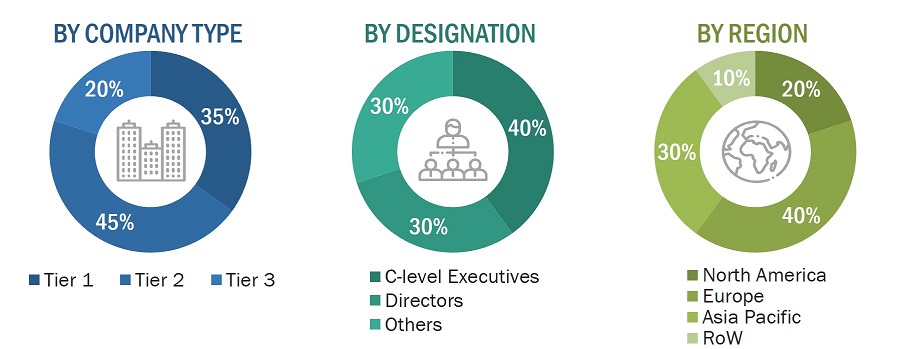
To know about the assumptions considered for the study, download the pdf brochure
Market Size Estimation
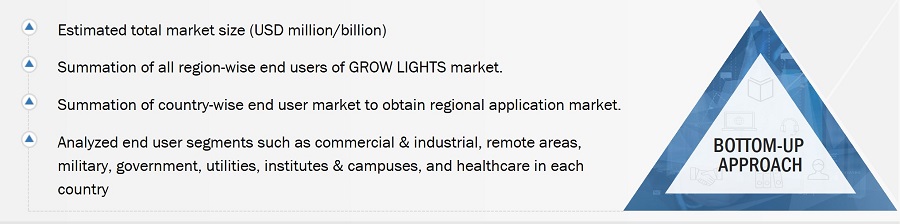
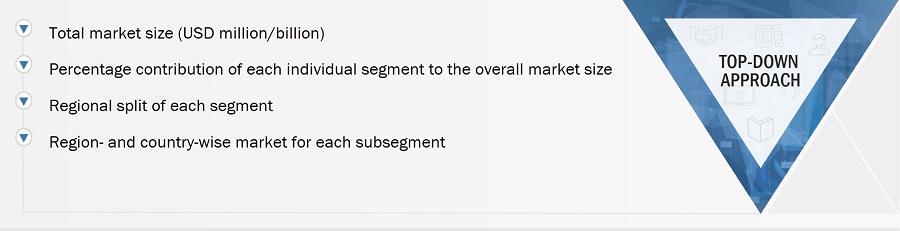
This report employed both top-down and bottom-up methodologies to evaluate and validate the size of the grow lights market and its related submarkets. Key players in the grow lights sector were identified through secondary research, while their market share in specific regions was determined through a blend of primary and secondary research. The comprehensive research approach included reviewing annual and financial reports of industry leaders and conducting interviews with key stakeholders, such as CEOs, VPs, directors, and marketing executives, to gather both quantitative and qualitative insights. Percentage shares, divisions, and breakdowns were sourced from secondary references and cross-checked with primary sources. All potential market influencers were examined through primary research and analyzed to compile the final quantitative and qualitative dataset. This data was consolidated and enriched with extensive analysis from MarketsandMarkets. The following figures illustrate the methodology utilized to estimate the overall market size for this study.
Market Size Estimation Methodology-Bottom-Up Approach
The overall size of the grow lights market was determined using a bottom-up approach, which involved calculating the market size based on the revenue generated by key players and their market share. A thorough analysis of key players in the grow lights market was conducted, and market size estimations were derived by considering the size of their grow lights offerings.
Market Size Estimation Methodology-Top-Down Approach
The top-down methodology utilized the overall market size as the foundation for determining individual market sizes, following the market segmentation with percentage allocations derived from primary and secondary research. To calculate specific market segment sizes, the immediate parent market size was utilized in applying the top-down approach. Additionally, the bottom-up approach was employed to validate segment sizes using data obtained from secondary research sources. Company market share estimates were utilized to confirm revenue distributions previously used in the bottom-up approach. Through a data triangulation process and validation via primary research sources, this study conclusively determined and confirmed both the overall parent market size and the size of each individual market segment.
Data Triangulation
After arriving at the overall market size from the market size estimation process explained above, the total market was split into several segments and subsegments. Data triangulation was employed to complete the market engineering process and arrive at the exact statistics for all segments and subsegments. The data has been triangulated by studying various factors and trends from the demand and supply sides. Along with this, the market has been validated using the top-down and bottom-up approaches.
Market Definition
Grow lights are artificial lights designed to support indoor plant growth throughout the year. These lights, often LED and electric, stimulate plant growth by emitting light suitable for photosynthesis. Essentially, grow lights (also known as horticultural lights) provide a spectrum similar to sunlight, enabling indoor plants to undergo photosynthesis. They are crucial gardening tools that ensure houseplants receive sufficient light, even in rooms lacking natural sunlight.
Grow lights play a vital role in urban agriculture practices. They can deliver a customized light spectrum tailored to the needs of specific plants or supplement natural light, particularly in regions with limited daylight hours, such as colder countries. By extending the hours of natural daylight, grow lights enhance the health, growth rate, and yield of plants.
Key Stakeholders
- Raw Material Suppliers
- Original Equipment Manufacturers (OEMs)
- Original Design Manufacturers (ODMs)
- Research Institutes
- Grow Lights Providers
- Forums, Alliances, and Associations
- Governments and Financial Institutions
- Analysts and Strategic Business Planners
The main objectives of this study are as follows:
- To describe and forecast the size of the grow lights market, in terms of value, by wattage, spectrum, cultivated plant, lighting type, application, installation type, and sales channel
- To describe and forecast the market size of various segments across four key regions—North America, Europe, Asia Pacific, and the Rest of the World (RoW), in terms of value
- To describe and forecast the grow lights market, in terms of value and volume, by offering
- To provide detailed information regarding the drivers, restraints, opportunities, and challenges influencing the growth of the grow lights market
- To provide an overview of the supply chain pertaining to the grow lights ecosystem, along with the average selling prices of grow light solutions
- To strategically analyze the ecosystem, tariffs and regulations, patent landscape, Porter’s five forces, import and export scenarios, trade landscape, and case studies pertaining to the market under study
- To strategically analyze micromarkets1 with regard to individual growth trends, prospects, and contributions to the overall market
- To analyze opportunities in the market for stakeholders by identifying high-growth segments
- To provide details of the competitive landscape for market leaders
- To analyze competitive developments such as product launches & developments, partnerships, agreements, and acquisitions in the grow lights market
- To profile key players in the grow lights market and comprehensively analyze their market ranking based on their revenues, market shares, and core competencies2
- To provide updated market developments of profiled players. The current report includes the market developments from January 2023 to May 2024
Available Customizations:
With the given market data, MarketsandMarkets offers customizations according to the specific requirements of companies. The following customization options are available for the report:
- Country-wise Information for Asia Pacific
- Detailed analysis and profiling of additional market players (up to five)
Get the Full Grow Lights Market Report
Full forecast, segment splits, and company analysis for all Grow Lights Market.
- US Grow Lights Market
- Germany Grow Lights Market
- Netherlands Grow Lights Market
- Rest Of Europe Grow Lights Market
- Scandinavia Grow Lights Market
- UK Grow Lights Market
- China Grow Lights Market
- Japan Grow Lights Market
- Rest Of Asia Pacific Grow Lights Market
- Southeast Asia Grow Lights Market
- Canada Grow Lights Market
- Mexico Grow Lights Market
Need a Tailored Report?
Customize this report to your needs
Get 10% FREE Customization
Customize This Report
