
Asia Pacific High-performance Liquid Chromatography (HPLC) Market (2020-2025)

The Asia Pacific High-performance Liquid Chromatography (HPLC) Market was valued at $582.7 Million in 2020 and projected to reach to $765.3 Million by 2025, representing a compound annual growth rate of 5.6%. The Asia Pacific HPLC market is poised for sustained growth through 2025, driven by robust pharmaceutical R&D investments and expanding manufacturing capabilities across key economies.


| Market Size in | USD 26.32 MN |
| Market Forecast in | |
| CAGR | |
| Forecast Period | |
| Units Considered | Value (USD MN) |
Asia Pacific High-performance Liquid Chromatography (HPLC) Market Trends and Insights
- Asia Pacific's HPLC market is driven by increasing pharmaceutical R&D investments, rising demand for quality control in manufacturing, and expanding biotechnology sectors across the region.
- The 5.6% compound annual growth rate in Asia Pacific outpaces the global average, reflecting accelerating adoption of advanced analytical instrumentation in emerging economies. Asia Pacific's HPLC market benefits from regulatory harmonization, growing laboratory infrastructure investments, and heightened focus on drug safety and efficacy testing.
- Key markets within Asia Pacific, including China, India, and Japan, are experiencing rapid industrialization and pharmaceutical expansion, creating sustained demand for chromatography solutions.
- By 2025, Asia Pacific is positioned as a critical growth engine for the global HPLC market, supported by favorable demographics, increasing healthcare spending, and technological advancement in analytical chemistry..
Key Market Statistics
- CAGR (2020-2025) 5.6% CAGR
- Market Size, 2020 ~USD 582.7 Million
- Forecast, 2025 ~USD 765.3 Million
- Geography Asia Pacific
Asia Pacific High-performance Liquid Chromatography (HPLC) Market Overview
Strong CAGR Outpacing Global Growth :
Asia Pacific's HPLC market is expanding at 5.6% CAGR (2020-2025), significantly outperforming the global average of 4.6%, driven by accelerating pharmaceutical and biotechnology development across the region.
Pharmaceutical R&D Investment Surge :
Increasing pharmaceutical research and development investments across Asia Pacific, particularly in China, Japan, and India, are fueling demand for advanced HPLC systems for drug discovery and development applications.
Quality Control Manufacturing Expansion :
Rising manufacturing standards and regulatory compliance requirements in Asia Pacific are driving adoption of HPLC systems for quality assurance and quality control in pharmaceutical and chemical production facilities.
Biotechnology Sector Growth :
Rapid expansion of biotechnology sectors across Asia Pacific nations is creating substantial demand for high-performance analytical instruments, positioning HPLC as a critical technology for bioanalytical testing and product development.
Asia Pacific High-performance Liquid Chromatography (HPLC) Market Dynamics
- China and Japan remain dominant markets, while India presents significant emerging opportunities due to its growing contract research and manufacturing sectors.
- Regulatory harmonization efforts and increasing quality standards are accelerating HPLC adoption across the region. Biotechnology innovation and personalized medicine initiatives are creating new applications for HPLC technology in Asia Pacific.
- Investment in laboratory infrastructure, coupled with rising healthcare expenditures and government support for life sciences development, will continue to propel market expansion.
- The region's competitive manufacturing landscape and cost advantages position it as a critical growth engine for the global HPLC market..
Market Ecosystem
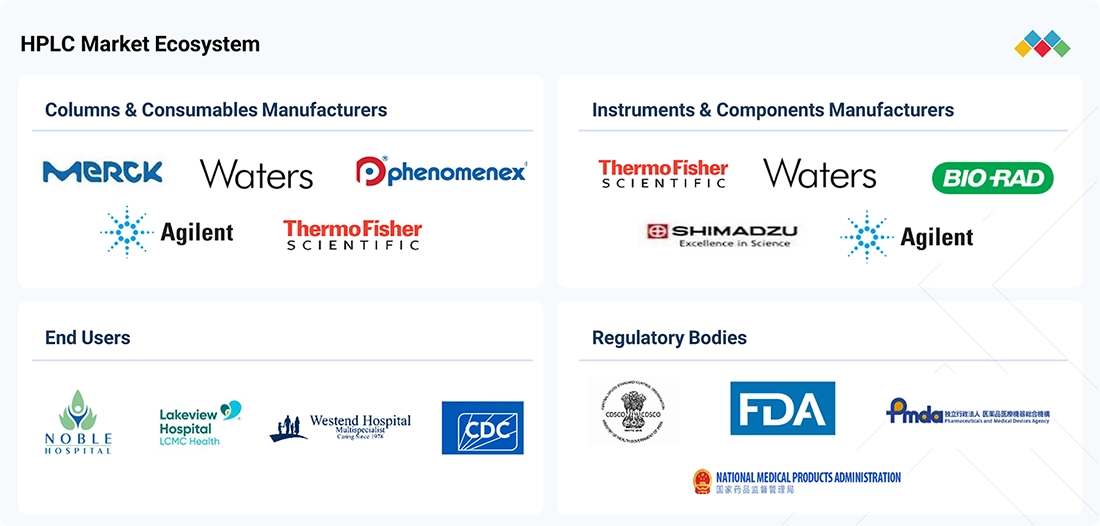
HIGH-PERFORMANCE LIQUID CHROMATOGRAPHY (HPLC) MARKET: COMMERCIAL USE CASES ACROSS INDUSTRIES
| COMPANY | USE CASE DESCRIPTION | BENEFITS |
|---|---|---|
 |
Supports pharmaceutical quality control, impurity analysis, and method development through Vanquish HPLC/UHPLC systems, Chromeleon software, columns, pumps, detectors, and consumables. | Reproducible separations, automated method development, and efficient routine testing. |
 |
Supports research, compound characterization, and pharmaceutical testing through ACQUITY UPLC and Alliance iS HPLC systems, Empower software, specialized columns, and multiple detector options. | Improved separation selectivity, reliable quantification, and integrated analytical workflows. |
 |
Supports clinical and diagnostic LC–MS workflows through Infinity LC Clinical Edition offerings, alongside Infinity III HPLC/UHPLC systems, columns, detectors, pumps, and consumables for broader laboratory applications. | Sensitive analysis of biological samples, flexible system configurations, and improved laboratory productivity. |
Logos and trademarks shown above are the property of their respective owners. Their use here is for informational and illustrative purposes only.
Related Ecosystem
Analytical And Scientific Instrumentation
- Environmental Testing
- Gas Chromatography
- Polymerase Chain Reaction (PCR)
- Automated Liquid Handling Systems
- Flow Cytometry
- Thermo Fisher Scientific Inc.
- Danaher Corporation
- Agilent Technologies, Inc.
- Shimadzu Corporation
- Merck KGaA
Key Takeaways
- Asia Pacific HPLC market valued at $582.7 million in 2020, projected to reach $765.3 million by 2025, representing a 5.6% CAGR.
- Asia Pacific's growth rate exceeds the global CAGR of 4.6%, positioning the region as a high-growth market for HPLC instrumentation.
- Pharmaceutical manufacturing expansion and regulatory compliance requirements are primary drivers of HPLC adoption across Asia Pacific.
- Emerging economies in Asia Pacific, particularly China and India, are accelerating laboratory modernization and analytical capability investments.
High-performance Liquid Chromatography (HPLC) Market Report Scope
| Report Metric | Details |
|---|---|
| Base Year | 2020 |
| Fastest Growing Segment | CONSUMABLES (Product) |
| Forecast Period | 2020-2030 |
| Growth Rate | CAGR of 4.6% from 2020 to 2030 |
| Largest Segment | INSTRUMENTS (Product) |
| Market Size Base Year (Billions) | ~USD 4.55 (2020) |
| Revenue Forecast (Billions) | ~USD 7.14 (2030) |
| Segments Covered | Product, Type, Application |
Asia Pacific High-performance Liquid Chromatography (HPLC) Market Report Segmentation
3 segment dimensions are covered across the global market.
By Product
- Accessories
- Consumables
- Instruments
By Type
- Columns
- Detectors
- Filters
- Fraction Collectors
- Hplc Systems
- Ion-Exchange Columns
- Normal-Phase Columns
- Other Hplc Columns
- Pump
- Pumps
- Reversed-Phase Columns
- Systems
- Tubes
- Vials
By Application
- Clinical Research
- Clinical Research Applications
- Diagnostic Applications
- Diagnostics
- Forensic Applications
- Forensics
- Other Applications
Target Audience
- Pharmaceutical Manufacturers : Need market intelligence to optimize HPLC procurement strategies, identify regional suppliers, and align quality control investments with Asia Pacific manufacturing expansion and regulatory requirements.
- HPLC Equipment Vendors : Require detailed market sizing, growth forecasts, and competitive analysis to develop Asia Pacific sales strategies, identify high-potential countries, and allocate resources for market penetration.
- Contract Research Organizations (CROs) : Need insights into regional demand for analytical testing services, market growth trends, and investment opportunities to expand laboratory capabilities and service offerings across Asia Pacific.
- Biotechnology Companies : Seek market data on HPLC adoption rates, technology trends, and regional regulatory landscapes to inform R&D investments, outsourcing decisions, and expansion plans in Asia Pacific markets.
- Healthcare Investors & Consultants : Require comprehensive market analysis, growth projections, and competitive intelligence to evaluate investment opportunities, guide client strategies, and assess market attractiveness in Asia Pacific life sciences.
Countries within Asia Pacific - compare and drill down
| Country | 2025 size (native) |
|---|---|
| Japan | USD 678.2 Million |
| China | USD 376 Million |
| India | USD 190.5 Million |
| Roe | USD 162.6 Million |
| Roapac | USD 263.1 Million |
Country market size visualization
Reasons to Buy this Report
- Regional Market Sizing & Forecasts : Obtain precise market valuations for Asia Pacific HPLC market with country-level breakdowns, enabling accurate budget allocation and investment decisions specific to high-growth Asian markets.
- Competitive Landscape Intelligence : Understand key players, market share distribution, and competitive strategies within Asia Pacific, identifying partnership and expansion opportunities in this rapidly growing region.
- Growth Driver Analysis : Gain insights into pharmaceutical R&D investments, regulatory trends, and biotechnology expansion driving HPLC adoption across Asia Pacific, supporting strategic planning and market entry strategies.
- Country-Specific Market Dynamics : Access detailed analysis of individual Asian markets (China, Japan, India) with distinct regulatory environments, manufacturing capabilities, and demand patterns for targeted business development.
- Future Opportunity Identification : Identify emerging segments, application areas, and underserved markets within Asia Pacific HPLC sector to guide product development, marketing, and sales strategies through 2025 and beyond.
Frequently asked questions
What is the market size of HPLC in Asia Pacific?
The Asia Pacific HPLC market was valued at $582.7 million in 2020 and is forecasted to reach $765.3 million by 2025.
What is the growth rate of the HPLC market in Asia Pacific?
Asia Pacific's HPLC market is growing at a compound annual growth rate (CAGR) of 5.6% from 2020 to 2025.
How does Asia Pacific's HPLC growth compare to global trends?
Asia Pacific's CAGR of 5.6% exceeds the global CAGR of 4.6%, indicating faster market expansion in the region.
What factors are driving HPLC demand in Asia Pacific?
Key drivers include pharmaceutical R&D expansion, regulatory compliance requirements, quality control needs in manufacturing, and biotechnology sector growth across the region.
Which countries in Asia Pacific are leading HPLC market growth?
China, India, and Japan are primary growth markets in Asia Pacific, driven by pharmaceutical manufacturing expansion and laboratory infrastructure modernization.
RESEARCH METHODOLOGY
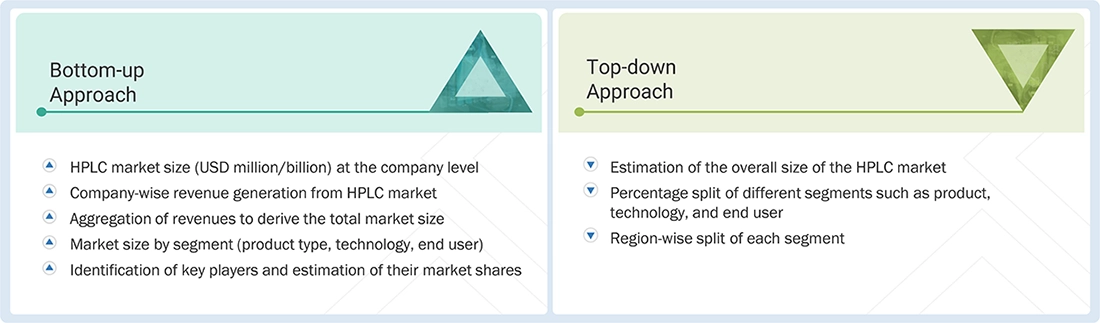
The HPLC market was estimated using extensive secondary and primary research, followed by data validation and triangulation. Secondary research was conducted using company reports, financial filings, industry databases, publications, and other credible sources to assess market structure, competitive landscape, product offerings, and industry trends. Primary research involved interviews with supply-side and demand-side stakeholders to validate market assumptions, pricing trends, adoption patterns, and market estimates. Top-down and bottom-up approaches, market segmentation, and data triangulation were applied to develop market estimates across key segments, regions, and countries.
Secondary Research
Secondary research included company annual reports, SEC filings, investor presentations, industry databases, white papers, company websites, and relevant industry publications. These sources were used to analyze company revenues, product portfolios, market positioning, technological developments, and market trends across the ecosystem.
Primary Research
Primary research covered both supply-side and demand-side participants. Supply-side interviews included senior executives, sales and marketing leaders, product managers, and regional representatives from HPLC providers. Demand-side discussions included pharmaceutical and biopharmaceutical companies; academia and research institutes; hospitals and clinical laboratories; food and beverage companies; environmental testing laboratories; chemical and petrochemical companies; forensic laboratories; and other HPLC end users. The findings were used to validate market sizing assumptions, purchasing patterns, technology adoption, and key market drivers and restraints.
A breakdown of the primary respondents is provided below:
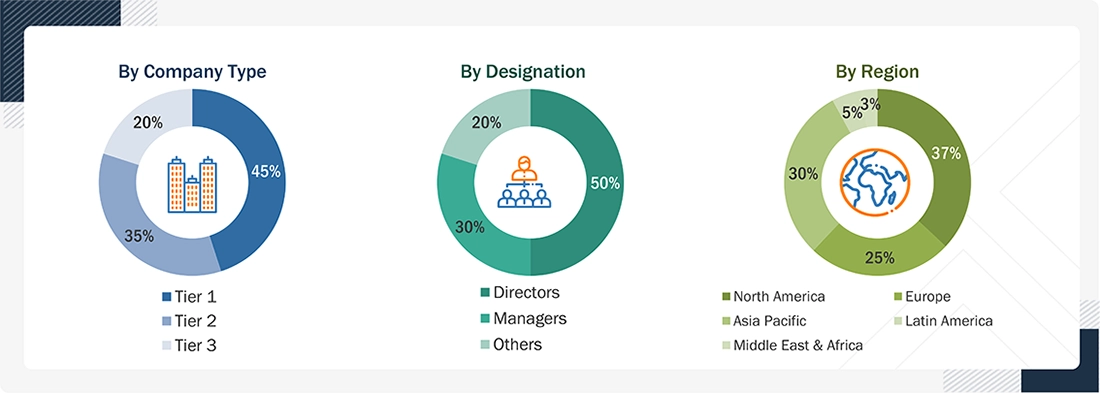
*Others include sales managers, marketing managers, business development managers, product managers, distributors, and suppliers.
Note: Companies are classified into tiers based on their total revenue. As of 2025, Tier 1 = >USD 1 billion, Tier 2 = <USD 500 million to USD 1 billion, and Tier 3 = <USD 100 million.
To know about the assumptions considered for the study, download the pdf brochure
Market Size Estimation
This research evaluates the revenues and market shares of leading players in the global HPLC market. Primary and secondary research were used to identify key companies and assess their financial performance and competitive positions. Primary research included interviews with CEOs, directors, senior marketing executives, and industry experts. Secondary research included annual reports, financial statements, investor presentations, and official company disclosures. A segment-based approach was used to estimate revenues attributable to HPLC/UHPLC systems, detectors, pumps, columns, and consumables.
Procedures Covered:
Identify leading global HPLC manufacturers, including Thermo Fisher Scientific, Waters Corporation, and Agilent Technologies, and review their annual revenues and relevant business divisions.
Map revenues attributable to products within the HPLC market scope, excluding unrelated businesses and avoiding double counting between complete systems and separately sold components.
Use 2025 company revenue estimates, supported by secondary research and primary validation, to assess competitive shares and estimate the total global HPLC market value.
High-Performance Liquid Chromatography (HPLC) Market : Top-Down and Bottom-Up Approach
Data Triangulation
The HPLC market is segmented into various segments and subsegments based on the methodology adopted in this report. Data triangulation and the segmentation process are then undertaken to ensure data accuracy across all segments. Drivers and trends have been identified from both the supply and demand sides. The results from both the top-down and bottom-up approaches were used to derive the HPLC market analysis results.
Market Definition
The high-performance liquid chromatography (HPLC) market encompasses instruments, components, columns, and consumables used to separate, identify, quantify, and purify compounds in liquid samples. HPLC operates by pumping a liquid mobile phase containing the sample through a column packed with a stationary phase. Differences in how sample components interact with these phases enable separation, followed by detection and analysis.
The market covers HPLC/UHPLC systems, detectors, pumps, columns, and consumables across analytical, preparative, semi-preparative, and micro/nano HPLC technologies. Applications include pharmaceutical quality control, drug impurity profiling, stability testing, clinical analysis, food safety testing, environmental monitoring, chemical analysis, and forensic investigations. Advances in automation, detection sensitivity, and specialized column chemistries support increasingly complex analytical workflows.
Key Stakeholders
- Manufacturers and distributors of HPLC/UHPLC systems, pumps, and detectors
- Manufacturers and suppliers of chromatography columns and consumables
- Pharmaceutical and biopharmaceutical companies
- Contract research organizations (CROs) and contract development and manufacturing organizations (CDMOs)
- Academic institutions, universities, and research institutes
- Hospitals and clinical laboratories
- Food and beverage companies and testing laboratories
- Environmental testing laboratories
- Chemical and petrochemical companies
- Forensic laboratories
- Independent analytical testing service providers
- Regulatory authorities and standards organizations
- Laboratory procurement teams and purchasing organizations
- Market research and consulting firms
Report Objectives
- To define, describe, and forecast the global HPLC market based on product, technology, end users, and region
- To provide detailed information regarding the major factors influencing the market growth (such as drivers, restraints, opportunities, and challenges)
- To strategically analyze micromarkets1 with respect to individual growth trends, prospects, and contributions to the total market
- To analyze the opportunities in the market for stakeholders and provide details of the competitive landscape for market leaders
- To profile the key market players and comprehensively analyze their market shares and core competencies2
- To forecast the revenue of the market segments in five main regions: North America (the US and Canada), Europe (Germany, France, the UK, Italy, Spain, and Rest of Europe), Asia Pacific (China, Japan, India, South Korea, Australia, and Rest of Asia Pacific), Latin America (Brazil, Mexico, and Rest of Latin America), and the Middle East & Africa (GCC Countries and the Rest of Middle East & Africa)
- To track and analyze competitive developments such as product launches and approvals, agreements, partnerships, expansions, acquisitions, and collaborations in the market
Available customizations:
With the market data, MarketsandMarkets offers customizations as per the company’s requirements. The following customization options are available for the global HPLC market:
Product Analysis
- Product matrix, which compares product portfolios of the top 5 companies.
Company Information
- In-depth profiling of additional market players (up to 5)
Geographic Analysis
- Further breakdown of the Rest of Europe's HPLC market: Russia, Belgium, the Netherlands, Switzerland, Austria, Finland, Sweden, Poland, and Portugal, among others
- Further breakdown of the Rest of Asia Pacific HPLC market: Singapore, Taiwan, New Zealand, the Philippines, Malaysia, and other APAC countries
- Further breakdown of the Rest of Latin America HPLC market: Argentina, Chile, Colombia, among others
Get the Full High-performance Liquid Chromatography (HPLC) Market Report
Full forecast, segment splits, and company analysis for all High-performance Liquid Chromatography (HPLC) Market.
- US High-performance Liquid Chromatography (HPLC) Market
- Canada High-performance Liquid Chromatography (HPLC) Market
- Germany High-performance Liquid Chromatography (HPLC) Market
- UK High-performance Liquid Chromatography (HPLC) Market
- France High-performance Liquid Chromatography (HPLC) Market
- Italy High-performance Liquid Chromatography (HPLC) Market
- Spain High-performance Liquid Chromatography (HPLC) Market
- Japan High-performance Liquid Chromatography (HPLC) Market
- China High-performance Liquid Chromatography (HPLC) Market
- India High-performance Liquid Chromatography (HPLC) Market
- Roe High-performance Liquid Chromatography (HPLC) Market
- Roapac High-performance Liquid Chromatography (HPLC) Market
Need a Tailored Report?
Customize this report to your needs
Get 10% FREE Customization
Customize This Report
