
Rest Of GCC Countries Human Capital Management Market (2024-2029)

The Rest Of GCC Countries Human Capital Management Market was valued at $396.22 Million in 2024 and projected to reach to $674.03 Million by 2029, representing a compound annual growth rate of 11.2%. Rest Of GCC Countries' Human Capital Management market is poised for sustained expansion through 2029, driven by government initiatives promoting digital economy development and private sector modernization.


| Market Size in | USD 26.32 MN |
| Market Forecast in | |
| CAGR | |
| Forecast Period | |
| Units Considered | Value (USD MN) |
Rest Of GCC Countries Human Capital Management Market Trends and Insights
- This represents a compound annual growth rate (CAGR) of 11.2%, significantly outpacing global market trends.
- Rest Of GCC Countries is witnessing accelerated digital transformation across public and private sectors, driving demand for integrated HCM solutions that streamline workforce management, payroll, and employee engagement. Rest Of GCC Countries' HCM market expansion is fueled by increasing labor force complexity, regulatory compliance requirements, and the region's strategic focus on economic diversification.
- Organizations in Rest Of GCC Countries are investing heavily in cloud-based HCM platforms to enhance operational efficiency and support talent retention initiatives.
- The forecast period through 2029 indicates sustained momentum, with Rest Of GCC Countries positioning itself as a key growth hub within the broader GCC region for enterprise HR technology adoption..
Key Market Statistics
- CAGR (2024-2029) 11.2% CAGR
- Market Size, 2024 ~USD 396.22 Million
- Forecast, 2029 ~USD 674.03 Million
- Country Rest Of GCC Countries
Rest Of GCC Countries Human Capital Management Market Overview
Strong Regional Growth Trajectory :
Rest Of GCC Countries' HCM market is expanding at 11.2% CAGR, significantly outpacing the global rate of 8.5%, driven by accelerated digital transformation initiatives across both public and private sectors.
Substantial Market Valuation :
The market is valued at USD 396.22 million in 2024 and is projected to reach USD 674.03 million by 2029, representing a 70% increase in market size over the five-year forecast period.
Digital Transformation Momentum :
Rest Of GCC Countries is experiencing rapid adoption of cloud-based HCM solutions, workforce analytics, and employee engagement platforms as organizations modernize their human resources operations.
Regional Economic Diversification :
Economic diversification efforts across Rest Of GCC Countries are spurring investment in talent management, workforce planning, and skills development technologies to support non-oil sector growth.
Rest Of GCC Countries Human Capital Management Market Dynamics
- Organizations across the region are increasingly investing in integrated HCM platforms to enhance employee productivity, streamline recruitment processes, and improve workforce analytics capabilities.
- The market's 11.2% CAGR reflects growing recognition of human capital as a strategic competitive advantage. Key growth catalysts include rising labor costs prompting automation investments, increasing expatriate workforce management needs, and regulatory compliance requirements.
- Cloud-based HCM solutions are gaining traction due to scalability and cost-efficiency benefits.
- The region's young, tech-savvy population and government support for digital transformation initiatives further accelerate market adoption, positioning Rest Of GCC Countries as a high-growth segment within the broader Middle Eastern HCM landscape..
Market Ecosystem
Related Ecosystem
Software And Services
- Natural Language Processing (NLP)
- Machine Learning
- Supply Chain Management
- Predictive Analytics
- Image Sensors
- International Business Machines Corporation
- MICROSOFT CORPORATION
- Oracle Corporation
- SAP SE
- Amazon.com, Inc.
Cloud Computing
- Software as A Service (SaaS)
- Natural Language Processing (NLP)
- Platform as A Service (PaaS)
- Machine Learning
- Supply Chain Management
- International Business Machines Corporation
- MICROSOFT CORPORATION
- Oracle Corporation
- Amazon.com, Inc.
Analytics
- Natural Language Processing (NLP)
- Machine Learning
- Supply Chain Management
- Predictive Analytics
- Image Sensors
- International Business Machines Corporation
- MICROSOFT CORPORATION
- Oracle Corporation
- SAP SE
Key Takeaways
- Rest Of GCC Countries HCM market will grow from USD 396.22M (2024) to USD 674.03M (2029) at 11.2% CAGR
- Rest Of GCC Countries is adopting cloud-based HCM solutions to support digital transformation and workforce optimization
- Regulatory compliance and labor market complexity are primary drivers of HCM investment in Rest Of GCC Countries
- Rest Of GCC Countries represents a high-growth opportunity within the GCC region for HCM technology vendors
Human Capital Management Market Report Scope
| Report Metric | Details |
|---|---|
| Base Year | 2024 |
| Fastest Growing Segment | MANAGED SERVICES (Service) |
| Forecast Period | 2024-2029 |
| Growth Rate | CAGR of 8.5% from 2024 to 2029 |
| Largest Segment | SOFTWARE (Offering) |
| Market Size Base Year (Billions) | ~USD 27.47 (2024) |
| Revenue Forecast (Billions) | ~USD 41.3 (2029) |
| Segments Covered | Offering, Software, Service, Professional Service, Deployment Model, Organization Size, Vertical, Component, Solution |
Rest Of GCC Countries Human Capital Management Market Report Segmentation
9 segment dimensions are covered across the global market.
By Offering
- Services
- Software
By Software
- Applicant Tracking System
- Benefits & Claims Management
- Compliance Management
- Core Hr
- Hr Analytics
- Learning Management
- Other Software
- Payroll & Compensation Management
- Pension Management
- Personnel Management
- Workforce Management
By Service
- Consulting
- Implementation
- Implementation & Integration
- Managed Services
- Professional Services
- Support & Maintenance
- Training, Support, And Maintenance
By Professional Service
- Consulting
- Integration & Implementation
- Training & Education
By Deployment Model
- Cloud
- On-Premises
By Organization Size
- Large Enterprises
- Smes
By Vertical
- Bfsi
- Consumer Goods & Retail
- Energy & Utilities
- Government
- Healthcare & Life Sciences
- It & Telecom
- Manufacturing
- Other Verticals
- Transportation & Logistics
By Component
- Services
- Software
By Solution
- Leave And Absence Management
- Others*
- Time And Attendance Management
- Workforce Analytics
- Workforce Scheduling
Target Audience
- HCM Software Vendors : Evaluate market opportunity in Rest Of GCC Countries, identify customer segments, benchmark competitive positioning, and develop region-specific product roadmaps and pricing strategies.
- Management Consulting Firms : Support client engagements with data-driven insights on Rest Of GCC Countries' HCM market trends, digital transformation opportunities, and organizational readiness assessments.
- Corporate HR Leaders : Benchmark HR technology investments against regional peers, identify best-in-class HCM solutions, and align talent management strategies with Rest Of GCC Countries' market evolution.
- Private Equity & Investment Firms : Assess investment opportunities in Rest Of GCC Countries' HCM sector, evaluate portfolio company growth potential, and identify acquisition targets within the expanding regional market.
- Government & Economic Development Agencies : Understand HCM market dynamics supporting Rest Of GCC Countries' economic diversification goals and develop policies promoting digital HR innovation and workforce development initiatives.
Reasons to Buy this Report
- Regional Market Sizing & Forecasts : Obtain precise market valuation data specific to Rest Of GCC Countries with detailed 5-year projections, enabling accurate budget allocation and investment planning for regional expansion strategies.
- Competitive Landscape Intelligence : Understand key HCM vendors, solution providers, and market players operating in Rest Of GCC Countries, including their market positioning, offerings, and growth strategies tailored to regional needs.
- Growth Driver Analysis : Identify specific digital transformation catalysts, regulatory drivers, and economic factors unique to Rest Of GCC Countries that are accelerating HCM adoption and market expansion.
- Segment & Technology Insights : Access detailed breakdowns of HCM market segments, emerging technologies, and solution preferences specific to Rest Of GCC Countries' public and private sector organizations.
- Strategic Market Entry Planning : Leverage region-specific insights to develop targeted go-to-market strategies, partnership opportunities, and localization approaches for Rest Of GCC Countries' unique business environment.
Frequently asked questions
What is the current size of the HCM market in Rest Of GCC Countries?
The Human Capital Management market in Rest Of GCC Countries was valued at USD 396.22 million in 2024.
What is the projected market size for Rest Of GCC Countries by 2029?
Rest Of GCC Countries' HCM market is forecast to reach USD 674.03 million by 2029.
What is the CAGR for the HCM market in Rest Of GCC Countries?
Rest Of GCC Countries' HCM market is expected to grow at a compound annual growth rate of 11.2% from 2024 to 2029.
What are the main drivers of HCM market growth in Rest Of GCC Countries?
Key drivers in Rest Of GCC Countries include digital transformation initiatives, regulatory compliance requirements, labor market complexity, and the region's economic diversification strategy.
Why is Rest Of GCC Countries important for HCM vendors?
Rest Of GCC Countries represents a high-growth market with strong adoption of cloud-based HCM solutions and increasing enterprise investment in workforce management technology.
RESEARCH METHODOLOGY
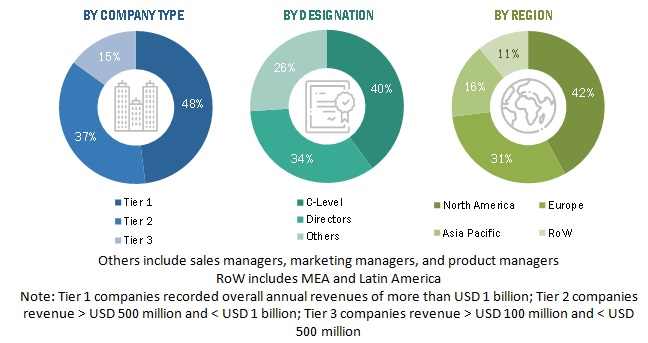
This research study used extensive secondary sources, directories, presentations and databases such as Hoovers, Bloomberg Businessweek, Factiva, and OneSource to identify and collect information for the technical, market-oriented, and commercial study of the core HR software market. The primary sources are mainly several industry experts from core and related industries and suppliers, manufacturers, distributors, service providers, technology developers, technologists from companies, and organizations related to all segments of this industry's value chain. In-depth interviews were conducted with various primary respondents, including key industry participants, C-level executives of key market players, and industry consultants, among other experts, to obtain and verify critical qualitative and quantitative information and assess prospects. The following figure shows the research methodology applied in this report on the HCM market.
The market has been predicted by analyzing the driving factors, such as the emergence of cloud computing, the growing need for cost-effective businesses, and the need for business agility and faster time to market.
Secondary Research
The market for the companies offering HCM software and services was arrived at based on the secondary data available through paid and unpaid sources and by analyzing the product portfolios of the major companies in the ecosystem and rating them according to their performance and quality. In the secondary research process, various sources were referred to to identify and collect information for this study. The secondary sources included annual reports, press releases, investor presentations of companies, white papers, journals, certified publications, and articles from recognized authors, directories, and databases.
We used secondary research to obtain essential information about the industry's supply chain, the total pool of key players, market classification and segmentation according to industry trends to the bottom-most level, regional markets, and key developments from both market and technology-oriented perspectives, all of which we validated from primary sources.
Primary Research
In the primary research process, we interviewed various supply and demand sources to obtain qualitative and quantitative information on the market. The primary sources from the supply side included various industry experts, including Chief Experience Officers (CXOs); Vice Presidents (VPs); directors from business development, marketing, and product development/innovation teams; related vital executives from HCM vendors, industry associations, and independent consultants; and key opinion leaders.
We conducted primary interviews to gather insights, such as market statistics, the latest trends disrupting the market, new use cases implemented, data on revenue collected from products and services, market breakups, market size estimations, market forecasts, and data triangulation. Primary research also helped me understand various trends related to technology, service type, deployment, and region. Stakeholders from the demand side, such as Chief Information Officers (CIOs), Chief Technology Officers (CTOs), Chief Security Officers (CSOs), the installation teams of governments/end users using HCM, and digital initiatives project teams, were interviewed to understand the buyer's perspective on suppliers, products, service providers, and their current use of solutions, which would affect the overall HCM market.
To know about the assumptions considered for the study, download the pdf brochure
Market Size Estimation
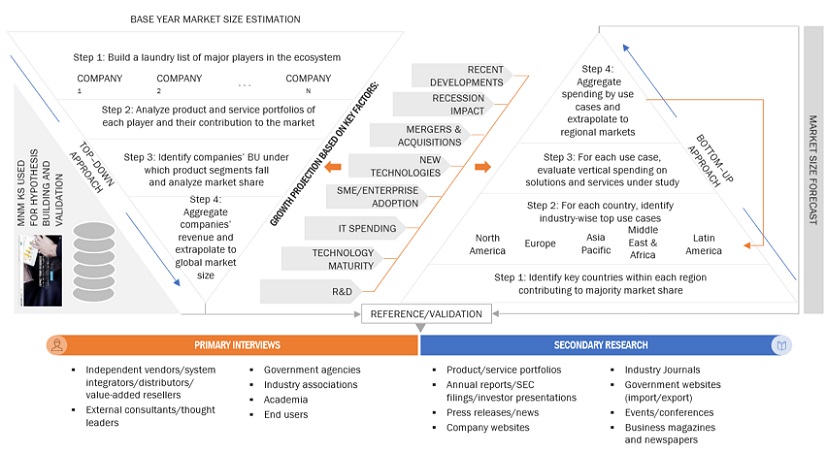
We used top-down and bottom-up approaches to estimate and forecast the HCM and other dependent submarkets. We deployed a bottom-up procedure to arrive at the overall market size using the revenues and offerings of key companies in the market. With data triangulation methods and validation through primary interviews, this study determined and confirmed the exact value of the overall parent market size. We used the overall market size in the top-down procedure to estimate the size of other individual markets via percentage splits of the market segments.
We used top-down and bottom-up approaches to estimate and validate the HCM market and other dependent subsegments.
The research methodology used to estimate the market size included the following details:
- The key players in the market were identified through secondary research, and their revenue contributions in respective regions were determined through primary and secondary research.
- This procedure included studying top market players' annual and financial reports and extensive interviews for key insights from industry leaders, such as CEOs, VPs, directors, and marketing executives.
- All percentage splits and breakups were determined using secondary sources and verified through primary sources.
All the possible parameters that affect the market covered in this research study have been accounted for, viewed in extensive detail, verified through primary research, and analyzed to get the final quantitative and qualitative data. This data is consolidated and added with detailed inputs and analysis from MarketsandMarkets.
HCM market: Top-down and Bottom-up approaches
To know about the assumptions considered for the study, Request for Free Sample Report
Data Triangulation
After arriving at the overall market size, the market was split into several segments and subsegments—using the market size estimation processes as explained above. Where applicable, data triangulation and market breakup procedures were employed to complete the overall market engineering process and determine each market segment's and subsegment's exact statistics. The data was triangulated by studying several factors and trends from the demand and supply sides in the HCM market.
Market Definition
HCM is software and services that manage an enterprise's human resources. These tools cover the entire lifecycle of an employee, from employee onboarding to employee retirement. These tools cover administrative tasks, payroll, benefits, employee productivity, analytics, etc.
As organizations focus on minimizing costs associated with the HR function, HCM software and services are in demand. HCM software and services enable organizations to realize various benefits, such as increased workforce productivity, employee engagement, and reduced cost of HR functions.
Key Stakeholders
- HCM Software and Service Providers
- Technology Service Providers
- Cloud Service Providers (CSPs)
- Government Organizations
- Consultants/Consultancies/Advisory Firms
- Support and Maintenance Service Providers
- Information Technology (IT) Infrastructure Providers
- System Integrators (SIS)
- Regional Associations
- Independent Software Vendors (ISVS)
- Value-added Resellers and Distributors
Report Objectives
- To define, describe, and forecast the global HCM market based on offering deployment model, organization size, vertical, and region
- To forecast the market size of the five major regional segments: North America, Europe, Asia Pacific, Middle East & Africa, and Latin America
- To strategically analyze the market subsegments concerning individual growth trends, prospects, and contributions to the total market
- To provide detailed information related to the major drivers, restraints, opportunities, and challenges influencing the growth of the market
- To strategically analyze macro and micro markets concerning growth trends, prospects, and their contributions to the overall market
- To analyze industry trends, patents & innovations, and pricing data related to the HCM market
- To analyze the impact of the recession on offerings, deployment models, organization size, verticals, and regions globally
- To analyze the opportunities in the market for stakeholders and provide details of their competitive landscape for prominent players
- To profile key players in the market and comprehensively analyze their market shares/ranking and core competencies
- To track and analyze competitive developments, such as mergers & acquisitions, new product developments, and partnerships & collaborations in the market
Available Customizations
With the given market data, MarketsandMarkets offers customizations per the company's specific needs. The following customization options are available for the report:
Product Analysis
- The product matrix provides a detailed comparison of each company's portfolio.
Geographic Analysis
- Further breakup of the Asia Pacific market into countries contributing 75% to the regional market size
- Further breakup of the North American market into countries contributing 75% to the regional market size
- Further breakup of the Latin American market into countries contributing 75% to the regional market size
- Further breakup of the Middle Eastern & African market into countries contributing 75% to the regional market size
- Further breakup of the European market into countries contributing 75% to the regional market size
Company Information
- Detailed analysis and profiling of additional market players (up to 5)
Get the Full Human Capital Management Market Report
Full forecast, segment splits, and company analysis for all Human Capital Management Market.
- US Human Capital Management Market
- Canada Human Capital Management Market
- UK Human Capital Management Market
- Germany Human Capital Management Market
- France Human Capital Management Market
- Italy Human Capital Management Market
- China Human Capital Management Market
- Japan Human Capital Management Market
- India Human Capital Management Market
- Brazil Human Capital Management Market
- Mexico Human Capital Management Market
- South Africa Human Capital Management Market
- Rest Of Europe Human Capital Management Market
- Rest Of Asia Pacific Human Capital Management Market
- Rest Of Latin America Human Capital Management Market
- GCC Countries Human Capital Management Market
- Saudi Arabia Human Capital Management Market
- UAE Human Capital Management Market
Need a Tailored Report?
Customize this report to your needs
Get 10% FREE Customization
Customize This Report
