
South Africa Hydrofluoric Acid Market (2025-2030)

The South Africa Hydrofluoric Acid Market was valued at $69.9 Million in 2025 and projected to reach to $83 Million by 2030, representing a compound annual growth rate of 3.5%. South Africa's hydrofluoric acid market is positioned for moderate growth, expanding from USD 69.9 million in 2025 to USD 83.0 million by 2030 at a 3.5% CAGR.


| Market Size in | USD 26.32 MN |
| Market Forecast in | |
| CAGR | |
| Forecast Period | |
| Units Considered | Value (USD MN) |
South Africa Hydrofluoric Acid Market Trends and Insights
- South Africa's chemical manufacturing sector, particularly in uranium processing, refrigerant production, and specialty chemicals, drives steady demand for hydrofluoric acid.
- The market in South Africa reflects moderate but consistent growth, supported by industrial applications across mining, petrochemical, and fluorine-based product manufacturing. During the 2025–2030 forecast period, South Africa's hydrofluoric acid market will benefit from increased industrial activity and infrastructure development.
- South Africa's position as a key mineral-rich economy and its established chemical processing capabilities position the country as a regional hub for fluorine chemistry.
- Market expansion in South Africa is tempered by regulatory scrutiny around hazardous chemical handling and environmental compliance, yet industrial demand remains resilient across core end-use sectors..
Key Market Statistics
- CAGR (2025-2030) 3.5% CAGR
- Market Size, 2025 ~USD 69.9 Million
- Forecast, 2030 ~USD 83 Million
- Country South Africa
South Africa Hydrofluoric Acid Market Overview
Uranium Processing Demand :
South Africa's significant uranium reserves and processing operations create consistent demand for hydrofluoric acid in extraction and refining processes, supporting steady market growth.
Refrigerant Production Growth :
Expanding refrigeration and air conditioning sectors in South Africa drive hydrofluoric acid consumption for refrigerant manufacturing, particularly HFC and HFO production.
Specialty Chemicals Expansion :
South Africa's specialty chemicals industry, including fluorine-based compounds for pharmaceuticals and agrochemicals, increasingly relies on hydrofluoric acid as a key feedstock.
Regional Manufacturing Hub :
South Africa's position as a regional manufacturing center for Southern Africa creates export opportunities for hydrofluoric acid-dependent products across the continent.
South Africa Hydrofluoric Acid Market Dynamics
- The market benefits from established uranium processing industries and growing demand in refrigerant production as regional cooling demands increase.
- Industrial diversification and investment in specialty chemicals manufacturing support sustained consumption.
- However, growth remains below the global average of 4.58%, reflecting South Africa's mature industrial base and regulatory constraints on fluorine-based chemicals.
- Strategic investments in downstream applications and export-oriented manufacturing will be critical for accelerating market expansion..
Market Ecosystem
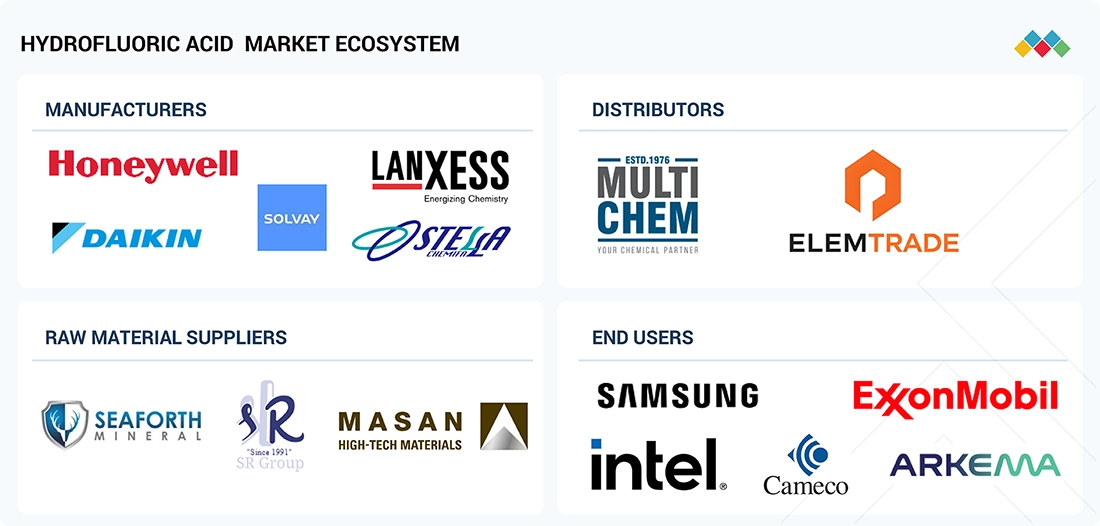
Hydrofluoric Acid Market: COMMERCIAL USE CASES ACROSS INDUSTRIES
| COMPANY | USE CASE DESCRIPTION | BENEFITS |
|---|---|---|
 |
A chemical company faced frequent equipment failures due to HF solution attacking high-nickel alloy components. Required a system resistant to chemical attack, high temperatures (230 °F), and abrasion. ECTFE lining was tested and selected for its durability. | ECTFE-lined reactor ran 6 months without damage. No signs of attack, discoloration, or wear. Reduced maintenance, extended life, and reliable continuous operation achieved. |
 |
Optimization and controlled study of hydrofluoric acid (HF) etching for lithium disilicate glass ceramic bonding in a dental laboratory setting. The laboratory aimed to enhance the bond strength between resin luting agents and lithium disilicate (EMX) restorations by comparing different HF concentrations (5% vs. 10%), commercial brands, and the effect of an adhesive layer. | Significant increase in bond strength of resin luting agents to lithium disilicate ceramic when using 10% hydrofluoric acid compared to 5%, regardless of commercial brand. Improved surface characteristics confirmed by scanning electron microscopy, supporting stronger and more durable dental ceramic bonds. |
 |
Application of hydrofluoric acid (HF) etching to optimize bonding of lithium disilicate ceramics by selectively removing interfering inorganic soil constituents such as aluminosilicates, amorphous silica, and iron oxides that complicate accurate analysis of humic acid properties. | The process enhances the characterization of humic acids by reducing inorganic interference, leading to more reliable measurements of functional groups and proton binding capacity. It maintains the natural distribution of these groups while lowering ash content, offering clearer insights into the chemical nature and environmental role of humic acids. This supports improved soil management and environmental assessments, especially in mineral-rich soils. |
Logos and trademarks shown above are the property of their respective owners. Their use here is for informational and illustrative purposes only.
Related Ecosystem
Bulk Chemicals And Inorganics
- Corrosion Inhibitors
- Glycol Ethers
- Acetic Acid
- Acetone
- Ammonium Nitrate
- Basf se
- DOW CHEMICAL COMPANY
- Exxon Mobil Corporation
- AZELIS HOLDINGS SA
- Sinopec limited
Speciality Chemicals
- Corrosion Inhibitors
- Polyetheretherketone (PEEK)
- Acrylonitrile Butadiene Styrene (ABS)
- Epoxy Resin
- Polycarbonate
- Basf se
- DOW CHEMICAL COMPANY
- Evonik industries ag
- Clariant ag.
- Solvay sa
Key Takeaways
- South Africa's hydrofluoric acid market is valued at USD 69.9 million in 2025 and will reach USD 83.0 million by 2030.
- South Africa's market is growing at a 3.5% CAGR, driven by mining, uranium processing, and specialty chemical manufacturing.
- South Africa's industrial base and mineral wealth support steady demand for hydrofluoric acid across multiple end-use sectors.
- Regulatory compliance and safe handling protocols remain critical considerations for market participants operating in South Africa.
Hydrofluoric Acid Market Report Scope
| Report Metric | Details |
|---|---|
| Base Year | 2025 |
| Fastest Growing Segment | HFO (Type) |
| Forecast Period | 2025–2030 |
| Growth Rate | CAGR of 4.58% from 2025 to 2030 |
| Largest Segment | HFC & BLENDS (Type) |
| Market Size Base Year (Billions) | ~USD 4.08 (2025) |
| Revenue Forecast (Billions) | ~USD 5.1 (2030) |
| Segments Covered | Grade, Application, End-Use Industry, Type |
South Africa Hydrofluoric Acid Market Report Segmentation
4 segment dimensions are covered across the global market.
By Grade
- Ahf
- By-Product Grade
- Dhf (Above 50% Concentration)
- Dhf (Below 50% Concentration)
- Synthetic Grade
By Application
- Air Conditioning Systems
- Biodiesel
- Calcium Chloride
- Chillers
- Food Processing
- Glass Etching & Cleaning
- Metal Pickling
- Mobile Air Conditioning
- Oil Refining
- Oil Well Acidizing
- Ore Processing
- Other Applications
- Pool Sanitation
- Production Of Fluorinated Derivatives
- Production Of Fluorocarbons
- Production Of Uranium Fuel
- Refrigeration Systems
- Steel Pickling
- –Commercial Refrigeration
- –Domestic Refrigeration
- –Ducted, Packaged & Rooftop Acs
- –Industrial Refrigeration
- –Split Ac
- –Vrf
- –Window Ac
By End-Use Industry
- Chemical
- Food & Beverage
- Oil & Gas
- Other End-Use Industries
- Pharmaceutical
- Steel
- Textile
By Type
- Ammonia
- Carbon Dioxide
- Hfc & Blends
- Hfo
- Isobutane
- Other Types
- Propane
Target Audience
- Chemical Manufacturers : South African chemical producers need market data to optimize hydrofluoric acid procurement strategies, assess supply reliability, and plan capacity investments.
- Uranium Mining Companies : Mining operators require detailed consumption forecasts and supplier analysis to secure stable hydrofluoric acid supply for processing operations.
- Refrigerant Producers : Manufacturers of cooling systems and refrigerants need market insights to forecast feedstock costs and plan production expansion in South Africa.
- Investment & Private Equity : Investors evaluating opportunities in South African chemicals and specialty materials require comprehensive market sizing and growth trajectory data.
- Regulatory & Government Bodies : South African government agencies and environmental regulators need market intelligence to inform policy decisions on chemical safety and industrial development.
Key Companies in the South Africa Hydrofluoric Acid Market
| Company | HQ | Ownership | Strongest segments |
|---|---|---|---|
| TANFAC INDUSTRIES LIMITED | India | Public Company | AHF,DHF (above 50% concentration),DHF (below 50% concentration), |
| MEXICHEM | Mexico | Public Company | AHF,DHF (above 50% concentration),DHF (below 50% concentration), |
| HONEYWELL INTERNATIONAL INC. | United States | Public Company | AHF,DHF (above 50% concentration),DHF (below 50% concentration), |
| SOLVAY | Belgium | Public Company | AHF,DHF (above 50% concentration),DHF (below 50% concentration), |
| STELLA CHEMIFA CORPORATION | Japan | Public Company | AHF,DHF (above 50% concentration),DHF (below 50% concentration), |
| DAIKIN | Japan | Public Company | AHF,DHF (above 50% concentration),DHF (below 50% concentration), |
| LANXESS | Germany | Public Company | AHF,DHF (above 50% concentration),DHF (below 50% concentration), |
| MERCK KGAA | United States | Public Company | AHF,DHF (above 50% concentration),DHF (below 50% concentration), |
| DONGYUE GROUP LTD. | China | Public Company | AHF,DHF (above 50% concentration),DHF (below 50% concentration), |
| ORBIA | Mexico | Public Company | AHF,DHF (above 50% concentration),DHF (below 50% concentration), |
TANFAC INDUSTRIES LIMITED
TANFAC Industries Limited is a public company based in India that was founded in 1972 and currently employs 178 people.
MEXICHEM
Mexichem is a public company headquartered in Mexico, founded in 1953, with 22,332 employees.
HONEYWELL INTERNATIONAL INC.
Honeywell International Inc. is a large public multinational company founded in the United States in 1885 and employs approximately 101,000 people.
SOLVAY
Solvay is a Belgian public company established in 1863 with 8,400 employees.
STELLA CHEMIFA CORPORATION
Stella Chemifa Corporation is a Japanese public company founded in 1916 with 683 employees.
DAIKIN
Daikin is a major Japanese public company founded in 1924 with approximately 104,095 employees.
LANXESS
Lanxess is a German public company established in 1863 with 11,630 employees.
MERCK KGAA
Merck KGaA is a large public company based in the United States with roots dating back to 1668 and employs 59,077 people.
DONGYUE GROUP LTD.
Dongyue Group Ltd. is a Chinese public company founded in 1987 with 6,377 employees.
ORBIA
Orbia is a public company headquartered in Mexico, founded in 1953, with 22,332 employees.
Reasons to Buy this Report
- Uranium Industry Insights : Understand hydrofluoric acid consumption patterns in South Africa's uranium processing sector, a critical end-use industry driving 25-30% of market demand.
- Regional Supply Chain Analysis : Gain detailed intelligence on South Africa's position as a regional supplier hub for hydrofluoric acid-dependent products across Southern African markets.
- Regulatory & Compliance Framework : Access comprehensive data on South African environmental regulations, safety standards, and compliance requirements specific to hydrofluoric acid handling and distribution.
- Competitive Landscape Mapping : Identify key manufacturers, distributors, and market players operating in South Africa's hydrofluoric acid sector with detailed competitive positioning analysis.
- Growth Opportunity Assessment : Evaluate emerging applications in specialty chemicals and refrigerant production to identify high-potential investment and expansion opportunities in South Africa.
Frequently asked questions
What is the current size of South Africa's hydrofluoric acid market?
South Africa's hydrofluoric acid market is estimated at USD 69.9 million in 2025.
What is the projected market size for South Africa by 2030?
South Africa's hydrofluoric acid market is forecast to reach USD 83.0 million by 2030.
What is the growth rate of South Africa's hydrofluoric acid market?
South Africa's hydrofluoric acid market is expected to grow at a CAGR of 3.5% from 2025 to 2030.
Which industries drive demand for hydrofluoric acid in South Africa?
South Africa's demand for hydrofluoric acid is driven by mining, uranium processing, refrigerant production, and specialty chemical manufacturing sectors.
What are the key challenges for the hydrofluoric acid market in South Africa?
South Africa's market faces challenges related to regulatory compliance, hazardous chemical handling requirements, and environmental protection standards.
RESEARCH METHODOLOGY
The study involved four key activities to determine the current size of the global hydrofluoric acid market. Comprehensive secondary research was conducted to gather information on the market, related product markets, and the broader product group. The next step was to validate these findings, assumptions, and estimates with industry experts across the hydrofluoric acid value chain through primary research. Both top-down and bottom-up approaches were used to estimate the overall market size. Following this, market segmentation and data triangulation processes were applied to define the size of various segments and sub-segments.
Secondary Research
The market for companies offering hydrofluoric acid is determined through secondary data from paid and free sources, analyzing the product portfolios of leading firms in the industry, and rating these companies by their performance and quality. Secondary sources such as Business Standard, Bloomberg, World Bank, and Factiva were used to gather information for this study on the hydrofluoric acid market. Multiple sources were consulted during the secondary research process to collect relevant data. These sources included annual reports, press releases, investor presentations of luxury vinyl tile vendors, forums, certified publications, and white papers. This secondary research provided essential insights into the industry’s value chain, the pool of key players, market classification, and segmentation from both market and technology perspectives.
Primary Research
In the primary research process, various primary sources from both the supply and demand sides were interviewed to gather qualitative and quantitative information for this report. The supply-side sources included industry experts such as Chief Executive Officers (CEOs), Vice Presidents (VPs), marketing directors, technology and innovation directors, and other key executives from several leading companies and organizations operating in the Hydrofluoric acid market. After completing the market engineering process—which involved calculations for market statistics, market breakdowns, market size estimations, market forecasting, and data triangulation—extensive primary research was conducted to collect information and verify the critical figures obtained. Primary research also identified the segmentation types, industry trends, competitive landscape of Hydrofluoric acid offered by various market players, and key market dynamics, including drivers, restraints, opportunities, challenges, industry trends, and strategies of major players. Throughout the complete market engineering process, the top-down and bottom-up approaches and several data triangulation methods were extensively used to estimate and forecast market segments and subsegments listed in this report. In-depth qualitative and quantitative analysis was performed on the entire market engineering process to highlight key insights and information throughout the report.
The following is a breakdown of the primary respondents:
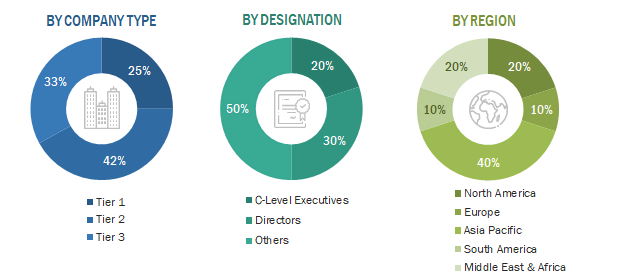
Notes: Others include sales, marketing, and product managers.
Tier 1: >USD 1 Billion; Tier 2: USD 500 million–1 Billion; and Tier 3: < USD 500 million
To know about the assumptions considered for the study, download the pdf brochure
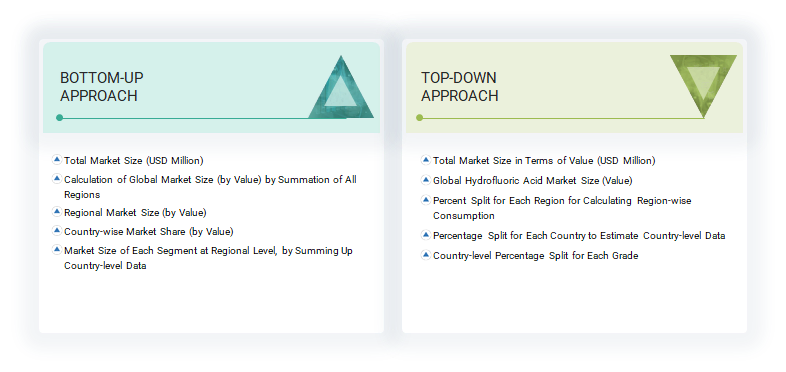
Market Size Estimation
The top-down and bottom-up methods were used to estimate and verify the size of the global hydrofluoric acid market. These methods were also widely employed to determine the size of various related market segments. The research approach for estimating the market size included the following:
Data Triangulation
After determining the overall market size through estimation methods, the market was divided into various segments and subsegments. Data triangulation and market breakdown procedures were used, where applicable, to complete the overall market analysis and determine precise statistics for each segment and subsegment. The data was triangulated by examining different factors and trends from both the demand and supply sides.
Market Definition
The reaction between a hydrogen atom and a fluorine atom produces hydrogen fluoride, a colorless, corrosive liquid or vapor with a strong, unpleasant, pungent odor. Hydrofluoric acid forms when hydrogen fluoride dissolves in water. The report divides the hydrofluoric acid market based on its grades, applications, and regions. It is available in different grades depending on the acid's concentration levels. In terms of its uses, hydrofluoric acid is employed in several industries, such as chemical manufacturing and glass etching.
Stakeholders
- Hydrofluoric Acid Manufacturers
- Raw Material Suppliers
- Traders and Distributors
- Industry Associations
- Research Organizations, Trade Associations, and Government Agencies
- Commercial R&D Institutes
- End-use Industries
Report Objectives
- To define, describe, and forecast the size of the global hydrofluoric acid market based on grade, application, and region in terms of value and volume
- To provide detailed information on the significant drivers, restraints, opportunities, and challenges influencing the market
- To strategically analyze micromarkets concerning individual growth trends, prospects, and their contribution to the market
- To assess the growth opportunities in the market for stakeholders and provide details on the competitive landscape for market leaders
- To forecast the market size of segments and subsegments for North America, Europe, the Asia Pacific, South America, and the Middle East & Africa
- To strategically profile key players and comprehensively analyze their market shares and core competencies
- To analyze competitive developments such as product launches, acquisitions, expansions, partnerships, and agreements in the hydrofluoric acid market
- To provide the impact of AI/Gen AI on the market
Get the Full Hydrofluoric Acid Market Report
Full forecast, segment splits, and company analysis for all Hydrofluoric Acid Market.
- US Hydrofluoric Acid Market
- Canada Hydrofluoric Acid Market
- Mexico Hydrofluoric Acid Market
- Germany Hydrofluoric Acid Market
- UK Hydrofluoric Acid Market
- France Hydrofluoric Acid Market
- Italy Hydrofluoric Acid Market
- Russia Hydrofluoric Acid Market
- China Hydrofluoric Acid Market
- Japan Hydrofluoric Acid Market
- India Hydrofluoric Acid Market
- South Korea Hydrofluoric Acid Market
- Taiwan Hydrofluoric Acid Market
- Brazil Hydrofluoric Acid Market
- Argentina Hydrofluoric Acid Market
- Saudi Arabia Hydrofluoric Acid Market
- UAE Hydrofluoric Acid Market
- Rest Of Europe Hydrofluoric Acid Market
Need a Tailored Report?
Customize this report to your needs
Get 10% FREE Customization
Customize This Report
