
Europe Immunotherapy Drugs Market (2024-2029)

The Europe Immunotherapy Drugs Market was valued at $86100 Million in 2024 and projected to reach to $176700 Million by 2029, representing a compound annual growth rate of 15.5%. Europe's immunotherapy drugs market is poised for sustained expansion through 2029, driven by increasing cancer incidence, aging populations, and growing healthcare expenditure across major economies.


| Market Size in | USD 26.32 MN |
| Market Forecast in | |
| CAGR | |
| Forecast Period | |
| Units Considered | Value (USD MN) |
Europe Immunotherapy Drugs Market Trends and Insights
- This expansion reflects Europe's strong healthcare infrastructure, increasing cancer prevalence, and rising adoption of checkpoint inhibitors and CAR-T cell therapies across major markets including Germany, France, and the United Kingdom.
- Europe's regulatory environment, supported by the European Medicines Agency, continues to accelerate approvals and market penetration of innovative immunotherapies. The European market benefits from substantial investment in oncology research, favorable reimbursement policies, and growing patient awareness of immunotherapy options.
- Between 2024 and 2029, Europe is expected to maintain its position as a key growth region, driven by aging populations, improved diagnostic capabilities, and expanding treatment indications beyond cancer into autoimmune and infectious diseases.
- Europe's competitive landscape features both established pharmaceutical giants and emerging biotech firms developing next-generation immunotherapeutic agents..
Key Market Statistics
- CAGR (2024-2029) 15.5% CAGR
- Market Size, 2024 ~USD 86100 Million
- Forecast, 2029 ~USD 176700 Million
- Geography Europe
Europe Immunotherapy Drugs Market Overview
Market Valuation & Growth :
Europe's immunotherapy drugs market is valued at $86.1 billion in 2024, with a robust CAGR of 15.5% projected through 2029, reaching $176.7 billion. This growth trajectory outpaces many global regions, driven by advanced healthcare systems and increasing treatment adoption.
Leading European Markets :
The UK dominates Europe's immunotherapy market at $45.7 billion, followed closely by Germany at $42.3 billion. France ($17.6 billion) and Italy ($13.3 billion) represent significant secondary markets, collectively accounting for substantial market share across the continent.
Therapeutic Innovation & Adoption :
European markets are experiencing accelerated adoption of checkpoint inhibitors and CAR-T cell therapies. Strong regulatory frameworks from EMA and national health authorities facilitate rapid market entry, while healthcare systems increasingly reimburse advanced immunotherapy treatments.
Healthcare Infrastructure Advantage :
Europe's mature healthcare infrastructure, high cancer prevalence, and strong R&D capabilities position the region as a critical market for immunotherapy development. Established patient access programs and clinical trial networks support rapid commercialization and market penetration.
Europe Immunotherapy Drugs Market Dynamics
- The region's sophisticated regulatory environment and strong reimbursement policies create favorable conditions for immunotherapy adoption.
- Germany and the UK will continue leading market growth, while emerging markets within Europe present untapped opportunities.
- Combination therapies and personalized medicine approaches are expected to drive innovation and market expansion. The competitive landscape in Europe remains dynamic, with both established pharmaceutical giants and emerging biotech companies investing heavily in immunotherapy development.
- Healthcare systems' commitment to precision oncology and value-based care models will further accelerate market penetration.
- Continued clinical evidence generation and real-world effectiveness data will strengthen reimbursement arguments, supporting sustained double-digit growth through the forecast period..
Market Ecosystem
Related Ecosystem
Pharmaceuticals
- Bioreactors
- Analytical Testing
- Bioanalytical Testing Services
- Cell Counters
- Data Management Services
- Thermo Fisher Scientific Inc.
- SANOFI
- Merck KGaA
- NOVARTIS
- Pfizer Inc.
Key Takeaways
- Europe's immunotherapy drugs market will double from $86.1B (2024) to $176.7B (2029), representing a 15.5% CAGR.
- Europe leads in regulatory innovation with EMA-approved therapies driving rapid market adoption across oncology and immunology.
- Aging European populations and increased cancer incidence are primary growth catalysts for immunotherapy demand through 2029.
- Europe's robust healthcare reimbursement systems and R&D investments position it as a competitive hub for immunotherapy development.
Immunotherapy Drugs Market Report Scope
| Report Metric | Details |
|---|---|
| Base Year | 2024 |
| Fastest Growing Segment | OTHER IMMUNOTHERAPY DRUGS (Type) |
| Forecast Period | 2024-2029 |
| Growth Rate | CAGR of 15.3% from 2024 to 2029 |
| Largest Segment | HOSPITALS (End User) |
| Market Size Base Year (Billions) | ~USD 284.92 (2024) |
| Revenue Forecast (Billions) | ~USD 580.6 (2029) |
| Segments Covered | Type, Application, Route Of Administration, End User |
Europe Immunotherapy Drugs Market Report Segmentation
4 segment dimensions are covered across the global market.
By Type
- Antibody Drugs
- Cancer Vaccines
- Inhibitor Drugs
- Interferons & Interleukins
- Other Immunotherapy Drugs
By Application
- Autoimmune & Inflammatory Diseases
- Cancer
- Hematology
- Neurology
- Osteology
- Other Applications
By Route Of Administration
- Intravenous Route Of Administration
- Other Route Of Administration
- Other Routes Of Administration
- Subcutaneous Route Of Administration
By End User
- Hospitals
- Long-Term Care Facilities
- Other End Users
Target Audience
- Pharmaceutical Manufacturers : Develop market entry strategies and optimize product positioning across European markets. Understand competitive dynamics, pricing benchmarks, and reimbursement requirements to maximize commercial success in this high-value region.
- Healthcare Investors & PE Firms : Evaluate investment opportunities in European immunotherapy companies and healthcare infrastructure. Assess market growth potential, competitive positioning, and exit opportunities within Europe's robust healthcare sector.
- Healthcare Providers & Hospital Networks : Plan immunotherapy service expansion and procurement strategies. Understand market trends, treatment adoption rates, and patient demand across European healthcare systems to optimize resource allocation.
- Regulatory & Market Access Consultants : Support clients navigating European regulatory pathways and reimbursement negotiations. Leverage detailed market intelligence to develop effective market access strategies across diverse European healthcare systems.
- Biotech & Research Institutions : Identify collaboration and commercialization opportunities for immunotherapy innovations. Understand European market dynamics and clinical trial landscapes to accelerate development and market adoption of novel therapies.
Countries within Europe - compare and drill down
| Country | 2025 size (native) |
|---|---|
| Germany | USD 42300 Million |
| UK | USD 45700 Million |
| France | USD 17600 Million |
| Italy | USD 13300 Million |
| Spain | USD 9400 Million |
| Rest Of Europe | USD 17700 Million |
Country market size visualization
Reasons to Buy this Report
- Country-Level Market Insights : Gain detailed market sizing and forecasts for all major European markets including UK, Germany, France, Italy, and Spain. Understand regional variations in market dynamics, regulatory environments, and reimbursement landscapes.
- Competitive Landscape Analysis : Identify leading immunotherapy manufacturers and emerging players across Europe. Analyze market share distribution, product portfolios, and strategic positioning within the continent's fragmented healthcare systems.
- Regulatory & Reimbursement Strategy : Navigate Europe's complex regulatory framework including EMA approval pathways and national health authority requirements. Understand reimbursement policies and pricing strategies across different European markets to optimize market entry.
- Growth Opportunity Assessment : Identify high-growth segments and therapeutic areas within European immunotherapy market. Evaluate expansion opportunities in underserved markets and emerging indications to maximize revenue potential.
- Strategic Partnership Intelligence : Discover collaboration and licensing opportunities with European healthcare providers, research institutions, and pharmaceutical companies. Benchmark against competitors and identify white space for market differentiation.
Frequently asked questions
What is the current size of Europe's immunotherapy drugs market?
Europe's immunotherapy drugs market was valued at $86.1 billion in 2024 and is expected to grow to $176.7 billion by 2029.
What is the projected growth rate for immunotherapy drugs in Europe?
Europe's immunotherapy drugs market is projected to grow at a compound annual growth rate (CAGR) of 15.5% from 2024 to 2029.
Which European countries drive the immunotherapy drugs market?
Major European markets include Germany, France, the United Kingdom, Italy, and Spain, which collectively represent significant demand for immunotherapy treatments.
What factors are driving growth in Europe's immunotherapy market?
Key drivers include aging populations, rising cancer incidence, EMA regulatory approvals, favorable reimbursement policies, and expanding treatment indications beyond oncology.
How does Europe's immunotherapy market compare to other regions?
Europe represents a mature, well-regulated market with strong healthcare infrastructure and high adoption rates, positioning it as a critical growth region alongside North America and Asia-Pacific.
RESEARCH METHODOLOGY
This study involved four major activities in estimating the current size of the immunotherapy drugs market. Exhaustive secondary research was carried out to collect information on the market, its peer markets, and its parent market. The next step was to validate these findings, assumptions, and sizing with industry experts across the value chain through primary research. Both top-down and bottom-up approaches were employed to estimate the complete market size. After that, market breakdown and data triangulation procedures were used to estimate the market size of segments.
Secondary Research
Secondary research was used mainly to identify and collect information for the extensive, technical, market-oriented, and commercial study of the immunotherapy drugs market. The secondary sources referred to for this research study include publications from government sources, such as National Institutes of Health (NIH), United States Food and Drug Administration (US FDA), World Health Organization (WHO), European Pharmaceutical Review, American Society of Gene & Cell Therapy (ASGCT), European Society of Gene and Cell Therapy (ESGCT), European Medicines Agency (EMA), and the Alliance for Regenerative Medicine (ARM). Secondary sources also include corporate and regulatory filings, such as annual reports, SEC filings, investor presentations, and financial statements; business magazines and research journals; press releases; and trade, business, and professional associations. Secondary data was collected and analyzed to arrive at the overall size of the immunotherapy drugs market, which was validated through primary research. These sources were also used to obtain key information about major players, market classification, and segmentation according to industry trends, regional/country-level markets, market developments, and technology perspectives.
Primary Research
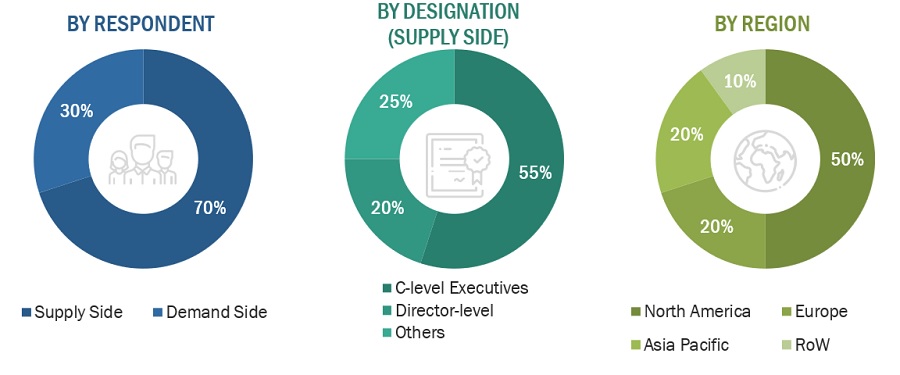
In-depth interviews were conducted with various primary respondents, including key industry participants, subject-matter experts (SMEs), C-level executives of key market players, and industry consultants, among other experts, to obtain and verify the critical qualitative and quantitative information as well as assess the prospects of the market. Various primary sources from both the supply and demand sides of the market were interviewed to obtain qualitative and quantitative information.
To know about the assumptions considered for the study, download the pdf brochure
Market Size Estimation
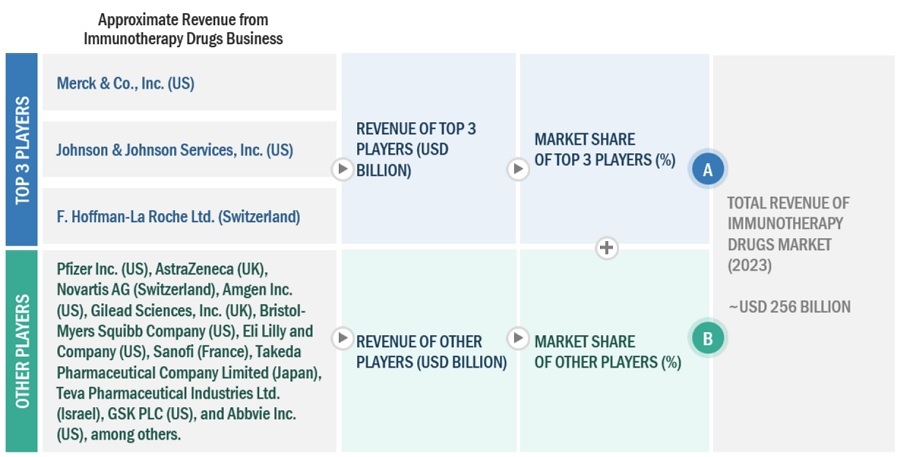
The global size of the immunotherapy drugs market was estimated through multiple approaches. A detailed market estimation approach was followed to estimate and validate the value of the immunotherapy drugs and other dependent submarkets. The research methodology used to estimate the market size includes the following:
- The key players in the industry and markets have been identified through extensive secondary research
- The industry’s supply chain and market size, in terms of value, have been determined through primary and secondary research processes.
- All percentage shares, splits, and breakdowns have been determined using secondary sources and verified through primary sources.
To know about the assumptions considered for the study, Request for Free Sample Report
Data Triangulation
After arriving at the overall market size—using the market size estimation processes—the market was split into several segments. To complete the overall market engineering process and arrive at the exact statistics of each market segment, data triangulation and market breakdown procedures were employed, wherever applicable. The data was triangulated by studying various factors and trends from both the demand and supply sides in the immunotherapy drugs market.
Market Definition
Immunotherapy drugs are a broad category of therapeutic agents that help stimulate the body's immune system to combat diseases. These drugs include antibody therapies, cell & gene therapy, inhibitor drugs, and other drugs such as oncolytic viral therapy and cancer vaccines. These drugs are engineered to enhance the immune response or counteract the immune system's regulatory mechanisms, thereby enabling the body to effectively target and eliminate disease-causing agents or cells. Immunotherapy drugs are used to treat various medical conditions, including cancer, autoimmune diseases, hematology, osteology, neurology, and other therapy areas (such as ophthalmology, dermatology, and cardiovascular disorders).
Stakeholders
- Research Institutes
- Pharmaceutical & Biotechnology Companies
- Venture Capitalists and Investors
- Contract Development & Manufacturing Organizations
- Government Associations
- Healthcare Associations/Institutes
- Business Research & Consulting Service Providers
Report Objectives
- To define, describe, and forecast the immunotherapy market based on type, application, route of administrration, end user, and region
- To provide detailed information about the drivers, restraints, opportunities, and challenges influencing the market growth
- To strategically analyze micromarkets1 with respect to individual growth trends, prospects, and contributions to the overall immunotherapy drugs market
- To analyze market opportunities for stakeholders and provide details of the competitive landscape for key players
- To forecast the size of market segments in North America, Europe, the Asia Pacific (APAC), Latin America, Middle East and Africa
- To profile the key players and comprehensively analyze their core competencies2 in terms of key developments, product portfolios, and financials
- To track and analyze competitive developments, such as partnerships, collaborations, agreements, and acquisitions, in the immunotherapy drugs market
- Micromarkets are the further segments and subsegments of the immunotherapy drugs market.
- Core competencies of companies are captured in terms of the key developments, market shares, and key strategies adopted to sustain their positions in the market.
Available Customizations:
With the given market data, MarketsandMarkets offers customizations as per the company’s specific needs. The following customization options are available for the report:
- Company Information: Detailed analysis and profiling of additional market players (up to five)
- Geographic Analysis: Further breakdown of the Rest of Europe market, by country, based on approvals and feasibility. Further breakdown of the Rest of Asia Pacific market, by country, based on approvals and feasibility
Get the Full Immunotherapy Drugs Market Report
Full forecast, segment splits, and company analysis for all Immunotherapy Drugs Market.
- US Immunotherapy Drugs Market
- Canada Immunotherapy Drugs Market
- Germany Immunotherapy Drugs Market
- UK Immunotherapy Drugs Market
- France Immunotherapy Drugs Market
- Italy Immunotherapy Drugs Market
- Spain Immunotherapy Drugs Market
- China Immunotherapy Drugs Market
- Japan Immunotherapy Drugs Market
- India Immunotherapy Drugs Market
- South Korea Immunotherapy Drugs Market
- Australia Immunotherapy Drugs Market
- Brazil Immunotherapy Drugs Market
- Saudi Arabia Immunotherapy Drugs Market
- UAE Immunotherapy Drugs Market
- Rest Of Europe Immunotherapy Drugs Market
- Rest Of Asia Pacific Immunotherapy Drugs Market
- Rest Of Latin America Immunotherapy Drugs Market
- GCC Countries Immunotherapy Drugs Market
- Rest Of Middle East Immunotherapy Drugs Market
- Rest Of GCC Countries Immunotherapy Drugs Market
Need a Tailored Report?
Customize this report to your needs
Get 10% FREE Customization
Customize This Report
