
Rest Of Asia Pacific In Vitro Toxicology Testing Market (2026-2031)

The Rest Of Asia Pacific In Vitro Toxicology Testing Market was valued at $346 Million in 2026 and projected to reach to $540.3 Million by 2031, representing a compound annual growth rate of 9.3%. Rest Of Asia Pacific represents a significant emerging market within the global in vitro toxicology testing landscape, driven by expanding pharmaceutical development activities and strengthening regulatory frameworks.


| Market Size in | USD 26.32 MN |
| Market Forecast in | |
| CAGR | |
| Forecast Period | |
| Units Considered | Value (USD MN) |
Rest Of Asia Pacific In Vitro Toxicology Testing Market Trends and Insights
- In 2026, Rest Of Asia Pacific is estimated at USD 346.0 million, reflecting growing regulatory pressures and pharmaceutical development activities across the region.
- By 2031, Rest Of Asia Pacific is forecast to expand to USD 540.3 million, driven by increasing adoption of alternative testing methods and stricter safety compliance requirements. The in vitro toxicology testing market in Rest Of Asia Pacific is experiencing accelerated growth as pharmaceutical and chemical manufacturers seek cost-effective, faster alternatives to animal testing.
- Rest Of Asia Pacific's expansion is supported by rising investments in research infrastructure, growing awareness of regulatory frameworks, and the region's position as a manufacturing hub for global pharmaceutical companies.
- The 9.3% compound annual growth rate (CAGR) from 2026 to 2031 underscores Rest Of Asia Pacific's potential as a high-growth market segment within Asia Pacific. Rest Of Asia Pacific's market trajectory reflects broader industry trends toward innovation in toxicology testing methodologies and increased compliance with international standards.
- The region's competitive advantages, including lower operational costs and skilled workforce availability, position Rest Of Asia Pacific as an attractive destination for in vitro testing service providers and pharmaceutical research organizations..
Key Market Statistics
- CAGR (2026-2031) 9.3% CAGR
- Market Size, 2026 ~USD 346 Million
- Forecast, 2031 ~USD 540.3 Million
- Country Rest Of Asia Pacific
Rest Of Asia Pacific In Vitro Toxicology Testing Market Overview
Market Size & Growth :
Rest Of Asia Pacific in vitro toxicology testing market valued at USD 346.0 million in 2026, expanding to USD 540.3 million by 2031, representing a robust 9.3% CAGR over the forecast period.
Regulatory Drivers :
Increasing regulatory pressures from national health authorities and pharmaceutical agencies across emerging Asia Pacific economies are accelerating adoption of in vitro testing methods to replace animal testing.
Pharmaceutical Development Surge :
Growing pharmaceutical and biotechnology R&D activities in countries like India, Vietnam, and Thailand are driving demand for cost-effective and compliant toxicology testing solutions.
Alternative Testing Adoption :
Rising adoption of alternative testing methods driven by ethical concerns, regulatory compliance requirements, and cost efficiency is positioning Rest Of Asia Pacific as a high-growth emerging market segment.
Rest Of Asia Pacific In Vitro Toxicology Testing Market Dynamics
- The region's market is experiencing accelerated growth as countries implement stricter chemical safety regulations and pharmaceutical companies establish R&D centers to capitalize on lower operational costs. By 2031, the market is projected to reach USD 540.3 million, reflecting increasing investment in laboratory infrastructure and adoption of advanced in vitro testing technologies.
- The shift toward alternative testing methods, combined with growing awareness of animal welfare and regulatory harmonization efforts, will continue to propel market expansion across emerging economies in the region..
Market Ecosystem
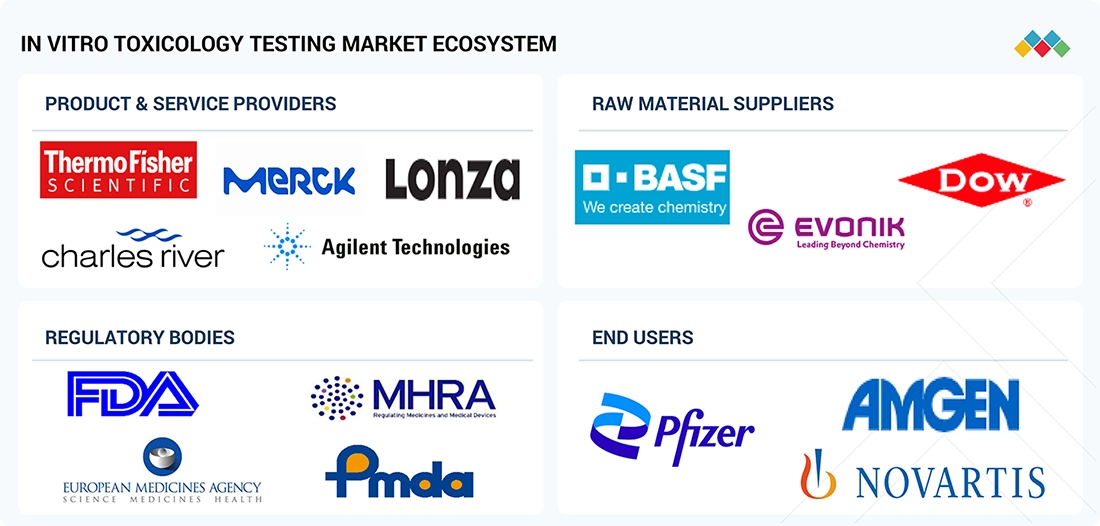
IN VITRO TOXICOLOGY TESTING MARKET: COMMERCIAL USE CASES ACROSS INDUSTRIES
| COMPANY | USE CASE DESCRIPTION | BENEFITS |
|---|---|---|
 |
Offers cytotoxicity and cell-viability products, such as LIVE/DEAD assays, LDH assays, alamarBlue, and ROS detection kits for compound toxicity screening | Supports rapid cell damage, viability, oxidative stress, and drug-discovery toxicity assessment |
 |
Provides CellTiter-Glo 3D assay for viability testing in 3D microtissue/spheroid toxicity models | Improves cytotoxicity readouts in 3D cultures and supports high-throughput screening |
Logos and trademarks shown above are the property of their respective owners. Their use here is for informational and illustrative purposes only.
Related Ecosystem
Biotechnology
Key Takeaways
- Rest Of Asia Pacific's in vitro toxicology testing market is valued at USD 346.0 million in 2026 and is projected to reach USD 540.3 million by 2031, representing a 9.3% CAGR.
- Rest Of Asia Pacific is experiencing rapid market expansion driven by regulatory compliance requirements, pharmaceutical manufacturing growth, and adoption of alternative testing methods.
- Rest Of Asia Pacific benefits from competitive advantages including lower operational costs, skilled workforce, and strategic positioning as a global pharmaceutical manufacturing hub.
- Rest Of Asia Pacific's market growth is supported by increasing investments in research infrastructure and rising awareness of international toxicology testing standards.
In Vitro Toxicology Testing Market Report Scope
| Report Metric | Details |
|---|---|
| Base Year | 2026 |
| Fastest Growing Segment | SERVICES (Offering) |
| Forecast Period | 2026–2031 |
| Growth Rate | CAGR of 10.6% from 2026 to 2031 |
| Largest Segment | PRODUCTS (Offering) |
| Market Size Base Year (Billions) | ~USD 12.67 (2026) |
| Revenue Forecast (Billions) | ~USD 20.97 (2031) |
| Segments Covered | Offering, Type |
Rest Of Asia Pacific In Vitro Toxicology Testing Market Report Segmentation
2 segment dimensions are covered across the global market.
By Offering
- Products
- Services
By Type
- Assay Kits
- Equipment
- Reagents & Consumables
- Software & Informatics
Target Audience
- Pharmaceutical Companies : Pharmaceutical manufacturers and biotech firms expanding R&D operations in Rest Of Asia Pacific need regional market data to optimize testing facility investments and regulatory compliance strategies.
- Contract Research Organizations (CROs) : CROs operating in Rest Of Asia Pacific require detailed market insights to identify service expansion opportunities, pricing strategies, and competitive positioning within emerging markets.
- In Vitro Testing Solution Providers : Vendors of toxicology testing platforms, reagents, and equipment need regional market analysis to guide product development, localization efforts, and go-to-market strategies in Rest Of Asia Pacific.
- Regulatory & Compliance Consultants : Consultants advising clients on regulatory compliance in Rest Of Asia Pacific need market-specific data on testing requirements, adoption trends, and regional regulatory harmonization initiatives.
- Investment & Strategy Teams : Private equity, venture capital, and corporate strategy teams evaluating opportunities in Rest Of Asia Pacific toxicology testing require comprehensive market sizing and growth trajectory analysis.
Key Companies in the Rest Of Asia Pacific In Vitro Toxicology Testing Market
| Company | HQ | Ownership | Strongest segments |
|---|---|---|---|
| MAXCYTE, INC | United States | Public Company | ExPERT instruments (ATx, STx, GTx, VLx),Disposable processing assemblies (PAs),Accessories, buffers, and software protocols, |
| GE HEALTHCARE | United States | Public Company | Imaging,Advanced Visualization Solutions (AVS),Patient Care Solutions (PCS), |
| THERMO FISHER SCIENTIFIC INC. | United States | Public Company | Life Sciences Solutions,Analytical Instruments,Specialty Diagnostics, |
| MEDICILON | China | Public Company | Drug Discovery and Pharmaceutical Research,Preclinical Research and IND-Enabling,Advanced Technology and Specialized Platforms, |
| ARAGEN LIFE SCIENCES LTD. | India | Private Company | Discovery and gene-to-protein services,Biologics development and manufacturing,Small-molecule development and manufacturing, |
| ENZO BIOCHEM INC. | United States | Private Company | Labels, dyes, and genomic probes,Antibodies and immunoassays,Biochemicals, proteins, and other reagents, |
| VIMTA LABS LTD. | India | Public Company | Pharma and Biopharma CRO (preclinical, clinical, analytical, biologics/biosimilars),Food, Nutraceuticals, Water and Beverages Testing,Agrochemicals and Specialty Chemicals Testing, |
MAXCYTE, INC
MaxCyte, Inc is a public biotechnology company founded in 1998 in the United States with 91 employees. The company develops cell engineering technologies and platforms.
GE HEALTHCARE
GE Healthcare is a public healthcare company founded in 2022 in the United States with 54,000 employees. The company provides medical imaging, diagnostics, and healthcare IT solutions.
THERMO FISHER SCIENTIFIC INC.
Thermo Fisher Scientific Inc. is a public life sciences company founded in 1956 in the United States with 125,000 employees. The company is a global leader in serving science with laboratory equipment, reagents, and analytical instruments.
MEDICILON
Medicilon is a public pharmaceutical research and development company founded in 2004 in China with 2,504 employees. The company provides drug discovery and development services.
ARAGEN LIFE SCIENCES LTD.
Aragen Life Sciences Ltd. is a private contract research organization founded in 2000 in India with 4,000 employees. The company provides drug discovery, development, and manufacturing services.
ENZO BIOCHEM INC.
Enzo Biochem Inc. is a private biotechnology company founded in 1976 in the United States with 131 employees. The company develops and manufactures molecular diagnostic and research products.
VIMTA LABS LTD.
Vimta Labs Ltd. is a public contract research organization founded in 1984 in India with 1,384 employees. The company provides preclinical and clinical research services.
Reasons to Buy this Report
- Regional Market Sizing : Obtain precise market valuation for Rest Of Asia Pacific (USD 346M in 2026) with detailed forecasts through 2031, enabling accurate budget allocation and investment decisions specific to this emerging region.
- Growth Opportunity Identification : Identify high-growth opportunities within Rest Of Asia Pacific's 9.3% CAGR trajectory, including emerging economies with expanding pharmaceutical sectors and strengthening regulatory requirements.
- Competitive Positioning : Benchmark your organization against regional market dynamics and understand competitive landscape specific to Rest Of Asia Pacific, including local players and international entrants.
- Regulatory Insights : Gain actionable intelligence on regulatory pressures driving in vitro testing adoption across Rest Of Asia Pacific countries, informing compliance strategies and market entry approaches.
- Strategic Planning : Develop targeted expansion strategies for Rest Of Asia Pacific based on market segmentation, growth drivers, and emerging pharmaceutical development hubs across the region.
Frequently asked questions
What is the market size of in vitro toxicology testing in Rest Of Asia Pacific?
Rest Of Asia Pacific's in vitro toxicology testing market is estimated at USD 346.0 million in 2026 and is forecast to reach USD 540.3 million by 2031.
What is the expected growth rate for Rest Of Asia Pacific's in vitro toxicology testing market?
Rest Of Asia Pacific is expected to grow at a compound annual growth rate (CAGR) of 9.3% from 2026 to 2031.
What factors are driving growth in Rest Of Asia Pacific's in vitro toxicology testing market?
Rest Of Asia Pacific's market growth is driven by increasing regulatory compliance requirements, pharmaceutical manufacturing expansion, adoption of alternative testing methods, and rising investments in research infrastructure.
Why is Rest Of Asia Pacific an attractive market for in vitro toxicology testing services?
Rest Of Asia Pacific offers competitive advantages including lower operational costs, availability of skilled workforce, and strategic positioning as a global pharmaceutical manufacturing hub, making it attractive for service providers and research organizations.
How does Rest Of Asia Pacific's growth compare to the global in vitro toxicology testing market?
Rest Of Asia Pacific's 9.3% CAGR is slightly below the global market CAGR of 10.6%, but the region represents a high-growth emerging market segment within Asia Pacific with significant expansion potential.
RESEARCH METHODOLOGY
This research study involved the extensive use of secondary sources, directories, and databases to identify and collect valuable information for the analysis of the global in vitro toxicology testing market. In-depth interviews were conducted with various primary respondents, including key industry participants, subject-matter experts (SMEs), C-level executives of key market players, and industry consultants, to obtain and verify critical qualitative and quantitative information and assess the growth prospects of the market. The global market size estimated through secondary research was then triangulated with inputs from primary research to arrive at the final market size.
Secondary Research
Secondary research was used mainly to identify and collect information for the extensive, technical, market-oriented, and commercial study of the in vitro toxicology testing market. Secondary sources used for this study include World Health Organization (WHO), Organisation for Economic Co-operation and Development (OECD), The Lens, American Society for Testing and Materials (ASTM), Center for Alternatives to Animal Testing (CAAT), European Union Reference Laboratory for Alternatives to Animal Testing (EURL ECVAM), National Institute of Environmental Health Sciences (NIEHS), Scientific Group on Methodologies for the Safety Evaluation of Chemicals (SGOMSEC), United States Environmental Protection Agency (USEPA), US Food and Drug Administration (US FDA), US Census Bureau, Eurostat, Statista, and Factiva. The Scientist Magazine, ScienceDirect, research journals, corporate filings such as annual reports, SEC filings, investor presentations, and financial statements, press releases, trade, business, professional associations and others. These sources were also used to obtain key information about major players, market classification, and segmentation according to industry trends, regional/country-level markets, market developments, and technology perspectives.
Primary Research
In-depth interviews were conducted with primary respondents, including key industry participants, subject-matter experts (SMEs), C-level executives of key market players, and industry consultants, among others, to obtain and verify critical qualitative and quantitative information and assess market prospects. Various primary sources from both the supply and demand sides of the market were interviewed to obtain qualitative and quantitative information.
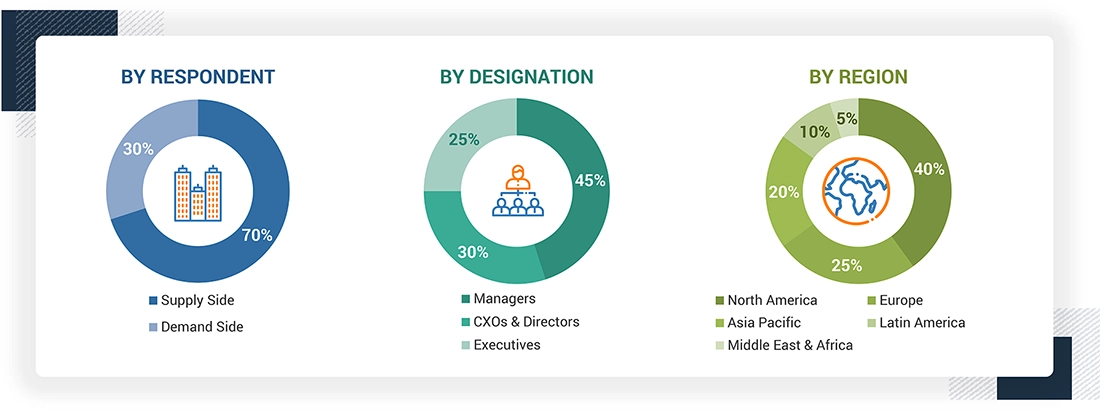
To know about the assumptions considered for the study, download the pdf brochure
Market Size Estimation
The global size of the in vitro toxicology testing market was estimated through multiple approaches. A detailed market estimation approach was used to estimate and validate the market value and other dependent submarkets. These methods were also used extensively to estimate the size of various subsegments in the market.
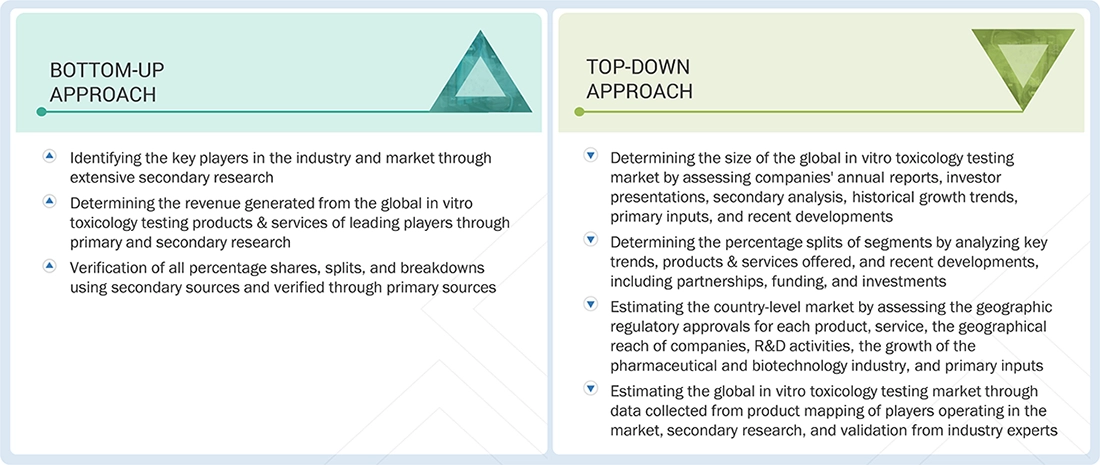
Data Triangulation
After estimating the overall market size from the market size estimation process, the total market was split into several segments. To complete the overall market engineering process and arrive at the exact statistics for all segments, the data triangulation procedure was employed; it involved studying various factors and trends from both the demand and supply sides.
Market Definition
Toxicology/Toxicity testing is required to evaluate compounds to identify their potential adverse effects to assure safety for human and environmental use. In vitro toxicology testing is ideally suited for the investigation of molecular, cellular, and physiological mechanisms of chemically induced toxicity, which cannot readily be studied in vivo. In vitro toxicology testing is widely used by pharmaceutical and biopharmaceutical, consumer care, food, and other industries.
Key Stakeholders
- Academic Research Institutes
- Biotechnology Companies
- Pharmaceutical & Biopharmaceutical Companies
- Chemical Companies
- Medical Device Companies
- Food & Beverage Manufacturers
- Contract Research Organizations (CROs)
- Market Research & Consulting Firms
- Venture Capitalists & Investors
- Government Associations
Report Objectives
- To define, describe, and forecast the in vitro toxicology testing market by offering, product type, toxicity end point and test, technology, method, end user, service type, method, end user, and region
- To provide detailed information regarding the major factors (such as drivers, restraints, opportunities, and challenges) influencing the market growth
- To analyze the micromarkets with respect to individual growth trends, prospects, and contributions to the overall in vitro toxicology testing market
- To analyze the opportunities for stakeholders and provide details of the competitive landscape for market leaders
- To forecast the size of the market segments with respect to six regions: North America (US and Canada), Europe (Germany, France, the UK, Italy, Spain, and the Rest of Europe), Asia Pacific (China, Japan, India, South Korea, Australia, and the Rest of Asia Pacific), Latin America (Brazil, Mexico, Argentina, and the Rest of Latin America), Middle East [GCC (Saudi Arabia, United Arab Emirates, and the Rest of GCC) and the Rest of Middle East], and Africa
- To profile the key players and analyze their market shares and core competencies
- To track and analyze competitive developments, such as product/ service launches, partnerships, agreements, acquisitions, collaborations, and expansions
- To benchmark players within the market using the proprietary “Company Evaluation Matrix” framework, which analyzes market players on various parameters within the broad categories of business and product excellence strategy.
Available customizations:
With the given market data, MarketsandMarkets offers customizations as per the company’s specific needs. The following customization options are available for the report:
Geographical Analysis
- Further breakdown of the Rest of Europe in vitro toxicology testing market, by country
- Further breakdown of the Rest of Asia Pacific in vitro toxicology testing market, by country
Company Information
- Detailed analysis and profiling of additional market players (up to five)
Segment Analysis
- Cross-segment analysis
Get the Full In Vitro Toxicology Testing Market Report
Full forecast, segment splits, and company analysis for all In Vitro Toxicology Testing Market.
- Australia In Vitro Toxicology Testing Market
- Brazil In Vitro Toxicology Testing Market
- Canada In Vitro Toxicology Testing Market
- China In Vitro Toxicology Testing Market
- France In Vitro Toxicology Testing Market
- Germany In Vitro Toxicology Testing Market
- India In Vitro Toxicology Testing Market
- Italy In Vitro Toxicology Testing Market
- Japan In Vitro Toxicology Testing Market
- Mexico In Vitro Toxicology Testing Market
- Rest Of Europe In Vitro Toxicology Testing Market
- Rest Of GCC Countries In Vitro Toxicology Testing Market
- Rest Of Latin America In Vitro Toxicology Testing Market
- Saudi Arabia In Vitro Toxicology Testing Market
- South Korea In Vitro Toxicology Testing Market
- Spain In Vitro Toxicology Testing Market
- UAE In Vitro Toxicology Testing Market
- UK In Vitro Toxicology Testing Market
- US In Vitro Toxicology Testing Market
Need a Tailored Report?
Customize this report to your needs
Get 10% FREE Customization
Customize This Report
