
Canada IoT Medical Devices Market (2025-2030)

The Canada IoT Medical Devices Market was valued at $1851 Million in 2025 and projected to reach to $3565.6 Million by 2030, representing a compound annual growth rate of 14.0%. Canada's IoT medical devices market is positioned for sustained growth through 2030, driven by an aging population requiring continuous health monitoring and chronic disease management solutions.


| Market Size in | USD 26.32 MN |
| Market Forecast in | |
| CAGR | |
| Forecast Period | |
| Units Considered | Value (USD MN) |
Canada IoT Medical Devices Market Trends and Insights
- This 14.0% compound annual growth rate reflects Canada's strong healthcare infrastructure and increasing adoption of connected medical technologies across hospitals, clinics, and home care settings.
- Canada's aging population and rising chronic disease prevalence are driving demand for remote monitoring and real-time patient data solutions. The Canadian market benefits from advanced regulatory frameworks, significant healthcare investments, and a tech-savvy population embracing digital health innovations.
- Canada's position within North America positions it as a key hub for IoT medical device development and deployment.
- By 2030, Canada is expected to capture an increasingly larger share of connected medical device adoption, supported by government healthcare digitalization initiatives and private sector innovation in wearables, diagnostic devices, and patient monitoring systems..
Key Market Statistics
- CAGR (2025-2030) 14.0% CAGR
- Market Size, 2025 ~USD 1851 Million
- Forecast, 2030 ~USD 3565.6 Million
- Country Canada
Canada IoT Medical Devices Market Overview
Market Valuation Growth :
Canada's IoT medical devices market is valued at $1,851.0 million in 2025, with projections reaching $3,565.6 million by 2030, representing a robust 14.0% CAGR driven by healthcare digitalization initiatives.
Aging Population Catalyst :
Canada's demographic shift toward an aging population is accelerating demand for remote monitoring and connected health solutions, particularly in chronic disease management and elderly care applications.
Healthcare Infrastructure Advantage :
Strong Canadian healthcare infrastructure and government support for digital health initiatives create favorable conditions for IoT medical device adoption across hospitals, clinics, and home care settings.
Regulatory Environment :
Health Canada's streamlined approval processes and alignment with international standards facilitate faster market entry for innovative IoT medical devices, supporting sustained market expansion.
Canada IoT Medical Devices Market Dynamics
- Provincial healthcare systems are increasingly investing in connected technologies to improve patient outcomes and reduce hospital readmissions, creating significant opportunities for device manufacturers and healthcare providers. The convergence of 5G infrastructure expansion, government digital health funding, and rising consumer adoption of wearable health technologies will further accelerate market penetration.
- Canadian healthcare organizations are prioritizing interoperable IoT solutions that integrate with existing electronic health records systems, positioning the market for accelerated innovation and competitive differentiation..
Market Ecosystem
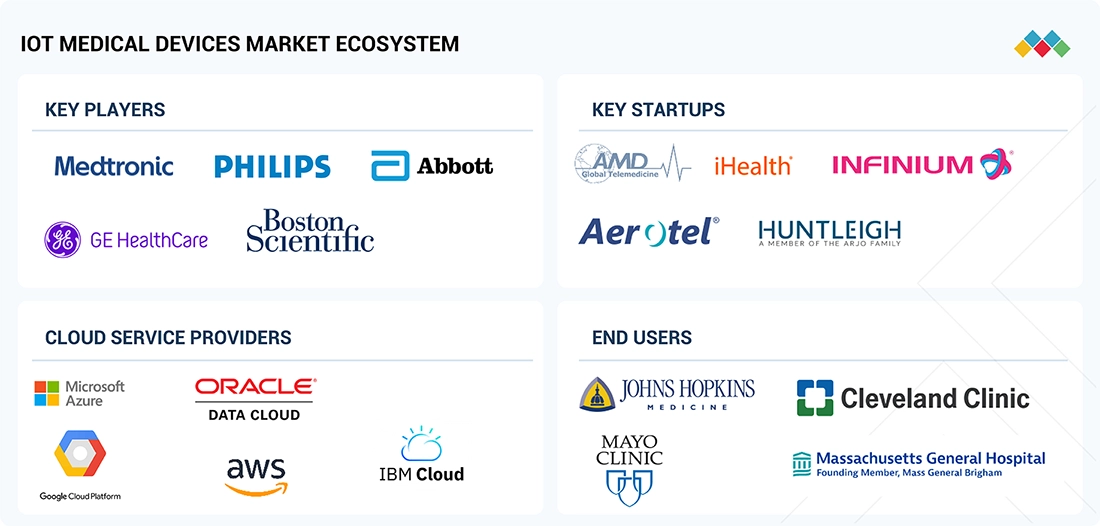
IoT Medical Devices Market: COMMERCIAL USE CASES ACROSS INDUSTRIES
| COMPANY | USE CASE DESCRIPTION | BENEFITS |
|---|---|---|
 |
IoT-enabled connected devices for cardiac monitoring, insulin pumps, and remote patient monitoring. | Enhances real-time patient monitoring, improves chronic disease management, and enables predictive analytics for personalized care. |
 |
Connected imaging systems, IoT-enabled diagnostic equipment, and remote patient monitoring platforms. | Improves operational efficiency, enables real-time imaging insights, and supports proactive patient care. |
 |
Smart hospital solutions, wearable devices, and telehealth platforms with IoT connectivity. | Enhances remote monitoring, optimizes clinical workflows, and improves patient engagement and outcomes. |
 |
IoT-enabled glucose monitoring systems, cardiovascular devices, and wearable health trackers. | Provides continuous health monitoring, supports data-driven interventions, and empowers patients with self-management tools. |
 |
Connected implantable devices and remote monitoring systems for cardiac, vascular, and neurological conditions. | Enables real-time patient monitoring, reduces hospital visits, and facilitates timely clinical interventions. |
Logos and trademarks shown above are the property of their respective owners. Their use here is for informational and illustrative purposes only.
Related Ecosystem
Healthcare It
- Computed Tomography (CT)
- Machine Learning
- Magnetic Resonance Imaging (MRI)
- Natural Language Processing (NLP)
- Predictive Analytics
- CERNER CORPORATION
- PHILIPS HEALTHCARE
- Oracle Corporation
- GE HealthCare Technologies Inc.
- Siemens healthineers
Medical Devices
- Polymerase Chain Reaction (PCR)
- Magnetic Resonance Imaging (MRI)
- Disposable Autoinjectors
- Pulse Oximeters
- Blood Pressure Monitors
- Medtronic plc
- Abbott Laboratories
- Stryker Corporation
- Becton, Dickinson and Company
- JOHNSON & JOHNSON
Key Takeaways
- Canada's IoT medical devices market will nearly double from $1,851.0M (2025) to $3,565.6M (2030), driven by a 14.0% CAGR.
- Canada's aging demographic and chronic disease burden are accelerating adoption of remote patient monitoring and connected diagnostic solutions.
- Canada's regulatory environment and healthcare infrastructure position the country as a North American leader in IoT medical device innovation.
- By 2030, Canada is expected to see widespread integration of wearables, smart sensors, and cloud-based health platforms across provincial healthcare systems.
IoT Medical Devices Market Report Scope
| Report Metric | Details |
|---|---|
| Base Year | 2025 |
| Fastest Growing Segment | MULTIPARAMETER MONITORS (Type) |
| Forecast Period | 2025–2030 |
| Growth Rate | CAGR of 18.9% from 2025 to 2030 |
| Largest Segment | HOSPITALS & CLINICS (End User) |
| Market Size Base Year (Billions) | ~USD 65.12 (2025) |
| Revenue Forecast (Billions) | ~USD 154.74 (2030) |
| Segments Covered | Product, Type, Connectivity Technology, End User |
Canada IoT Medical Devices Market Report Segmentation
4 segment dimensions are covered across the global market.
By Product
- Anesthesia Machines
- Fetal Monitoring Devices
- Hearing Devices
- Imaging Systems
- Implantable Cardiac Devices
- Infusion Pumps
- Neurological Devices
- Other IoT Medical Devices
- Patient Monitors
- Respiratory Devices
- Ventilators
- Vital Signs Monitoring Devices
By Type
- Blood Glucose Monitors
- Blood Pressure Monitors
- Ecg/Heart Rate Monitors
- Icds
- Implantable Cardiac Monitors
- Implantable Devices
- Multiparameter Monitors
- Other Device Types
- Oximeters
- Pacemakers
- Stationary Devices
- Wearable Devices
By Connectivity Technology
- Bluetooth
- Other Connectivity Technologies
- Wi-Fi
- Zigbee
By End User
- Hospitals & Clinics
- Nursing Homes, Assisted Living Facilities, Long-Term Care Centers, And Home Care Settings
- Other End Users
CANADA: IOT MEDICAL DEVICES MARKET, BY END USER, 2023–2030
| Segment | 2023 | 2024 | 2025 | 2026 | 2027 | 2028 | 2029 | 2030 | CAGR (%) |
|---|---|---|---|---|---|---|---|---|---|
| HOSPITALS & CLINICS | 915.9 | 1056.6 | 1216.7 | 1389.7 | 1574.7 | 1770.1 | 1974.1 | 2184 | 12.4 |
| NURSING HOMES, ASSISTED LIVING FACILITIES, LONG-TERM CARE CENTERS, AND HOME CARE SETTINGS | 405.6 | 487.5 | 585.2 | 697.3 | 824.7 | 968.4 | 1129 | 1306.8 | 17.4 |
| OTHER END USERS | 39.7 | 44.1 | 49.1 | 54.2 | 59.3 | 64.5 | 69.7 | 74.7 | 8.8 |
| TOTAL | 1361.2 | 1588.3 | 1851 | 2141.2 | 2458.7 | 2803.1 | 3172.7 | 3565.6 | 14 |
Target Audience
- Medical Device Manufacturers : Manufacturers need Canada-specific market data to develop localized product strategies, understand regulatory requirements, and identify distribution partnerships within Canada's healthcare system.
- Healthcare Providers & Hospital Systems : Canadian hospitals and clinics require market insights to evaluate IoT technology investments, benchmark adoption rates against peers, and justify capital expenditures to provincial health authorities.
- Investment & Private Equity Firms : Investors targeting Canada's healthcare technology sector need detailed market analysis to identify acquisition targets, assess growth potential, and make informed funding decisions in this high-CAGR market.
- Healthcare IT Consultants & Integrators : System integrators and consultants need Canada-specific market data to advise clients on IoT implementation strategies, vendor selection, and interoperability requirements aligned with provincial health IT standards.
- Government & Policy Makers : Canadian health ministry officials and policy makers require market intelligence to inform digital health funding priorities, regulatory frameworks, and strategic initiatives supporting IoT adoption across provinces.
Key Companies in the Canada IoT Medical Devices Market
| Company | HQ | Ownership | Strongest segments |
|---|---|---|---|
| KONINKLIJKE PHILIPS N.V. | Netherlands | Public Company | Diagnostic Imaging (MR, CT, X-ray, Ultrasound),Image Guided Therapy Systems & Devices,Monitoring & Enterprise Informatics, |
| ABBOTT | United States | Public Company | Diagnostic Products,Medical Devices,Nutritional Products, |
| BOSTON SCIENTIFIC CORPORATION | United States | Public Company | Cardiovascular (structural heart, CRM, electrophysiology, peripheral interventions, oncology-related),MedSurg – Endoscopy (GI, pancreaticobiliary, single-use scopes, infection prevention),MedSurg – Urology and Pelvic Health, |
| OMRON CORPORATION | Japan | Public Company | Industrial Automation Systems and Components,Device and Module Solutions (Relays, Switches, Connectors, Sensors),Social Systems and Data/Power Solutions, |
| BAXTER INTERNATIONAL, INC. | United States | Public Company | Medical Products & Therapies (IV, infusion, parenteral nutrition, renal-related therapies),Healthcare Systems & Technologies (smart beds, monitoring, OR integration, surgical equipment),Pharmaceuticals (generic injectables, specialty injectables, inhaled anesthetics, compounding), |
| JOHNSON & JOHNSON | United States | Public Company | Oncology & Immunology (Innovative Medicine),Neuroscience, Cardiovascular & Metabolism, Pulmonary Hypertension, Infectious Disease,Surgery & Interventional (including energy, stapling, wound closure, biosurgery), |
| NIHON KOHDEN CORPORATION | Japan | Public Company | Patient monitors & clinical information systems,Physiological measuring & neuro-diagnostics,Defibrillators, AEDs & therapeutic devices, |
| HONEYWELL INTERNATIONAL, INC. | United States | Public Company | Industrial Automation (control, instrumentation, smart energy, sensing, PPE, software and analytics),Building Automation (BMS software, controls, security, fire, services),Energy and Sustainability Solutions / UOP (licensed process technology, equipment, catalysts, software), |
| DRÄGERWERK AG & CO. KGAA | Germany | Public Company | Medical ventilators, anaesthesia, and lung monitoring,Patient monitoring and hospital infrastructure,Neonatal care and perinatal medicine, |
KONINKLIJKE PHILIPS N.V.
Koninklijke Philips N.V. is a Dutch multinational public company founded in 1891 with 63,670 employees, operating in healthcare, lighting, and consumer electronics.
ABBOTT
Abbott is a United States-based public company founded in 1888 with 115,000 employees, specializing in pharmaceuticals, diagnostics, and nutritional products.
BOSTON SCIENTIFIC CORPORATION
Boston Scientific Corporation is a United States-based public company founded in 1979 with 59,000 employees, manufacturing medical devices for various therapeutic areas.
OMRON CORPORATION
Omron Corporation is a Japanese public company founded in 1933 with 26,050 employees, specializing in automation, healthcare, and electronic components.
BAXTER INTERNATIONAL, INC.
Baxter International, Inc. is a United States-based public company founded in 1931 with 37,500 employees, providing renal care, hospital products, and biopharmaceuticals.
JOHNSON & JOHNSON
Johnson & Johnson is a United States-based public company founded in 1886 with 138,200 employees, operating in pharmaceuticals, medical devices, and consumer health.
NIHON KOHDEN CORPORATION
Nihon Kohden Corporation is a Japanese public company founded in 1951 with 6,116 employees, manufacturing patient monitoring and diagnostic medical equipment.
HONEYWELL INTERNATIONAL, INC.
Honeywell International, Inc. is a United States-based public company founded in 1885 with 101,000 employees, operating in aerospace, building technologies, and industrial solutions.
DRÄGERWERK AG & CO. KGAA
Drägerwerk AG & Co. KGaA is a German public company founded in 1889 with 16,033 employees, specializing in medical and safety technology.
Reasons to Buy this Report
- Market-Specific Sizing & Forecasts : Access precise valuation data for Canada's IoT medical devices market with detailed 2025-2030 projections, enabling accurate budget allocation and revenue forecasting for Canadian market entry or expansion strategies.
- Demographic & Healthcare Insights : Understand Canada's unique aging population dynamics and provincial healthcare system requirements driving IoT adoption, allowing targeted product development and go-to-market strategies aligned with local needs.
- Competitive Landscape Analysis : Identify key players, market gaps, and competitive positioning specific to Canada's healthcare ecosystem, supporting strategic partnership and acquisition decisions in this high-growth market segment.
- Regulatory & Reimbursement Pathways : Navigate Health Canada's approval processes and provincial reimbursement frameworks with market-specific guidance, reducing time-to-market and improving commercialization success rates for IoT medical devices.
- Investment & Growth Opportunities : Identify high-potential segments within Canada's IoT medical devices market, including remote monitoring, wearables, and home care solutions, to prioritize capital allocation and maximize ROI in this expanding sector.
Frequently asked questions
What is the current size of Canada's IoT medical devices market?
Canada's IoT medical devices market is valued at $1,851.0 million in 2025 and is projected to reach $3,565.6 million by 2030.
What is the growth rate for Canada's IoT medical devices market?
Canada's IoT medical devices market is growing at a compound annual growth rate (CAGR) of 14.0% from 2025 to 2030.
What factors are driving growth in Canada's IoT medical devices market?
Canada's market growth is driven by an aging population, rising chronic disease prevalence, strong healthcare infrastructure, government digitalization initiatives, and increasing adoption of remote monitoring technologies.
Which IoT medical device categories are most popular in Canada?
Canada shows strong adoption of remote patient monitoring devices, wearable health trackers, smart diagnostic equipment, and cloud-connected medical sensors across hospitals and home care settings.
How does Canada's IoT medical devices market compare to North America?
Canada represents a significant portion of the North American IoT medical devices market, with advanced regulatory frameworks and healthcare investments supporting faster adoption than many global markets.
RESEARCH METHODOLOGY
The study included several key activities aimed at estimating the current size of the IoT medical devices market. Extensive secondary research was conducted to collect information about this market. The next step involved validating the findings, assumptions, and size estimates by consulting industry experts from across the value chain through primary research. A combination of top-down and bottom-up approaches was used to estimate the overall market size. Subsequently, market segmentation and data triangulation techniques were applied to determine the sizes of specific segments and subsegments within the IoT medical devices market.
Secondary Research
This research study extensively utilized secondary sources, including directories and databases such as Dun & Bradstreet, Bloomberg Business, and Factiva. It also incorporated white papers, annual reports, companies' house documents, investor presentations, and SEC filings of various companies. The market for companies offering IoT medical device solutions was assessed using data from both, paid and free sources. This involved analyzing the product portfolios of major industry players and evaluating these companies based on their performance and quality. Various resources were employed during the secondary research process to gather relevant information for this study. These sources included annual reports, press releases, investor presentations, white papers, academic journals, certified publications, articles by recognized authors, as well as directories and databases.
The secondary research process involved consulting a variety of sources to gather information relevant to the study. These sources included annual reports, press releases, investor presentations from IoT medical device vendors, forums, certified publications, and white papers. This research was essential for obtaining critical insights into the industry's value chain, identifying key players in the market, and understanding market classification and segmentation from both, market and technology-oriented perspectives.
Primary Research
In the primary research process, various sources from both, the supply and demand sides were interviewed to gather qualitative and quantitative information for this report. Primary sources mainly include industry experts from core and related industries, as well as preferred suppliers, manufacturers, distributors, technology developers, researchers, and organizations linked to all segments of the industry's value chain.
In-depth interviews were conducted with key industry participants, subject-matter experts (SMEs), C-level executives from leading market players, and industry consultants. This approach helped in gathering and verifying critical qualitative and quantitative information while also assessing future prospects.
The primary research aimed to identify different segmentation types, industry trends, key players, and important market dynamics, such as drivers, restraints, opportunities, challenges, and strategies adopted by major players in the industry.
After completing the market engineering process, which includes calculations for market statistics, market breakdown, size estimations, forecasting, and data triangulation, extensive primary research was conducted. This research aimed to gather information and verify the critical numbers obtained during the market analysis.
In the complete market engineering process, the top-down and bottom-up approaches and several data triangulation methods were extensively used to perform the market estimation and market forecasting for the overall market segments and subsegments listed in this report. Extensive qualitative and quantitative analysis was performed on the complete market engineering process to list the key information/insights throughout the report.
Breakdown of Primary Respondents
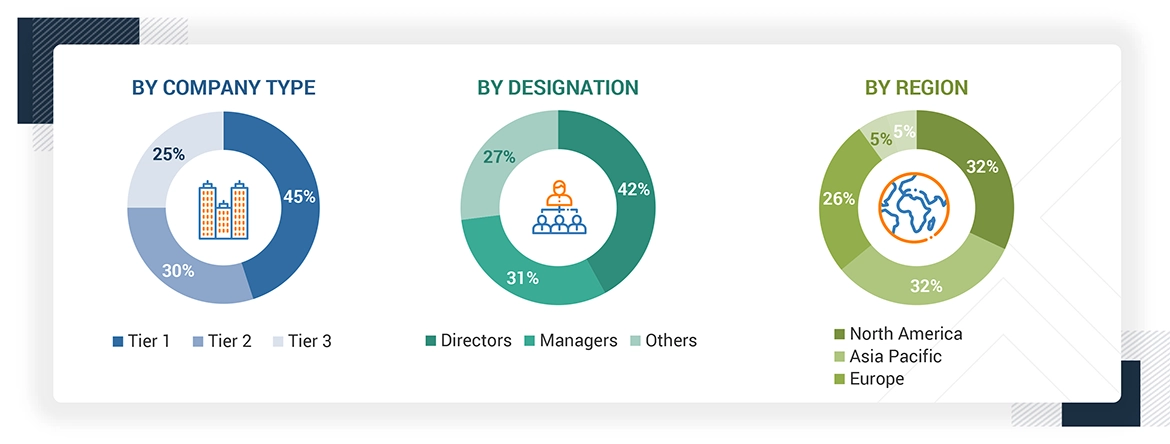
Note 1: Others include sales, marketing, and product managers.
Note 2: Tiers are defined based on a company's total revenue. As of 2023: Tier 1 = >USD 1 billion, Tier 2 = USD 500 million to USD 1 billion, and Tier 3 = < USD 500 million.
To know about the assumptions considered for the study, download the pdf brochure
Market Size Estimation
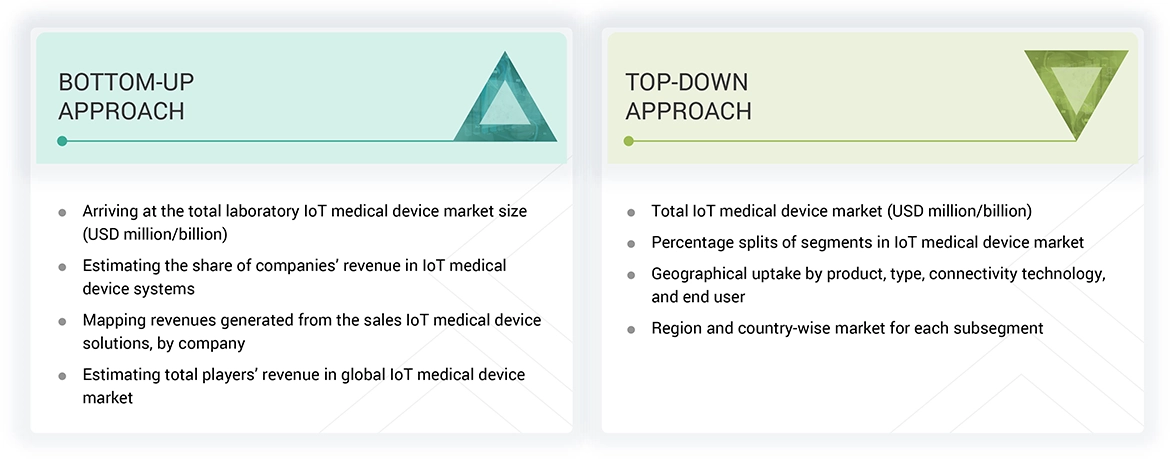
The market size estimates and forecasts provided in this study are derived through a mix of the bottom-up approach (revenue share analysis of leading players) and the top-down approach (assessment of utilization/adoption/penetration trends by product, type, connectivity technology, end user, and region).
Data Triangulation
After arriving at the overall market size, using the market size estimation processes, the market was split into several segments and subsegments. To complete the overall market engineering process and arrive at the exact statistics of each market segment and subsegment, the data triangulation and market breakdown procedures were employed, wherever applicable. The data was triangulated by studying various factors and trends from both, the demand and supply sides in the IoT medical devices market.
Market Definition
The IoT medical devices market refers to connected healthcare devices that use sensors and internet technology to gather and share patient data in real time. These tools support remote monitoring, individualized treatment, and better health outcomes across hospitals, clinics, and home care settings. Growth is fueled by the rise in chronic conditions, increased use of telemedicine, and innovations in wireless communication, though concerns around data privacy and regulatory standards remain key challenges.
Stakeholders
- Telecom service providers
- Wireless device manufacturers
- Healthcare technology suppliers
- Application developers and app stores
- IoT infrastructure and service providers
- M2M, IoT, and general telecommunications companies
- Internet identity management, privacy, and security companies
- Sensor, presence, location, and detection solution providers
- Data management and predictive analysis companies
- Semiconductor companies
- Embedded systems companies
- Regulators and governmental agencies
- Hospitals and clinics
- Nursing homes and assisted living facilities
- Research institutions
Report Objectives
- To define, describe, and forecast the global IoT medical devices market based on product, type, connectivity technology, end user, and region
- To provide detailed information regarding the factors influencing the growth of the market (drivers, restraints, opportunities, and challenges)
- To strategically analyze micromarkets with respect to individual growth trends, prospects, and contributions to the overall IoT medical devices market
- To analyze market opportunities for stakeholders and provide details of the competitive landscape for market leaders
- To forecast the size of the IoT medical devices market in five main regions (along with their respective key countries): North America, Europe, Asia Pacific, Latin America, and Middle East & Africa
- To profile key players and comprehensively analyze their product portfolios, market positions, and core competencies in the market
- To track and analyze competitive developments such as product & service launches; expansions; partnerships, agreements, and collaborations; and acquisitions in the IoT medical devices market
- To benchmark players within the IoT medical devices market using the Company Evaluation Matrix framework, which analyzes market players on various parameters within the broad categories of business strategy, market share, and product offering
Get the Full IoT Medical Devices Market Report
Full forecast, segment splits, and company analysis for all IoT Medical Devices Market.
- US IoT Medical Devices Market
- Germany IoT Medical Devices Market
- UK IoT Medical Devices Market
- France IoT Medical Devices Market
- Italy IoT Medical Devices Market
- Spain IoT Medical Devices Market
- China IoT Medical Devices Market
- Japan IoT Medical Devices Market
- India IoT Medical Devices Market
- Brazil IoT Medical Devices Market
- Mexico IoT Medical Devices Market
Need a Tailored Report?
Customize this report to your needs
Get 10% FREE Customization
Customize This Report
