
Asia Pacific Kraft Paper Market (2025-2030)

The Asia Pacific Kraft Paper Market was valued at $4303.8 Million in 2025 and projected to reach to $4983.9 Million by 2030, representing a compound annual growth rate of 3.0%. The Asia Pacific kraft paper market is positioned for sustained growth through 2030, expanding from USD 4,303.8 million to USD 4,983.9 million.


| Market Size in | USD 26.32 MN |
| Market Forecast in | |
| CAGR | |
| Forecast Period | |
| Units Considered | Value (USD MN) |
Asia Pacific Kraft Paper Market Trends and Insights
- Asia Pacific represents a significant portion of global kraft paper demand, driven by robust packaging, construction, and industrial applications across the region.
- The market in Asia Pacific is supported by rising e-commerce activity, increased consumer goods manufacturing, and infrastructure development initiatives that elevate demand for protective and structural packaging materials. Asia Pacific's kraft paper market benefits from the region's position as a global manufacturing hub and the growing emphasis on sustainable packaging solutions.
- Between 2025 and 2030, Asia Pacific is expected to maintain steady growth momentum as industries in the region increasingly adopt kraft paper for its strength, recyclability, and cost-effectiveness.
- Key end-use sectors in Asia Pacific-including food and beverage, pharmaceuticals, and logistics-continue to drive consumption, while regulatory support for eco-friendly materials further strengthens market prospects in Asia Pacific..
Key Market Statistics
- CAGR (2025-2030) 3.0% CAGR
- Market Size, 2025 ~USD 4303.8 Million
- Forecast, 2030 ~USD 4983.9 Million
- Geography Asia Pacific
Asia Pacific Kraft Paper Market Overview
China Dominates Regional Market :
China accounts for USD 2,103.7 million of the Asia Pacific kraft paper market, representing nearly 49% of regional demand. The country's massive manufacturing base and e-commerce sector drive substantial kraft paper consumption for packaging applications.
Strong Regional Growth Trajectory :
Asia Pacific's 3.0% CAGR outpaces the global average of 2.6%, positioning the region as a key growth engine. This acceleration is fueled by expanding industrial activities, rising consumer goods production, and infrastructure development across emerging economies.
Diverse Market Contributors :
India (USD 832.7M), Japan (USD 987.3M), and South Korea (USD 379.8M) form a robust secondary tier of demand. These markets collectively contribute over 30% of regional volume, driven by packaging, construction, and specialty applications.
Emerging Market Opportunities :
Indonesia (USD 144.5M) and Thailand (USD 87.5M) represent high-growth emerging segments within Asia Pacific. Rapid industrialization and increasing foreign investment in these countries create expanding opportunities for kraft paper suppliers.
Asia Pacific Kraft Paper Market Dynamics
- This 3.0% CAGR reflects strong demand from packaging industries driven by e-commerce growth, particularly in China and India, alongside traditional applications in construction and manufacturing sectors.
- Rising consumer spending and urbanization across the region continue to support kraft paper consumption. Key growth drivers include increasing adoption of sustainable packaging solutions, expansion of food and beverage industries, and infrastructure development projects.
- China's manufacturing dominance and India's emerging market potential will remain primary growth catalysts.
- However, competition from alternative materials and environmental regulations may moderate growth rates.
- Strategic investments in production capacity and sustainable kraft paper variants will be critical for market participants to capitalize on Asia Pacific's expanding opportunities..
Market Ecosystem
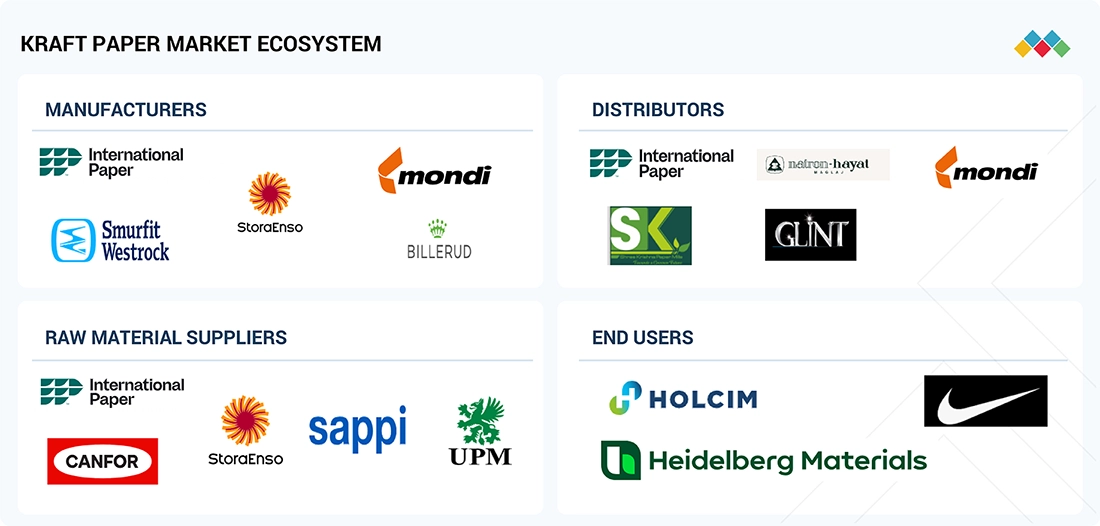
Kraft Paper Market: COMMERCIAL USE CASES ACROSS INDUSTRIES
| COMPANY | USE CASE DESCRIPTION | BENEFITS |
|---|---|---|
 |
NeoPharm used plastic airbags for protective packaging, which caused the following problems: Increased plastic waste, conflicting with its ESG and sustainability commitments. Ineffective protection, resulting in a high rate of product damage during transit. As a global beauty and healthcare company, NeoPharm is dedicated to sustainability and ESG- focused operations. The company aimed to replace its plastic-based packaging with an eco-friendly, recyclable alternative, minimize environmental impact, and offer reliable product protection. Simultaneously, it needed a solution that was cost-effective, efficient, and simplified logistics. | Full shift to plastic-free, 100% recyclable packaging aligned with ESG goals. Reduction in transit damage. Lower labor costs through faster packaging cycles, saving the equivalent of two staff members. Streamlined logistics since kraft paper alone met all packaging needs. Enhanced customer experience and brand reputation with sustainable packaging. |
Logos and trademarks shown above are the property of their respective owners. Their use here is for informational and illustrative purposes only.
Related Ecosystem
Packaging
- Ampoules
- Gravure Process
- Rigid Packaging
- Aerosols
- Aseptic Filling and Sealing Equipment
- Amcor plc
- Essentra plc
- Berry Global Group, Inc.
- Mondi plc
- SEALED AIR CORPORATION
Key Takeaways
- Asia Pacific kraft paper market is valued at USD 4,303.8 million in 2025 and will reach USD 4,983.9 million by 2030.
- Asia Pacific is growing at a 3.0% CAGR, outpacing the global average of 2.6%, reflecting strong regional demand dynamics.
- E-commerce expansion and sustainable packaging mandates are primary growth drivers for Asia Pacific's kraft paper market.
- Asia Pacific's manufacturing base and infrastructure investments position the region as a key growth engine for kraft paper consumption.
Kraft Paper Market Report Scope
| Report Metric | Details |
|---|---|
| Base Year | 2025 |
| Fastest Growing Segment | PASTED VALVE (Product Type) |
| Forecast Period | 2025-2030 |
| Growth Rate | CAGR of 2.6% from 2025 to 2030 |
| Largest Segment | FOOD & BEVERAGE (End-Use Industry) |
| Market Size Base Year (Billions) | ~USD 12.52 (2025) |
| Revenue Forecast (Billions) | ~USD 14.24 (2030) |
| Segments Covered | Grade, Packaging Form, End-Use Industry, Product Type |
Asia Pacific Kraft Paper Market Report Segmentation
4 segment dimensions are covered across the global market.
By Grade
- Bleached Kraft
- Bleached Sack
- Unbleached Kraft
- Unbleached Sack
By Packaging Form
- Envelopes
- Grocery Bags
- Industrial Bags
- Pouches
- Wraps
By End-Use Industry
- Building & Construction
- Cosmetic & Personal Care
- Cosmetics & Personal Care
- Food & Beverage
- Other End-Use Industries
- Pharmaceutical
By Product Type
- Flat Bottom
- Pasted Open Mouth
- Pasted Valve
- Pinched Bottom Open Mouth
- Sewn Open Mouth
Target Audience
- Kraft Paper Manufacturers & Producers : Manufacturers need Asia Pacific-specific market data to optimize production capacity, identify high-growth country markets, and develop region-tailored product strategies. Understanding China's dominance and India's growth potential informs supply chain and investment decisions.
- Packaging & Converting Companies : Converters and packaging manufacturers require regional demand forecasts to plan sourcing strategies, negotiate supplier contracts, and identify emerging market opportunities. Country-level insights help optimize distribution networks across Asia Pacific.
- Construction & Industrial Suppliers : Companies serving construction and industrial sectors need to understand kraft paper demand patterns across Asia Pacific markets. Regional growth forecasts and application-specific insights guide product development and market expansion strategies.
- Investment & Private Equity Firms : Investors evaluating kraft paper sector opportunities in Asia Pacific require detailed market sizing, growth projections, and competitive analysis. Country-level data enables identification of high-potential acquisition targets and investment opportunities.
- Supply Chain & Procurement Professionals : Procurement teams need regional market intelligence to forecast kraft paper availability, anticipate price trends, and identify reliable suppliers across Asia Pacific. Understanding market dynamics by country optimizes sourcing and inventory management.
Countries within Asia Pacific - compare and drill down
| Country | 2025 size (native) |
|---|---|
| China | USD 2103.7 Million |
| India | USD 832.7 Million |
| Japan | USD 987.3 Million |
| South Korea | USD 379.8 Million |
| Thailand | USD 87.5 Million |
| Indonesia | USD 144.5 Million |
Country market size visualization
Reasons to Buy this Report
- Regional Market Sizing & Forecasts : Obtain precise market valuations for Asia Pacific (USD 4,303.8M in 2025) and country-level breakdowns including China, India, Japan, and emerging markets. Detailed forecasts through 2030 enable accurate business planning and investment decisions.
- Competitive Landscape Intelligence : Understand market dynamics specific to Asia Pacific, including regional player strategies, market consolidation trends, and competitive positioning. Identify growth opportunities and threats unique to the region's kraft paper sector.
- Sector-Specific Application Insights : Analyze kraft paper demand across packaging, construction, mining, and industrial gas applications within Asia Pacific. Understand which sectors drive growth and how regional preferences differ from global trends.
- Growth Driver Analysis : Identify key catalysts for Asia Pacific's 3.0% CAGR including e-commerce expansion, urbanization, manufacturing growth, and sustainability trends. Evaluate how regional economic factors influence kraft paper demand differently than other geographies.
- Strategic Market Entry & Expansion : Leverage country-specific market data to prioritize expansion targets within Asia Pacific. Understand market maturity levels, growth potential, and competitive intensity across China, India, Japan, South Korea, and emerging economies.
Frequently asked questions
What is the current market size of kraft paper in Asia Pacific?
The Asia Pacific kraft paper market is valued at USD 4,303.8 million in 2025 and is expected to grow to USD 4,983.9 million by 2030.
What is the growth rate for kraft paper in Asia Pacific?
Asia Pacific's kraft paper market is growing at a CAGR of 3.0% from 2025 to 2030, which exceeds the global CAGR of 2.6%.
Which industries drive kraft paper demand in Asia Pacific?
Key demand drivers in Asia Pacific include packaging (e-commerce and consumer goods), construction, food and beverage, pharmaceuticals, and mining applications.
Why is Asia Pacific's kraft paper market growing faster than the global average?
Asia Pacific's faster growth is driven by rapid e-commerce expansion, manufacturing hub status, infrastructure development, and increasing adoption of sustainable packaging solutions across the region.
What sustainability factors influence the Asia Pacific kraft paper market?
Regulatory support for eco-friendly materials, recyclability of kraft paper, and corporate sustainability commitments in Asia Pacific are driving increased adoption of kraft paper over alternative packaging materials.
RESEARCH METHODOLOGY
The study involved four major activities to estimate the current size of the global kraft paper market. Exhaustive secondary research was carried out to collect information on the market, the peer product market, and the parent market. The next step was to validate these findings, assumptions, and sizes with the industry experts across the value chain of kraft paper through primary research. The top-down and bottom-up approaches were employed to estimate the overall size of the kraft paper market. After that, market breakdown and data triangulation procedures were used to determine the size of different segments of the market.
Secondary Research
The market for the companies offering kraft paper is arrived at by secondary data available through paid and unpaid sources, analyzing the product portfolios of the major companies in the ecosystem, and rating the companies by their performance and quality. Various secondary sources, such as Business Standard, Bloomberg, World Bank, and Factiva, were referred to identify and collect information for this study on the kraft paper market. In the secondary research process, various secondary sources were referred to identify and collect information related to the study. Secondary sources included annual reports, press releases, and investor presentations of kraft paper vendors, forums, certified publications, and white papers. The secondary research was used to obtain critical information on the industry’s value chain, the total pool of key players, market classification, and segmentation from the market and technology-oriented perspectives.
Primary Research
In the primary research process, various primary sources from both the supply and demand sides were interviewed to obtain qualitative and quantitative information for this report. The primary sources from the supply side included industry experts, such as chief executive officers (CEOs), Vice Presidents (VPs), marketing directors, technology and innovation directors, and related key executives from several key companies and organizations operating in the kraft paper market. After the complete market engineering (calculations for market statistics, market breakdown, market size estimations, market forecasting, and data triangulation), extensive primary research was conducted to gather information and verify and validate the critical numbers arrived at. Primary research was also conducted to identify the segmentation types, industry trends, competitive landscape of kraft paper offered by various market players, and key market dynamics, such as drivers, restraints, opportunities, challenges, industry trends, and key player strategies. In the complete market engineering process, the top-down and bottom-up approaches and several data triangulation methods were extensively used to perform the market estimation and market forecasting for the overall market segments and subsegments listed in this report. Extensive qualitative and quantitative analysis was performed on the complete market engineering process to list the key information/insights throughout the report.
The following is the breakdown of primary respondents:
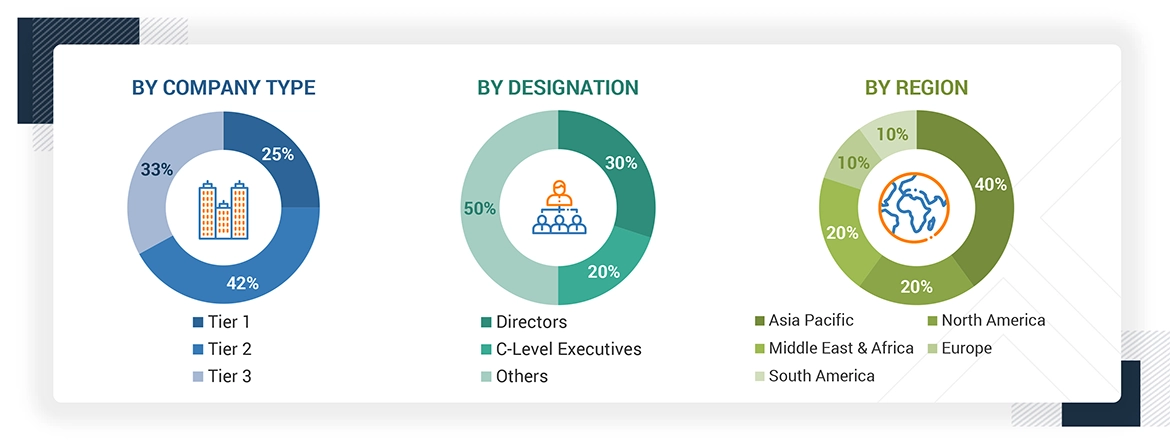
Notes: Other designations include sales, marketing, and product managers.
Tier 1: >USD 1 billion; Tier 2: USD 500 million–1 billion; and Tier 3: < USD 500 million.
To know about the assumptions considered for the study, download the pdf brochure
Market Size Estimation
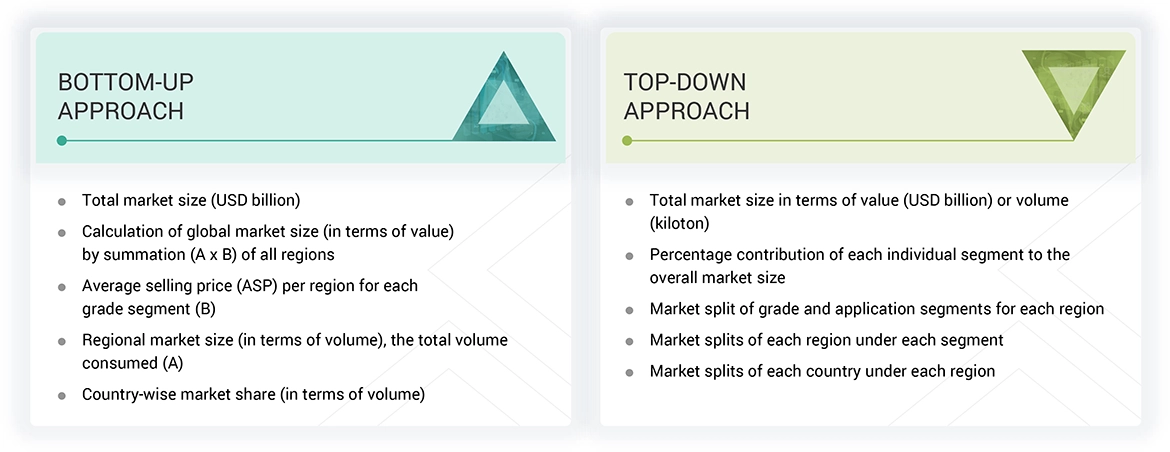
The top-down and bottom-up approaches were used to estimate and validate the size of the global kraft paper market. These approaches were also used extensively to estimate the size of various dependent market segments. The research methodology used to estimate the market size included the following:
Data Triangulation
After arriving at the overall market size using the market size estimation processes, the market was split into several segments and subsegments. The data triangulation and market breakup procedures were employed, wherever applicable, to complete the overall market engineering process and arrive at the exact statistics of each market segment and subsegment. The data was triangulated by studying various factors and trends from both the demand and supply sides.
Market Definition
Kraft paper is a highly durable type of packaging paper. It is manufactured through the sulfate pulping process, which involves the chemical conversion of wood into wood pulp. Depending on the treatment, kraft paper is available in two primary forms: natural (unbleached), which retains a light brown color, and bleached kraft paper, which appears white. Among all commonly used packaging papers, kraft paper is considered the strongest option, making it ideal for applications where durability and resistance to tearing are essential. Its coarse texture and robust nature provide excellent performance as a packaging material. In some cases, kraft paper is intentionally produced with a slightly rough surface to enhance friction, helping prevent bags or packages from slipping off pallets during handling and transportation. Kraft paper is highly versatile and supports various printing methods such as letterpress, flexography, and offset printing, allowing for customization and branding. Its wide range of packaging forms includes multiwall bags, shipping sacks, industrial tapes, envelopes, and wrapping papers.
Stakeholders
- Raw Material Suppliers
- Kraft Paper Manufacturers
- Packaging Converters
- Distributors and Wholesalers
- Research & Development Entities
- Industry Associations and Regulatory Bodies
- End Users
Report Objectives
- To define, describe, and forecast the size of the global kraft paper market based on grade, packaging form, end-use industry, and region in terms of value and volume
- To provide detailed information on the significant drivers, restraints, opportunities, and challenges influencing the market
- To strategically analyze micromarkets concerning individual growth trends, prospects, and their contribution to the market
- To assess the growth opportunities in the market for stakeholders and provide details on the competitive landscape for market leaders
- To forecast the market size of segments for North America, Europe, Asia Pacific, South America, and the Middle East & Africa
- To strategically profile the key players and comprehensively analyze their market shares and core competencies
- To analyze competitive developments such as product launches, acquisitions, partnerships, and expansions in the kraft paper market
- To provide the impact of AI on the market.
Get the Full Kraft Paper Market Report
Full forecast, segment splits, and company analysis for all Kraft Paper Market.
- China Kraft Paper Market
- India Kraft Paper Market
- Japan Kraft Paper Market
- South Korea Kraft Paper Market
- Thailand Kraft Paper Market
- Indonesia Kraft Paper Market
- Germany Kraft Paper Market
- France Kraft Paper Market
- Italy Kraft Paper Market
- Spain Kraft Paper Market
- Sweden Kraft Paper Market
- Turkey Kraft Paper Market
- Finland Kraft Paper Market
- Canada Kraft Paper Market
- Mexico Kraft Paper Market
- US Kraft Paper Market
- South Africa Kraft Paper Market
- Brazil Kraft Paper Market
- Argentina Kraft Paper Market
- Chile Kraft Paper Market
- Rest Of Europe Kraft Paper Market
- Rest Of Asia Pacific Kraft Paper Market
- GCC Countries Kraft Paper Market
- -Rest Of GCC Countries Kraft Paper Market
- Rest Of South America Kraft Paper Market
Need a Tailored Report?
Customize this report to your needs
Get 10% FREE Customization
Customize This Report
