
Rest Of Asia Pacific Negative Pressure Wound Therapy Market (2025-2030)

The Rest Of Asia Pacific Negative Pressure Wound Therapy Market was valued at $28.47 Million in 2025 and projected to reach to $45.24 Million by 2030, representing a compound annual growth rate of 9.7%. Rest Of Asia Pacific represents a high-growth opportunity in the global Negative Pressure Wound Therapy market, with expansion driven by rising chronic disease burden, improving healthcare accessibility, and increasing awareness of advanced wound management solutions.


| Market Size in | USD 26.32 MN |
| Market Forecast in | |
| CAGR | |
| Forecast Period | |
| Units Considered | Value (USD MN) |
Rest Of Asia Pacific Negative Pressure Wound Therapy Market Trends and Insights
- Rest Of Asia Pacific's market growth significantly outpaces the global CAGR of 6.9%, driven by increasing prevalence of chronic wounds, rising healthcare infrastructure investments, and growing adoption of advanced wound care technologies across emerging economies.
- Rest Of Asia Pacific represents a high-potential market segment within the broader Asia Pacific region, with expanding patient populations and improving access to NPWT solutions. Rest Of Asia Pacific's accelerated 9.7% CAGR reflects strengthening demand for innovative wound management therapies, particularly in countries with developing healthcare systems and rising surgical volumes.
- Rest Of Asia Pacific is witnessing increased clinical awareness among healthcare providers and growing reimbursement support for NPWT treatments.
- The market trajectory for Rest Of Asia Pacific demonstrates strong momentum through 2030, supported by demographic shifts, urbanization, and enhanced medical device distribution networks across the region..
Key Market Statistics
- CAGR (2025-2030) 9.7% CAGR
- Market Size, 2025 ~USD 28.47 Million
- Forecast, 2030 ~USD 45.24 Million
- Country Rest Of Asia Pacific
Rest Of Asia Pacific Negative Pressure Wound Therapy Market Overview
Rapid Market Expansion :
Rest Of Asia Pacific's Negative Pressure Wound Therapy market is growing at 9.7% CAGR, significantly outpacing the global rate of 6.9%, reflecting strong regional demand and market maturation.
Substantial Growth Trajectory :
Market valuation is projected to increase from USD 28.47 million in 2025 to USD 45.24 million by 2030, representing a 59% growth opportunity over the five-year forecast period.
Healthcare Infrastructure Investment :
Rising healthcare infrastructure investments across Rest Of Asia Pacific countries are enabling wider adoption of advanced wound therapy technologies and improving patient access to NPWT solutions.
Chronic Wound Prevalence :
Increasing prevalence of chronic wounds, diabetic ulcers, and post-surgical complications in Rest Of Asia Pacific is driving demand for effective negative pressure wound therapy treatments.
Rest Of Asia Pacific Negative Pressure Wound Therapy Market Dynamics
- The region's 9.7% CAGR demonstrates strong market momentum as healthcare providers invest in modern therapeutic technologies. Key growth catalysts include expanding middle-class populations with greater healthcare spending capacity, government initiatives to improve wound care standards, and growing adoption among hospitals and specialty clinics.
- As healthcare infrastructure continues to develop across emerging economies in the region, NPWT adoption is expected to accelerate, positioning Rest Of Asia Pacific as a critical growth engine for market expansion through 2030..
Market Ecosystem
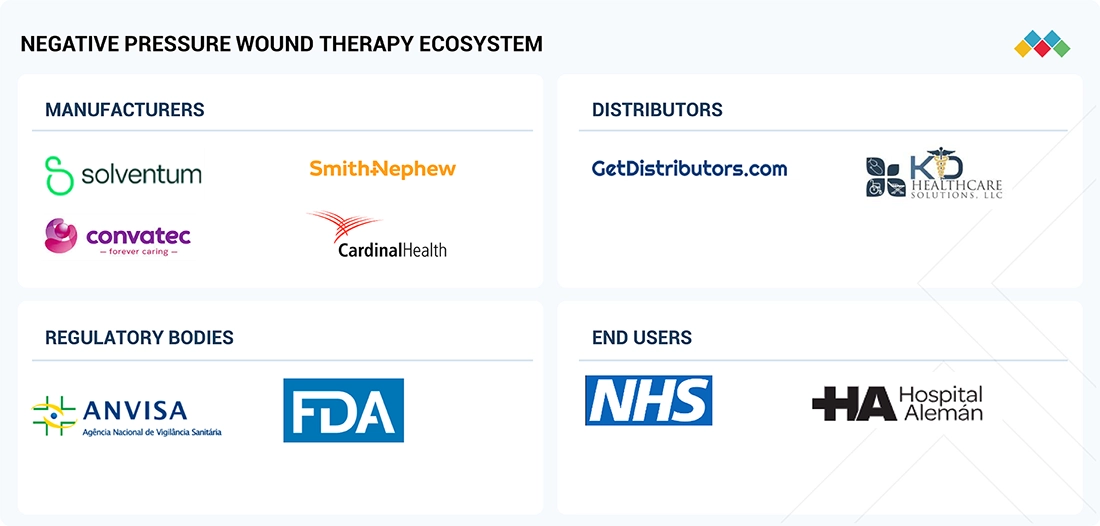
Negative Pressure Wound Therapy Market: COMMERCIAL USE CASES ACROSS INDUSTRIES
| COMPANY | USE CASE DESCRIPTION | BENEFITS |
|---|---|---|
 |
Provides advanced negative pressure wound therapy systems designed to manage acute, chronic, and surgical wounds across healthcare and home settings. | Promotes faster wound closure, enhances granulation tissue formation, reduces exudate and edema, and lowers the risk of infection to support effective wound healing. |
 |
Offers comprehensive negative pressure wound therapy solutions for complex wounds such as pressure injuries, diabetic ulcers, and post-operative wounds. | Maintains an optimal healing environment, accelerates tissue repair, reduces dressing change frequency, and improves patient comfort and mobility. |
 |
Supplies reliable negative pressure wound therapy systems designed for both inpatient and outpatient wound management, supporting clinical efficiency and patient safety. | Facilitates effective exudate removal, reduces infection risk, promotes consistent wound healing, and ensures accessibility through cost-effective care solutions. |
 |
Develops negative pressure wound therapy solutions tailored for surgical and chronic wounds, emphasizing patient safety and ease of use in diverse care environments. | Minimizes wound complications, enhances tissue regeneration, reduces healing time, and improves patient outcomes through advanced exudate management. |
 |
Provides negative pressure wound therapy technologies and accessories for managing exuding, hard-to-heal, and chronic wounds in clinical and home care settings. | Supports continuous wound healing, improves moisture balance, enhances patient comfort, and shortens recovery time by optimizing wound bed conditions. |
Logos and trademarks shown above are the property of their respective owners. Their use here is for informational and illustrative purposes only.
Related Ecosystem
Medical Devices
- Polymerase Chain Reaction (PCR)
- Magnetic Resonance Imaging (MRI)
- Disposable Autoinjectors
- Pulse Oximeters
- Blood Pressure Monitors
- Medtronic plc
- Abbott Laboratories
- Stryker Corporation
- Becton, Dickinson and Company
- JOHNSON & JOHNSON
Key Takeaways
- Rest Of Asia Pacific's NPWT market is valued at USD 28.47 million in 2025 and will grow to USD 45.24 million by 2030, representing a 9.7% CAGR.
- Rest Of Asia Pacific's growth rate significantly exceeds the global average of 6.9%, positioning the region as a high-growth market for wound therapy solutions.
- Rest Of Asia Pacific is driven by rising chronic wound prevalence, expanding healthcare infrastructure, and increasing clinical adoption of advanced NPWT technologies.
- Rest Of Asia Pacific's market expansion is supported by improving reimbursement policies and growing awareness among healthcare providers through 2030.
Negative Pressure Wound Therapy Market Report Scope
| Report Metric | Details |
|---|---|
| Base Year | 2025 |
| Fastest Growing Segment | HOSPITALS (End User) |
| Forecast Period | 2025–2030 |
| Growth Rate | CAGR of 6.9% from 2025 to 2030 |
| Largest Segment | CONVENTIONAL NPWT DEVICES (Product Type) |
| Market Size Base Year (Billions) | ~USD 2.75 (2025) |
| Revenue Forecast (Billions) | ~USD 3.84 (2030) |
| Segments Covered | Product Type, Wound Type, End User |
Rest Of Asia Pacific Negative Pressure Wound Therapy Market Report Segmentation
3 segment dimensions are covered across the global market.
By Product Type
- Conventional Npwt Devices
- Npwt Accessories & Consumables
- Single-Use Npwt Devices
By Wound Type
- Burns And Surgical & Open Wounds
- Diabetic Foot Ulcers
- Pressure Ulcers
- Traumatic Wounds
- Venous Leg Ulcers
By End User
- Home Care Settings
- Hospitals
- Other End Users
Target Audience
- Medical Device Manufacturers : Manufacturers need Rest Of Asia Pacific market intelligence to identify growth opportunities, assess competitive positioning, and develop region-specific product strategies for NPWT solutions.
- Healthcare Investors : Investors require detailed market analysis of Rest Of Asia Pacific's NPWT sector to evaluate investment opportunities, assess market potential, and make informed capital allocation decisions.
- Hospital & Clinic Operators : Healthcare facility operators need market insights to understand NPWT adoption trends, procurement opportunities, and technology investments relevant to Rest Of Asia Pacific healthcare settings.
- Pharmaceutical & Biotech Companies : Companies seeking to expand wound care portfolios need Rest Of Asia Pacific market data to identify partnership opportunities, licensing potential, and regional commercialization strategies.
- Healthcare Consultants & Advisors : Consultants require comprehensive Rest Of Asia Pacific market research to support client strategy development, market entry planning, and competitive analysis in the NPWT sector.
Key Companies in the Rest Of Asia Pacific Negative Pressure Wound Therapy Market
| Company | HQ | Ownership | Strongest segments |
|---|---|---|---|
| NITTO DENKO CORPORATION | Japan | Public Company | Conventional NPWT (materials content),Single-use NPWT (materials content),NPWT Consumables (dressings, drapes, tapes), |
| COLOPLAST A/S | Denmark | Public Company | Conventional NPWT systems,Single-use NPWT,Consumables, |
| SOLVENTUM | United States | Public Company | Conventional NPWT Systems,Single-use NPWT,Consumables (Dressings, Canisters, Interfaces), |
| SMITH+NEPHEW | United Kingdom | Public Company | Conventional NPWT Systems,Single-use NPWT Systems,Consumables (Dressings & Canisters), |
| CARDINAL HEALTH | United States | Public Company | Conventional NPWT Systems,Single-use NPWT,Consumables, |
| MöLNLYCKE AB | Sweden | Private Company | Conventional NPWT,Single-use NPWT,Consumables, |
| CONVATEC GROUP PLC | United Kingdom | Public Company | Conventional NPWT Systems,Single-use NPWT,Consumables (Dressings, Canisters, Tubing), |
| PAUL HARTMANN AG | Germany | Public Company | Conventional NPWT systems,Single-use NPWT,NPWT Consumables (dressings, canisters, tubing), |
| AVERY DENNISON CORPORATION | United States | Public Company | Conventional NPWT (materials inputs),Single-use NPWT (materials inputs),Consumables (dressings, drapes, interface materials), |
| BENQ MATERIALS CORPORATION | Taiwan | Public Company | Conventional NPWT systems,Single-use NPWT,NPWT consumables (dressings, drapes, canisters), |
| DOUBLE MEDICAL TECHNOLOGY INC. | China | Public Company | Conventional NPWT Systems,Single-use NPWT,Consumables (Dressings & Canisters), |
NITTO DENKO CORPORATION
Nitto Denko Corporation is a Japanese public company founded in 1918 with 26,477 employees. The company operates as a diversified manufacturer with operations across multiple industrial sectors.
COLOPLAST A/S
Coloplast A/S is a Danish public company established in 1954 with 17,083 employees. The company specializes in medical devices and healthcare solutions.
SOLVENTUM
Solventum is a United States public company established in 2023 with 20,584 employees. The company operates in the healthcare and industrial sectors.
SMITH+NEPHEW
Smith+Nephew is a United Kingdom-based public company founded in 1856 with 16,988 employees. The company is a global medical technology provider specializing in orthopedics, wound care, and surgical products.
CARDINAL HEALTH
Cardinal Health is a United States public company founded in 1979 with 55,392 employees. The company is a major healthcare services and products distributor serving hospitals, pharmacies, and other healthcare providers.
MöLNLYCKE AB
Mölnlycke AB is a Swedish private company established in 1849 with 8,463 employees. The company specializes in healthcare and hygiene products.
CONVATEC GROUP PLC
ConvaTec Group PLC is a United Kingdom-based public company founded in 1978 with 10,910 employees. The company develops and manufactures medical devices and products for ostomy care, continence care, and wound care.
PAUL HARTMANN AG
Paul Hartmann AG is a German public company founded in 1818 with 10,066 employees. The company produces medical and hygiene products for healthcare and consumer markets.
AVERY DENNISON CORPORATION
Avery Dennison Corporation is a United States public company founded in 1935 with 35,000 employees. The company manufactures pressure-sensitive materials, labels, and packaging solutions for various industries.
BENQ MATERIALS CORPORATION
BenQ Materials Corporation is a Taiwan-based public company founded in 1998 with 1,317 employees. The company manufactures specialty materials and components.
DOUBLE MEDICAL TECHNOLOGY INC.
Double Medical Technology Inc. is a China-based public company founded in 2004 with 4,704 employees. The company manufactures medical devices and healthcare products.
Reasons to Buy this Report
- Regional Growth Opportunity : Capture insights into Rest Of Asia Pacific's fastest-growing NPWT market segment with 9.7% CAGR, enabling strategic market entry and expansion planning in high-potential emerging economies.
- Competitive Intelligence : Understand regional market dynamics, competitive landscape, and key players operating in Rest Of Asia Pacific to inform product development, pricing strategies, and market positioning decisions.
- Investment Decision Support : Access comprehensive market sizing and forecasts (2025-2030) to support investment decisions, business case development, and resource allocation for Rest Of Asia Pacific operations.
- Customer Demand Insights : Identify emerging customer needs, healthcare infrastructure gaps, and adoption drivers specific to Rest Of Asia Pacific to tailor solutions and marketing approaches for regional success.
- Risk Mitigation : Evaluate regional regulatory environment, reimbursement trends, and market barriers specific to Rest Of Asia Pacific to develop informed go-to-market strategies and minimize business risks.
Frequently asked questions
What is the market size of Negative Pressure Wound Therapy in Rest Of Asia Pacific?
Rest Of Asia Pacific's NPWT market is estimated at USD 28.47 million in 2025 and is projected to reach USD 45.24 million by 2030.
What is the CAGR for the NPWT market in Rest Of Asia Pacific?
Rest Of Asia Pacific's NPWT market is expected to grow at a compound annual growth rate of 9.7% from 2025 to 2030.
How does Rest Of Asia Pacific's NPWT market compare to global growth?
Rest Of Asia Pacific's 9.7% CAGR significantly outpaces the global CAGR of 6.9%, indicating stronger regional market momentum and adoption potential.
What factors are driving growth in Rest Of Asia Pacific's NPWT market?
Rest Of Asia Pacific's market growth is driven by increasing chronic wound prevalence, expanding healthcare infrastructure, rising surgical volumes, and improved clinical awareness among providers.
Which countries comprise Rest Of Asia Pacific in this market analysis?
Rest Of Asia Pacific includes emerging and developing economies within the Asia Pacific region excluding major markets like China, Japan, India, and Australia.
RESEARCH METHODOLOGY
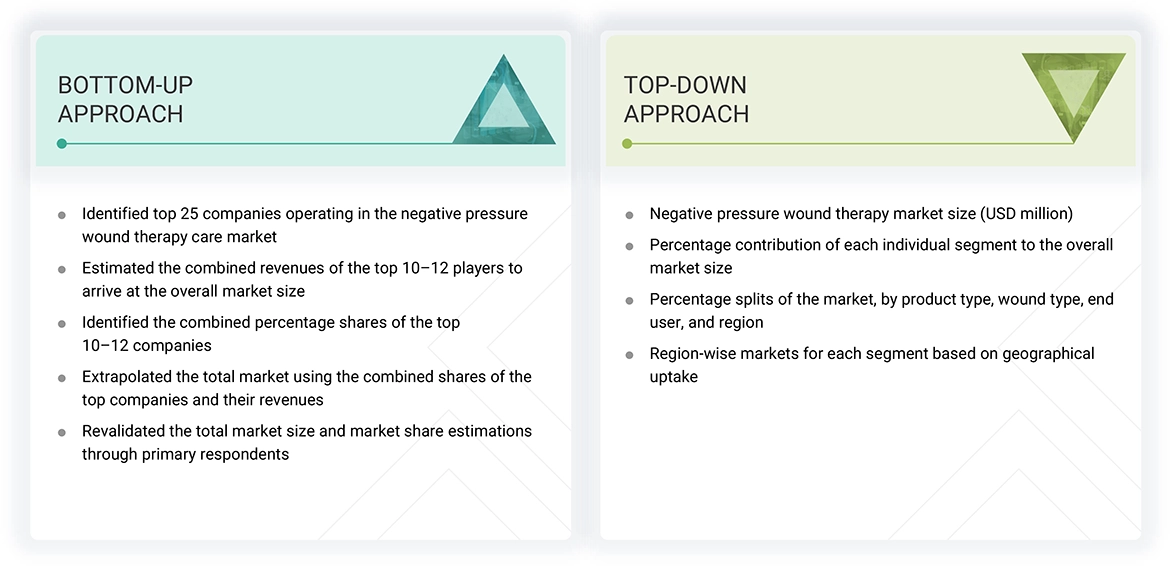
The study involved major activities in estimating the current market size for the negative pressure wound therapy market. Exhaustive secondary research was done to collect information on the negative pressure wound therapy industry. The next step was to validate these findings, assumptions, and sizing with industry experts across the value chain using primary research. Different approaches, such as top-down and bottom-up, were employed to estimate the total market size. After that, the market breakup and data triangulation procedures were used to estimate the market size of the segments and subsegments of the negative pressure wound therapy market.
The four steps involved in estimating the market size are:
Secondary Research
The secondary research process involves the widespread use of secondary sources, directories, databases (such as Bloomberg Businessweek, Factiva, and D&B Hoovers), white papers, annual reports, investor presentations, SEC filings of companies and publications from government sources [such as National Institutes of Health (NIH), US FDA, US Census Bureau, World Health Organization (WHO), , Global Burden of Disease Study, and Centers for Medicare and Medicaid Services (CMS) were referred to identify and collect information for the global negative pressure wound therapy market study. It was also used to obtain important information about the key players and market classification & segmentation according to industry trends to the bottom-most level and key developments related to market and technology perspectives. A database of the key industry leaders was also prepared using secondary research.
Primary Research
In the primary research process, various sources from both the supply and demand sides were interviewed to obtain qualitative and quantitative information for this report. The primary sources from the supply side include industry experts such as CEOs, vice presidents, marketing and sales directors, technology & innovation directors, and related key executives from various key companies and organizations in the negative pressure wound therapy market. The primary sources from the demand side include pharmaceutical companies, biotechnology companies, CROs, pharmacies, medical device companies, and research academics and universities. Primary research was conducted to validate the market segmentation, identify key players in the market, and gather insights on key industry trends & key market dynamics.
The following is a breakdown of the primary respondents:
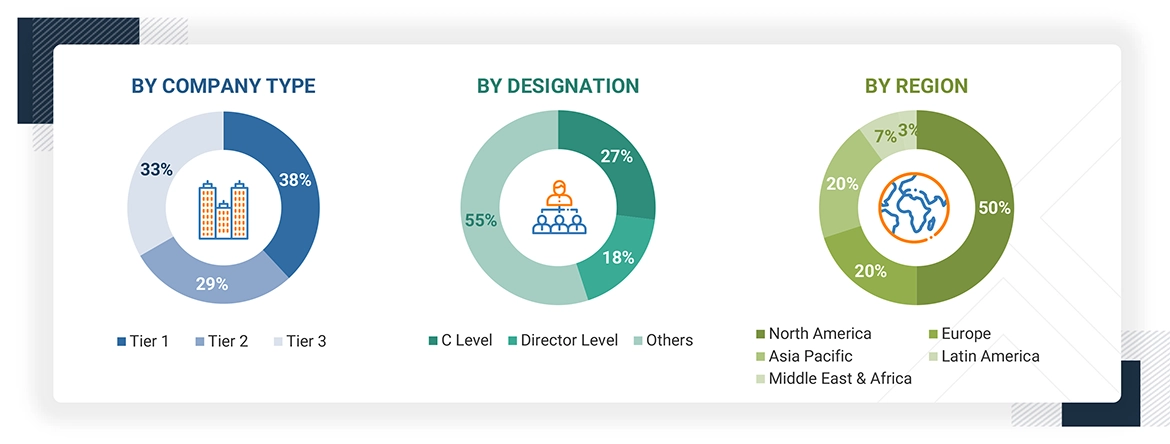
Note 1: Other designations include sales managers, marketing managers, and product managers.
Note 2: Companies are classified into tiers based on their total revenues. As of 2024, Tier 1 = >USD 100 million, Tier 2 = USD 10 million to USD 100 million, and Tier 3 = < USD 10 million.
To know about the assumptions considered for the study, download the pdf brochure
Market Size Estimation
For the global market value, annual revenues were calculated based on the revenue mapping of major product manufacturers and OEMs active in the global negative pressure wound therapy market. All the major service providers were identified at the global and/or country/regional level. Revenue mapping for the respective business segments/sub-segments was done for the major players. The global negative pressure wound therapy market was split into various segments and sub-segments based on:
- List of major players operating in the products market at the regional and/or country level
- Product mapping of negative pressure wound therapy providers at the regional and/or country level
- Mapping of annual revenue generated by listed major players from negative pressure wound therapy (or the nearest reported business unit/product category)
- Extrapolation of the revenue mapping of the listed major players to derive the global market value of the respective segments/subsegments
- Summation of the market value of all segments/subsegments to arrive at the global negative pressure wound therapy market
The above-mentioned data was consolidated and added with detailed inputs and analysis from MarketsandMarkets and presented in this report.
The research methodology used to estimate the market size includes the following:
Data Triangulation
After arriving at the overall market size by applying the process mentioned above, the total market was split into several segments. To complete the overall market engineering process and arrive at the exact statistics for all segments and subsegments, data triangulation and market breakdown procedures were employed, wherever applicable. The data was triangulated by studying various factors and trends from both the demand and supply sides.
Market Definition
Negative pressure wound therapy is a treatment that pulls fluid and bacteria out of a wound to help it heal better. Some healthcare providers call it vacuum-assisted therapy. It works by creating suction. A provider can use this treatment to heal soft tissue on many different parts of your body.
Stakeholders
- NPWT Device Manufacturers
- Hospitals and ASCs
- Research and Consulting Firms
- Distributors of NPWT Devices
- Contract Manufacturers of NPWT Devices
- Venture Capitalists and Investors
- Government Wound Care Organizations
Report Objectives
- To define, describe, segment, and forecast the global negative pressure wound therapy market by product type, wound type, end user, and region
- To provide detailed information regarding the major factors influencing market growth (such as drivers, restraints, opportunities, and challenges)
- To analyze the micromarkets with respect to individual growth trends, prospects, and contributions to the overall negative pressure wound therapy market
- To analyze market opportunities for stakeholders and provide details of the competitive landscape for key players
- To forecast the size of the market segments with respect to five regions: North America, Europe, the Asia Pacific, Latin America, and the Middle East & Africa
- To profile the key players and comprehensively analyze their product portfolios, market positions, and core competencies
- To benchmark players within the market using the proprietary Company Evaluation Matrix framework, which analyzes market players on various parameters within the broad categories of business and product excellence
- To study the impact of AI/Gen AI on the market, along with the macroeconomic outlook for each region
Get the Full Negative Pressure Wound Therapy Market Report
Full forecast, segment splits, and company analysis for all Negative Pressure Wound Therapy Market.
- Canada Negative Pressure Wound Therapy Market
- US Negative Pressure Wound Therapy Market
- UK Negative Pressure Wound Therapy Market
- Germany Negative Pressure Wound Therapy Market
- France Negative Pressure Wound Therapy Market
- Italy Negative Pressure Wound Therapy Market
- Spain Negative Pressure Wound Therapy Market
- Russia Negative Pressure Wound Therapy Market
- China Negative Pressure Wound Therapy Market
- Japan Negative Pressure Wound Therapy Market
- India Negative Pressure Wound Therapy Market
- Australia Negative Pressure Wound Therapy Market
- South Korea Negative Pressure Wound Therapy Market
- Singapore Negative Pressure Wound Therapy Market
- Brazil Negative Pressure Wound Therapy Market
- Mexico Negative Pressure Wound Therapy Market
- Rest Of Europe Negative Pressure Wound Therapy Market
- Rest Of Latin America Negative Pressure Wound Therapy Market
Need a Tailored Report?
Customize this report to your needs
Get 10% FREE Customization
Customize This Report
