
Japan Nuclear Medicine Equipment Market (2025-2030)

The Japan Nuclear Medicine Equipment Market was valued at $525.9 Million in 2025 and projected to reach to $668.9 Million by 2030, representing a compound annual growth rate of 4.9%. Japan's nuclear medicine equipment market is poised for steady growth, driven by the nation's aging population requiring advanced diagnostic and therapeutic imaging solutions.


| Market Size in | USD 26.32 MN |
| Market Forecast in | |
| CAGR | |
| Forecast Period | |
| Units Considered | Value (USD MN) |
Japan Nuclear Medicine Equipment Market Trends and Insights
- Japan's advanced healthcare infrastructure and aging population drive demand for diagnostic imaging and therapeutic nuclear medicine solutions.
- The market in Japan benefits from high healthcare spending, technological innovation, and strong adoption of nuclear medicine procedures across major medical institutions. The growth trajectory in Japan reflects increasing prevalence of cancer and cardiovascular diseases, coupled with Japan's commitment to modernizing diagnostic capabilities.
- Japan's regulatory environment supports the deployment of cutting-edge nuclear medicine equipment, while reimbursement policies favor nuclear imaging procedures.
- Between 2025 and 2030, Japan is expected to see sustained investment in PET-CT systems, SPECT cameras, and radiopharmaceutical production facilities, positioning the country as a key market within the Asia Pacific region..
Key Market Statistics
- CAGR (2025-2030) 4.9% CAGR
- Market Size, 2025 ~USD 525.9 Million
- Forecast, 2030 ~USD 668.9 Million
- Country Japan
Japan Nuclear Medicine Equipment Market Overview
Aging Population Driving Demand :
Japan's rapidly aging demographic, with over 29% of the population aged 65+, significantly increases demand for diagnostic nuclear medicine imaging and therapeutic procedures for age-related conditions.
Advanced Healthcare Infrastructure :
Japan maintains one of the world's most sophisticated healthcare systems with widespread adoption of cutting-edge nuclear medicine technologies, supporting market growth and innovation.
High Healthcare Expenditure :
Japan's substantial healthcare spending and universal insurance coverage ensure consistent investment in nuclear medicine equipment, diagnostic imaging, and therapeutic solutions across hospitals and clinics.
Technological Innovation Hub :
Japan's strong medical device manufacturing sector and R&D capabilities position it as a leader in developing advanced nuclear medicine equipment and imaging solutions.
Japan Nuclear Medicine Equipment Market Dynamics
- The market's 4.9% CAGR reflects consistent demand from hospitals, diagnostic centers, and research institutions investing in state-of-the-art equipment.
- Japan's universal healthcare system and high per-capita healthcare spending support sustained market expansion through 2030. The market will benefit from technological advancements in PET/CT and SPECT systems, increased prevalence of cancer and cardiovascular diseases among elderly patients, and growing adoption of personalized medicine approaches.
- Regulatory support and reimbursement policies favorable to nuclear medicine procedures will further accelerate market penetration across Japan's healthcare facilities..
Market Ecosystem
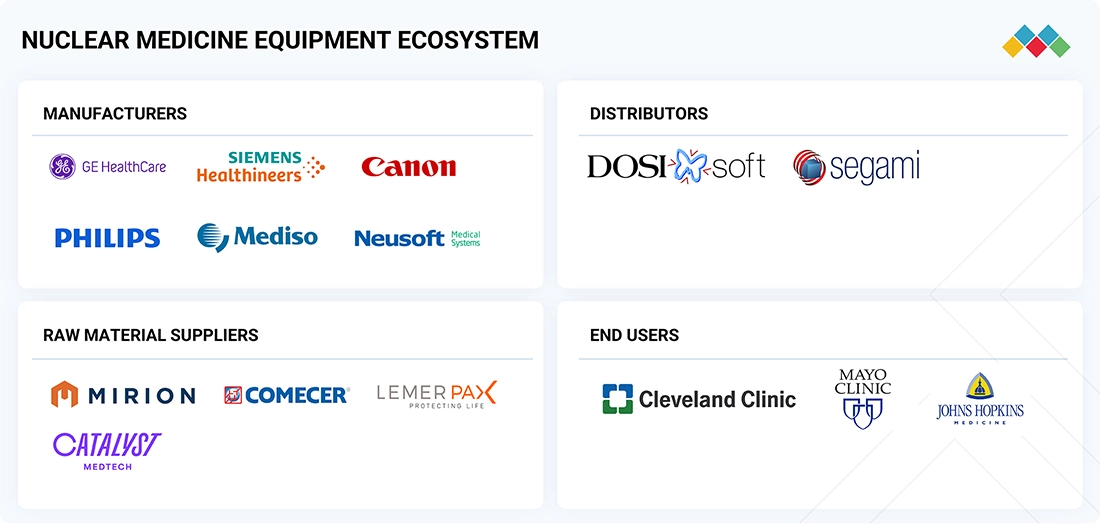
nuclear medicine equipment market: COMMERCIAL USE CASES ACROSS INDUSTRIES
| COMPANY | USE CASE DESCRIPTION | BENEFITS |
|---|---|---|
 |
Al-enabled PET/CT and SPECT/CT platforms with advanced image reconstruction, theranostic support, and digital workflow solutions | Higher diagnostic accuracy, improved therapy monitoring, streamlined workflows, reduced scan times |
 |
Hybrid imaging systems integrating PET/MRI and PET/CT with cloud-based informatics, supporting personalized oncology and cardiology diagnostics | Enhanced precision in oncology/cardiology, data-driven decision support, better patient stratification |
 |
Advanced molecular imaging solutions with Al for lesion detection, radiomics, and dosimetry; strong focus on theranostics and therapy response tracking | Personalized treatment planning, accelerated clinical trials, improved therapy outcomes |
 |
Cost-effective PET/CT and SPECT systems with dose reduction technologies, integrated software for workflow automation, and accessibility in emerging markets | Expanded access to nuclear imaging, lower operational costs, improved patient safety and efficiency |
 |
Radiation detection and dosimetry solutions for nuclear medicine safety and compliance. | Improved radiation protection, regulatory compliance, and workflow efficiency. |
Logos and trademarks shown above are the property of their respective owners. Their use here is for informational and illustrative purposes only.
Related Ecosystem
Pharmaceuticals
- Bioreactors
- Analytical Testing
- Bioanalytical Testing Services
- Cell Counters
- Data Management Services
- Thermo Fisher Scientific Inc.
- Merck KGaA
- SANOFI
- Pfizer Inc.
- NOVARTIS
Key Takeaways
- Japan's nuclear medicine equipment market is valued at USD 525.9 million in 2025 and will reach USD 668.9 million by 2030, growing at 4.9% CAGR.
- Japan's aging demographic and high prevalence of cancer and cardiovascular diseases are primary drivers of nuclear medicine equipment demand.
- Japan's advanced healthcare infrastructure and favorable reimbursement policies support widespread adoption of PET-CT and SPECT imaging technologies.
- Japan is positioned as a leading Asia Pacific market for nuclear medicine equipment, with sustained investment in diagnostic and therapeutic capabilities through 2030.
Nuclear Medicine Equipment Market Report Scope
| Report Metric | Details |
|---|---|
| Base Year | 2025 |
| Fastest Growing Segment | DIAGNOSTIC IMAGING CENTERS (End User) |
| Forecast Period | 2025–2030 |
| Growth Rate | CAGR of 4.62% from 2025 to 2030 |
| Largest Segment | IMAGING MODALITIES (System Type) |
| Market Size Base Year (Billions) | ~USD 6.63 (2025) |
| Revenue Forecast (Billions) | ~USD 8.31 (2030) |
| Segments Covered | System Type, Type, Therapeutic Area, Dimension, End User, Type 2023–2030 |
Japan Nuclear Medicine Equipment Market Report Segmentation
6 segment dimensions are covered across the global market.
By System Type
- Imaging Modalities
- Non- Imaging Modalities
- Non-Imaging Modalities
By Type
- Dose Calibrators
- Gamma Well Counters
- Gamma/ Scintillation Cameras
- Gamma/Scintillation Cameras
- Gm Counters
- Hybrid Pet
- Hybrid Spect
- Other Non-Imaging Modalities
- Pet
- Probe Counting Systems
- Spect
- Standalone Pet
- Standalone Spect
By Therapeutic Area
- Cardiology
- Neurology
- Oncology
- Orthopedics
- Other Therapeutic Areas
- Thyroid
By Dimension
- 2D
- 3D
By End User
- Cancer Treatment Centers
- Diagnostic Imaging Centers
- Hospitals
- Other End Users
By Type 2023–2030
- Dose Calibrators
- Gamma Well Counters
- Gamma/ Scintillation Cameras
- Gm Counters
- Other Non-Imaging Modalities
- Pet
- Probe Counting Systems
- Spect
JAPAN: NUCLEAR MEDICINE EQUIPMENT MARKET, BY END USER, 2023–2030
| Segment | 2023 | 2024 | 2025 | 2026 | 2027 | 2028 | 2029 | 2030 | CAGR (%) |
|---|---|---|---|---|---|---|---|---|---|
| CANCER TREATMENT CENTERS | 76.7 | 80.9 | 85.2 | 89.7 | 94.5 | 99.4 | 104.6 | 110 | 5.2 |
| DIAGNOSTIC IMAGING CENTERS | 112.2 | 118.6 | 125.3 | 132.4 | 139.8 | 147.5 | 155.7 | 164.2 | 5.6 |
| HOSPITALS | 236.8 | 248.5 | 260.4 | 272.8 | 285.8 | 299.3 | 313.3 | 327.9 | 4.7 |
| OTHER END USERS | 50.7 | 52.8 | 55 | 57.2 | 59.5 | 61.8 | 64.3 | 66.7 | 4 |
| TOTAL | 476.4 | 500.8 | 525.9 | 552.1 | 579.5 | 608.1 | 637.9 | 668.9 | 4.9 |
Target Audience
- Medical Device Manufacturers : Manufacturers need Japan-specific market data to develop localized product strategies, understand competitive dynamics, and identify opportunities for PET/CT, SPECT, and therapeutic equipment expansion.
- Healthcare Facility Operators : Hospital administrators and diagnostic center operators require market insights to justify capital investments in nuclear medicine equipment and align procurement with demand forecasts.
- Investment & Private Equity Firms : Investors need comprehensive Japan market analysis to evaluate acquisition targets, assess growth potential, and make informed decisions on healthcare sector investments in nuclear medicine.
- Healthcare Consultants & Advisors : Consulting firms require detailed Japan market data to advise clients on market entry strategies, competitive positioning, and long-term growth planning in nuclear medicine.
- Regulatory & Policy Bodies : Government agencies and healthcare policymakers need market intelligence to develop evidence-based regulations, reimbursement policies, and healthcare infrastructure planning for nuclear medicine services.
Key Companies in the Japan Nuclear Medicine Equipment Market
| Company | HQ | Ownership | Strongest segments |
|---|---|---|---|
| PHILIPS | Netherlands | Public Company | Imaging Systems (PET, SPECT, Gamma),Software (Image Management, PACS, Treatment, Analytics, Workflow),Detectors & Counters (GM Counter, Dose Calibrator and Related), |
| DIGIRAD CORPORATION | United States | Private Company | Imaging – SPECT / Gamma cameras,Imaging – PET,Radiation detection (GM counters, dose calibrators), |
| TOSHIBA CORPORATION | Japan | Private Company | Imaging Equipment (PET, SPECT, Gamma),Radiation Measurement (GM Counter, Dose Calibrator),Software (Image Management, PACS, Treatment, Analytic, Workflow), |
| SIEMENS AG | Germany | Public Company | Imaging Systems (PET, SPECT, Gamma Cameras),Software (Image Management, PACS, Treatment, Analytics, Workflow),Therapy-adjacent Solutions (Onco, Cardio, Neuro, Ortho Planning/Support), |
| GE HEALTHCARE | United States | Public Company | Imaging – PET,Imaging – SPECT,Imaging – Gamma cameras, |
| SIEMENS HEALTHINEERS AG | Germany | ||
| KONINKLIJKE PHILIPS N.V. | Netherlands | Public Company | Imaging Systems (PET, SPECT, Gamma Cameras),Software (Image Management, PACS, Analytics, Workflow, Treatment Planning Interfaces),Therapy-related Applications (Oncology, Cardiology, Neurology, Orthopedic Planning), |
| MIRION TECHNOLOGIES, INC. | United States | Public Company | Imaging-related equipment (PET/SPECT/Gamma-adjacent QA, detectors, cameras),Radiation measurement & counters (GM counters, dose calibrators, health-physics),Software (image/spectroscopy analysis, QA, workflow, treatment support), |
| DOSISOFT SA | France | Private Company | Imaging-related software (PET/SPECT/Gamma image management & PACS integration),Treatment planning & dosimetry software (Onco/Cardio/Neuro/Ortho),Analytics & workflow orchestration, |
| SEGAMI CORPORATION | Japan | Private Company | Imaging Equipment (PET/SPECT/Gamma),GM Counters & Dose Calibrators,Nuclear Medicine Software (Image Management, PACS, Treatment, Analytic, Workflow), |
| LABLOGIC SYSTEMS LTD. | United Kingdom | Private Company | Imaging-adjacent QC hardware (gamma counters, dose calibrator-related QC, radiochromatography hardware),CDS / Image & data management software for radiopharmaceutical workflows,LIMS / workflow and analytic software for nuclear medicine and radiochemistry labs, |
PHILIPS
Philips is a Dutch multinational public company founded in 1891 with 63,670 employees. The company operates across healthcare, consumer lifestyle, and lighting sectors.
DIGIRAD CORPORATION
Digirad Corporation is a United States-based private company founded in 1985 with 194 employees.
TOSHIBA CORPORATION
Toshiba Corporation is a Japanese private company founded in 1875 with 106,648 employees, operating across multiple industrial and technology sectors.
SIEMENS AG
Siemens AG is a German public company founded in 1847 with 310,312 employees, operating across industrial, infrastructure, and healthcare sectors.
GE HEALTHCARE
GE Healthcare is a United States-based public company founded in 2022 with 54,000 employees.
SIEMENS HEALTHINEERS AG
Siemens Healthineers AG is a German healthcare company within the Siemens group.
KONINKLIJKE PHILIPS N.V.
Koninklijke Philips N.V. is a Dutch multinational public company founded in 1891 with 63,670 employees, operating across healthcare, consumer lifestyle, and lighting sectors.
MIRION TECHNOLOGIES, INC.
Mirion Technologies, Inc. is a United States-based public company founded in 2005 with 3,281 employees.
DOSISOFT SA
Dosisoft SA is a French private company founded in 2002.
SEGAMI CORPORATION
Segami Corporation is a Japanese private company with 1,501 employees.
LABLOGIC SYSTEMS LTD.
Lablogic Systems Ltd. is a United Kingdom-based private company founded in 1980.
Reasons to Buy this Report
- Market Size & Growth Projections : Access precise valuation data for Japan's nuclear medicine equipment market (USD 525.9M in 2025, USD 668.9M in 2030) with detailed CAGR analysis to inform investment and expansion strategies.
- Demographic & Healthcare Insights : Understand Japan's aging population dynamics and universal healthcare system impact on nuclear medicine demand, enabling targeted product development and market positioning strategies.
- Competitive Landscape Analysis : Gain intelligence on Japan-specific market players, technological innovations, and competitive positioning to identify partnership opportunities and market entry strategies.
- Regulatory & Reimbursement Framework : Obtain detailed information on Japan's healthcare regulations, insurance coverage policies, and reimbursement mechanisms affecting nuclear medicine equipment adoption and pricing.
- Strategic Market Opportunities : Identify high-growth segments, emerging applications, and underserved regions within Japan's nuclear medicine market to optimize resource allocation and revenue generation.
Frequently asked questions
What is the current size of Japan's nuclear medicine equipment market?
Japan's nuclear medicine equipment market is valued at USD 525.9 million in 2025.
What is the projected market size for Japan by 2030?
Japan's nuclear medicine equipment market is projected to reach USD 668.9 million by 2030.
What is the CAGR for Japan's nuclear medicine equipment market?
Japan's nuclear medicine equipment market is expected to grow at a compound annual growth rate (CAGR) of 4.9% from 2025 to 2030.
What factors are driving growth in Japan's nuclear medicine equipment market?
Key growth drivers in Japan include an aging population, increasing prevalence of cancer and cardiovascular diseases, advanced healthcare infrastructure, and favorable reimbursement policies for nuclear medicine procedures.
Which nuclear medicine equipment types are most in demand in Japan?
PET-CT systems and SPECT cameras are among the most in-demand nuclear medicine equipment types in Japan, supported by strong adoption across major medical institutions.
RESEARCH METHODOLOGY
This market research study involved the extensive use of secondary sources, directories, and databases to identify and collect information useful for this technical, market-oriented, and financial study of the nuclear medicine equipment market. In-depth interviews were conducted with various primary respondents, including key industry participants, subject-matter experts (SMEs), C-level executives of key market players, and industry consultants, among other experts, to obtain and verify critical qualitative and quantitative information and to assess market prospects. The size of the nuclear medicine equipment market was estimated through various secondary research approaches and triangulated with inputs from primary research to arrive at the final market size.
Secondary Research
The secondary research process involved the widespread use of secondary sources, directories, databases (such as Bloomberg Businessweek, Factiva, and D&B Hoovers), white papers, annual reports, company house documents, investor presentations, and SEC filings of companies. Some non-exclusive secondary sources include the World Health Organization (WHO), the Organisation for Economic Co-operation and Development (OECD), Healthcare Information and Management Systems Society (HIMSS), Centers for Disease Control and Prevention (CDC), ClinicalTrials.gov, Expert Interviews, and MarketsandMarkets Analysis.
Secondary research was used to identify and collect information useful for the extensive, technical, market-oriented, and commercial study of the nuclear medicine equipment market. It was also used to obtain important information about the key players and market classification and segmentation according to industry trends, to the bottom-most level, and key developments related to market and technology perspectives. A database of the key industry leaders was also prepared using secondary research.
Primary Research
In the primary research process, various sources from both the supply and demand sides were interviewed to obtain qualitative and quantitative information for this report. Primary sources are mainly industry experts from the core and related industries and preferred suppliers, manufacturers, distributors, technology developers, researchers, and organizations related to all segments of this industry’s value chain. In-depth interviews were conducted with various primary respondents, including key industry participants, subject-matter experts (SMEs), C-level executives of key market players, and industry consultants, among other experts, to obtain and verify the critical qualitative and quantitative information as well as assess prospects.
Primary research was conducted to identify segmentation types, industry trends, key players, and key market dynamics such as drivers, restraints, opportunities, challenges, and strategies adopted by key players.
After completing the market engineering process, which includes calculations for market statistics, market breakdown, size estimations, forecasting, and data triangulation, extensive primary research was conducted. This research aimed to gather information and verify the critical numbers obtained during the market analysis. Additionally, primary research was conducted to identify different types of market segmentation, analyze industry trends, evaluate the competitive landscape of nuclear medicine equipment offered by various players, and understand key market dynamics such as drivers, restraints, opportunities, challenges, industry trends, and strategies employed by key market participants.
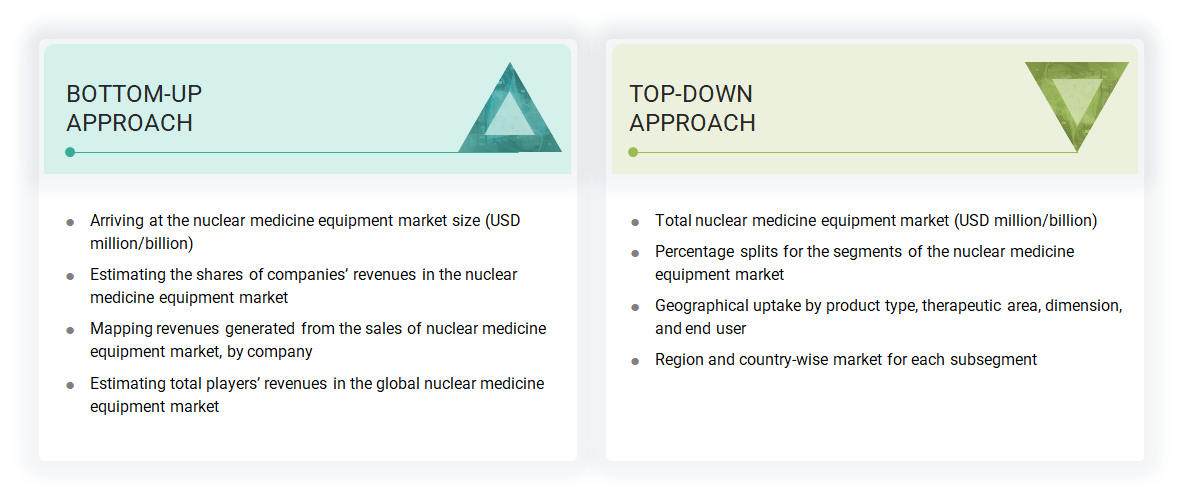
In the complete market engineering process, the top-down and bottom-up approaches and several data triangulation methods were extensively used to perform the market estimation and market forecasting for the overall market segments and subsegments listed in this report. Extensive qualitative and quantitative analysis was performed on the complete market engineering process to list the key information/insights throughout the report.
Breakdown of Primary Interviews
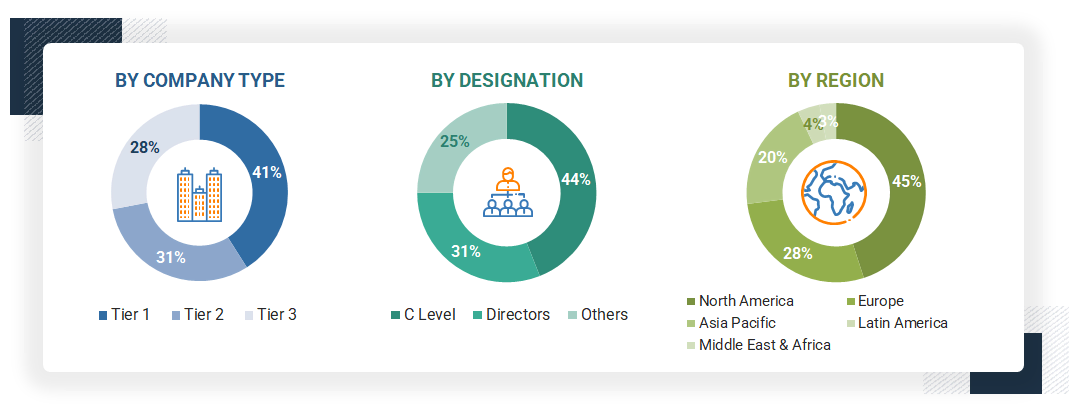
Note 1: Other designations include sales, marketing, and product managers.
Note 2: Tiers are defined based on a company’s total revenue, as of 2024: Tier 1 = >USD 1 billion, Tier 2 = USD 500 million to USD 1 billion, and Tier 3 = < USD 500 million.
To know about the assumptions considered for the study, download the pdf brochure
Market Size Estimation
The market size estimates and forecasts provided in this study are derived through a mix of the bottom-up approach (revenue share analysis of leading players) and top-down approach (assessment of utilization/adoption/penetration trends, by product type, therapeutic area, dimension, end user, and region).
Data Triangulation
After arriving at the overall market size, from the market size estimation process explained above, the nuclear medicine equipment market was split into segments and subsegments. To complete the overall market engineering process and to arrive at the exact statistics for all segments and subsegments, data triangulation and market breakdown procedures were employed, wherever applicable. The data was triangulated by studying various factors and trends from both the demand and supply sides in the nuclear medicine equipment market.
Market Definition
Nuclear medicine equipment refers to specialized medical devices used to perform diagnostic and therapeutic procedures involving radioactive substances. These include imaging systems such as PET (Positron Emission Tomography) and SPECT (Single Photon Emission Computed Tomography) scanners, as well as gamma cameras and hybrid imaging systems. The equipment enables the detection, imaging, and tracking of radiopharmaceuticals within the body, playing a crucial role in disease diagnosis, monitoring, and targeted radionuclide therapy.
Stakeholders
- Nuclear Medicine Equipment Vendors & Imaging Device Manufacturers
- Healthcare Providers (Hospitals, Outpatient Settings, Diagnostics & Imaging Centers, Radiopharmacies, Other Healthcare Providers)
- Clinical Research Organizations (CROs)
- Research & Development (R&D) Companies
- Business Research & Consulting Service Providers
- Medical Research Laboratories
- Academic Medical Centers/Universities/Hospitals/Research Institutes
- Regulatory Bodies (FDA, EMA, IAEA)
- AI & Algorithm Developers
- Venture Capitalists
- Advocacy Groups
- Investors & Financial Institutions
- Contract Manufacturing Organizations (CMOs)
- Contract Research Organizations (CROs)
Report Objectives
- To define, describe, and forecast the nuclear medicine equipment market by product type, therapeutic area, dimension, end user, and region
- To provide detailed information regarding the major drivers, restraints, opportunities, and challenges influencing market growth
- To strategically analyze micromarkets with respect to individual growth trends, prospects, and contributions to the overall nuclear medicine equipment market
- To analyze market opportunities for stakeholders and provide details of the competitive landscape for key players
- To forecast the size of the nuclear medicine equipment market in five main regions (and their respective countries): North America, Europe, Asia Pacific, the Middle East & Africa, and Latin America
- To provide key industry insights, such as supply chain, regulatory, patent, and recession impact analysis
- To profile the key players in the market and comprehensively analyze their core competencies
- To track and analyze competitive developments, such as product launches & upgrades, collaborations, partnerships, acquisitions, investments, contracts, agreements, alliances, mergers, funding, and expansions of the leading players in the market
- To benchmark players within the market using the company evaluation matrix, which analyzes market players on various parameters within the broad categories of business strategy, market share, and product offering
Get the Full Nuclear Medicine Equipment Market Report
Full forecast, segment splits, and company analysis for all Nuclear Medicine Equipment Market.
- Canada Nuclear Medicine Equipment Market
- US Nuclear Medicine Equipment Market
- Germany Nuclear Medicine Equipment Market
- UK Nuclear Medicine Equipment Market
- France Nuclear Medicine Equipment Market
- Italy Nuclear Medicine Equipment Market
- Spain Nuclear Medicine Equipment Market
- Sweden Nuclear Medicine Equipment Market
- China Nuclear Medicine Equipment Market
- India Nuclear Medicine Equipment Market
- South Korea Nuclear Medicine Equipment Market
- Australia Nuclear Medicine Equipment Market
- Brazil Nuclear Medicine Equipment Market
- Mexico Nuclear Medicine Equipment Market
- Rest Of Europe Nuclear Medicine Equipment Market
- Rest Of Asia Pacific Nuclear Medicine Equipment Market
- Rest Of Latin America Nuclear Medicine Equipment Market
Need a Tailored Report?
Customize this report to your needs
Get 10% FREE Customization
Customize This Report
