
Pakistan Phosphoric Acid Market (2025-2030)

The Pakistan Phosphoric Acid Market was valued at $1583.8 Million in 2025 and projected to reach to $1993.4 Million by 2030, representing a compound annual growth rate of 4.71%. Pakistan's phosphoric acid market is poised for sustained growth over the 2025-2030 forecast period, driven by the country's agricultural sector's persistent demand for phosphate-based fertilizers.


| Market Size in | USD 26.32 MN |
| Market Forecast in | |
| CAGR | |
| Forecast Period | |
| Units Considered | Value (USD MN) |
Pakistan Phosphoric Acid Market Trends and Insights
- Pakistan's phosphoric acid sector is driven by strong demand from the fertilizer industry, which remains the largest end-use application in the country.
- The agricultural backbone of Pakistan's economy continues to fuel consumption of phosphoric acid as a key raw material for phosphate fertilizer production, supporting both domestic crop yields and export competitiveness. Growth in Pakistan's phosphoric acid market is underpinned by rising fertilizer demand, infrastructure investments in the chemical sector, and increasing adoption of modern farming practices.
- Pakistan's strategic position in South Asia and its expanding chemical manufacturing base position the country as a significant regional consumer.
- Between 2025 and 2030, Pakistan is expected to benefit from capacity expansions and improved supply chain efficiency, though the market remains sensitive to global phosphate rock prices and agricultural commodity cycles..
Key Market Statistics
- CAGR (2025-2030) 4.71% CAGR
- Market Size, 2025 ~USD 1583.8 Million
- Forecast, 2030 ~USD 1993.4 Million
- Country Pakistan
Pakistan Phosphoric Acid Market Overview
Strong Agricultural Foundation :
Pakistan's phosphoric acid market is primarily driven by the fertilizer industry, which accounts for the largest end-use application. The country's agricultural sector remains a critical economic pillar, sustaining consistent demand for phosphoric acid-based fertilizers.
Steady Growth Trajectory :
The market is projected to grow from USD 1,583.8 million in 2025 to USD 1,993.4 million by 2030, with a CAGR of 4.71%, outpacing the global growth rate of 4.06% and indicating Pakistan's market resilience.
Fertilizer Industry Dominance :
Phosphoric acid consumption in Pakistan is heavily concentrated in the fertilizer sector, reflecting the nation's reliance on agricultural productivity and the critical role of phosphate-based nutrients in crop production.
Regional Market Opportunity :
Pakistan represents a significant market within South Asia for phosphoric acid, with growth potential tied to agricultural modernization, increased crop yields, and expanding food security initiatives across the region.
Pakistan Phosphoric Acid Market Dynamics
- With a CAGR of 4.71%, the market demonstrates resilience and expansion potential, supported by Pakistan's position as a major agricultural economy and the critical role of phosphoric acid in enhancing crop productivity and soil fertility. Future growth will be influenced by government agricultural policies, investment in farming infrastructure, and the adoption of modern fertilizer technologies.
- Increasing awareness of sustainable farming practices and the need to maximize yields on limited arable land will further support phosphoric acid demand.
- Market players should focus on supply chain optimization and strategic partnerships with fertilizer manufacturers to capitalize on Pakistan's growing agricultural requirements..
Market Ecosystem
Related Ecosystem
Bulk Chemicals And Inorganics
- Corrosion Inhibitors
- Glycol Ethers
- Acetic Acid
- Acetone
- Ammonium Nitrate
- Basf se
- DOW CHEMICAL COMPANY
- Exxon Mobil Corporation
- AZELIS HOLDINGS SA
- Sinopec limited
Key Takeaways
- Pakistan's phosphoric acid market is valued at USD 1,583.8 million in 2025 and will reach USD 1,993.4 million by 2030, growing at a 4.71% CAGR.
- Pakistan's fertilizer industry is the primary driver of phosphoric acid demand, leveraging the country's agricultural sector and export markets.
- Pakistan benefits from regional demand dynamics and strategic chemical manufacturing investments that support market expansion through 2030.
- Pakistan's market growth is constrained by global phosphate rock price volatility and agricultural commodity cycle fluctuations.
Phosphoric Acid Market Report Scope
| Report Metric | Details |
|---|---|
| Base Year | 2025 |
| Fastest Growing Segment | FEED & FOOD ADDITIVES (Application) |
| Forecast Period | 2025-2030 |
| Growth Rate | CAGR of 4.06% from 2025 to 2030 |
| Largest Segment | WET PROCESS (Process Type) |
| Market Size Base Year (Billions) | ~USD 116.49 (2025) |
| Revenue Forecast (Billions) | ~USD 142.14 (2030) |
| Segments Covered | Application, Process Type |
Pakistan Phosphoric Acid Market Report Segmentation
2 segment dimensions are covered across the global market.
By Application
- Detergents
- Feed & Food Additives
- Fertilizers
- Industrial Use
- Metal Finishing
- Other Application
- Other Applications
- Water Treatment Chemicals
By Process Type
- Thermal Process
- Wet Process
PAKISTAN: PHOSPHORIC ACID MARKET, BY APPLICATION, 2025–2030
| Segment | 2025 | 2026 | 2027 | 2028 | 2029 | 2030 | CAGR (%) |
|---|---|---|---|---|---|---|---|
| DETERGENTS | 82.3 | 86 | 90 | 94.2 | 98.6 | 103.2 | 4.65 |
| FEED & FOOD ADDITIVES | 136.3 | 142.7 | 149.5 | 156.7 | 164.3 | 172.4 | 4.81 |
| FERTILIZERS | 1220.5 | 1277.2 | 1336.9 | 1399.9 | 1466.5 | 1536.8 | 4.72 |
| INDUSTRIAL USE | 31.9 | 33.2 | 34.7 | 36.2 | 37.8 | 39.4 | 4.35 |
| METAL FINISHING | 39.9 | 41.6 | 43.5 | 45.4 | 47.5 | 49.7 | 4.51 |
| OTHER APPLICATIONS | 23.8 | 24.8 | 26 | 27.2 | 28.4 | 29.8 | 4.6 |
| WATER TREATMENT CHEMICALS | 49.2 | 51.5 | 54 | 56.5 | 59.3 | 62.1 | 4.78 |
| TOTAL | 1583.8 | 1657.1 | 1734.5 | 1816.2 | 1902.4 | 1993.4 | 4.71 |
Target Audience
- Fertilizer Manufacturers : Pakistan-based and international fertilizer producers need detailed market intelligence to optimize phosphoric acid procurement, production planning, and market positioning in Pakistan's agriculture-driven economy.
- Chemical Distributors & Traders : Distributors and trading companies operating in Pakistan require country-specific market data to forecast demand, manage inventory, negotiate supplier contracts, and identify growth opportunities in the phosphoric acid supply chain.
- Agricultural Input Suppliers : Companies providing agricultural inputs and solutions need Pakistan market insights to understand phosphoric acid consumption trends, farmer preferences, and opportunities to integrate phosphate-based products into their portfolios.
- Investment & Private Equity Firms : Investors evaluating opportunities in Pakistan's chemical and agricultural sectors require market-specific data on growth potential, market size, CAGR, and competitive landscape to assess investment viability and returns.
- Government & Policy Bodies : Pakistani agricultural ministries, regulatory agencies, and policy makers need market analysis to inform agricultural development strategies, fertilizer subsidies, import/export policies, and food security initiatives.
Reasons to Buy this Report
- Country-Specific Market Sizing : Obtain precise market valuation for Pakistan's phosphoric acid sector with verified data points: USD 1,583.8M (2025) and USD 1,993.4M (2030), enabling accurate business planning and investment decisions.
- Agricultural Sector Insights : Understand Pakistan's fertilizer industry dynamics and phosphoric acid consumption patterns specific to the country's agricultural landscape, crop types, and farming practices to tailor product offerings.
- Competitive Positioning : Benchmark your operations against Pakistan's market growth rate of 4.71% CAGR versus global 4.06%, identifying competitive advantages and market share opportunities in this outperforming regional market.
- Strategic Investment Guidance : Make informed decisions on market entry, expansion, or partnership strategies in Pakistan with comprehensive analysis of growth drivers, end-use applications, and forecast trajectories through 2030.
- Supply Chain Optimization : Develop targeted supply chain and distribution strategies for Pakistan's phosphoric acid market by understanding local demand patterns, agricultural cycles, and fertilizer industry requirements specific to the country.
Frequently asked questions
What is the current size of Pakistan's phosphoric acid market?
Pakistan's phosphoric acid market is estimated at USD 1,583.8 million in 2025.
What is the projected market size for Pakistan's phosphoric acid industry by 2030?
Pakistan's phosphoric acid market is forecast to reach USD 1,993.4 million by 2030.
What is the growth rate of Pakistan's phosphoric acid market?
Pakistan's phosphoric acid market is expected to grow at a CAGR of 4.71% from 2025 to 2030.
Which industry drives phosphoric acid demand in Pakistan?
The fertilizer industry is the largest consumer of phosphoric acid in Pakistan, driven by the country's agricultural sector and export demand.
What factors influence Pakistan's phosphoric acid market growth?
Pakistan's market growth is influenced by fertilizer demand, agricultural practices, chemical sector investments, and global phosphate rock prices.
RESEARCH METHODOLOGY
The study involved four major activities in estimating the market size for phosphoric acid. Exhaustive secondary research was conducted to gather information on the market, including peer and parent markets. The next step was to validate these findings, assumptions, and sizing with industry experts across the value chain through primary research. Both top-down and bottom-up approaches were used to estimate the total market size. Subsequently, market breakdown and data triangulation methods were applied to determine the sizes of segments and subsegments.
Secondary Research
Secondary sources used in this study included annual reports, press releases, and investor presentations of companies; white papers; certified publications; articles from recognized authors; and gold standard & silver standard websites such as Factiva, ICIS, and Bloomberg. The findings of this study were verified through primary research by conducting extensive interviews with key officials such as CEOs, VPs, directors, and other executives.
Primary Research
The phosphoric acid market comprises several stakeholders, such as raw material suppliers, end-product manufacturers, and regulatory organizations in the supply chain. The demand side of this market is characterized by key opinion leaders in various applications for the phosphoric acid market. The supply side is characterized by advancements in technology and diverse application industries. Various primary sources from both the supply and demand sides of the market were interviewed to obtain qualitative and quantitative information.
The breakdown of profiles of the primary interviewees is illustrated in the figure below:
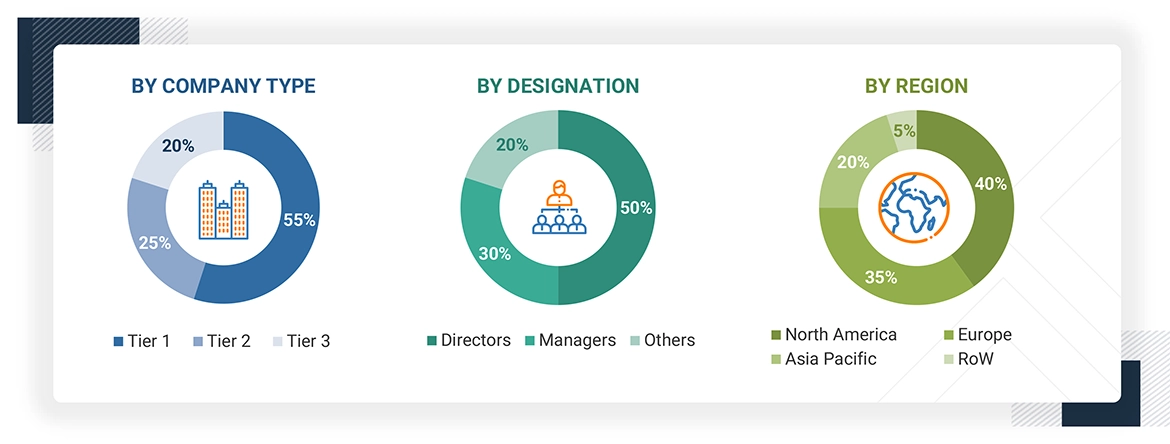
Note: Tier 1, Tier 2, and Tier 3 companies are classified based on their market revenue in 2023/2024, available in the public domain, product portfolios, and geographical presence.
Other designations include consultants and sales, marketing, and procurement managers.
To know about the assumptions considered for the study, download the pdf brochure
| COMPANY NAME | DESIGNATION | |
|---|---|---|
| OCP Group | Senior Manager | |
| The Mosaic Company | Innovation Manager | |
| PJSC PhosAgro | Vice-President | |
| ICL Group Ltd. | Production Supervisor | |
| Nutrien Ltd. | Sales Manager | |
Market Size Estimation
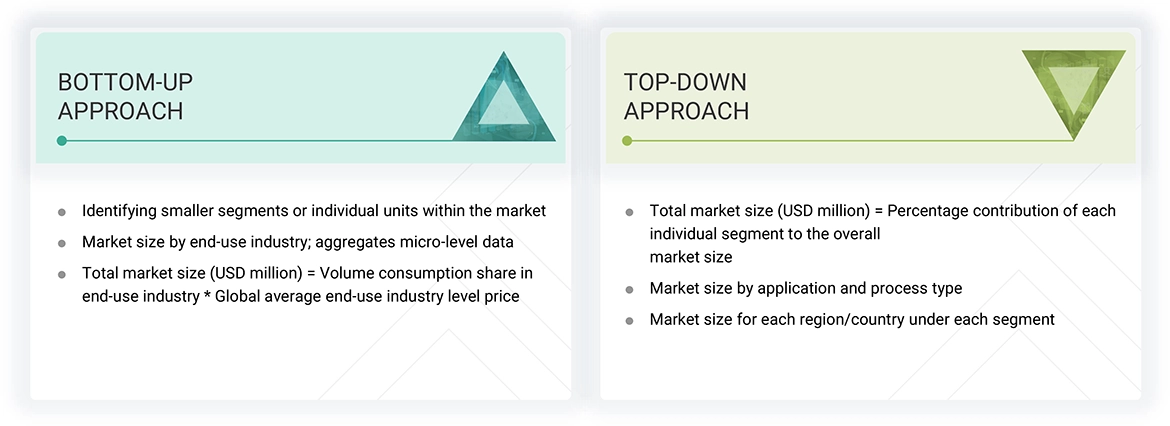
Both top-down and bottom-up approaches were used to estimate and validate the total size of the phosphoric acid market. These methods were also used extensively to estimate the size of various subsegments in the market. The research methodology used to estimate the market size includes the following:
- The key players in the industry have been identified through extensive secondary research.
- The supply chain of the industry has been determined through primary and secondary research.
- All percentage shares, splits, and breakdowns have been determined using secondary sources and verified through primary sources.
- All possible parameters that affect the markets covered in this research study have been accounted for, viewed in extensive detail, verified through primary research, and analyzed to obtain the final quantitative and qualitative data.
Data Triangulation
After arriving at the overall market size—using the market size estimation processes as explained above—the market was split into several segments and subsegments. To complete the overall market engineering process and arrive at the exact statistics of each market segment and subsegment, data triangulation, and market breakdown procedures were employed, wherever applicable. The data was triangulated by studying various factors and trends from both the demand and supply sides in the phosphoric acid industry.
Market Definition
According to the Phosphoric Acid and Phosphates Association, "Phosphates are inorganic compounds that exist in various food products and are manufactured synthetically from phosphoric acid.” Phosphoric acid is an inorganic type of acid that is derived from one or more inorganic compounds. The key raw materials for phosphoric acid production are rock phosphate, sulfuric acid, and elemental phosphorus. Phosphoric acid is manufactured from two major processes, the wet process and the thermal process. The wet process is the most commonly used for phosphoric acid production. The thermal process is used to produce high-purity phosphoric acid.
Stakeholders
- Phosphoric acid manufacturers
- Phosphoric acid distributors
- Raw material suppliers
- Government and research organizations
- Investment banks and private equity firms
Report Objectives
- To define, describe, and forecast the phosphoric acid market in terms of value and volume
- To provide detailed information regarding significant drivers, opportunities, restraints, and challenges, influencing market growth
- To estimate and forecast the market size by process type, application, and region
- To forecast the size of the market with respect to five main regions (along with key countries of each region): Asia Pacific, North America, Europe, the Middle East & Africa, and South America
- To strategically analyze micromarkets with respect to individual growth trends, prospects, and their contribution to the overall market
- To analyze opportunities in the market for stakeholders and provide a competitive landscape of the market leaders
- To analyze competitive developments, such as product launches, acquisitions, partnerships, and expansions
- To strategically profile the key players and comprehensively analyze their core competencies
Get the Full Phosphoric Acid Market Report
Full forecast, segment splits, and company analysis for all Phosphoric Acid Market.
- China Phosphoric Acid Market
- India Phosphoric Acid Market
- Indonesia Phosphoric Acid Market
- Australia Phosphoric Acid Market
- US Phosphoric Acid Market
- Mexico Phosphoric Acid Market
- Canada Phosphoric Acid Market
- France Phosphoric Acid Market
- Poland Phosphoric Acid Market
- Russia Phosphoric Acid Market
- Spain Phosphoric Acid Market
- Turkey Phosphoric Acid Market
- Brazil Phosphoric Acid Market
- Argentina Phosphoric Acid Market
- Egypt Phosphoric Acid Market
- Rest Of Europe Phosphoric Acid Market
- Rest Of Asia Pacific Phosphoric Acid Market
- GCC Countries Phosphoric Acid Market
- Morocco Phosphoric Acid Market
- -Rest Of GCC Phosphoric Acid Market
- Rest Of South America Phosphoric Acid Market
Need a Tailored Report?
Customize this report to your needs
Get 10% FREE Customization
Customize This Report
