
Turkey Pipe Insulation Market (2025-2030)

The Turkey Pipe Insulation Market was valued at $294.16 Million in 2025 and projected to reach to $377.66 Million by 2030, representing a compound annual growth rate of 5.12%. Turkey's pipe insulation market is poised for sustained growth through 2030, driven by accelerating industrial modernization and infrastructure investments across the country.


| Market Size in | USD 26.32 MN |
| Market Forecast in | |
| CAGR | |
| Forecast Period | |
| Units Considered | Value (USD MN) |
Turkey Pipe Insulation Market Trends and Insights
- The market in Turkey is expected to expand steadily, reaching USD 377.66 million by 2030, driven by increasing industrial infrastructure development and energy efficiency regulations.
- Turkey's strategic location and growing manufacturing sector are catalyzing demand for thermal and acoustic insulation solutions across HVAC, industrial, and district heating applications. The pipe insulation sector in Turkey benefits from rising construction activity and modernization of aging infrastructure networks.
- Between 2025 and 2030, Turkey is anticipated to experience sustained growth as industrial facilities and building projects prioritize energy conservation and operational efficiency.
- The market expansion in Turkey reflects broader regional trends toward sustainable building practices and compliance with European Union-aligned environmental standards, positioning the country as an emerging hub for insulation material adoption..
Key Market Statistics
- CAGR (2025-2030) 5.12% CAGR
- Market Size, 2025 ~USD 294.16 Million
- Forecast, 2030 ~USD 377.66 Million
- Country Turkey
Turkey Pipe Insulation Market Overview
Market Valuation :
Turkey's pipe insulation market is valued at USD 294.16 million in 2025, with projected growth to USD 377.66 million by 2030, representing a steady CAGR of 5.12%.
Industrial Infrastructure Growth :
Turkey's expanding manufacturing sector and strategic geographic position are driving increased demand for pipe insulation solutions across industrial applications and energy infrastructure projects.
Energy Efficiency Regulations :
Strengthening energy efficiency mandates and building codes in Turkey are compelling industries to adopt advanced pipe insulation materials to meet compliance requirements and reduce operational costs.
Regional Significance :
As a key growth segment within Central Eastern Europe, Turkey's pipe insulation market benefits from regional trade dynamics and cross-border industrial development initiatives.
Turkey Pipe Insulation Market Dynamics
- The nation's manufacturing sector expansion, coupled with stricter energy efficiency regulations, creates robust demand for thermal and acoustic insulation solutions.
- Government initiatives supporting industrial competitiveness and sustainability are expected to further propel market adoption.
- The market's 5.12% CAGR reflects steady expansion as industries prioritize operational efficiency and cost reduction through advanced insulation technologies.
- Turkey's strategic position as a manufacturing hub between Europe and Asia enhances its market potential for pipe insulation applications across diverse industrial verticals..
Market Ecosystem
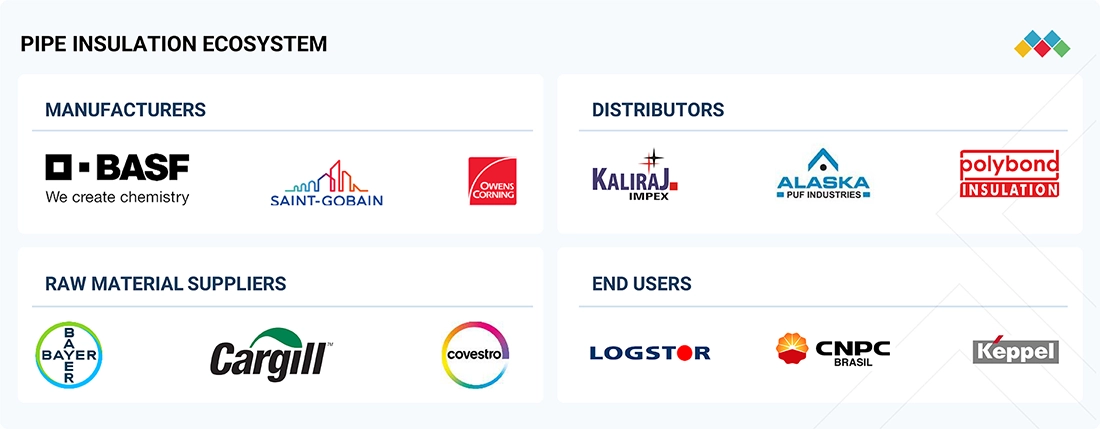
Pipe Insulation Market: COMMERCIAL USE CASES ACROSS INDUSTRIES
| COMPANY | USE CASE DESCRIPTION | BENEFITS |
|---|---|---|
 |
Insulates high-temperature pipelines in industries like oil, gas, and chemicals | Saves energy, improves safety, prevents heat loss, extends pipe life |
 |
Insulates heating and cooling pipes in commercial buildings | Reduces energy use, noise, condensation, and maintenance costs |
 |
Insulates hot and cold water pipes in homes and offices | Prevents freezing, maintains temperature, saves energy, protects pipes |
 |
Insulates ultra-low temperature fluid pipes like LNG or nitrogen | Maintains temperature, reduces product loss, ensures safety, prevents frost |
 |
Insulates urban heating or cooling network pipes | Reduces heat loss, improves efficiency, lowers costs, prolongs system life |
Logos and trademarks shown above are the property of their respective owners. Their use here is for informational and illustrative purposes only.
Related Ecosystem
Foam And Insulation
- Fiberglass
- Acoustic Insulation
- Elastomeric Foam
- HVAC System
- Flexible Foam
- Basf se
- Saint-gobain
- ARMACELL INTERNATIONAL
- THE WOODBRIDGE GROUP
- Sekisui Chemical Co., Ltd.
Key Takeaways
- Turkey's pipe insulation market is valued at USD 294.16 million in 2025 and is projected to grow to USD 377.66 million by 2030.
- Turkey is experiencing a compound annual growth rate (CAGR) of 5.12%, reflecting steady market expansion driven by industrial and construction sectors.
- Energy efficiency regulations and EU-aligned environmental standards are key drivers accelerating pipe insulation adoption across Turkey.
- Turkey's strategic geographic position and growing manufacturing base position the country as an emerging market for thermal and acoustic insulation solutions.
Pipe Insulation Market Report Scope
| Report Metric | Details |
|---|---|
| Base Year | 2025 |
| Fastest Growing Segment | OIL (Application) |
| Forecast Period | 2025-2030 |
| Growth Rate | CAGR of 5.4% from 2025 to 2030 |
| Largest Segment | BUILDING & CONSTRUCTION (Application) |
| Market Size Base Year (Billions) | ~USD 5.53 (2025) |
| Revenue Forecast (Billions) | ~USD 7.2 (2030) |
| Segments Covered | Material Type, Application |
Turkey Pipe Insulation Market Report Segmentation
2 segment dimensions are covered across the global market.
By Material Type
- Elastomeric Foam
- Glass Wool
- Other Material Types
- Other Plastic Foams
- Phenolic Foam
- Pur & Pir Foam
- Pur /Pir Foam
- Rock Wool
- Rockwool
By Application
- Building & Construction
- District Energy Systems
- Gas
- Industrial
- Oil
- Other Applications
Target Audience
- Industrial Manufacturers : Turkish and international manufacturers need market insights to understand local demand drivers, regulatory requirements, and competitive dynamics for pipe insulation product development and market entry.
- Construction & Engineering Firms : Construction companies and engineering consultants require Turkey-specific data to assess project requirements, material specifications, and cost implications for industrial and infrastructure projects.
- Insulation Material Suppliers : Suppliers of thermal and acoustic insulation materials need detailed Turkey market analysis to identify growth opportunities, customer segments, and distribution strategies in this expanding market.
- Investment & Private Equity : Investment firms evaluating opportunities in Turkey's industrial sector need comprehensive market data to assess growth potential, market size, and return projections for pipe insulation businesses.
- Government & Policy Makers : Turkish government agencies and policy makers benefit from market intelligence to inform industrial development strategies, energy efficiency initiatives, and regulatory framework decisions.
Reasons to Buy this Report
- Market-Specific Growth Data : Access precise valuation metrics for Turkey's pipe insulation market with detailed CAGR analysis, enabling accurate financial forecasting and investment planning specific to this regional market.
- Regulatory Landscape Intelligence : Understand Turkey's energy efficiency regulations and building code requirements driving market demand, helping businesses align product offerings with local compliance standards.
- Industrial Sector Insights : Gain detailed analysis of Turkey's manufacturing and industrial infrastructure development, identifying key growth opportunities and sector-specific applications for pipe insulation solutions.
- Competitive Positioning Strategy : Leverage Turkey-focused market data to benchmark competitive positioning, identify market gaps, and develop targeted go-to-market strategies for this emerging Central Eastern European market.
- Investment Decision Support : Make informed investment and expansion decisions with comprehensive Turkey market forecasts through 2030, supporting business case development and resource allocation planning.
Frequently asked questions
What is the current size of Turkey's pipe insulation market?
Turkey's pipe insulation market is valued at USD 294.16 million in 2025 and is expected to reach USD 377.66 million by 2030.
What is the growth rate of the pipe insulation market in Turkey?
Turkey's pipe insulation market is growing at a compound annual growth rate (CAGR) of 5.12% from 2025 to 2030.
What are the main drivers of pipe insulation demand in Turkey?
Key drivers in Turkey include rising industrial infrastructure development, energy efficiency regulations, modernization of aging networks, and EU-aligned environmental compliance standards.
Which sectors are driving pipe insulation adoption in Turkey?
Primary sectors in Turkey include HVAC systems, industrial facilities, district heating networks, and commercial construction projects focused on energy conservation.
How does Turkey's market compare to the global pipe insulation market?
Turkey's market CAGR of 5.12% is slightly below the global average of 5.4%, though Turkey represents a significant growth opportunity within the Central Eastern Europe region.
RESEARCH METHODOLOGY
The study involved four major activities in estimating the market size for the pipe insulation market. Exhaustive secondary research was done to collect information on the market, the peer market, and the parent market. The next step was to validate these findings, assumptions, and sizing with industry experts across the value chain through primary research. Both top-down and bottom-up approaches were employed to estimate the complete market size. After that, the market breakdown and data triangulation procedures were used to estimate the market size of the segments and subsegments.
Secondary Research
Secondary sources used in this study included annual reports, press releases, and investor presentations of companies; white papers; certified publications; articles from recognized authors; and gold standard & silver standard websites such as Factiva, ICIS, Bloomberg, and others. The findings of this study were verified through primary research by conducting extensive interviews with key officials such as CEOs, VPs, directors, and other executives. The breakdown of profiles of the primary interviewees is illustrated in the figure below:
Primary Research
The pipe insulation market comprises several stakeholders, such as raw material suppliers, end-product manufacturers, and regulatory organizations in the supply chain. The demand side of this market is characterized by key opinion leaders in various applications for the pipe insulation market. The supply side is characterized by advancements in technology and diverse application industries. Various primary sources from both the supply and demand sides of the market were interviewed to obtain qualitative and quantitative information.
Breakdown Of Primary Participants
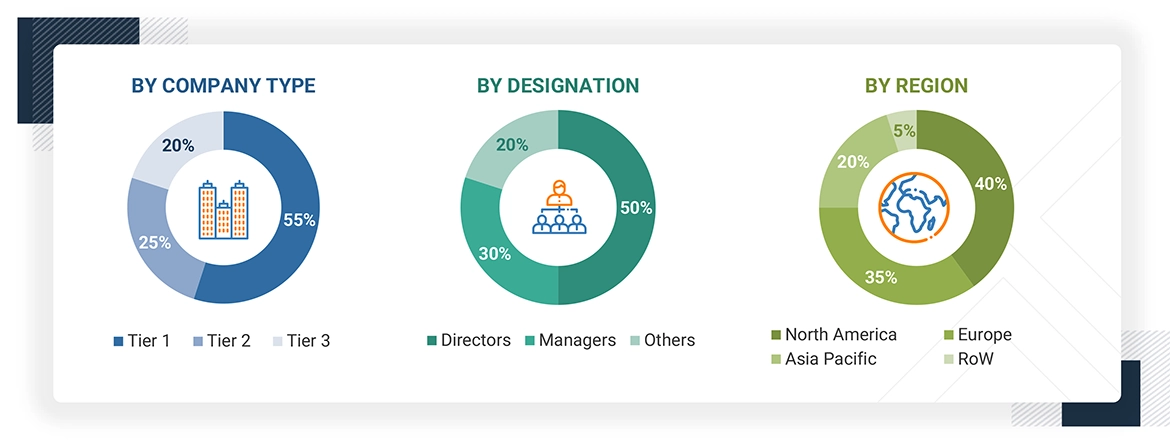
Note: Tier 1, Tier 2, and Tier 3 companies are classified based on their market revenue in 2023/2024, available in the public domain, product portfolios, and geographical presence.
Other designations include consultants and sales, marketing, and procurement managers.
To know about the assumptions considered for the study, download the pdf brochure
| COMPANY NAME | DESIGNATION | |
|---|---|---|
| Saint-Gobain S.A. | Senior Manager | |
| BASF SE | Innovation Manager | |
| Johns Manville | Vice-President | |
| Owens Corning | Production Supervisor | |
| Kingspan Group plc | Sales Manager | |
Market Size Estimation
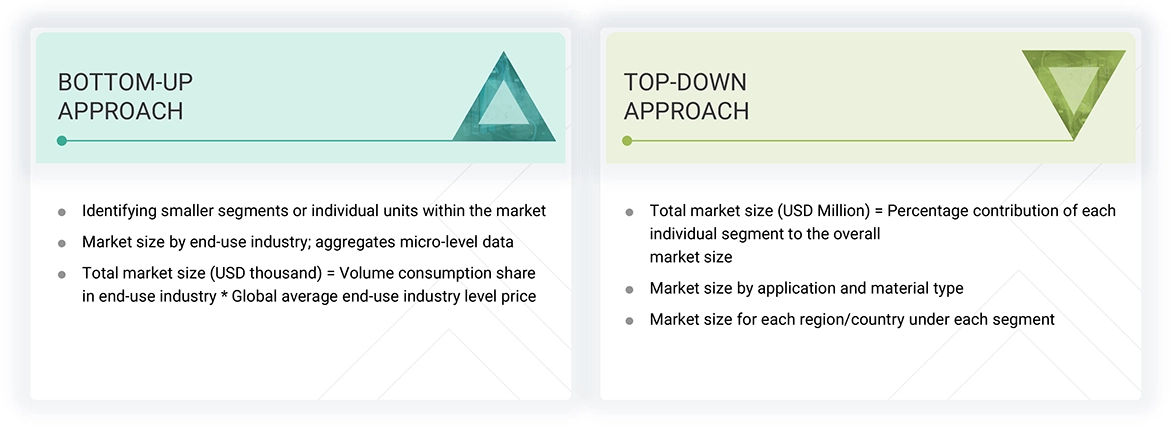
Both top-down and bottom-up approaches were used to estimate and validate the total size of the pipe insulation market. These methods were also used extensively to estimate the size of various subsegments in the market. The research methodology used to estimate the market size includes the following:
- The key players in the industry have been identified through extensive secondary research.
- The supply chain of the industry has been determined through primary and secondary research.
- All percentage shares, splits, and breakdowns have been determined using secondary sources and verified through primary sources.
- All possible parameters that affect the markets covered in this research study have been accounted for, viewed in extensive detail, verified through primary research, and analyzed to obtain the final quantitative and qualitative data.
Data Triangulation
After arriving at the overall market size—using the market size estimation processes as explained above—the market was split into several segments and subsegments. To complete the overall market engineering process and arrive at the exact statistics of each market segment and subsegment, data triangulation, and market breakdown procedures were employed, wherever applicable. The data was triangulated by studying various factors and trends from both the demand and supply sides in the pipe insulation industry.
Market Definition
Pipe insulations are materials or combinations of materials wrapped around pipes that hinder the flow of heat energy. Pipe insulation significantly reduces energy losses and consequently lowers energy costs. Piping must be insulated according to the insulation class, operating temperature, and insulation thickness specified in the piping and instrumentation diagram (P&ID). Pipe insulation includes materials or a combination of materials that provide a protective covering for pipes and minimize heat loss or heat gain from surfaces operating at temperatures above or below the ambient temperature. It prevents condensation on pipework, serving as a protective barrier against moisture that can accumulate inside a pipe and cause various types of corrosion. Pipe insulation solutions can be implemented across multiple industries, such as industrial, chemical & water treatment, and HVAC, among others, to decrease energy consumption and efficiently manage equipment.
Stakeholders
- Pipe Insulation Manufacturers
- Pipe Insulation Distributors
- Raw Material Suppliers
- Service Providers
- Packaging Companies
- Government and Research Organizations
Report Objectives
- To analyze and forecast the size of the global pipe insulation market in terms of value
- To provide detailed information about the important drivers, restraints, challenges, and opportunities influencing market growth
- To define, describe, and segment the market based on material type, application, and region
- To forecast the size of the market segments based on regions such as Asia Pacific, North America, Western Europe, Central & Eastern Europe, the Middle East & Africa, and South America
- To strategically analyze the segmented markets with respect to individual growth trends, prospects, and contributions to the overall market
- To identify and analyze opportunities for stakeholders in the market
- To analyze competitive developments such as expansions, partnerships & collaborations, mergers & acquisitions, agreements, and product launches in the market
- To strategically profile the key companies and comprehensively analyze their core competencies
Get the Full Pipe Insulation Market Report
Full forecast, segment splits, and company analysis for all Pipe Insulation Market.
- US Pipe Insulation Market
- Canada Pipe Insulation Market
- Mexico Pipe Insulation Market
- Germany Pipe Insulation Market
- UK Pipe Insulation Market
- France Pipe Insulation Market
- Italy Pipe Insulation Market
- Spain Pipe Insulation Market
- Netherlands Pipe Insulation Market
- Sweden Pipe Insulation Market
- Switzerland Pipe Insulation Market
- Norway Pipe Insulation Market
- Russia Pipe Insulation Market
- Poland Pipe Insulation Market
- China Pipe Insulation Market
- Japan Pipe Insulation Market
- India Pipe Insulation Market
- South Korea Pipe Insulation Market
- Indonesia Pipe Insulation Market
- Vietnam Pipe Insulation Market
- Saudi Arabia Pipe Insulation Market
- UAE Pipe Insulation Market
- Egypt Pipe Insulation Market
- South Africa Pipe Insulation Market
- Brazil Pipe Insulation Market
- Argentina Pipe Insulation Market
- Rest Of Europe Pipe Insulation Market
- Rest Of Asia Pacific Pipe Insulation Market
- Rest Of Western Europe Pipe Insulation Market
- Czechia Pipe Insulation Market
- Columbia Pipe Insulation Market
- Rest Of South America Pipe Insulation Market
Need a Tailored Report?
Customize this report to your needs
Get 10% FREE Customization
Customize This Report
