
North America Precision Fermentation Ingredients Market (2025-2030)

The North America Precision Fermentation Ingredients Market was valued at $2106.3 Million in 2025 and projected to reach to $15041.9 Million by 2030, representing a compound annual growth rate of 48.2%. North America's precision fermentation ingredients market is positioned as the global epicenter for biotechnology-driven food innovation.


| Market Size in | USD 26.32 MN |
| Market Forecast in | |
| CAGR | |
| Forecast Period | |
| Units Considered | Value (USD MN) |
North America Precision Fermentation Ingredients Market Trends and Insights
- This remarkable 48.2% compound annual growth rate reflects North America's leadership in biotechnology innovation and consumer demand for sustainable, animal-free protein alternatives.
- North America's advanced regulatory framework, robust R&D infrastructure, and early adoption of fermentation-derived ingredients position the region as a global innovation hub. The North America market is driven by North America's strong presence of precision fermentation companies, increasing investment in food-tech startups, and North America's consumer preference for clean-label and plant-based products.
- North America's food and beverage manufacturers are rapidly integrating precision fermentation ingredients into dairy alternatives, meat substitutes, and functional foods.
- Between 2025 and 2030, North America is expected to capture significant market share as regulatory approvals accelerate and production costs decline, making fermentation-derived ingredients increasingly competitive with conventional alternatives..
Key Market Statistics
- CAGR (2025-2030) 48.2% CAGR
- Market Size, 2025 ~USD 2106.3 Million
- Forecast, 2030 ~USD 15041.9 Million
- Geography North America
North America Precision Fermentation Ingredients Market Overview
Dominant US Market Leadership :
The US commands 80% of North America's precision fermentation ingredients market, valued at $12,033.6 million in 2030, driven by biotech innovation hubs, FDA regulatory clarity, and major investments from food giants transitioning to sustainable protein production.
Canada's Growing Biotech Ecosystem :
Canada's market reaches $2,105.9 million by 2030, supported by government R&D incentives, strong academic research institutions, and emerging fermentation startups focusing on dairy-free and plant-based ingredient alternatives.
Mexico's Emerging Opportunity :
Mexico's precision fermentation market expands to $902.5 million by 2030, capitalizing on lower production costs, proximity to US supply chains, and growing consumer demand for sustainable food ingredients across Latin America.
48.2% Regional CAGR Trajectory :
North America's 48.2% CAGR significantly outpaces traditional ingredient markets, reflecting accelerating adoption by food manufacturers, beverage companies, and ingredient suppliers seeking competitive advantages in the sustainable protein revolution.
North America Precision Fermentation Ingredients Market Dynamics
- The region's combination of advanced regulatory frameworks, substantial venture capital funding, and established food manufacturing infrastructure creates an unparalleled environment for market expansion.
- Major food corporations and emerging biotech firms are rapidly scaling fermentation capabilities to produce proteins, enzymes, and flavor compounds that rival conventional production methods at increasingly competitive costs. By 2030, North America will solidify its market dominance through continued technological breakthroughs, consumer acceptance of fermentation-derived ingredients, and regulatory harmonization across the US, Canada, and Mexico.
- Strategic partnerships between ingredient suppliers and food manufacturers will accelerate commercialization timelines, while sustainability mandates and corporate net-zero commitments will drive widespread adoption across dairy alternatives, meat substitutes, and specialty food applications..
Market Ecosystem
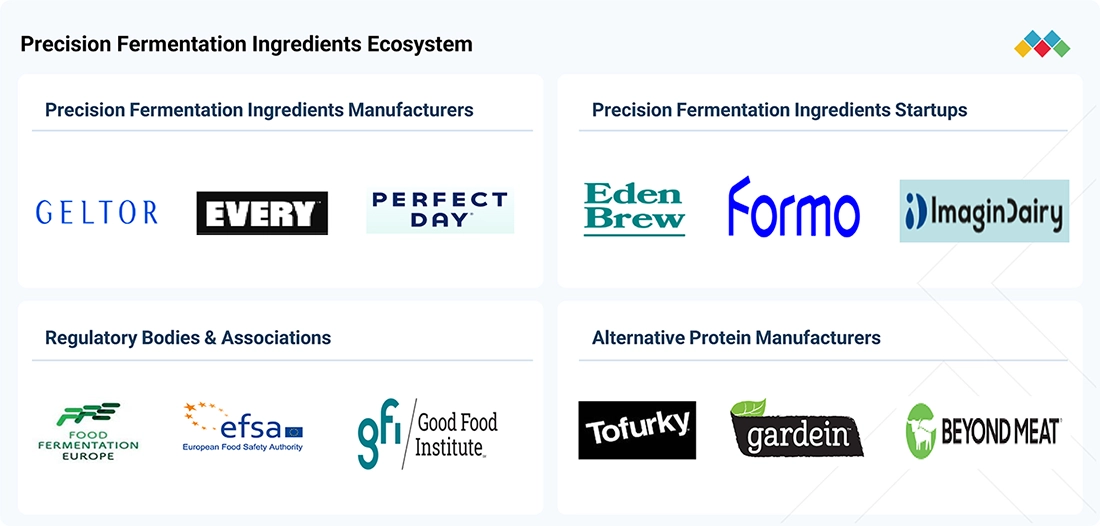
PRECISION FERMENTATION INGREDIENTS MARKET: COMMERCIAL USE CASES ACROSS INDUSTRIES
| COMPANY | USE CASE DESCRIPTION | BENEFITS |
|---|---|---|
 |
Application of precision-fermented whey proteins in dairy alternatives, ice cream, and other food products. | Delivers dairy protein functionality and sensory properties without conventional dairy farming. |
 |
Use of precision-fermented egg proteins in food and beverage formulations. | Provides egg-protein functionality for food applications while reducing dependence on conventional egg production. |
 |
Integration of precision-fermented dairy proteins into dairy-free milk, cheese, and other dairy alternative products. | Supports dairy-like taste and functionality while enabling animal-free dairy product development. |
 |
Application of precision-fermented dairy proteins in food, nutrition, and functional ingredient formulations. | Enables the development of functional protein ingredients with dairy-like properties for diverse end-use applications. |
Logos and trademarks shown above are the property of their respective owners. Their use here is for informational and illustrative purposes only.
Related Ecosystem
Fandb Processing And Technology
- Dairy Products
- Bakery Products
- Filtration Equipment
- Heat Exchanger
- Acetic Acid
- Gea group
- John Bean Technologies Corporation
- Alfa Laval Corporate AB
- AZELIS HOLDINGS SA
- SPX FLOW INC
Key Takeaways
- North America's precision fermentation ingredients market will grow from $2,106.3M (2025) to $15,041.9M (2030), representing a 48.2% CAGR.
- North America leads global adoption due to advanced biotech infrastructure, favorable regulatory environment, and strong venture capital funding.
- North America's consumer demand for sustainable and animal-free ingredients is accelerating fermentation-based product development across dairy, protein, and functional food categories.
- North America's competitive landscape features both established food corporations and innovative startups scaling precision fermentation production to meet 2025–2030 market expansion.
Precision Fermentation Ingredients Market Report Scope
| Report Metric | Details |
|---|---|
| Base Year | 2025 |
| Fastest Growing Segment | COLLAGEN PROTEIN (Ingredient Type) |
| Forecast Period | 2025–2030 |
| Growth Rate | CAGR of 48.6% from 2025 to 2030 |
| Largest Segment | FLAVORED (Formulation) |
| Market Size Base Year (Billions) | ~USD 5.01 (2025) |
| Revenue Forecast (Billions) | ~USD 36.31 (2030) |
| Segments Covered | Ingredient Type, Microbe Type, End Use, Food & Beverage Application, Source, Formulation |
North America Precision Fermentation Ingredients Market Report Segmentation
6 segment dimensions are covered across the global market.
By Ingredient Type
- Collagen Protein
- Egg White
- Enzymes
- Heme Protein
- Other Ingredients
- Whey & Casein Protein
By Microbe Type
- Algae
- Bacteria
- Fungi
- Yeast
By End Use
- Cosmetics & Others
- Food & Beverages
- Pharmaceuticals
By Food & Beverage Application
- Dairy Alternatives
- Egg Alternatives
- Meat & Seafood
- Other Applications
By Source
- Beef
- Duck
- Pork
- Poultry
- Seafood
By Formulation
- Flavored
- Plain
Target Audience
- Food & Beverage Manufacturers : North American F&B companies need this data to benchmark fermentation ingredient adoption rates, identify supplier partnerships, and plan product reformulation strategies to meet consumer demand for sustainable, animal-free alternatives.
- Biotech and Ingredient Suppliers : Precision fermentation companies require North America-specific market sizing to validate business models, forecast revenue potential by country, and prioritize R&D investments in high-growth segments across the US, Canada, and Mexico.
- Private Equity and Venture Investors : Investment firms targeting North America's biotech sector need regional market data to evaluate portfolio company growth ceilings, identify consolidation opportunities, and assess competitive dynamics across the three-country market.
- Regulatory and Policy Advisors : Government agencies, trade associations, and policy consultants use North America market intelligence to shape fermentation ingredient regulations, subsidies, and trade policies that reflect each country's unique biotech innovation priorities.
- Sustainability and ESG Strategists : Corporate sustainability teams need North America fermentation market data to validate commitments to animal-free and sustainable ingredient sourcing, benchmark peer adoption, and communicate progress to stakeholders and consumers.
Key Companies in the North America Precision Fermentation Ingredients Market
| Company | HQ | Ownership | Strongest segments |
|---|---|---|---|
| FORMO COMPANY | Taiwan | Public Company | PVC and plastic raw materials,Chemical intermediates and solvents,Fibers, carbon fiber, and composites, |
FORMO COMPANY
Formo Company is a public company established in 1954 and headquartered in Taiwan. The company operates in the food or manufacturing sector with over seven decades of industry experience.
Countries within North America - compare and drill down
| Country | 2025 size (native) |
|---|---|
| US | USD 12033.6 Million |
| Canada | USD 2105.9 Million |
| Mexico | USD 902.5 Million |
Country market size visualization
Reasons to Buy this Report
- Country-Level Market Granularity : Access detailed market sizing and forecasts for US ($12.0B), Canada ($2.1B), and Mexico ($902.5M) to identify high-growth segments and regional investment opportunities tailored to each market's regulatory and competitive landscape.
- Competitive Positioning Intelligence : Understand North America's 48.2% CAGR advantage over global markets (48.6%), revealing why the region attracts disproportionate biotech investment and how to capitalize on first-mover advantages in fermentation ingredient commercialization.
- Supply Chain Optimization Insights : Leverage cross-border analysis of US-Canada-Mexico production ecosystems to identify cost-efficient sourcing strategies, regulatory compliance pathways, and manufacturing location decisions for precision fermentation operations.
- Strategic M&A and Partnership Roadmap : Identify acquisition targets, joint venture opportunities, and technology licensing prospects across North America's fragmented fermentation ingredient landscape, with market dynamics specific to each country's biotech maturity.
- Consumer Demand Validation by Market : Quantify regional consumer adoption rates for fermentation-derived proteins and ingredients, enabling product development prioritization and go-to-market strategies aligned with North American sustainability trends and regulatory requirements.
Frequently asked questions
What is the current market size of precision fermentation ingredients in North America?
North America's precision fermentation ingredients market was valued at $2,106.3 million in 2025 and is projected to reach $15,041.9 million by 2030.
What is the expected growth rate for North America's precision fermentation market?
North America's precision fermentation ingredients market is expected to grow at a compound annual growth rate (CAGR) of 48.2% from 2025 to 2030.
Why is North America leading the precision fermentation ingredients market?
North America leads due to its advanced biotechnology infrastructure, supportive regulatory framework, significant venture capital investment, and strong consumer demand for sustainable and animal-free food ingredients.
Which product categories are driving growth in North America's precision fermentation market?
North America's growth is driven by dairy alternatives, plant-based meat substitutes, functional foods, and specialty proteins produced through precision fermentation technology.
What factors will influence North America's precision fermentation market between 2025 and 2030?
North America's market growth will be influenced by regulatory approvals, declining production costs, scaling of manufacturing capacity, and increasing adoption by major food and beverage corporations.
RESEARCH METHODOLOGY
The study involved two major approaches in estimating the current size of the precision fermentation ingredients market. Exhaustive secondary research was done to collect information on the market, peer, and parent markets. The next step was to validate these findings, assumptions, and sizing with industry experts across the value chain through primary research. Both top-down and bottom-up approaches were employed to estimate the complete market size. After that, market breakdown and data triangulation were used to estimate the market size of segments and subsegments.
Secondary Research
This research study involved the extensive use of secondary sources—directories and databases such as Bloomberg Businessweek and Factiva—to identify and collect information useful for a technical, market-oriented, and commercial study of the market.
In the secondary research process, various sources such as annual reports, press releases & investor presentations of companies, white papers, food journals, certified publications, articles from recognized authors, directories, and databases were referred to identify and collect information.
Secondary research was mainly used to obtain key information about the industry’s supply chain, the total pool of key players, and market classification and segmentation as per the industry trends to the bottom-most level, regional markets, and key developments from both market- and technology-oriented perspectives.
Primary Research
Extensive primary research was conducted after obtaining information regarding the precision fermentation ingredients market scenario through secondary research. Several primary interviews were conducted with market experts from both the demand and supply sides across major countries of North America, Europe, Asia Pacific, South America, and the Rest of the World. Primary data was collected through questionnaires, emails, and telephonic interviews. The primary sources from the supply side included various industry experts, such as Chief X Officers (CXOs), Vice Presidents (VPs), Directors from business development, marketing, research, and development teams, and related key executives from distributors and key opinion leaders. Primary interviews were conducted to gather insights such as market statistics, data on revenue collected from the products and services, market breakdowns, market size estimations, market forecasting, and data triangulation. Primary research also helped in understanding the various trends related to precision fermentation ingredients - ingredient type, microbe type, end use, food & beverage application type, and region. Demand-side stakeholders, including alternative protein manufacturers, food and beverages ingredient suppliers, ingredient buyers, research institutions, and universities, were interviewed to understand purchasing preferences, supplier selection criteria, product adoption, current usage patterns, and future demand expectations. These insights helped assess customer requirements, commercialization opportunities, and evolving business outlooks across the precision fermentation ingredients value chain.
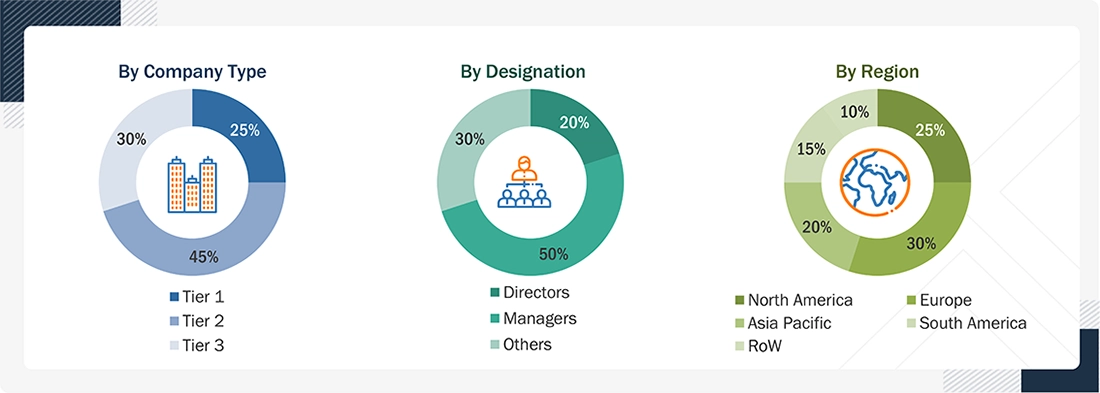
Note: The three tiers of the companies are defined based on their total revenues in 2022 or 2023, as per the availability of financial data: Tier 1: Revenue > USD 1 billion; Tier 2: USD 100 million ≤ Revenue ≤ USD 1 billion; Tier 3: Revenue < USD 100 million.
|
COMPANY NAME |
DESIGNATION |
|
Perfect Day, Inc. (US) |
Sales Manager |
|
Shiru, Inc. (US) |
Sales Manager |
|
The EVERY Company (US) |
Manager |
|
New Culture (US) |
Operation Manager |
|
Remilk Ltd. (Israel) |
Marketing Manager |
To know about the assumptions considered for the study, download the pdf brochure
Market Size Estimation
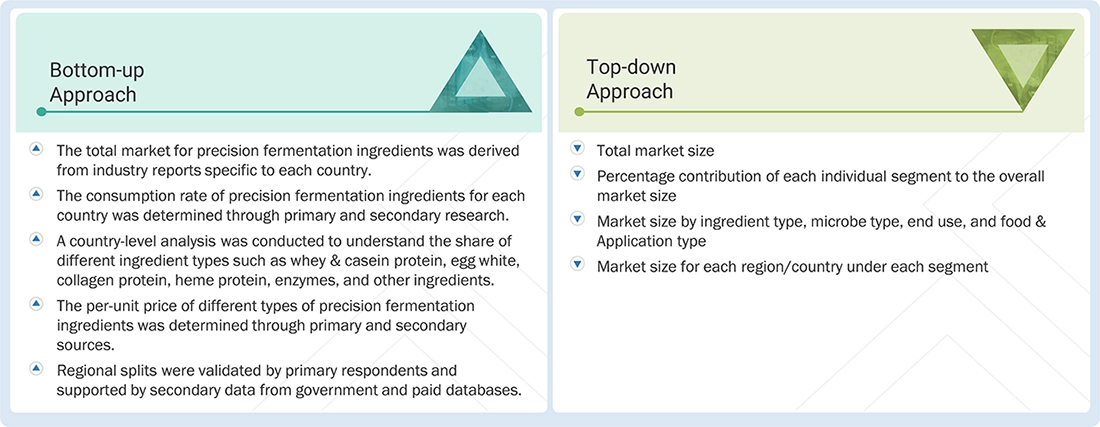
Both the top-down and bottom-up approaches were used to estimate and validate the total size of the precision fermentation ingredients market. These approaches were also used extensively to determine the size of various subsegments in the market. The research methodology used to estimate the market size includes the following details:
- The key players in the industry and the overall markets were identified through extensive secondary research.
- All shares, splits, and breakdowns were determined using secondary sources and verified through primary sources.
- All possible parameters that affect the market covered in this research study were accounted for, viewed in extensive detail, verified through primary research, and analyzed to obtain final quantitative and qualitative data.
- The research included the study of reports, reviews, and newsletters of top market players, along with extensive interviews for opinions from leaders, such as CEOs, directors, and marketing executives.
Precision Fermentation Ingredients Market: Top-Down and Bottom-Up Approach
Data Triangulation
After arriving at the overall market size from the estimation process explained above, the total market was split into several segments and subsegments. The data triangulation and market breakdown procedures were employed, wherever applicable, to estimate the overall precision fermentation ingredients market and arrive at the exact statistics for all segments and subsegments. The data was triangulated by studying various factors and trends from the demand and supply sides. The market size was also validated using both the top-down and bottom-up approaches.
Market Definition
Precision fermentation uses microbial host cells as factories to produce specific functional ingredients that can enhance and enable end products predominantly made of plant proteins, cultivated animal cells, or another microbial biomass.
Key Stakeholders
- Alternative protein manufacturers
- Food & beverage manufacturers, suppliers, and processors
- Research & development institutions
- Traders & retailers
- Distributors, importers, and exporters
- Regulatory bodies
- Organizations such as the Food Fermentation Europe (FFI), European Food Safety Agency (EFSA), EUROPA, Good Food Institute (GFI), Precision Fermentation Alliance (PFA) and Biotechnology Innovation Organization (BIO)
- Government agencies
- Intermediary suppliers
- Universities and industry bodies
- End users
Report Objectives
Market Intelligence
- To determine and project the size of the precision fermentation ingredients market with respect to the ingredient type, microbe type, end use, food & beverage application, and regions in terms of value over ten years, ranging from 2025 to 2030.
- To identify the attractive opportunities in the market by determining the largest and fastest-growing segments across regions.
- To provide detailed information about the key factors influencing market growth (drivers, restraints, opportunities, and challenges).
- To analyze the opportunities in the market for stakeholders and provide details of the competitive landscape for market leaders.
- To analyze the micro-markets with respect to individual growth trends, prospects, and their contribution to the total market.
- To identify and profile the key players in the precision fermentation ingredients market.
- To understand the competitive landscape and identify the major growth strategies adopted by players across the key regions.
Available customizations:
With the given market data, MarketsandMarkets offers customizations according to company-specific scientific needs.
The following customization options are available for the report:
Product Analysis
Product Matrix, which gives a detailed comparison of the product portfolio of each company.
Geographic Analysis
-
With the given market data, MarketsandMarkets offers customizations according to company-specific scientific needs.
- Further breakdown of the Rest of Europe precision fermentation ingredients market into key countries.
- Further breakdown of the Rest of Asia Pacific precision fermentation ingredients market into key countries.
- Further breakdown of the Rest of South America precision fermentation ingredients market into key countries.
Company Information
-
Detailed analyses and profiling of additional market players (up to five)
Get the Full Precision Fermentation Ingredients Market Report
Full forecast, segment splits, and company analysis for all Precision Fermentation Ingredients Market.
- US Precision Fermentation Ingredients Market
- Canada Precision Fermentation Ingredients Market
- Mexico Precision Fermentation Ingredients Market
- France Precision Fermentation Ingredients Market
- Germany Precision Fermentation Ingredients Market
- UK Precision Fermentation Ingredients Market
- Spain Precision Fermentation Ingredients Market
- Netherlands Precision Fermentation Ingredients Market
- China Precision Fermentation Ingredients Market
- India Precision Fermentation Ingredients Market
- Japan Precision Fermentation Ingredients Market
- Singapore Precision Fermentation Ingredients Market
- South Korea Precision Fermentation Ingredients Market
- Brazil Precision Fermentation Ingredients Market
- Argentina Precision Fermentation Ingredients Market
- Israel Precision Fermentation Ingredients Market
- UAE Precision Fermentation Ingredients Market
- Rest Of Europe Precision Fermentation Ingredients Market
- Rest Of Middle East Precision Fermentation Ingredients Market
Need a Tailored Report?
Customize this report to your needs
Get 10% FREE Customization
Customize This Report
