
Rest Of Asia Pacific Rail Composites Market (2023-2028)

The Rest Of Asia Pacific Rail Composites Market was valued at $137.6 Million in 2023 and projected to reach to $191.5 Million by 2028, representing a compound annual growth rate of 6.8%. Rest Of Asia Pacific's rail composites market is positioned for sustained expansion through 2028, driven by substantial government investments in railway infrastructure and the region's shift toward modernized transit systems.


| Market Size in | USD 26.32 MN |
| Market Forecast in | |
| CAGR | |
| Forecast Period | |
| Units Considered | Value (USD MN) |
Rest Of Asia Pacific Rail Composites Market Trends and Insights
- Rest Of Asia Pacific represents a significant opportunity within the broader Asia Pacific region, driven by increasing railway infrastructure investments and modernization initiatives across emerging economies.
- The region's growing demand for lightweight, durable materials in rail applications is propelling adoption of composite solutions. Rest Of Asia Pacific's rail composites market is benefiting from rising passenger and freight rail expansion projects, coupled with government initiatives to enhance transportation networks.
- The 6.8% compound annual growth rate reflects Rest Of Asia Pacific's commitment to sustainable and efficient rail systems.
- Rest Of Asia Pacific manufacturers are increasingly integrating advanced composite technologies to improve fuel efficiency, reduce maintenance costs, and extend asset lifecycles in rail operations..
Key Market Statistics
- CAGR (2023-2028) 6.8% CAGR
- Market Size, 2023 ~USD 137.6 Million
- Forecast, 2028 ~USD 191.5 Million
- Country Rest Of Asia Pacific
Rest Of Asia Pacific Rail Composites Market Overview
Market Valuation :
Rest Of Asia Pacific rail composites market valued at USD 137.6 million in 2023, demonstrating strong regional demand for lightweight composite materials in railway applications.
Growth Trajectory :
Market projected to reach USD 191.5 million by 2028 with a CAGR of 6.8%, outpacing many mature markets and reflecting accelerating infrastructure modernization across emerging economies.
Infrastructure Investment :
Increasing railway expansion and modernization initiatives across Rest Of Asia Pacific countries are driving adoption of advanced composite materials for improved fuel efficiency and durability.
Regional Opportunity :
Rest Of Asia Pacific represents a significant growth segment within broader Asia Pacific, with emerging economies investing heavily in next-generation rail transport systems and fleet upgrades.
Rest Of Asia Pacific Rail Composites Market Dynamics
- Emerging economies in the region are increasingly adopting composite materials to enhance train performance, reduce operational costs, and meet environmental standards.
- The 6.8% CAGR reflects growing awareness of composites' advantages in weight reduction and fuel efficiency.
- Key growth catalysts include expanding high-speed rail projects, urban metro system developments, and fleet renewal programs across multiple countries.
- As rail operators prioritize sustainability and operational efficiency, composite adoption is expected to accelerate, positioning Rest Of Asia Pacific as a critical growth market for material suppliers and rail manufacturers..
Market Ecosystem
Related Ecosystem
Locomotives And Rolling Stock
- Sensors
- Passenger Information System (PIS)
- Cartesian Robots
- Flow Sensors
- Gas Sensors
- Siemens ag
- Alstom s.a.
- Hitachi, Ltd.
- Knorr-bremse ag
- SYSTRA LTD.
Fibers And Composites
- Polyetheretherketone (PEEK)
- Polyphenylene Sulfide (PPS)
- Epoxy Resin
- Polycarbonate
- Polyester Resin
- Toray Industries, Inc.
- Teijin Limited
- Sgl carbon se
- Hexcel Corporation
- Solvay sa
Speciality Chemicals
- Corrosion Inhibitors
- Polyetheretherketone (PEEK)
- Acrylonitrile Butadiene Styrene (ABS)
- Epoxy Resin
- Polycarbonate
- Basf se
- DOW CHEMICAL COMPANY
- Evonik industries ag
- Clariant ag.
- Solvay sa
Key Takeaways
- Rest Of Asia Pacific rail composites market valued at USD 137.6 million in 2023, expanding to USD 191.5 million by 2028
- Rest Of Asia Pacific demonstrates a 6.8% CAGR, driven by infrastructure modernization and lightweight material adoption
- Rest Of Asia Pacific's growth is supported by increasing government investments in railway expansion and sustainability initiatives
- Rest Of Asia Pacific manufacturers are leveraging composites to enhance fuel efficiency and reduce operational costs in rail transport
Rail Composites Market Report Scope
| Report Metric | Details |
|---|---|
| Base Year | 2023 |
| Fastest Growing Segment | FILAMENT WINDING (Manufacturing Process) |
| Forecast Period | 2023-2028 |
| Growth Rate | CAGR of 7.2% from 2023 to 2028 |
| Largest Segment | GLASS FIBER COMPOSITES (Fiber Type) |
| Market Size Base Year (Billions) | ~USD 1.7 (2023) |
| Revenue Forecast (Billions) | ~USD 2.4 (2028) |
| Segments Covered | Fiber Type, Resin Type, Manufacturing Process, Application |
Rest Of Asia Pacific Rail Composites Market Report Segmentation
4 segment dimensions are covered across the global market.
By Fiber Type
- Carbon Fiber Composites
- Glass Fiber Composites
- Other Fiber Composites
By Resin Type
- Epoxy
- Other Resin Types
- Phenolic
- Polyester
- Vinyl Ester
By Manufacturing Process
- Compression Molding
- Filament Winding
- Injection Molding
- Lay-Up
- Other Manufacturing Processes
- Pultrusion
- Rtm
By Application
- Exterior Components
- Interior Components
- Other Applications
Target Audience
- Composite Material Manufacturers : Need regional market data to identify growth opportunities, assess demand trends, and develop targeted product portfolios for Rest Of Asia Pacific rail operators.
- Rail Equipment Suppliers : Require market forecasts and infrastructure investment insights to plan production capacity, supply chain strategies, and commercial expansion in emerging Rest Of Asia Pacific markets.
- Investment & Private Equity Firms : Seek detailed regional analysis to evaluate investment opportunities in rail composite companies, infrastructure projects, and material suppliers operating in Rest Of Asia Pacific.
- Railway Operators & Transit Authorities : Need market intelligence on composite material availability, cost trends, and performance data to inform fleet modernization and procurement decisions across the region.
- Strategic Consultants & Analysts : Require comprehensive regional market data and forecasts to support client advisory work, competitive analysis, and strategic planning for rail and materials industry stakeholders.
Reasons to Buy this Report
- Regional Market Sizing : Obtain precise market valuation and forecasts specific to Rest Of Asia Pacific, enabling accurate budget allocation and investment decisions for regional expansion strategies.
- Growth Opportunity Identification : Identify high-potential emerging economies within Rest Of Asia Pacific with accelerating rail infrastructure projects and composite adoption rates for targeted market entry.
- Competitive Positioning : Understand regional market dynamics, key drivers, and infrastructure investment trends to benchmark competitive positioning and develop region-specific go-to-market strategies.
- Investment Decision Support : Access detailed forecasts and market insights to support capital allocation decisions, partnership opportunities, and facility location planning across Rest Of Asia Pacific.
- Trend Analysis & Insights : Gain actionable intelligence on modernization initiatives, regulatory developments, and material adoption patterns unique to Rest Of Asia Pacific rail operators and manufacturers.
Frequently asked questions
What is the current market size of rail composites in Rest Of Asia Pacific?
Rest Of Asia Pacific's rail composites market was valued at USD 137.6 million in 2023 and is projected to reach USD 191.5 million by 2028.
What is the expected growth rate for Rest Of Asia Pacific rail composites?
Rest Of Asia Pacific's rail composites market is expected to grow at a compound annual growth rate (CAGR) of 6.8% from 2023 to 2028.
What factors are driving growth in Rest Of Asia Pacific's rail composites market?
Rest Of Asia Pacific's market growth is driven by railway infrastructure expansion, government modernization initiatives, demand for lightweight materials, and the need to reduce operational costs and improve fuel efficiency.
Which applications dominate Rest Of Asia Pacific's rail composites market?
Rest Of Asia Pacific's rail composites are primarily used in structural components, interior panels, and lightweight structural elements that enhance fuel efficiency and reduce maintenance requirements.
How does Rest Of Asia Pacific compare to other Asia Pacific regions?
Rest Of Asia Pacific represents a distinct segment within Asia Pacific with its own growth trajectory, driven by emerging economies' infrastructure investments and increasing adoption of advanced composite technologies in rail systems.
RESEARCH METHODOLOGY
The study involves two major activities in estimating the current market size for the rail composites market. Exhaustive secondary research was done to collect information on the market, peer market, and parent market. The next step was to validate these findings, assumptions, and sizing with industry experts across the value chain through primary research. Both top-down and bottom-up approaches were employed to estimate the complete market size. After that, market breakdown and data triangulation were used to estimate the market size of segments and subsegments.
Secondary Research
Secondary sources referred to for this research study include financial statements of companies offering rail composites and information from various trade, business, and professional associations. Secondary research has been used to obtain critical information about the industry’s value chain, the total pool of key players, market classification, and segmentation according to industry trends to the bottom-most level and regional markets. The secondary data was collected and analyzed to arrive at the overall size of the rail composites market, which was validated by primary respondents.
Primary Research
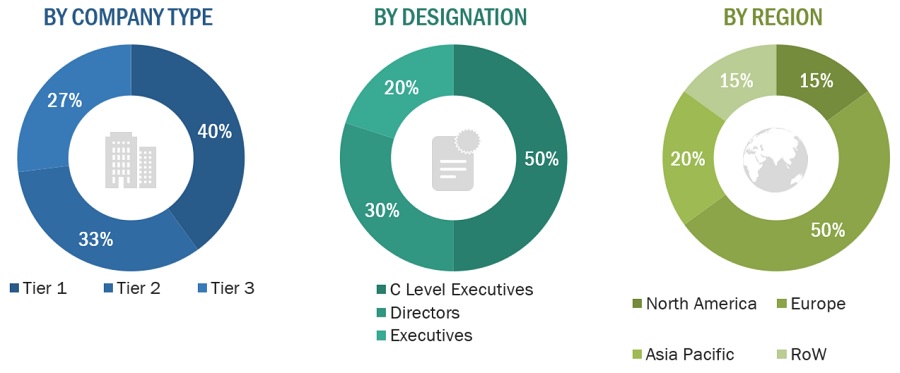
Extensive primary research was conducted after obtaining information regarding the rail composites market scenario through secondary research. Several primary interviews were conducted with market experts from both the demand and supply sides across major countries of North America, Europe, Asia Pacific, and Rest of the World. Primary data was collected through questionnaires, emails, and telephonic interviews. The primary sources from the supply side included various industry experts, such as Chief X Officers (CXOs), Vice Presidents (VPs), Directors from business development, marketing, product development/innovation teams, and related key executives from rail composites industry vendors; system integrators; component providers; distributors; and key opinion leaders. Primary interviews were conducted to gather insights such as market statistics, data on revenue collected from the products and services, market breakdowns, market size estimations, market forecasting, and data triangulation. Primary research also helped in understanding the various trends related to type, application, and region. Stakeholders from the demand side, such as CIOs, CTOs, CSOs, and installation teams of the customer/end users who are using rail composites products were interviewed to understand the buyer’s perspective on the suppliers, products, component providers, and their current usage of rail composites and future outlook of their business which will affect the overall market.
The Breakup of Primary Research:
To know about the assumptions considered for the study, download the pdf brochure
Market Size Estimation
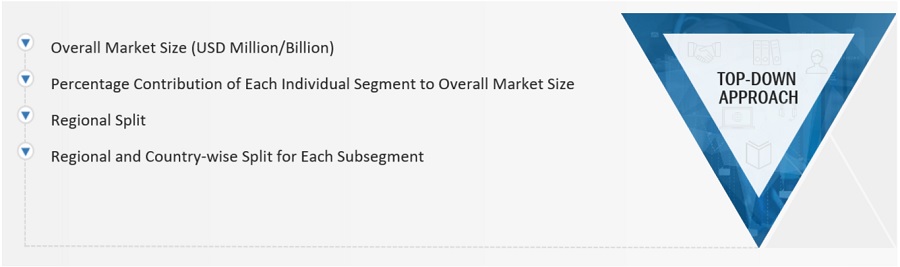
The research methodology used to estimate the size of the rail composites market includes the following details. The market sizing of the market was undertaken from the demand side. The market was upsized based on procurements and adoption in rail plastic composite products in different applications at a regional level. Such procurements provide information on the demand aspects of the rail composites industry for each application. For each application, all possible segments of the rail composites market were integrated and mapped.
Rail Composites Market Size: Botton Up Approach
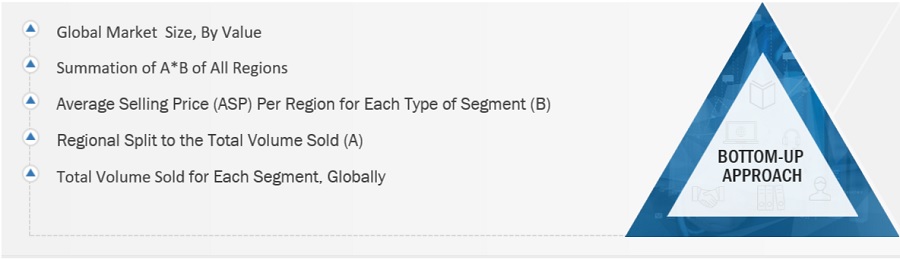
To know about the assumptions considered for the study, Request for Free Sample Report
Rail Composites Market Size: Top-Down Approach
Data Triangulation
After arriving at the overall size from the market size estimation process explained above, the total market was split into several segments and subsegments. The data triangulation and market breakdown procedures explained below were implemented, wherever applicable, to complete the overall market engineering process and arrive at the exact statistics for various market segments and subsegments. The data was triangulated by studying various factors and trends from the demand and supply sides. Along with this, the market size was validated using both the top-down and bottom-up approaches.
Market Definition
A composite is a combination of two or more materials that have better properties than those of the individual components. It is a blend of least two immiscible components, with different structures, whose individual features combine to provide improved performance. Composites are formed by a combination of a matrix and reinforcement. In a composite, fibers are reinforced and are used to fortify the matrix in terms of strength and stiffness. The reinforcement fibers can be cut and aligned in different ways to affect the properties of the resulting composites. The matrix, normally, a form of resin, keeps the reinforcement in the desired orientation and also protects the reinforcement from chemical and environmental attack. The composites that gets used in rail exterior, interior, structural and other rail applications are considered as rail composites.
Key Stakeholders
- Rail Composites Manufacturers
- Raw Materials Suppliers
- Distributors and Suppliers
- End-use Applications
- Industry Associations
- R&D Institutions
- Environment Support Agencies
Report Objectives
- To define, describe, and forecast the rail composites market size in terms of volume and value
- To provide detailed information regarding the key factors, such as drivers, restraints, opportunities, and challenges influencing market growth
- To analyze and project the global rail composites market by fiber type, resin type, manufacturing process, application, and region
- To forecast the market size concerning five main regions (along with country-level data), namely, North America, Europe, Asia Pacific, Rest of the World, and analyze the significant region-specific trends
- To strategically analyze micromarkets with respect to individual growth trends, prospects, and contributions of the submarkets to the overall market
- To analyze the market opportunities and the competitive landscape for stakeholders and market leaders
- To assess recent market developments and competitive strategies, such as agreements, contracts, acquisitions, and new product developments/new product launches, to draw the competitive landscape
- To strategically profile the key market players and comprehensively analyze their core competencies
Available Customizations
MarketsandMarkets offers following customizations for this market report:
Additional country-level analysis of the rail composites market
Product Analysis
- Product matrix, which provides a detailed comparison of the product portfolio of each company's market
Get the Full Rail Composites Market Report
Full forecast, segment splits, and company analysis for all Rail Composites Market.
- US Rail Composites Market
- Canada Rail Composites Market
- Germany Rail Composites Market
- France Rail Composites Market
- UK Rail Composites Market
- Spain Rail Composites Market
- Italy Rail Composites Market
- Turkey Rail Composites Market
- China Rail Composites Market
- Japan Rail Composites Market
- India Rail Composites Market
- Australia Rail Composites Market
- Brazil Rail Composites Market
- Mexico Rail Composites Market
- Rest Of Europe Rail Composites Market
- Others In Rest Of World Rail Composites Market
Need a Tailored Report?
Customize this report to your needs
Get 10% FREE Customization
Customize This Report
