
Japan Shortwave Infrared (SWIR) Market (2024-2029)

The Japan Shortwave Infrared (SWIR) Market was valued at $40.9 Million in 2024 and projected to reach to $76.3 Million by 2029, representing a compound annual growth rate of 13.3%. Japan's SWIR market demonstrates exceptional growth momentum, driven by the country's leadership in semiconductor manufacturing and increasing adoption across industrial and scientific applications.


| Market Size in | USD 26.32 MN |
| Market Forecast in | |
| CAGR | |
| Forecast Period | |
| Units Considered | Value (USD MN) |
Japan Shortwave Infrared (SWIR) Market Trends and Insights
- Japan's advanced semiconductor and electronics manufacturing capabilities position the country as a critical hub for SWIR technology adoption, driven by demand from industrial imaging, surveillance, and scientific research applications.
- Japan's investment in next-generation imaging solutions and precision manufacturing continues to accelerate SWIR market penetration across multiple sectors. The 13.3% compound annual growth rate (CAGR) reflects Japan's strong technological infrastructure and increasing integration of SWIR sensors in automotive, medical, and defense applications.
- Japan's leadership in optics and sensor technology, combined with rising demand for non-destructive testing and quality assurance solutions, supports sustained market expansion through 2029.
- Japan's commitment to innovation and high-precision manufacturing standards ensures competitive advantage in the global SWIR ecosystem..
Key Market Statistics
- CAGR (2024-2029) 13.3% CAGR
- Market Size, 2024 ~USD 40.9 Million
- Forecast, 2029 ~USD 76.3 Million
- Country Japan
Japan Shortwave Infrared (SWIR) Market Overview
Market Valuation & Growth :
Japan's SWIR market reached $40.9 million in 2024 with a robust 13.3% CAGR, outpacing the global growth rate of 11.1%, reflecting strong regional demand and technological advancement.
Manufacturing Excellence :
Japan's advanced semiconductor and electronics manufacturing infrastructure positions it as a critical hub for SWIR technology development, leveraging decades of precision engineering expertise.
Application Diversity :
Industrial imaging, surveillance systems, and scientific research applications drive SWIR adoption across Japan's manufacturing, defense, and research sectors.
Forecast Expansion :
The market is projected to nearly double to $76.3 million by 2029, indicating sustained investment in SWIR-enabled technologies and expanding commercial opportunities.
Japan Shortwave Infrared (SWIR) Market Dynamics
- The 13.3% CAGR significantly exceeds global benchmarks, reflecting Japan's competitive advantages in precision optics and imaging technology development.
- Key growth catalysts include expanding surveillance infrastructure, advanced manufacturing automation, and research institution investments in spectroscopic applications. Looking ahead to 2029, Japan's SWIR market will benefit from continued technological innovation, rising demand for non-destructive testing solutions, and integration with AI-powered imaging systems.
- The country's strong electronics ecosystem and government support for advanced manufacturing technologies position it as a regional leader, with opportunities extending to export markets across Asia-Pacific..
Market Ecosystem
Related Ecosystem
Electronics System And Components
- Sensors
- Temperature Sensors
- Pressure Sensors
- Actuators
- Image Sensors
- Lenovo
- Samsung
- Texas Instruments Incorporated
- HONEYWELL INTERNATIONAL INC.
- Teledyne Technologies Incorporated
Security And Surveillance
- Face Recognition
- Video Surveillance as A Service (VSaaS)
- Voice Recognition
- Fingerprint Recognition
- IRIS Recognition
- HONEYWELL INTERNATIONAL INC.
- Thales group
- HID-GLOBAL
- Lenovo
- AXIS COMMUNICATIONS
Aviation
- Narrow Body Aircraft
- Wide Body Aircraft
- Military Helicopters
- Special Mission Aircraft
- Fighter Aircraft
- HONEYWELL INTERNATIONAL INC.
- COLLINS AEROSPACE
- Thales group
- Safran group
- HEICO Corporation
Key Takeaways
- Japan's SWIR market is valued at $40.9 million in 2024 and expected to reach $76.3 million by 2029, representing a 13.3% CAGR.
- Japan's advanced semiconductor manufacturing and optical technology expertise drive strong adoption of SWIR sensors across industrial and scientific applications.
- Japan's automotive, medical device, and defense sectors are primary growth drivers for SWIR technology integration and innovation.
- Japan's commitment to precision manufacturing and quality assurance standards positions the country as a key regional leader in SWIR market development.
Shortwave Infrared (SWIR) Market Report Scope
| Report Metric | Details |
|---|---|
| Base Year | 2024 |
| Fastest Growing Segment | SPECTRAL (Imaging Type) |
| Forecast Period | 2024-2029 |
| Growth Rate | CAGR of 11.1% from 2024 to 2029 |
| Largest Segment | UNCOOLED (Technology) |
| Market Size Base Year (Billions) | ~USD 0.63 (2024) |
| Revenue Forecast (Billions) | ~USD 1.07 (2029) |
| Segments Covered | Imaging Type, Scanning Type, Technology, Use Case, Industry, Type, Offering |
Japan Shortwave Infrared (SWIR) Market Report Segmentation
7 segment dimensions are covered across the global market.
By Imaging Type
- Hyperspectral
- Spectral
- Thermal
By Scanning Type
- Area Scan
- Line Scan
By Technology
- Cooled
- Uncooled
By Use Case
- Detection
- Monitoring & Inspection
- Security & Surveillance
By Industry
- Discrete
- Process
By Type
- Other Hyperspectral Imaging Types
- Pushbroom/Line Scan
- Snapshot
By Offering
- Cameras
- Modules
- Other Offerings
Target Audience
- SWIR Technology Manufacturers : Understand Japan's production capabilities, supply chain dynamics, and export opportunities to optimize manufacturing strategies and expand market share in Asia-Pacific.
- Industrial Automation Companies : Identify integration opportunities for SWIR imaging in Japanese manufacturing facilities, quality control systems, and process optimization applications.
- Surveillance & Security Providers : Assess demand for advanced SWIR surveillance systems across Japan's infrastructure, transportation, and security sectors with detailed application insights.
- Research & Academic Institutions : Evaluate SWIR technology adoption trends in Japanese research facilities and universities for spectroscopy, materials analysis, and scientific imaging applications.
- Investment & Private Equity Firms : Evaluate market growth potential, competitive landscape, and investment opportunities in Japan's SWIR sector with comprehensive financial projections and risk analysis.
Reasons to Buy this Report
- Localized Market Intelligence : Gain Japan-specific insights into SWIR adoption patterns, regional manufacturing capabilities, and competitive dynamics that differ significantly from global market trends.
- Growth Opportunity Identification : Identify high-potential segments within Japan's industrial imaging, surveillance, and scientific research sectors with detailed market sizing and expansion forecasts through 2029.
- Strategic Partnership Mapping : Understand Japan's semiconductor and electronics ecosystem to identify key manufacturers, technology providers, and distribution channels for market entry or expansion strategies.
- Competitive Benchmarking : Compare Japan's 13.3% CAGR against global 11.1% growth to assess regional competitive advantages and position your offerings effectively in this high-growth market.
- Investment Decision Support : Make informed capital allocation decisions with comprehensive market projections, application demand analysis, and regulatory landscape assessment specific to Japan's SWIR sector.
Frequently asked questions
What is the current market size of SWIR in Japan?
Japan's Shortwave Infrared market was valued at $40.9 million in 2024 and is projected to grow to $76.3 million by 2029.
What is the expected growth rate for Japan's SWIR market?
Japan's SWIR market is expected to grow at a compound annual growth rate (CAGR) of 13.3% from 2024 to 2029.
Which industries in Japan are driving SWIR adoption?
Japan's automotive, medical device, defense, industrial imaging, and scientific research sectors are primary drivers of SWIR technology adoption and market growth.
Why is Japan a key market for SWIR technology?
Japan's advanced semiconductor manufacturing capabilities, optical technology expertise, and commitment to precision manufacturing make it a critical hub for SWIR innovation and deployment.
What applications are fueling SWIR demand in Japan?
Japan's demand for SWIR is driven by industrial imaging, non-destructive testing, surveillance systems, medical diagnostics, and quality assurance applications across multiple sectors.
RESEARCH METHODOLOGY
The study involved four major activities in estimating the current size of the SWIR market. Exhaustive secondary research was done to collect information on the market, peer, and parent markets. The next step was to validate these findings, assumptions, and sizing with industry experts across the value chain through primary research. Both top-down and bottom-up approaches were employed to estimate the complete market size. After that, market breakdown and data triangulation were used to estimate the market size of segments and subsegments.
Secondary Research
Various secondary sources have been referred to in the secondary research process to identify and collect information important for this study. The secondary sources include annual reports, press releases, and investor presentations of companies; white papers; journals and certified publications; and articles from recognized authors, websites, directories, and databases. Secondary research has been conducted to obtain critical information about the industry’s supply chain, the market’s value chain, the total pool of key players, market segmentation according to the industry trends (to the bottom-most level), regional markets, and key developments from market- and technology-oriented perspectives. The secondary data has been collected and analyzed to determine the overall market size, further validated by primary research.
List of major secondary sources
|
Sources |
Web Link |
|
Company Blogs |
|
|
Industry Journals |
|
|
Environmental Protection Agency |
Primary Research
Extensive primary research was conducted after gaining knowledge about the current scenario of the SWIR market through secondary research. Several primary interviews were conducted with experts from the demand and supply sides across four major regions—North America, Europe, Asia Pacific, and RoW. This primary data was collected through questionnaires, emails, and telephonic interviews.
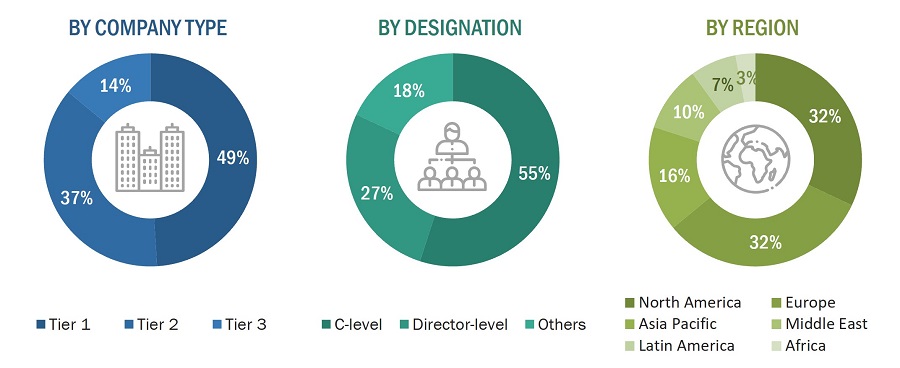
To know about the assumptions considered for the study, download the pdf brochure
Market Size Estimation
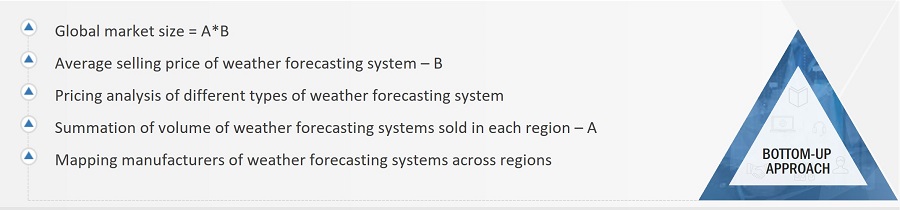
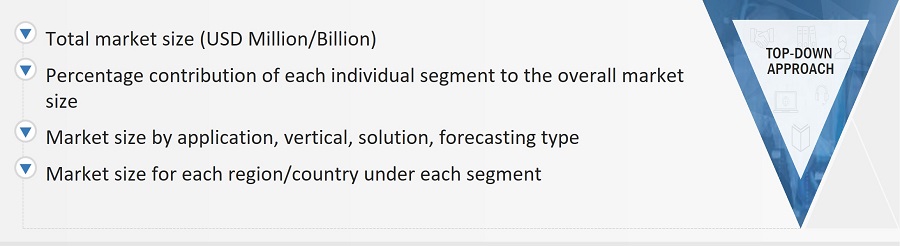
In the complete market engineering process, top-down and bottom-up approaches and several data triangulation methods have been used to estimate and forecast the overall market segments and subsegments listed in this report. Key players in the market have been identified through secondary research, and their market shares in the respective regions have been determined through primary and secondary research. This entire procedure includes the study of annual and financial reports of the top market players and extensive interviews for key insights (quantitative and qualitative) with industry experts (CEOs, VPs, directors, and marketing executives).
All percentage shares, splits, and breakdowns have been determined using secondary sources and verified through primary sources. All the parameters affecting the markets covered in this research study have been accounted for, viewed in detail, verified through primary research, and analyzed to obtain the final quantitative and qualitative data. This data has been consolidated and supplemented with detailed inputs and analysis from MarketsandMarkets and presented in this report. The following figure represents this study’s overall market size estimation process.
Bottom-Up Approach
- Identifying various applications of SWIR
- Analyzing the penetration of each type of SWIR technology through secondary and primary research
- Analyzing the penetration of SWIR for different applications and verticals through secondary and primary research
- Conducting multiple discussion sessions with key opinion leaders to understand the detailed working of SWIR and their implementation in numerous applications; this helped analyze the break-up of the scope of work carried out by each major company
- Verifying and cross-checking the estimates at every level with key opinion leaders, including CEOs, directors, operation managers, and finally with MarketsandMarkets domain experts
- Studying various paid and unpaid sources of information, such as annual reports, press releases, white papers, and databases
Top-Down Approach
- Focusing initially on the top-line investments and expenditures being made in the ecosystem of the SWIR market; further, splitting the key market areas based on imaging type, offering, technology, use case, vertical, and region, and listing the key developments
- Identifying all leading players and applications in the SWIR market based on region through secondary research and thoroughly verifying them through a brief discussion with industry experts
- Analyzing revenues, product mix, geographic presence, and key applications served by all identified players to estimate and arrive at percentage splits for all key segments
- Discussing splits with the industry experts to validate the information and identify key growth pockets across all key segments
- Breaking down the total market based on verified splits and key growth pockets across all segments
Data Triangulation
After arriving at the overall market size from the estimation process explained in the previous section, the total market was split into several segments and subsegments. The data triangulation procedure was employed, wherever applicable, to complete the overall market engineering process and arrive at the exact statistics for all segments and subsegments. The data was triangulated by studying various factors and trends from the demand and supply sides, and the market size was validated using top-down and bottom-up approaches.
Market Definition
Short Wave IR (SWIR) is a subset of the infrared band in the electromagnetic spectrum, covering wavelengths ranging from 1 to 3 microns. This wavelength is not visible to human eyes and can often offer a better image than what is achievable with visible light imaging. A number of manufacturers make SWIR imagers that detect various ranges of the electromagnetic spectrum with multiple qualities.
For imaging in this range, SWIR cameras convert the radiation of objects in the SWIR range to a measurable form. The capability of a SWIR camera depends on the type of component used. Lenses and detectors are the two most essential components of a SWIR camera and account for a significant percentage of the total parts of a SWIR camera. Indium gallium arsenide (InGaAs), mercury cadmium telluride (HgCdTe), and indium antimonide (InSb) are a few of the types of SWIR detectors available in the SWIR market.
Key Stakeholders
- SWIR material and component providers
- SWIR providers, integrators, and installers
- Electronic hardware equipment manufacturers
- Optical system manufacturers
- SWIR software and solution providers
- Consulting companies
- SWIR related associations, organizations, forums, and alliances
- Government and corporate bodies
- Research institutes and organizations
- Venture capitalists, private equity firms, and startup companies
- Distributors and traders
- Original equipment manufacturers (OEMs)
- End users
Report Objectives
- To define, describe, and forecast the SWIR market in terms of value, segmented by imaging type, by offering, by technology, use case, and vertical
- To describe and forecast the market, in terms of value, for various segments with respect to four main regions—North America, Europe, Asia Pacific, and Rest of the World (RoW)
- To study different types of materials used in SWIR products with the scope limited to qualitative research only
- To forecast the SWIR market in terms of volume
- To provide detailed information regarding the major factors, such as drivers, restraints, opportunities, and challenges, influencing the growth of the SWIR market
- To strategically analyze micromarkets1 with respect to individual growth trends, prospects, and contributions to the total market
- To analyze opportunities for stakeholders by identifying high-growth segments of the SWIR market
- To benchmark players within the market using the proprietary Company Evaluation Matrix framework, which analyzes market players on various parameters within the broad categories of market rank and product offering
- To strategically profile the key players and comprehensively analyze their market shares and core competencies2 and provide a detailed competitive landscape for market leaders
- To analyze competitive developments, such as partnerships, collaborations, agreements, and joint ventures; mergers and acquisitions; expansions; and product launches and developments; in the SWIR market
Customization Options
With the given market data, MarketsandMarkets offers customizations according to the company’s specific needs. The following customization options are available for the report:
Company Information
- Detailed analysis and profiling of additional market players (up to five)
Geographic Analysis
- Further breakdown of regions into respective countries
Get the Full Shortwave Infrared (SWIR) Market Report
Full forecast, segment splits, and company analysis for all Shortwave Infrared (SWIR) Market.
- US Shortwave Infrared (SWIR) Market
- Canada Shortwave Infrared (SWIR) Market
- Mexico Shortwave Infrared (SWIR) Market
- Germany Shortwave Infrared (SWIR) Market
- UK Shortwave Infrared (SWIR) Market
- France Shortwave Infrared (SWIR) Market
- Rest Of Europe Shortwave Infrared (SWIR) Market
- China Shortwave Infrared (SWIR) Market
- India Shortwave Infrared (SWIR) Market
- Rest Of Asia Pacific Shortwave Infrared (SWIR) Market
- GCC Countries Shortwave Infrared (SWIR) Market
- Rest Of Middle East Shortwave Infrared (SWIR) Market
Need a Tailored Report?
Customize this report to your needs
Get 10% FREE Customization
Customize This Report
