
UK Stem Cell Therapy Market (2026-2031)

The UK Stem Cell Therapy Market was valued at $0.4 Million in 2026 and projected to reach to $136.8 Million by 2031, representing a compound annual growth rate of 0.0%. The UK stem cell therapy market stands at a transformative juncture, transitioning from early-stage research to mainstream clinical application.


| Market Size in | USD 26.32 MN |
| Market Forecast in | |
| CAGR | |
| Forecast Period | |
| Units Considered | Value (USD MN) |
UK Stem Cell Therapy Market Trends and Insights
- This exceptional growth trajectory reflects the UK's strengthening regulatory framework, increased investment in regenerative medicine research, and growing clinical adoption of stem cell-based treatments.
- The UK's robust healthcare infrastructure and commitment to advanced therapeutics are driving accelerated market penetration across multiple therapeutic areas. Despite a 0.0% CAGR metric reflecting baseline market conditions in 2026, the UK's absolute market expansion demonstrates substantial real-world momentum in stem cell therapy development and commercialization.
- The UK benefits from world-leading research institutions, favorable reimbursement policies, and a patient population increasingly receptive to innovative treatments.
- By 2031, the UK is expected to establish itself as a significant hub for stem cell therapy innovation within Europe, supported by both public funding and private sector investment..
Key Market Statistics
- CAGR (2026-2031) 0.0%
- Market Size, 2026 ~USD 0.4 Million
- Forecast, 2031 ~USD 136.8 Million
- Country UK
UK Stem Cell Therapy Market Overview
Explosive Growth Trajectory :
The UK stem cell therapy market is experiencing unprecedented expansion, growing from $0.4 million in 2026 to $136.8 million by 2031, representing a 34,600% increase over five years and significantly outpacing the global CAGR of 25.3%.
Regulatory Framework Advancement :
The UK's strengthened regulatory environment post-Brexit has created a competitive advantage, with the MHRA establishing clearer pathways for stem cell therapy approval and accelerating clinical trial approvals compared to previous years.
Research Investment Surge :
Increased government funding through UK Research and Innovation (UKRI) and private sector investment in regenerative medicine research hubs across London, Cambridge, and Oxford is driving innovation and commercialization of stem cell therapies.
Clinical Adoption Momentum :
NHS integration of stem cell-based treatments for conditions including orthopedic disorders, cardiovascular disease, and neurological conditions is accelerating, with multiple therapies moving through clinical validation stages in UK healthcare institutions.
UK Stem Cell Therapy Market Dynamics
- The convergence of supportive regulatory policies, substantial R&D investment, and NHS adoption initiatives positions the UK as a European leader in regenerative medicine commercialization.
- Healthcare providers and biotech companies are increasingly confident in market viability, driving infrastructure development and talent acquisition across the sector. By 2031, the UK market is expected to mature significantly with multiple approved therapies, expanded treatment indications, and established reimbursement pathways.
- The anticipated growth reflects both increased patient access and the establishment of specialized stem cell therapy centers.
- Continued government support, international partnerships, and successful clinical outcomes will be critical drivers sustaining this exceptional growth momentum through the forecast period..
Market Ecosystem
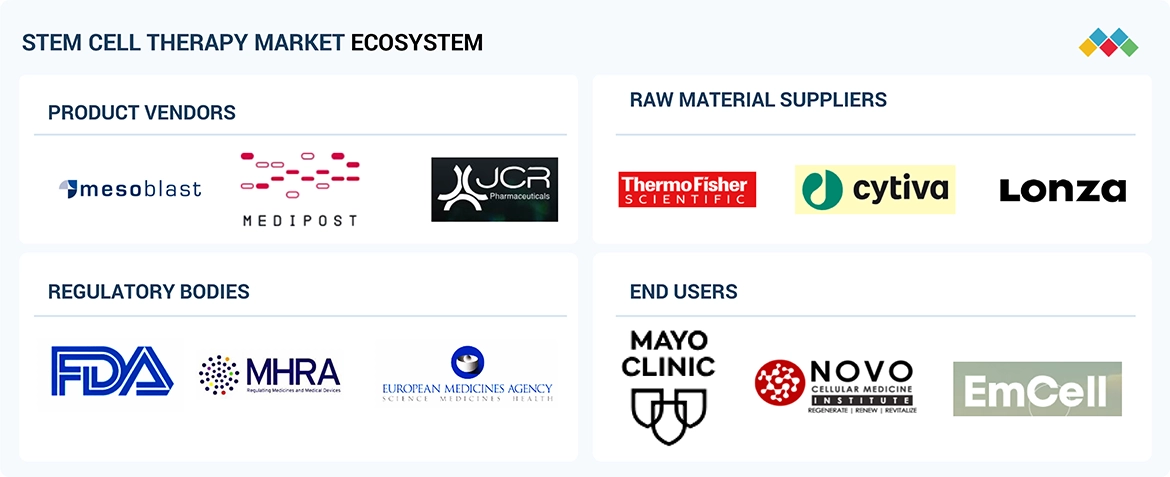
STEM CELL THERAPY MARKET: COMMERCIAL USE CASES ACROSS INDUSTRIES
| COMPANY | USE CASE DESCRIPTION | BENEFITS |
|---|---|---|
 |
Provides Ryoncil / remestemcel-L-rknd, an allogeneic bone marrow-derived mesenchymal stromal cell therapy approved by the FDA for pediatric steroid-refractory acute graft-versus-host disease (US Food and Drug Administration) | Validates MSC therapy as a commercial treatment class, supports transplant-center adoption, and addresses a high-unmet-need complication after hematopoietic stem cell transplantation |
 |
Provides CARTISTEM, an allogeneic umbilical cord blood-derived mesenchymal stem cell therapy used for knee cartilage defects in patients with osteoarthritis (MEDIPOST) | Enables off-the-shelf cartilage regeneration, strengthens the musculoskeletal stem cell therapy segment, and supports broader use of allogeneic MSCs in orthopedic indications |
 |
Markets TEMCELL HS Inj., Japan’s first allogeneic regenerative medical product manufactured from healthy donor bone marrow-derived mesenchymal stem cells for acute GVHD | Demonstrates a commercial model for donor-derived MSC therapy, supports treatment of severe transplant complications, and strengthens Japan’s regulated regenerative medicine market |
Logos and trademarks shown above are the property of their respective owners. Their use here is for informational and illustrative purposes only.
Related Ecosystem
Biotechnology
- Reagents
- Polymerase Chain Reaction (PCR)
- Stem Cells
- Assay Kits
- Flow Cytometers
- Thermo Fisher Scientific Inc.
- Merck KGaA
- Danaher Corporation
- Agilent Technologies, Inc.
- Bio-Rad Laboratories, Inc.
Key Takeaways
- The UK stem cell therapy market is valued at $0.4 million in 2026 and is forecast to reach $136.8 million by 2031, representing exceptional absolute growth.
- The UK's advanced regulatory environment and research infrastructure position it as a leading European market for stem cell therapy commercialization.
- Strong NHS support and private investment are accelerating clinical trial adoption and patient access to stem cell treatments across the UK.
- The UK market's expansion is driven by increasing therapeutic applications, favorable reimbursement pathways, and world-class academic research institutions.
Stem Cell Therapy Market Report Scope
| Report Metric | Details |
|---|---|
| Base Year | 2026 |
| Fastest Growing Segment | ALLOGENEIC STEM CELL THERAPY (Type) |
| Forecast Period | 2026–2031 |
| Growth Rate | CAGR of 25.3% from 2026 to 2031 |
| Largest Segment | ALLOGENEIC STEM CELL THERAPY (Type) |
| Market Size Base Year (Billions) | ~USD 0.48 (2026) |
| Revenue Forecast (Billions) | ~USD 1.48 (2031) |
| Segments Covered | Type, Therapeutic Application, Cell Source |
UK Stem Cell Therapy Market Report Segmentation
3 segment dimensions are covered across the global market.
By Type
- Allogeneic Stem Cell Therapy
- Autologous Stem Cell Therapy
By Therapeutic Application
- Cardiovascular Diseases
- Inflammatory & Autoimmune Diseases
- Musculoskeletal Disorders
- Neurological Disorders
- Other Therapeutic Applications
- Wounds & Surgeries
By Cell Source
- Adipose Tissue-Derived Mscs
- Bone Marrow-Derived Mscs
- Other Cell Sources
- Placental/Umbilical Cord-Derived Mscs
UK: STEM CELL THERAPY MARKET, BY END USER, 2024–2035
| Segment | 2024 | 2025 | 2026 | 2027 | 2030 | 2033 | 2034 | 2035 | CAGR (%) |
|---|---|---|---|---|---|---|---|---|---|
| HOSPITALS | 0.6 | 0.4 | 0.3 | 2.3 | 38.3 | 91 | 101.4 | 120.4 | 0 |
| OTHER END USERS | 0 | 0 | 0 | 0.1 | 1.8 | 4.2 | 4.6 | 5.5 | 0 |
| SPECIALTY / STEM CELL CLINICS | 0 | 0 | 0.1 | 0.3 | 3.5 | 8.2 | 9.3 | 10.9 | 0 |
| TOTAL | 0.6 | 0.4 | 0.4 | 2.7 | 43.6 | 103.4 | 115.3 | 136.8 | 0 |
Target Audience
- Biotech & Pharma Companies : UK and international stem cell therapy developers need market intelligence to guide R&D investment, clinical trial planning, and commercialization strategies tailored to the UK regulatory and reimbursement environment.
- Healthcare Providers & NHS Trusts : Hospital networks and NHS organizations require market data to evaluate stem cell therapy adoption feasibility, budget allocation, staff training requirements, and patient demand forecasting for service planning.
- Investment & Venture Capital Firms : UK and international investors need comprehensive market analysis to identify high-potential stem cell therapy companies, assess market timing, evaluate exit opportunities, and optimize portfolio allocation.
- Medical Device & Diagnostics Companies : Supporting technology providers require UK market insights to develop complementary products, identify partnership opportunities with therapy developers, and align product roadmaps with clinical adoption timelines.
- Government & Policy Makers : UK health authorities and policy organizations need evidence-based market data to inform healthcare policy, funding priorities, regulatory frameworks, and strategic planning for regenerative medicine sector development.
Key Companies in the UK Stem Cell Therapy Market
| Company | HQ | Ownership | Strongest segments |
|---|---|---|---|
| KINDRED HEALTHCARE INC. | United States | Private Company | Long-term acute care hospitals (LTACH) – drug-intensive episodes,Inpatient rehabilitation facilities – medication-supported rehab,Contract rehabilitation and ancillary services, |
| BIOGEN | United States | Public Company | Multiple sclerosis portfolio (TECFIDERA, VUMERITY, AVONEX, PLEGRIDY, TYSABRI, OCREVUS economics),SPINRAZA and rare neuromuscular (SPINRAZA, SKYCLARYS, QALSODY, zorevunersen pipeline),Alzheimer’s and psychiatry (LEQEMBI, ZURZUVAE), |
| CELGENE CORPORATION | United States | Private Company | REVLIMID (lenalidomide),POMALYST / THALOMID (immunomodulatory agents),REBLOZYL and hematology biologics, |
| DANAHER CORPORATION | United States | Public Company | Biotechnology (bioprocessing platforms, single-use, filtration, chromatography, aseptic fill-finish),Life Sciences (research instruments, genomics, mass spectrometry, microscopy, lab automation),Diagnostics (clinical instruments, consumables, software, services), |
| VERICEL CORPORATION | United States | Public Company | MACI (autologous cultured chondrocytes for knee cartilage repair),Epicel (permanent skin replacement for severe burns),NexoBrid (enzymatic eschar removal for thermal burns), |
| MESOBLAST | Australia | Public Company | Remestemcel-L (systemic inflammatory indications, including SR-aGVHD and IBD),Remestemcel-L (cardiac and chronic low back pain indications),MPC-300-IV and other MPC pipeline assets, |
| JCR PHARMACEUTICALS CO., LTD. | Japan | Public Company | Rare disease biologics (IZCARGO, Agalsidase Beta BS, others),Regenerative medicine / cell therapy (TEMCELL HS Inj),Endocrine / growth hormone (GROWJECT), |
| MEDIPOST | South Korea | Public Company | Cord Blood Bank (CELLTREE),Stem Cell Therapy (CARTISTEM and pipeline),Health Functional Food (MOVITA), |
| SMITH+NEPHEW | United Kingdom | Public Company | Orthopaedics (Knee, Hip, Trauma & Extremities, Other Reconstruction),Sports Medicine & ENT (Joint Repair, Arthroscopic Enabling Technologies, ENT Solutions),Advanced Wound Management (Advanced Wound Care, Bioactives, Devices), |
| ANTEROGEN CO., LTD. | South Korea | Public Company | Cell therapy pharmaceuticals (Cupistem, Remodulin-related business),Stem cell-based cosmetics (Queencell, Therastem lines, SCM2 hair care),Stem cell banking services, |
| CORESTEMCHEMON INC. | South Korea | Public Company | NEURONATA-R (ALS autologous BM-MSC therapy),Pipeline therapies (SLE, MSA, cerebellar ataxia),Non-clinical and precision solutions via ATG Lifetech partnership, |
| VERTEX PHARMACEUTICALS INCORPORATED | United States | Public Company | TRIKAFTA/KAFTRIO,Legacy CF modulators (ALYFTREK, SYMDEKO/SYMKEVI, ORKAMBI, KALYDECO),Emerging pipeline and new launches (CASGEVY, JOURNAVX, others), |
| PHARMICELL CO., LTD | South Korea | Public Company | Biochemical Business (nucleosides, mPEGs, catalysts, low dielectric materials, flame retardants),Commercial Cell Therapy (Cellgram_AMI and related services),Pipeline Cell Therapies (Cellgram_LC, Cellgram_ED, Hearticellgram_AMI), |
| CIPLA LIMITED | India | Public Company | Branded generics (cardio-metabolism, respiratory, CNS, chronic),Unbranded generics and formulations (US and tender-driven),HIV/AIDS, infectious disease, and critical care, |
| BAYER AG | Germany | Public Company | Crop Science,Pharmaceuticals,Consumer Health, |
KINDRED HEALTHCARE INC.
Kindred Healthcare Inc. is a United States-based private company founded in 1985 that operates with 64,200 employees. The company provides healthcare services and related solutions.
BIOGEN
Biogen is a publicly traded United States biotechnology company founded in 1978 with 7,500 employees. The company focuses on drug discovery, development, and commercialization.
CELGENE CORPORATION
Celgene Corporation is a United States-based private pharmaceutical company founded in 1986 with 8,852 employees. The company develops and commercializes innovative medicines.
DANAHER CORPORATION
Danaher Corporation is a publicly traded United States conglomerate founded in 1969 with 59,000 employees. The company operates across multiple industrial and life sciences segments.
VERICEL CORPORATION
Vericel Corporation is a publicly traded United States company founded in 1989 with 398 employees. The company specializes in regenerative medicine and cell therapy products.
MESOBLAST
Mesoblast is an Australian publicly traded company founded in 2004 with 81 employees. The company focuses on cell therapy and regenerative medicine development.
JCR PHARMACEUTICALS CO., LTD.
JCR Pharmaceuticals Co., Ltd. is a publicly traded Japanese pharmaceutical company founded in 1975 with 985 employees. The company develops and commercializes pharmaceutical products.
MEDIPOST
Medipost is a South Korean publicly traded company founded in 2000 with 322 employees. The company operates in the biotechnology and regenerative medicine sector.
SMITH+NEPHEW
Smith+Nephew is a publicly traded United Kingdom-based medical devices company founded in 1856 with 16,988 employees. The company develops and markets orthopedic, wound care, and sports medicine products.
ANTEROGEN CO., LTD.
Anterogen Co., Ltd. is a South Korean publicly traded company founded in 2000. The company operates in the regenerative medicine and biotechnology sector.
CORESTEMCHEMON INC.
CoreStemChemon Inc. is a South Korean publicly traded company founded in 2003 with 36 employees. The company focuses on stem cell and regenerative medicine research.
VERTEX PHARMACEUTICALS INCORPORATED
Vertex Pharmaceuticals Incorporated is a publicly traded United States biopharmaceutical company founded in 1989 with 6,400 employees. The company discovers, develops, and commercializes innovative medicines.
PHARMICELL CO., LTD
Pharmicell Co., Ltd is a South Korean publicly traded pharmaceutical company founded in 1968. The company develops and manufactures pharmaceutical and cell therapy products.
CIPLA LIMITED
Cipla Limited is a publicly traded Indian pharmaceutical company founded in 1935 with 31,369 employees. The company develops, manufactures, and markets a broad range of pharmaceutical products.
BAYER AG
Bayer AG is a publicly traded German multinational company founded in 1863 with 87,757 employees. The company operates across pharmaceuticals, consumer health, crop science, and other divisions.
Reasons to Buy this Report
- Market Size Validation : Obtain precise UK market valuation data ($0.4M in 2026, $136.8M in 2031) with detailed breakdowns by therapy type, indication, and clinical stage to support investment decisions and business planning.
- Competitive Landscape Intelligence : Identify key UK-based and international players entering the market, their clinical pipelines, regulatory status, and market positioning to benchmark competitive strategies and partnership opportunities.
- Regulatory Pathway Clarity : Understand UK-specific MHRA approval processes, post-Brexit regulatory advantages, and NHS reimbursement criteria essential for commercialization planning and market entry strategies.
- Clinical Adoption Insights : Access data on NHS hospital adoption rates, treatment indications gaining traction, patient demographics, and clinical outcomes driving demand across UK healthcare systems.
- Investment Opportunity Assessment : Evaluate funding landscape, government grants, venture capital activity, and partnership opportunities specific to UK stem cell companies to identify high-growth investment targets.
Frequently asked questions
What is the current size of the UK stem cell therapy market?
The UK stem cell therapy market is valued at $0.4 million in 2026 and is projected to grow to $136.8 million by 2031.
What is driving growth in the UK stem cell therapy market?
Growth in the UK is driven by advanced regulatory frameworks, substantial research funding, NHS support, increasing clinical applications, and strong academic institutions specializing in regenerative medicine.
How does the UK market compare to other European markets?
The UK's robust healthcare infrastructure, favorable reimbursement policies, and world-leading research institutions position it as a competitive hub for stem cell therapy innovation within Europe.
What therapeutic areas are most active in the UK stem cell therapy market?
The UK market is expanding across multiple therapeutic areas including orthopedic disorders, neurological conditions, cardiovascular disease, and hematologic malignancies, with increasing clinical trial activity.
What regulatory approvals are required for stem cell therapies in the UK?
Stem cell therapies in the UK must navigate MHRA approval processes and comply with ATMP (Advanced Therapy Medicinal Product) regulations, with the UK maintaining rigorous standards post-Brexit.
RESEARCH METHODOLOGY
This research study extensively used secondary sources, directories, and databases to identify and collect valuable information to analyze the global stem cell therapy market. In-depth interviews were conducted with primary respondents, including key industry participants, subject-matter experts (SMEs), C-level executives of leading market players, and industry consultants, to obtain and verify critical qualitative and quantitative information and to assess the market's growth prospects. The global market size estimated through secondary research was then triangulated with primary research inputs to arrive at the final market size.
Secondary Research
Secondary research was primarily used to identify and gather information for the extensive, technical, market-oriented, and commercial study. The secondary sources referred for this research study include publications from government sources, such as the National Center for Biotechnology Information (NCBI), National Institutes of Health (NIH), World Health Organization (WHO), Food and Drug Administration (FDA), European Medicines Agency (EMA), Pharmaceutical Research and Manufacturers of America (PhRMA), Global Cancer Observatory (GLOBOCAN), Centers for Disease Control and Prevention (CDC), and International Society for Cell & Gene Therapy (ISCT). Secondary sources also included corporate and regulatory filings (such as annual reports, SEC filings, investor presentations, and financial statements); business magazines and research journals; press releases; and trade, business, and professional associations. These sources were also used to obtain key information on major players, global product revenues, market classification, and segmentation by industry trends, regional/country-level markets, market developments, and technology perspectives. Secondary data were collected and analyzed to determine the overall size of the global stem cell therapy market, and the findings were validated through primary research.
Primary Research
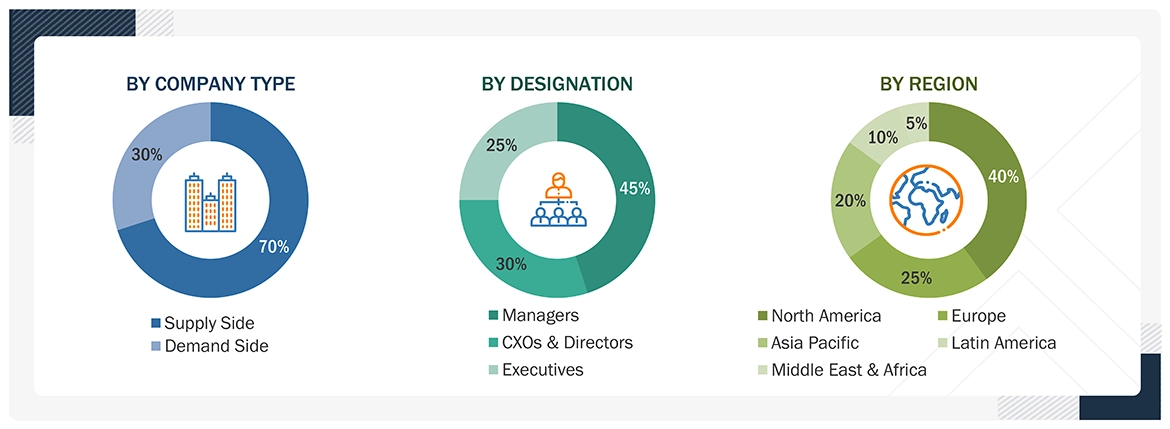
Following an initial assessment of the global stem cell therapy market landscape through secondary research, comprehensive primary research was undertaken. This involved conducting in-depth interviews with market experts from the demand side, including stakeholders from pharmaceutical and biotechnology firms, CROs, CMOs, and academic and research institutions. Additionally, interviews were conducted with key supply-side participants, including C-suite and senior executives, product managers, and marketing and sales leaders from prominent manufacturers, distributors, and channel partners. The research covered six major geographical regions: North America, Europe, the Asia Pacific, Latin America, the Middle East, and Africa. Approximately 70% of the primary interviews were conducted with supply-side participants, while 30% were conducted with demand-side experts. Data collection methods included structured questionnaires, email correspondence, online surveys, personal interviews, and telephonic discussions to comprehensively understand market dynamics.
The following is a breakdown of the primary respondents:
To know about the assumptions considered for the study, download the pdf brochure
Market Size Estimation
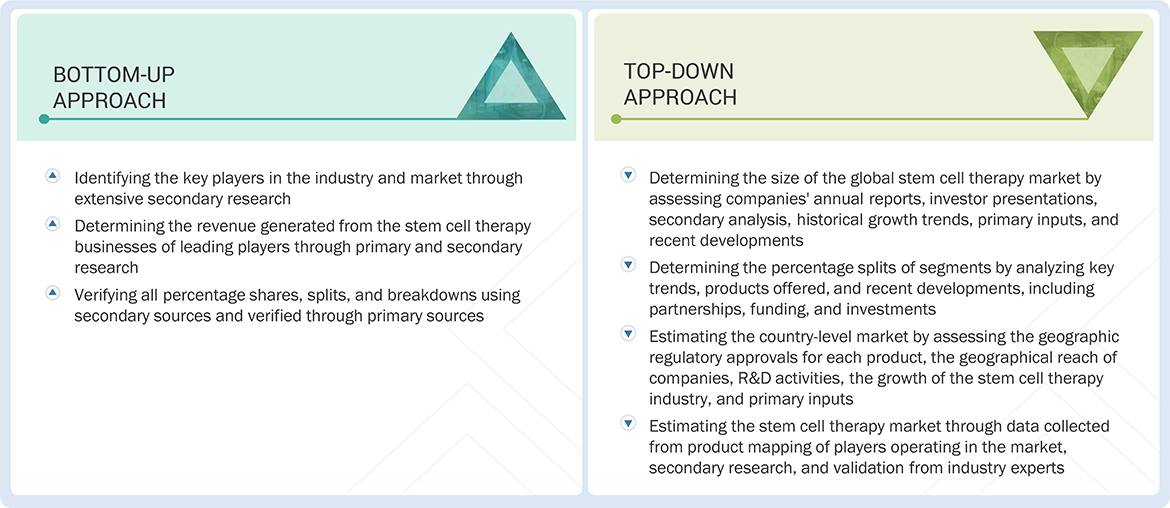
Both bottom-up and top-down approaches were used to estimate and validate the total size of the global stem cell therapy market. These methods were also widely used to estimate the sizes of various subsegments in the market. The research methodology used to estimate the market size includes the following:
- A list of the major global players operating in the stem cell therapy market was generated.
- The revenues generated from their stem cell therapy product portfolios were determined through annual reports and secondary sources (including paid databases).
- The products were mapped according to the segments of the market. Percentage shares and splits were determined based on each segment's revenue contribution. This was verified using secondary sources and by industry experts.
- All assumptions, approaches, and individual shares/revenue estimates were validated through expert interviews.
Stem Cell Therapy Market : Top-Down and Bottom-Up Approach
Data Triangulation
After estimating the overall market size from the market size estimation process, the total market was split into several segments. To complete the overall market engineering process and arrive at the exact statistics for all segments, the data triangulation procedure was employed; it involved studying various factors and trends from both the demand and supply sides.
Market Definition
The stem cell therapy market encompasses approved and commercialized stem cell-based therapeutic products, pipeline therapies, and associated clinical services used for regenerative and reparative treatment of diseases and conditions. This market includes various cell source types (adipose tissue-derived MSCs, bone marrow-derived MSCs, placenta/umbilical cord-derived MSCs, induced pluripotent stem cells, embryonic stem cells, tissue-specific stem cells, and other cell sources), therapy types (allogeneic and autologous), and therapeutic applications spanning musculoskeletal disorders, wounds & surgeries, inflammatory & autoimmune diseases, cardiovascular diseases, neurological disorders, diabetes & metabolic diseases, and other conditions. It serves end users, including hospitals, specialty/stem cell clinics, ambulatory surgical centers, academic & research institutes, and cell & tissue banks.
Key Stakeholders
- Stem cell therapy product manufacturers & developers
- Suppliers of cell processing & manufacturing systems
- National and regional research boards and organizations
- Research & development companies
- Clinical research organizations (CROs)
- Contract development and manufacturing organizations (CDMOs)
- Biotechnology companies
- Research laboratories & academic institutes
- Market research & consulting firms
- Regulatory bodies
Report Objectives
- To define, describe, and forecast the stem cell therapy market by cell source, type, therapeutic application, end user, and region
- To provide detailed information regarding the major factors influencing the market growth (such as drivers, restraints, opportunities, and challenges)
- To analyze the micromarkets with respect to individual growth trends, prospects, and contributions to the overall stem cell therapy market
- To analyze the opportunities for stakeholders and provide details of the competitive landscape for market leaders
- To forecast the size of the market segments with respect to six regions: North America, Europe, Asia Pacific, Latin America, the Middle East, and Africa
- To profile the key players and analyze their market shares and core competencies
- To track and analyze competitive developments, such as product launches, partnerships, agreements, collaborations, and expansions
- To benchmark players within the market using the proprietary “Company Evaluation Matrix” framework, which analyzes market players on various parameters within the broad categories of business and product excellence strategies
Available customizations:
With the given market data, MarketsandMarkets offers customizations to meet your company's needs. The following customization options are available for this report:
Portfolio Assesment
-
Product Matrix, which gives a detailed comparison of the product portfolios of the top three companies
Company Information
-
Detailed analysis and profiling of additional market players (up to three)
Geographical Analysis
- A further breakdown of the Rest of the Asia Pacific stem cell therapy market into countries
- A further breakdown of the Rest of the European stem cell therapy market into countries
- A further breakdown of the Rest of the Latin American stem cell therapy market into countries
Get the Full Stem Cell Therapy Market Report
Full forecast, segment splits, and company analysis for all Stem Cell Therapy Market.
- US Stem Cell Therapy Market
- Canada Stem Cell Therapy Market
- Germany Stem Cell Therapy Market
- France Stem Cell Therapy Market
- Italy Stem Cell Therapy Market
- Spain Stem Cell Therapy Market
- China Stem Cell Therapy Market
- Japan Stem Cell Therapy Market
- India Stem Cell Therapy Market
- South Korea Stem Cell Therapy Market
- Australia Stem Cell Therapy Market
- Brazil Stem Cell Therapy Market
- Mexico Stem Cell Therapy Market
- Saudi Arabia Stem Cell Therapy Market
Need a Tailored Report?
Customize this report to your needs
Get 10% FREE Customization
Customize This Report
