
Spain Tools Plastic Market (2025-2030)

The Spain Tools Plastic Market was valued at $100.4 Million in 2025 and projected to reach to $128.3 Million by 2030, representing a compound annual growth rate of 5.0%. Spain's tools plastic market is positioned for steady growth, driven by the country's established manufacturing base and rising demand for innovative plastic solutions in hand and power tool segments.


| Market Size in | USD 26.32 MN |
| Market Forecast in | |
| CAGR | |
| Forecast Period | |
| Units Considered | Value (USD MN) |
Spain Tools Plastic Market Trends and Insights
- This steady expansion reflects Spain's robust manufacturing sector and increasing demand for lightweight, durable plastic components in hand tools and power tool applications.
- Spain's position within Europe's broader industrial ecosystem supports consistent adoption of advanced plastic materials across construction, automotive, and consumer tool segments. The Spanish market benefits from strong regional supply chains and a skilled workforce that drives innovation in tool design and material engineering.
- Between 2025 and 2030, Spain is expected to see sustained investment in sustainable plastic alternatives and ergonomic tool development.
- Spain's growth trajectory, while moderate compared to global rates, underscores the maturity and stability of its tools plastic sector, with opportunities emerging in recycled plastic integration and specialized composite formulations tailored to European regulatory standards..
Key Market Statistics
- CAGR (2025-2030) 5.0% CAGR
- Market Size, 2025 ~USD 100.4 Million
- Forecast, 2030 ~USD 128.3 Million
- Country Spain
Spain Tools Plastic Market Overview
Market Size & Growth :
Spain's tools plastic market is valued at USD 100.4 million in 2025, with a projected CAGR of 5.0% through 2030, reaching USD 128.3 million. This growth trajectory reflects steady demand across Spain's manufacturing and construction sectors.
Manufacturing Strength :
Spain's robust manufacturing sector drives significant demand for lightweight, durable plastic components in hand tools and power tool applications. The country's industrial base supports consistent market expansion and innovation in tool design.
European Market Position :
As a key player within Europe's broader tools plastic market, Spain benefits from regional supply chain integration, cross-border trade opportunities, and alignment with EU manufacturing standards and sustainability regulations.
Material Innovation Trends :
Spanish manufacturers increasingly adopt advanced plastic materials for improved durability, ergonomics, and weight reduction in tool production, supporting competitive advantages in both domestic and European markets.
Spain Tools Plastic Market Dynamics
- The 5.0% CAGR reflects consistent investment in tool production and modernization across Spanish industrial facilities.
- Sustainability initiatives and EU regulations are encouraging manufacturers to adopt eco-friendly plastic materials, creating opportunities for premium product development.
- The market's expansion is supported by Spain's strategic location within Europe, enabling efficient distribution and collaboration with regional partners, while domestic construction and DIY sectors continue to fuel end-user demand for quality plastic-based tools..
Market Ecosystem
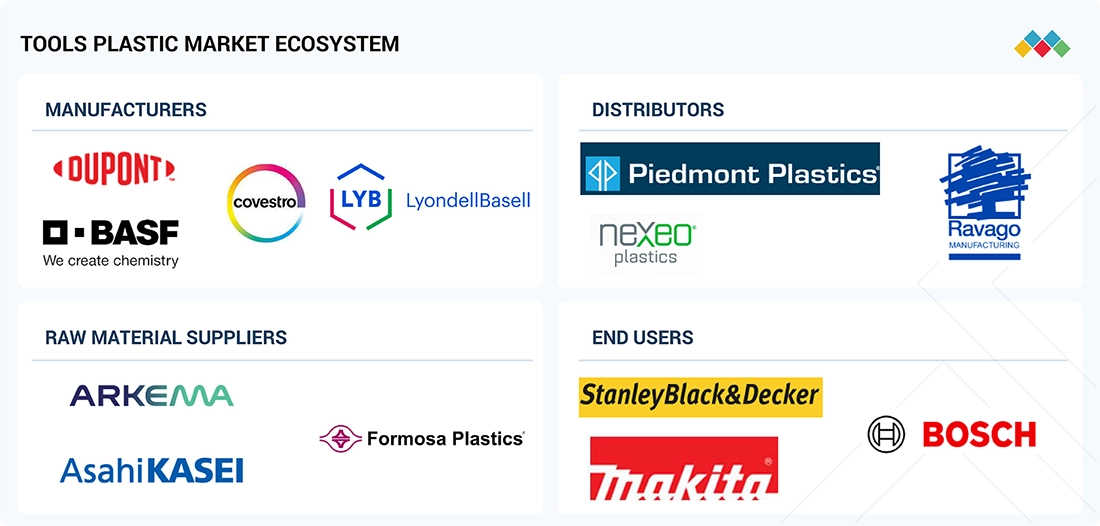
Tools Plastic Market: COMMERCIAL USE CASES ACROSS INDUSTRIES
| COMPANY | USE CASE DESCRIPTION | BENEFITS |
|---|---|---|
 |
High-performance engineering plastics for power tools, hand tools, and industrial equipment housings | Excellent dimensional stability, impact resistance, lightweight, and easy processability for durable tool parts |
 |
Polyamide (Nylon) and acetal resins for mechanical tools, connectors, and functional components | High strength-to-weight ratio, wear resistance, and superior performance under mechanical stress |
 |
Polycarbonate blends and thermoplastic polyurethane for protective casings and ergonomic tool designs | Transparent, tough, chemical resistant, and offers design flexibility for user comfort and safety |
 |
Polypropylene and polyethylene compounds for tool handles, housings, and fastening systems | Cost-effective, recyclable, fatigue-resistant, and provides high rigidity with environmental stability |
Logos and trademarks shown above are the property of their respective owners. Their use here is for informational and illustrative purposes only.
Related Ecosystem
Resins And Polymers
- Polycarbonate
- Acrylonitrile Butadiene Styrene (ABS)
- Epoxy Resin
- Light Commercial Vehicles (LCVs)
- Polypropylene (PP)
- Basf se
- DOW CHEMICAL COMPANY
- Solvay sa
- Saudi arabia basic industries corporation (sabic)
- DuPont de Nemours, Inc.
Key Takeaways
- Spain's tools plastic market is valued at USD 100.4 million in 2025 and will reach USD 128.3 million by 2030, growing at a 5.0% CAGR.
- Spain's mature manufacturing base and EU regulatory compliance drive steady demand for high-performance plastic tool components.
- Sustainability initiatives in Spain are accelerating adoption of recycled and bio-based plastics in tool production.
- Spain's strategic location within Europe positions it as a key hub for tools plastic innovation and regional distribution.
Tools Plastic Market Report Scope
| Report Metric | Details |
|---|---|
| Base Year | 2025 |
| Fastest Growing Segment | RESIDENTIAL (DIY) (Application) |
| Forecast Period | 2025-2030 |
| Growth Rate | CAGR of 6.5% from 2025 to 2030 |
| Largest Segment | MECHANICAL TOOLS (Functionality) |
| Market Size Base Year (Billions) | ~USD 5.31 (2025) |
| Revenue Forecast (Billions) | ~USD 7.28 (2030) |
| Segments Covered | Type, Application, Functionality, End-Use Industry |
Spain Tools Plastic Market Report Segmentation
4 segment dimensions are covered across the global market.
By Type
- Acrylonitrile Butadiene Styrene (Abs)
- Hdpe
- Nylon (Polyamide)
- Other Types
- Polyamide (Nylon)
- Polycarbonate (Pc)
- Polypropylene (Pp)
- Polyvinyl Chloride (Pvc)
By Application
- Commercial
- Industrial (Professional)
- Residential (Diy)
By Functionality
- Mechanical Tools
- Power Tools
By End-Use Industry
- Aerospace
- Agriculture/Gardening/Farming
- Automotive
- Construction
- Manufacturing
- Medical
- Other End-Use Industries
- Shipbuilding
SPAIN: TOOL PLASTICS MARKET, BY END-USE INDUSTRY, 2025–2030
| Segment | 2025 | 2026 | 2027 | 2028 | 2029 | 2030 | CAGR (%) |
|---|---|---|---|---|---|---|---|
| AEROSPACE | 4 | 4.2 | 4.5 | 4.7 | 5 | 5.3 | 5.56 |
| AGRICULTURE/GARDENING/FARMING | 16.1 | 16.8 | 17.7 | 18.5 | 19.4 | 20.4 | 4.91 |
| AUTOMOTIVE | 18.1 | 19 | 20 | 21 | 22.1 | 23.2 | 5.16 |
| CONSTRUCTION | 33.1 | 34.8 | 36.5 | 38.4 | 40.3 | 42.4 | 5.04 |
| MANUFACTURING | 9 | 9.4 | 9.9 | 10.3 | 10.8 | 11.3 | 4.57 |
| MEDICAL | 15.1 | 15.9 | 16.7 | 17.6 | 18.6 | 19.6 | 5.46 |
| OTHER END-USE INDUSTRIES | 3 | 3.1 | 3.3 | 3.4 | 3.6 | 3.7 | 4.33 |
| SHIPBUILDING | 2 | 2.1 | 2.2 | 2.3 | 2.3 | 2.4 | 3.97 |
| TOTAL | 100.4 | 105.3 | 110.7 | 116.2 | 122.1 | 128.3 | 5.04 |
Target Audience
- Tool Manufacturers : Spanish and European tool producers need Spain-specific market data to optimize production strategies, assess demand for plastic components, and plan capacity investments in the domestic market.
- Plastic Material Suppliers : Suppliers of plastic resins and compounds require detailed insights into Spain's tool manufacturing demand to identify customer opportunities, forecast material requirements, and develop targeted sales strategies.
- Investment & Private Equity Firms : Investors evaluating opportunities in Spain's manufacturing and chemicals sectors need comprehensive market analysis to assess growth potential, valuation benchmarks, and risk factors in the tools plastic market.
- Business Consultants & Strategists : Consultants advising clients on market entry, expansion, or repositioning in Spain require localized data to develop informed strategies and provide credible recommendations for the tools plastic industry.
- Distribution & Logistics Companies : Distributors and logistics providers need Spain market insights to understand demand patterns, identify growth segments, and optimize supply chain networks for tools plastic products across the region.
Reasons to Buy this Report
- Localized Market Intelligence : Gain Spain-specific insights into market size, growth rates, and forecasts that enable accurate business planning and investment decisions tailored to the Spanish tools plastic sector.
- Competitive Positioning : Understand Spain's manufacturing landscape, key demand drivers, and regional trends to identify competitive advantages and benchmark performance against local and European competitors.
- Strategic Expansion Planning : Leverage detailed market data to evaluate Spain as a manufacturing hub or distribution center, with insights into supply chain opportunities and regulatory compliance requirements.
- Product Development Guidance : Access information on material preferences, sustainability trends, and application-specific demands in Spain's hand tool and power tool markets to guide R&D and product innovation strategies.
- Investment & Partnership Opportunities : Identify growth potential and market gaps in Spain's tools plastic sector to support M&A decisions, joint ventures, and strategic partnerships with Spanish manufacturers and distributors.
Frequently asked questions
What is the current market size of tools plastic in Spain?
Spain's tools plastic market is estimated at USD 100.4 million in 2025.
What is the projected market size for tools plastic in Spain by 2030?
Spain's tools plastic market is forecast to reach USD 128.3 million by 2030.
What is the CAGR for Spain's tools plastic market?
Spain's tools plastic market is expected to grow at a compound annual growth rate (CAGR) of 5.0% from 2025 to 2030.
What factors are driving growth in Spain's tools plastic market?
Spain's growth is driven by strong manufacturing demand, EU sustainability regulations, ergonomic tool innovation, and increased adoption of lightweight plastic components in construction and automotive sectors.
How does Spain's tools plastic market compare to Europe?
Spain represents a significant segment within Europe's tools plastic market, with stable growth reflecting its mature industrial base and commitment to sustainable manufacturing practices aligned with EU standards.
RESEARCH METHODOLOGY
The study involved four main activities to estimate the current size of the global tools plastic market. Extensive secondary research was conducted to gather information on the market, peer product markets, and the parent product group market. The next step was to validate these findings, assumptions, and sizes with industry experts across the value chain of tools plastic through primary research. Both top-down and bottom-up approaches were used to estimate the market’s overall size. Then, market segmentation and data triangulation procedures were applied to determine the size of various segments and sub-segments of the market.
Secondary Research
In the secondary research process, various secondary sources such as Hoovers, Factiva, Bloomberg BusinessWeek, and Dun & Bradstreet were used to identify and collect information for this study on the tools plastic market. These secondary sources included annual reports, press releases & investor presentations of companies; white papers; certified publications; articles by recognized authors; regulatory bodies, trade directories, and databases.
Primary Research
The tools plastic market includes several stakeholders in the supply chain, such as raw material suppliers, distributors, end-product manufacturers, buyers, and regulatory organizations. Various key sources from both the supply and demand sides of the market have been interviewed to gather qualitative and quantitative data. On the demand side, primary participants include key opinion leaders, executives, vice presidents, and CEOs of companies in the tools plastic market. On the supply side, primary sources consist of associations and institutions involved in the tools plastic market, key opinion leaders, and processing companies.
Following is breakdown of primary respondents:
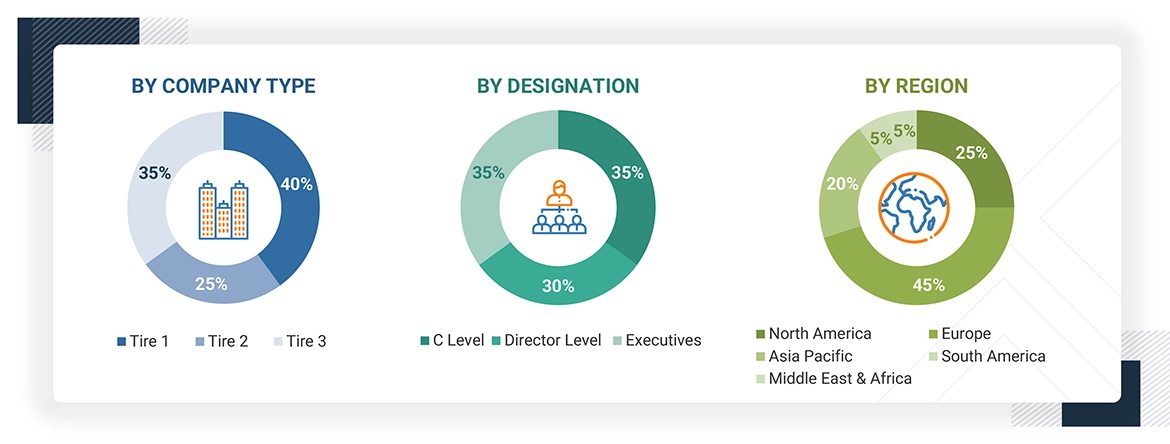
To know about the assumptions considered for the study, download the pdf brochure
Market Size Estimation
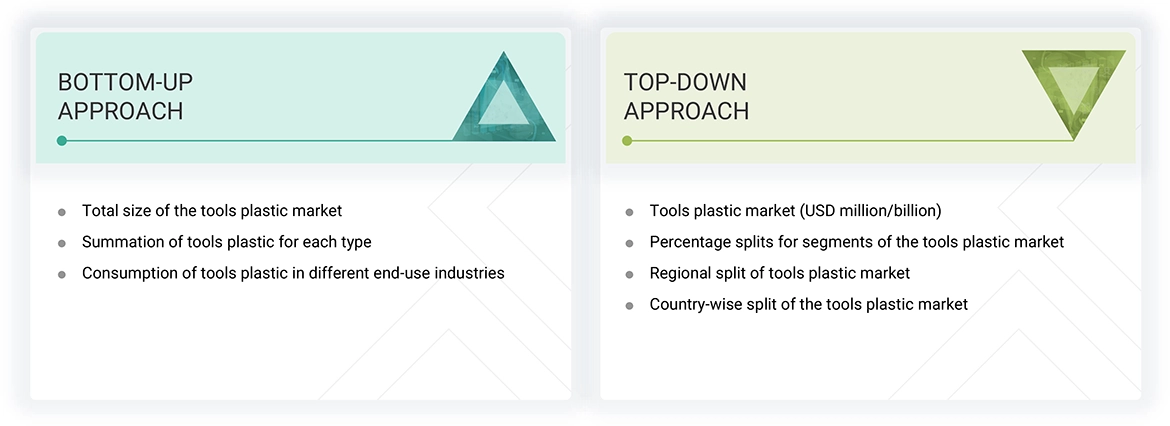
The bottom-up and top-down approaches have been used to estimate the tools plastic market by type, application, end-use industry, and region. The research methodology used to calculate the market size includes the following steps:
- The key players in the industry and markets were identified through extensive secondary research.
- In terms of value, the industry’s value chain and market size were determined through both primary and secondary research processes.
- All percentage shares, splits, and breakdowns were established using secondary sources and verified via primary sources.
- All relevant parameters influencing the markets covered in this study were thoroughly considered, verified through primary research, and analyzed to obtain the final quantitative and qualitative data.
- The research involved reviewing reports, reviews, and newsletters of top market players and conducting extensive interviews with leaders such as directors and marketing executives to gather opinions.
The following figure illustrates the overall market size estimation process employed for this study.
Data Triangulation
After estimating the overall size of the tools plastics market, the data was divided into several segments and subsegments. Data triangulation and market breakdown methods were used, where appropriate, to complete the market analysis and determine precise statistics for all segments and subsegments. The data was triangulated by examining various factors and trends from both the demand and supply sides. Additionally, the market size was validated using both top-down and bottom-up approaches.
Market Definition
The tools plastic is defined as the segment involved in manufacturing plastics used in tools, including hand tools, power tools, garden tools, medical tools and devices, manual tools, and industrial equipment. The plastics used, often ABS, polycarbonate, nylon, and polypropylene, are selected for their qualities such as strength and durability, lightweight nature, chemical and heat resistance, and impact resistance. The tools plastic market has many end-use sectors, including construction, automotive, healthcare, and manufacturing. With advances in material technology and consumer demand for ergonomic, affordable, high-performance tools, the tools plastic market, with various consumer and professional applications, is diverse and expanding globally.
Stakeholders
- Tools plastic manufacturers
- Raw material suppliers
- Regulatory bodies and government agencies
- Distributors and suppliers
- End-use industries
- Associations and industrial bodies
- Market research and consulting firms
Report Objectives
- To define, describe, and forecast the size of the tools plastic market in terms of value and volume
- To provide detailed information regarding the key factors influencing the growth of the market (drivers, restraints, opportunities, and challenges)
- To forecast the market size based on type, application, end-use industry, and region
- To forecast the market size for the five main regions—North America, Europe, Asia Pacific, South America, and the Middle East & Africa, along with their key countries
- To strategically analyze micromarkets with respect to individual growth trends, prospects, and contributions to the total market
- To analyze the opportunities in the market for stakeholders and provide details of the competitive landscape for the market leaders
- To strategically profile leading players and comprehensively analyze their key developments, such as product launches, expansions, and deals in the tools plastic market
- To strategically profile key players and comprehensively analyze their market shares and core competencies
- To study the impact of AI/Gen AI on the market under study, along with the macroeconomic outlook
Get the Full Tools Plastic Market Report
Full forecast, segment splits, and company analysis for all Tools Plastic Market.
- US Tools Plastic Market
- Canada Tools Plastic Market
- Mexico Tools Plastic Market
- Germany Tools Plastic Market
- France Tools Plastic Market
- UK Tools Plastic Market
- Italy Tools Plastic Market
- China Tools Plastic Market
- Japan Tools Plastic Market
- India Tools Plastic Market
- South Korea Tools Plastic Market
- South Africa Tools Plastic Market
- Brazil Tools Plastic Market
- Argentina Tools Plastic Market
- Rest Of Europe Tools Plastic Market
- Rest Of Asia Pacific Tools Plastic Market
- GCC Countries Tools Plastic Market
- -Rest Of GCC Countries Tools Plastic Market
- Rest Of South America Tools Plastic Market
Need a Tailored Report?
Customize this report to your needs
Get 10% FREE Customization
Customize This Report
