
Rest Of Europe Ultra-Wideband Market (2025-2030)

The Rest Of Europe Ultra-Wideband Market was valued at $31.9 Million in 2025 and projected to reach to $74.1 Million by 2030, representing a compound annual growth rate of 18.4%. Rest Of Europe's Ultra-Wideband market is positioned for substantial growth through 2030, driven by escalating demand for precise indoor positioning systems and secure wireless communication protocols.


| Market Size in | USD 26.32 MN |
| Market Forecast in | |
| CAGR | |
| Forecast Period | |
| Units Considered | Value (USD MN) |
Rest Of Europe Ultra-Wideband Market Trends and Insights
- The region is experiencing accelerated adoption driven by increasing demand for precise indoor positioning, secure wireless communication, and IoT connectivity solutions.
- Rest Of Europe is projected to expand significantly, reaching $74.1 million by 2030, reflecting a compound annual growth rate of 18.4%—outpacing the global average and demonstrating strong regional momentum. The expansion of Rest Of Europe's Ultra-Wideband market is fueled by rising investments in smart building infrastructure, automotive safety systems, and enterprise-grade location services.
- Rest Of Europe's regulatory environment and technology adoption patterns are creating favorable conditions for semiconductor and electronics manufacturers to deploy UWB-enabled devices across consumer, industrial, and commercial applications.
- By 2030, Rest Of Europe is expected to consolidate its position as a critical growth hub within the European Ultra-Wideband ecosystem..
Key Market Statistics
- CAGR (2025-2030) 18.4% CAGR
- Market Size, 2025 ~USD 31.9 Million
- Forecast, 2030 ~USD 74.1 Million
- Country Rest Of Europe
Rest Of Europe Ultra-Wideband Market Overview
Strong Regional Growth Trajectory :
Rest Of Europe's Ultra-Wideband market is expanding at 18.4% CAGR, outpacing the global average of 15.8%, indicating accelerated regional adoption and market maturation.
Significant Market Expansion :
The market is projected to more than double from $31.9 million in 2025 to $74.1 million by 2030, demonstrating robust investment and deployment momentum across the region.
Emerging IoT & Positioning Demand :
Rest Of Europe is witnessing increased adoption of UWB technology for precise indoor positioning, secure wireless communication, and interconnected IoT solutions across multiple verticals.
Regional Market Consolidation :
The segment represents a distinct high-growth opportunity within the broader European UWB landscape, attracting technology vendors and enterprise deployments seeking advanced connectivity solutions.
Rest Of Europe Ultra-Wideband Market Dynamics
- Enterprise adoption is accelerating across manufacturing, logistics, and smart building sectors, where UWB technology enables real-time asset tracking and enhanced security features.
- The region's expanding IoT ecosystem and digital transformation initiatives are creating favorable conditions for UWB deployment. Key growth catalysts include increasing regulatory support for spectrum allocation, rising investments in smart infrastructure, and growing awareness of UWB's advantages over competing technologies.
- Rest Of Europe's market trajectory suggests strong commercial viability, with enterprises prioritizing location accuracy and communication security.
- The forecasted expansion to $74.1 million by 2030 reflects sustained momentum, positioning the region as a significant contributor to European semiconductor and electronics innovation..
Market Ecosystem
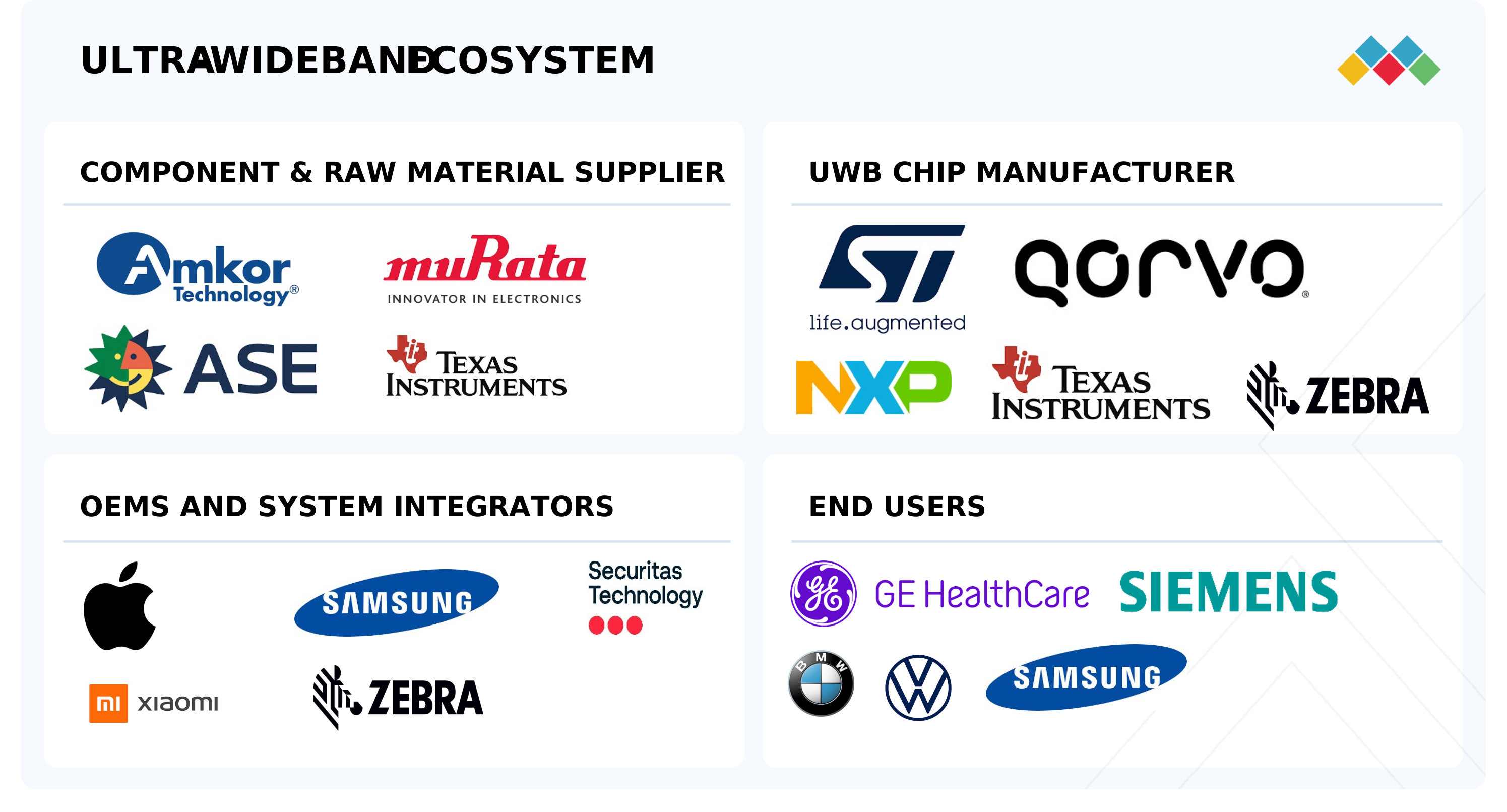
Ultra-Wideband Market: COMMERCIAL USE CASES ACROSS INDUSTRIES
| COMPANY | USE CASE DESCRIPTION | BENEFITS |
|---|---|---|
 |
Ultra-Wideband System-on-Chip (SoC) for Consumer Electronics, Industrial, and Automotive | Centimeter accuracy distance / location measurement and secure low-power, low-latency data communication. |
 |
Ultra-wideband Chip for iPhone, smart watch, and air tags | Centimeter accuracy distance / location measurement |
 |
Ultra-wideband IC for smartphone-based car access | Secure remote parking via smartphone and protection against car theft through relay attacks |
 |
Ultra-Wideband Amplifier for industrial application | Reduced Power Consumption and Improved Signal Chain Performance |
 |
Ultra-wideband module for automotive and industrial | Deliver centimeter-level accuracy, enabling businesses to track assets, equipment, and people with greater precision |
Logos and trademarks shown above are the property of their respective owners. Their use here is for informational and illustrative purposes only.
Related Ecosystem
Electronics System And Components
- Sensors
- Temperature Sensors
- Pressure Sensors
- Actuators
- Image Sensors
- Lenovo
- Samsung
- Texas Instruments Incorporated
- HONEYWELL INTERNATIONAL INC.
- Teledyne Technologies Incorporated
Key Takeaways
- Rest Of Europe's Ultra-Wideband market is valued at $31.9 million in 2025 and is forecast to reach $74.1 million by 2030.
- Rest Of Europe is growing at a 18.4% CAGR, significantly outpacing global growth rates and indicating strong regional demand.
- Rest Of Europe's market expansion is driven by smart building adoption, automotive safety integration, and enterprise IoT solutions.
- Rest Of Europe is positioned as a critical growth hub within Europe, attracting semiconductor and electronics manufacturer investment.
Ultra-Wideband Market Report Scope
| Report Metric | Details |
|---|---|
| Base Year | 2025 |
| Fastest Growing Segment | AUTOMOTIVE & TRANSPORTATION (Vertical) |
| Forecast Period | 2025–2030 |
| Growth Rate | CAGR of 15.8% from 2025 to 2030 |
| Largest Segment | INDOOR (Positioning System) |
| Market Size Base Year (Billions) | ~USD 8.46 (2025) |
| Revenue Forecast (Billions) | ~USD 17.62 (2030) |
| Segments Covered | Positioning System, Range, Application, Vertical |
Rest Of Europe Ultra-Wideband Market Report Segmentation
4 segment dimensions are covered across the global market.
By Positioning System
- Indoor
- Outdoor
By Range
- High-Range
- Low-Range
By Application
- Communication
- Imaging
- Other Applications
- Rtls
By Vertical
- Automotive & Transportation
- Consumer Electronics
- Healthcare
- Manufacturing
- Other Verticals
- Residential
- Retail
Target Audience
- UWB Technology Vendors : Semiconductor manufacturers and UWB solution providers need Rest Of Europe market data to identify growth opportunities, optimize product positioning, and allocate regional sales resources effectively.
- Enterprise Technology Buyers : IT decision-makers and procurement teams in Rest Of Europe require market insights to evaluate UWB adoption feasibility, benchmark competitive offerings, and justify technology investments.
- Investment & Private Equity Firms : Investors targeting the European semiconductor and IoT sectors need Rest Of Europe UWB market analysis to assess portfolio opportunities, valuation benchmarks, and growth potential.
- System Integrators & Consultants : Solution providers and management consultants serving Rest Of Europe enterprises require regional market intelligence to advise clients on UWB deployment strategies and ROI projections.
- Government & Policy Organizations : Regulatory bodies and economic development agencies in Rest Of Europe need market data to inform spectrum allocation policies, technology roadmaps, and digital infrastructure initiatives.
Key Companies in the Rest Of Europe Ultra-Wideband Market
| Company | HQ | Ownership | Strongest segments |
|---|---|---|---|
| PCTEL, INC. | United States | Private Company | RTLS-focused antennas and IoT devices,Communication infrastructure antennas (public safety, transportation, utilities),RF test and measurement for indoor and public safety networks, |
| ASAHI GLASS CO LTD | Japan | Public Company | |
| QORVO, INC. | United States | Public Company | RTLS (Indoor positioning across industrial, healthcare, and logistics),Communication (UWB-based secure ranging, device-to-device links, and access control),Imaging (sensing, radar-like presence detection, and spatial awareness), |
| APPLE INC. | United States | Public Company | Consumer Electronics – iPhone UWB (communication and indoor positioning),Wearables – Watch and accessories UWB,Accessories – AirTag and Find My ecosystem, |
| NXP SEMICONDUCTORS | Netherlands | Public Company | RTLS & Positioning (Indoor/Outdoor),Communication & Device-to-Device Connectivity,Imaging & Sensing-style UWB Applications, |
| TEXAS INSTRUMENTS INCORPORATED | United States | Public Company | RTLS-adjacent analog and MCUs,Automotive & transportation UWB-enabled systems,Consumer electronics UWB-enabled devices, |
| ZEBRA TECHNOLOGIES CORP. | United States | ||
| SAMSUNG | Korea, South | ||
| STMICROELECTRONICS | Switzerland | Public Company | RTLS-focused UWB (industrial, healthcare, manufacturing, logistics),Automotive and transportation UWB (digital keys, in-cabin, V2X adjunct),Consumer and residential UWB (smartphones, wearables, smart home), |
| MICROCHIP TECHNOLOGY INC. | United States | ||
| MURATA MANUFACTURING CO., LTD. | Japan |
PCTEL, INC.
PCTEL, Inc. is a private company founded in 1994 in the United States with 213 employees. The company provides wireless network testing and optimization solutions.
ASAHI GLASS CO LTD
Asahi Glass Co Ltd is a public company founded in 1907 in Japan with 52,896 employees. The company is a major manufacturer of glass, chemicals, and electronics materials.
QORVO, INC.
Qorvo, Inc. is a public company founded in 1957 in the United States with 5,200 employees. The company designs and manufactures semiconductor products for mobile, infrastructure, and defense applications.
APPLE INC.
Apple Inc. is a public company founded in 1976 in the United States with 166,000 employees. The company designs, manufactures, and sells consumer electronics, software, and services including iPhones, Macs, and digital platforms.
NXP SEMICONDUCTORS
NXP Semiconductors is a public company founded in 2006 in the Netherlands with 32,169 employees. The company develops and manufactures semiconductors for automotive, industrial, mobile, and security applications.
TEXAS INSTRUMENTS INCORPORATED
Texas Instruments Incorporated is a public company founded in 1930 in the United States with 33,000 employees. The company designs and manufactures semiconductors and analog integrated circuits for industrial, automotive, and consumer markets.
ZEBRA TECHNOLOGIES CORP.
Insufficient information provided.
SAMSUNG
Insufficient information provided.
STMICROELECTRONICS
STMicroelectronics is a public company founded in 1987 in Switzerland with 48,000 employees. The company designs and manufactures semiconductors for automotive, industrial, mobile, and consumer applications.
MICROCHIP TECHNOLOGY INC.
Insufficient information provided.
MURATA MANUFACTURING CO., LTD.
Insufficient information provided.
Reasons to Buy this Report
- Regional Market Sizing & Forecasting : Obtain precise market valuation data specific to Rest Of Europe ($31.9M in 2025, $74.1M in 2030) with detailed CAGR analysis to support strategic planning and investment decisions.
- Competitive Landscape Intelligence : Understand regional vendor positioning, market share dynamics, and competitive strategies tailored to Rest Of Europe's unique UWB adoption patterns and customer preferences.
- Segment & Application Analysis : Access detailed breakdowns of UWB applications in indoor positioning, IoT connectivity, and secure communication specific to Rest Of Europe's enterprise and industrial sectors.
- Growth Driver Identification : Identify region-specific catalysts including regulatory developments, infrastructure investments, and technology adoption trends driving the 18.4% CAGR in Rest Of Europe.
- Strategic Market Entry Planning : Leverage Rest Of Europe-focused insights to develop targeted go-to-market strategies, partnership opportunities, and customer acquisition approaches for UWB solutions.
Frequently asked questions
What is the current market size of Ultra-Wideband in Rest Of Europe?
Rest Of Europe's Ultra-Wideband market is estimated at $31.9 million in 2025, with strong growth anticipated through the forecast period.
What is the projected market size for Rest Of Europe by 2030?
Rest Of Europe's Ultra-Wideband market is forecast to reach $74.1 million by 2030, representing more than a doubling of market value.
What is the CAGR for Rest Of Europe's Ultra-Wideband market?
Rest Of Europe is experiencing a compound annual growth rate of 18.4% from 2025 to 2030, outperforming global market growth.
What are the primary drivers of growth in Rest Of Europe?
Rest Of Europe's growth is driven by smart building infrastructure investments, automotive safety system integration, and enterprise IoT adoption.
How does Rest Of Europe compare to the global Ultra-Wideband market?
Rest Of Europe's 18.4% CAGR exceeds the global average of 15.8%, positioning the region as a high-growth market within the semiconductor and electronics sector.
RESEARCH METHODOLOGY
The study involved key activities in estimating the current size of the UWB market. Extensive secondary research was conducted to gather information on ultra-wideband. The next step was to validate these findings, assumptions, and estimates with industry experts across the value chain through primary research. Different methods, such as top-down and bottom-up approaches, were used to estimate the total market size. Subsequently, market segmentation and data triangulation procedures were employed to determine the market size of various segments and subsegments of the ultra-wideband.
Secondary Research
Various secondary sources were consulted in the secondary research process to gather relevant information for this study. These sources included annual reports, press releases, investor presentations from companies; white papers, certified publications, and articles by recognized authors; directories; and databases. The main purpose of secondary research was to obtain essential details about the industry’s supply chain, value chain, the key players, and market classification and segmentation based on industry trends, geographic areas, and significant developments from both market and technology perspectives. Secondary sources also comprised corporate filings such as annual reports, investor presentations, and financial statements; trade, business, and professional association publications; white papers; journals on IoT technologies and certified publications; articles by acknowledged authors; reputable websites; directories; and databases. Additional data was collected from industry organizations like the Semiconductor Industry Association, Global Semiconductor Alliance, and Taiwan Semiconductor Industry Association.
Secondary research was primarily used to gather essential information about the industry’s supply chain, the market’s value chain, the pool of key players, market classification and segmentation based on industry trends down to the most detailed levels, geographic markets, and important developments from both market and technology perspectives. Secondary data was collected and analyzed to determine the overall market size, which was also confirmed through primary research.
Primary Research
Extensive primary research was conducted after understanding and analyzing the current scenario of the ultra-wideband market through secondary research. Several primary interviews were held with key opinion leaders from the demand and supply sides in four key regions: North America, Europe, Asia Pacific, and the rest of the world. About 25% of the primary interviews were with the demand side and 75% with the supply side. The primary data was mainly collected through telephonic interviews, which accounted for 80% of the total primary interviews. Surveys and emails were also used to gather data.
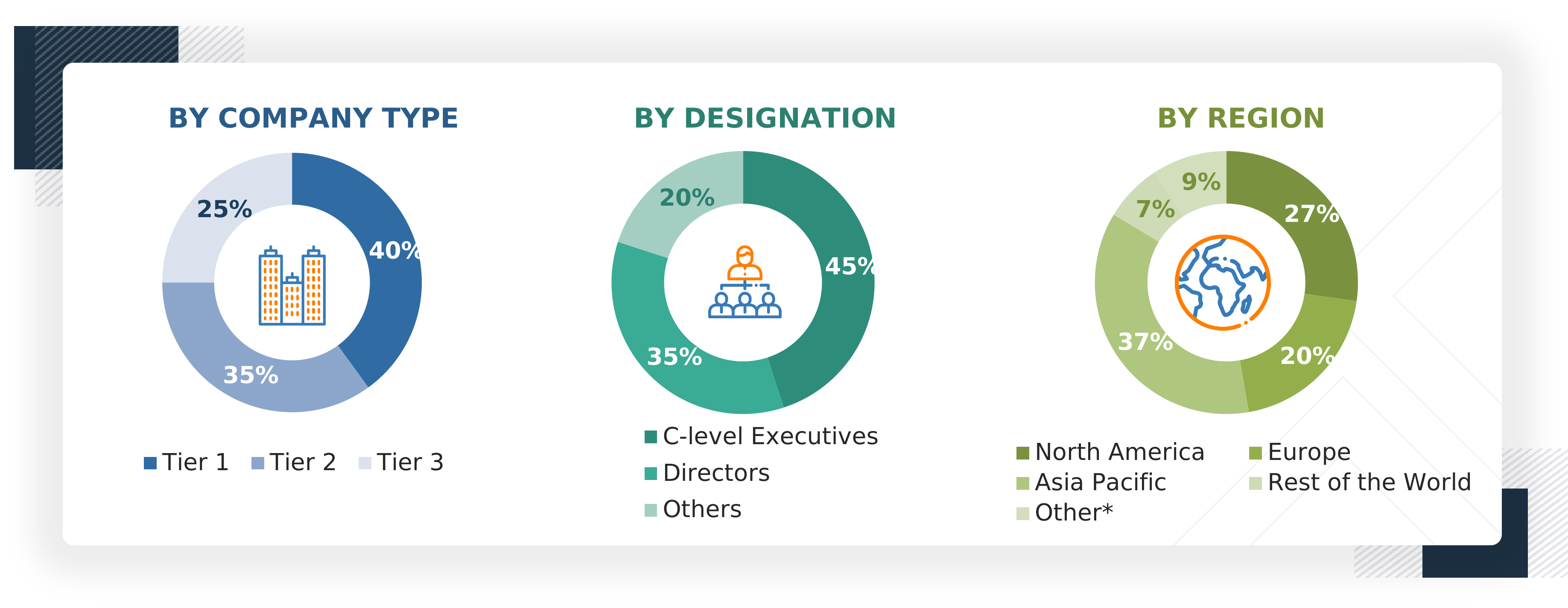
Note: Companies are categorized based on their total revenue as of 2024: Tier 1 includes companies with USD 500 million or more, Tier 2 covers revenue between USD 100 million and USD 500 million, and Tier 3 consists of companies with USD 100 million or less. Other titles include sales and marketing executives, researchers, and members of various ultra-wideband organizations.
To know about the assumptions considered for the study, download the pdf brochure
Market Size Estimation
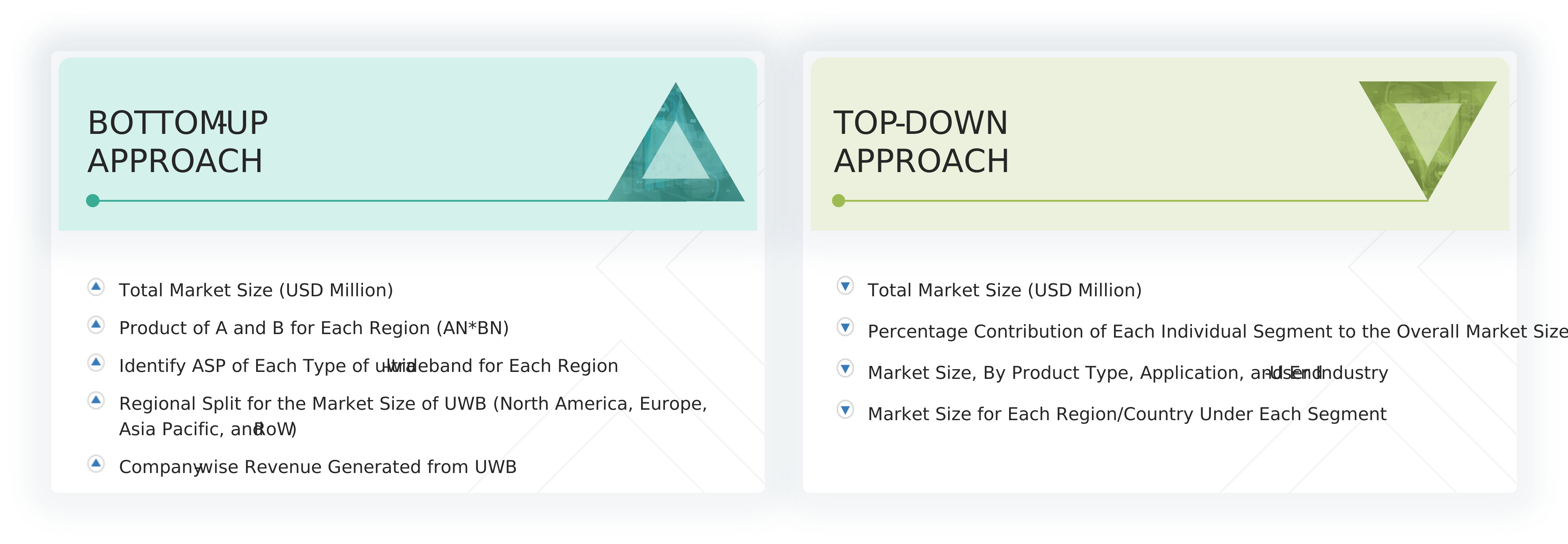
This report uses top-down and bottom-up methods to estimate and verify the size of the ultra-wideband market and its related submarkets. It identifies key market players through secondary research and determines their market shares in different regions through primary and secondary research.
This entire research methodology involved analyzing annual and financial reports of leading companies, along with conducting interviews with experts such as CEOs, VPs, directors, and marketing executives to gather key insights (both quantitative and qualitative). All percentage shares, splits, and breakdowns were determined using secondary sources and verified through primary sources. All relevant parameters affecting the market covered in this study were thoroughly examined, verified through primary research, and analyzed to produce final quantitative and qualitative data. This data was consolidated and supplemented with detailed inputs and analysis from MarketsandMarkets and presented in this report. The figures below illustrate the overall market size estimation process used in this study.
Bottom-up Approach
- Identifying verticals that are either using or will use UWB
- Tracking leading companies and system integrators operating across various industries
- Conducting multiple discussions with key opinion leaders to understand the demand for RTLS and analyzing the breakup of the scope of work carried out by each major company
- Carrying out the market trend analysis to obtain the CAGR of the UWB market by understanding the product penetration rate in each vertical and analyzing the demand and supply of UWB in different verticals
- Assigning a percentage to the overall revenue or, in a few cases, to segmental revenues of each company to derive their revenues from the sales of UWB (This percentage for each company has been decided based on their product portfolios.)
- Verifying and cross-checking estimates at every level through discussions with key opinion leaders, including CXOs, directors, and operations managers, and with domain experts at MarketsandMarkets
- Studying various paid and unpaid information sources, such as annual reports, press releases, white papers, and databases
Top-Down Approach
- Focusing initially on the top-line investments and expenditures being made in the ecosystem of the ultra-wideband market
- Building and developing the information related to the revenue generated by selling various ultra-wideband products, services, and software
- Conducting multiple on-field discussions with key opinion leaders across major companies involved in manufacturing products
- Estimating geographic splits using secondary sources, based on factors such as the number of players in a specific country and region, operational types, level of services offered, and types of software implemented
Ultra-wideband (UWB) Market: Top-Down and Bottom-Up Approach
Data Triangulation
After estimating the overall size of the ultra-wideband market as explained above, the market was divided into several segments and subsegments. Data triangulation and market breakdown methods were used (where applicable) to complete the entire market engineering process and determine precise statistics for all segments and subsegments. The data was triangulated by examining various factors and trends from both demand and supply perspectives. The size of the ultra-wideband market was validated through top-down and bottom-up approaches.
Market Definition
The UWB market is emerging as one of the fastest-growing segments in the wireless communication ecosystem. Its ability to provide high-precision location tracking, secure short-range communication, and low-power data transmission drives it. UWB operates across a broad frequency range, typically between 3.1 and 10.6 GHz, allowing centimeter-level accuracy in positioning applications while reducing interference with existing wireless technologies like Wi-Fi and Bluetooth. With advancements in 5G, edge computing, and AI-based analytics, UWB is expected to become a key enabler of Industry 4.0, autonomous mobility, and secure smart environments, offering scalability and interoperability across various industries.
Key Stakeholders
- Raw material and manufacturing equipment suppliers
- Electronic design automation (EDA) and design tool vendors
- Component manufacturers
- Original equipment manufacturers (OEMs)
- Integrated device manufacturers (IDMs)
- Original design manufacturers (ODMs)
- ODM and OEM technology solution providers
- Assembly, testing, and packaging vendors
- Technology, service, and solution providers
- Intellectual property (IP) core and licensing providers
- Suppliers and distributors
- Market research and consulting firms
Report Objectives
- To define, describe, and forecast the ultra-wideband market, by application, range, positioning system, vertical, and region, in terms of value and volume
-
To forecast the sizes of various segments with respect to four major regions—
North America, Europe, Asia Pacific, and Rest of the World (RoW) - To provide a detailed analysis of the ultra-wideband supply chain
- To strategically analyze the micromarkets1 with respect to individual growth trends and prospects and their contributions to the total market
- To analyze competitive developments, such as expansions, agreements, partnerships, acquisitions, product developments, and research & development (R&D), in the UWB market
- To analyze the opportunities for market players and provide details of the competitive landscape of the market.
- To benchmark the market players using the proprietary company evaluation matrix framework, which analyzes the market players on various parameters within the broad categories of business strategy excellence and strength of product portfolios
- To strategically profile the key players and comprehensively analyze their market positions in terms of ranking and core competencies2, along with a detailed competitive landscape of the market
- To analyze the supply chain, market/ecosystem map, trend/disruptions impacting customer business, technology analysis, Porter’s five force analysis, trade analysis, patent analysis, key conferences & events, and regulations related to the ultra-wideband market
Available Customizations
With the market data given, MarketsandMarkets offers customizations according to the company’s needs. The following customization options are available for the report:
Company Information
- Detailed analysis and profiling of additional market players (up to 7)
Get the Full Ultra-Wideband Market Report
Full forecast, segment splits, and company analysis for all Ultra-Wideband Market.
- US Ultra-Wideband Market
- Canada Ultra-Wideband Market
- Mexico Ultra-Wideband Market
- Germany Ultra-Wideband Market
- UK Ultra-Wideband Market
- France Ultra-Wideband Market
- Italy Ultra-Wideband Market
- China Ultra-Wideband Market
- Japan Ultra-Wideband Market
- India Ultra-Wideband Market
- South Korea Ultra-Wideband Market
- Rest Of Asia Pacific Ultra-Wideband Market
- UAE Ultra-Wideband Market
- Rest Of GCC Countries Ultra-Wideband Market
Need a Tailored Report?
Customize this report to your needs
Get 10% FREE Customization
Customize This Report
