Wi-Fi Chipset Market Size, Share & Trends, 2030

Wi-Fi Chipset Market Size, Share & Trends by IEEE Standard (802.11be, 802.11ax, 802.11ac), Band (Single & Dual Band, Triband), MIMO Configuration (SU-MIMO, MU-MIMO), End-use Application (Consumer, Smart Home, AR/VR, Networking Devices) and Vertical - Global Forecast to 2030




WI-FI CHIPSET MARKET SIZE, SHARE & TRENDS
According to Marketsandmarkets, the global Wi-Fi chipset market size was valued at $22.50 billion in 2025 and is projected to reach $29.86 billion by 2030, growing at a CAGR of 5.8% from 2025 to 2030. The increasing use of Wi-Fi in enterprises and business sectors is a major driver for the Wi-Fi chipset market. Organizations are adopting high-speed wireless networks at an increasing rate to enable remote working, cloud applications, IoT devices, and robust communication infrastructure. The move toward hybrid working models, smart offices, and Bring Your Own Device (BYOD) policies has increased demand for high-end Wi-Fi solutions, such as Wi-Fi 6 and 6E and 7 chipsets. Moreover, industries such as retail, healthcare, manufacturing, and logistics use Wi-Fi for real-time analysis, automation, and customer interaction, further propelling chipset usage in enterprise deployments.
MARKET SNAPSHOT TABLE
| REPORT METRIC | DETAILS |
|---|---|
| Market Size Value in 2025 | USD 22.50 Billion |
| Revenue Forecast in 2030 | USD 29.86 Billion |
| Growth Rate | CAGR of 5.8% from 2025 to 2030 |
| Actual Data | 2021–2024 |
| Base Year | 2024 |
| Forecast Period | 2025–2030 |
| Units Considered | Value (USD Billion) and Volume (Million Units) |
| Report Coverage | Revenue Forecast, Company Ranking, Competitive Landscape, Growth Factors, and Trends |
| Top Companies |
|
| Growth Driver |
|
| Segments Covered | By IEEE Standards: 802.11be (Wi-Fi 7), 802.11ax (Wi-Fi 6 and 6E), 802.11ac , 802.11ad , 802.11b/g/n, By Band: Single- & Dual-band, Tri-band, By MIMO Configuration: SU-MIMO, MU-MIMO, By Vertical: Consumer Electronics, Enterprise, Healthcare, Banking, Retail, Automotive, Industrial, Other verticals, By End-user Application: Consumer Devices, Cameras, Smart Home Devices, Gaming Devices, AR/VR Devices, Mobile Robots, Drones, Networking Devices, MPOS, In-vehicle infotainment, Other end-use applications |
| Regional Scope | North America, Europe, Asia Pacific, and RoW |
WHAT IS IN IT FOR YOU: Wi-Fi Chipset Market REPORT CONTENT GUIDE
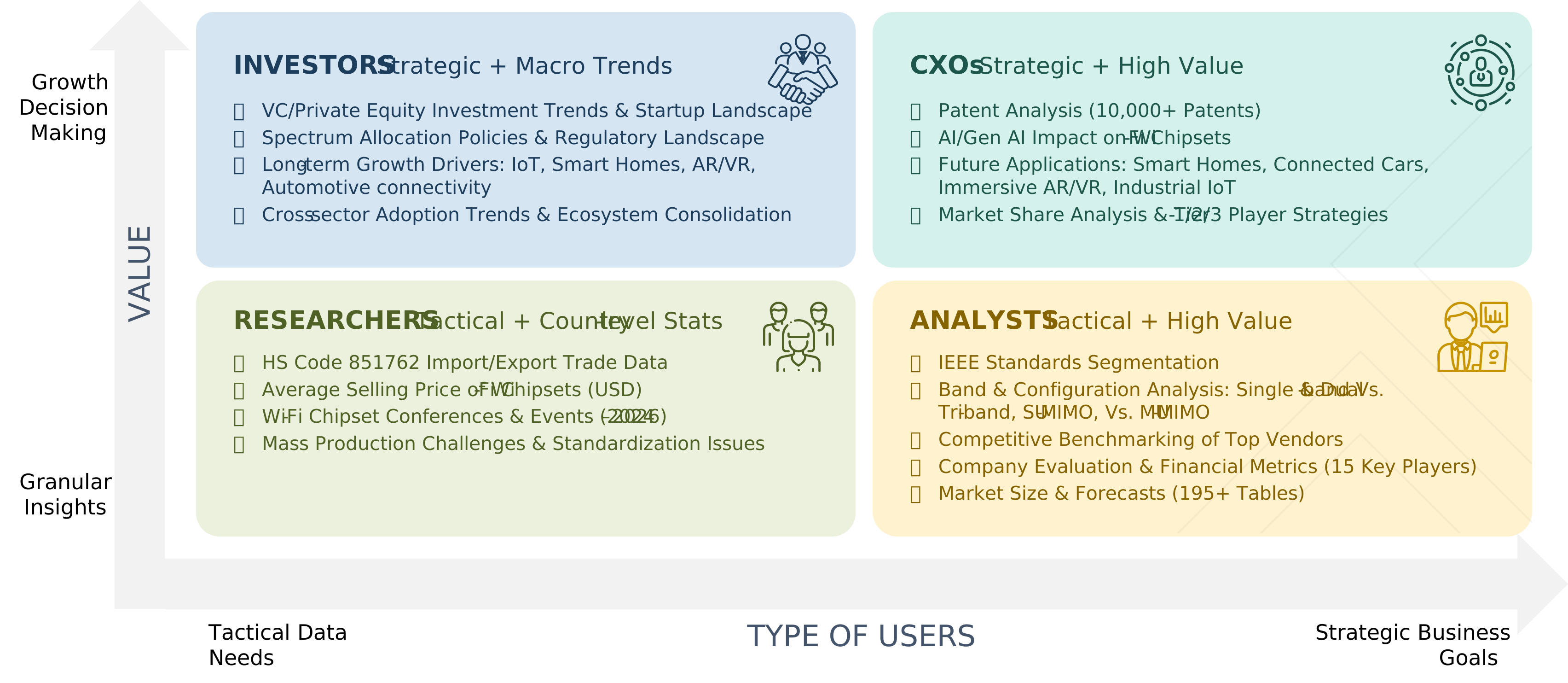
DELIVERED CUSTOMIZATIONS
We have successfully delivered the following deep-dive customizations:
| CLIENT REQUEST | CUSTOMIZATION DELIVERED | VALUE ADDS |
|---|---|---|
| Wi-Fi IC providers along with the package types | Provided detailed table of Wi-Fi IC providers along with the package types used in the wi-fi chipsets | Enabled rapid benchmarking and comparison of Wi-Fi IC suppliers by package type, accelerating sourcing and design decisions |
Market Size & Forecast
• 2025 Market Size: USD 22.50 Billion
• 2030 Projected Market Size: USD 29.86 Billion
• CAGR (2025-2030): 5.8%
• Tri-band Segment: Highest Growth Rate
• Asia Pacific: Fastest-growing Market
KEY TAKEAWAYS
-
BY IEEE STANDARDThe Wi-Fi chipset market, by IEEE standard, comprises IEEE 802.11BE (Wi-Fi 7), IEEE 802.11AX (Wifi 6 and 6E), IEEE 802.11AC, IEEE 802.11AD, IEEE 802.11N with IEEE 802.11BE (Wi-Fi 7) holding the largest share as this standard brings significant advancements over its predecessors by offering theoretical data speeds of up to 46 Gbps, ultra-low latency, multi-link operation (MLO), and 320 MHz bandwidth support, making it ideal for high-bandwidth applications.
-
BY BANDThe Wi-Fi chipset market, based on band, comprises single- , dual, and tri-band chipsets. Tri-band is expected to witness the highest growth rate, driven by the increasing need for higher bandwidth and reduced network congestion in high-density environments.
-
BY MIMO CONFIGURATIONThe Wi-Fi chipset market, based on MIMO configuration, is classified into SU-MIMO and MU-MIMO. The MU-MIMO segment holds a larger market share due to its capability to serve multiple devices simultaneously, enhancing network efficiency and user experience.
-
BY VERTICALThe Wi-Fi chipset market, by vertical, is further classifed into consumer electronics, enterprise, healthcare, BFSI, retail, automotive, industrial, other verticals. The consumer electronics vertical is likely to hold the largest market share due to the rising adoption of smart home technologies (smart speakers, security cameras, smart appliances) and the increasing adoption of high-bandwidth applications, such as 4K/8K video streaming, cloud gaming, and AR/VR, further accelerating chipset demand.
-
BY END-USE APPLICATIONThe Wi-Fi chipset market, based on end-use applications is further segmented into consumer devices, cameras, smart home devices, gaming devices, AR/VR devices, mobile robots, drones, networking devices, mPoS, in-vehicle infotainment, and other end-use applications. With consumer devices holding the largest share due to their high penetration, mass adoption, and frequent upgrade cycles across smartphones, tablets, laptops, and wearables. The sheer volume of shipments, coupled with the integration of advanced Wi-Fi standards (such as Wi-Fi 6 and Wi-Fi 7) to support faster speeds, seamless streaming, online gaming, and cloud connectivity, drives their dominance.
-
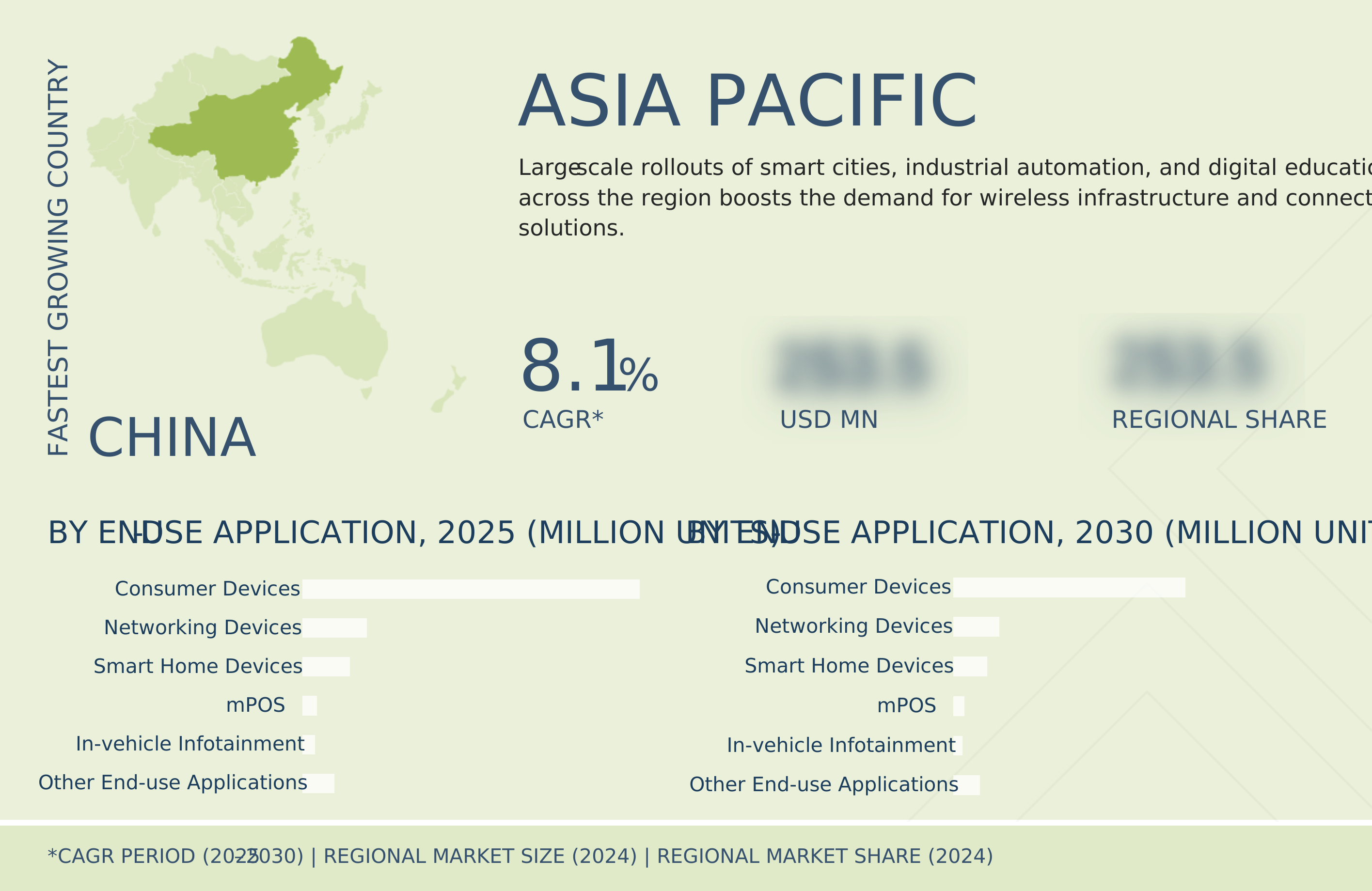
BY REGIONAsia Pacific is expected to be the fastest-growing market at a CAGR of 8.1%, fueled by the rising middle-class population, increasing internet penetration, and expanding e-commerce ecosystems.
-
COMPETITIVE LANDSCAPEMajor market players have adopted organic and inorganic strategies, including partnerships and investments. For instance, Broadcom and Qualcomm Technologies, Inc., have entered into a number of agreements and partnerships to address the growing demand for Wi-Fi chipsets in innovative applications.
The Wi-Fi chipset market share is projected to grow rapidly over the next decade. The rapid growth in connected devices such as smartphones, smart TVs, laptops, wearables, and smart home appliances is significantly driving demand for Wi-Fi chipsets. As consumers and enterprises increasingly adopt IoT solutions and smart ecosystems, reliable and high-speed wireless connectivity becomes essential. This rising need for seamless connectivity is boosting the integration of Wi-Fi chipsets across a wide range of applications.
img class="w-100" loading="lazy" src="https://mnmimg.marketsandmarkets.com/Images/wi-fi-chipset-market1-img-overview.webp" />Source: Secondary Research, Interviews with Experts, MarketsandMarkets Analysis
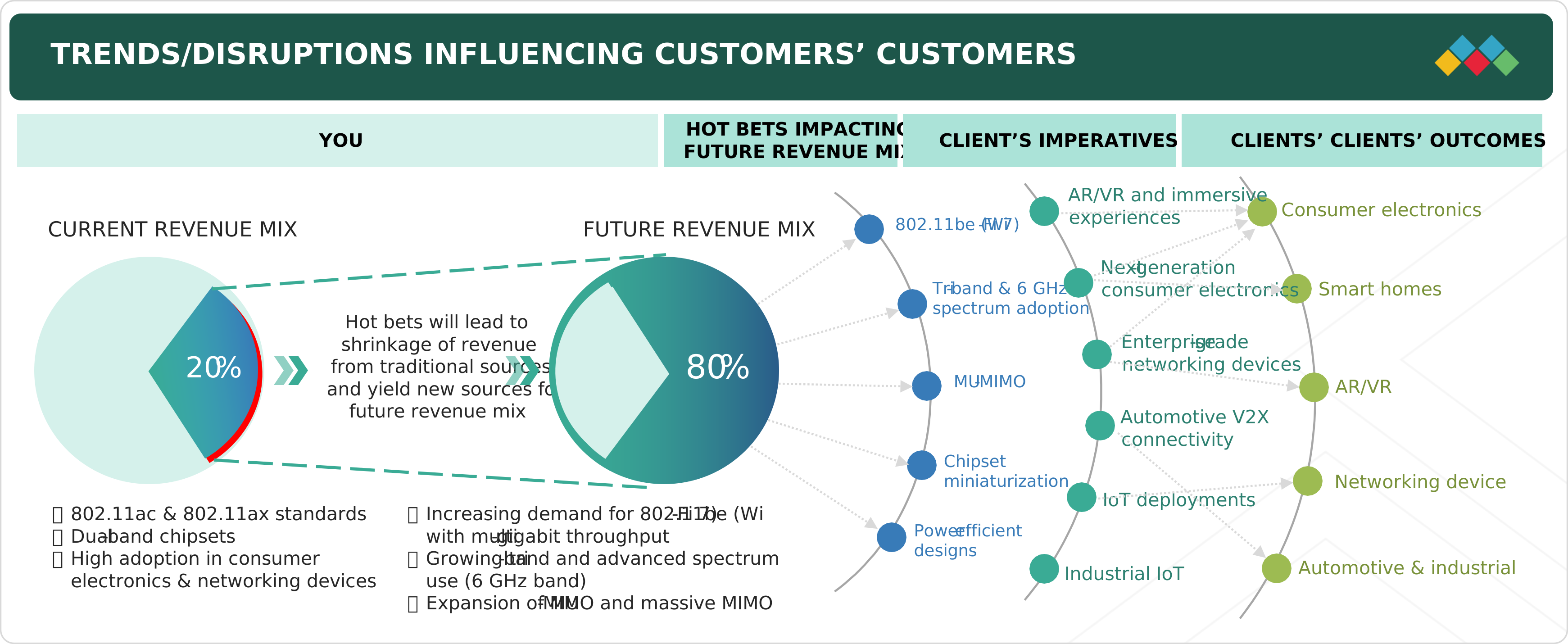
TRENDS & DISRUPTIONS IMPACTING CUSTOMERS' CUSTOMERS
The disruptions and emerging trends affecting customers in the Wi-Fi chipset market trends include an increasing demand for 802.11be (Wi-Fi 7) with multi-gigabit throughput, along with the growing use of tri-band technology and advanced spectrum in the 6 GHz band across various industries and sectors.
Source: Secondary Research, Interviews with Experts, MarketsandMarkets Analysis
MARKET DYNAMICS

Level
-
Rising demand for connected devices with advent of IoT

-
Growing focus on improving business and enterprise customer engagement


Level
-
Regulations and security concerns associated with Wi-Fi technolog

-
High power consumption issue associated with advanced Wi-Fi technologies


Level
-
Significant emphasis on enhancing location capabilities of Wi-Fi chipsets

-
Rising integration of AR and VR technologies into consumer electronics and enterprise solutions


Level
-
Overcrowding of unlicensed wireless frequency spectrums

-
Coexistence issues related to use of 5 GHz Wi-Fi band

Source: Secondary Research, Interviews with Experts, MarketsandMarkets Analysis
Driver: Increasing need for faster data transfer
The Wi-Fi chipset market growth is expanding rapidly, driven by the rising demand for faster data transfer. Growing digital content consumption, cloud computing, and real-time applications across consumer and enterprise sectors have created a strong need for high-speed wireless connectivity. Devices such as smartphones, laptops, smart home networks, and industrial IoT systems now require seamless data exchange to support 4K/8K streaming, AR/VR, video conferencing, and bulk transfers. Next-generation technologies such as Wi-Fi 6, 6E, and 7 address these needs with higher bandwidth, lower latency, and improved performance in dense environments. Enterprises are upgrading networks for real-time collaboration, while smart homes and autonomous vehicles rely on robust, low-latency connections. The rise of edge computing and AI-driven analytics further accelerates this shift, making high-speed data transfer a core driver of next-generation Wi-Fi chipset adoption.
Restraint: Regulations and security concerns associated with Wi-Fi technology
Regulations and security concerns remain a major restraint for the Wi-Fi chipset market. As Wi-Fi is increasingly used in critical sectors such as healthcare, finance, smart homes, and manufacturing, risks such as unauthorized access, data interception, and cyberattacks raise serious concerns. Enterprises are often cautious about adopting advanced Wi-Fi systems without strong security guarantees. Additionally, compliance with strict regulations, such as GDPR in Europe and FCC rules in the US, adds complexity, as manufacturers must meet requirements on frequency use, power limits, and encryption standards. These factors drive higher R&D costs and longer time to market. With cyber threats evolving rapidly, chipsets must also support advanced encryption protocols including WPA3, further complicating design. Such regulatory and security challenges can slow adoption, especially in sensitive industries, limiting overall market growth.
Opportunity: Use of Wi-Fi technology in indoor and outdoor location systems
The rising adoption of Wi-Fi technology in indoor and outdoor location-based systems offers a strong growth opportunity for the Wi-Fi chipset market. Unlike GPS, which lacks indoor accuracy, Wi-Fi-based positioning leverages existing networks to enable precise navigation and asset tracking in malls, airports, hospitals, and warehouses. Outdoors, Wi-Fi is being integrated into smart city projects for applications such as crowd management, vehicle tracking, and urban mobility. Embedding Wi-Fi chipsets into access points and devices supports real-time data collection and analytics, boosting efficiency and user engagement. Advancements in Wi-Fi 6 and Wi-Fi 7 enhance scalability, accuracy, and responsiveness of location services. This creates new revenue potential for chipset makers across logistics, healthcare, retail, and transportation, as demand for location-aware applications continues to grow.
Challenge: Overcrowding of unlicensed wireless frequency spectrum
The overcrowding of unlicensed wireless spectrum is a key challenge for the Wi-Fi chipset market players. With most Wi-Fi operating in the 2.4 GHz and 5 GHz bands, the surge in connected devices, from smartphones and wearables to smart home and IoT systems, has led to severe congestion. This results in interference, reduced speeds, higher latency, and weaker performance, especially in dense urban and enterprise settings. Such issues hinder adoption for bandwidth-intensive and latency-sensitive applications such as video conferencing, gaming, and industrial automation. For chipset makers, delivering reliable connectivity in these conditions requires advanced features such as MU-MIMO, beamforming, and dynamic frequency selection. Although Wi-Fi 6E and Wi-Fi 7 open access to the 6 GHz band, global adoption remains uneven due to regulatory delays. This inconsistent spectrum availability limits smooth deployment, forcing vendors to balance performance innovation with regional compliance challenges.
Wi-Fi Chipset Market: COMMERCIAL USE CASES ACROSS INDUSTRIES
| COMPANY | USE CASE DESCRIPTION | BENEFITS |
|---|---|---|
 |
Wi-Fi chipsets for enterprise networking equipment, broadband gateways, and high-performance routers | High throughputlow latency|Enterprise-grade security| Improved coverage for dense environments|Seamless multi-device connectivity |
 |
Advanced Wi-Fi chipsets for smartphones, automotive, XR devices, and next-gen access points | Cutting-edge Wi-Fi 6/6E/7 support |Optimized for AR/VR and gaming |Superior power efficiency |Enhanced mobility|Immersive experiences |
 |
Integrated Wi-Fi solutions for consumer electronics, smart home devices, and mid-range smartphones | Cost-effective design, energy efficiency|Strong integration with SoCs | Enabling affordable connectivity across smart devices |
 |
Wi-Fi chipsets for laptops, PCs, and enterprise platforms with cloud/edge integration | Reliable connectivity for hybrid work |Seamless collaboration|Support for Wi-Fi 6E/7|Robust enterprise-grade performance and security |
 |
Wi-Fi solutions for IoT devices, wearables, and smart home applications | Compact|Low-power chipsets |Affordable design |Srong compatibility|Supporting smart appliances|Home automation|Battery-efficient IoT ecosystems |
Logos and trademarks shown above are the property of their respective owners. Their use here is for informational and illustrative purposes only.
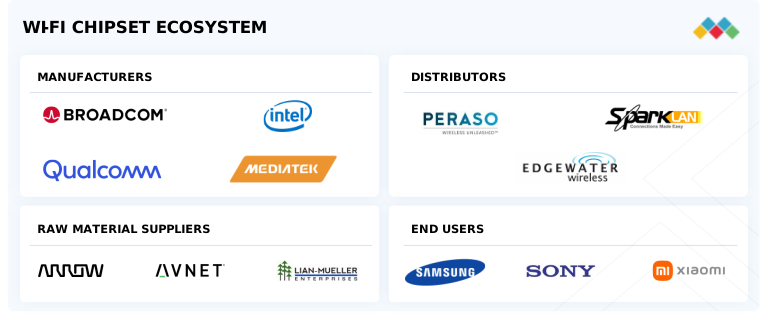
MARKET ECOSYSTEM
The ecosystem covers the entire Wi-Fi chipset industry value chain: chipset manufacturers (Qualcomm, Broadcom, MediaTek, Intel), module integrators (Peraso Technologies Inc., Edgewater Wireless Inc., SparkLAN), major distributors (Arrow, Avnet, Lian-Mueller), and end users (Samsung, Sony, Xiaomi). This interconnected structure demonstrates how core innovation moves through integration and distribution channels to reach end consumers, reflecting a robust and collaborative industry network.
Logos and trademarks shown above are the property of their respective owners. Their use here is for informational and illustrative purposes only.
MARKET SEGMENTS
Source: Secondary Research, Interviews with Experts, MarketsandMarkets Analysis
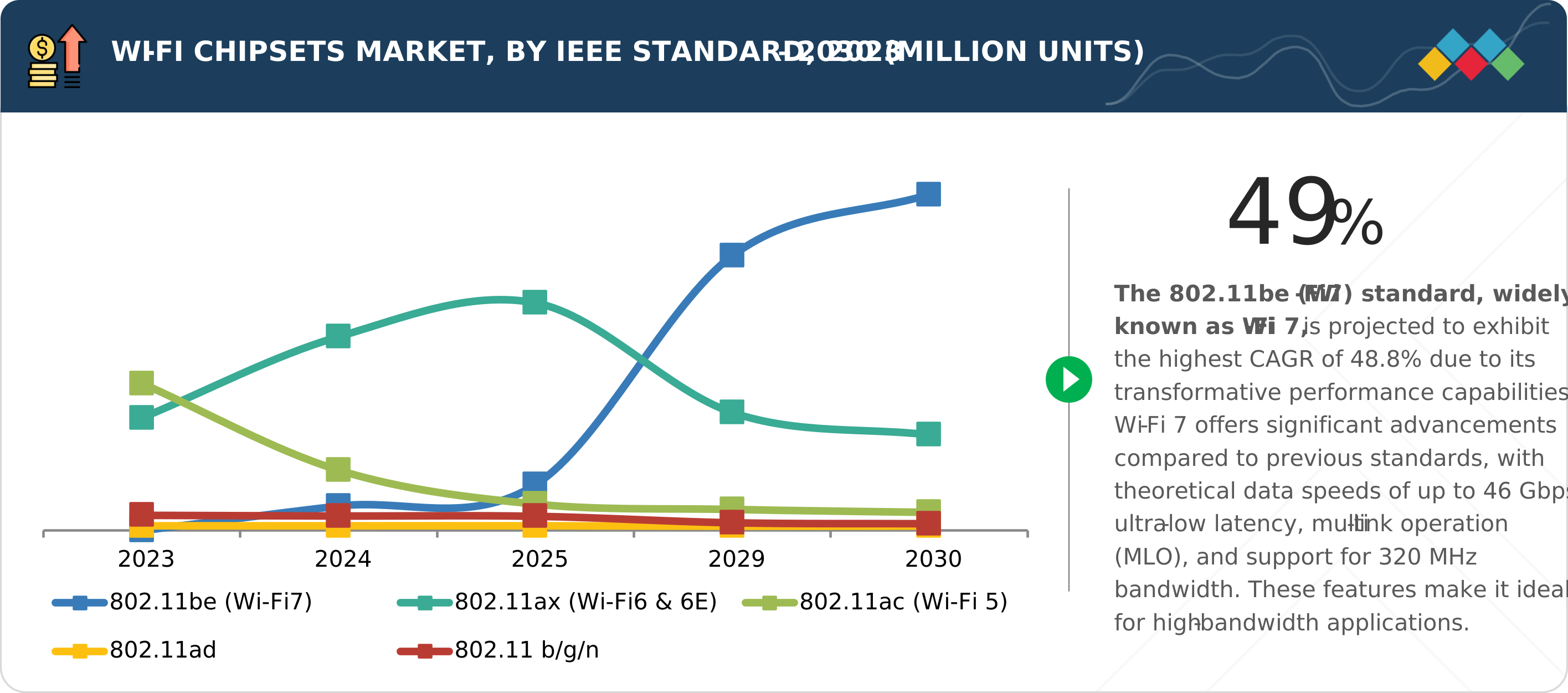
Wi-Fi Chipset Market, By IEEE Standard
The 802.11be standard, widely known as Wi-Fi 7, is projected to witness the highest CAGR in the Wi-Fi chipset market during the forecast period due to its transformative performance capabilities. Wi-Fi 7 brings significant advancements over its predecessors by offering theoretical data speeds of up to 46 Gbps, ultra-low latency, multi-link operation (MLO), and 320 MHz bandwidth support, making it ideal for high-bandwidth applications. These features are increasingly crucial in emerging use cases, such as 8K video streaming, AR/VR, cloud gaming, real-time telemedicine, smart manufacturing, and enterprise-grade connectivity.
Wi-Fi Chipset Market, By Band
Single- & dual-band Wi-Fi chipsets are expected to hold a significant market share in 2030, primarily due to their widespread adoption across a broad spectrum of consumer and industrial applications. Dual-band chipsets, which support 2.4 GHz and 5 GHz frequency bands, strike a balance between cost, performance, and compatibility, making them the preferred choice for smartphones, laptops, smart TVs, tablets, routers, and IoT devices. These chipsets allow enhanced data throughput, reduced interference, and improved user experience, especially in densely populated wireless environments. While tri-band and Wi-Fi 6E/7 chipsets offer superior performance by utilizing the newly available 6 GHz spectrum, their adoption is still in the early phase and concentrated mostly on high-end routers and enterprise-grade equipment.
Wi-Fi Chipset Market, By MIMO Configuration
The MU-MIMO configuration segment is projected to hold the largest market share by 2030 due to its capability to serve multiple devices simultaneously, enhancing network efficiency and user experience. It is increasingly adopted in enterprise networks, smart homes, and public hotspots to manage high data traffic. Its compatibility with advanced Wi-Fi standards such as Wi-Fi 6 and 7 further drives its demand.
Wi-Fi Chipset Market, By Vertical
Based on vertical, the consumer electronics segment is expected to hold a significant market share in the Wi-Fi chipset market by 2030, driven by the widespread adoption of smartphones, tablets, laptops, smart TVs, and smart home devices. The increasing demand for high-speed internet, seamless streaming, and IoT connectivity in households fuels the integration of advanced Wi-Fi chipsets in these devices. The rollout of Wi-Fi 6 and Wi-Fi 7 technologies further enhances the user experience with improved speed, latency, and efficiency. Continuous innovations by OEMs and chipset manufacturers are also accelerating the penetration of Wi-Fi-enabled consumer electronics globally.
Wi-Fi Chipset Market, By End-use Application
Based on end-use application, the AR/VR devices segment is expected to witness the highest CAGR during the forecast period, due to the growing demand across gaming, healthcare, retail, and education applications. Increasing adoption of immersive technologies for training simulations, virtual collaboration, and customer engagement is accelerating deployment. Technological advancements such as improved display resolution, lower latency, and enhanced wireless connectivity are further driving market growth. Additionally, rising investments from tech giants and startups are boosting innovation and accessibility. These trends collectively position AR/VR devices as a high-growth segment in the coming years.
REGION
Asia Pacific to be fastest-growing region in global wi-fi chipset market during forecast period
A confluence of technological advancements, an expanding consumer base, and supportive government initiatives drives the Wi-Fi chipset market in Asia Pacific. The region is witnessing rapid growth in smart device adoption, fueled by the rising middle-class population, increasing internet penetration, and expanding e-commerce ecosystems. Countries such as China, India, South Korea, and Japan are experiencing strong demand for connected consumer electronics, including smartphones, smart TVs, tablets, laptops, and IoT-enabled home appliances, all of which rely on Wi-Fi chipsets.
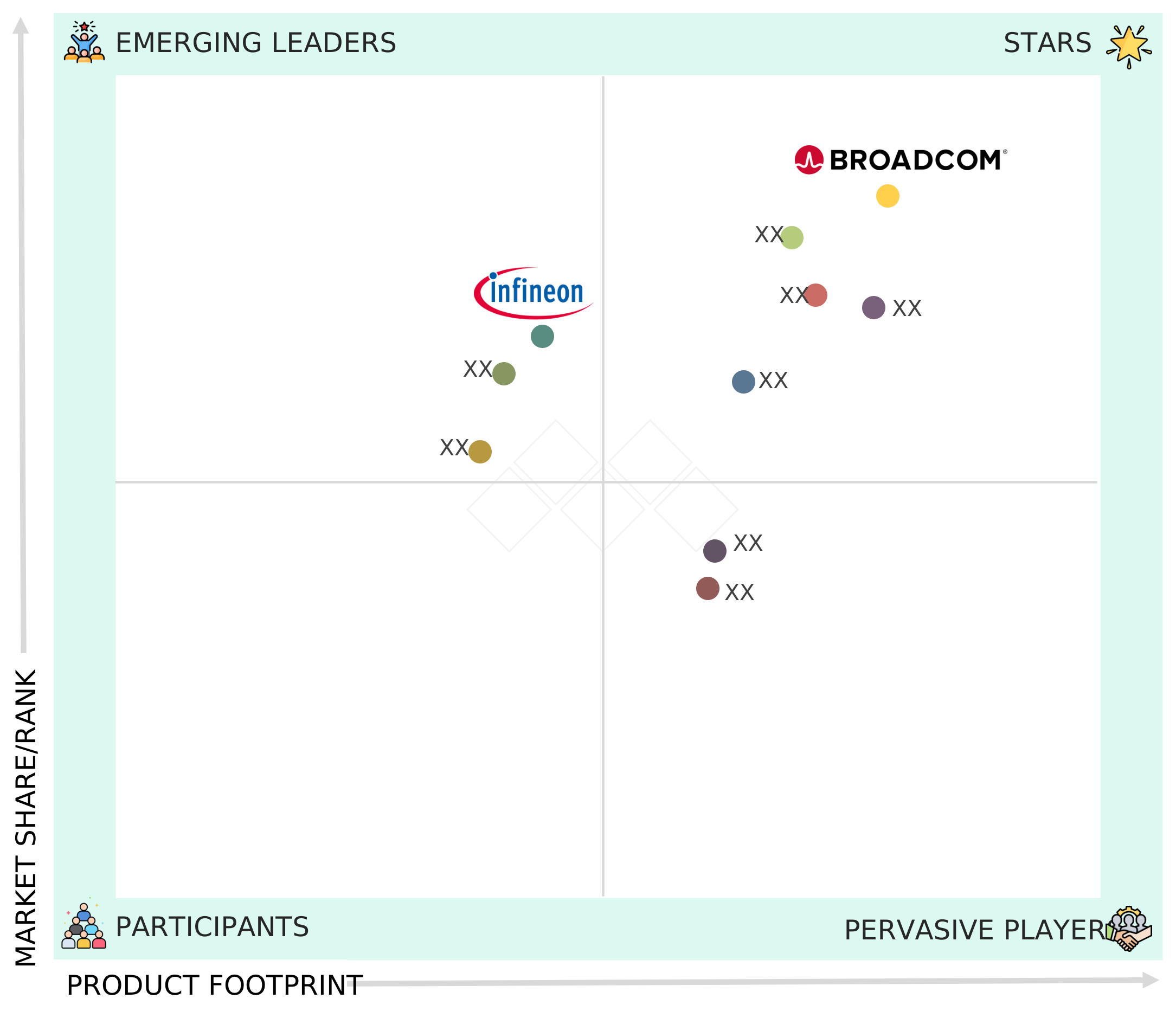
Wi-Fi Chipset Market: COMPANY EVALUATION MATRIX
In the Wi-Fi chipset companies, Broadcom is a leading player with a well-established product portfolio and a strong market presence. Infineon Technologies AG, classified as an emerging leader, is gaining momentum with its focused product offerings and effective growth strategies. While Broadcom benefits from its scale and established customer base, Infineon Technologies AG shows promising growth potential that may allow it to advance toward the leaders' quadrant.
Source: Secondary Research, Interviews with Experts, MarketsandMarkets Analysis
KEY MARKET PLAYERS
RECENT DEVELOPMENTS
- March 2025 : Qualcomm Technologies, Inc. launched the Dragonwing FWA Gen 4 Elite, a 5G Advanced-capable Fixed Wireless Access (FWA) platform. It is powered by the Qualcomm X85 5G Modem-RF and delivers downlink speeds up to 12.5 Gbps. The platform features significant AI enhancements, including an integrated Edge AI coprocessor with up to 40 TOPS of neural processing power, setting a new standard for high-performance 5G broadband.
- March 2025 : Qualcomm Technologies introduced the Qualcomm X85 5G Modem-RF, its eighth-generation 5G modem-to-antenna solution and fourth-generation AI-powered 5G system. The X85 is designed for next-generation connected and AI-driven applications, and it offers faster speeds, better network reliability, extended battery life, and improved location accuracy, enhancing the overall user experience in high-demand environments.
- October 2024 : Realtek Semiconductor Corp. extended its partnership with Promwad to deliver enhanced support for PON, switch, and Wi-Fi device manufacturers. The collaboration offers clients faster access to development tools, technical expertise, and production support, enabling quicker and more efficient deployment of Realtek-based solutions.
- June 2024 : Infineon Technologies AG launched the AIROC CYW5591x Connected MCU product family. These MCUs integrate Wi-Fi 6/6E, Bluetooth Low Energy 5.4, and a secure, versatile microcontroller, enabling cost-efficient, power-saving, and compact solutions for smart home, industrial, wearable, and broader IoT applications.
- November 2023 : MediaTek launched Filogic 860, a dual-band Wi-Fi 7 access point solution combined with an advanced network processor, designed for enterprise APs, service provider gateways, mesh nodes, and IoT/retail routers. It delivers peak connectivity performance and always-on reliability, making it ideal for high-performance infrastructure applications.
Table of Contents
 Exclusive indicates content/data unique to MarketsandMarkets and not available with any competitors.
Methodology
The study involved major activities in estimating the current size of the Wi-Fi chipset market. Exhaustive secondary research was done to collect information on the Wi-Fi chipset. The next step was to validate these findings, assumptions, and sizing with industry experts across the value chain using primary research. Different approaches, such as top-down and bottom-up, were employed to estimate the total market size. After that, the market breakup and data triangulation procedures were used to estimate the market size of the segments and subsegments of the Wi-Fi chipset.
Secondary Research
In the secondary research process, various secondary sources have been used to identify and collect information for this study. The secondary sources referred to for this research study include corporate filings (annual reports, investor presentations, and financial statements); trade, business, and professional associations; white papers, wireless communication-related journals, certified publications, and articles from recognized authors; gold standard and silver standard websites; directories; and databases.
Secondary research has mainly been used to obtain key information about the industry’s value chain, the market’s monetary chain, the total pool of key players, market segmentation according to industry trends to the bottom-most level, geographic markets, and key developments from market- and technology-oriented perspectives. The secondary data was collected and analyzed to determine the overall market size, further validated by primary research.
Primary Research
In the primary research process, various primary sources from both supply and demand sides have been interviewed to obtain qualitative and quantitative information for this report. The primary sources from the supply side include industry experts, such as CEOs, vice presidents, marketing directors, technology and innovation directors, and related key executives, from leading companies and organizations operating in the Wi-Fi technology and other wireless communication markets.
After the complete market engineering (calculations for market statistics, market breakdown, market size estimations, market forecasting, and data triangulation), extensive primary research has been conducted to gather information and verify and validate the numbers obtained. Primary research has also been conducted to identify the segmentation types, industry trends, Porter’s analysis, key players, competitive landscape, and key market dynamics (drivers, restraints, opportunities, challenges, and industry trends) along with the key strategies adopted by the market players.
Extensive primary research has been conducted after acquiring knowledge about the Wi-Fi chipset market scenario through secondary research. Several primary interviews have been conducted with market experts from the demand and supply sides across four major geographical regions—North America, Europe, Asia Pacific, and RoW. RoW comprises the Middle East and Africa. Approximately 40% of the primary interviews have been conducted with the demand side and 60% with the supply side. This primary data has been collected through questionnaires, e-mails, and telephonic interviews.
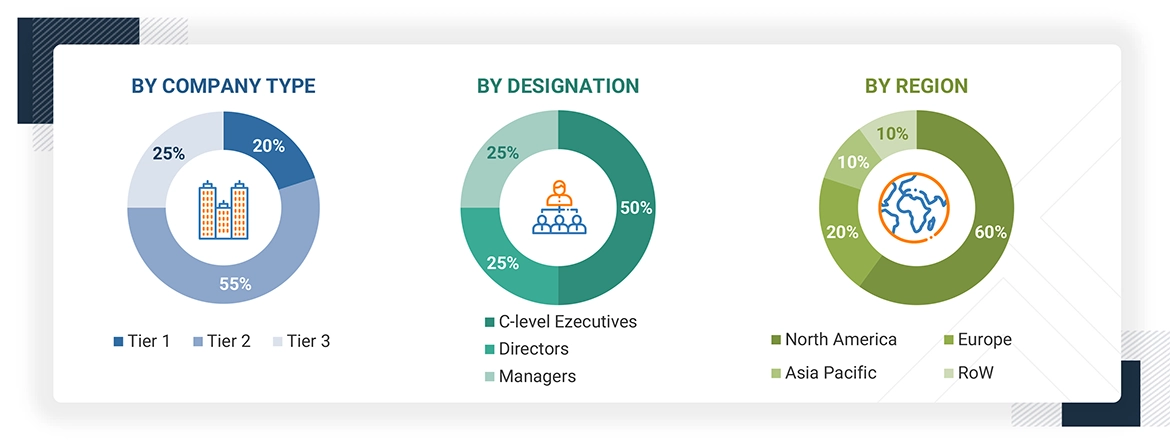
Note: RoW includes the Middle East, Africa, and South America. Other designations include product managers, sales managers, and marketing managers.
The 3 tiers of the companies have been defined based on their total/segmental revenue as of 2024: Tier 1 => USD 1,000 million, Tier 2 = USD 100 million to USD 1,000 million, and Tier 3 = USD 100 million.
To know about the assumptions considered for the study, download the pdf brochure
Market Size Estimation
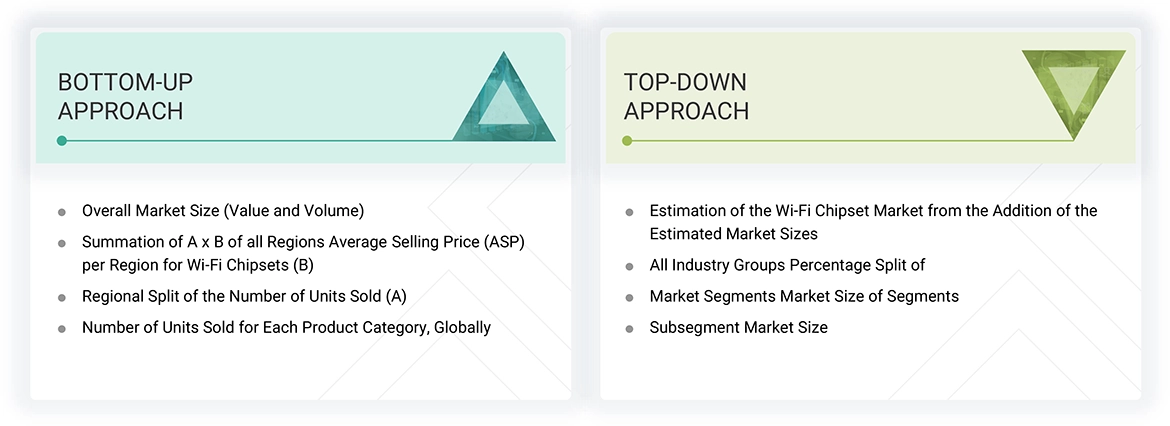
In the complete market engineering process, the top-down and bottom-up approaches and several data triangulation methods have been used to estimate and forecast the size of the market and its segments and subsegments listed in the report. Extensive qualitative and quantitative analyses have been carried out on the complete market engineering process to list the key information/insights pertaining to the Wi-Fi chipset market.
All percentage shares, splits, and breakdowns have been determined using secondary sources and verified through primary sources. All the possible parameters affecting the markets covered in this research study have been accounted for, viewed in detail, verified through primary research, and analyzed to obtain the final quantitative and qualitative data. This data has been consolidated and supplemented with detailed inputs and analysis from MarketsandMarkets and presented in this report.
Top-down and bottom-up approaches have been used to estimate and validate the size of the global market and various other dependent submarkets. Key players involved in manufacturing Wi-Fi chipsets have been identified through secondary research, and their market shares in the respective regions have been determined through primary and secondary research. The research methodology includes the study of the annual and financial reports of the top market players and extensive interviews with industry leaders, such as CEOs, VPs, directors, and marketing executives, for key insights.
All the percentage shares, splits, and breakdowns have been determined using secondary sources and verified through primary sources. All the possible parameters that affect the markets covered in this research study have been accounted for, viewed in detail, verified through primary research, and analyzed to obtain the final quantitative and qualitative data. This data has been consolidated and supplemented with detailed input and analysis from MarketsandMarkets and presented in this report.
Wi-Fi Chipset Market : Top-Down and Bottom-Up Approach
Data Triangulation
After arriving at the overall market size from the market size estimation process explained in the earlier section, the overall Wi-Fi chipset market has been split into several segments. The data triangulation and market breakdown procedures have been employed, wherever applicable, to complete the overall market engineering process and arrive at the exact statistics for all segments and subsegments. The data has been triangulated by studying the various factors and trends from the demand and supply sides. Along with this, the Wi-Fi chipset market has been validated using the top-down and bottom-up approaches.
Market Definition
Wi-Fi chipsets in this report refer to the chipsets that use IEEE 802.11 standards and radio waves between 2.4 GHz and 60 GHz to provide high-speed wireless Internet connectivity and network connections. IEEE 802.11be (Wi-Fi 7), 802.11ax (Wi-Fi 6 & 6E), 802.11ac (Wi-Fi 5), 802.11ad, and 802.11b/g/n standards are considered within the scope of this study. Wi-Fi Alliance-certified Wi-Fi chipsets for security, interoperability, and application-specific protocols (labeled “Wi-Fi CERTIFIED”) are considered for the market size calculation.
The Wi-Fi Chipset Market is segmented based on sensor technology, implementation type, detection range, process stage, application, and region. The market comprises electrochemical, catalytic, metal-oxide-semiconductor (MOS), thermal conductivity, and micro-electromechanical systems (MEMS) by sensor technology. Each sensor type offers unique advantages, such as fast response time, high sensitivity, and cost-efficiency, making them suitable for various industrial requirements. In terms of implementation type, hydrogen detectors are available as fixed and portable systems, with fixed systems deployed in industrial plants and portable units used for field inspections or emergency response. The market is also categorized by detection range, including 0–1,000 ppm, 0–5,000 ppm, 0–20,000 ppm, and beyond 20,000 ppm, based on the safety threshold and detection needs of different environments. The hydrogen lifecycle is addressed across four process stages: generation, storage, transportation, and usage, each requiring real-time leak monitoring and safety assurance. Key application areas include oil & gas, automotive & transportation, chemicals, metals & mining, power & energy, and other sectors such as semiconductors, food & beverage, and medical industries. Each segment demands tailored detection technologies to meet compliance, safety, and operational efficiency standards.
Key Stakeholders
- Raw material and manufacturing equipment suppliers
- Electronic design automation (EDA) and design tool vendors
- Component manufacturers
- Original equipment manufacturers (OEMs)
- Integrated device manufacturers (IDMs)
- Original design manufacturers (ODMs)
- ODM and OEM technology solution providers
- Assembly, testing, and packaging vendors
- Technology, service, and solution providers
- Intellectual property (IP) core and licensing providers
- Suppliers and distributors
- Government and other telecom regulatory bodies
- Technology investors
- Research institutes and organizations
- Wireless communication IC manufacturers
- Semiconductor foundry service providers
- Market research and consulting firms
Report Objectives
- To define, describe, and forecast the Wi-Fi chipset market, by standard, multiple-input multiple-output (MIMO) configuration, band, vertical, and end-use application, in terms of volume, and by end-use application, in terms of value
- To provide detailed information on the major factors that influence the growth of the Wi-Fi chipset market (drivers, restraints, opportunities, and challenges)
- To forecast the market size for various segments with regard to 4 main regions—North America, Europe, Asia Pacific, and RoW, in terms of value and volume
- To provide a detailed overview of the value chain of the market and analyze the impact of Porter’s five forces on the market
- To analyze the opportunities in the market for stakeholders and describe the competitive landscape of the market
- To analyze the opportunities in the market for various stakeholders by identifying the high-growth segments of the market
- To strategically analyze micromarkets1 with respect to individual growth trends, prospects, and contributions to the overall market
- To strategically profile key players and comprehensively analyze their core competencies2
- To analyze competitive developments, such as collaborations, agreements, contracts, partnerships, acquisitions, new product launches, and research & development, in the market
- To analyze the impact of AI/Gen AI and the 2025 US tariff, and the macroeconomic outlook for each region in the Wi-Fi chipset market
Customization Options
With the market data given, MarketsandMarkets offers customizations according to the company’s specific needs. The following customization options are available for the report:
Company Information
- Detailed analysis and profiling of additional market players (up to 7)
Key Questions Addressed by the Report
What is the current size of the Wi-Fi Chipset market?
The global Wi-Fi Chipset market is estimated at USD 22.50 billion in 2025 and is projected to reach USD 29.86 billion by 2030. (MarketsandMarkets)
What is the expected CAGR of the Wi-Fi Chipset market?
The market is expected to grow at a CAGR of 5.8% during 2025–2030. (MarketsandMarkets)
What are the key growth drivers of the Wi-Fi Chipset market?
Major growth drivers include rising demand for high-speed wireless connectivity, increasing adoption of smart devices and IoT, enterprise Wi-Fi upgrades, cloud computing, and Wi-Fi 6/6E/7 deployment. (MarketsandMarkets)
Which IEEE standard segment dominates the market?
The 802.11ax (Wi-Fi 6 & Wi-Fi 6E) segment is expected to hold the largest market share in 2025 due to its higher speed, lower latency, and improved network efficiency. (MarketsandMarkets)
Which end-use application is expected to grow the fastest?
AR/VR devices are projected to register the highest CAGR during the forecast period, driven by increasing demand in gaming, healthcare, retail, and education. (MarketsandMarkets)
Which region is expected to lead the Wi-Fi Chipset market?
Asia Pacific is projected to be the fastest-growing regional market, supported by strong electronics manufacturing, smartphone adoption, and government digital initiatives. (MarketsandMarkets)
Who are the leading companies in the Wi-Fi Chipset market?
Key companies include Broadcom, Qualcomm Technologies, MediaTek, Intel Corporation, and Realtek Semiconductor Corp. (MarketsandMarkets)
What are the latest trends in the Wi-Fi Chipset market?
Major trends include Wi-Fi 7 adoption, Edge AI integration, MU-MIMO technology, tri-band chipsets, and increasing deployment in smart homes and enterprise networks. (MarketsandMarkets)
What industries are driving demand for Wi-Fi chipsets?
Demand is growing across consumer electronics, enterprise networking, healthcare, automotive, industrial IoT, retail, banking, and smart home applications. (MarketsandMarkets)
What does the MarketsandMarkets Wi-Fi Chipset report include?
The report contains 253 pages and 197 market tables, with detailed market forecasts to 2030, competitive landscape, segmentation by IEEE standard, band, MIMO configuration, application, vertical, and regional analysis. (MarketsandMarkets)


Personalize This Research
- Triangulate with your Own Data
- Get Data as per your Format and Definition
- Gain a Deeper Dive on a Specific Application, Geography, Customer or Competitor
- Any level of Personalization
Let Us Help You
- What are the Known and Unknown Adjacencies Impacting the Wi-Fi Chipset Market
- What will your New Revenue Sources be?
- Who will be your Top Customer; what will make them switch?
- Defend your Market Share or Win Competitors
- Get a Scorecard for Target Partners

Custom Market Research Services
We Will Customise The Research For You, In Case The Report Listed Above Does Not Meet With Your Requirements
Get 10% Free CustomisationTESTIMONIALS

Tetsuya Ohhira
Business Development Manager-Technology Business
Nikon Corporation,
Leading Japanese MNC specializing in optics and imaging productswww.nikon.com
MarketsandMarkets™ response
is quick. Their attitude is flexible and positive. Analyst Insights are globally considered and
significant. Client Services quickly respond to our inquiry and demand. Their wide range of global
surveys help us make our strategic plan.
We hope Knowledge Store will be easier to search
for a report.
VP - Marketing & Business Development
Leading Provider of Process Control Solutions
We engaged with MarketsandMarkets on a study to perform an analysis and recommend a Go-To-Market strategy for metrology and process control in the semiconductor market. The study was tailored to our targets and needs with well-defined milestones. Our overall experience with the MarketsandMarkets team was very good throughout the project in all aspects including the analysis methodologies used, the quality and depth of primary and secondary data sets, the professionalism and flexibility of the team and the ability to meet the target schedule and milestones. We want to thank MarketsandMarkets team for a job well done.
- China Wi-Fi Chipset Market
- Japan Wi-Fi Chipset Market
- South Korea Wi-Fi Chipset Market
- Rest Of Asia Pacific Wi-Fi Chipset Market
- GCC Wi-Fi Chipset Market
- US Wi-Fi Chipset Market
- Canada Wi-Fi Chipset Market
- Mexico Wi-Fi Chipset Market
- UK Wi-Fi Chipset Market
- Germany Wi-Fi Chipset Market
- France Wi-Fi Chipset Market
- Italy Wi-Fi Chipset Market
- Rest Of Europe Wi-Fi Chipset Market






Growth opportunities and latent adjacency in Wi-Fi Chipset Market