
US Wi-Fi as a Service Market (2025-2030)

The US Wi-Fi as a Service Market was valued at $2880.2 Million in 2025 and projected to reach to $5957.8 Million by 2030, representing a compound annual growth rate of 15.6%. The US Wi-Fi as a Service market is poised for sustained expansion as organizations prioritize flexible, scalable connectivity solutions over traditional capital-intensive infrastructure.


| Market Size in | USD 26.32 MN |
| Market Forecast in | |
| CAGR | |
| Forecast Period | |
| Units Considered | Value (USD MN) |
US Wi-Fi as a Service Market Trends and Insights
- This expansion reflects the US market's increasing adoption of managed Wi-Fi solutions across enterprises, hospitality, and retail sectors.
- The US is driving innovation in cloud-based connectivity and network management, positioning itself as a key growth engine within North America's broader digital infrastructure transformation..
Key Market Statistics
- CAGR (2025-2030) 15.6% CAGR
- Market Size, 2025 ~USD 2880.2 Million
- Forecast, 2030 ~USD 5957.8 Million
- Country US
US Wi-Fi as a Service Market Overview
Market Valuation Growth :
The US Wi-Fi as a Service market is valued at $2,880.2 million in 2025, with a projected CAGR of 15.6% through 2030, reaching $5,957.8 million. This growth trajectory demonstrates strong market momentum driven by digital transformation initiatives across American enterprises.
Enterprise Adoption Leadership :
US enterprises are rapidly adopting managed Wi-Fi solutions to reduce capital expenditure and operational complexity. Cloud-based connectivity platforms are becoming standard infrastructure for organizations seeking scalable, secure network management without on-premises hardware investments.
Vertical Market Expansion :
Hospitality, retail, and healthcare sectors in the US are driving significant demand for Wi-Fi as a Service solutions. These verticals prioritize guest experience, operational efficiency, and network security, making managed Wi-Fi services increasingly critical to their business models.
Innovation in Network Management :
The US market is at the forefront of cloud-based connectivity innovation, with vendors developing AI-driven network optimization, advanced analytics, and integrated security features. This technological leadership positions American providers as global innovators in managed Wi-Fi solutions.
US Wi-Fi as a Service Market Dynamics
- The shift toward hybrid work environments and digital-first business models continues to accelerate adoption across mid-market and enterprise segments.
- Cloud-based network management platforms are becoming essential for organizations seeking cost efficiency and operational agility. Looking ahead, the US market will be shaped by increasing demand for integrated security features, AI-powered network intelligence, and seamless multi-location management capabilities.
- Service providers offering comprehensive solutions with superior customer support and transparent pricing models are expected to capture significant market share.
- The convergence of Wi-Fi 6E technology adoption and growing cybersecurity concerns will further drive investment in managed Wi-Fi services through 2030..
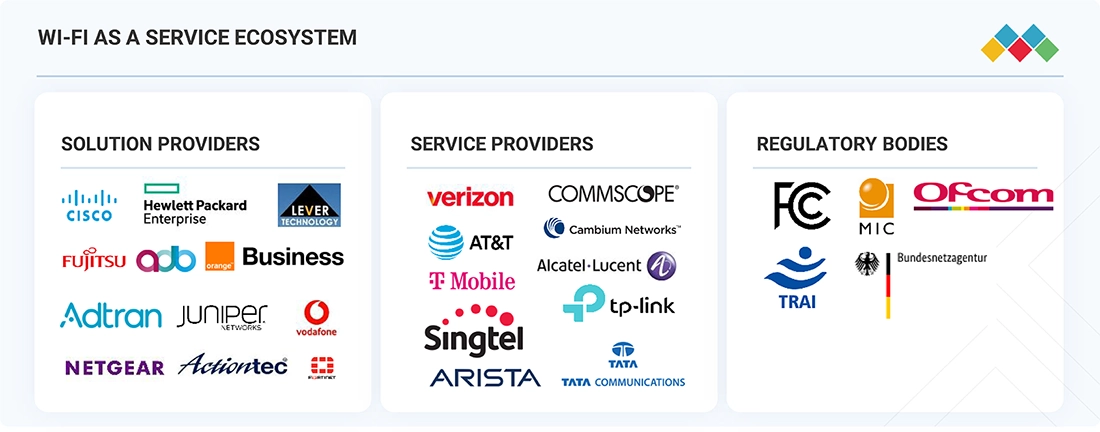
Market Ecosystem
wi-fi-as-a-service-market: COMMERCIAL USE CASES ACROSS INDUSTRIES
| COMPANY | USE CASE DESCRIPTION | BENEFITS |
|---|---|---|
 |
Radford College is an independent co-educational school based in Canberra that has deployed Extreme Wi-Fi 6 managed by ExtremeCloud IQ to enable a digital learning environment. It supports teachers and students for e-learning by offering a secure, strong, flexible modular infrastructure. | Offered flexible, secure, consistent network connection to ensure internet connectivity all over the campus. Improved real-time device visibility helps diagnose problems and errors rapidly and resolve issues quickly. Offered Wi-Fi services at a large-scale to support thousands of users and devices. |
 |
Ohso Technical is a service provider based in London. The company has adopted Wi-Fi services offered by Ubiquiti to improve operation in the commercial environment. Ubiquiti has enhanced the network efficiency and provides 5GHz wireless coverage throughout the campus. | Wireless connectivity issue has been resolved. Staff members received fewer complaints after deployment. The company offered services to their clients at a low cost and with less disruption to their business operations. |
 |
Anord Mardix has adopted Wi-Fi services offered by Redway Networks to improve production efficiency at its three production facilities in the UK. This new service has increased the network for its employees and provided seamless connectivity throughout the campus. The company has deployed new Wi-Fi with Redway Networks to support internet connectivity in 10,100 sq./ft production area in Blackburn and 140,000 sq./ft of fabrication and production areas across two sites in Kendal. | Anord Mardix is now working on robust Wi-Fi services that enhance the workforce's work efficiency. Enabled remote testing through Wi-Fi in high-quality HD video. Quick error detection and troubleshooting remotely have saved time. |
 |
East Bernard is an independent educational school based in n East Bernard, Texas. The school has deployed a high-performance Wi-Fi foundation to enable classroom technology. It also supports BYOD policy and offers seamless internet connectivity to BYOD devices such as tablets given by districts. The school serves approximately 1,000 students and 130 employees. They need internet connectivity in 8 buildings with up to 300 devices connected to Wi-Fi. | ADTRAN enabled BYOD policy in the East Bernard Independent School and provides extensive Wi-Fi connectivity. Increased network flexibility and reduced load on the IT department by offering wireless network management tools and handling daily internet traffic. ADTRAN has offered cost-effective and cost-controlled Wi-Fi services in districts' budget to schools by eliminating extra hardware needs. |
Logos and trademarks shown above are the property of their respective owners. Their use here is for informational and illustrative purposes only.
Related Ecosystem
Data Centre And Networking
- Software-Defined Networking (SDN)
- Mid-Sized Data Centers
- Small Data Centers
- Remote Monitoring
- Smart Healthcare
- Cisco Systems, Inc.
- HUAWEI TECHNOLOGIES CO LTD
- Hewlett Packard Enterprise Company
- MITSUBISHI ELECTRIC INFORMATION SYSTEMS CORPORATION
- MITSUBISHI ELECTRIC INFORMATION NETWORK CORPORATION
Key Takeaways
- The US Wi-Fi as a Service market will more than double from $2,880.2M (2025) to $5,957.8M (2030), growing at a 15.6% CAGR.
- The US market is outpacing global growth trends, with enterprises in the US increasingly shifting from capital-intensive infrastructure to subscription-based Wi-Fi models.
- The US dominates North America's WaaS adoption, driven by demand for seamless connectivity in corporate offices, airports, and hospitality venues.
- The US market benefits from advanced cybersecurity integration and AI-powered network optimization capabilities embedded in managed Wi-Fi platforms.
Wi-Fi as a Service Market Report Scope
| Report Metric | Details |
|---|---|
| Base Year | 2025 |
| Fastest Growing Segment | WI-FI 7 (Technology) |
| Forecast Period | 2025-2030 |
| Growth Rate | CAGR of 18.8% from 2025 to 2030 |
| Largest Segment | INDOOR (Deployment) |
| Market Size Base Year (Billions) | ~USD 9.28 (2025) |
| Revenue Forecast (Billions) | ~USD 21.96 (2030) |
| Segments Covered | Service Type, Enterprise Size, End User, Enterprise, Offering, Density, Deployment, Technology, Application, Type, Organization Size, End-User |
US Wi-Fi as a Service Market Report Segmentation
12 segment dimensions are covered across the global market.
By Service Type
- Fully Managed
- Partially Managed
- Subscription-Based
By Enterprise Size
- Large Enterprises
- SME
- Smes
By End User
- Consumer
- Enterprise
By Enterprise
- Bfsi
- Education
- Government & Public Sector
- Healthcare & Life Sciences
- It & Ites
- Manufacturing
- Other Enterprises
- Retail
- Transportation & Logistics
- Travel & Hospitality
By Offering
- Hardware
- Services
- Software
By Density
- High-Density Wi-Fi
- Low-Density Wi-Fi
- Medium-Density Wi-Fi
By Deployment
- Indoor
- Outdoor
By Technology
- Other Technologies
- Wi-Fi 5
- Wi-Fi 6/6E
- Wi-Fi 7
By Application
- Bandwidth On Demand
- Cloud And SaaS Connectivity
- Corporate Enterprises
- Industry 4.0
- Multi-Branch Connectivity
- Network Access Control
- Other Applications
- Public Wi-Fi & Dense Environment
- Residential
- Secure Web Gateway
- Smart Education
- Smart Healthcare
- Smart Hospitality
- Smart Retail
- Smart Transportation
- Ucaas/Video Conferencing
- Virtual Private Network
- Wan Optimization
By Type
- Communication And Collaboration
- Lan And Wlan
- Network Security
- Wan
By Organization Size
- Large Enterprises
- Smes
By End-User
- Bfsi
- Education
- Government
- Healthcare
- Manufacturing
- Media And Entertainment
- Other End-Users
- Retail And Ecommerce
- Software And Technology
US: WI-FI AS A SERVICE MARKET, BY END USER, 2025–2030
| Segment | 2025 | 2026 | 2027 | 2028 | 2029 | 2030 | CAGR (%) |
|---|---|---|---|---|---|---|---|
| CONSUMER | 698.2 | 806.8 | 930.1 | 1069.8 | 1227.6 | 1405.5 | 15 |
| ENTERPRISE | 2182.1 | 2539.5 | 2948.6 | 3415.7 | 3947.7 | 4552.4 | 15.8 |
| TOTAL | 2880.2 | 3346.3 | 3878.7 | 4485.4 | 5175.3 | 5957.8 | 15.6 |
Target Audience
- Enterprise IT Decision Makers : US enterprise CIOs and IT directors need this data to evaluate managed Wi-Fi solutions, justify budget allocations, and understand market trends influencing network infrastructure investments and vendor selection criteria.
- Service Providers & Vendors : Wi-Fi service providers and connectivity solution vendors require US market intelligence to identify growth opportunities, benchmark performance, develop competitive strategies, and optimize pricing models for American customers.
- Hospitality & Retail Operators : US hospitality and retail executives need insights into Wi-Fi as a Service adoption trends, ROI metrics, and best practices to enhance guest experiences, improve operational efficiency, and reduce network management costs.
- Investment & Private Equity Firms : Investors evaluating opportunities in the US connectivity and network services sector require comprehensive market data, growth projections, and competitive dynamics to assess investment potential and portfolio company valuations.
- Technology Consultants & Analysts : Consulting firms and independent analysts advising US clients on digital transformation and network modernization need authoritative market data, forecasts, and trend analysis to support client recommendations and strategic planning.
Reasons to Buy this Report
- Market Size & Growth Validation : Obtain precise US market valuation data ($2,880.2M in 2025) and verified CAGR projections (15.6%) to support investment decisions, business planning, and competitive positioning strategies with confidence.
- Vertical-Specific Insights : Access detailed analysis of Wi-Fi as a Service adoption across US hospitality, retail, and enterprise sectors, enabling targeted go-to-market strategies and customer segmentation for service providers and solution vendors.
- Competitive Landscape Intelligence : Understand the US market dynamics, key growth drivers, and emerging opportunities to benchmark against competitors, identify market gaps, and develop differentiated service offerings that resonate with American buyers.
- Technology Trend Analysis : Gain insights into cloud-based connectivity innovations, network management advancements, and security integration trends shaping the US market, enabling informed product development and feature prioritization decisions.
- Strategic Planning & Forecasting : Leverage 2030 forecast data ($5,957.8M) and growth projections to develop long-term business strategies, allocate resources effectively, and identify expansion opportunities in the high-growth US Wi-Fi services market.
Frequently asked questions
What is the current size of the US Wi-Fi as a Service market?
The US Wi-Fi as a Service market is valued at $2,880.2 million in 2025 and is expected to grow to $5,957.8 million by 2030.
What is the growth rate of the US Wi-Fi as a Service market?
The US market is growing at a compound annual growth rate (CAGR) of 15.6% from 2025 to 2030.
Which sectors are driving Wi-Fi as a Service adoption in the US?
The US market is driven by enterprises, hospitality venues, retail locations, and educational institutions seeking managed, scalable connectivity solutions.
How does the US market compare to global Wi-Fi as a Service growth?
The US market's 15.6% CAGR demonstrates strong regional momentum, contributing significantly to the global market's 18.8% growth rate.
What factors are accelerating Wi-Fi as a Service adoption in the US?
Key drivers include digital transformation initiatives, remote work trends, demand for enhanced cybersecurity, and the shift from CapEx to OpEx models in the US.
RESEARCH METHODOLOGY
This research on the Wi-Fi as a Service market used extensive secondary sources, directories, journals, and databases such as D&B Hoovers, Bloomberg Businessweek, and Factiva to gather information for this technical, market, and commercial study. Primary sources included industry experts from core and related industries, preferred system developers, service providers, resellers, partners, and organizations involved in various segments of the industry’s value chain. In-depth interviews were conducted with key industry participants and subject-matter experts to gather and validate critical qualitative and quantitative data, as well as to evaluate the market’s outlook. These respondents included top industry players, subject-matter experts, C-level executives of major companies, and industry consultants. The primary sources mainly comprised industry specialists from core and related industries, preferred Wi-Fi as a Service providers, third-party service providers, consulting firms, end users, and other commercial organizations. In-depth interviews with these primary respondents helped obtain and confirm essential qualitative and quantitative information and assess growth potential. The following figure illustrates the market research methodology used to develop the Wi-Fi as a Service market report.
Secondary Research
The market size of companies providing Wi-Fi as a Service was calculated using secondary data from both paid and free sources. It was also determined by analyzing the product offerings of leading companies and rating them based on their performance and quality.
In the secondary research process, various sources were used to identify and gather information for this study. Secondary sources included annual reports, press releases, and investor presentations of companies; white papers, journals, and reputable publications; and articles from recognized authors, directories, and databases. Data was also collected from other secondary sources such as journals and related magazines. Wi-Fi as a Service spending by different countries was obtained from the respective sources. Secondary research primarily aimed to gather key information about the industry’s value chain and supply chain to identify key players, market classification, and segmentation based on offerings of major companies; industry trends related to service type, location type, enterprise size, end users, and regions; and significant developments from both market and technology perspectives.
Primary Research
In the primary research process, various primary sources from both the supply and demand sides were interviewed to obtain qualitative and quantitative information for the report. The primary sources from the supply side included industry experts, such as Chief Executive Officers (CEOs), Vice Presidents (VPs), marketing directors, technology and innovation directors, and related key executives from various key companies and organizations providing Wi-Fi as a Service solutions and services. The primary sources from the demand side included end users, such as Chief Information Officers (CIOs), consultants, service professionals, technicians and technologists, and managers at public and investor-owned utilities.
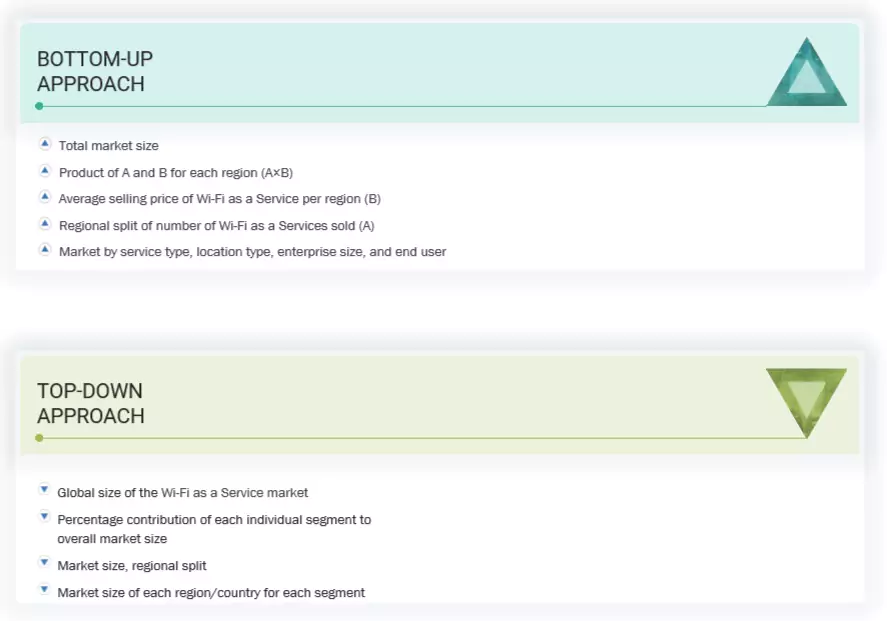
In the market engineering process, both top-down and bottom-up approaches were widely used, along with several data triangulation methods, to estimate and forecast market segments and subsegments listed in the report. Extensive qualitative and quantitative analyses were conducted throughout the entire market engineering process to highlight key information and insights for the report.
After completing comprehensive market analysis, including calculations for market statistics, market breakdown, market size estimations, market forecasting, and data triangulation, extensive primary research was carried out to gather information. This research aimed to identify segmentation, industry trends, key players, the competitive landscape, and crucial market dynamics such as drivers, restraints, opportunities, challenges, industry trends, and key strategies.
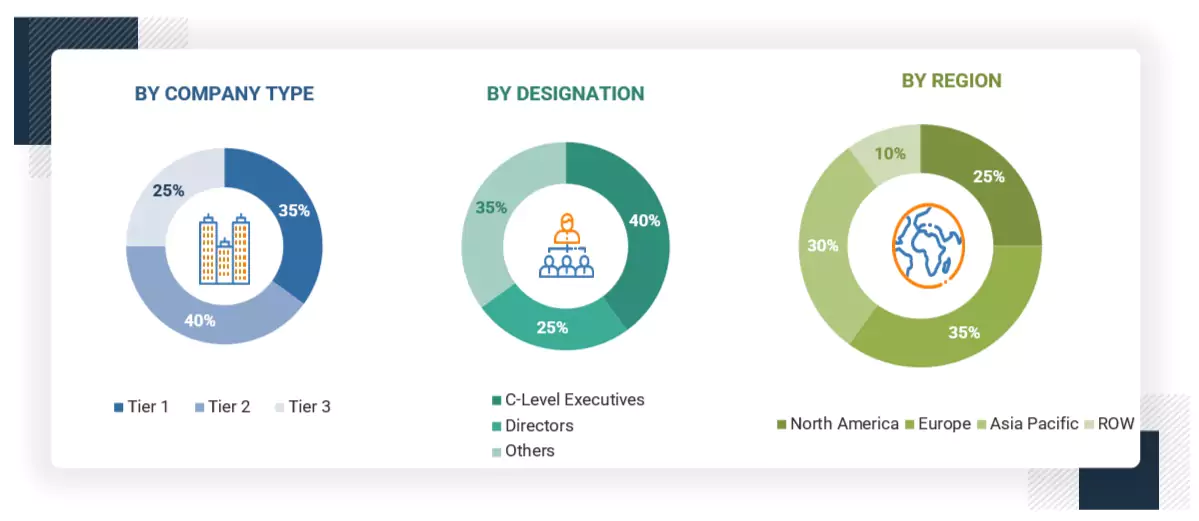
Note 1: Tier 1 companies - Revenue greater than USD 10 billion; Tier 2 companies - Revenue ranges between
USD 1 and 10 billion; and Tier 3 companies - Revenue ranges between USD 500 million and 1 billion
Note 2: Others include sales, marketing, and product managers.
Source: Secondary Literature, Interviews with Experts, and MarketsandMarkets Analysis
To know about the assumptions considered for the study, download the pdf brochure
Market Size Estimation
Multiple methods were used to estimate and forecast the Wi-Fi as a Service market. The first method involved calculating the market size by summing the revenue generated by companies through service sales.
The research methodology used to estimate the market size included the following:
- The revenue contributions of the major market participants in each country were determined using primary and secondary research after they were identified through secondary research.
- Critical insights were obtained through in-depth interviews with industry professionals, including directors, CEOs, VPs, and marketing executives, as well as by reviewing the annual and financial reports of the top firms in the market.
- Primary sources were used to verify all percentage splits and breakups, which were calculated using secondary sources..
Wi-Fi as a Service Market : Top-Down and Bottom-Up Approach
Data Triangulation
Once the overall market size was established, the market was divided into segments and subsegments using the previously described market size estimation methods. When necessary, market breakdown and data triangulation procedures were utilized to complete the market engineering process and determine the precise figures for each market segment and subsegment. The data was triangulated by analyzing various variables and patterns from the supply and demand sides of government entities.
Market Definition
Wi-Fi as a Service (WaaS) is a model where a provider manages and delivers wireless network infrastructure, including hardware, software, maintenance, and support, to businesses or organizations. Instead of buying and maintaining their own Wi-Fi equipment, customers pay a recurring fee for fully managed, partially managed, or subscription-based, scalable, and secure wireless connectivity. WaaS typically involves network setup, monitoring, upgrades, and troubleshooting, often utilizing cloud-based management for flexibility and ease of use. This enables organizations to concentrate on their core operations while outsourcing Wi-Fi management to specialists.
Stakeholders
- WaaS Providers
- Managed Service Providers
- Cloud Platform Providers
- Hardware Vendors
- Software Providers
- System Integrators
- Enterprise End Users
- Vertical-Specific Users
- Regulatory Bodies & Standards Organizations
- End Consumers
- Internet Service Providers
- Network Security Providers
- Real Estate and Infrastructure Owners
- Channel Partners and Distributors
- Technology Consultants and Advisory Firms
Report Objectives
- To define, describe, and forecast the Wi-Fi as a Service market in terms of value
- To provide detailed information regarding drivers, restraints, opportunities, and challenges influencing the growth of the market
- To forecast the market by service type, location type, enterprise size, end user, and region
- To forecast the market size of segments for five main regions: North America, Europe, Asia Pacific, the Middle East & Africa, and Latin America
- To analyze opportunities in the market and provide details of the competitive landscape for stakeholders and market leaders
- To profile the key market players, including top vendors and startups; provide a comparative analysis based on business overviews, regional presence, product offerings, business strategies, and key financials; and provide a detailed competitive landscape of the market
- To analyze competitive developments, such as mergers & acquisitions (M&A), product launches/enhancements, agreements, partnerships, collaborations, expansions, and R&D activities, in the market.
Available Customizations
MarketsandMarkets offers customized options based on the company's specific needs using market data. These include the following:
Product Analysis
- Product matrix – detailed comparison of each company's portfolio
Geographic Analysis as per Feasibility
- Further breakup of Wi-Fi as a Service market
Company Information
- Detailed analysis and profiling of five additional market players
Get the Full Wi-Fi as a Service Market Report
Full forecast, segment splits, and company analysis for all Wi-Fi as a Service Market.
- UK Wi-Fi as a Service Market
- Italy Wi-Fi as a Service Market
- China Wi-Fi as a Service Market
- Brazil Wi-Fi as a Service Market
- Canada Wi-Fi as a Service Market
- France Wi-Fi as a Service Market
- Germany Wi-Fi as a Service Market
- Rest Of Europe Wi-Fi as a Service Market
- India Wi-Fi as a Service Market
- Japan Wi-Fi as a Service Market
- Rest Of Asia Pacific Wi-Fi as a Service Market
- South Korea Wi-Fi as a Service Market
- Mexico Wi-Fi as a Service Market
- Rest Of Latin America Wi-Fi as a Service Market
Need a Tailored Report?
Customize this report to your needs
Get 10% FREE Customization
Customize This Report
