Document AI Market

Document AI Market by Offering (IDP, Document Workflow Automation, Generative AI Document Generation, ECM, and Governance Tools), Use Case (Compliance Reports, Customer Feedback, KYC Document, RFP Responses, Purchase Orders) - Global Forecast to 2031




OVERVIEW
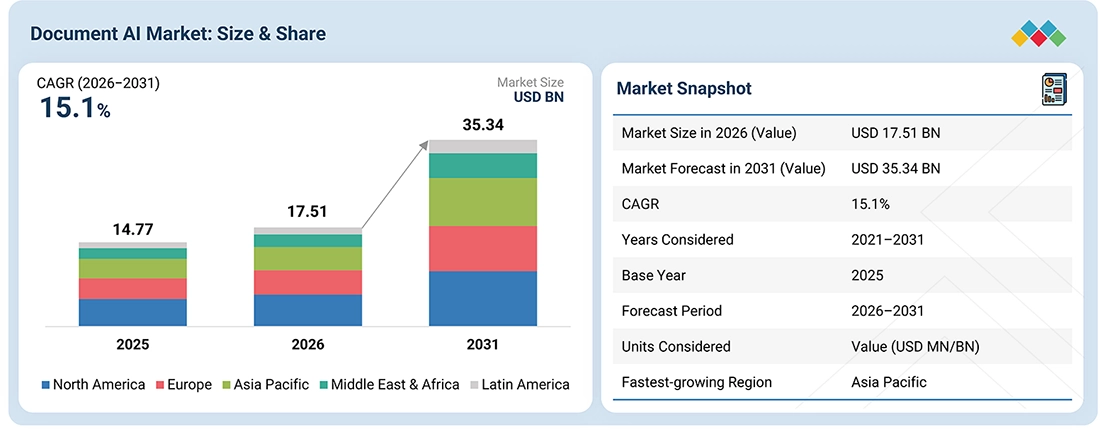
Source: Secondary Research, Interviews with Experts, MarketsandMarkets Analysis
The Document AI market is projected to grow from USD 17.51 billion in 2026 to USD 35.34 billion by 2031, at a CAGR of 15.1% during the forecast period. Market expansion is supported by advances in intelligent automation, language technologies, and specialized AI models. Organizations are moving from basic document extraction toward context-aware processing that interprets meaning, relationships, and intent across complex content. Adoption is also strengthening for domain-adapted models designed for sector-specific workflows in BFSI, healthcare, logistics, and other data-intensive industries. In parallel, rising requirements for multilingual and multi-format processing are encouraging unified document intelligence platforms that improve workflow efficiency, information accessibility, compliance support, and decision-making across increasingly diverse digital document environments.
Market Size and Forecast:
- Market Size in 2025: USD 14.77 Billion
- 2026 Market Size: USD 17.51 Billion
- 2031 Forecasted Market Size: USD 35.34 Billion
- Growth Rate (2026-2031): CAGR of 15.1%
- Forecast period: 2026–2031
- The Marketing & Sales segment is projected to grow at the highest CAGR of 17.2% during the forecast period.
Key Market Trends and Insights
- Future Outlook: Document AI adoption will accelerate as enterprises prioritize AI-driven document intelligence, automation, and semantic understanding of unstructured data.
-
Key Trends: Growing adoption of multimodal AI, RAG-enabled intelligence, cloud platforms, multilingual automation, and vision-language models is transforming complex document processing.
- Key Technologies: Core technologies include OCR+NER fusion, intelligent document processing (IDP), generative AI, large language models (LLMs), and vision-language models such as LayoutLM and Donut.
- Growth Opportunities: Expanding Document AI deployment across onboarding, KYC, contracts, compliance, and knowledge management creates opportunities across BFSI, healthcare, and marketing.
KEY TAKEAWAYS
-
BY REGIONThe Asia Pacific region is estimated to register the highest CAGR of 17.1% during the forecast period.
-
BY OFFERINGBy offering, the solutions segment is estimated to account for the largest market share of 64.2% in 2026.
-
BY DOCUMENT TYPEBy document type, multimodal/mixed-content documents are projected to witness the fastest growth between 2026 and 2031.
-
BY USE CASEBy use case, the marketing and sales segment is expected to grow at the fastest CAGR of 17.2% during the forecast period.
-
BY VERTICALBy vertical, the BFSI segment is expected to witness the fastest growth rate over the forecast period.
-
BY COMPETITIVE LANDSCAPE - KEY PLAYERSThe competitive landscape is characterized by strategic alliances and continuous innovation across increasingly AI-driven document processing environments. Google, Microsoft, SAP, Appian, and IBM continue to expand advanced Document AI capabilities. Their platforms strengthen document classification, data extraction, semantic understanding, workflow automation, content processing, and real-time decision-making capabilities.
-
BY COMPETITIVE LANDSCAPE - STARTUPS/SMESMindee, Anthropic, CheckBox, Docbyte, and DocuAI (Visionet), among others, have differentiated themselves among emerging Document AI providers by developing focused capabilities in intelligent document processing, multimodal understanding, data extraction, document classification, workflow automation, and enterprise knowledge processing, highlighting their growing potential to address specialized document-intensive requirements and strengthen participation across the evolving Document AI market.
The Document AI market is advancing rapidly as organizations adopt human-in-the-loop approaches that combine automated processing with expert review to strengthen accuracy, oversight, and accountability across document-intensive operations. Simultaneously, AI-enabled document intelligence is helping enterprises convert unstructured repositories into searchable knowledge assets, supporting faster information retrieval, analysis, and decision-making. In addition, increasingly capable multimodal models are broadening document understanding by interpreting text, images, layouts, and contextual relationships together. These capabilities improve extraction and classification across complex document types, including invoices, contracts, claims, forms, and reports, while enabling more efficient workflows, stronger governance, and better use of enterprise information.
TRENDS & DISRUPTIONS IMPACTING CUSTOMERS' CUSTOMERS
The Document AI market is shifting from basic OCR and rule-based extraction toward intelligent, multimodal, context-aware document automation. Enterprises increasingly process invoices, contracts, claims, clinical records, applications, regulatory files, and other unstructured content across workflows. Generative AI, vision-language models, and semantic understanding are improving document classification, extraction, interpretation, and validation across complex formats. Agentic automation is extending Document AI from information capture toward workflow execution, case handling, and decision support. BFSI, healthcare, government, retail, manufacturing, logistics, telecommunications, utilities, and education organizations are accelerating adoption. Cloud-based APIs, consumption models, and domain-specific models are expanding deployment flexibility and specialized accuracy. Private, sovereign, and hybrid architectures are strengthening governance for sensitive documents. Organizations increasingly prioritize faster onboarding, improved compliance, shorter processing times, reliable services, and better customer experiences. These disruptions are reshaping technology investments, solution architectures, partnerships, operating models, and Document AI economics.
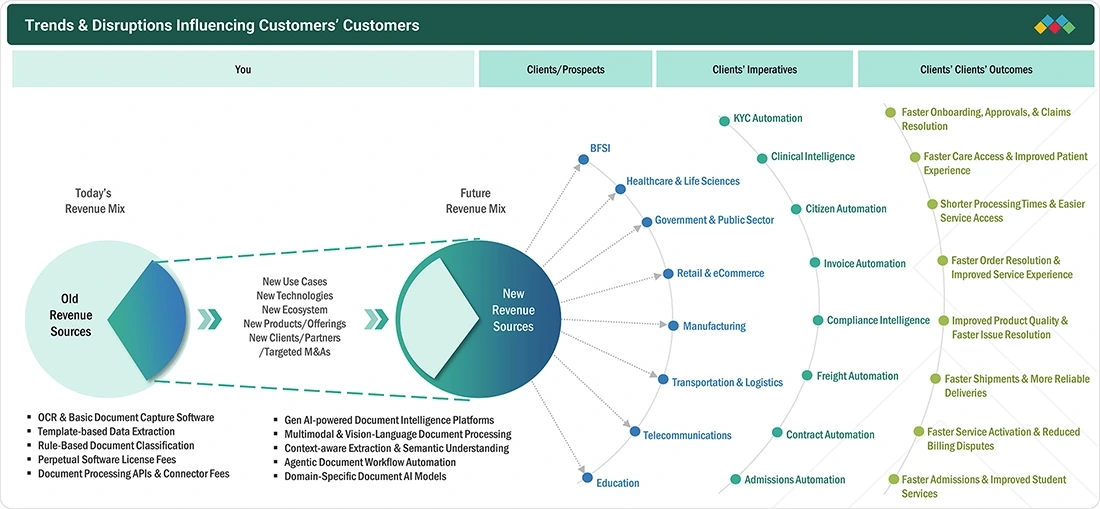
Source: Secondary Research, Interviews with Experts, MarketsandMarkets Analysis
MARKET DYNAMICS

Level
-
Advancements in OCR+NER fusion pipelines delivering higher precision

-
Growth of e-signature and e-workflow ecosystems tying documents to transactions


Level
-
Cross-border data residency limits for model training and telemetry

-
High annotation cost for rare and long-tail templates


Level
-
Synthetic-document marketplaces for niche training datasets

-
Generative-assisted contract drafting integrated with clause libraries


Level
-
Maintaining extraction stability as templates and forms evolve

-
Securing annotation supply chains against malicious or low-quality labels

Source: Secondary Research, Interviews with Experts, MarketsandMarkets Analysis
Driver: Advancements in OCR+NER fusion pipelines delivering higher precision
Combining Optical Character Recognition (OCR) with Named Entity Recognition (NER) models is improving precision and contextual interpretation across Document AI systems. The integrated approach supports accurate extraction of entities, relationships, and meaning from complex, semi-structured documents, including invoices, contracts, and medical forms. Providers are increasingly applying deep learning and transformer-based architectures to improve recognition across multilingual datasets, positioning OCR+NER pipelines as an important foundation for next-generation document intelligence platforms requiring reliable, structured information from varied enterprise content.
Restraint: Cross-border data residency limits for model training and telemetry
Data localization, residency, and cross-border transfer requirements across the EU, China, and India can constrain movement of enterprise documents used for model training and telemetry. These requirements may limit Document AI providers from combining datasets for model tuning across domains and languages. Resulting data fragmentation can raise development costs and weaken model generalization, encouraging providers to use regional infrastructure, privacy-preserving methods, or synthetic datasets while aligning with evolving cross-border data governance and protection frameworks globally.
Opportunity: Synthetic-document marketplaces for niche training datasets
Growing use of synthetic document datasets creates an opportunity for Document AI developers to obtain domain-specific training data while reducing exposure of sensitive information. Artificial samples representing financial statements, legal records, or healthcare forms can support model development at scale without directly sharing underlying confidential records. This approach can improve coverage for underrepresented languages, layouts, and sectors, helping enterprises and startups accelerate experimentation, customize models, and lower acquisition barriers across privacy-sensitive and regulated environments.
Challenge: Securing annotation supply chains against malicious or low-quality labels
Document AI models often depend on human-annotated data for supervised learning, making integrity of labeling pipelines a significant challenge. Poor-quality or intentionally manipulated annotations can introduce bias, weaken reliability, and undermine compliance-sensitive workflows. As organizations use distributed annotation teams and external providers, stronger provenance records, access controls, validation procedures, and quality checks are becoming important for protecting annotation pipelines, detecting inconsistent labels, and maintaining confidence in training data and resulting outputs.
DOCUMENT AI MARKET: COMMERCIAL USE CASES ACROSS INDUSTRIES
| COMPANY | USE CASE DESCRIPTION | BENEFITS |
|---|---|---|
 |
KollwitzOwen adopted Veryfi’s AI-powered OCR platform to automate receipt verification for consumer promotional campaigns, enabling accurate purchase validation and rapid fraud detection. The integration streamlined instant-win promotions through near-real-time receipt processing. | Instant purchase validation improved promotional experiences | Automated duplicate and fraud detection reduced fraudulent submissions | Lower manual validation requirements enabled more promotions to be managed efficiently |
 |
N.S. Trucking implemented Docsumo’s AI-powered document data extraction solution to process more than 45,000 dispatch tickets, accelerating payment workflows for truck drivers while minimizing manual data capture. | 4x faster document processing | 94% touchless processing achieved | 5k+ man-hours saved through automated document processing |
 |
Convex, a global specialty insurer, implemented Indico Data to automate complex underwriting submission intake involving SOVs, loss runs, emails, and supporting documents, reducing manual preparation and accelerating underwriting workflows. | Median processing time reduced from approximately 2 hours to 40 seconds | Underwriters spend less time on manual document preparation | Solution expanded across multiple viable business lines and use cases |
Logos and trademarks shown above are the property of their respective owners. Their use here is for informational and illustrative purposes only.
MARKET ECOSYSTEM
The Document AI market ecosystem is structured around two core segments: document processing and document generation, each supported by a diverse set of technology vendors. Document processing is anchored by capabilities such as OCR and handwritten recognition, document classification, entity extraction, and workflow automation, where platform players like Microsoft, Oracle, UiPath, and IBM provide end-to-end solutions, while specialized vendors focus on niche functions. Document generation, on the other hand, is characterized by targeted offerings like automated report creation, proposal and RFP generation, and document drafting tools, led by agile, domain-specific vendors. This layered ecosystem highlights the coexistence of full-stack platforms and specialized providers, enabling enterprises to automate, extract, and generate documents with increasing accuracy and efficiency.
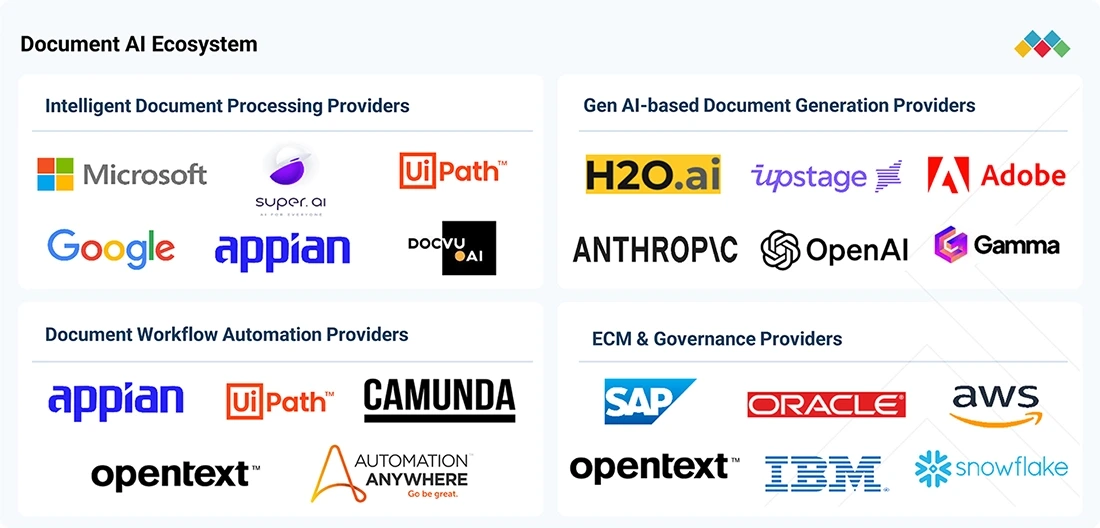
Logos and trademarks shown above are the property of their respective owners. Their use here is for informational and illustrative purposes only.
MARKET SEGMENTS
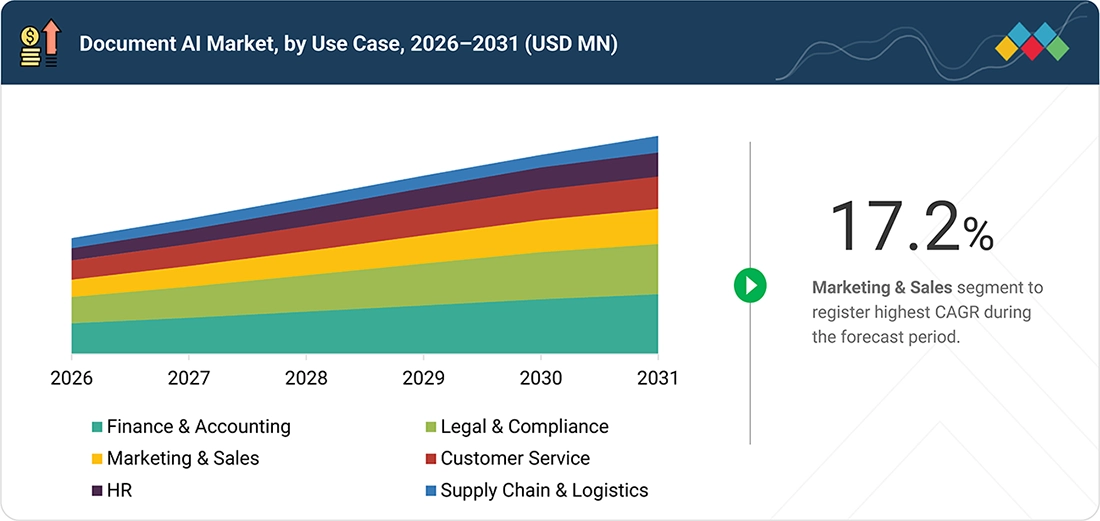
Source: Secondary Research, Interviews with Experts, MarketsandMarkets Analysis
Document AI Market, by Offering
Generative AI-based document generation is anticipated to post the strongest growth as enterprises automate content creation, summarization, and drafting activities. Providers are embedding large language models (LLMs) into Document AI platforms to enable context-aware, natural document generation. Adoption is supported by demand for scalable document creation across legal, finance, and healthcare environments, where accuracy, compliance, and speed remain essential. As organizations expand intelligent authoring and adaptive reporting, vendors are increasingly offering subscription-based generative AI capabilities integrated with broader workflow automation platforms for enterprise use.
Document AI Market, by Document Type
Unstructured documents, such as emails, contracts, reports, and scanned forms, are projected to represent the leading document type in the Document AI market in 2026 because of widespread use across enterprise processes. Vendors are combining multimodal models, OCR, and natural language processing to derive insights from complex unstructured content accurately. Expanding digitalization, compliance requirements, and content intelligence initiatives are further supporting adoption.
Document AI Market, by Use Case
The finance and accounting use case is positioned to lead the Document AI market, supported by automation across invoices, expense reports, reconciliations, and audit records. Organizations are adopting Document AI to improve accuracy, reinforce compliance, and provide more timely financial visibility. Vendors are adapting pre-trained models for transaction-intensive processes, supporting faster handling and fewer errors. AI-enabled anomaly detection, document validation, and regulatory reporting capabilities are reshaping finance operations, helping enterprises reduce manual effort while strengthening data integrity, control, and auditability across financial workflows and reporting processes.
REGION
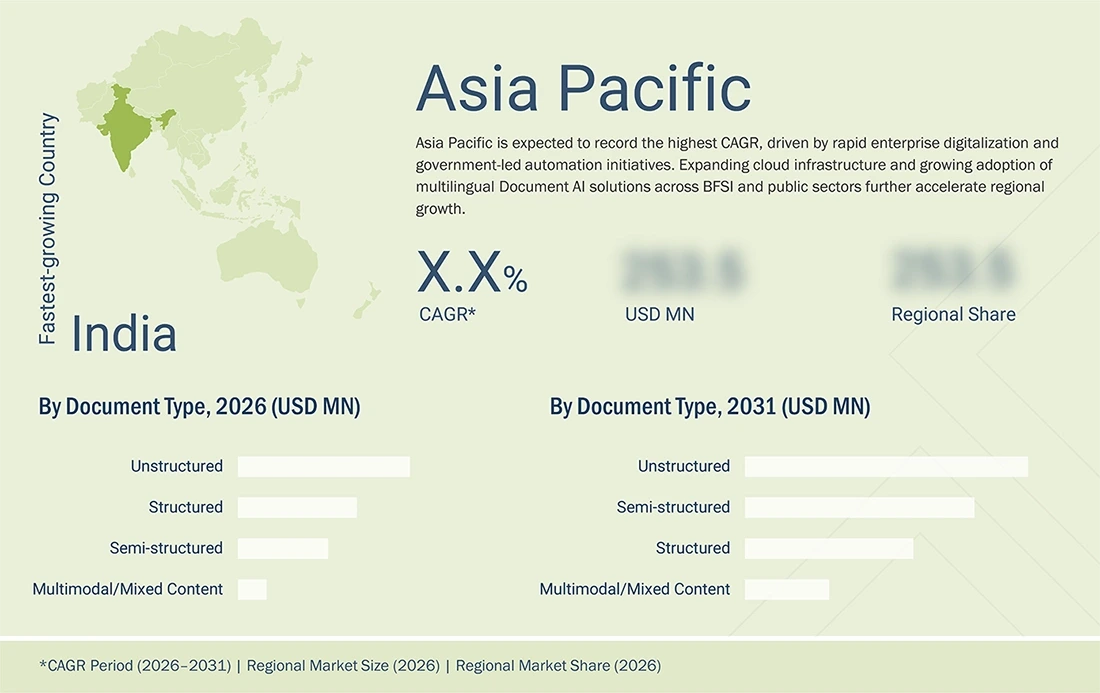
Asia Pacific to be fastest-growing region in global Document AI market during forecast period
The Asia Pacific region is expected to experience the fastest growth in the Document AI market from 2026 to 2031, driven by rapid digital transformation, expanding cloud adoption, and government-led automation initiatives. Emerging economies such as India, Indonesia, and Vietnam are digitizing document-intensive workflows across the BFSI, healthcare, and public administration sectors. Vendors are localizing their Document AI solutions with multilingual NLP, domain-specific models, and compliance-ready architectures to serve diverse markets. Strong investments in AI infrastructure, rising fintech adoption, and growing regulatory digitalization are positioning the Asia Pacific as the most dynamic region for Document AI adoption.
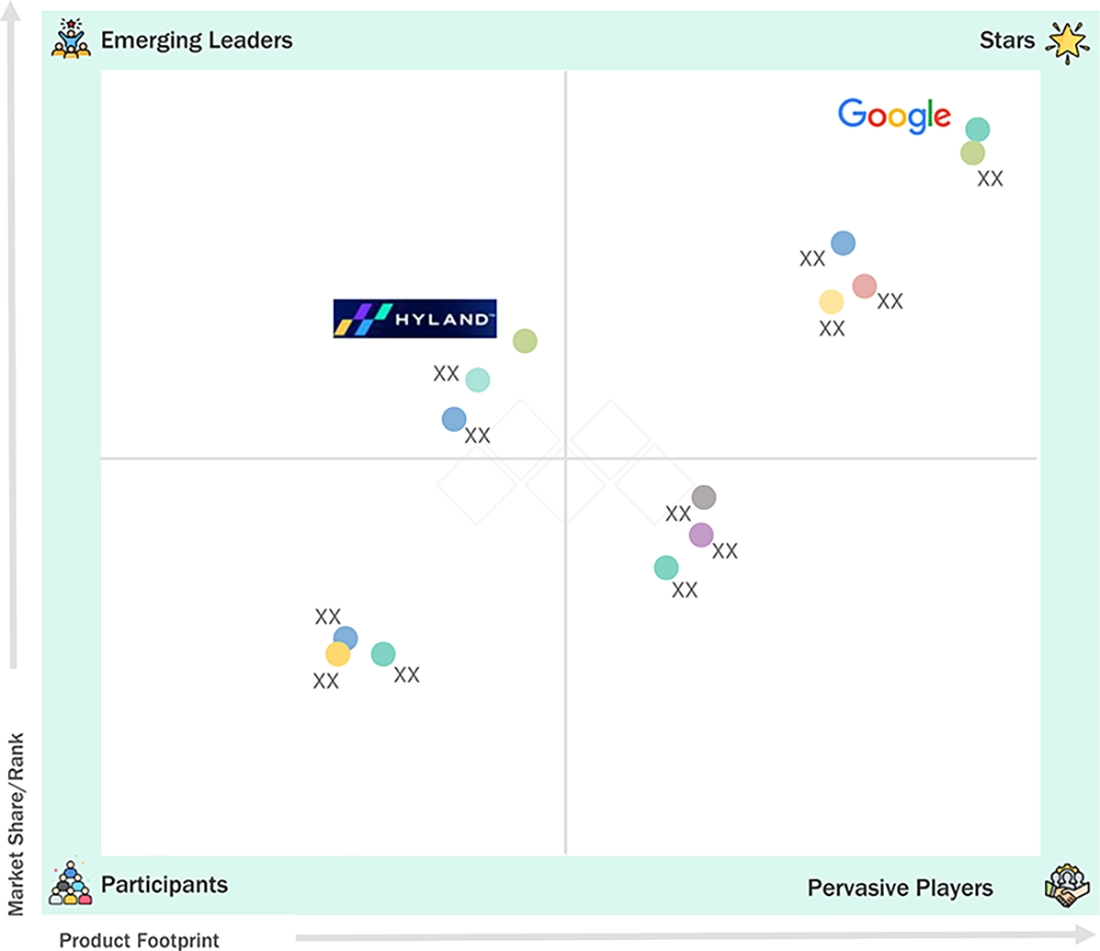
DOCUMENT AI MARKET: COMPANY EVALUATION MATRIX
Google is positioned in the Stars category because it combines a cloud-native AI ecosystem with strong capabilities across OCR, document extraction, classification, multimodal understanding, and generative AI. Its reach across Google Cloud, Vertex AI, Document AI, and Gemini provides scale and multiple pathways to automate document-intensive enterprise workflows. Hyland is positioned in the Emerging Leaders category. Its strengths lie in intelligent document processing, content intelligence, agentic automation, enterprise content management, and workflow integration, giving it a credible position across regulated and content-intensive enterprise environments and scalable business processes.
Source: Secondary Research, Interviews with Experts, MarketsandMarkets Analysis
KEY MARKET PLAYERS
- Google (US)
- Microsoft (US)
- SAP (Germany)
- Appian (US)
- Adobe (US)
- IBM (US)
- Oracle (US)
- EdgeVerve (India)
- OpenAI (US)
- Anthropic (US)
- Gamma (US)
- DocByte (Belgium)
- Infrrd (US)
- AidocMaker (US)
- Checkbox (US)
MARKET SCOPE
| REPORT METRIC | DETAILS |
|---|---|
| Market Size in 2025 (Value) | USD 14.77 Billion |
| Market Forecast in 2026 (Value) | USD 17.51 Billion |
| Market Forecast in 2031 (Value) | USD 35.34 Billion |
| Growth Rate | 15.1% |
| Years Considered | 2021–2031 |
| Base Year | 2025 |
| Forecast Period | 2026–2031 |
| Units Considered | Value (USD Billion) |
| Report Coverage | Revenue Forecast, Company Ranking, Competitive Landscape, Growth Factors, and Trends |
| Segments Covered |
|
| Regions Covered | North America, Europe, Asia Pacific, Middle East & Africa, Latin America |
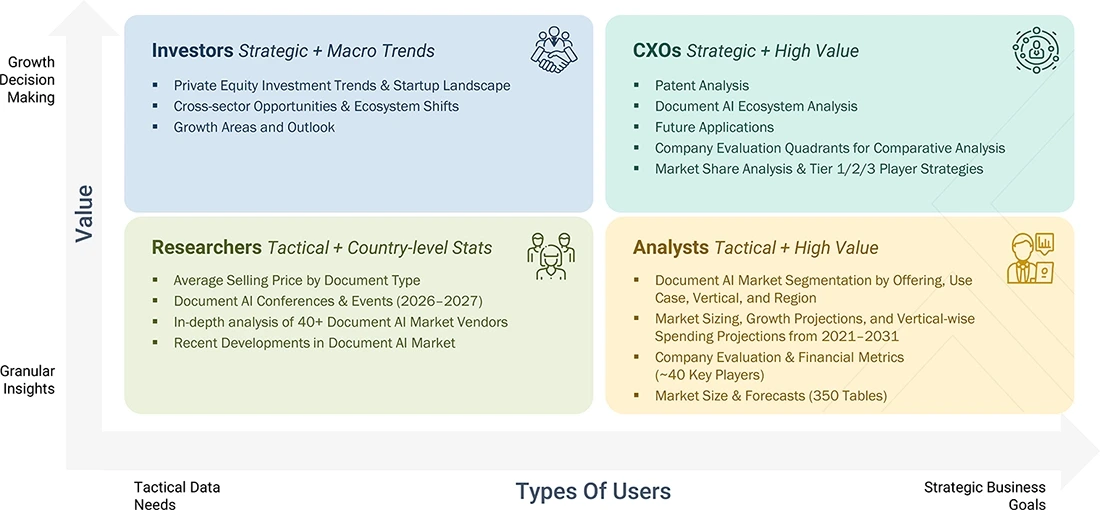
WHAT IS IN IT FOR YOU: DOCUMENT AI MARKET REPORT CONTENT GUIDE
DELIVERED CUSTOMIZATIONS
We have successfully delivered the following deep-dive customizations:
| CLIENT REQUEST | CUSTOMIZATION DELIVERED | VALUE ADDS |
|---|---|---|
| Leading Document AI Provider (North America) |
|
|
| Leading Document AI Provider (Europe) |
|
|
RECENT DEVELOPMENTS
- July 2026 : Toshiba Tec partnered with AIDA to offer AI-powered document and process automation solutions. The collaboration combines intelligent document processing, workflow automation, and agentic AI, helping organizations automate invoices, forms, contracts, orders, prescriptions, and customer correspondence efficiently.
- May 2026 : Parascript partnered with ABBYY to deliver end-to-end document intelligence by combining ABBYY’s OCR and intelligent document processing platform with Parascript’s handwriting recognition and fraud detection. The alliance improves accuracy, reduces manual review, and strengthens document fraud prevention.
- April 2026 : UiPath expanded its collaboration with Google Cloud by launching Intelligent Xtraction and Processing on the Google Cloud Marketplace with Gemini. The integration enables faster, more accurate processing of structured and unstructured documents while supporting scalable document automation workflows.
- March 2026 : IBM expanded its collaboration with NVIDIA across AI, including intelligent document processing and unstructured data extraction. The initiative combines IBM software and NVIDIA acceleration to help organizations operationalize document-intensive AI workloads across enterprise environments.
- February 2026 : UiPath acquired WorkFusion, strengthening agentic AI solutions for financial services and banking. The acquisition adds pre-built AI agents for anti-money laundering and KYC operations, helping institutions automate document-intensive compliance workflows while maintaining security, governance, human oversight, and requirements.
Table of Contents
 Exclusive indicates content/data unique to MarketsandMarkets and not available with any competitors.
Methodology
The research study for the Document AI market involved extensive use of secondary sources, including directories, journals, and paid databases. Primary sources were mainly industry experts from the core and related industries, preferred Document AI providers, third-party service providers, consulting service providers, end users from various vertical industries, and other commercial enterprises. In-depth interviews with primary respondents, including key industry participants and subject matter experts, were conducted to gather and verify critical qualitative and quantitative information, as well as assess the market’s prospects.
Secondary Research
In the secondary research process, various sources were referred to identify and collect information for the study. The secondary sources included annual reports, press releases, investor presentations from companies, white papers, journals, certified publications, and articles from recognized authors, as well as directories and databases. The data was also collected from other secondary sources, such as conferences and related magazines. Additionally, the Document AI spending of various countries was extracted from respective sources. Secondary research was used to obtain key information about the industry’s supply chain to identify key players by solution, service, market classification, and segmentation according to the offerings of major players and industry trends related to solutions, services, document types, use cases, verticals, and regions, and key developments from both market and technology-oriented perspectives.
Primary Research
In the primary research process, various primary sources from both the supply and demand sides were interviewed to obtain qualitative and quantitative information on the market. The primary sources from the supply side included various industry experts, including chief experience officers (CXOs), vice presidents (VPs), directors from business development and marketing, related key executives from Document AI offering vendors, SIs, managed service providers, industry associations, and key opinion leaders.
Primary interviews were conducted to gather insights, including market statistics, revenue data collected from solutions and services, market segmentations, market size estimations, market forecasts, and data triangulation. Primary research also helped to understand various trends related to use cases, offerings, document types, verticals, and regions. Stakeholders from the demand side, such as chief information officers (CIOs), chief technology officers (CTOs), chief strategy officers (CSOs), and end users in verticals using Document AI solutions, were interviewed to understand the buyer’s perspective on suppliers, products, and their current usage of Document AI solutions, which would impact the overall Document AI market.
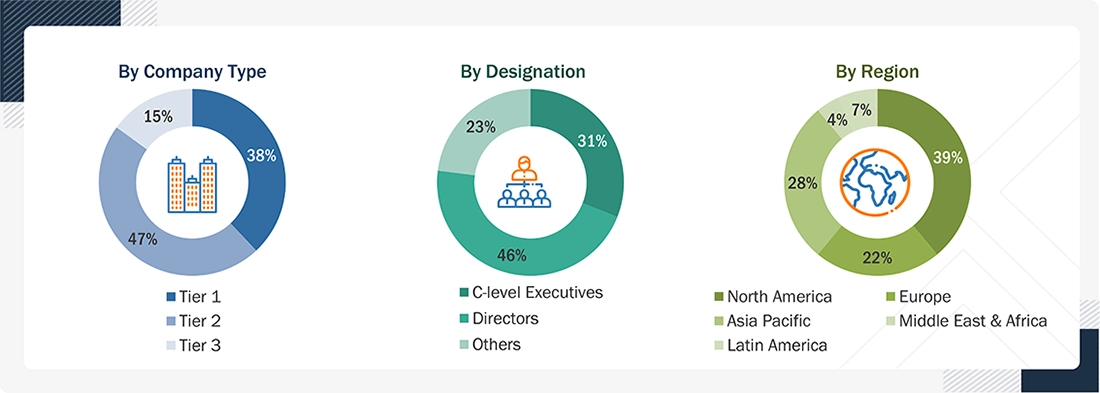
Note: Others include sales, marketing, and product managers; Tier 1 companies’ revenues are more than USD 500 million, Tier 2 companies’ revenues range between USD 100 and 500 million, and Tier 3 companies’ revenues are equal to or less than USD 100 million.
To know about the assumptions considered for the study, download the pdf brochure
Market Size Estimation
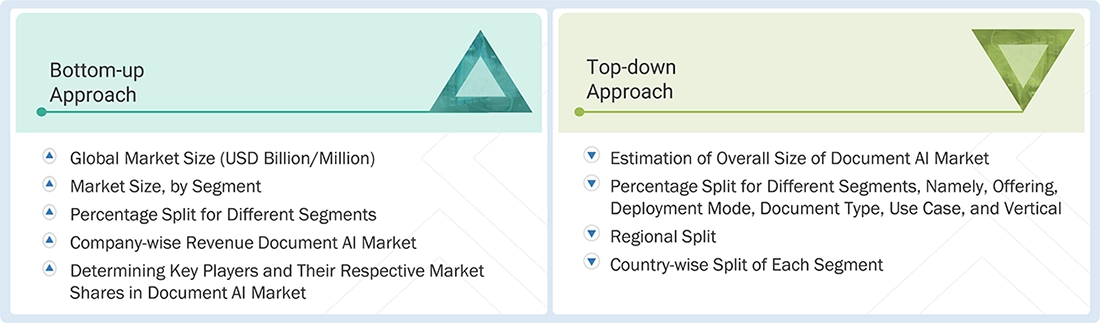
The top-down and bottom-up approaches were employed to estimate and forecast the Document AI market, as well as its dependent submarkets. This multi-layered analysis was further reinforced through data triangulation, which incorporated primary and secondary research inputs. The market figures were also validated against the existing MarketsandMarkets repository for accuracy.
Document AI Market: Top-Down and Bottom-Up Approach
Data Triangulation
The market was divided into several segments and subsegments after determining the overall market size using the market size estimation processes described above. To complete the overall market engineering process and determine the exact statistics for each market segment and subsegment, data triangulation and market segmentation procedures were employed, wherever applicable. The overall market size was then used in the top-down approach to estimate the size of other individual markets by applying percentage splits to the market segmentation.
Market Definition
Document AI refers to a set of artificial intelligence technologies that enable organizations to understand, process, and manage documents automatically across their entire lifecycle. It combines Intelligent Document Processing (IDP) for data extraction, document workflow management for automation and routing, generative AI-based document generation for creating summaries and reports, and enterprise content management (ECM) and governance tools for secure storage, compliance, and auditability. Together, these capabilities enable enterprises to transform unstructured and semi-structured content into actionable information, thereby improving accuracy, speed, and regulatory control in document-driven processes.
Key Stakeholders
- Document AI providers
- Third-party administrators
- Business analysts
- Cloud service providers
- Consulting service providers
- Distributors and value-added resellers (VARs)
- Government agencies
- Independent software vendors (ISVs)
- Market research and consulting firms
- Support & maintenance service providers
- System Integrators (SIs)/migration service providers
- Technology providers
Report Objectives
- To define, describe, and forecast the Document AI market by offering, document type, deployment mode, use case, vertical, and region
- To provide detailed information related to major factors (drivers, restraints, opportunities, and industry-specific challenges) influencing market growth
- To analyze opportunities in the market and provide details of the competitive landscape for stakeholders and market leaders
- To forecast the market size of segments with respect to five main regions: North America, Europe, Asia Pacific, the Middle East & Africa, and Latin America
- To analyze each submarket with respect to individual growth trends, prospects, and contributions to the overall Document AI market
- To analyze competitive developments, such as partnerships, new product launches, mergers & acquisitions, in the Document AI market
- To analyze the impact of macroeconomic factors on the Document AI market across all regions
Available customizations:
Using the provided market data, MarketsandMarkets offers customizations tailored to the company’s specific needs. The following customization options are available for the report.
Product Analysis
- Product comparative analysis, which gives a detailed comparison of innovative products being offered by prominent vendors
Geographic Analysis
- Further breakdown of additional European countries by offering, document type, deployment mode, use case, and vertical
- Further breakdown of additional Asia Pacific countries by offering, document type, deployment mode, use case, and vertical
- Further breakdown of additional Middle Eastern & African countries by offering, document type, deployment mode, use case, and vertical
- Further breakdown of additional Latin American countries by offering, document type, deployment mode, use case, and vertical
Company Information
-
Detailed analysis and profiling of additional market players (up to five)
Key Questions Addressed by the Report
What is the projected size of the Document AI Market by 2031?
The global Document AI Market is projected to grow from USD 17.51 billion in 2026 to USD 35.34 billion by 2031, at a CAGR of 15.1% during 2026–2031.
Which region is projected to register the highest CAGR in the Document AI Market?
Asia Pacific is estimated to register the highest CAGR of 17.1% during the 2026–2031 forecast period.
Which offering segment is expected to account for the largest share of the Document AI Market?
The Solutions segment is estimated to account for the largest share of the Document AI Market, with a 64.2% share in 2026.
Which document type is projected to grow at the fastest rate in the Document AI Market?
Multimodal/mixed-content documents are projected to witness the fastest growth during 2026–2031, reflecting increasing demand for AI systems that can process diverse and complex document content.
Which use case is projected to grow at the highest CAGR in the Document AI Market?
Marketing & Sales is projected to grow at the highest CAGR of 17.2% during the forecast period.
Which industry vertical is expected to account for the largest share of the Document AI Market?
The BFSI vertical is expected to account for the largest share of the Document AI Market. The report also covers Government & Public Sector, Healthcare & Life Sciences, Retail & E-commerce, Energy & Utilities, Transportation & Logistics, Education, Telecommunications, and other verticals.


Personalize This Research
- Triangulate with your Own Data
- Get Data as per your Format and Definition
- Gain a Deeper Dive on a Specific Application, Geography, Customer or Competitor
- Any level of Personalization
Let Us Help You
- What are the Known and Unknown Adjacencies Impacting the Document AI Market
- What will your New Revenue Sources be?
- Who will be your Top Customer; what will make them switch?
- Defend your Market Share or Win Competitors
- Get a Scorecard for Target Partners

Custom Market Research Services
We Will Customise The Research For You, In Case The Report Listed Above Does Not Meet With Your Requirements
Get 10% Free CustomisationTESTIMONIALS
- US Document AI Market
- Canada Document AI Market
- UK Document AI Market
- Germany Document AI Market
- France Document AI Market
- Italy Document AI Market
- China Document AI Market
- India Document AI Market
- Japan Document AI Market
- South Korea Document AI Market
- Singapore Document AI Market
- Saudi Arabia Document AI Market
- UAE Document AI Market
- South Africa Document AI Market
- Qatar Document AI Market
- Brazil Document AI Market
- Mexico Document AI Market
- Rest Of Europe Document AI Market




Growth opportunities and latent adjacency in Document AI Market